
2027 Best Online IT Training Bootcamps

Co-Founder and Chief Data Scientist
Individuals contemplating a transition into the dynamic world of information technology often question whether online IT bootcamps genuinely offer a worthwhile return on their time and financial investment. With the global IT market size projected to reach $29,887 billion by 2033, the industry presents significant opportunities, deciding to upskill or reskill a compelling one.
Research.com's team, with over ten years of expertise in career planning, has meticulously compiled this guide using only credible sources. By reading this article, you will gain a clear understanding of the value proposition of online IT training bootcamps, enabling you to make an informed decision about your career advancement.
What are the benefits of getting an online IT training bootcamp?
- Graduates of online IT training bootcamps can secure roles such as software engineers, web developers, data analysts, cybersecurity analysts, and UX/UI designers.
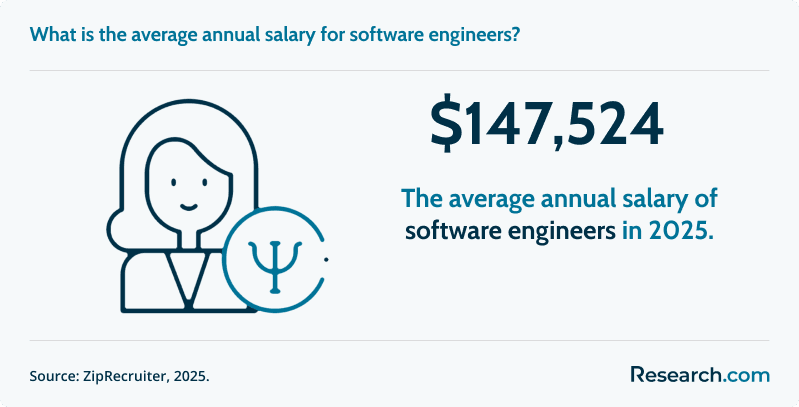
- Bootcamp graduates can expect strong earning potential, with median salaries varying by role. For instance, UX designers typically earn around $106,224 per year, while software engineers can command over $147,524 annually.
- Online IT bootcamps offer flexible learning schedules that accommodate working professionals and those with other commitments, combining interactive live instruction, mentorship, and hands-on projects—all without geographic constraints—making tech education accessible and practical.
What can I expect from an online IT training bootcamp?
An online IT training bootcamp typically covers a core curriculum that includes front-end and back-end development, programming fundamentals, and other IT skills, often culminating in a capstone project where you build a real-world application or solution.
Many programs also incorporate internship hours or practical hands-on labs to provide real experience. Tuition for these bootcamps generally ranges from around $7,000 to $15,000, depending on the program’s length and depth.
Online classes are usually delivered through a mix of live sessions, recorded lectures, interactive coding labs, and virtual collaboration tools, allowing flexible learning that fits various schedules without geographic constraints. This setup balances theory with practical application to prepare you for a tech career.
Where can I work after completing an online IT training bootcamp?
Completing an online IT training bootcamp can open doors to diverse career opportunities across many industries. Graduates often find roles in corporate settings, government agencies, and nonprofit organizations, as well as the option to start their businesses. Many work in management, consulting, research, or specialized fields related to their training.
Additionally, some bootcamps provide pathways to careers in education, healthcare, technology, and the creative sector. The transferable skills gained—like problem-solving, communication, and critical thinking—enable graduates to adapt successfully to various work environments. Job placement rates for bootcamp graduates are strong, with about 74% to 94% securing employment within six months.
How much can I expect to earn after getting an IT training bootcamp certificate?
Salary varies by industry, experience, and location; for example, cybersecurity roles tend to pay higher with averages around $132,962, rising above $186,000 for seasoned professionals. Entry-level professionals usually start lower but can earn $70,000–$90,000, while experienced developers or analysts can approach six figures with several years’ experience.
Advanced certifications or degrees, like Certified Information Security Manager (CISM) in cybersecurity, can significantly boost salary potential, often adding tens of thousands to base pay. Geographic location also impacts earnings; tech hubs usually offer higher salaries compared to smaller markets.
- List of the Best Online IT Training Bootcamps for 2027 List of Programs
- How long does it take to complete an online IT training bootcamp? Completion Time
- How does an online and in-person IT training bootcamp compare? How does an online and in-person IT training bootcamp compare?
- What is the average cost of an online IT training bootcamp? Average Cost
- What are the financial aid options for students enrolling in an online IT training bootcamp? Financial Aid
- What are the prerequisites for enrolling in an online IT training bootcamp? Requirements
- What courses are typically in an online IT training bootcamp? What courses are typically in an online IT training bootcamp?
- What types of specializations are available in an online IT training bootcamp? What types of specializations are available in an online IT training bootcamp?
- What are the accreditation and certification standards for online IT bootcamps? What are the accreditation and certification standards for online IT bootcamps?
- How to Choose the Best Online IT Training Bootcamp How to Choose the Best Online IT Training Bootcamp
- What career paths are available for graduates of an online IT training bootcamp? Career Paths
- What is the job market for graduates with an online IT training bootcamp? Job Market
- Is an Online IT Training Bootcamp a Viable Alternative to a fast computer science degree? Is an Online IT Training Bootcamp a Viable Alternative to a fast computer science degree?
Best Online IT Training Bootcamps for 2027
Choosing an online IT training bootcamp is not just a question of finding the shortest program or the lowest tuition. The better question is whether a bootcamp can help you build job-ready skills, complete projects employers can evaluate, and move toward a specific technical role without taking on unnecessary cost or time. This guide is for career changers, working professionals, recent graduates, and self-taught learners comparing online bootcamps in software development, cybersecurity, data, cloud, IT support, and related technology fields.
Online bootcamps can be a practical route into technology because they focus on applied skills rather than broad general education requirements. They can also be risky if students choose a program without checking curriculum depth, career support, refund terms, accreditation context, or whether the training aligns with their target job. In this guide, you will find ranked online IT training bootcamps, cost and duration comparisons, common specializations, financial aid options, prerequisites, career paths, and decision criteria to help you choose a program more carefully.
If your goal is cybersecurity, a focused option such as online CompTIA Security+ training bootcamps may be more relevant than a broad coding bootcamp. If your goal is software development, a full-stack web development program may make more sense than a general IT support track.
Quick Answer: Are Online IT Training Bootcamps Worth Considering?
Online IT training bootcamps can be worth considering if you need structured, skills-based training for a specific technology role and can commit enough weekly study time to complete projects, labs, and job-search preparation. They are usually best for learners who want a faster, career-focused path than a traditional degree, but they are not a guaranteed route to employment and do not replace the long-term academic depth of a computer science degree.
The strongest bootcamps tend to offer four things: a current technical curriculum, substantial hands-on practice, instructor or mentor access, and realistic career support. The weakest choices are programs that make vague job promises, provide limited project work, hide total costs, or fail to explain who teaches the course and how students are supported.
How we rank the programs
Because an education program can affect your finances, schedule, and career options, our ranking process emphasizes transparent information and decision-useful comparisons. We review publicly available program details alongside institutional and education data sources where applicable.
Our research draws on resources such as the IPEDS database, Peterson's database, the College Scorecard database, and the National Center for Education Statistics. These sources help provide context on institutions connected to online IT training bootcamps. To learn more about the evaluation process, review our ranking methodology.
Best Online IT Training Bootcamps for 2027
The programs below include university-affiliated online bootcamps in coding, cybersecurity, web development, computer science fundamentals, software engineering, data science, and related IT areas. Use the list as a starting point, then compare each program against your career target, weekly availability, budget, and preferred learning format.
| Rank | Program | Best fit | Length | Cost | Accreditation listed |
| 1 | Rutgers University - Cybersecurity Bootcamp | Learners targeting cybersecurity analyst, SOC, and security operations roles | 24 weeks | Total program cost is $7,200 (with discount) or $9,600 (without discount). | Middle States Commission on Higher Education (MSCHE) |
| 2 | University of California, Berkeley - Coding Bootcamp | Students seeking full-stack web development training with full-time or part-time pacing | 12 weeks (full-time) or 24 weeks (part-time) | $12,995 | Western Association of Schools & Colleges (WASC) |
| 3 | Florida International University - Cybersecurity Bootcamp | Self-paced learners who can dedicate steady weekly time to cybersecurity labs | 6 months (self-paced, requiring 15-25 hours/week) | $4,275 | Southern Association of Colleges and Schools Commission on Colleges (SACSCOC) |
| 4 | Georgia Institute of Technology - FlexStack | Working professionals who want stackable certificates in Python, SQL, and data modeling | Modular, consisting of three stackable certificates. | $7,560 | SACSCOC |
| 5 | University of Texas at San Antonio - Fundamentals of Computer Science Bootcamp | Beginners seeking Python, SQL, and core computer science foundations | 3 months (full-time) or 6 months (part-time) | $11,000 (or $8,800 with upfront payment discount). | SACSCOC |
| 6 | San José State University - Coding & Cybersecurity Bootcamps | Beginners comparing web development and cybersecurity training | Coding Bootcamp: 12 weeks; Cybersecurity Bootcamp: 13-21 weeks. | $12,995 | WASC |
| 7 | Arizona State University - Web Development Bootcamp | Learners focused on HTML, CSS, React, JavaScript, and the MERN stack | 3 months (full-time) or 6 months (part-time) | $6,600 | Higher Learning Commission (HLC) |
| 8 | Virginia Tech - Coding Bootcamp | Students who want live online full-stack development instruction with generative AI exposure | Part-time: 22 weeks; Full-time: 13 weeks | Part-time tuition is $9,995 (with discount), full-time tuition is $10,995 (with discount). | SACSCOC |
| 9 | Hofstra University - Online IT Bootcamps | Students comparing software engineering, cybersecurity, and data science paths | 10–12 weeks | $12,000 | MSCHE |
| 10 | Carnegie Mellon University - Coding Bootcamp | U.S.-based learners seeking an intensive software or web development program | 16 weeks (full-time, 360 hours online learning) | Total tuition is $18,600 (scholarships up to $6,000 available). | MSCHE |
1. Rutgers University - Cybersecurity Bootcamp
The online live cybersecurity bootcamp from Rutgers University is built for learners who want to enter or progress in cybersecurity, including those without a technical background. The program emphasizes practical areas such as network security, ethical hacking, digital forensics, threat detection, and applied security analysis. Students complete hands-on work and a real-world Capstone Project that can support preparation for roles such as Security Analyst and SOC Analyst.
- Program length: 24 weeks
- Cost: Total program cost is $7,200 (with discount) or $9,600 (without discount).
- Accreditation: Middle States Commission on Higher Education (MSCHE)
2. University of California, Berkeley - Coding Bootcamp
UC Berkeley's Coding Bootcamp delivers online full-stack web development training for learners from a range of academic and professional backgrounds. The curriculum uses project-based learning to cover programming foundations, server-side development, and data querying. Students who finish the program receive a certificate of completion and access to career support designed to help them prepare for web development and quality assurance opportunities.
- Program length: 12 weeks (full-time) or 24 weeks (part-time)
- Cost: $12,995
- Accreditation: Western Association of Schools & Colleges (WASC)
3. Florida International University - Cybersecurity Bootcamp
Florida International University's online self-paced Cybersecurity Bootcamp is intended for motivated beginners who want a structured path into cybersecurity. The program moves from networking fundamentals into ethical hacking and includes hands-on labs and a capstone project. It is designed to support preparation for roles such as cybersecurity analyst and penetration tester.
- Program length: 6 months (self-paced, requiring 15-25 hours/week)
- Cost: $4,275
- Accreditation: Southern Association of Colleges and Schools Commission on Colleges (SACSCOC)
4. Georgia Institute of Technology - FlexStack
Georgia Tech's FlexStack is an online IT training option for professionals who want to build or update technical skills while continuing to work. The program uses live, synchronous instruction from Georgia Tech faculty and is organized around stackable certificates. Topics include Python Fundamentals, SQL, and Python Data Modeling and Visualization.
- Program length: Modular, consisting of three stackable certificates.
- Cost: $7,560
- Accreditation: SACSCOC
5. University of Texas at San Antonio - Fundamentals of Computer Science Bootcamp
UTSA's online Fundamentals of Computer Science Bootcamp is designed for students without prior coding experience. The program covers Python, SQL, and core computer science concepts through a mix of flexible pacing options, mentorship, and hands-on projects. Graduates receive a UTSA certificate of completion.
- Program length: 3 months (full-time) or 6 months (part-time)
- Cost: $11,000 (or $8,800 with upfront payment discount).
- Accreditation: SACSCOC
6. San José State University - Coding & Cybersecurity Bootcamps
San José State University offers live online bootcamps in coding and cybersecurity for learners preparing for technical roles. These programs are structured for beginners and emphasize practice-based learning. Students also receive 1-on-1 career coaching and access to an alumni network, which can be useful during the transition from training to job search.
- Program length: Coding Bootcamp: 12 weeks; Cybersecurity Bootcamp: 13-21 weeks.
- Cost: $12,995
- Accreditation: WASC
7. Arizona State University - Web Development Bootcamp
ASU's online Web Development Bootcamp is aimed at learners preparing for full-stack web development work without requiring prior coding experience. The curriculum includes HTML, CSS, React, JavaScript, and the MERN stack, with capstone projects and professional feedback built into the learning process. Potential career directions include JavaScript Developer and UX Designer roles.
- Program length: 3 months (full-time) or 6 months (part-time)
- Cost: $6,600
- Accreditation: Higher Learning Commission (HLC)
8. Virginia Tech - Coding Bootcamp
Virginia Tech's Coding Bootcamp provides live online instruction for learners at different skill levels. The program focuses on full-stack development, portfolio-building projects, career simulations, and exposure to generative AI. Students also receive personalized career coaching and job-search support for roles such as Front-End Developer and Full-Stack Web Developer.
- Program length: Part-time: 22 weeks; Full-time: 13 weeks
- Cost: Part-time tuition is $9,995 (with discount), full-time tuition is $10,995 (with discount).
- Accreditation: SACSCOC
9. Hofstra University - Online IT Bootcamps
Hofstra University, through a partnership with QuickStart, offers online IT Bootcamps for students and working professionals. Available tracks include Software Engineering, Cybersecurity, and Data Science. The programs use QuickStart's AI-based learning platform to support personalized learning paths toward certification-oriented training.
- Program length: 10–12 weeks
- Cost: $12,000
- Accreditation: MSCHE
10. Carnegie Mellon University - Coding Bootcamp
Carnegie Mellon University's Coding Bootcamp is an intensive online program for U.S.-based learners pursuing software or web development careers. The curriculum includes live masterclasses from CMU faculty and practical projects in full-stack development, including Python, JavaScript, and React. Graduates receive CMU-SCS certification.
- Program length: 16 weeks (full-time, 360 hours online learning)
- Cost: Total tuition is $18,600 (scholarships up to $6,000 available).
- Accreditation: MSCHE
How Long Does It Take to Complete an Online IT Training Bootcamp?
Online IT training bootcamps vary in length because they serve different goals. A short course may teach a single tool or concept, while a career-oriented bootcamp usually includes technical lessons, labs, projects, portfolio work, and career preparation. Most learners should choose based on weekly availability, not just the calendar length.
- Full-time bootcamps: These often run around 10 to 14 weeks, or about 2.5 to 3.5 months. They are usually intensive and best for learners who can treat the program like a full-time commitment.
- Part-time bootcamps: These commonly take 18 to 30 weeks, or about 4.5 to 7.5 months. They are better suited to students balancing a job, caregiving, or other obligations.
- Short intensive courses: Some formats last three to seven days or a few weeks. These are generally better for learning a narrow skill than for preparing for a new IT career from scratch.
- Self-paced bootcamps: These may take up to six to seven months and often require consistent weekly study time, typically 15 to 25 hours. They can work well for disciplined learners who need schedule flexibility.
If you want a compressed cybersecurity pathway, fast-track online cyberops training programs may be worth comparing with broader cybersecurity bootcamps.
Online vs. In-Person IT Training Bootcamps: Which Format Fits You?
The main difference between online and in-person IT bootcamps is not the subject matter. It is the learning experience. Online programs offer flexibility and wider access, while in-person programs may provide more structure, immediate interaction, and local networking. The right format depends on how you learn, how much support you need, and whether commuting is realistic.
| Factor | Online IT bootcamp | In-person IT bootcamp | Best choice if... |
| Schedule | May include live online, self-paced, or hybrid-style online learning | Usually follows fixed class times at a physical location | Choose online if you need flexibility; choose in-person if you need a fixed routine. |
| Learning environment | Requires a reliable workspace, stable internet, and self-discipline | Provides a classroom setting with fewer home-based distractions | Choose online if you can manage your own study habits; choose in-person if you benefit from separation between home and school. |
| Instructor access | Often includes virtual office hours, chat, scheduled coaching, or recorded lessons | Allows face-to-face questions and immediate classroom feedback | Choose online if scheduled support is enough; choose in-person if you need real-time help frequently. |
| Collaboration | Uses forums, video sessions, breakout rooms, and online group projects | Creates more spontaneous peer interaction and local networking | Choose online for geographic flexibility; choose in-person for stronger local peer contact. |
| Cost considerations | May reduce commuting, relocation, and schedule-related costs | May involve transportation, parking, or moving expenses | Compare total cost, not tuition alone. |
Some learners combine a bootcamp with targeted certification preparation. For example, online CCNA certification training can complement networking, cybersecurity, or IT infrastructure learning.
What Is the Average Cost of an Online IT Training Bootcamp?
The average cost of an online IT training bootcamp generally falls between $7,000 and $15,000, but tuition can vary widely by provider, length, format, and included services. A lower price is not automatically better if the program lacks projects, support, or career services. A higher price is not automatically justified unless the bootcamp clearly explains what students receive.
- The median tuition cost is around $8,000, and the average tuition tends to be approximately $11,000 to $12,500.
- Some lower-cost programs range from $500 to $2,600, especially part-time or self-paced options.
- More comprehensive or full-time bootcamps can cost up to $16,000 or more.
- Tuition may reflect factors such as live instruction, mentorship, career coaching, labs, certification preparation, portfolio reviews, and the reputation of the provider.
When comparing costs, ask whether the listed price includes software, exam vouchers, tutoring, career services, and access to course materials after graduation. Similar questions apply to other technical upskilling options, such as an online CompTIA Cloud+ certification boot camp.
Financial Aid and Payment Options for Online IT Bootcamps
Many bootcamps are not funded the same way traditional degree programs are, so students should confirm aid eligibility before enrolling. Start by reading the school's official tuition policies and reviewing federal guidance on types of financial aid. Then compare the true repayment cost of each payment option.
| Option | How it works | What to check before choosing it |
| Scholarships and grants | Programs may offer awards based on need, merit, military status, gender, or underrepresented group status in tech. | Confirm eligibility, deadlines, whether the award reduces tuition directly, and whether it can be combined with other discounts. |
| Payment plans | Students pay tuition in installments during the program, sometimes interest-free. | Ask about fees, missed-payment consequences, and whether payments continue if you withdraw. |
| Deferred tuition | Students delay payment until after graduation and employment, usually repaying over two to four years after earning above a salary threshold, typically $40,000-$60,000 annually. | Review the repayment cap, job requirements, income threshold, and what happens if you do not find qualifying employment. |
| Income Share Agreements (ISAs) | ISAs may allow little or no upfront tuition in exchange for paying a percentage, commonly 10-25%, of future income for a set period. | Calculate the maximum possible repayment because the final amount can exceed upfront tuition. |
| Employer assistance | Some employers reimburse or sponsor training tied to job duties or advancement. | Ask whether you must remain employed for a period after receiving reimbursement. |
What Are the Prerequisites for an Online IT Training Bootcamp?
Most online IT bootcamps are designed to be accessible, but “beginner-friendly” does not mean effortless. Admissions requirements vary, and students should understand both the formal prerequisites and the practical expectations before enrolling.
- Age and education: Many bootcamps require students to be at least 18 years old and to have a high school diploma or equivalent. Some programs are more flexible, but that is not universal.
- Application materials: Applicants may need to submit an application, explain their motivation, or describe their goals. Some programs also use assessments in logic, problem-solving, or critical thinking.
- Technical readiness: Prior coding experience is often not required for beginner programs, but students still need basic computer literacy, persistence, and comfort learning new tools quickly.
- Pre-work: Some bootcamps provide or require preparation modules before the official start date. These may introduce programming basics, command-line tools, cybersecurity concepts, or study expectations.
- Interviews or challenges: More selective programs may include an interview, culture-fit conversation, take-home challenge, or basic coding exercise.
Specialized programs, including online CyberOps training bootcamps, often place particular emphasis on problem-solving ability, curiosity, and consistent practice.
What Courses Are Typically Included in an Online IT Training Bootcamp?
Bootcamp curricula differ by specialization, but many technology programs follow a progression from fundamentals to applied projects. Software and web development bootcamps often move from front-end basics into back-end development, databases, testing, deployment, and portfolio work.
Phase 1: Front-End and Tooling Foundations
- HTML and CSS for page structure, layout, and styling
- JavaScript fundamentals, syntax, and programming logic
- Command-line navigation and terminal usage
- Version control workflows using Git and GitHub
- Browser APIs, DOM manipulation, and interactive web behavior
- Introductory use of AI-supported coding tools such as GitHub Copilot
Phase 2: Full-Stack Development Core
- Server-side programming with Node.js and npm
- TypeScript fundamentals
- RESTful API development and integration
- SQL database use, including CRUD operations
- React for single-page application development
- Introductory prompt engineering for AI-assisted technical workflows
Phase 3: Advanced Development Practices
- MERN stack application development using MongoDB, Express, React, and Node.js
- Unit, component, integration, and end-to-end testing
- CI/CD pipeline setup for automated build, test, and deployment workflows
- Object-oriented programming concepts and Python fundamentals
- NoSQL databases and alternative data storage approaches
Common Online IT Bootcamp Specializations
The best specialization depends on the job you want after graduation. A cybersecurity bootcamp will not prepare you for the same portfolio as a UX design bootcamp, and a data analytics track will not emphasize the same tools as a cloud engineering program. Choose the track that matches actual job postings you plan to pursue.
| Specialization | Typical focus | Good fit for learners who... |
| Software engineering or full-stack development | JavaScript, React, Node.js, APIs, SQL, MongoDB, application architecture, and project deployment | Want to build web applications and prepare a coding portfolio. |
| Cybersecurity | Network security, ethical hacking, penetration testing, Python for security, operating systems, and security tools | Want to protect systems, investigate threats, and pursue security operations or analyst roles. |
| IT support or IT technician | Hardware, operating systems, networking basics, troubleshooting, help desk workflows, and customer support | Want a practical entry point into technology infrastructure and support roles. |
| UX design | User research, interface design, usability, digital product workflows, and portfolio development | Want a design-oriented technology role focused on user experience. |
| Programming fundamentals | Python, C, Java, algorithms, problem-solving, and computational thinking | Want a structured introduction to coding before choosing a deeper specialization. |
| Data analytics or data science | Python libraries, SQL, Excel, PowerBI, visualization, data cleaning, and data-informed decision-making | Want to analyze data and communicate insights for business or technical teams. |
For cybersecurity-focused students, the fastest online cybersecurity bootcamps may be useful if speed matters and you can handle an intensive schedule. For design-focused learners, a bootcamp can build a portfolio, while an online UI UX design bachelor's degree may offer a broader academic foundation. For data-focused learners who want a degree rather than short-format training, an accelerated online degree in data analytics may be a better long-term fit.
Accreditation and Certification Standards for Online IT Bootcamps
Accreditation can be confusing in the bootcamp market. A university may be institutionally accredited, but the bootcamp itself may be a continuing education, professional studies, or third-party partnership program rather than a degree program. That does not automatically make it low quality, but students should understand exactly what credential they will receive.
Before enrolling, verify whether the credential is a certificate of completion, an industry certification preparation program, a university-issued certificate, or a noncredit professional training credential. Also ask whether the curriculum prepares students for recognized certification exams, whether exam fees are included, and whether employers in your target role value the credential.
If you are comparing IT bootcamps with other specialized online graduate or professional programs, remember that different fields use different credibility signals. For example, a program such as a space studies masters online follows a different academic model than a short-format IT bootcamp, so accreditation and outcome comparisons should be made carefully.
How to Choose the Best Online IT Training Bootcamp
A strong bootcamp choice starts with the job you want, not the program brand. Review job postings first, list the tools and skills that appear repeatedly, and then compare bootcamps against those requirements. This reduces the chance of paying for a program that teaches interesting skills but does not match your intended career path.
Step-by-step bootcamp selection checklist
- Define your target role. Decide whether you are aiming for software development, cybersecurity, data analytics, IT support, cloud, UX, or another field.
- Map the curriculum to job postings. Compare course topics against real entry-level or junior job descriptions.
- Check the learning format. Decide whether you need live instruction, self-paced study, full-time immersion, or part-time flexibility.
- Review project requirements. Look for labs, capstones, portfolio projects, security exercises, data dashboards, deployed apps, or other work samples relevant to your field.
- Verify support access. Ask how often you can meet instructors, mentors, teaching assistants, or career coaches.
- Compare total cost. Include tuition, fees, equipment, certification exams, software, financing costs, and lost income if you reduce work hours.
- Read outcomes carefully. Look for transparent job support details, not vague claims. Ask how outcomes are measured and whether all graduates are included.
- Understand withdrawal and refund policies. Make sure you know what happens if the program is not a fit after it starts.
Questions to ask before enrolling
- Who teaches the program, and what industry experience do instructors have?
- How many hours per week do successful students usually spend on class, labs, and assignments?
- Are classes live, recorded, self-paced, or a mix?
- What projects will I complete, and can I use them in a public portfolio?
- Does the program prepare students for specific certifications or only general skills?
- Are certification exam vouchers included in tuition?
- What career services are included, and for how long after graduation?
- Does the bootcamp publish job outcomes, and how are those outcomes verified?
- What is the refund policy if I withdraw early?
- Will I receive academic credit, a noncredit certificate, a certificate of completion, or another credential?
Workforce participation in IT also differs by demographic group, and students should look for programs that provide inclusive support, mentoring, and career resources rather than assuming every learner enters with the same network or background.
Common Mistakes to Avoid When Choosing an Online IT Bootcamp
Bootcamps can be useful, but rushed enrollment decisions can lead to poor outcomes. Avoid these common mistakes before committing tuition or signing a financing agreement.
| Mistake | Why it matters | Better approach |
| Choosing based only on brand recognition | A university name does not always explain who teaches the bootcamp, how the curriculum works, or whether the credential is credit-bearing. | Ask who operates the program, what credential is awarded, and what student support is included. |
| Focusing only on tuition | A cheaper program may lack mentorship, labs, portfolio review, or career services; an expensive program may still be overpriced. | Compare total value: curriculum, support, projects, financing terms, and outcomes transparency. |
| Ignoring weekly time requirements | Even online programs can be difficult to complete without consistent study time. | Block out your schedule before enrolling and choose part-time or self-paced formats if needed. |
| Assuming a bootcamp guarantees a job | Career support is not the same as job placement, and hiring depends on skills, portfolio, location, market conditions, and interview performance. | Treat the bootcamp as one part of a broader job-search plan. |
| Skipping accreditation and credential questions | Not every bootcamp credential carries the same academic or employer value. | Confirm whether the program is credit-bearing, noncredit, certification-focused, or a certificate of completion. |
| Overlooking financing terms | Deferred tuition and ISAs can become expensive depending on salary and repayment rules. | Read the full agreement and calculate the maximum repayment amount before signing. |
Career Paths After an Online IT Training Bootcamp
Bootcamp graduates may pursue a range of entry-level or junior technical roles, but the right path depends heavily on the specialization completed, prior experience, portfolio quality, certifications, and local or remote hiring conditions. A bootcamp can help demonstrate applied skills, but many employers still evaluate candidates through technical interviews, projects, prior work history, and problem-solving ability.
- Software Engineer or Developer: Builds, tests, and maintains applications using tools and languages such as JavaScript, Python, Node.js, and React.
- Web Developer: Creates and maintains websites, often focusing on front-end interfaces, back-end logic, or full-stack development.
- Cybersecurity Analyst: Monitors systems, investigates threats, supports security controls, and applies knowledge of networking, ethical hacking, and security tools.
- Data Analyst or Data Scientist: Uses tools such as Python, SQL, and PowerBI to clean, analyze, visualize, and explain data.
- IT Support Specialist or Technician: Troubleshoots hardware, software, operating systems, user access, and network issues.
- DevOps Engineer: Works on automation, deployment workflows, CI/CD pipelines, infrastructure, and system reliability.
- Quality Assurance Engineer: Tests software, documents defects, and helps development teams improve product quality.
- Cloud Engineer: Supports cloud infrastructure and services on platforms such as AWS or Azure. Learners who want a shorter route into this specialization can compare options such as a fast-track cloud engineering course online.
Job Market Outlook for Online IT Bootcamp Graduates
The technology labor market continues to reward practical skills, but bootcamp graduates should be realistic. Hiring standards vary by role, region, employer, and economic conditions. Some entry-level jobs are competitive, and candidates often need a strong portfolio, networking effort, interview preparation, and continued learning after graduation.
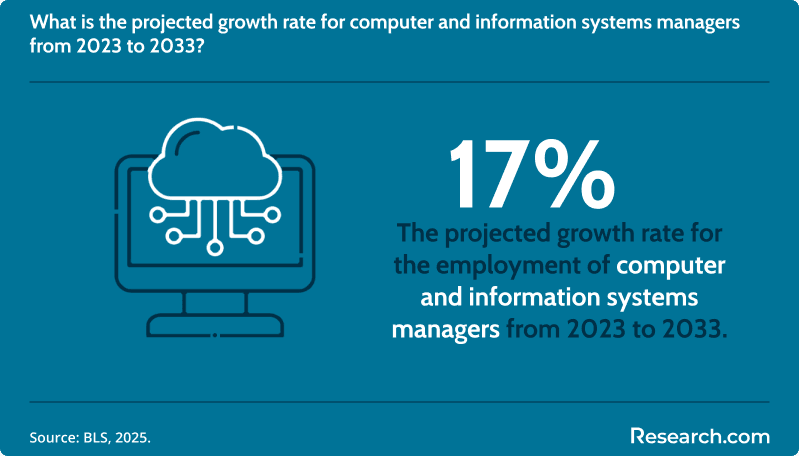
For broader context, the demand for computer and information systems managers is projected to grow by 17% between 2023 and 2033, which is much faster than the average for all occupations. About 54,700 openings for computer and information systems managers are projected each year, on average, over the decade. Many openings are expected to result from workers transferring to other occupations or leaving the labor force.
Worldwide technology investment is also part of the backdrop for IT hiring. Gartner forecasts worldwide IT spending to grow 9.3% in 2025, reflecting continued business reliance on digital systems, cloud platforms, software, cybersecurity, and data infrastructure. However, spending growth does not guarantee a job for any individual graduate; employability still depends on skill depth and job-search execution.
The chart below shows the percent change in employment among computer and information systems managers.
What Professionals Say About Online IT Training Bootcamps
- : "Online study gave me the flexibility I needed to keep working while learning to code. Within six months of finishing the bootcamp, I accepted a junior developer position and increased my salary by 20%. The biggest benefit was the amount of practical work I could show employers. — Simon"
- : "I was unsure about learning online at first, but the organized lessons and student community helped me stay on track. Being able to revisit difficult topics at my own pace made the move into cybersecurity feel more manageable, and the job search felt less intimidating once I had stronger technical skills. — Marky"
- : "The bootcamp helped me create a project portfolio that demonstrated my data analytics skills. Studying remotely also connected me with instructors and classmates from different backgrounds, which made the experience more useful and engaging. I now work in a field I genuinely enjoy. — Grace"
Is an Online IT Training Bootcamp a Good Alternative to a Fast Computer Science Degree?
An online IT bootcamp can be a practical alternative to a degree when your goal is rapid, job-focused skill development in a specific area such as web development, cybersecurity, cloud, or data analytics. It is usually shorter and more applied than a degree. However, it does not provide the same breadth in theory, mathematics, algorithms, systems, general education, or long-term academic credentialing that a computer science degree can offer.
A bootcamp may make more sense if you already have a degree, need to upskill quickly, want a portfolio, or are targeting roles where demonstrable skills matter more than a specific academic credential. A degree may be better if you want a deeper foundation, plan to pursue advanced study, need broader eligibility for certain employers, or want a credential with long-term academic transfer value. If you are weighing both options, compare bootcamps with accelerated computer science degree programs.
| Option | Strengths | Limitations | Best for |
| Online IT bootcamp | Shorter timeline, applied projects, career-focused curriculum, flexible formats | May not carry academic credit, can vary widely in quality, does not guarantee employment | Learners who need targeted skills for a specific technical role |
| Fast computer science degree | Broader academic foundation, stronger theoretical coverage, recognized degree credential | Usually requires more time, more coursework, and broader academic commitments | Learners seeking long-term credential value and deeper computing knowledge |
References
- Computer and Information Systems Managers. (2025, April 18). Bureau of Labor Statistics. https://www.bls.gov/ooh/management/computer-and-information-systems-managers.htm#tab-6
- Cybersecurity salary. (2025). ZipRecruiter. Retrieved July 29, 2025, from https://www.ziprecruiter.com/Salaries/Cyber-Security-Salary
- Gartner forecasts worldwide IT spending to grow 9.3% in 2025. (2024). Gartner. Retrieved July 29, 2025, from https://www.gartner.com/en/newsroom/press-releases/2024-10-23-gartner-forecasts-worldwide-it-spending-to-grow-nine-point-three-percent-in-2025
- Information Technology (IT) market size - forecast to 2033. (n.d.). https://www.businessresearchinsights.com/market-reports/information-technology-it-market-108885
- Information Technology Professional Demographics and Statistics [2025]: Number of information technology professionals in the US. (2025, January 8). https://www.zippia.com/information-technology-professional-jobs/demographics/
- Software Engineer Salary. (2025). ZipRecruiter. Retrieved July 29, 2025, from https://www.ziprecruiter.com/Salaries/Software-Engineer-Salary
- UX Designer Salary. (2025). ZipRecruiter. Retrieved July 29, 2025, from https://www.ziprecruiter.com/Salaries/Ux-Designer-Salary
Key Insights
- Online IT bootcamps are best used as targeted skills programs, not as guaranteed job-placement products or full substitutes for degrees.
- The right bootcamp depends on your target role. Cybersecurity, software development, cloud, data, UX, and IT support require different curricula and portfolios.
- Program length varies widely: full-time bootcamps often run 10 to 14 weeks, part-time options commonly take 18 to 30 weeks, and self-paced programs may take six to seven months.
- Online IT bootcamp costs often fall between $7,000 and $15,000, but students should compare total cost, financing terms, included services, and refund rules.
- Accreditation should be checked carefully. A university-affiliated bootcamp may not be the same as a credit-bearing degree program.
- Career support matters, but it is not the same as a job guarantee. Strong portfolios, interview preparation, networking, and continued practice remain essential.
- Before enrolling, ask direct questions about instructors, projects, weekly workload, certification preparation, career services, outcomes reporting, and payment obligations.
Other Things You Should Know About Online IT Training Bootcamps
The best online IT training bootcamps in 2027 boast job placement rates ranging from 85% to 95% within six months of graduation. These programs typically partner with tech companies to ensure graduates secure roles in various IT domains, making them a worthwhile investment for individuals seeking tech careers.
When selecting an online IT training bootcamp in 2027, consider factors like curriculum relevancy, instructor expertise, student reviews, job placement support, and cost. Prioritize bootcamps that offer up-to-date skills aligned with industry demand. Additionally, check if they provide career counseling and have a robust alumni network.


