2027 AI, Automation, and the Future of Forensic Science Degree Careers

Co-Founder and Chief Data Scientist
Forensic science students and working analysts now face a practical career question: which parts of the field will AI strengthen, which tasks will automation reduce, and which human skills will still determine career value? The answer matters because AI is no longer limited to experimental tools. Currently, 35% of forensic science labs in the U. S. have begun integrating AI-driven technologies, changing how evidence is screened, prioritized, documented, and reviewed.
This guide explains how AI and automation are reshaping forensic science careers for prospective students, current degree holders, and professionals planning their next move. It identifies the industries adopting AI fastest, the roles most exposed to automation, the work that still depends on human judgment, and the skills, training, and career strategies that can help graduates stay competitive as forensic workflows become more data-driven.
Key Things to Know About AI, Automation, and the Future of Forensic Science Degree Careers
- AI and automation are transforming forensic science jobs by automating repetitive tasks, enabling professionals to focus on complex analysis and critical thinking.
- Employers now prioritize skills in data analytics, machine learning, and digital forensics alongside traditional forensic expertise.
- While automation may reduce some entry-level roles, it encourages specialization and offers advanced career paths focused on technology integration and oversight.
What Forensic Science Industries Are Adopting AI Fastest?
The fastest AI adoption in forensic science is happening where evidence volume is high, time pressure is intense, and digital data is central to investigations. Students should pay attention to these sectors because they are likely to influence hiring expectations, internship options, and the technical skills employers value.
- Law enforcement agencies: Local, state, and federal agencies use AI-supported tools to organize digital evidence, identify patterns across cases, and speed up preliminary review. These systems can help investigators process large data sets, but they also require forensic professionals who understand how to verify AI outputs, document methods, and explain findings clearly.
- Cybersecurity firms: Cybersecurity teams are among the strongest adopters because cybercrime investigations produce massive volumes of logs, files, device records, and network activity. AI can flag suspicious behavior and support incident reconstruction, but analysts still need technical judgment to separate meaningful evidence from false positives.
- Legal and judicial systems: Courts, law firms, and legal support teams increasingly use AI to organize case files, review forensic reports, and manage discovery materials. Forensic science professionals who can communicate the limits of AI-supported evidence may be especially valuable in litigation settings.
Forensic science students should not treat AI as a replacement for foundational science. The stronger career strategy is to combine core forensic training with data literacy, digital evidence handling, and an understanding of how automated systems reach or support conclusions. Students interested in broader leadership or education-focused pathways may also compare specialized fast-track EdD programs if their long-term goals include training, administration, or applied research.
Which Forensic Science Roles Are Most Likely to Be Automated?
The forensic science work most likely to be automated is repetitive, rule-based, high-volume, and heavily dependent on pattern recognition. A 2023 Bureau of Labor Statistics report estimates that up to 25% of forensic science technician tasks may be automated within the next decade, which means students should prepare for a labor market where routine processing matters less than interpretation, validation, and expert communication.
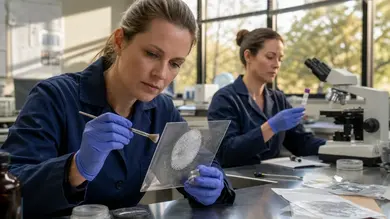
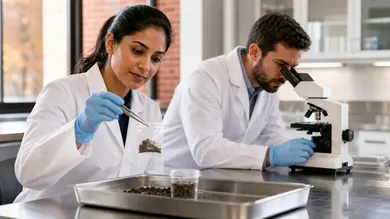
- Trace evidence analysis: AI can assist with sorting, comparing, and identifying patterns in fibers, glass, hair, paint, and other trace materials. Automation may reduce the time spent on initial screening, but it does not eliminate the need for professionals who can evaluate context, confirm results, and recognize when a tool may be producing misleading matches.
- Digital forensics: Automated tools can scan devices, index files, identify suspicious activity, and prioritize evidence for review. This changes the role from manually searching every item to designing sound investigative workflows, validating tool results, and interpreting complex digital behavior.
- Data entry and report generation: Routine documentation, database updates, template-based reporting, and chain-of-custody tracking are strong candidates for automation. Graduates who rely only on clerical or repetitive lab tasks may be more vulnerable than those who can analyze results, write defensible conclusions, and testify effectively.
The main career risk is not that AI will remove all forensic science jobs. The larger risk is that graduates without technical literacy may be limited to shrinking task categories. Students who want broader flexibility may also consider complementary training in management, analytics, or operations through options such as affordable online business colleges, especially if they plan to move into lab supervision, compliance, or administrative roles.
What Parts of Forensic Science Work Cannot Be Replaced by AI?
AI can accelerate evidence processing, but it cannot fully replace the professional judgment required to decide what evidence means, whether a method was appropriate, and how findings should be communicated in a legal setting. A 2023 National Institute of Justice study found that over 60% of forensic experts highlighted the importance of contextual understanding and critical thinking to prevent errors often seen in AI interpretations.
- Contextual judgment: Evidence rarely exists in isolation. A result may look significant until the analyst considers collection conditions, contamination risk, case facts, lab limitations, or alternative explanations. Human judgment is essential for connecting technical findings to the investigative context without overstating certainty.
- Courtroom communication: Judges, attorneys, and juries need clear explanations of methods, limits, assumptions, and confidence. AI cannot take responsibility for expert testimony, respond to cross-examination, or translate technical evidence into language a non-specialist can understand.
- Ethical decision-making: Forensic work involves privacy, bias, disclosure obligations, and the consequences of error. AI tools do not make ethical judgments; professionals must decide how tools should be used and when their outputs should be challenged.
- Creative problem-solving: Unusual cases often do not follow standard workflows. Analysts may need to adjust methods, consult other experts, or develop a new approach when evidence is incomplete, degraded, or contradictory.
- Collaborative coordination: Forensic professionals often work with law enforcement, attorneys, medical examiners, cybersecurity teams, and lab personnel. Strong collaboration helps ensure evidence is collected correctly, interpreted responsibly, and used appropriately.
The safest long-term career position is not “anti-AI.” It is becoming the person who knows when AI is useful, when it is limited, and how to defend conclusions under scrutiny. Professionals seeking stronger leadership, strategy, or organizational decision-making skills may also evaluate an online EMBA if their career path points toward lab management or executive roles.
AI is not only automating parts of forensic work; it is also creating roles that combine forensic science, data analytics, cybersecurity, and legal accountability. Recent data from the World Economic Forum highlights a surge of over 40% in demand for AI-related skills within investigative fields. Graduates who understand both forensic standards and AI-supported analysis may qualify for roles that did not exist in traditional lab structures.
- Forensic data scientist: This role applies data analysis and machine learning methods to identify patterns in large evidence sets. It may involve digital evidence, lab trends, case linkage, or investigative intelligence. Strong statistics, programming, and forensic methodology are important.
- AI forensic analyst: These professionals review evidence generated or filtered by AI tools and assess whether the outputs are reliable, explainable, and appropriate for the case. The role requires skepticism, documentation discipline, and knowledge of admissibility concerns.
- Cybercrime intelligence expert: AI-supported systems can monitor threats, detect suspicious patterns, and help anticipate cyberattacks. Professionals in this area combine digital forensics, threat intelligence, and investigative analysis.
- Digital evidence automation specialist: This specialist helps design, test, and manage automated workflows for collecting, processing, and organizing digital evidence. The work can reduce backlogs, but it requires careful validation so speed does not compromise accuracy.
- Ethics and compliance officer for AI forensics: As AI use grows, organizations need professionals who can evaluate privacy, bias, civil rights, documentation, and legal risks. This role is especially relevant where forensic tools influence criminal investigations or court proceedings.
These career paths reward interdisciplinary preparation. A forensic science graduate does not need to become a full-time software engineer to benefit from AI, but understanding data quality, model limitations, validation, bias, and documentation can distinguish a candidate from applicants with only traditional lab training.
Forensic science graduates need enough AI fluency to use automated tools responsibly, challenge questionable outputs, and explain how technology supports their conclusions. Industry analyses predict a growth exceeding 30% in AI integration within forensic settings over the next five years, so graduates should build skills that make them adaptable rather than dependent on a single tool or platform.
- Data interpretation: AI tools often produce scores, rankings, alerts, clusters, or probability-based outputs. Graduates must know how to interpret these results in context and avoid treating machine-generated findings as automatic conclusions.
- Programming ability: Python and similar tools can help forensic professionals clean data, automate repetitive analysis, review logs, and understand how technical systems work. Not every role requires advanced coding, but basic programming literacy can improve communication with data and cybersecurity teams.
- Machine learning insight: Graduates should understand the basics of training data, model performance, bias, false positives, and validation. This knowledge helps them evaluate whether an AI tool is appropriate for a specific forensic task.
- Analytical judgment: AI can narrow a search or suggest a pattern, but the professional must decide whether the result is meaningful. Strong analysts ask what the tool may have missed, what assumptions shaped the output, and what independent checks are needed.
- Forensic expertise: Core forensic knowledge remains the foundation. Evidence handling, chain of custody, lab protocols, scientific reasoning, quality control, and courtroom standards determine whether AI-supported work is defensible.
One forensic science degree holder described the transition this way: “The learning curve was steep-I remember feeling uncertain about trusting the automated outputs at first.” He added, “It took time to combine my traditional forensic methods with new AI insights, but that blend ultimately improved my case assessments.” His experience reflects a common reality: AI becomes more useful when professionals understand both the technology and the forensic principles that constrain its use.

Some forensic science programs are adding AI-relevant training, but coverage is uneven. Recent data shows that around 40% of forensic science curricula now include AI concepts and data analytics. Prospective students should review course requirements carefully instead of assuming every program has modernized its curriculum.
- Coursework on machine learning: Programs with stronger AI preparation may introduce machine learning concepts, pattern recognition, and automated analysis in forensic contexts. Students should look for applied assignments rather than only broad lectures about emerging technology.
- Data science integration: Useful programs often include statistics, data management, database work, or analytical software. These skills help graduates understand the large and complex data sets produced by digital evidence tools, lab instruments, and automated workflows.
- Hands-on simulation labs: Simulation software, virtual labs, and tool-based exercises can help students practice with AI-supported forensic processes before entering the workplace. Practical exposure is especially valuable because employers often want graduates who can learn unfamiliar systems quickly.
- Limited AI coverage in some curricula: Many programs still focus mainly on traditional forensic science. That foundation is important, but students may need electives, certificates, internships, or independent training to close gaps in AI, cybersecurity, programming, or data analysis.
Before enrolling, students should ask specific questions: Which courses include data analytics or AI-supported forensic tools? Are digital forensics and cybersecurity covered? Do students complete projects using real or simulated evidence data? Are faculty active in current forensic technology? The answers can reveal whether a program prepares graduates for today’s lab environment or mainly for older workflows.
Certifications and short-form training can help forensic science graduates add AI, data, and cybersecurity skills without starting a new degree. The best option depends on the target role: lab automation, digital forensics, cybercrime investigation, data analysis, or forensic management.
- Certified Artificial Intelligence Practitioner (CAIP): This credential can provide a structured introduction to AI concepts, machine learning, and data processing. It may be useful for graduates who want a formal way to demonstrate AI literacy.
- Data science and machine learning bootcamps: Bootcamps can build practical skills in data cleaning, modeling, visualization, and algorithmic thinking. For forensic science graduates, the value is strongest when projects connect to evidence analysis, pattern recognition, or digital investigations.
- Digital forensics and cybersecurity certifications, such as Certified Cyber Forensics Professional - CCFP: These credentials can support roles involving cybercrime, device analysis, incident response, and digital evidence. They are especially relevant as AI becomes more common in threat detection and evidence triage.
- Programming courses in Python or R: Programming training helps graduates automate routine work, review data more efficiently, and communicate better with technical teams. Python is often useful for scripting and data analysis, while R can support statistics-heavy tasks.
When asked how training helped her adapt to AI in forensic science, one graduate said, “Initially, the rapid changes in technology felt overwhelming-it wasn't just about understanding the basics but integrating AI into my investigative approach.”
She described completing a machine learning bootcamp that required her to apply algorithms to case-style problems: “It was tough at first, learning to trust AI outputs while applying my forensic judgment. But over time, this training made me more confident in handling digital evidence and interpreting complex data patterns.” Her experience shows why continuing education matters: the goal is not blind trust in automation, but better professional control over how automated tools are used.
AI can improve salary potential in forensic science when it gives professionals skills that employers cannot easily find. Studies show forensic scientists with AI expertise can earn up to 15% more than their counterparts without such skills, reflecting the value of technical capability in a field where digital evidence, automation, and data-heavy investigations are expanding.
- Growing demand for technical expertise: Employers may pay more for professionals who can use AI-supported tools, interpret complex data, and evaluate automated outputs without compromising forensic standards.
- Automation of routine tasks: As repetitive evidence processing and documentation become more automated, pay growth may concentrate in roles that require oversight, validation, quality control, and expert interpretation.
- Emergence of new roles: Positions such as forensic data analyst, cybercrime investigator, and AI-focused forensic specialist can command stronger compensation because they blend scientific, technical, and investigative skills.
- Performance-linked pay: AI can help experienced professionals manage larger or more complex caseloads. In some workplaces, improved productivity, accuracy, or leadership in technology adoption may support raises or advancement.
- Continuous learning rewards: Forensic scientists who keep their AI, cybersecurity, programming, or data skills current may be better positioned for promotions, specialized assignments, or leadership roles.
Salary outcomes still depend on employer type, location, role level, education, budget constraints, and public versus private sector hiring. AI skills are not a guaranteed pay increase, but they can make a candidate more competitive for higher-responsibility roles.
AI is creating the most demand in forensic areas where evidence is digital, large-scale, time-sensitive, or difficult to analyze manually. With cybercrime-related investigations increasing by 50% annually according to the FBI, graduates who can combine forensic science with AI-supported analysis may find stronger opportunities in technology-heavy investigative settings.
- Digital forensics: AI can help process large collections of files, messages, images, logs, and device data. Demand is growing for graduates who can manage automated tools while preserving evidence integrity and explaining investigative decisions.
- Biometric analysis: Facial recognition, fingerprint systems, and other biometric technologies increasingly rely on AI-supported matching and comparison. Professionals need to understand both the scientific basis of biometric evidence and the limitations of algorithmic outputs.
- Crime scene reconstruction: AI-supported modeling and simulation can help investigators test scenarios and visualize events. Graduates with skills in forensic methods, data interpretation, and reconstruction technology may find expanding options in this area.
- Cybersecurity forensics: AI supports malware detection, phishing analysis, intrusion review, and threat pattern identification. This is one of the clearest growth areas for graduates who want to work at the intersection of forensic science and cyber investigations.
- Forensic laboratory automation: AI-driven automation can support DNA sequencing, toxicology testing, and high-volume lab processes. Graduates who understand both lab science and automated quality controls may be better prepared for modern forensic laboratories.
Students comparing education pathways should prioritize programs that build both forensic fundamentals and technical adaptability. Flexible and cost-conscious learners may also review options such as the cheapest online bachelor's degree programs while checking whether any program includes relevant science prerequisites, lab requirements, digital forensics, statistics, or data-focused coursework.
Students should plan for a forensic science career by building a strong scientific foundation first, then adding AI, data, and digital evidence skills that expand their options. The best strategy is not to chase every new tool, but to become the kind of professional who can evaluate technology responsibly and apply it to real evidence problems.
- Build data literacy early: Students should become comfortable with statistics, databases, spreadsheets, visualization, and evidence data sets. Data literacy makes it easier to work with AI-supported systems and to question their outputs.
- Add interdisciplinary knowledge: Coursework or training in computer science, cybersecurity, statistics, and machine learning can strengthen a forensic science degree. Even introductory knowledge can help graduates communicate with technical teams and understand automated workflows.
- Develop ethical judgment: AI can introduce bias, privacy concerns, and overconfidence in machine-generated results. Students should learn to document methods, disclose limitations, and avoid overstating conclusions.
- Seek practical experience: Internships, lab work, simulations, research projects, and digital forensics exercises help students connect theory to practice. Employers value graduates who have handled realistic evidence problems, not just read about tools.
- Commit to continuous learning: Forensic technology changes quickly. Graduates should expect to update their skills through certifications, vendor training, workshops, graduate coursework, or employer-sponsored professional development.
- Strengthen collaboration and communication: AI-supported forensic work often involves multidisciplinary teams. Students should practice explaining technical findings to nontechnical audiences, because communication remains essential in investigations and court settings.
A practical career plan might include a forensic science major or related science degree, electives in statistics or computer science, an internship involving digital evidence or lab technology, and targeted certifications after graduation. Students exploring additional credentials can review online certifications that may pay well and compare them against their intended forensic specialty.
What Graduates Say About AI, Automation, and the Future of Forensic Science Degree Careers
- Derrick: "My forensic science degree gave me the scientific foundation I needed before I started working with AI and automation in crime scene analysis. The problem-solving skills I built in school helped me understand the algorithms now used to support evidence processing. AI has made parts of my work faster and more precise, and it has opened career paths I did not expect when I first entered the field."
- Ariana: "The critical thinking and data interpretation skills from my forensic science program became even more important once I moved into roles supported by AI-driven tools. Automation changed many routine tasks, but it also gave me more time to focus on complex investigations and higher-level decisions. For me, the future of forensic science looks strongest for people who can combine technical tools with professional judgment."
- Elise: "Working in forensic science today means learning how advanced AI applications support traditional methods without replacing the responsibility of the analyst. My degree helped me understand the technical side of machine learning models used in forensic data analysis, and that knowledge is now part of my daily work. AI has strengthened my career outlook because it rewards adaptability, careful interpretation, and leadership in forensic innovation."
Other Things You Should Know About Forensic Science Degrees
Students should learn Python, Excel, SQL, and basic forensic laboratory information management systems used for evidence tracking and chain-of-custody records. Programs also value familiarity with image analysis, statistical software, and digital evidence platforms because automated labs still require human review and documentation.
In 2027, forensic science programs are incorporating AI and automation modules, focusing on data analysis, machine learning, and digital forensics. Students are required to complete courses in AI ethics and technology management to adapt to evolving industry demands.
- AI in Forensic Science Education: VR & Machine Learning https://www.crimesceneinvestigatoredu.org/blog/how-ai-is-revolutionizing-crime-scene-investigation-education/
- Artificial Intelligence in Forensic Sciences: A Systematic Review of Past and Current Applications and Future Perspectives https://www.cureus.com/articles/294368-artificial-intelligence-in-forensic-sciences-a-systematic-review-of-past-and-current-applications-and-future-perspectives
- Forensic Science Technology: Shaping the Future of Investigation https://www.stevenson.edu/online/about-us/news/forensic-science-technology-shaping-the-future-of-investigation/
- What is Forensic AI? Automation in Digital Forensics https://www.forensicscolleges.com/blog/automation-in-digital-forensics
- The Impact of AI on the Labour Market https://institute.global/insights/economic-prosperity/the-impact-of-ai-on-the-labour-market
- Harnessing the AI Power in Forensic Voice and Speech Analysis https://forensicscienceacademy.org/f/harnessing-the-ai-power-in-forensic-voice-and-speech-analysis
- How AI is Shaping the Future of Forensic Investigations - Innefu Labs https://innefu.com/how-ai-is-shaping-the-future-of-forensic-investigations/
- AI-Powered Digital Forensics & SOC Analyst https://lset.uk/course/ai-powered-digital-forensics-soc-analyst/
- 6 New AI Professions: The Rise of Unexpected Roles Created by Artificial Intelligence https://www.thenocodeguy.com/en/blog/6-new-ai-professions-the-rise-of-unexpected-roles-created-by-artificial-intellig/
- Forensic Scientist https://www.ailaborindex.com/occupations/forensic-scientist