2027 Best Online Forensic Science Degree Programs at Nonprofit Universities

Co-Founder and Chief Data Scientist
Choosing an online forensic science degree means balancing scientific training with cost, scheduling, and career requirements. The U.S. Bureau of Labor Statistics projects 14% employment growth for forensic science technicians from 2023 to 2033, faster than the average for all occupations.
This guide helps prospective students compare nonprofit universities, verify quality, estimate total costs, and select a degree level that supports laboratory, investigation, or graduate-study goals.
Key Things You Should Know
- Choose an institutionally accredited nonprofit university, then confirm that its online curriculum includes the laboratory sciences, evidence procedures, and experiential components needed for your target role.
- Forensic science technician employment is projected to grow 14% from 2023 to 2033; however, employers may prefer specific science coursework, laboratory experience, and local law-enforcement qualifications.
- Compare total cost, not tuition alone: include technology fees, laboratory kits, travel for residencies, transfer-credit limits, and the time needed to complete 120 bachelor's credits or a 30- to 36-credit master's program.
What Makes an Online Forensic Science Degree Program at a Nonprofit University Different?
A nonprofit university reinvests revenue into its educational mission rather than distributing profits to owners or shareholders. Public universities and many private universities are nonprofit institutions, but nonprofit status alone does not establish program quality, affordability, or career value. Students should assess the individual degree's accreditation, science curriculum, faculty expertise, student services, and required practical experiences.
Online forensic science programs commonly lead to an associate, bachelor's, or master's degree. A bachelor's degree is generally the most versatile starting point for entry-level laboratory and investigator-adjacent roles; a master's degree can suit students seeking advanced analytical, digital, or management-focused work. An associate degree may be useful for transfer or technician pathways, but it can be less competitive for science-intensive positions.
Public nonprofit institutions often offer lower tuition for in-state residents, while private nonprofit institutions may use a single tuition rate and provide institutional scholarships. Neither model is automatically better. A working student who needs predictable online terms may prefer a private nonprofit program, while a resident able to attend laboratory sessions locally may find stronger value at a public university.
Healthcare-minded students comparing science-based career pathways can also review online nursing degree programs, but nursing and forensic science have different clinical, licensing, and professional expectations.
| Program level | Typical purpose | Common fit | Important caution |
| Associate | Foundation coursework or transfer preparation | Students starting college or exploring criminal justice support roles | May not include enough chemistry or biology for laboratory employment |
| Bachelor's | Broad scientific and forensic preparation | Students pursuing entry-level forensic, laboratory, or investigation-related work | May require in-person labs, internships, or field experiences |
| Master's | Advanced specialization or career advancement | Professionals with an appropriate bachelor's background | Does not replace foundational science prerequisites |
| Doctoral | Research, teaching, or highly specialized scientific work | Students pursuing academic or research careers | Usually involves substantial research and is rarely fully online |
The comparison shows why degree level should follow career requirements rather than a school's marketing label. Ask employers in your intended field whether they expect a chemistry, biology, criminal justice, digital forensics, or general forensic science background.
How Can Students Verify Accreditation for an Online Forensic Science Degree at a Nonprofit University?
Start with institutional accreditation. A legitimate university should identify its accreditor and accreditation status clearly, and students should independently confirm the information through the U.S. Department of Education or the Council for Higher Education Accreditation directories. Institutional accreditation affects federal aid eligibility, transferability, and the credibility of the degree.
Programmatic accreditation is separate. The Forensic Science Education Programs Accreditation Commission accredits qualifying forensic science programs, but not every strong online program holds this specialized accreditation, and availability varies by degree level and delivery format. If a school claims programmatic accreditation, verify the exact degree, campus, and accreditation period; do not assume it covers every online concentration.
Use this verification sequence before applying. It prevents a frequent mistake: treating institutional accreditation as proof that a specific program has specialized scientific approval.
- Find the university's legal name and institutional accreditor on its official website.
- Confirm current accreditation status in an independent federal or recognized accreditor directory.
- Check whether the exact forensic science degree has specialized accreditation or a documented alignment with professional standards.
- Review state authorization for your residence and ask whether online students may complete required practical work locally.
- Save written responses about accreditation, transfer credit, and career-specific eligibility before paying a deposit.
Red flags include vague statements such as "internationally recognized," missing accreditor names, unverified transfer promises, and a curriculum with little chemistry, biology, physics, statistics, or laboratory methodology. Accreditation is necessary, but readers should still examine completion outcomes, faculty qualifications, and course content.
How Rigorous Are Online Forensic Science Degree Programs at Nonprofit Universities?
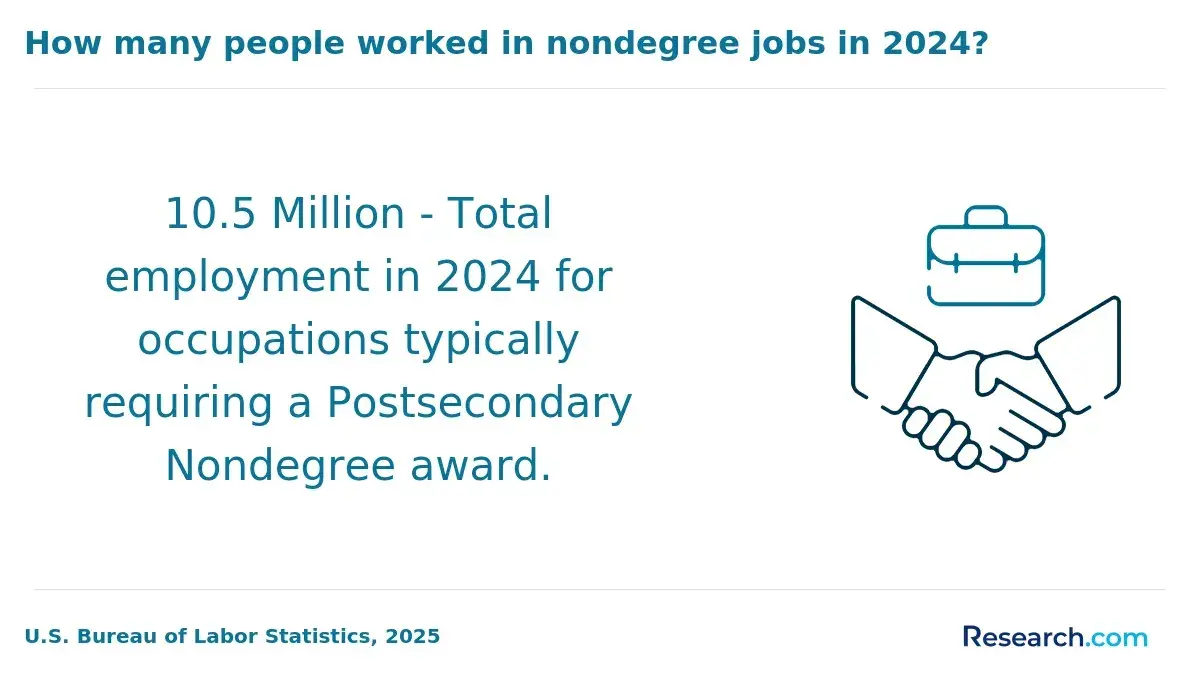
A rigorous online forensic science degree uses the same learning outcomes expected in an in-person program, but it delivers lectures, discussions, simulations, assessments, and advising through a digital platform. Academic rigor depends on the syllabus, faculty feedback, laboratory design, assessment integrity, and practical application - not simply on whether classes meet online.
Strong bachelor's programs commonly include general biology, general and organic chemistry, physics, statistics, criminalistics, forensic biology, toxicology, evidence handling, ethics, and scientific writing. Digital forensics programs may emphasize networks, operating systems, cybersecurity, data recovery, and legal procedure instead. A criminal justice degree with a few forensic courses can be useful for some careers, but it is not interchangeable with a laboratory-science degree.
Students should examine how the program teaches hands-on skills. The following features distinguish a curriculum designed for professional preparation from one that is primarily survey-based.
- Required laboratory courses with clear information about whether they use home kits, virtual simulations, approved local facilities, or campus residencies
- Instruction in chain of custody, documentation, quality assurance, ethics, and courtroom communication
- Faculty members with relevant scientific, laboratory, law-enforcement, or digital-investigation experience
- Capstone projects, internships, practicums, or supervised research that create evidence of applied skills
- Assessments that require analysis, reports, and case-based reasoning rather than only multiple-choice quizzes
Online learning can work well for self-directed students who can reserve regular study time and participate in required live sessions. Students who learn best through frequent bench work, who lack access to local facilities, or who need immediate hands-on mentoring may be better served by a hybrid or campus-based program. For comparison, clinical fields have different placement requirements; some registered nurses pursue an RN to BSN with no clinical hours because they already hold licensure, an option that does not translate directly to forensic laboratory training.
How Much Does an Online Forensic Science Degree Cost at a Nonprofit University?
Costs vary more by residency, credit load, transfer credit, and required practical components than by nonprofit status. Students should request a written estimate for the entire degree, including institutional fees, course materials, proctoring, laboratory kits, travel, background checks, and any internship-related expenses. A low advertised per-credit rate can become less economical if the program accepts few transfer credits or requires repeated campus travel.
The College Board reports that average published tuition and fees for 2024-25 were $11,610 for in-state students at public four-year institutions and $43,350 at private nonprofit four-year institutions. These national figures are not forensic-science program prices or net prices, but they illustrate why in-state public options often deserve an early comparison. Grants and scholarships can materially change the final price, especially at private nonprofit universities.
| Cost factor | Why it changes the total | What to request |
| Tuition per credit | Rates may differ by residency, degree level, and online status | Rate for every required credit |
| Transfer credits | Accepted prior coursework can reduce both cost and completion time | Preliminary transfer evaluation |
| Laboratory requirements | Kits, local labs, or residencies may create additional charges | Itemized practical-learning estimate |
| Mandatory fees | Technology, graduation, proctoring, and distance-learning fees may not appear in tuition | Full fee schedule |
| Time to completion | Longer enrollment can increase fees and delay earnings | Term-by-term degree plan |
Compare net cost after gift aid rather than assuming the lowest tuition creates the best return. A higher-priced program may be worth consideration if it accepts substantially more transfer credit, includes meaningful laboratory access, or better matches a required specialization. Conversely, do not borrow more simply for a school name when a lower-cost accredited program meets the same employer and graduate-school prerequisites.
What Financial Aid Is Available for an Online Forensic Science Degree at a Nonprofit University?
Eligible online students at accredited nonprofit universities may use federal student aid when they meet program and enrollment requirements. Completing the Free Application for Federal Student Aid is the practical first step because it can determine eligibility for Pell Grants, Direct Loans, work-study opportunities, and many state or institutional awards. Aid availability depends on individual circumstances and the school's participation, not on online delivery alone.
Students should prioritize gift aid and employer benefits before borrowing. Forensic science students may find institutional scholarships based on academic performance, transfer status, military affiliation, public-service interests, or STEM study. Employees of public agencies, laboratories, hospitals, and technology organizations may also have tuition-assistance benefits, although approval rules and reimbursement limits vary.
Before accepting loans, compare the aid offers using the same enrollment assumptions. The most useful questions to ask a financial-aid office are:
- Which scholarships are available specifically to online, transfer, part-time, or out-of-state students?
- Will laboratory fees, required travel, and equipment be included in the cost of attendance?
- How will dropping from full-time to part-time enrollment affect grants, loans, and completion time?
- Can employer tuition assistance be combined with institutional scholarships?
- What is the estimated annual borrowing amount and the school's policy for satisfactory academic progress?
Avoid accepting the maximum offered loan amount without a term-by-term budget. Federal aid can be valuable, but borrowing should be tied to a realistic completion plan and a career path with requirements the degree actually satisfies.
How Flexible Are Online Forensic Science Degree Programs at Nonprofit Universities?
"Online" does not always mean fully asynchronous or available from every state. Programs may combine recorded coursework with live discussions, timed exams, group projects, local laboratory work, internships, or short campus residencies. Flexibility is strongest when a school publishes a predictable academic calendar, course rotation, attendance rules, and practical requirements before enrollment.
Asynchronous courses suit many working adults because students can complete weekly work around job and family obligations. Synchronous sessions can provide real-time faculty access and collaboration but require attendance at scheduled times. Accelerated terms may shorten the calendar but increase weekly workload; traditional 14- to 16-week terms can be easier to manage alongside full-time employment.
| Format | Best for | Trade-off to investigate |
| Fully asynchronous | Students with changing work schedules | May require strong self-management and still have timed assessments |
| Mostly online with live meetings | Students wanting regular interaction | Meeting times may conflict with work or time zones |
| Hybrid with residencies | Students needing structured practical instruction | Travel, lodging, and leave from work add cost |
| Part-time pathway | Working adults and caregivers | Longer completion time and possible aid implications |
| Accelerated pathway | Students with ample weekly study time | Fast pace may be difficult for lab-heavy science courses |
Students considering healthcare programs should not assume online flexibility means identical experiential requirements. For example, 1 year radiology tech programs online may still involve clinical education, just as forensic programs may require supervised laboratory or field-based work.
What Student Support Services Do Nonprofit Universities Provide for Online Forensic Science Degree Students?
Online students need more than technical support. The most useful nonprofit university services include academic advising, library access, tutoring in chemistry and statistics, writing support, disability services, career counseling, financial-aid guidance, and responsive help with online learning systems. Availability can differ between campus-based and online students, so confirm access rather than relying on a general services page.
Forensic science students should specifically ask whether the university offers laboratory-preparation resources, internship assistance, resume feedback for scientific roles, mock interviews, and access to faculty office hours. Career support is especially important because job titles and hiring standards vary across crime laboratories, police agencies, private laboratories, federal employers, digital investigation firms, and related scientific employers.
A good support system also helps students make informed pivots. Someone interested in advanced practice nursing, for example, would need program-specific support and clinical planning for PMHNP programs; similarly, forensic students should seek advising tailored to their desired specialty rather than general career advice alone.
Ask current students or admissions staff how quickly online learners receive responses, whether tutoring is available outside business hours, and whether career services can review a forensic-science-focused resume. These operational details often matter more than a broad promise of "student success."
Do Online Forensic Science Degree Programs at Nonprofit Universities Prepare Graduates for In-Demand Careers?
An online forensic science degree can prepare graduates for relevant careers when the curriculum matches the scientific and practical requirements of the intended employer. The Bureau of Labor Statistics reports a 2023 median annual wage of $64,940 for forensic science technicians and projects 14% growth from 2023 to 2033. This occupation-level figure is a national benchmark, not a starting-salary promise; pay and hiring requirements differ by location, employer, experience, education, and specialty.
Forensic science technicians may collect, preserve, and analyze evidence; document findings; operate laboratory equipment; and sometimes provide courtroom testimony. Common related paths include crime laboratory analyst, forensic biology technician, toxicology assistant, evidence technician, digital forensic examiner, quality-assurance specialist, and crime-scene investigator. Some positions require a bachelor's degree in natural science, while others prioritize criminal justice, law-enforcement experience, or specialized technical skills.
Students should map courses to a target occupation before enrolling. For example, laboratory analysis usually requires extensive chemistry or biology; digital forensics requires computing and cybersecurity skills; and crime-scene work may involve agency-specific hiring standards, physical requirements, background investigations, or academy training.
Artificial intelligence and automation are increasing the importance of data literacy, documentation, validation, cybersecurity awareness, and ethical judgment in many technical fields. They do not eliminate the need for trained professionals who can preserve evidence, explain methods, assess limitations, and follow legal procedures. Review whether a program addresses emerging tools without neglecting foundational science.
Can an Online Forensic Science Degree From a Nonprofit University Prepare Students for Graduate School?
Yes, an online bachelor's degree from an appropriately accredited nonprofit university can support graduate-school applications when it includes the prerequisite coursework, academic performance, research exposure, and faculty recommendations required by the receiving program. Graduate admissions committees typically evaluate the substance of the transcript and evidence of readiness, not online delivery alone.
Students considering a forensic science master's, chemistry, biology, criminal justice, cybersecurity, public health, or related graduate program should check prerequisites early. Many science-oriented programs expect laboratory coursework in chemistry, biology, statistics, calculus, or physics. An online degree that uses virtual labs may be academically valid but may not satisfy every graduate program's expectations for hands-on laboratory credits.
Build graduate-school readiness deliberately. Seek research opportunities, complete a capstone that demonstrates scientific writing, retain syllabi for laboratory courses, and cultivate relationships with faculty who can write detailed recommendations. Students interested in research-intensive nursing careers can compare the different pathway represented by best online nursing PhD programs; doctoral preparation is discipline-specific and should not be treated as interchangeable across fields.
A master's degree is not automatically necessary for entry-level forensic work. It makes the most sense when it adds a clearly relevant specialization, meets an employer preference, supports a career transition, or prepares the student for research and leadership responsibilities.
How Should Students Compare the Best Online Forensic Science Degree Programs at Nonprofit Universities?
The best program is the one that meets your career requirements at a manageable total cost and schedule. Create a shortlist of institutionally accredited nonprofit universities, then compare the exact degree - not just the university's reputation or nonprofit status. Eliminate programs that cannot serve students in your state, lack needed prerequisites, or require practical experiences you cannot complete.
This comparison framework focuses attention on the factors most likely to affect academic fit, affordability, and career preparation.
| Comparison category | Strong evidence | Potential red flag |
| Accreditation | Current institutional accreditation and transparent program status | Unclear accreditor or unsupported specialized-accreditation claim |
| Curriculum | Published sequence of science, forensic, ethics, and applied courses | Few laboratory sciences for a laboratory-career goal |
| Total cost | Written estimate including all fees and practical requirements | Only a per-credit tuition figure is provided |
| Flexibility | Clear information on live sessions, deadlines, residencies, and course rotation | "100% online" without details about practical work |
| Transfer policy | Individual transcript review and published transfer limits | Vague promise that all credits will transfer |
| Career alignment | Internship support, relevant faculty, and courses matching target roles | Generic job claims with no role-specific preparation |
After comparing programs, take these final steps before committing. They will help you choose based on documented facts rather than marketing language.
- Identify two or three target jobs and review their education, science-course, certification, and background requirements.
- Request degree plans and total-cost estimates from each shortlisted university.
- Confirm accreditation, state authorization, laboratory format, and transfer credit in writing.
- Compare financial-aid offers using the same number of credits and expected completion date.
- Choose the program that best matches your target career, academic preparation, budget, and available weekly study time.
Common mistakes include choosing solely by tuition, assuming every online course is self-paced, overlooking residency costs, and selecting a criminal justice curriculum when an employer expects substantial laboratory science. A careful comparison can prevent expensive course changes later.
Other Things You Should Know About Forensic Science
No. Criminal justice focuses on legal systems, policing, courts, and corrections. Forensic science applies scientific methods to evidence. Some careers combine both areas, but laboratory positions commonly require more chemistry, biology, or analytical-science coursework than a general criminal justice degree provides.
There is no single nationwide license required for all forensic science careers. Requirements vary by employer, specialty, and state. Some roles may value professional certification, while law-enforcement positions can involve separate hiring, background, and training requirements.
Some introductory activities can use kits or simulations, but schools may require campus residencies, approved local laboratories, or supervised experiences for certain skills. Confirm the format for every required lab before enrolling.
Useful skills include careful documentation, scientific reasoning, statistics, laboratory safety, report writing, ethical judgment, attention to detail, and clear communication. Digital forensic pathways also require computing, cybersecurity, and data-handling skills.
References
- Compare Forensic Scientist Schools & Training Programs https://www.criminaljusticeprograms.com/specialty/forensic-science-degrees/
- Forensic Science | Tiffin University https://www.tiffin.edu/academics/school-of-science-tech-health/forensic-science/
- Becoming a Forensic Scientist in Texas (Career Guide) https://www.allcriminaljusticeschools.com/forensics/texas/
- How To Become a Forensic Scientist: Requirements & Steps https://www.forensicscolleges.com/blog/htb/how-to-become-forensic-scientist
- Online Forensic Science Degree https://www.aiuniv.edu/degrees/criminal-justice/bachelors-forensic-science
- 2025 Most Popular Online Forensic Science Degrees https://www.onlineu.com/degrees/forensic-science
- Forensic Science Degree Programs https://www.criminaljusticedegreeschools.com/degrees/forensic-science-degree/