2027 Are There Any One-Year Online Forensic Science Degree Programs Worth Considering?

Co-Founder and Chief Data Scientist
If you want to move into forensic science quickly, the central question is not just whether a program is online or accelerated. It is whether the credential will actually qualify you for the work you want to do. Forensic science is evidence-driven, technical, and often tied to laboratory standards, court procedures, and employer requirements. That makes program length, accreditation, hands-on training, and transfer credit policies especially important.
A true one-year online forensic science degree is difficult to find because full degrees usually require far more coursework, lab preparation, and applied learning than can reasonably fit into twelve months. However, shorter online options do exist, especially certificates, diplomas, graduate certificates, and accelerated pathways for students who already have college credit or professional experience.
This guide explains what is realistic, which types of fast online forensic science programs are available, what they can and cannot do for your career, how to evaluate quality, and what to expect in terms of admissions, cost, coursework, financial aid, and outcomes.
Key Points About One-Year Online Forensic Science Degree Programs
- One-year online forensic science degrees often prioritize theoretical knowledge over hands-on lab work, which is critical compared to traditional programs emphasizing practical skills.
- These accelerated programs cater to working professionals seeking swift certification updates or foundational knowledge rather than comprehensive forensic training.
- Students should verify program accreditation and availability of virtual labs, as 35% of forensic employers prefer candidates with extensive practical experience.
Is It Feasible to Finish a Forensic Science Degree in One Year?
In most cases, no. Completing a full forensic science degree entirely online in one year is generally not realistic, especially at the bachelor's level. Bachelor's programs typically require 120 to 124 credit hours and take four to five years full-time because students must complete science foundations, forensic coursework, lab-based learning, electives, and often internships or capstone projects.
The more realistic one-year options are usually not full degrees. They are graduate certificates, career diplomas, or focused professional credentials designed to build targeted forensic knowledge. For example, the University of Florida offers an online graduate certificate in forensic science that may be finished in about one year, while self-paced diplomas like Ashworth College's can take between four and twelve months.
These shorter programs can be useful, but they serve a different purpose than a degree. A certificate may help a working professional add forensic knowledge, explore the field, or strengthen an application for a later degree. It typically does not replace the broader science preparation, supervised practice, or degree requirements that some forensic employers may expect.
Before choosing a one-year option, ask three practical questions:
- What credential will I earn? A certificate, diploma, bachelor's degree, and master's degree are not interchangeable.
- Will it qualify me for the role I want? Laboratory and technical forensic roles may require stronger science coursework than a short online program provides.
- Does it include applied learning? Forensic work depends on evidence handling, documentation, analytical reasoning, and, in many roles, laboratory competence.
Are There Available One-Year Online Forensic Science Degree Programs?
There are currently no accredited one-year online forensic science degree programs in the United States. Online forensic science degrees, including bachelor's and master's programs, usually require two to four years, depending on transfer credits, enrollment intensity, and the number of courses taken each term.
Some programs are flexible or accelerated, but that does not mean they are designed to be completed in one year. Students with substantial transfer credits, prior learning, military training, or professional certifications may shorten the timeline, but finishing a full forensic science degree in twelve months remains uncommon.
If your priority is speed, compare full degrees with shorter credentials. Certificates can be completed faster, but they may not carry the same academic or employment value as a degree. Students still exploring academic direction may also benefit from reviewing different types of college majors before committing to forensic science.
Examples of Faster or Flexible Online Options
| Program | What to Know | One-Year Degree? |
| Arizona State University Online BS in Forensics | This degree requires 120 credits delivered in 7.5-week sessions with multiple start dates annually. The curriculum covers evidence analysis, digital forensics, and virtual reality crime scene simulations. | No. Although the format allows some acceleration, most students need at least two years to finish, even with maximum transfer credits. |
| Purdue University Global BS in Criminal Justice with Crime Scene Investigation (ExcelTrack Option) | This self-paced, competency-based program lets students advance as quickly as they master material. Coursework includes virtual crime labs, evidence processing, and courtroom testimony preparation. | No. Students with prior experience may move faster than usual, but it is not classified as a one-year program. |
| Excelsior University BS in Criminal Justice with Forensic Concentrations | Excelsior's flexible model accepts up to 113 transfer credits and recognizes prior learning, military training, and professional certifications. Specializations focus on crime scene investigation and digital forensics with applied skill development. | Rare. Rapid completion is possible, but finishing within one year is uncommon. |
For a truly one-year credential, students are more likely to find graduate certificates in forensic science or crime scene investigation, such as the University of North Carolina Wilmington's online Crime Scene Investigation Certificate. These programs can build relevant skills, but they should not be confused with full degree programs.
Why Consider Taking Up One-Year Online Forensic Science Programs?
One-year online forensic science programs can make sense when you understand what they are best used for. They are most useful for students and professionals who need focused training, not a complete replacement for a full forensic science degree.
These programs often appeal to working adults because they may use asynchronous coursework, allowing students to study around shifts, family responsibilities, or existing careers. They can also help law enforcement personnel, laboratory staff, criminal justice graduates, or science graduates add forensic terminology and methods without committing to a multi-year program immediately.
The strongest reasons to consider a shorter online forensic science credential include:
- Flexibility: Online formats can make forensic education more accessible for students who cannot relocate or attend campus courses regularly.
- Rapid career development: Graduate certificates and focused master's tracks can be completed in about twelve months, giving professionals a way to add targeted skills such as digital forensics or toxicology without a lengthy commitment.
- Professional upskilling: Law enforcement officers, laboratory technicians, and related specialists can use a short program to strengthen forensic knowledge while remaining employed.
- Career exploration: A certificate or diploma can help students test their interest in forensic science before investing in a full degree.
- Specialized credentials for recent graduates: Students who already hold a related degree may use a short program to demonstrate interest in a specific forensic area.
The main advantage is speed. The main trade-off is depth. A one-year credential may help you become more competitive for some roles or future education, but it may not satisfy degree requirements for science-intensive forensic laboratory positions. If your goal is a fast credential with career value, you may also want to compare forensic options with other certifications you can get online that pay well.
What Are the Drawbacks of Pursuing One-Year Online Forensic Science Programs?
The biggest drawback is that a one-year online forensic science program may not provide the depth, laboratory exposure, or credential level needed for certain forensic careers. Forensic science is practical and evidence-based. Students must learn not only concepts but also procedures, documentation standards, analytical limits, and how scientific conclusions may be challenged in legal settings.
Fully one-year online programs in forensic science are rare or unavailable because the discipline often requires extensive practical preparation. Shorter programs can still be valuable, but students should be realistic about what they will and will not gain.
- Heavy workload: Accelerated formats compress reading, assignments, exams, and projects into a shorter schedule. This can be demanding for students balancing work, family, or shift-based employment.
- Limited hands-on training: Virtual labs and simulations can teach concepts, but they may not fully replace in-person practice with instruments, evidence packaging, biological samples, or crime scene documentation.
- Fewer networking opportunities: Short online programs may offer less time to build relationships with faculty, classmates, alumni, and potential employers.
- Credential limitations: A certificate or diploma may not meet employer requirements when a bachelor's or master's degree is expected.
- Less time for internships: The accelerated pace can make it harder to complete field experiences, especially for students already working.
- Self-discipline requirements: Online forensic programs often require strong time management, independent study habits, and comfort with technical platforms.
To reduce these risks, look for programs with clear learning outcomes, access to faculty, realistic workload expectations, career support, and opportunities for applied projects. If a program advertises unusually fast completion, verify exactly what credential is awarded and whether employers or graduate schools are likely to recognize it.
What Are the Eligibility Requirements for One-Year Online Forensic Science Programs?
Eligibility requirements depend on the credential level. A one-year certificate may require only a high school diploma, a bachelor's degree, or previous coursework, depending on whether it is undergraduate or graduate-level. A full bachelor's degree in forensic science is different: because these programs typically require 120-124 credit hours, one-year completion is uncommon unless a student brings in substantial transfer credit.
Accelerated options are more common at the graduate level. For example, Touro University Worldwide offers an MS in Forensic Psychology that can be finished in 12 months by taking two courses each term for six consecutive terms. Students should note, however, that forensic psychology and forensic science are related but distinct fields; forensic psychology focuses more on behavior, legal systems, and psychological assessment, while forensic science is more closely tied to physical evidence and scientific analysis.
Common eligibility requirements include:
- High school diploma or GED: Required for bachelor's degree applicants, although accelerated completion usually depends on substantial prior college credit.
- Transfer credits: Some bachelor's and master's programs allow students to shorten completion time by applying previously earned credits.
- Bachelor's degree with minimum GPA: Master's programs like Oklahoma State University's MS require a bachelor's degree and recommend a GPA of 3.0 or higher.
- No GRE requirement: Programs such as Touro's MS in Forensic Psychology may waive GRE scores, reducing one application barrier.
- Relevant coursework and credit hours: University of Florida's online MS program mandates completing core forensic science courses prior to the final semester, maintaining academic rigor.
- Background checks and professional experience: Because forensic work may involve sensitive evidence, criminal justice agencies, or laboratory environments, many programs require background checks and may value related work experience.
Applicants should read admissions pages carefully rather than assuming all one-year online programs use the same criteria. Confirm whether the program is undergraduate or graduate-level, whether prerequisites are required, whether credits can transfer into a later degree, and whether the credential fits your target job. Students considering advanced study may also find it useful to understand whether can you get a phd without a dissertation applies to their long-term academic plans.
What Should I Look for in One-Year Online Forensic Science Degree Programs?
Because accredited one-year online forensic science degrees are not generally available, the better question is how to evaluate accelerated forensic science credentials. A strong program should be transparent about what it offers, what it does not offer, and which students it is designed to serve.
Start with accreditation. Institutional accreditation matters for credit transfer, financial aid eligibility, and employer recognition. Programmatic accreditation can also be important. For forensic science, look for programs accredited by recognized bodies such as the Forensic Science Education Programs Accreditation Commission (FEPAC). FEPAC accreditation indicates that the program meets defined educational standards, which may be relevant for future employment or graduate study.
Then review the curriculum. A credible forensic science program should connect scientific methods to legal evidence. Depending on the focus, courses may include biochemistry, biology, chemistry, genetics, crime scene investigation, forensic chemistry, toxicology, digital forensics, evidence handling, and courtroom procedures.
Key factors to compare
- Credential type: Confirm whether you are earning a certificate, diploma, bachelor's degree, master's degree, or concentration within another major.
- Accreditation: Check both institutional accreditation and, when relevant, FEPAC accreditation.
- Faculty expertise: Look for instructors with academic training, forensic practice, laboratory experience, law enforcement experience, or legal-system expertise.
- Course delivery: Decide whether you prefer asynchronous courses, live sessions, hybrid requirements, or self-paced competency-based learning.
- Applied learning: Prioritize programs with virtual labs, case-based assignments, simulations, capstone projects, or internship guidance.
- Transfer credit policies: If you plan to continue into a degree, verify whether credits can transfer and whether the receiving institution will accept them.
- Student support: Online learners need reliable advising, technical support, library access, tutoring, and career services.
- Total cost: Compare tuition, fees, books, technology requirements, and any travel or campus requirements.
- Career alignment: Match the program to your intended role. Digital forensics, crime scene investigation, forensic chemistry, and forensic psychology can lead to different career paths.
Avoid choosing a program based only on speed. The fastest program is not always the best value if it does not meet employer expectations or transfer into further education. Students focused on fast career advancement may also want to compare forensic science pathways with other options among the fastest career to make money.
How Much Do One-Year Online Forensic Science Degree Programs Typically Cost?
One-year online forensic science programs often cost less than full degree programs because they are usually certificates or postgraduate diplomas rather than complete bachelor's or master's degrees. However, exact tuition fees for shorter programs are not always published clearly, so students should request a full cost breakdown before enrolling.
Several factors affect cost, including the institution, accreditation status, program reputation, number of credits, technology fees, books, lab materials, and whether the program is a standalone credential or part of a broader degree pathway.
Tuition for online forensic science master's degrees typically ranges from around $3,969 to more than $21,420 annually, which gives students a rough benchmark when estimating the cost of related one-year offerings. A certificate may cost less overall, but cost per credit can still vary widely.
When comparing programs, look beyond advertised tuition. Ask whether the total includes application fees, graduation fees, online course fees, textbooks, software, proctoring, background checks, and any required travel. Also confirm whether credits from a shorter credential can apply to a later degree; transferable credits can improve long-term value.
The least expensive program is not always the best choice, especially if it lacks accreditation, career support, or relevant coursework. A higher-cost program may be worthwhile if it provides stronger faculty access, applied learning, or a clearer path to graduate study or employment.
What Can I Expect From One-Year Online Forensic Science Degree Programs?
Most one-year online forensic science programs are structured as certificates, graduate certificates, diplomas, or accelerated professional credentials. Students can expect a focused curriculum rather than the broad scientific preparation of a full degree.
Common topics include crime scene investigation, forensic chemistry, evidence handling, forensic biology, digital forensics, legal procedures, expert testimony, and ethical issues in forensic practice. Coursework is often asynchronous, which gives students flexibility but also requires consistent self-management.
Learning activities may include readings, case studies, discussion boards, recorded lectures, quizzes, research papers, virtual labs, and simulated evidence analysis. Some programs may include occasional live sessions or group projects. Practical training is usually more limited than in campus-based programs, so students interested in laboratory-heavy roles should pay close attention to how the program teaches applied skills.
Skills you may develop
- Evidence reasoning: Understanding how evidence is collected, preserved, analyzed, and interpreted.
- Scientific communication: Writing clear reports and explaining findings in ways that can be understood in legal settings.
- Case analysis: Applying forensic concepts to real or simulated investigative scenarios.
- Legal awareness: Learning how forensic evidence connects to court procedures, chain of custody, and testimony.
- Technical familiarity: Building introductory or specialized knowledge in areas such as digital forensics, toxicology, or forensic chemistry.
Students should also expect a demanding pace. A one-year format leaves less time to recover from missed assignments or difficult concepts. Before enrolling, review the weekly workload, course sequence, grading requirements, and technology expectations. Prospective students can also consult lists of best online nationally accredited schools to identify reputable institutions that match their goals.
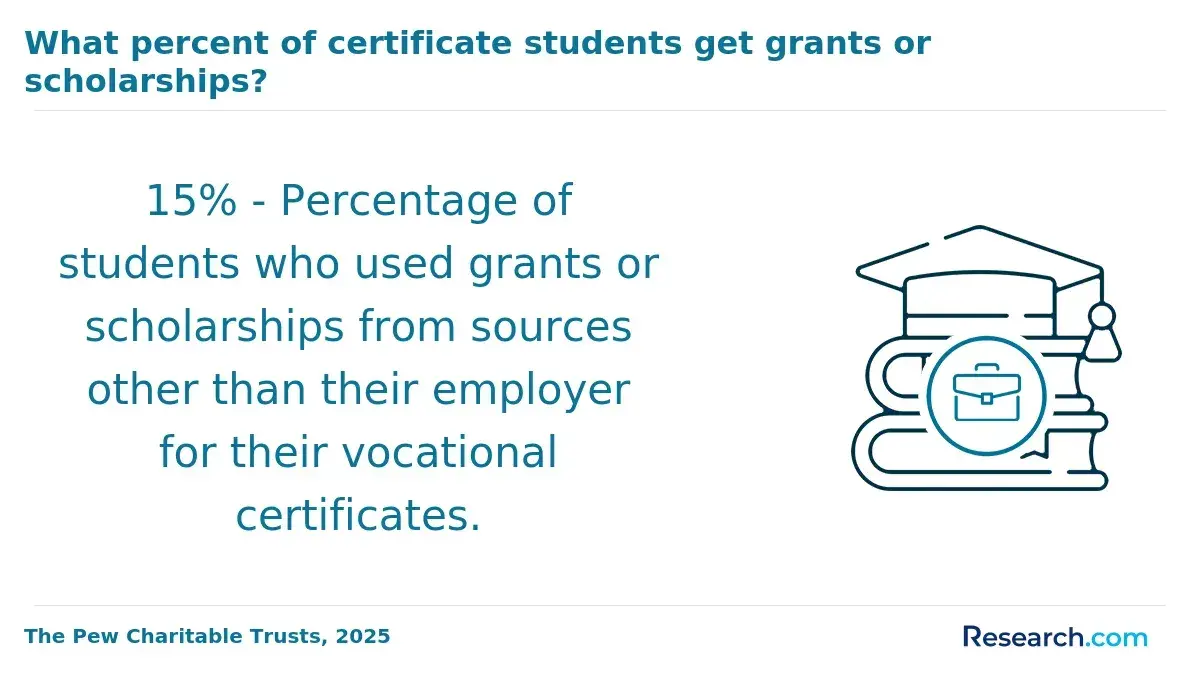
Are There Financial Aid Options for One-Year Online Forensic Science Degree Programs?
Financial aid may be available for one-year online forensic science programs, but eligibility depends heavily on the institution, credential type, accreditation, enrollment status, and whether the program qualifies for aid. Students should not assume that every certificate or diploma is eligible for federal funding.
Common funding options include:
- Federal Financial Aid: Awards such as Pell Grants and Direct Loans are available for eligible students who complete the FAFSA form. Requirements include U.S. citizenship, demonstrated financial need, and enrollment in an accredited forensic science program.
- State Grants and Scholarships: Many states offer financial assistance for residents attending in-state institutions. Eligibility often depends on residency status, academic merit, or a commitment to pursue a career in forensic science locally.
- Employer Tuition Assistance: Individuals working in law enforcement or forensic laboratories may receive reimbursement or direct funding for degree costs. To qualify, employees typically must maintain satisfactory academic progress and agree to continue employment after completing the program.
Additional scholarships and private grants may be available through universities, professional associations, foundations, and STEM-focused initiatives. Some awards prioritize academic excellence, financial need, public service, or diversity in science-related fields.
Before enrolling, contact the financial aid office and ask direct questions: Is this specific program aid-eligible? Is it considered degree-seeking or non-degree? How many credits must I take to qualify? When are funds disbursed? Accelerated and modular formats can affect billing and disbursement schedules, so students should understand payment timing before committing.
What Forensic Science Graduates Say About Their Online Degree
Student experiences can help illustrate what accelerated online study feels like, especially the workload, flexibility, and career motivation behind choosing a shorter forensic science pathway. Individual outcomes vary, so use testimonials as one perspective alongside accreditation, curriculum, cost, and employer requirements.
- Derrick: "Pursuing the one-year online Forensic Science degree completely transformed my career path. The accelerated format allowed me to gain essential skills quickly without compromising quality, and the average cost of attendance made it a smart investment. Now, I'm confidently working in a forensic lab, knowing I have a strong, competency-based education behind me."
- Arjun: "The intensive structure of this program challenged me to stay focused and manage my time effectively. I appreciated the practical learning outcomes tailored to real-world forensic applications, which gave me hands-on experience virtually. Reflecting on my journey, finishing so quickly was incredibly rewarding and cost-effective compared to traditional programs."
- Elias: "Completing the online Forensic Science degree in just one year was a professional milestone. The program's design prioritized mastery of critical concepts, which made me feel prepared for complex cases in my current role. Balancing work and study was feasible, and the overall affordability made it an excellent choice for advancing my expertise without lengthy delays."
Other Things You Should Know About Pursuing One-Year Forensic Science Degrees
No fully online program can replace hands-on lab training; students usually need an in-person lab practicum, internship, or short campus residency. Accrediting standards from bodies such as ABET or program-specific agencies often require documented competence in microscopy, toxicology, or evidence handling before graduation.
Accreditation is vital as it ensures a program meets the educational standards necessary for professional credibility. Forensic science programs should ideally be accredited by recognized bodies such as the Forensic Science Education Programs Accreditation Commission (FEPAC).
Licensing requirements vary by state, but many forensic science positions require passing certification exams beyond the degree itself.
References
- For Prospective Students: FAQ » Forensic Science » College of Pharmacy » University of Florida https://forensicscience.ufl.edu/about/for-prospective-students-faq/
- CSI & Forensic Science Scholarships 2025: Complete Funding Guide https://www.crimesceneinvestigatoredu.org/blog/complete-guide-to-csi-and-forensic-science-scholarships/
- 2025 Most Affordable Online Forensic Science Master's Degrees https://www.onlineu.com/most-affordable-colleges/forensic-science-masters-degrees
- Online Forensic Programs » College of Medicine » University of Florida https://online.forensics.med.ufl.edu/
- Digital Forensic Investigation, M.S. - University of New Haven https://www.newhaven.edu/lee-college/graduate-programs/digital-forensic-investigation/index.php
- Online Bachelor's Degrees in Forensic Science https://www.forensicscolleges.com/online/bachelors-in-forensic-science
- Online Forensic Science Degrees https://www.affordablecollegesonline.org/degrees/best-online-bachelors-in-forensic-science-programs/
- What Are The Benefits Of Online Forensic Courses? - NCC Blog https://www.ncchomelearning.co.uk/blog/what-are-the-benefits-of-online-forensic-courses/
- Criminology and Forensic Science - VIZJA University in Warsaw https://vizja.pl/en/specjalizacja/kryminologia-i-kryminalistyka-studia-i-stopnia/