2027 Best Shortest Online PMHNP Certificate Programs

Co-Founder and Chief Data Scientist
Recent global events have caused a significant decline in our mental well-being. Around 44% of adults worldwide consider mental health the most pressing health issue in their country (Statista, 2023). In the U.S. alone, 90% of the population believes there is a mental health crisis (Lopes et al., 2022).
This emphasizes the need for more mental health professionals, with psychiatric mental health nurse practitioners (PMHNPs) being key to fulfilling this demand. Achieved either through online PMHNP certificate programs or MSN programs, a PMHNP designation equips you with the skills and knowledge to help people with mental health distress.
Pursuing this certification is an ideal pathway for registered nurses (RNs) or nurse practitioners (NPs) who wish to gain expertise in mental health care. As a career planner for over a decade, I can attest to the impact PMHNPs provide to diverse populations. So, in this guide, I’ll cover essential details about PMHNPs, including job outlook, career paths, tuition fees, and financial aid options. I also compiled a list of the fastest online PMHNP certification programs to help you choose the quickest route to certification.
What are the benefits of getting a PMHNP certificate?
- A PMHNP certificate allows nurses to specialize in psychiatric-mental health care, broadening their scope of practice to include assessment, diagnosis, and treatment of psychiatric disorders.
- Graduates with a PMHNP certificate are in high demand across various healthcare settings, from physicians’ offices and hospitals to outpatient mental healthcare centers and community health facilities.
- PMHNPs earn as much as $119,809 yearly, providing you with a stable career that creates positive changes in your patients’ lives.
What can I expect from an online PMHNP Certificate Program?
An online PMHNP certificate program offers a comprehensive and flexible educational experience that trains nurses in advanced practice in mental health care. Based on my research across industry and academic sources, these programs include the following features and experiences:
- Preparation and guidance for certification exams as PMHNPs
- Flexible scheduling options to accommodate working professionals
- Rigorous coursework covering advanced topics in psychiatric assessment, diagnosis, and treatment
- Combination of online asynchronous and synchronous sessions to facilitate engagement and understanding
- Clinical practicum experiences in psychiatric and mental health settings to apply theoretical knowledge
- Access to supportive faculty, academic advisors, and clinical placement teams for guidance and mentorship
Where can I work with a PMHNP Certificate?
After completing PMHNP certificate programs, you can work in traditional clinical environments and non-traditional settings. As such, you can find employment opportunities in the following facilities:
- Hospitals and medical centers
- Emergency departments
- Community mental health centers and outpatient clinics
- Correctional facilities and forensic settings
- Schools and universities
- Private and group practices
- Telehealth platforms
- Military and veterans’ healthcare facilities
- Employee assistance programs (EAPs) and workplace wellness initiatives
- Research institutions and academic centers
According to the American Psychiatric Nurses Association (APNA, 2022), 70% of PMHNPs work in outpatient settings, 15% are employed in hospitals, and 2% practice in correctional facilities.
How much can I make with a PMHNP Certificate?
NPs and advanced practice registered nurses (APRNs) earn an average salary of $128,490 according to the latest data from the U.S. Bureau of Labor Statistics (BLS, 2024a). Furthermore, with an online PMHNP certificate, you can earn anywhere from $112,000 to $130,000 annually, making it one of the most lucrative nursing jobs (PayScale, 2024).
Keep in mind that your potential income can be affected by several factors, such as educational attainment, level of experience, employer or industry type, and location. Therefore, I highly suggest you conduct thorough research before committing to this role.
- List of the Best Shortest Online PMHNP Certificate Programs for 2027 Best Programs
- What is an online PMHNP Certificate Program? What is an online PMHNP Certificate Program?
- How long does it take to complete an online PMHNP Certificate Program? How long does it take to complete an online PMHNP Certificate Program?
- How do online PMHNP Certificate Programs differ from traditional NP programs? How do online PMHNP Certificate Programs differ from traditional NP programs?
- What skills do you need to succeed in a PMHNP program? What skills do you need to succeed in a PMHNP program?
- What is the average cost of an online PMHNP Certificate Program? Degree Cost
- What are the financial aid options for students enrolling in an online PMHNP Certificate Program? Financial Aid
- What are the prerequisites for enrolling in an online PMHNP Certificate Program? Requirements
- How to choose the best online PMHNP Certificate Program? How to choose the best online PMHNP Certificate Program?
- What career paths are available for graduates of PMHNP Certificate Programs? Career Paths
- What is the job market for graduates with a PMHNP Certificate? Job Market
- Can complementary certifications enhance your clinical practice? Can complementary certifications enhance your clinical practice?
- Is an online nursing degree credible? Is an online nursing degree credible?
- What emerging trends are reshaping PMHNP education and practice? What emerging trends are reshaping PMHNP education and practice?
- How does the cost of an online PMHNP certificate program compare to LPN programs? How does the cost of an online PMHNP certificate program compare to LPN programs?
- Can pursuing dual-degree options enhance my PMHNP career? Can pursuing dual-degree options enhance my PMHNP career?
- Is being a psychiatric mental health nurse practitioner stressful? Is being a psychiatric mental health nurse practitioner stressful?
- Why is flexibility important in online PMHNP certificate programs? Why is flexibility important in online PMHNP certificate programs?
- How do PMHNPs impact underserved communities? How do PMHNPs impact underserved communities?
- What are the key accreditation standards to look for in online PMHNP certificate programs? What are the key accreditation standards to look for in online PMHNP certificate programs?
- What are the fastest pathways to advance from RN to PMHNP? What are the fastest pathways to advance from RN to PMHNP?
- What opportunities exist for continuing professional development after PMHNP certification? What opportunities exist for continuing professional development after PMHNP certification?
- What challenges may arise during the transition from RN to PMHNP certification? What challenges may arise during the transition from RN to PMHNP certification?
Best Shortest Online PMHNP Certificate Programs for 2027
Choosing a short online Psychiatric-Mental Health Nurse Practitioner certificate program is usually not about finding the fastest option alone. It is about finding a program that fits your licensure status, prior graduate coursework, clinical placement needs, state practice requirements, budget, and timeline for ANCC certification eligibility.
This guide is for licensed nurses who already hold graduate nursing preparation, such as an MSN or nursing doctorate, and want to add psychiatric-mental health nurse practitioner preparation without completing a full second NP degree. You will learn which short online PMHNP certificate programs stand out, how long they take, what they cost, what admissions requirements to expect, how to compare accredited programs, and what career questions to ask before enrolling.
Quick answer: What is the shortest online PMHNP certificate program?
The shortest online PMHNP certificate programs can be completed in about 12 months by qualified full-time students who already meet prerequisite requirements. Ohio University, Johns Hopkins University, Georgia State University, the University of Virginia, and Wilkes University all offer PMHNP certificate pathways with stated completion timelines beginning at 12 months. However, your actual timeline may be longer if you need prerequisite graduate courses, additional clinical placement approvals, part-time enrollment, or state-specific documentation.
How Research.com evaluates programs
Research.com rankings are built to help students compare programs using transparent, education-focused criteria rather than promotional claims. Our school research draws on our published ranking methodology and data sources such as the Integrated Postsecondary Education Data System, Peterson’s database, including distance learning data, College Scorecard, and the National Center for Education Statistics.
Because PMHNP certificate programs are highly dependent on licensure, clinical placement, prerequisite coursework, and state authorization, rankings should be used as a starting point. Always confirm current tuition, admission rules, clinical hour requirements, accreditation status, and eligibility for certification or licensure directly with the school and your state board of nursing.
Top short online PMHNP certificate programs at a glance
| School | Shortest stated timeline | Credits | Clinical hours | Cost information provided | Accreditation |
| Ohio University | 12 months | 20 | 750 | $633 per credit for residents; $652 per credit for nonresidents | CCNE |
| Johns Hopkins University | 12 months | 17 | 500 | $1,881 per credit | CCNE |
| University of Virginia | 12–15 months | 19 | Not separately stated in the original program summary | $862 per credit for residents; $1,407 per credit for nonresidents | CCNE |
| Wilkes University | 12–18 months | 29 | 500 | $729 per credit | CCNE |
| Georgia State University | 12 months | 26 | Minimum of 500 | Estimated tuition per semester: $4,776 for residents; $15,108 for nonresidents | CCNE |
1. Ohio University
The Ohio University Post-Graduate Psychiatric Mental Health Nurse Practitioner Certificate is built for nurses who want focused preparation in psychiatric assessment, therapy-informed care, medication prescribing, and clinical management for mental health conditions. The program includes 750 clinical experience hours and four core courses. Students complete coursework across three 15-week semesters, with online learning paired with in-person clinical requirements.
- Program length: 12 months
- Track: Psychiatric Mental Health Nurse Practitioner
- Cost per credit: $633 for residents; $652 for nonresidents
- Credits required: 20
- Accreditation: Commission on Collegiate Nursing Education (CCNE)
- Admissions note: Applicants need a minimum GPA of 3.0 and must complete required prerequisite courses.
2. Johns Hopkins University
The Johns Hopkins University psychiatric nursing certificate pathway is one of the shortest options listed, with a 12-month timeline for eligible students. The curriculum includes advanced psychiatric content such as Differential Diagnosis of Mental Disorders, Neurobiology of Mental Disorders, and Psychotherapeutic Frameworks and Modalities. Students complete 500 clinical hours across populations and age groups, which helps prepare them for broad psychiatric-mental health practice.
- Program length: 12 months
- Track: Psychiatric Mental Health Nurse Practitioner
- Cost per credit: $1,881
- Credits required: 17
- Accreditation: CCNE
- Admissions note: Applicants are expected to demonstrate commitment to nursing practice, scholarship, and community service in addition to meeting standard admission requirements.
3. University of Virginia
The University of Virginia Post-Master’s Certificate in PMHNP offers a flexible structure for nurses who need online coursework but still want direct interaction. Students attend one synchronous online session each week, and clinical rotations may be completed in their home communities. The curriculum integrates neurobiological, psychosocial, and psychiatric nursing perspectives for treating acute and chronic mental health disorders. Students who lack prerequisite coursework or come from a different advanced practice focus may need up to 21 months.
- Program length: 12–15 months
- Track: Psychiatric Mental Health Nurse Practitioner
- Cost per credit: $862 for residents; $1,407 for nonresidents
- Credits required: 19
- Accreditation: CCNE
- Timeline note: Some students may extend to 21 months depending on prerequisites and prior focus area.
4. Wilkes University
The Wilkes University online Post-Graduate/APRN Certificate in Psychiatric/Mental Health Nurse Practitioner includes 12-week courses and 500 clinical hours. A clinical placement team helps connect students with appropriate healthcare settings, which can be an important advantage for working nurses who do not already have psychiatric clinical sites arranged. Coursework covers advanced psychiatric modalities, psychopharmacology, and care for culturally diverse, rural, and underserved populations.
- Program length: 12–18 months
- Track: Psychiatric Mental Health Nurse Practitioner
- Cost per credit: $729
- Credits required: 29
- Accreditation: CCNE
- Best fit: Nurses who value structured clinical placement support and can manage a larger credit requirement.
If you are not yet a registered nurse and need an entry route into nursing before advanced practice study, compare options such as online ABSN programs before looking at PMHNP certificates.
5. Georgia State University
The Georgia State University Post-Master’s Certificate Program in Psychiatric Mental Health Nurse Practitioner combines online and in-person learning in a part-time format designed for practicing nurses. Courses include Interprofessional Collaboration for Advanced Practice, Advanced Professional Nurse Practice Issues, and Common Adult Health Problems. Students complete at least 500 experience hours across age groups and mental health needs.
- Program length: 12 months
- Track: Psychiatric Mental Health Nurse Practitioner
- Estimated tuition per semester: $4,776 for residents; $15,108 for nonresidents
- Credits required: 26
- Accreditation: CCNE
- Best fit: Nurses who want a part-time PMHNP certificate with both online and in-person components.
If you are comparing PMHNP certificates with broader nurse practitioner tracks, review 1 year nurse practitioner programs online. If your goal is doctoral preparation rather than a certificate-only pathway, you can also compare short online PMHNP certificate options alongside DNP-oriented routes.
What Is an Online PMHNP Certificate Program?
An online PMHNP certificate program is a post-graduate nursing pathway for NPs or APRNs who already hold an MSN, DNP, PhD in Nursing, or similar graduate nursing preparation and want to add psychiatric-mental health nurse practitioner specialization. Unlike social work or counseling pathways, such as affordable online MSW programs, PMHNP certificates are designed around advanced nursing assessment, diagnosis, treatment planning, prescribing, psychotherapy-informed care, and psychiatric clinical practice.
Students typically study psychiatric assessment, mental health diagnosis, psychopharmacology, therapeutic interventions, lifespan psychiatric care, and practicum-based clinical decision-making. Graduates who meet the appropriate education and clinical requirements may be eligible to sit for the competency-based Psychiatric-Mental Health Nurse Practitioner certification exam from the American Nurses Credentialing Center (ANCC).
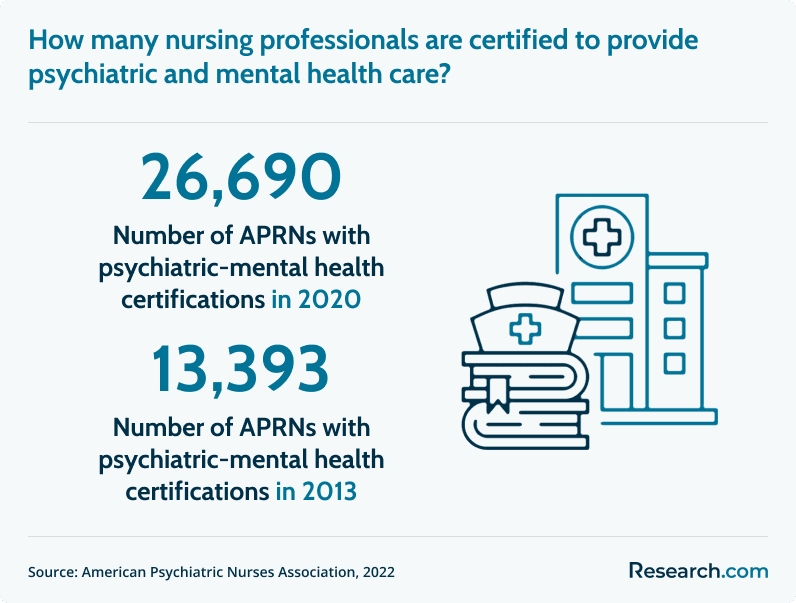
The PMHNP pathway has grown substantially. According to APNA, the number of nurses certified through ANCC nearly doubled since 2013, reaching 26,690 certified nurses in 2020. APNA also reported that nurses completing a PMH Post-Master’s Certificate as their initial role preparation doubled from the 2000s to the 2010s.
How Long Does an Online PMHNP Certificate Program Take?
Many short online PMHNP certificate programs can be completed in 12 months by full-time students who already satisfy prerequisite requirements. Programs with more credits, more clinical sequencing, or part-time formats often take 15 to 18 months. Some students need up to 24 months if they reduce their course load, complete additional prerequisites, or need more time to secure approved clinical placements.
These certificates are shorter than full graduate degrees because they build on prior advanced nursing education. By comparison, many MSN pathways or mental health degrees such as online Christian counseling programs can take two to three years, depending on program design and enrollment status.
| Student situation | Likely timeline | Why it may take longer |
| Graduate-prepared APRN with all prerequisites complete | About 12 months | Clinical placement timing can still affect completion. |
| Student missing one or more advanced nursing prerequisites | 15 to 21 months | Advanced pathophysiology, pharmacology, or assessment may need to be completed first. |
| Working nurse enrolled part time | Up to 24 months | Reduced course loads and clinical scheduling limits can extend the plan. |
| Student in a state with added authorization or placement rules | Varies | State board requirements and clinical site approvals can delay progression. |
Online PMHNP Certificate vs. Traditional NP Program: What Is the Difference?
Both PMHNP certificates and traditional NP programs prepare nurses for advanced practice, but they serve different students. A traditional NP program usually helps an RN become an NP for the first time. A PMHNP certificate usually helps an already graduate-prepared nurse add a psychiatric-mental health population focus.
| Factor | Online PMHNP certificate | Traditional NP program |
| Primary purpose | Add psychiatric-mental health specialization after graduate nursing preparation | Prepare an RN for initial NP practice |
| Credential outcome | Post-master’s or post-graduate certificate | Graduate degree, often an MSN or DNP |
| Typical student | NP or APRN with prior graduate nursing education | RN seeking first advanced practice credential |
| Clinical focus | Psychiatric and mental health assessment, treatment, and management | Primary care, acute care, family practice, adult-gerontology, pediatrics, or other NP tracks |
| Delivery format | Often online coursework with in-person clinical requirements | May be campus-based, hybrid, or online depending on the school |
What Skills Help Students Succeed in a PMHNP Certificate Program?
PMHNP certificate programs are academically demanding and emotionally complex. Students need advanced clinical judgment, strong communication, and the maturity to work with patients experiencing psychiatric distress, trauma, substance use concerns, family conflict, or chronic mental illness.
- Therapeutic communication: PMHNPs must ask sensitive questions, listen without judgment, explain treatment options clearly, and build trust with patients who may feel vulnerable or guarded.
- Empathy with boundaries: Compassion is essential, but PMHNPs also need professional boundaries to avoid emotional overextension and maintain safe clinical decision-making.
- Critical thinking: Psychiatric symptoms may overlap with medical conditions, medication effects, trauma responses, or substance-related concerns. Students must learn to evaluate information carefully before making clinical decisions.
- Cultural competence: Mental health care is shaped by culture, family systems, language, stigma, religion, and access to care. PMHNPs need to provide treatment that respects patient context.
- Resilience: Psychiatric practice can be rewarding but intense. Students should build habits for supervision, self-care, peer support, and workload management early.
- Organization: Online learning, synchronous sessions, clinical documentation, preceptor coordination, and licensure paperwork require disciplined time management.
How Much Does an Online PMHNP Certificate Program Cost?
Online PMHNP certificate programs commonly cost less than full graduate degrees because they require fewer credits, but they are still a significant investment. The programs reviewed here include per-credit rates below and above $1,000, with stated examples ranging from $633 per credit to $1,881 per credit. Many programs fall between $15,000 and $40,000 in total cost, depending on credits, residency status, fees, and transferred coursework.
For context, a regular master’s degree program can cost $56,000 to $75,000 (Hanson, 2024a). Other mental health education routes have different cost structures. For example, students researching the cost of a counseling degree may see graduate averages around $19,552, while a doctor of philosophy such as psychology costs around $81,900 (College Tuition Compare, n.d.; Hanson, 2024b).
| Cost category | Why it matters | Question to ask the school |
| Tuition | Usually the largest expense and may differ for residents and nonresidents | Is tuition charged per credit, per semester, or by program? |
| Program fees | Online learning, clinical coordination, simulation, or technology charges can add cost | What mandatory fees are not included in the tuition estimate? |
| Clinical placement expenses | Travel, background checks, immunizations, insurance, and site onboarding may be required | Does the program help secure placements, and are there placement fees? |
| Books and course materials | Specialized psychiatric texts and digital resources may be required | What is the estimated annual cost for materials? |
| Certification and licensure costs | Graduation is not the final cost if you must apply for certification or state practice authority | Which post-graduation fees should I budget for? |
Financial Aid Options for Online PMHNP Certificate Students
Financial aid for PMHNP certificate students depends on school participation, enrollment status, prior aid usage, and whether the certificate qualifies for specific aid programs. Students may be able to use federal or state loans, institutional scholarships, employer tuition reimbursement, military education benefits, or workforce-focused repayment programs.
- Federal and state aid: Ask whether the certificate is eligible for federal loans or state-supported aid.
- Institutional scholarships: Nursing schools may offer awards for graduate nursing students, advanced practice students, or students serving high-need communities.
- Professional nursing organizations: Students can explore opportunities connected to groups such as the American Association of Nurse Practitioners (AANP).
- Nurse Corps Loan Repayment Program: The Nurse Corps LRP may be relevant for nurses who meet service and employment requirements.
- Employer reimbursement: Hospitals, clinics, and behavioral health organizations may help pay for PMHNP training if the credential supports workforce needs.
- Military benefits: Eligible service members, veterans, and family members should confirm whether benefits apply to certificate-level graduate study.
- Mission-based awards: Organizations such as the Daisy Foundation and United Health Foundation may support nursing students committed to underserved populations.
Admission Requirements and Prerequisites
PMHNP certificate admissions are more specialized than general undergraduate admissions. Unlike broad education lists such as affordable online colleges for early childhood education, PMHNP certificate programs typically require active nursing licensure, prior graduate nursing education, and advanced clinical preparation.
Common prerequisite coursework includes Advanced or Lifespan Physical Health Assessment, Advanced Pharmacology, and Advanced Pathophysiology. Some schools include missing courses in the plan of study, while others allow students to transfer previously completed graduate credits.
- MSN or doctorate in nursing
- Official transcripts
- Minimum GPA of 3.0 on a 4.0 scale
- Clinical and practicum experience
- One to three years of RN or NP experience
- Active, unrestricted RN license and NP/APRN license or certificate, when applicable
- Personal statement
- CV or resume
- Letters of recommendation
- Possible GRE or GMAT scores, depending on the school
- Possible admissions interview
- Proof of English proficiency, if required
- Background check, immunization records, malpractice insurance, and basic life support documentation, if required
How to Choose the Best Online PMHNP Certificate Program
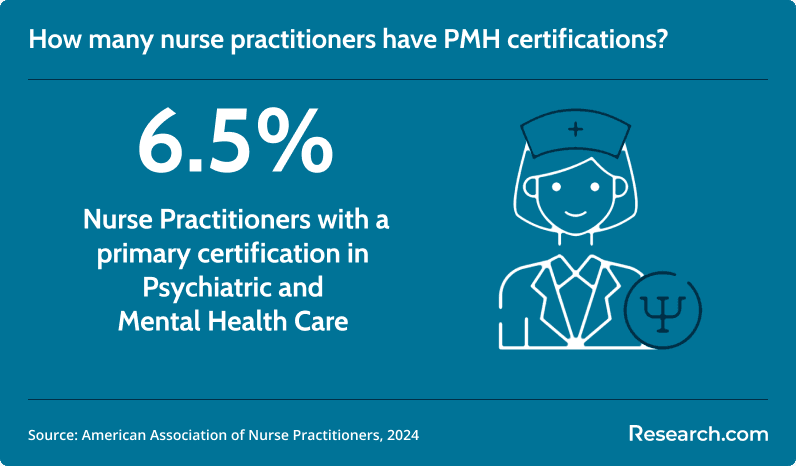
The best PMHNP certificate is not automatically the shortest or cheapest. It is the program that can legally and practically prepare you for certification eligibility, clinical placement, and practice in the state where you intend to work. According to the latest AANP data cited in the original article, only 6.5% of NPs have certifications in Psychiatric/Mental Health nursing services, compared with 70.3% certified as FNPs. That gap makes program quality especially important.
| Selection factor | What to verify | Why it affects your decision |
| Accreditation | Look for CCNE or ACEN accreditation. | Accreditation affects certification eligibility, employer acceptance, and educational quality. |
| State authorization | Confirm that the school can enroll students from your state and support clinical placements there. | An online program may not meet every state’s nursing board requirements. |
| Clinical placement support | Ask whether the school finds placements, approves student-found sites, or only provides guidance. | Clinical placement delays can extend your graduation timeline. |
| Prerequisite review | Request a transcript evaluation before applying if possible. | Missing advanced pharmacology, pathophysiology, or assessment can add time and cost. |
| Faculty expertise | Review faculty clinical backgrounds, psychiatric practice experience, and research activity. | Strong faculty support matters in a complex specialty area. |
| Format and flexibility | Compare synchronous sessions, asynchronous work, campus visits, and part-time options. | Working nurses need a schedule that fits employment and clinical hours. |
| Total cost | Compare tuition, fees, travel, books, clinical onboarding, and certification costs. | The lowest tuition may not equal the lowest total cost. |
| Student outcomes | Ask about completion rates, certification exam pass rates, clinical placement outcomes, and employment support. | Outcomes help you judge whether students complete the program and move into practice. |
Career Paths After a PMHNP Certificate
Most graduates pursue psychiatric-mental health nurse practitioner roles in settings such as outpatient mental health clinics, hospitals, community health centers, addiction treatment programs, telehealth practices, correctional health, integrated primary care, and private practice environments where state law permits. The certificate can also support adjacent roles that use psychiatric expertise, advanced nursing judgment, and leadership skills.
- Psychiatric-mental health nurse practitioner: Assesses, diagnoses, and treats mental health conditions, often including medication management and therapy-informed care.
- Mental health consultant: Advises healthcare teams, community agencies, or organizations on psychiatric assessment, crisis response, treatment planning, and behavioral health workflows.
- Psychiatric nurse educator: Teaches nursing students, healthcare professionals, or community groups about mental health care, psychiatric interventions, and best practices.
- Nurse researcher: Studies psychiatric nursing practice, outcomes, evidence-based interventions, and care models for people with mental health disorders.
- Medical and health services manager: Oversees healthcare teams, budgets, operations, and quality initiatives. Nurses interested in executive leadership may also compare business-focused graduate options such as the most affordable online DBA programs.
- Policy advocate: Works on mental health access, workforce planning, scope-of-practice policy, and behavioral health funding at local, state, or national levels.
- Health technology innovator: Supports telehealth platforms, digital mental health tools, remote monitoring, or technology-enabled behavioral healthcare delivery.
Job Market Outlook for PMHNP Certificate Graduates
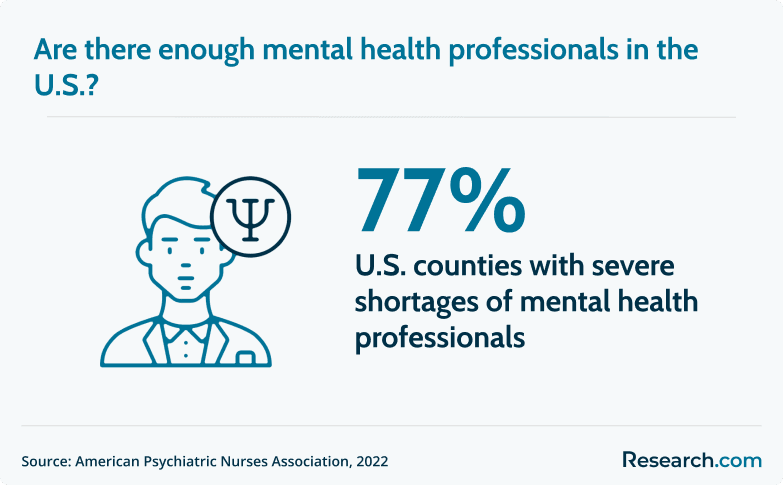
The broader nurse practitioner labor market is strong. The latest BLS data cited in the original article show a 45% job outlook for NPs from 2022 to 2032 and 384,900 job openings each year throughout the decade. PMHNPs may also benefit from mental health workforce shortages, especially as APNA reported that 77% of U.S. counties have severe shortages of mental health professionals.
PMHNPs also occupy an important policy space. A published analysis noted that PMHNPs have not yet been fully included in federal mental health planning and behavioral workforce initiatives despite their qualifications. That creates both a challenge and an opportunity: PMHNPs may be needed in workforce planning, but broader recognition and integration still require advocacy.
Demand should not be interpreted as a guaranteed job offer or guaranteed salary. Employment outcomes depend on location, state scope-of-practice rules, employer demand, experience, clinical training, certification status, and willingness to work in high-need settings.
Can Complementary Certifications Strengthen PMHNP Practice?
Additional certifications can help PMHNPs develop more specialized clinical or leadership skills, especially in areas such as addiction, trauma-informed care, telehealth, geriatric psychiatry, child and adolescent mental health, or integrated care. The right add-on credential depends on your patient population and workplace.
PMHNPs also work with other professionals who address physical, behavioral, and lifestyle factors. For example, collaboration with graduates of athletic training programs may be useful in care models where mental health, injury recovery, chronic pain, performance stress, or wellness planning intersect.
Are Online PMHNP Certificates Credible?
An online PMHNP certificate can be credible when it is offered by an accredited nursing school, meets certification and state licensure requirements, includes supervised clinical practice, and is accepted by employers and boards of nursing. The word “online” usually describes the didactic coursework format; PMHNP students still complete in-person clinical experiences.
Before enrolling, verify accreditation, clinical hour requirements, faculty credentials, student support, and certification eligibility. If you are comparing online nursing credentials more broadly, Research.com’s guide on whether an online nursing degree is credible explains how to evaluate academic quality, employer recognition, and program legitimacy.
Trends Reshaping PMHNP Education and Practice
PMHNP education is changing as mental health care becomes more integrated, technology-supported, and team-based. Programs increasingly emphasize telehealth readiness, simulation-based learning, interprofessional collaboration, digital documentation, culturally responsive care, and treatment planning for complex patients with both psychiatric and medical needs.
For nurses still building toward advanced practice, bridge pathways can shorten the route into graduate nursing education. ADN-prepared nurses, for example, may compare ADN-to-MSN bridge programs before choosing a psychiatric-mental health specialization.
How Does a PMHNP Certificate Compare With LPN Training?
PMHNP certificate programs and LPN programs serve very different career stages. LPN programs prepare students for foundational practical nursing roles. PMHNP certificates prepare graduate-educated nurses for advanced psychiatric-mental health practice. Because PMHNP certificates involve advanced coursework, graduate-level clinical expectations, and specialty preparation, they typically require a higher investment than LPN training.
If you are comparing nursing entry points, review how much LPN school costs before weighing the long-term investment required for advanced practice credentials.
Can a Dual Degree Improve a PMHNP Career?
A dual degree may make sense for PMHNPs who want leadership roles in behavioral health operations, healthcare administration, consulting, private practice management, or executive decision-making. Business training can strengthen skills in budgeting, staffing, strategy, compliance, and program development.
For nurses who want both advanced clinical and business preparation, online MSN MBA dual degree programs may be worth comparing with certificate-only routes. However, a dual degree is usually a larger time and financial commitment, so it should match a clear leadership goal.
Is Being a Psychiatric-Mental Health Nurse Practitioner Stressful?
PMHNP work can be deeply meaningful, but it can also be emotionally demanding. Psychiatric providers often support patients facing trauma, suicidal ideation, severe mood disorders, psychosis, addiction, family instability, or limited access to care. Heavy caseloads, crisis decision-making, documentation demands, and limited community resources can increase stress.
A McKinsey study reported that 56% of nurses indicated symptoms of burnout, including emotional exhaustion (Berlin et al., 2023). Aspiring PMHNPs should take this risk seriously and look for programs and employers that support supervision, realistic workloads, peer consultation, debriefing, and mental health resources.
Personal resilience helps, but burnout is not only an individual problem. Healthcare organizations also need safe staffing, supportive leadership, manageable documentation systems, and workplace cultures that protect clinicians’ well-being.
Why Flexibility Matters in Online PMHNP Certificate Programs
Flexibility is one reason working nurses consider online certificates. The right format can make it possible to continue employment while completing graduate psychiatric coursework and clinical hours. However, flexibility has limits: clinical placements are in person, synchronous sessions may be required, and some programs include campus or skills-based requirements.
- Asynchronous coursework: Useful for nurses with rotating shifts or family responsibilities.
- Synchronous sessions: Helpful for live discussion and faculty interaction, but they require scheduled availability.
- Part-time enrollment: Reduces weekly workload but may extend graduation.
- Clinical placement support: Especially important for students who do not already have psychiatric preceptors or approved sites.
- Online student services: Advising, library access, technical support, and certification guidance can affect completion.
If you are comparing certificate pathways with doctoral options, review flexible accelerated choices such as short online DNP programs.
How PMHNPs Support Underserved Communities
PMHNPs can play a major role in communities with limited access to psychiatrists, therapists, and behavioral health clinics. APNA reported that 77% of U.S. counties face severe shortages of mental health providers. In these settings, PMHNPs may provide assessment, diagnosis, medication management, therapy-informed treatment, crisis planning, and care coordination.
Underserved communities may include rural areas, low-income neighborhoods, correctional settings, community health centers, schools, addiction treatment programs, and regions with few specialty providers. PMHNPs who are trained in culturally competent, trauma-informed, and community-based care can help reduce barriers to treatment and connect patients with longer-term support.
Accreditation Standards to Check Before Enrolling
Accreditation is one of the most important filters when comparing online PMHNP certificate programs. A low-cost or fast program is not a good choice if it does not meet certification, licensure, or employer expectations. Students seeking affordable options should compare accredited choices carefully, including affordable online nurse practitioner programs in related specialties.
- Programmatic nursing accreditation: Look for recognized nursing accreditors such as CCNE or ACEN.
- State board alignment: Confirm that the program satisfies the requirements of the state where you plan to practice.
- ANCC preparation: Ask whether coursework and clinical hours align with eligibility expectations for psychiatric-mental health certification.
- Clinical hour documentation: Make sure the program tracks and verifies clinical experiences in a way that boards and certifying bodies accept.
- State authorization for online students: Verify that the school is authorized to enroll students from your state and place them clinically.
Fastest Pathways From RN to PMHNP
The fastest route to becoming a PMHNP depends on where you are starting. A post-graduate PMHNP certificate is usually not the first step for an RN without graduate nursing education. RNs may first need a BSN, then an MSN or DNP with appropriate advanced practice preparation, before pursuing a PMHNP certificate or PMHNP degree track.
RNs who still need a bachelor’s degree can compare fast online RN to BSN programs. Students who want a more accessible undergraduate pathway may also review nursing schools that are easier to get into or online RN to BSN programs with more accessible admissions before planning advanced practice study.
Continuing Professional Development After PMHNP Certification
PMHNP certification is not the end of professional learning. Mental health care changes as new evidence, medications, digital tools, care models, and policy requirements emerge. Continuing professional development may include workshops, specialty certifications, conferences, online modules, supervised consultation, leadership training, and recertification activities.
Good development plans are tied to practice goals. A PMHNP in addiction care may need different training than one working in child psychiatry, rural telehealth, emergency psychiatry, or private practice. Choose continuing education that strengthens your actual patient care responsibilities rather than collecting unrelated credentials.
Common Challenges When Transitioning From RN to PMHNP
The transition into PMHNP practice can be challenging even for experienced nurses. Psychiatric-mental health care requires a different clinical lens, more emphasis on diagnostic interviewing, and comfort with long-term therapeutic relationships and complex medication decisions.
| Common challenge | Why it happens | Better approach |
| Underestimating prerequisite gaps | Prior graduate courses may not match PMHNP certificate requirements. | Request a transcript review before applying. |
| Assuming online means fully remote | Clinical hours must be completed in person. | Ask where clinical placements can occur and who secures them. |
| Choosing only by speed | The shortest program may not fit your state, schedule, or clinical needs. | Compare accreditation, state authorization, clinical support, and outcomes. |
| Ignoring licensure rules | NP scope of practice and prescribing authority vary by state. | Contact your state board of nursing before enrolling. |
| Focusing only on tuition | Fees, travel, books, certification, and clinical onboarding add costs. | Build a full program budget. |
| Taking on too much while working | Graduate psychiatric study plus clinical hours can strain schedules. | Consider part-time enrollment if workload or burnout risk is high. |
Questions to Ask Before Applying
- Is the PMHNP certificate accredited by CCNE or ACEN?
- Will this program meet the requirements for certification and licensure in my state?
- How many clinical hours are required, and what populations must I work with?
- Does the school find clinical placements, or am I responsible for securing preceptors?
- Are campus visits, synchronous sessions, simulations, or intensives required?
- Which prerequisite courses can transfer, and which must be repeated?
- What is the total estimated cost, including fees and clinical expenses?
- What are the program’s completion rates and certification exam outcomes?
- Can I continue working full time, or is part-time enrollment more realistic?
- What student support is available for online learners?
Graduate Perspectives on PMHNP Certificate Programs
-
: "The online format made it possible for me to keep working while completing advanced psychiatric training. Within one year, I gained new clinical experience and became better prepared to manage complicated mental health cases.
— Therese"
-
: "I began as an FNP and later moved into psychiatric-mental health practice. The certificate helped me build the specialized skills I needed to serve patients whose mental health needs were not being fully addressed.
— Marian"
-
: "Studying online gave me the flexibility I needed, but the clinical work was what changed my practice. Since completing the certificate, I have worked in hospitals and mental health centers and have become a more thoughtful, patient-centered clinician.
— Justin"
References
- American Psychiatric Nurses Association. (2022, August 15). APNA 2022 Psychiatric-mental health nursing workforce report. https://www.apna.org/wp-content/uploads/2022/08/APNA-Workforce-Survey-Data-Report-8.15.22.pdf
- College Tuition Compare. (n.d.). Mental health counseling/counselor program 2024 tuition. Retrieved May 29, 2024, from https://www.collegetuitioncompare.com/majors/51.1508/mental-health-counseling-counselor
- Hanson, M. (2024a, February 24). Average cost of a master’s degree. Education Data Initiative. https://educationdata.org/average-cost-of-a-masters-degree
- Hanson, M. (2024b, February 24). Average cost of a doctorate degree. Education Data Initiative. https://educationdata.org/average-cost-of-a-doctorate-degree
- Lopes, L., Kirzinger, A., Sparks, G., Stokes, M., & Brodie, M. (2022, October 5). KFF/CNN mental health in America survey. Kaiser Family Foundation. https://www.kff.org/report-section/kff-cnn-mental-health-in-america-survey-findings
- PayScale. (2024, May 22). Average psychiatric nurse practitioner (NP) salary. Retrieved May 28, 2024, from https://www.payscale.com/research/US/Job=Psychiatric_Nurse_Practitioner_(NP)/Salary
- Statista. (2023, September). Percentage of adults worldwide who stated select issues were the biggest health problems facing people in their country in 2023. https://www.statista.com/statistics/917148/leading-health-problems-worldwide
- U.S. Bureau of Labor Statistics. (2024a, April 3). Occupational employment and wages, May 2023 - Nurse practitioners. Occupational Employment and Wage Statistics. https://www.bls.gov/oes/current/oes291171.htm
- U.S. Bureau of Labor Statistics. (2024b, April 17). Nurse anesthetists, nurse midwives, and nurse practitioners. Occupational Outlook Handbook. https://www.bls.gov/ooh/healthcare/nurse-anesthetists-nurse-midwives-and-nurse-practitioners.htm
Key Insights
- The shortest online PMHNP certificate programs can take about 12 months, but only for students who already meet graduate nursing prerequisites and can complete clinical requirements on schedule.
- Accreditation, state authorization, and clinical placement support matter more than speed. A fast program is not useful if it does not support certification eligibility or licensure where you plan to practice.
- Costs vary widely. The listed programs include rates from $633 per credit to $1,881 per credit, and students should also budget for fees, books, travel, clinical onboarding, and certification expenses.
- PMHNP certificates are best suited for graduate-prepared nurses adding psychiatric specialization. RNs without graduate nursing preparation usually need BSN and MSN or DNP pathways first.
- The PMHNP workforce need is significant, with APNA reporting severe mental health provider shortages in 77% of U.S. counties, but employment outcomes still depend on location, licensure, experience, and employer demand.
- Before applying, ask each school to confirm accreditation, ANCC preparation, state eligibility, prerequisite transfer rules, clinical placement responsibilities, total cost, and expected time to completion.
Other Things You Should Know About the Shortest Online PMHNP Certificate Programs
In 2027, the American Nurses Credentialing Center (ANCC) approves online PMHNP certificate programs. Programs must adhere to standards set by ANCC to ensure quality and eligibility for certification exams, maintaining consistent educational requirements across accredited courses.
Most shortest online PMHNP certificate programs require 500 to 750 supervised clinical hours. These hours must be completed in approved psychiatric-mental health settings and documented under a qualified preceptor. Programs also usually require an active registered nurse license before clinical placement begins.