2027 Is an Online Nursing Degree Credible?

Co-Founder and Chief Data Scientist
Choosing an online nursing degree is not really a question of whether “online” can be credible. The better question is whether a specific program is accredited, approved for the state where you want to practice, transparent about clinical requirements, and strong enough to prepare you for licensure, certification, or career advancement. That distinction matters in 2027 because nursing education now commonly blends online coursework, local clinical placements, simulation, and structured faculty interaction.
According to a Bureau of Health Workforce report, nearly 46.4% of RNs who earned their degrees between 2016 and 2020 completed part of their nursing education online. With 614 schools in the United States offering online nursing programs, students now have more choices than ever—but also more responsibility to verify quality before enrolling.
This guide explains how credible online nursing degrees are, what accreditation means, how clinical training works, what programs can cost, how state licensure affects your options, and how to compare programs without relying on marketing claims alone.
Quick Answer: Are Online Nursing Degrees Credible in 2027?
Yes, an online nursing degree can be credible when it comes from an accredited nursing program that meets state licensure requirements and includes appropriate clinical or practice-based learning. Employers and licensing boards generally focus less on whether coursework was delivered online and more on whether the program is properly accredited, whether graduates meet clinical standards, and whether students are eligible for the required licensure or certification exams.
| Question | Short Answer |
| Can an online nursing degree lead to RN licensure? | It can, but only if the program meets the requirements of the state nursing board where the student intends to practice. |
| Are online nursing programs fully self-paced? | Usually no. Most are structured, with deadlines, live sessions, clinical requirements, and progression milestones. |
| What makes an online nursing degree credible? | Recognized accreditation, state approval, qualified faculty, verifiable clinical training, strong student support, and transparent outcomes. |
| Do employers accept online nursing degrees? | Many do when the program is accredited and the graduate holds the required license or certification. |
| What is the biggest risk? | Enrolling before confirming accreditation, state authorization, clinical placement support, and licensure eligibility. |
Key Things You Should Know About a Credible Online Nursing Degree
- Online nursing education is now a major part of the nursing pipeline, with 614 schools in the United States offering online nursing programs.
- Online options exist at several academic levels, including Associate Degree in Nursing (ADN), Bachelor of Science in Nursing (BSN), Master of Science in Nursing (MSN), and Doctor of Nursing Practice (DNP).
- For nursing program credibility, recognized accreditation from organizations such as the Commission on Collegiate Nursing Education (CCNE) or the Accreditation Commission for Education in Nursing (ACEN) is critical.
- Credible programs do not rely on recorded lectures alone. They often use live video sessions, learning management systems, virtual simulations, case discussions, clinical documentation, and faculty feedback.
- Research showing no significant difference in certification pass rates between online and face-to-face graduate nurses supports the idea that delivery format alone does not determine graduate readiness.
- How credible is an online nursing degree in 2027?
- How accreditation affects online nursing degree credibility
- How online programs build real-world nursing skills
- Online nursing degree cost in 2027
- Self-paced vs. structured online nursing programs
- State licensing board acceptance of online nursing degrees
- Return on investment for online nursing degrees
- Career opportunities after an accredited online nursing degree
- Interactive learning in online nursing programs
- Disadvantages and risks of online nursing education
- Online RN to BSN programs without clinicals
- How to choose an online nursing program
- How online nursing programs evaluate competency
- Certifications that can strengthen a nursing career
- Admission requirements for online nursing programs
- Research and innovation in online nursing education
- Student support services for online nursing students
- How online nursing education has changed
- Online nursing bridge programs and career mobility
- Online accelerated nursing programs vs. traditional programs
- Career placement services in online nursing programs
How credible is an online nursing degree for 2027?
An online nursing degree is credible when the program meets the same academic, clinical, accreditation, and licensure standards expected of campus-based nursing education. The format of instruction matters less than the program’s quality controls: curriculum rigor, faculty qualifications, supervised practice, student assessment, and state authorization.
A comparative study by Pearl and Arunfred found that e-learners often developed stronger concentration skills than students in traditional settings. That does not mean every online program is strong, but it does show that online learning can support serious academic performance when the program is well designed.
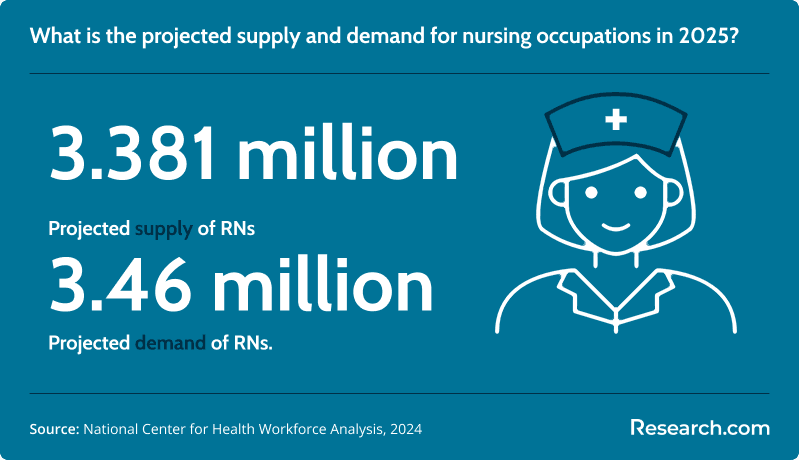
Online nursing education has also gained relevance because healthcare systems continue to face workforce pressure. A November 2022 report from the National Center for Health Workforce Analysis projected a shortage of 78,610 full-time registered nurses by 2025. Flexible nursing pathways can help working adults, rural students, and current healthcare workers continue their education without relocating or leaving employment.
Students evaluating credibility should ask a practical question: “Will this program qualify me for the nursing role I want in the state where I plan to work?” That is more useful than asking whether online education is respected in general. For broader context on employer perception, Research.com’s guide on whether online degrees are respected explains how accreditation, school reputation, and career field shape acceptance.
| Credibility Factor | Why It Matters | What to Verify |
| Programmatic accreditation | Signals that the nursing curriculum has been reviewed against professional standards. | Look for recognized nursing accreditation such as CCNE or ACEN when applicable. |
| State approval | Licensure is controlled at the state level. | Confirm that the program meets requirements where you live and where you intend to practice. |
| Clinical or practice learning | Nursing requires applied judgment, patient assessment, communication, and safe care skills. | Ask how clinical hours, simulations, practicums, or projects are arranged and documented. |
| Faculty access | Online students need timely feedback and expert guidance. | Review office hours, response times, advising access, and instructor credentials. |
| Graduate outcomes | Outcomes help show whether students complete the program and move into relevant roles. | Ask for licensure pass rates, certification pass rates, completion rates, and placement support where available. |
How does accreditation impact the credibility of an online nursing degree?
Accreditation is one of the strongest signals that an online nursing degree is legitimate. It shows that an outside body has reviewed the program’s curriculum, faculty, resources, student outcomes, and continuous improvement practices. For students, accreditation can affect licensure eligibility, transfer credit, graduate school admission, employer confidence, and access to some forms of financial aid.
Students should distinguish between institutional accreditation and nursing programmatic accreditation. Institutional accreditation reviews the college or university as a whole. Nursing programmatic accreditation reviews the nursing program specifically. Both matter, but nursing-specific accreditation is especially important when the degree is tied to licensure, advanced practice, or certification.
Major Accreditation and Quality Bodies to Understand
| Organization | Relevance to Online Nursing Students | What Students Should Know |
| Commission on Collegiate Nursing Education (CCNE) | CCNE evaluates nursing programs at the baccalaureate, master's, and doctoral levels. | CCNE accreditation is widely used as a quality marker for BSN, MSN, and DNP programs. Students comparing advanced options, including a short post-master's DNP pathway, should confirm current accreditation status directly with the school and accreditor. |
| Accreditation Commission for Education in Nursing (ACEN) | ACEN accredits nursing programs across multiple levels, including associate, bachelor’s, master’s, and doctoral programs. | ACEN, formerly the National League for Nursing Accrediting Commission (NLNAC), has more than 900 accredited nursing schools. It is especially important for students comparing entry-level and bridge nursing pathways. |
| Accreditation Commission for Health Care (ACHC) | ACHC is a non-profit organization associated with healthcare quality and accreditation in healthcare-related settings. | ACHC recognition may be relevant to healthcare organizations and quality environments, but students should not treat it as a substitute for nursing programmatic accreditation from CCNE or ACEN when a nursing degree requires that level of review. |
Accreditation also helps students understand program difficulty and expectations. For example, nurses considering a bachelor’s completion pathway may ask whether online RN to BSN programs are hard. The answer usually depends on workload, writing expectations, clinical or project requirements, and how well the program supports working nurses.
Because accreditation works differently by profession, students should avoid assuming that standards in one field apply to another. For comparison outside nursing, Research.com explains CACREP accreditation requirements for counseling programs, while affordability research for other health-adjacent fields, such as online master's programs in child and adolescent psychology, follows a different set of professional considerations.
Can online nursing programs prepare students for real-world healthcare settings?
Online nursing programs can prepare students for real-world care when they combine rigorous coursework with supervised clinical experiences, simulation, patient-care case analysis, and skills-based assessment. Nursing cannot be learned through reading alone. Credible online programs therefore use hybrid models: theory may be online, but clinical skill development must be demonstrated through approved methods.
Common practice-based learning tools include:
- High-fidelity virtual patient platforms: Students interact with simulated patients, review symptoms, choose interventions, and receive feedback on clinical reasoning before working with actual patients.
- Interactive clinical decision-making simulations: Learners analyze changing patient data, prioritize care, and practice judgment in scenarios that resemble high-pressure healthcare environments.
- Remote patient assessment modules: These activities help students practice interviewing, observation, documentation, and telehealth-style assessment skills, which are increasingly relevant in remote care and monitoring.
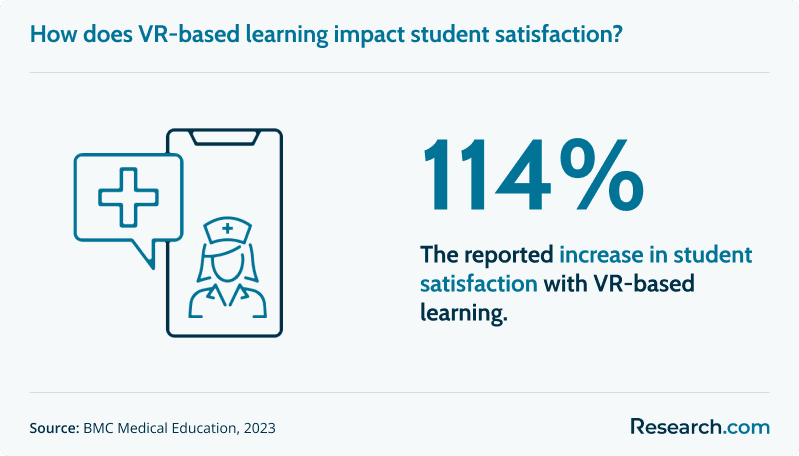
- Augmented and virtual reality medical training: AR and VR tools can help students visualize anatomy, practice procedures, and work through patient scenarios. A recent study by Liu et al. found that VR improved students' theoretical knowledge by 97%, practical skills by 52%, and skill retention by 52%, with all results being statistically significant.
The strongest online programs are transparent about which experiences are virtual, which are in person, who arranges clinical placements, and how competencies are verified. Students looking for a shorter route should still examine clinical quality carefully when comparing affordable accelerated online nursing programs.
How much does an online nursing degree cost for 2027?
The cost of an online nursing degree in 2024 varies by degree level, public or private status, transfer credit, residency rules, clinical fees, technology fees, and program length. Online delivery may reduce commuting or relocation costs, but it does not automatically make a nursing degree inexpensive. Students should calculate the total cost, not just advertised tuition.
| Degree Level | Estimated Cost Range | Best Fit | Cost Notes |
| Associate Degree in Nursing | $20,000 - $40,000 | Students seeking a direct path toward RN licensure through an entry-level nursing route. | Often more affordable at community colleges, though costs vary by institution and residency status. |
| Bachelor of Science in Nursing | $30,000 - $80,000 | New nursing students or licensed RNs completing a bachelor’s degree. | RN-to-BSN tracks may cost less than full prelicensure BSN pathways. Students comparing price should review low-cost online RN to BSN programs. |
| Master of Science in Nursing | $50,000 - $120,000 | Nurses pursuing advanced practice, nurse education, administration, or specialized leadership roles. | Specialization, clinical requirements, and program length can significantly affect total cost. |
| Doctor of Nursing Practice | $70,000 - $150,000 | Nurses seeking a terminal practice-focused doctorate for advanced clinical or leadership work. | DNP programs often include intensive practice, leadership, and evidence-based project requirements. |
Costs Students Often Forget
- Clinical compliance expenses, including background checks, drug screening, immunizations, CPR certification, and health documentation.
- Technology requirements such as a reliable computer, webcam, simulation software, and stable internet access.
- Books, digital course materials, testing platforms, lab kits, and exam preparation tools.
- Travel costs for intensives, labs, clinical rotations, or campus visits if required.
- Lost income if the program requires reduced work hours, daytime clinical availability, or full-time enrollment.
Are online nursing degrees self-paced or structured?
Most online nursing degrees are structured. While students may be able to watch some lectures or complete readings on their own schedule, nursing programs usually follow set academic terms, weekly deadlines, required discussions, scheduled assessments, and clinical progression rules. This structure is intentional because nursing education must document competence, not simply course completion.
| Program Feature | Structured Online Nursing Program | Fully Self-Paced Program |
| Course calendar | Uses fixed start dates, end dates, weekly modules, and semester or term schedules. | Allows broad control over when coursework begins and ends. |
| Assignments | Requires regular deadlines for papers, exams, care plans, discussions, and projects. | Deadlines may be flexible or based on student pacing. |
| Live interaction | May include synchronous lectures, faculty meetings, simulation debriefings, or group work. | Usually relies more heavily on recorded content and independent study. |
| Clinical requirements | Must be completed according to program and site schedules. | Rarely compatible with prelicensure nursing because clinical learning requires supervision. |
| Best suited for | Students who need flexibility but still benefit from accountability and faculty guidance. | Students in nonclinical or limited-scope coursework, depending on program rules. |
Students considering advanced certificate routes, such as a short post-master's FNP certificate, should pay close attention to synchronous sessions, clinical scheduling, and progression policies because “online” does not mean “available whenever you want.”
A well-structured online nursing program often includes recorded lectures, discussion boards, group projects, live faculty interaction, clinical milestones, and consistent academic progress requirements. That combination gives students flexibility while preserving professional standards.
Do state licensing boards accept online nursing degrees?
State nursing boards may accept online nursing degrees, but acceptance depends on whether the program meets that state’s rules. Nursing licensure is not controlled by the school alone. Each state board determines educational requirements, clinical expectations, application rules, and eligibility for licensure exams or advanced practice authority.
Before enrolling, students should verify three things directly: the program’s accreditation status, the state approval or authorization status, and whether graduates are eligible for licensure in the state where they plan to practice.
- Accreditation and authorization: Distance education nursing programs must ensure they meet the licensure and certification requirements in the state where each student resides at the time of enrollment. Students should still confirm this independently with the school and state board.
- Theoretical nursing education: State boards expect students to complete substantial coursework in areas such as anatomy, pharmacology, ethics, nursing theory, patient care, and clinical judgment.
- Verifiable clinical training: Online programs must be able to document approved clinical experiences, rotations, preceptors, practice hours, or other required applied learning components.
Licensure Questions to Ask Before Enrolling
- Is this program approved for students living in my state?
- Will I be eligible for licensure or certification in the state where I plan to work after graduation?
- Who arranges clinical placements—the school or the student?
- Are there states where this program does not meet licensure requirements?
- Will the school provide written confirmation of licensure eligibility for my state?
What is the return on investment for online nursing degrees?
The return on investment for an online nursing degree depends on total cost, time to completion, current income, expected salary increase, employer tuition assistance, certification eligibility, and whether the degree opens a role that was previously unavailable. For an RN, an online BSN may support advancement into leadership, public health, or graduate study. For an MSN or DNP student, ROI may depend more heavily on specialization, local demand, and certification outcomes.
Students should compare the full cost of attendance with realistic career goals rather than assuming that any nursing degree will automatically pay off. A useful first step is reviewing broader cost considerations in Research.com’s guide to how much nursing school costs.
| ROI Factor | Why It Matters | How to Evaluate It |
| Degree goal | An ADN, BSN, MSN, and DNP lead to different opportunities. | Match the degree to a specific career outcome, not just a credential upgrade. |
| Program length | Finishing sooner may reduce opportunity cost, but accelerated formats can be intense. | Estimate how work hours, family obligations, and clinical scheduling will affect completion. |
| Employer support | Some healthcare employers provide tuition assistance or reimbursement. | Ask HR about eligibility, grade requirements, repayment clauses, and approved schools. |
| Licensure or certification eligibility | A degree has limited value if it does not qualify you for the role you want. | Confirm state and certification requirements before applying. |
| Local labor market | Pay and opportunity vary by region, employer type, and specialty. | Compare job postings in your target area before committing to a specialization. |
What career opportunities can a credible online nursing degree unlock?
A credible online nursing degree can support entry into registered nursing, bachelor’s-level advancement, graduate-level specialization, healthcare leadership, nursing education, quality improvement, care coordination, informatics, and advanced clinical practice, depending on the degree level and licensure path. The degree format alone does not determine the career outcome; the graduate’s license, experience, specialization, certifications, and state practice rules are usually more important.
Students who want a role with a sustainable workload should compare specialties carefully. Research.com’s nursing career guide discusses options that some professionals consider among the least stressful nursing specialties, though stress levels vary by setting, staffing, patient population, and employer.
| Degree or Pathway | Potential Career Direction | Important Requirement |
| ADN | Entry-level registered nursing roles after meeting licensure requirements. | State board approval and eligibility for the required licensure exam. |
| RN to BSN | Clinical advancement, leadership preparation, public health, case management, or graduate study. | Active RN license and completion of bachelor’s-level nursing coursework. |
| MSN | Nurse practitioner, nurse educator, nurse administrator, informatics, or specialty practice. | Specialization-specific coursework, clinical hours, and certification where required. |
| DNP | Advanced clinical leadership, systems improvement, executive roles, or high-level practice. | Doctoral practice project, advanced competencies, and role-specific requirements. |
How do online nursing programs ensure interactive learning?
Effective online nursing programs are not passive correspondence courses. They use structured interaction to help students practice clinical reasoning, communicate with peers, receive faculty feedback, and apply evidence-based care principles.
- Live video conferencing: Students attend virtual lectures, skills briefings, case discussions, or Q&A sessions with faculty in real time.
- Virtual collaboration spaces: Group projects, shared documents, and team-based case work help students build communication habits needed in healthcare settings.
- Real-time case analysis: Faculty may guide students through patient scenarios that require prioritization, documentation, and evidence-based intervention planning.
- Immersive simulation: Virtual scenarios allow learners to practice assessment and decision-making without placing real patients at risk.
- Peer learning networks: Discussion boards, study groups, and cohort channels help students test their understanding and stay connected.
- Learning management systems: LMS platforms organize assignments, videos, quizzes, grades, feedback, and student analytics. The importance of these systems became especially clear in 2020 when approximately 75% of undergraduate students were enrolled in at least one online course.
What are the downsides of online nursing education?
Online nursing education can be flexible, but it is not easier by default. Students who choose this format should be honest about their learning style, schedule, technology access, and need for in-person support.
| Potential Downside | Why It Can Be a Problem | How to Reduce the Risk |
| Less immediate face-to-face contact | Students may miss spontaneous instructor feedback, informal peer support, and in-person mentoring. | Choose programs with live sessions, faculty office hours, cohort interaction, and prompt response policies. |
| High self-management demands | Online students must track deadlines, readings, exams, clinical paperwork, and technology requirements. | Use a weekly study schedule and choose a structured program if you need accountability. |
| Limited informal networking | Remote students may have fewer casual opportunities to meet faculty, classmates, and local healthcare contacts. | Join professional associations, attend optional intensives, and use alumni networks and clinical placements strategically. |
| Technology learning curve | Virtual simulations, LMS tools, proctored exams, and video platforms can be frustrating for students who are not comfortable online. | Complete technology orientation early and confirm support availability before classes begin. |
| Technology access barriers | Reliable internet, a suitable computer, and a quiet testing environment are essential for success. | Review device requirements in advance and consider the technology-access concerns highlighted in the 2024 report by ACT Research. |
Do online RN to BSN programs without clinicals meet industry standards?
Online RN to BSN programs without traditional clinical placements can meet industry expectations when they are designed for licensed RNs who already have direct patient-care experience and when the program satisfies accreditation and state requirements. These programs often emphasize leadership, community health, evidence-based practice, quality improvement, population health, and professional nursing development rather than repeating basic bedside clinical training.
Students should not assume that “no clinicals” means “no applied work.” Many programs still require projects, practicums, community assessments, simulations, capstones, or employer-based assignments. Research.com’s guide to online RN to BSN programs with no clinicals can help licensed nurses understand how these models differ.
What factors should prospective students consider when choosing an online nursing program?
The best online nursing program is the one that fits your licensure goal, schedule, budget, learning style, and career plan. Rankings and tuition lists can help you build a shortlist, but they should not replace direct verification with the school, accreditor, and state nursing board.
| What to Compare | Questions to Ask | Why It Matters |
| Accreditation and state authorization | Is the program accredited, and does it meet requirements in my state? | This affects licensure, certification, employer acceptance, and transfer options. |
| Clinical placement model | Does the school place students, or must I find my own site and preceptor? | Clinical placement delays can extend time to graduation. |
| Schedule and pace | Is the program full-time, part-time, accelerated, synchronous, asynchronous, or hybrid? | A program that looks short may be difficult to complete while working. |
| Total cost | What are tuition, fees, books, travel, clinical costs, and technology expenses? | The cheapest tuition rate may not reflect the true cost of attendance. |
| Student support | Are tutoring, advising, technical support, mental health resources, and career services available online? | Support can affect persistence, especially for working adults. |
| Career alignment | Does the curriculum prepare me for the specialty, license, or credential I want? | Program fit matters more than convenience alone. |
Students pursuing a fast advanced-practice route should review program length and clinical expectations carefully. For example, one-year nurse practitioner programs may appeal to experienced nurses, but the pace can be demanding.
What salary can online nursing graduates expect?
Salary outcomes for online nursing graduates depend on the same factors that affect campus graduates: license level, specialty, state, employer type, shift, experience, certifications, and advanced practice authority. An accredited online degree may support career mobility, but it does not guarantee a specific salary.
Students interested in advanced practice compensation should research the specialty and state where they plan to work. For example, psychiatric mental health nursing salaries vary by location; Research.com provides a state-focused discussion of psychiatric nurse practitioner salary considerations.
How are student competencies evaluated in online nursing programs?
Online nursing programs evaluate students through multiple measures rather than a single exam. The goal is to confirm that students can apply nursing knowledge safely, communicate effectively, make sound judgments, and meet professional standards.
- Written exams and quizzes: These assess foundational knowledge in nursing theory, pharmacology, pathophysiology, ethics, and patient care.
- Simulation-based assessments: Students respond to virtual patient situations and may be evaluated on prioritization, documentation, assessment, and intervention choices.
- Objective structured clinical examinations: OSCE-style evaluations may be used to assess practical reasoning and clinical performance in standardized scenarios.
- Case studies and care plans: Learners demonstrate how they interpret patient information and develop evidence-based plans.
- Clinical or practicum evaluations: Preceptors and faculty document applied performance when in-person or practice-based experiences are required.
- Capstone or quality improvement projects: Advanced programs often require students to identify a practice problem, apply evidence, and evaluate outcomes.
Competency-based evaluation is especially important in shortened formats. Students comparing options such as 6-month RN to BSN programs should ask how the school verifies learning quality within an accelerated timeline.
What specialized certifications can further enhance a nursing career?
Specialized certifications can help nurses demonstrate focused expertise, qualify for certain roles, or move toward advanced practice. The right certification depends on the nurse’s license, degree level, specialty, and state rules. Certifications should be selected strategically, not simply added for résumé length.
Examples include certifications or certificate pathways in psychiatric mental health, family practice, leadership, education, informatics, critical care, case management, and other focused areas. Nurses interested in mental health practice may compare options such as an affordable psychiatric nurse practitioner graduate certificate program.
What are the admission requirements for online nursing programs?
Admission requirements vary by degree level. Prelicensure programs may require prerequisites, entrance exams, background checks, immunization records, and clinical eligibility documentation. RN completion programs usually require an active RN license. Graduate programs may require a BSN, professional experience, a minimum GPA, references, a personal statement, and sometimes specialty-specific prerequisites.
| Program Type | Common Admission Requirements | What to Watch For |
| ADN or prelicensure BSN | Prerequisite science courses, GPA requirements, entrance testing, background checks, and clinical eligibility documents. | Confirm state approval and in-person clinical requirements before applying. |
| RN to BSN | Active RN license, prior nursing degree or diploma, transcripts, and general education requirements. | Transfer credit policies can change both cost and completion time. Some students compare streamlined options such as an accessible online RN to BSN pathway. |
| MSN | BSN or approved bridge background, RN license, professional references, statement of purpose, and experience requirements. | Specialty tracks may require clinical placements and certification eligibility review. |
| DNP | MSN or BSN-to-DNP eligibility, advanced practice preparation when required, references, clinical documentation, and project readiness. | Students should review practice-hour requirements and final project expectations. |
How do online nursing programs foster academic research and innovation?
Online nursing programs support research and innovation by teaching evidence-based practice, data interpretation, quality improvement, healthcare technology, and systems thinking. Graduate programs may require students to evaluate clinical evidence, design practice improvements, or complete scholarly projects tied to patient outcomes or organizational needs.
Online platforms can also make research collaboration easier for working nurses by supporting virtual meetings, shared datasets, digital libraries, and faculty mentorship across locations. Students entering nursing from another field may explore accelerated academic routes such as the shortest direct-entry MSN programs for non-nursing bachelor's degree holders, but they should still verify clinical and licensure requirements carefully.
What types of support are available to online nursing students?
Support services can determine whether an online nursing student stays on track. A credible program should offer more than a course portal. Students should look for academic, technical, clinical, financial, career, and wellness support that is accessible remotely.
- Technical support: Many programs provide help with login issues, proctored testing, simulation software, video platforms, and learning management systems.
- Academic advising: Advisors help students plan courses, understand progression rules, and avoid delays caused by missing prerequisites or clinical documents.
- Career services: Support may include résumé feedback, interview coaching, job boards, employer events, and specialty career guidance. DNP students can also use career resources to evaluate questions such as how much DNP graduates make by location and role.
- Technology training: Orientation modules and tutorials help students use virtual classrooms, digital libraries, simulation tools, and online testing platforms.
- Financial guidance: Financial aid staff can explain scholarships, grants, loans, payment plans, employer reimbursement, and budgeting considerations.
- Alumni networks: Alumni communities may provide mentoring, job leads, specialty advice, and professional connections.
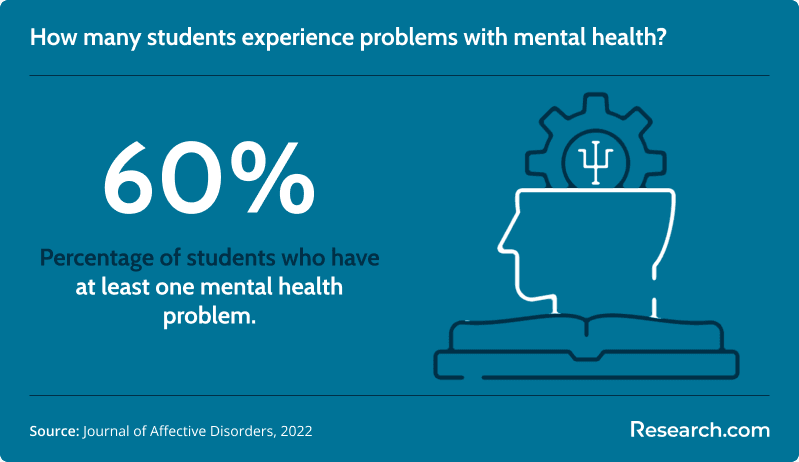
- Mental health counseling: Nursing school can be stressful, especially for working adults managing clinical demands and family responsibilities. Online access to counseling or telehealth support can be valuable.
How has online nursing education evolved over the past decade?
Online nursing education has moved far beyond static slide decks and message boards. Programs now use more advanced learning systems, stronger student analytics, virtual simulation, secure testing tools, video-based collaboration, and digital clinical documentation. These changes have made online nursing education more interactive, but they have also raised expectations for student technology skills and program quality.
- Artificial intelligence: AI-supported tools can help personalize practice questions, identify knowledge gaps, and support adaptive learning, though faculty oversight remains essential.
- Cybersecurity improvements: Encryption, multi-factor authentication, secure testing, and protected data systems have become more important as education platforms handle sensitive academic and health-related information.
- Personalized learning systems: Some platforms adjust content, feedback, and practice activities based on student progress.
- Global collaboration tools: Video conferencing and shared digital workspaces allow students and faculty from different regions to collaborate more easily.
- Advanced simulation: Virtual and augmented reality tools now support patient scenarios, procedural practice, and clinical reasoning exercises. These tools can be especially useful in specialized routes such as a short online PMHNP program, where students must connect theory with complex patient needs.
Can online bridge programs boost nursing career progression?
Online bridge programs can help nurses move from one credential level to another without starting over. They are commonly designed for licensed nurses or healthcare professionals who already have relevant education and experience. A bridge program may shorten the path from ADN or ASN preparation to graduate-level study, but students must examine admissions rules, transfer credit, clinical expectations, and licensure outcomes carefully.
Programs such as ADN-to-MSN and ASN-to-NP bridge pathways can support career advancement when they align with the nurse’s specialty goals and state requirements. The strongest bridge programs clearly explain how prior learning is applied, how graduate-level readiness is assessed, and how clinical placements are supported.
How do online accelerated nursing programs compare to traditional programs?
Online accelerated nursing programs compress coursework into a shorter schedule while still requiring students to meet academic and clinical standards. They may be a good fit for highly organized students who can handle intensive reading, frequent assignments, simulation work, and clinical scheduling. They may be a poor fit for students who need a slower pace or who cannot adjust work hours around required experiences.
| Comparison Point | Online Accelerated Program | Traditional Program |
| Pace | Faster and more intensive, with less downtime between courses. | Usually spread over a longer timeline with more scheduling space. |
| Flexibility | Coursework may be online, but clinicals and deadlines can be demanding. | May require more campus attendance but can offer predictable in-person routines. |
| Best for | Students with strong time management, prior credits, and clear career goals. | Students who want more gradual progression and in-person support. |
| Main risk | Burnout, clinical scheduling conflicts, and limited time to recover from weak performance. | Longer time to completion and potentially higher opportunity cost. |
Students pursuing advanced practice may also compare fast-track nurse practitioner programs, but they should confirm certification eligibility and clinical placement support before enrolling.
Do online nursing programs offer dedicated career placement services?
Many accredited online nursing programs offer career support, but the quality varies widely. Some provide basic résumé templates, while others offer specialty advising, employer introductions, mock interviews, job boards, alumni mentoring, and recruitment events with healthcare organizations. Students should ask what services are available to online students specifically, not just campus learners.
Career placement support is helpful, but it should not be the only reason to choose a school. Admissions accessibility, academic quality, accreditation, clinical support, and licensure fit matter more. Applicants building a broad school list may also review Research.com’s discussion of the easiest nursing schools to get into, while remembering that easier admission does not always mean the best long-term fit.
Common Mistakes to Avoid When Choosing an Online Nursing Degree
| Mistake | Why It Hurts Students | Better Approach |
| Assuming all online nursing degrees are accepted everywhere | State licensure rules vary, and some programs may not meet requirements in every state. | Check with the state nursing board before enrolling. |
| Looking only at tuition | Fees, clinical travel, books, testing platforms, and lost work time can change the real cost. | Calculate total cost of attendance and opportunity cost. |
| Ignoring clinical placement details | Students may face delays if they must find their own site or preceptor. | Ask for written details on placement support and site approval. |
| Choosing the fastest program automatically | Accelerated formats can be difficult to manage with work or family responsibilities. | Compare pace, workload, support, and completion expectations. |
| Relying only on rankings or advertisements | Marketing claims may not reflect licensure fit, faculty access, or student outcomes. | Verify accreditation, outcomes, support services, and state eligibility directly. |
| Assuming online means easy | Nursing programs require discipline, assessment, clinical judgment, and professional accountability. | Choose a format that matches your learning habits and available study time. |
Here’s What Graduates Have to Say About Their Credible Online Nursing Degrees
- Earning my BSN online while working full time and caring for my family was challenging, but the schedule made it possible. The live discussions, organized coursework, and responsive instructors helped me stay connected and build confidence as I moved forward in nursing. Daniel
- I worried that an online nursing degree might not feel hands-on enough, but the program’s accreditation, simulation work, and clinical coordination made a real difference. The experience was demanding, but it prepared me to take the next step professionally. Allison
- Returning to school after years in the workforce felt intimidating at first. The online format, faculty access, student community, and career services helped me manage the transition and pursue a more specialized nursing role. Pamela
References:
- AACN. (2022, April 5). Nursing schools see enrollment increases in entry-level programs, signaling strong interest in nursing careers. American Association of Colleges of Nursing. Retrieved December 10, 2024.
- AACN. (2024, June). The impact of education on nursing practice. American Association of Colleges of Nursing. Retrieved December 10, 2024.
- BHW - HRSA. (2022, November). Nurse workforce projections, 2020-2035. Bureau of Health Workforce. Retrieved December 12, 2024.
- BHW - HRSA. (2024, March). Nursing education and training: Data from 2022 NSSRN. Bureau of Health Workforce. Retrieved December 10, 2024.
- Hanson, M. (2024, May 28). Average cost of college & tuition. Education Data Initiative. Retrieved December 12, 2024.
- Lipson, S. K., Zhou, S., Abelson, S., Heinze, J., Jirsa, M., Morigney, J., Patterson, A., Singh, M., & Eisenberg, D. (2022). “Trends in college student mental health and help-seeking by race/ethnicity: Findings from the national healthy minds study,” 2013–2021. Journal of Affective Disorders, 306, 138-147.
- NCES. (2023, July 20). Fast facts: Distance learning. National Center for Education Statistics. Retrieved December 12, 2024.
Key Insights
- An online nursing degree can be credible in 2027, but only when the program is accredited, state-compliant, clinically sound, and aligned with the student’s licensure or career goal.
- Accreditation is not optional research. Students should verify institutional accreditation, nursing programmatic accreditation, and state authorization before applying.
- Most online nursing programs are structured rather than fully self-paced because nursing education must document competence, clinical readiness, and professional progression.
- Online coursework can prepare students for real healthcare settings when paired with approved clinical placements, simulation, case analysis, faculty feedback, and competency-based evaluation.
- Cost varies widely by degree level, with listed ranges from $20,000 - $40,000 for an ADN to $70,000 - $150,000 for a DNP. Students should calculate total cost, not just tuition.
- The biggest enrollment risks are choosing without checking state licensure eligibility, underestimating clinical placement demands, focusing only on speed or price, and assuming online means easier.
- The best program is not necessarily the fastest or cheapest. It is the one that meets professional standards, fits your schedule, supports your clinical requirements, and moves you toward a realistic nursing career outcome.
Other Things You Should Know About Credible Online Nursing Degrees
Check the program’s curriculum and state approval letter for the required clinical placements and supervision plan. Prelicensure nursing programs commonly require at least 500 to 1,000 supervised clinical hours, completed at approved sites under licensed preceptors or faculty oversight.
To ensure credibility, verify the program is accredited by a recognized body like the CCNE or ACEN. Also, check if the degree includes clinically supervised practice in healthcare settings, essential for gaining practical skills and meeting licensure requirements.