2027 Best Online Nursing Programs in Indiana – Accredited RN to BSN Programs

Co-Founder and Chief Data Scientist
Indiana needs more nurses, and prospective students need clearer ways to choose a program that actually leads to licensure, career mobility, and a realistic return on investment. The COVID-19 pandemic intensified an already serious workforce shortage, and Indiana’s House Bill 1003, “Nursing Indiana Back to Health,” was introduced to expand prelicensure nursing enrollment and increase nursing faculty capacity.
Even with efforts from institutions such as Ivy Tech Community College, qualified applicants can still be denied admission because programs may lack faculty, clinical placements, lab space, or other resources. Indiana must graduate over 1,300 more nurses annually by 2031 to meet demand, which makes program access, accreditation, clinical training, and licensure alignment especially important.
This guide explains how online nursing programs in Indiana work, when they make sense, what they cost, how employers view them, what licensure steps you must complete, and how to compare programs before enrolling. It is designed for working adults, current RNs, career changers, rural students, and anyone deciding whether an online nursing degree is the right path.
Online Nursing Programs in Indiana Table of Contents
- Can you get a degree completely online?
- Will employers take my online degree seriously?
- Are online degrees recognized all over the world?
- Online vs. Traditional Nursing Programs in Indiana
- How much does an online nursing degree in Indiana cost?
- What are the requirements for online nursing degree programs in Indiana?
- Courses to Expect in Online Nursing Programs in Indiana
- Things to Look for in Online Nursing Programs in Indiana
- 2027 Best Online Nursing Programs in Indiana
- What financial aid and scholarship opportunities can support my online nursing studies in Indiana?
- How do I meet nursing licensure requirements in Indiana?
- The Flexibility of Online Nursing Programs and How They Accommodate Working Adults
- How can Indiana's online nursing programs help address the rural healthcare shortage?
- What are the benefits of online BSN programs for non-nurses in Indiana?
- What challenges do online nursing programs in Indiana face?
- How can online nursing programs support your transition to advanced practice roles?
- How do online nursing programs integrate healthcare informatics and administrative skills?
- How can online nursing programs prepare students for specialized roles like nurse midwife?
- How do online nursing programs prepare students for practical nursing roles?
- How do online nursing programs foster interdisciplinary healthcare collaboration?
- What career opportunities are available for graduates of online nursing programs in Indiana?
- What student support and career services are offered by online nursing programs in Indiana?
- How do online nursing programs incorporate virtual simulation for enhanced clinical training?
Quick Answer: Are Online Nursing Programs in Indiana Worth Considering?
Online nursing programs in Indiana can be a strong option if the program is accredited, accepted for Indiana licensure, transparent about clinical requirements, and affordable for your situation. They are especially useful for licensed RNs completing a BSN, working adults who need flexible coursework, rural students who cannot easily commute, and nurses preparing for graduate study.
However, “online” does not always mean every requirement is remote. Prelicensure nursing programs usually require in-person labs, simulations, clinical rotations, background checks, health documentation, and licensure exams. Before enrolling, confirm that the program meets Indiana Board of Nursing expectations and that clinical placements are available where you live.
| Student Goal | Online Nursing Program Fit | What to Verify Before Enrolling |
| Current RN wants a BSN | Often a good fit because RN to BSN coursework is commonly online | Accreditation, transfer credit policy, total credits, cost per credit, and employer tuition support |
| Non-nurse wants to become an RN | Possible through selected BSN or accelerated BSN pathways, but hands-on requirements are still required | Clinical placement support, NCLEX preparation, state approval, and admission prerequisites |
| Working nurse wants leadership or advanced practice | Can be a practical route through MSN, DNP, or bridge programs | Certification alignment, practicum requirements, faculty credentials, and state authorization |
| Student wants a fully remote experience | Best suited for post-licensure programs rather than initial clinical preparation | Whether any campus visits, labs, proctored exams, or local clinical hours are mandatory |
Can you get a degree completely online?
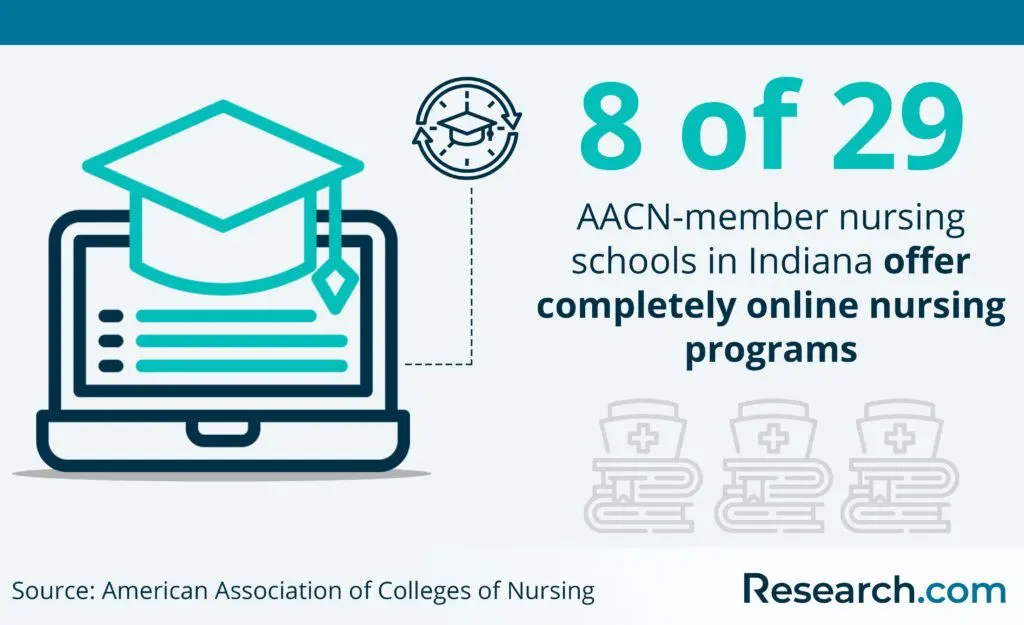
You can complete many nursing courses online in Indiana, and some programs are designed as fully online academic pathways. Eight of the over 20 Indiana nursing schools offer fully online programs, and students can find accredited undergraduate and graduate options, including online bachelor’s in nursing degree programs.
The important distinction is between online coursework and clinical preparation. RN to BSN programs are often the easiest to complete online because students already hold an RN license. Prelicensure programs that prepare students for initial nursing licensure typically still require supervised clinical experiences, labs, simulation work, and other in-person learning components.
Drexel University recommends confirming that a program is accredited by a recognized nursing accreditor such as the Commission on Collegiate Nursing Education (CCNE). Students should also look for programs offered by established institutions that provide comparable on-campus nursing education, not only online instruction.
Will employers take my online nursing degree seriously?
Employers generally accept online nursing degrees when the degree comes from an accredited, reputable institution and the graduate meets licensure or certification requirements for the role. According to Drexel University, online degrees are viewed as credible when they are awarded by established colleges, especially institutions that also offer campus-based programs.
For nursing, the diploma format matters less than whether you are clinically competent, licensed, and trained through an approved program. Hiring managers are more likely to focus on your RN license, NCLEX eligibility or results, clinical experience, specialty certifications, work history, references, and the reputation of the nursing school.
Are online degrees recognized all over the world?
International recognition is not automatic. An online nursing degree earned in Indiana may be accepted in some countries and questioned or rejected in others, depending on local nursing regulations, licensure rules, clinical-hour standards, and credential evaluation policies.
Three factors can improve the likelihood that a degree will be considered legitimate outside the United States:
- Accreditation: The program should hold nursing accreditation from a recognized body and meet state standards.
- Institutional reputation: A degree from a well-known college or university is often easier to evaluate than one from a lesser-known provider.
- Clinical and academic quality: Countries may review whether your nursing education included sufficient supervised patient-care experience.
If you plan to work abroad, contact the nursing regulator or credential evaluation authority in the country where you want to practice before enrolling. Ask whether an online or hybrid Indiana nursing degree can be used for licensure, registration, migration, or employment in that jurisdiction.
Online vs. Traditional Nursing Programs in Indiana
Online and campus-based nursing programs can both lead to strong outcomes, but they serve different student needs. Institutional quality and accreditation are central to employer confidence. The National Association of Colleges and Employers found that 87.4% of employers that track new hires’ degree modality reported hiring college graduates with online degrees in 2024. Programs from reputable colleges that also operate campus-based offerings are often viewed more favorably than online-only institutions because employers may associate them with broader academic resources and student support.
The better choice depends on your schedule, learning style, transportation access, financial situation, and need for in-person structure. Use the comparison below to narrow your decision.
| Factor | Online Nursing Program | Traditional Nursing Program | Best Fit |
| Schedule | Often offers asynchronous coursework, flexible assignment windows, and fewer required campus visits | Usually follows fixed class meeting times and campus-based labs | Online works well for working adults; campus works well for students who need structure |
| Clinical learning | Coursework may be online, but clinical hours usually occur in approved healthcare settings | Clinical rotations are commonly coordinated near the campus or partner facilities | Compare how each program secures placements before choosing |
| Student interaction | Uses discussion boards, video meetings, virtual office hours, and group projects | Provides face-to-face access to faculty, classmates, labs, and campus resources | Campus may suit students who learn best through direct in-person engagement |
| Pacing | May allow more control over when weekly coursework is completed | Moves through a more fixed academic schedule | Self-motivated students often do well online |
| Cost profile | May reduce commuting, parking, relocation, and housing costs | May include added living or transportation expenses | Calculate total cost, not tuition alone |
Schedule
Online nursing programs usually provide more control over when you watch lectures, review materials, and complete assignments. Deadlines still apply, and synchronous sessions may be required, but students often have more room to plan coursework around work shifts and family responsibilities.
Campus programs usually require students to attend classes, labs, and exams at set times. This structure can help students who want direct accountability, regular in-person contact, and a predictable weekly routine.
Learning Experience
Online learning can feel more individualized because students communicate through digital platforms, recorded lectures, virtual meetings, and written discussions. This format can be effective for students who are comfortable asking questions online and managing their own study schedule.
Traditional programs provide more immediate face-to-face interaction. Students who prefer practicing skills in campus labs, studying with classmates in person, and speaking with faculty before or after class may prefer this format.
Pacing
Many online programs allow students to complete weekly work at times that fit their lives. That flexibility can be valuable, but it also requires discipline. Students who procrastinate or need frequent reminders should look for online programs with strong advising, scheduled check-ins, and clear milestone tracking.
Traditional programs often move students through a set sequence. This can be less flexible but may help learners stay on track, especially in demanding prelicensure nursing courses.
Teaching Methods
Online nursing programs may use recorded lectures, live video classes, case studies, interactive modules, virtual simulations, online exams, discussion forums, and digital care-plan assignments. Strong programs also provide faculty feedback and opportunities to apply concepts to real clinical problems.
Campus programs typically combine lectures, lab practice, simulations, and clinical placements in a more physically immersive format. Students deciding among nursing degree options should consider how much in-person instruction they need to build confidence.
When Online Nursing Makes Sense
- You already hold an RN license and want to complete a BSN while working.
- You live far from a campus but can complete clinical requirements locally.
- You are comfortable learning through technology and managing deadlines independently.
- You need to reduce relocation, commuting, parking, or room-and-board costs.
- You want to continue earning income while completing a degree.
When a Campus Program May Be Better
- You are entering nursing for the first time and want extensive in-person lab support.
- You learn best through face-to-face instruction and immediate feedback.
- You need a highly structured schedule to stay accountable.
- You do not have reliable internet access or a quiet place to study.
- You want campus-based peer networks, student organizations, and direct faculty access.
Is an online degree cheaper?
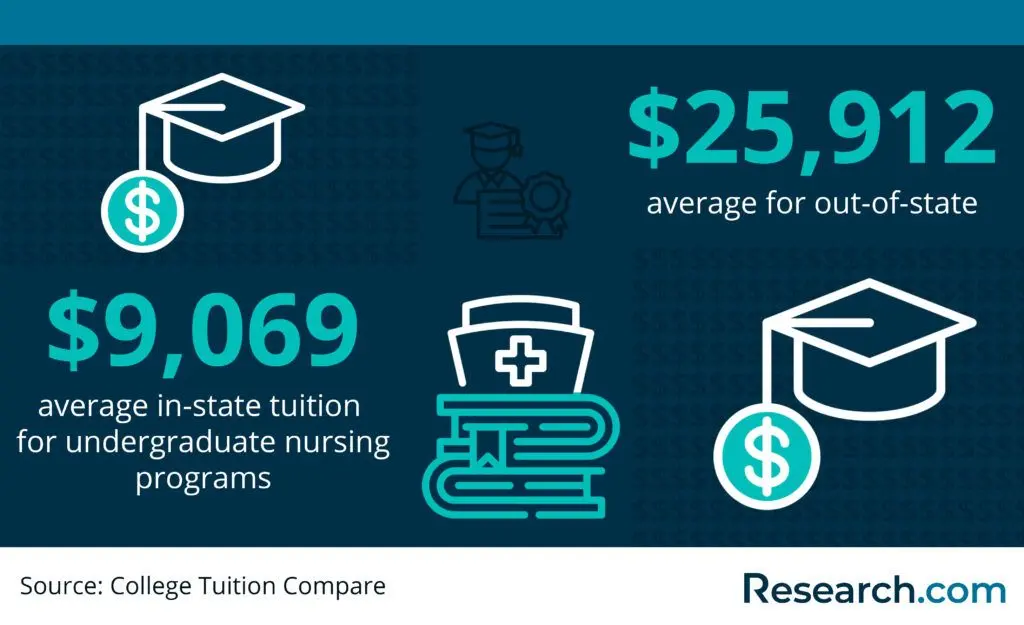
Online nursing degrees in Indiana can be less expensive overall, but the answer depends on the school, residency status, program type, transfer credits, and required fees. Based on data gathered by Research.com expert reviewers, online nursing in Indiana could cost from $10,500 to $29,400 annually, assuming 30 total credit hours per year. College Tuition Compare reports $9,069 to $25,912 tuition for traditional nursing programs in the U.S.; however, campus attendance can add housing and living expenses, including an estimated average room and board cost per year for nursing students of around $13,175 (2026).
The most useful comparison is total net cost. Include tuition, fees, textbooks, technology, uniforms, background checks, immunizations, clinical travel, exam fees, lost work hours, and financial aid before deciding which format is cheaper.
Is an online degree as good as a regular degree?
An online nursing degree can be comparable to a campus degree when it meets three conditions: it is accredited, it is offered by a reputable institution, and it has an on-campus counterpart from the same institution (AACN, 2024). Employers and Indiana nursing licensure processes focus heavily on program legitimacy, clinical readiness, and licensure status.
- Program quality: A strong online program should be rigorous, clinically aligned, and accredited by a recognized nursing accreditor.
- Institutional credibility: The college’s reputation, faculty qualifications, clinical partnerships, and student outcomes can influence how the degree is perceived.
- Learning fit: Online learning works best for students who can organize their time, communicate proactively, and stay motivated without daily in-person meetings.
Licensure bodies and registries, including the Indiana CNA registry, typically evaluate credentials, licenses, and approved training rather than whether every lecture was delivered online.
How much does an online nursing degree in Indiana cost?
The average cost of online nursing programs in Indiana ranges from $350 to $980 per credit hour. Actual cost can change based on residency, program length, transfer credits, school fees, clinical requirements, and whether the program is undergraduate or graduate level. Always verify current tuition and fee schedules directly with the institution before applying.
| School or Program | Reported Tuition or Cost | Decision Note |
| Indiana University Southeast | $19,978 | Ask whether the total includes fees, books, and clinical-related costs |
| Indiana University Online | $350 per credit hour for in-state students, $455 per credit hour for out-of-state students | Residency status can make a substantial difference |
| Goshen College | $34,540 | Confirm transfer credit rules and total program cost |
| Indiana State University | $20,160 | Review whether additional course or technology fees apply |
| University of Indianapolis | $980 per credit hour | Compare total credits required, not only the per-credit price |
To estimate affordability, request a program-specific cost sheet and ask the financial aid office to separate direct school charges from indirect expenses such as equipment, travel, and exam preparation.
What are the requirements for online nursing degree programs in Indiana?
Admission requirements vary by degree level, but online nursing students should be prepared for academic screening, clinical compliance requirements, technology expectations, and licensure-related documentation. Enrollment is also an important workforce issue: baccalaureate-level nursing enrollment dropped by 1.4% last year, ending a 20-year period of enrollment growth, while the U.S. nursing shortage remains serious (HRSA, 2024). Indiana is among the states facing significant shortages, so applicants should prepare early and apply strategically.
Admission Requirements
- Educational background: Most programs require a high school diploma or equivalent for entry-level study. Advanced or bridge programs may require prior college credits, an associate degree, a bachelor’s degree, or an active RN license.
- GPA: Many programs set minimum GPA expectations between 2.0 and 3.0, while competitive tracks may prefer higher academic performance.
- Standardized tests: Some undergraduate programs may ask for SAT or ACT scores. Graduate pathways, including online BSN to DNP programs, may require the GRE or another exam depending on the institution. Students whose first language is not English may need TOEFL or similar language scores.
- Letters of recommendation: Programs may request references from teachers, employers, supervisors, or healthcare professionals who can speak to your readiness for nursing education.
- Personal statement or essay: Applicants are often asked to explain career goals, motivation for nursing, relevant experience, and reasons for choosing the program.
Clinical and Professional Readiness Requirements
Because nursing is a patient-care profession, admission is only one part of the process. Students may also need to complete background checks, drug screening, immunization documentation, CPR certification, health insurance verification, and clinical site onboarding. Requirements can vary by school and placement site.
- Clinical knowledge: Nursing students must develop safe patient-care skills such as vital sign measurement, wound care, hygiene support, specimen collection, CPR, documentation, and ethical decision-making.
- Mental health awareness: Employers value nurses who understand mental health conditions, therapeutic communication, crisis response, and patient-centered care.
- Personal care experience: Experience in home health, rehabilitation, nursing homes, or direct support roles can help students understand mobility assistance, safety, and daily care routines.
- Activities of daily living: Nurses and nursing support staff frequently assist with eating, bathing, grooming, toileting, dressing, and mobility, especially in long-term care and acute care settings.
- Digital workplace skills: Familiarity with Microsoft Suite, including Word, Excel, OneNote, Outlook, PowerPoint, and Publisher, can help with schoolwork and healthcare communication. Experience with hospital management systems (HMS) or electronic health records can be an additional advantage.
What are the technological requirements for online nursing?
Online nursing students need dependable technology because coursework, exams, advising, simulations, and group assignments may be delivered digitally. Students should review each school’s requirements, but common technological requirements include:
- Reliable internet connection: A connection speed of at least 400 kbps is recommended for use with cable or DSL.
- Computer or laptop: A computer or laptop with a 1 GHz processor and 256 MB of RAM is recommended for Windows computers, while a 1 GHz Intel processor (Core 2 Duo) and 1 GB RAM are recommended for Mac devices.
- Video chat software: Microsoft Teams, Skype, Zoom, or a comparable platform may be required for live sessions, faculty meetings, group projects, or clinical conferences.
- Webcam: Some courses require a high-definition webcam for video meetings, presentations, identity verification, or remote proctoring. Most laptops and tablets purchased within the last five years include built-in cameras.
- Headphones and microphone: A headset or external USB microphone can improve audio quality during long discussions, simulations, or advising appointments.
Before classes begin, test your learning platform access, browser compatibility, video setup, and backup internet plan. Technology problems can affect attendance, assignment submission, and exam performance.
Courses to Expect in Online Nursing Programs in Indiana
Online nursing programs in Indiana generally cover the same major subject areas as comparable campus programs, though delivery format and clinical arrangements differ by school. Course sequences depend on whether you are in an RN to BSN, prelicensure BSN, MSN, DNP, LPN, or bridge pathway.
| Course Area | What You Learn | Why It Matters in Practice |
| Foundational nursing sciences | Anatomy, physiology, microbiology, pharmacology, and medical terminology | Builds the scientific base for safe medication use, assessment, and patient care |
| Nursing concepts | Nursing theory, health assessment, care planning, and the nursing process | Helps students organize clinical thinking and patient-centered interventions |
| Clinical nursing | Supervised practice in patient care settings, often with registered nurse oversight | Connects classroom knowledge to hands-on care, safety, documentation, and communication |
| Specialty nursing | Pediatrics, adult health, mental health, community health, or maternal-newborn care | Introduces students to populations and settings they may pursue after graduation |
| Nursing research | Evidence appraisal, research design, data interpretation, and quality improvement | Supports evidence-based practice and better patient outcomes |
| Nursing leadership | Team communication, conflict resolution, delegation, ethics, and systems improvement | Prepares nurses for charge roles, management, education, and administrative pathways |
Students may also complete general education requirements such as English, math, psychology, statistics, sociology, or humanities. Transfer credits can significantly change how many courses you still need, so ask for an official transfer evaluation before calculating completion time.

Things to Look for in Online Nursing Programs in Indiana
With over 600 nursing schools in the U.S. offering online options, including 254 schools with the best online RN to BSN programs and 655 schools offering online graduate nursing programs (AACN, 2024), students need a practical screening process. The right program is not simply the cheapest or fastest; it is the one that aligns with licensure, clinical access, learning needs, and career goals.
| What to Check | Why It Matters | Question to Ask |
| State authorization | Not every online program can enroll students in every state or country | Can I legally enroll from my current location? |
| Clinical placement support | Online students may still need approved local clinical sites | Does the school arrange placements, or am I responsible for finding them? |
| Teaching format | Asynchronous and synchronous classes require different schedules | How many live sessions, campus visits, or proctored exams are required? |
| Reputation | Employer confidence can be influenced by institutional credibility | What are the program’s graduation, retention, and licensure outcomes? |
| Accreditation | Accreditation affects licensure, transferability, graduate admissions, and employer trust | Is the nursing program accredited by ACEN or CCNE? |
| True total cost | Fees, books, technology, travel, and clinical compliance can raise expenses | Can I receive a full cost estimate before enrolling? |
| Student support | Online learners need timely advising, tutoring, tech help, and faculty access | What support is available during evenings, weekends, or clinical terms? |
| On-site requirements | Some “online” programs still require campus labs or intensives | How often must I travel, and where? |
| Career alignment | Programs differ in concentrations, practicum options, and employer connections | Does this program support my target role after graduation? |
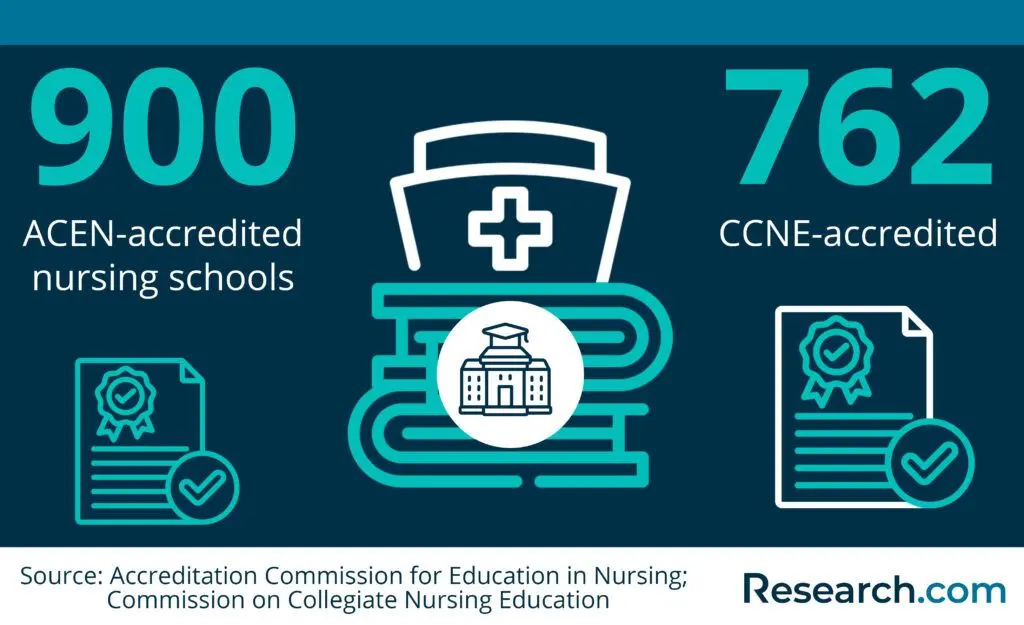
Pay special attention to accreditation. The two most common nursing accreditation organizations are ACEN, with over 900 schools accredited, and CCNE, with 762 schools accredited. In Indiana, there are over 29 American Association of Colleges of Nursing (AACN) member schools accredited by these two bodies.
Common Mistakes to Avoid
- Choosing only by tuition: A low per-credit rate may not be the best deal if the program accepts few transfer credits or adds substantial fees.
- Ignoring accreditation: A non-accredited nursing program can limit licensure, graduate school, financial aid, and employment options.
- Assuming online means no clinical travel: Many programs require local clinical rotations, campus intensives, labs, or proctored assessments.
- Waiting to ask about licensure: Confirm Indiana licensure alignment before you apply, not after you graduate.
- Relying only on rankings: Rankings can be useful, but your decision should also include cost, support, clinical placement, schedule, and outcomes.
- Overlooking employer benefits: Working healthcare employees should ask about tuition reimbursement, shift flexibility, and clinical partnerships.
2027 Best Online Nursing Programs in Indiana
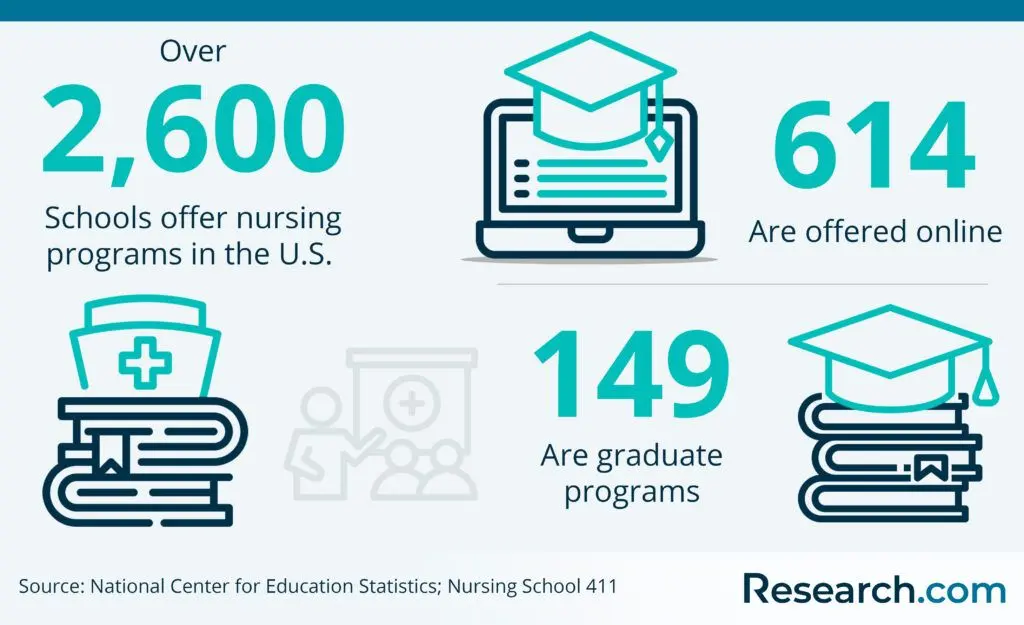
Of the over 2,600 colleges or universities offering a nursing degree program, including certificate or associate degree programs for registered or practical nursing (ADN, LVN, or LPN), and bachelor’s degree registered nursing programs (BSN), 1,695 schools offer online programs (NCSBN, 2024). Of this total, 29 are from Indiana.
The following online RN to BSN programs were identified through Research.com’s review work. These programs may support career growth for licensed nurses and can also help students understand pathways connected to roles such as certified nursing assistant, registered nurse, and Indiana Board of Nursing licensure. Because affordability differs by student, compare tuition, fees, scholarships, employer benefits, and transfer credits when searching for the most affordable RN to BSN program.
1. Ball State University
Ball State University’s RN to BSN program is designed for registered nurses who want to complete a Bachelor of Science in Nursing. The program is delivered fully online and gives students the option to align coursework with professional interests through three concentrations: nurse educator, nurse administrator, and family nurse practitioner.
Program Length: 2 years
Cost per Credit: $336 (resident); $561 (non-resident)
Required Credits to Graduate: 120
Accreditation: ACEN
2. Indiana Wesleyan University
Indiana Wesleyan University’s RN to BSN program is offered online and through an online/onsite hybrid format, with several start dates each year. The fully online track is asynchronous, which can help working nurses complete coursework around employment and personal obligations.
Program Length: 12-18 months
Cost per Credit: $455
Required Credits to Graduate: 37
Accreditation: ACEN
3. Indiana University-Purdue University Indianapolis (IUPUI)
IUPUI’s RN to BSN program provides an online curriculum intended to help nurses respond to current and future healthcare needs. Graduates may use the degree to strengthen preparation for roles in physician offices, neonatal or pediatric care, geriatric care, and other settings.
Program Length: 18 or 24 months
Cost per Credit: $350 (residents); $455 (nonresidents)
Required Credits to Graduate: 120
Accreditation: ACEN
4. Purdue University Global
Purdue University Global’s RN to BSN program offers four tracks for working nurses and includes an option to specialize in Nursing Informatics. The program is fully online and allows students to shape part of their curriculum through nursing electives.
Program Length: 12-18 months
Cost per Credit: $315
Required Credits to Graduate: 90130
Accreditation: ACEN
5. Bethel University
Bethel University’s RN to BSN program supports registered nurses pursuing a BSN in a fully online format. The program is structured for working nurses and claims to place learners on a critical care nurse pathway with a 100% placement rate for its nursing students.
Program Length: 12-16 months
Tracks/Concentrations: Critical Care Nurse
Cost per Credit: $465
Required Credits to Graduate: 120
Accreditation: ACEN
What financial aid and scholarship opportunities can support my online nursing studies in Indiana?
Online nursing students in Indiana should explore federal aid, state aid, school-based scholarships, nursing-specific awards, employer tuition reimbursement, workforce development funding, and loan options. Current healthcare employees should also ask their employer whether tuition assistance is tied to service commitments, grade requirements, or approved-school lists.
Start by completing financial aid steps early, then request a written estimate from each school. Ask whether scholarships apply to online students, part-time students, RN to BSN students, graduate students, or only first-time undergraduates. For a broader planning guide, review the steps for becoming an RN in Indiana.
How do I meet nursing licensure requirements in Indiana?
To work as a nurse in Indiana, your education and clinical experience must align with state licensing standards. Before enrolling, confirm that the program is nationally accredited, state-approved where required, and designed to prepare graduates for the appropriate licensure exam.
After graduation, candidates generally need to submit required documentation, including transcripts, clinical verification when applicable, identification records, and other materials requested by the Indiana Board of Nursing. RN candidates must pass the NCLEX-RN or the relevant licensure examination for their pathway. For detailed steps, eligibility rules, application procedures, and renewal expectations, consult the guide to nursing license requirements in Indiana.
The Flexibility of Online Nursing Programs and How They Accommodate Working Adults
Flexibility is one of the main reasons students choose online nursing programs in Indiana. Working adults, parents, military-connected students, rural residents, and current healthcare employees often need a program that fits around shifts, caregiving, and transportation limits.
Balancing Work and School
Many online nursing programs use asynchronous coursework, allowing students to review lectures, complete assignments, and participate in discussions outside traditional class times. This can be especially helpful for licensed healthcare workers who cannot afford to leave the workforce while earning a BSN, MSN, or advanced credential.
Flexibility does not mean the program is easy. Nursing coursework is time-intensive, and clinical deadlines can be strict. Students should build a weekly study schedule, communicate with supervisors about school obligations, and avoid taking more credits than they can realistically manage.
Clinical Placements and Hands-On Learning
Online programs still need to ensure students develop clinical judgment and hands-on skills. Many schools work with healthcare facilities across Indiana so students can complete clinical hours closer to home. This arrangement can reduce travel burdens, especially for adult learners with work or family responsibilities.
Before enrolling, ask exactly how clinical placements are handled. Some schools coordinate placements directly, while others expect students to help identify approved sites. This difference can affect your timeline, stress level, and ability to graduate on schedule.
Earning Potential and Career Advancement
For working adults, an online nursing degree can support progression from a nursing assistant role to registered nursing, from RN to BSN-prepared nurse, or from bedside nursing into leadership, education, informatics, or advanced practice. Career results are not guaranteed, but a properly accredited degree can expand eligibility for roles that require higher education.
If you want a lower-stress entry point or a more manageable nursing path, compare role expectations and work settings before choosing a program. This guide to the easiest nursing jobs to get can help you think through career fit.
How can Indiana’s online nursing programs help address the rural healthcare shortage?
Rural communities in Indiana can face limited access to healthcare professionals, specialty care, and training locations. Online nursing programs can help by allowing students to complete academic coursework without relocating, then apply their clinical training in or near the communities where they may later work.
- Flexible access for rural students: Students who live far from campus can pursue nursing education without moving away from their community.
- Expanded enrollment capacity: Indiana’s House Bill 1003 supports growth in nursing education, and online delivery can help reach students who may not be able to attend a traditional campus program.
- Preparation for rural health needs: Coursework in community health, chronic disease management, prevention, telemedicine, and resource-limited care can help students understand rural patient needs.
- Telehealth readiness: Online learning environments often expose students to digital communication and remote-care tools, which are increasingly important in rural practice.
- Local workforce development: Students trained near home may be more likely to remain in their area, strengthening the rural healthcare pipeline.
What are the benefits of online BSN programs for non-nurses in Indiana?
Online BSN programs for non-nurses can help career changers enter nursing without starting their education from the beginning. These pathways are often designed for students who already completed college coursework or hold a bachelor’s degree in another field.
1. Faster transition into nursing
Accelerated BSN options may allow students with a prior bachelor’s degree to complete a BSN in 12 to 18 months. This can shorten the path into nursing, but the pace is demanding and often requires significant time for coursework, labs, simulations, and clinical rotations.
2. Flexible academic delivery
Online BSN programs may deliver lectures and assignments remotely while still requiring in-person clinical training. This format can help students balance family, work, or relocation constraints while completing prerequisite and nursing coursework.
3. Required hands-on clinical preparation
Even when lectures are online, students must develop bedside skills through supervised clinical experience. Many Indiana institutions partner with healthcare providers throughout the state, including rural areas, to support required clinical learning.
4. Broader career access after licensure
Graduates of qualifying BSN programs may be prepared to take the NCLEX-RN exam and pursue RN licensure. A BSN can support entry into bedside care, community health, specialty units, leadership preparation, and future graduate study.
Career changers should compare prerequisites, clinical placement policies, cost, completion time, and licensure outcomes. To explore this route further, review online BSN programs for non-nurses.
What challenges do online nursing programs in Indiana face?
Online nursing education expands access, but it also creates practical challenges. Schools must translate complex clinical skills into blended learning models, secure enough clinical placements, support students with different technology skills, and maintain strong faculty engagement at a distance.
Students should ask how each program evaluates hands-on competence, how quickly faculty respond, what happens if a clinical site falls through, and whether the school provides support for students with limited internet access. Those exploring practical nursing pathways can also review how to become an LVN nurse in Indiana through this guide to LVN nursing steps in Indiana.
How can online nursing programs support your transition to advanced practice roles?
Online nursing programs can help licensed nurses move from foundational practice into advanced clinical, leadership, education, or administrative roles. Graduate programs may include advanced assessment, pathophysiology, pharmacology, diagnostic reasoning, population health, leadership, and specialty practicum experiences.
Students targeting advanced practice should confirm that the curriculum aligns with the certification and licensure pathway they want. Practicum hours, faculty qualifications, state authorization, and clinical preceptor support are critical. Nurses interested in advanced clinical autonomy can learn more about how to become a nurse practitioner in Indiana.
How do online nursing programs integrate healthcare informatics and administrative skills?
Modern nursing programs increasingly include digital health, healthcare informatics, electronic health records, quality improvement, data use, compliance, and administrative communication. These topics help nurses operate in technology-driven care environments and can also support movement into non-bedside roles.
Coursework in informatics and administration may be especially valuable for nurses interested in case management, clinical documentation, care coordination, quality assurance, nursing leadership, or revenue-cycle adjacent roles. Students considering administrative healthcare careers can also explore how to become a medical biller and coder in Indiana.
How can online nursing programs prepare students for specialized roles like nurse midwife?
Specialized roles such as nurse midwife require advanced education, clinical preparation, and credential alignment beyond general nursing coursework. Online graduate programs may include maternal-newborn health, reproductive care, advanced assessment, pharmacology, simulation cases, and supervised clinical practicums.
Because specialization requirements are strict, students should verify that the program’s curriculum, accreditation, clinical placements, and certification preparation match their target role. Prospective maternal health providers can review how to become a nurse midwife in Indiana before selecting a program.
How do online nursing programs prepare students for practical nursing roles?
Practical nursing pathways focus on direct patient-care skills, basic assessment, medication administration, documentation, infection control, and communication with RNs and other healthcare professionals. Online components may support theory learning, while labs and clinical experiences help students practice essential bedside procedures.
Students interested in practical nursing should confirm that the program is approved for the intended license and includes enough supervised clinical preparation. For requirements and pathway details, review how to become an LPN in Indiana.
How do online nursing programs foster interdisciplinary healthcare collaboration?
Nurses rarely work in isolation. Online nursing programs can build collaboration skills through team-based assignments, virtual case conferences, simulation scenarios, interprofessional communication exercises, and projects involving care coordination across disciplines.
These experiences prepare students to work with physicians, medical assistants, therapists, social workers, pharmacists, administrators, and community health partners. Students comparing allied health pathways may also find value in reviewing medical assistant programs in Indiana.
What career opportunities are available for graduates of online nursing programs in Indiana?
Graduates of accredited online nursing programs in Indiana may qualify for a wide range of roles depending on their degree level, license, experience, and certifications. Common pathways include registered nurse, BSN-prepared staff nurse, nurse educator, clinical manager, case manager, informatics nurse, community health nurse, nurse practitioner, and healthcare administrator.
| Degree or Credential | Possible Roles | Best For |
| LPN or LVN pathway | Licensed practical nurse roles in long-term care, clinics, rehabilitation, and related settings | Students seeking a practical nursing entry route |
| RN pathway | Registered nurse roles in hospitals, clinics, home health, long-term care, and community settings | Students seeking broad bedside and clinical employment options |
| RN to BSN | BSN-prepared nurse, charge nurse preparation, public health, leadership-track roles | Licensed RNs who want career mobility and future graduate options |
| MSN or DNP | Nurse practitioner, nurse educator, administrator, informatics leader, advanced practice roles | Nurses seeking specialization, leadership, or advanced practice |
Indiana’s rural healthcare needs may create opportunities for nurses willing to work in underserved communities, telehealth-supported care, community health, and chronic disease management. Nurses seeking advanced clinical roles can compare nurse practitioner programs in Indiana to understand next-step options.
What student support and career services are offered by online nursing programs in Indiana?
Strong online nursing programs provide more than digital lectures. Look for academic advising, faculty office hours, technical assistance, online tutoring, library access, writing support, clinical placement guidance, simulation resources, peer mentoring, and licensure preparation.
Career services can also matter. Ask whether the school offers resume reviews, interview preparation, virtual job fairs, employer partnerships, alumni networks, and help identifying clinical or practicum sites. Students comparing graduate-level affordability can also review the cheapest online FNP programs.
How do online nursing programs incorporate virtual simulation for enhanced clinical training?
Virtual simulation gives online nursing students a way to practice clinical reasoning before or alongside in-person rotations. These tools can present patient scenarios, medication decisions, documentation tasks, communication challenges, and emergency responses in a controlled environment.
Simulation is not a full substitute for supervised patient care, but it can strengthen preparation, confidence, and decision-making. Many accredited nursing schools in Indiana use simulation to support modern clinical training and help students prepare for real healthcare settings.
How to Choose the Right Online Nursing Program in Indiana
A good online nursing program should match your current license status, career goal, budget, schedule, and licensure needs. Use a step-by-step evaluation rather than choosing based on marketing claims.
- Define your target role: Decide whether you want to become an RN, complete an RN to BSN, pursue practical nursing, enter advanced practice, or move into leadership.
- Confirm accreditation and approval: Check institutional accreditation, nursing program accreditation, and Indiana licensure alignment.
- Review clinical requirements: Ask where clinical hours occur, who arranges sites, and what happens if placement is delayed.
- Calculate total cost: Include tuition, fees, books, technology, travel, testing, supplies, uniforms, background checks, and lost work hours.
- Compare schedule fit: Look at synchronous requirements, assignment deadlines, practicum expectations, and course load options.
- Ask about student support: Make sure advising, tutoring, faculty access, tech help, and licensure preparation are available to online students.
- Evaluate outcomes: Request graduation rates, licensure pass-rate information when relevant, employment support, and alumni feedback.
- Check transfer credits: A higher-cost school may be cheaper overall if it accepts more prior credits.
Time to Get an Online Nursing Degree in Indiana
Online nursing programs can help Indiana expand access to nursing education, especially for working adults and students outside major metro areas. They can also support the state’s need to strengthen the nursing pipeline after the workforce strain intensified by COVID-19.
The best programs combine flexibility with rigorous clinical preparation, recognized accreditation, transparent costs, and clear licensure alignment. Options such as online masters of nursing programs can support advanced career goals, while RN to BSN and prelicensure pathways can help students move into or upward within nursing.
If you are comparing Indiana programs, review the schools listed above and the remaining options among the 29 nursing schools in Indiana. With careful planning, you may be able to earn a degree, pursue an Indiana nursing license, complete CNA certification in Indiana, or move toward an MSN in nursing administration with limited or no traditional campus attendance, depending on the program and clinical requirements.
Key Insights
- Online nursing can be legitimate, but accreditation is non-negotiable: Employers and licensing processes care most about program approval, accreditation, clinical preparation, and licensure status.
- Not every “online” program is fully remote: Prelicensure nursing students should expect in-person clinicals, labs, simulations, compliance requirements, or proctored assessments.
- Indiana has a workforce need: The state must graduate over 1,300 more nurses annually by 2031, and House Bill 1003 aims to expand enrollment and faculty capacity.
- Cost comparisons must include more than tuition: Online programs may reduce housing and commuting expenses, but students should still budget for fees, technology, books, clinical travel, and exams.
- Online formats are especially useful for working nurses: RN to BSN, MSN, and other post-licensure programs often fit online learning better than initial clinical training.
- Clinical placement support can make or break the experience: Ask whether the school secures placements or expects students to find approved sites themselves.
- Choose by career fit, not speed alone: The right program should align with your target license, work schedule, learning style, financial plan, and long-term nursing goals.
Related Articles for Nearby States
- 2027 Best Online Nursing Programs in Ohio – Accredited RN to BSN Programs
- 2027 Best Online Nursing Programs in Illinois – Accredited RN to BSN Programs
- 2027 Best Online Nursing Programs in Kentucky – Accredited RN to BSN Programs
- 2027 Best Online Nursing Programs in Michigan – Accredited RN to BSN Programs
- 2027 Best Online Nursing Programs in Wisconsin – Accredited RN to BSN Programs
- 2027 Best Online Nursing Programs in Missouri – Accredited RN to BSN Programs
- 2027 Best Online Nursing Programs in Tennessee – Accredited RN to BSN Programs
- 2027 Best Online Nursing Programs in Iowa – Accredited RN to BSN Programs
- 2027 Best Online Nursing Programs in West Virginia – Accredited RN to BSN Programs
- 2027 Best Online Nursing Programs in Minnesota – Accredited RN to BSN Programs
References:
- HRSA. (2025). 2024 National Sample Survey of Registered Nurses. https://bhw.hrsa.gov/data-research/access-data-tools/national-sample-survey-registered-nurses
- NCCU Online. (2025). Types of Nurses and Their Salaries. https://online.nccu.edu
- Nightingale College. (2025). Nursing Shortage: 2026 US Statistics. https://nightingale.edu
- Precedence Research. (2025). Healthcare Staffing Market Size to Hit USD 82.47 Bn. https://www.precedenceresearch.com/healthcare-staffing-market
- U.S. Bureau of Labor Statistics. (2026). The Employment Situation. https://www.bls.gov
Other Things You Should Know About
Students enrolling in online RN to BSN programs in Indiana typically need a reliable high-speed internet connection, a computer with updated operating systems, and access to specific software platforms like Blackboard or Canvas for coursework and virtual communication tools like Zoom for live sessions.
To ensure accreditation, check for programs accredited by the Commission on Collegiate Nursing Education (CCNE) or the Accreditation Commission for Education in Nursing (ACEN). Indiana's Board of Nursing provides a list of recognized programs. Verifying accreditation ensures that the program meets industry standards and eligibility for licensure.
The average cost of online nursing programs in Indiana ranges from $350 to $980 per credit hour. Tuition costs can vary based on factors such as residency status and program length. Additional costs such as textbooks, clinical rotations, and technology fees should also be considered. Contacting the institutions directly for the most accurate tuition information is recommended.
Yes, some Indiana RN to BSN programs allow workplace-based clinical experiences, but only if the site meets course objectives and is approved in advance by the program. Students must still document supervised practice hours and meet any university or clinical agency requirements.
RN to BSN programs in Indiana often require clinical placements to provide hands-on experience. Typically, students must complete a specified number of clinical hours in approved healthcare settings, supervised by licensed professionals, ensuring practical application of theoretical knowledge. Exact hours and locations can vary by program.