
2027 Best Online Nursing Programs in Massachusetts – Accredited RN to BSN Programs

Co-Founder and Chief Data Scientist
Choosing an online RN to BSN program in Massachusetts is not just about earning another credential. For ADN-prepared registered nurses, the decision can affect hospital hiring options, leadership eligibility, graduate school access, scheduling flexibility, and long-term earning potential. Massachusetts has a large healthcare workforce, major hospital systems, and a strong market for registered nurses, but many employers now prefer or require BSN-prepared nurses for new roles and advancement.
As of 2026, Massachusetts is projected to have an 11% RN staff surplus, with 7,790 more RNs than required (Nightingale, 2026). Even with that projected supply advantage, BSN completion still matters because employer expectations have changed. In 2024, RNs with a BSN degree went up to 71.7% (National Nursing Workforce Survey, 2024), compared with 49% about 15 years earlier. That shift means ADN-trained nurses may face more competition for hospital, leadership, public health, and specialty positions.
This guide explains how online RN to BSN programs in Massachusetts work, what they cost, how long they take, which schools stand out, and how to compare programs before enrolling. It is written for licensed RNs with an ADN or nursing diploma who want a practical path to a BSN while continuing to work. If you are already thinking beyond the BSN, an online master’s degree in nursing may also be a later option after you complete your bachelor’s degree.
Best Online Nursing Programs in Massachusetts Table of Contents
- How to become a nurse in Massachusetts
- Cost of online RN to BSN programs in Massachusetts
- Program length and course expectations
- Can you earn a BSN online in Massachusetts?
- Online nursing programs in Massachusetts for 2027
- Is Massachusetts a strong state for RN to BSN students?
- Career options after an RN to BSN degree in Massachusetts
- Advanced nursing specializations after a BSN in MassachusettsCareer path overview
- Massachusetts licensure standards for online RN to BSN programs
- How a BSN supports advanced practice and higher earnings
- Technology and digital support for online nursing students
- Program success metrics to review
- Student support resources for online RN to BSN students
- Can online RN to BSN programs support broader nursing transitions?
- Using your BSN for immediate career growth
- Common challenges in online RN to BSN programs
- RN to BSN as a step toward nurse midwifery
- LPN to RN to BSN online pathways in Massachusetts
- How to pay for an online RN to BSN program
- Clinical and practice-based learning opportunities
- Job market outlook after an online RN to BSN programClinical preparation details
- Building a professional network while studying onlineClinical connectionsFunding resources
Quick Answer: Is an Online RN to BSN Program in Massachusetts Worth It?
For many licensed RNs in Massachusetts, an accredited online RN to BSN program is worth considering if the goal is to qualify for more hospital positions, move into leadership or case management, prepare for graduate nursing education, or strengthen long-term career mobility. The best choice is usually a CCNE- or ACEN-accredited program with reasonable tuition, a clear transfer-credit policy, flexible scheduling, strong advising, and coursework aligned with your professional goals.
An RN to BSN program does not replace RN licensure. It is a bachelor’s completion pathway for nurses who are already licensed or eligible as registered nurses. Before enrolling, confirm that the program accepts your ADN credits, fits your work schedule, and has the academic support needed for online learners.
How to Become a Nurse in Massachusetts
To work as a registered nurse in Massachusetts, you must graduate from an approved nursing program, pass the National Council Licensure Examination, and satisfy the Massachusetts Board of Registration in Nursing requirements. Those requirements include a background check and documentation related to good moral character. Licensure applications can be submitted through the state’s online nursing portal.
RNs licensed in another state still need to apply for a Massachusetts nursing license before practicing in the state. Massachusetts is not yet part of the Nursing License Compact (NLC), which allows eligible nurses in compact states to practice across member jurisdictions under a multistate license.
Massachusetts has a dense RN labor market. According to the United States Bureau of Labor Statistics, Massachusetts has the fourth highest concentration of RN jobs in the country, with 26.39 employment per 1,000 jobs.
| State | Employment | Employment per thousand jobs |
| South Dakota | 14,360 | 32.99 |
| West Virginia | 21,110 | 31.13 |
| North Dakota | 11,300 | 27.88 |
| Massachusetts | 94,100 | 26.39 |
| Mississippi | 29,370 | 25.96 |
Massachusetts nursing licenses are renewed every two years by the licensee’s birthday. RN and advanced practice registered nurse licenses expire in even-numbered years, while licensed practical nurse licenses expire in odd-numbered years. Renewal may be completed online or by mail up to 90 days before your birthday.
You can confirm the status of a Massachusetts RN license through the state’s nurse registry and verification site. The same system can also help users verify certified nursing assistants and other health professionals.
Typical Admission Requirements for Online RN to BSN Programs in Massachusetts
Admissions requirements vary by college, but most online RN to BSN programs in Massachusetts expect applicants to have prior nursing education, active licensure, and college transcripts that show readiness for upper-division coursework.
| Requirement | What it usually means | Why it matters |
| ADN or nursing diploma | You generally need an ADN from an accredited program or equivalent nursing preparation. | The RN to BSN is a degree-completion pathway, not a first nursing degree. |
| Active RN license | Most programs require an active RN license in good standing with the Massachusetts Board of Nursing. | Programs build on your licensed RN practice and prior clinical training. |
| Minimum GPA | A minimum GPA of 2.0 in your ADN is commonly required, though schools may set higher thresholds. | Transcripts help schools evaluate whether you can handle bachelor’s-level work. |
| Prerequisite courses | Schools may require anatomy and physiology, microbiology, pharmacology, or similar courses. | Prerequisites ensure you have the science foundation needed for advanced nursing coursework. |
| Additional materials | Some colleges request recommendations, essays, interviews, standardized test scores, work experience, or documented clinical hours. | Selective programs may use these items to assess fit, communication skills, and professional readiness. |
How to Choose an Online RN to BSN Program in Massachusetts
Massachusetts has several online BSN completion options, including affordable RN to BSN online programs. Price matters, but it should not be the only filter. A low-cost program that delays graduation, rejects too many transfer credits, or lacks support can end up costing more in time and stress.
The stronger approach is to compare programs using career fit, accreditation, curriculum, flexibility, credit transfer, support services, and total cost. Your goal is not simply to find a school that admits you; it is to choose a program that supports a stable and sustainable nursing career.
Use the following criteria before applying:
- Accreditation: Prioritize programs accredited by a recognized nursing accreditor, such as the Commission on Collegiate Nursing Education (CCNE) or the Accreditation Commission for Education in Nursing (ACEN). Accreditation can affect graduate school options, employer recognition, and overall academic quality.
- Transfer-credit policy: Ask how many ADN credits, general education credits, and RN license credits the school will accept. This is one of the biggest factors affecting cost and completion time.
- Curriculum: Look for courses in evidence-based practice, nursing research, health assessment, community health, leadership, ethics, and population health. These subjects are often the real value of BSN completion.
- Schedule format: Confirm whether courses are asynchronous, synchronous, hybrid, accelerated, or offered in short sessions. Working RNs should be especially careful about live meeting requirements.
- Total cost: Compare tuition, technology fees, books, course materials, graduation fees, and any required campus visits. Do not rely only on the per-credit price.
- Faculty and advising: Strong programs provide accessible faculty, nursing-specific advisors, tutoring, library access, and responsive technical support.
- Location: Even online programs may include campus orientations, local practice projects, or in-person requirements. A nearby school can be useful if the program is not fully online.
| Question to ask | Why the answer matters |
| Is the RN to BSN program CCNE- or ACEN-accredited? | Accreditation supports program quality and may matter for graduate school or employer requirements. |
| How many credits will I need after transfer evaluation? | Your remaining credit load determines your actual cost and graduation timeline. |
| Are classes fully online, hybrid, synchronous, or asynchronous? | The delivery format determines whether you can realistically study while working shifts. |
| Are clinical, practicum, or community health projects required? | Even BSN completion programs may require practice-based learning or local projects. |
| What support is available for online nursing students? | Advising, tutoring, tech help, and career services can make a major difference in completion. |
| Does the program prepare students for MSN, DNP, or leadership pathways? | If you plan to continue your education, the BSN curriculum should align with that goal. |
What is the Typical Cost of Online RN to BSN Programs in Massachusetts?
The price of an online RN to BSN program in Massachusetts depends on the institution, tuition rate, accepted transfer credits, required nursing credits, enrollment pace, and fees. Two students in the same program may pay different totals if one transfers more credits or receives employer tuition reimbursement.
As a national reference point, the average cost of an online RN-to-BSN program in the U.S. ranges from $20,000 to $80,000. Online programs are often less expensive than campus-based options because students may avoid relocation, housing, commuting, and some campus-related expenses. However, online learning is not automatically cheap, so compare the full degree cost rather than the advertised tuition rate alone.
| Cost factor | What to check | How to reduce the cost |
| Tuition per credit | Confirm the online undergraduate nursing rate, not just the general undergraduate rate. | Compare multiple accredited programs and ask about partner or employer discounts. |
| Transfer credits | Request an official transfer evaluation before committing. | Choose a program that accepts prior ADN, general education, and RN license credits generously. |
| Fees | Ask about technology, clinical, graduation, background check, and course material fees. | Use a total-cost worksheet instead of comparing tuition only. |
| Enrollment pace | Full-time, part-time, and accelerated options can affect both costs and work hours. | Select a pace that allows you to keep income while progressing steadily. |
| Financial aid | Check federal aid, scholarships, employer benefits, and payment plans. | Submit the FAFSA early and ask your employer about tuition reimbursement. |

How Long Does it Take to Complete an Online RN to BSN Program in Massachusetts?
Most RN to BSN online nursing programs in Massachusetts can be finished in two years or less by full-time students. Nurses who continue working full-time or need a lighter course load may take longer. The exact timeline depends on transfer credits, course availability, session length, and whether the program offers an accelerated format.
| Enrollment option | Typical completion time | Best fit |
| Full-time | 1 to 2 years | RNs who can manage a heavier academic schedule while working fewer hours or using strong support systems. |
| Part-time | 2 to 4 years | Working nurses balancing shifts, family responsibilities, and limited study time. |
| Accelerated | 1 year | Highly organized students who can handle compressed coursework and faster deadlines. |
Accelerated RN to BSN programs may allow completion in as little as 12 months, but they usually require a larger credit load per term and consistent weekly study time. Before choosing the fastest option, ask whether the pace fits your work schedule, clinical responsibilities, and personal obligations.
Common Courses in Online RN to BSN Programs
RN to BSN coursework is designed for licensed nurses who already understand core nursing practice and have passed the NCLEX. Instead of repeating entry-level clinical training, BSN completion programs usually focus on broader systems thinking, leadership, evidence-based care, community health, and professional development.
- Nursing Management
- Nursing Leadership
- Nursing Ethics
- Pathophysiology
- Pharmacology
- Medical-surgical nursing
- Community health nursing
- Leadership and management
Can You Become a BSN Nurse in Massachusetts With an Online Degree?
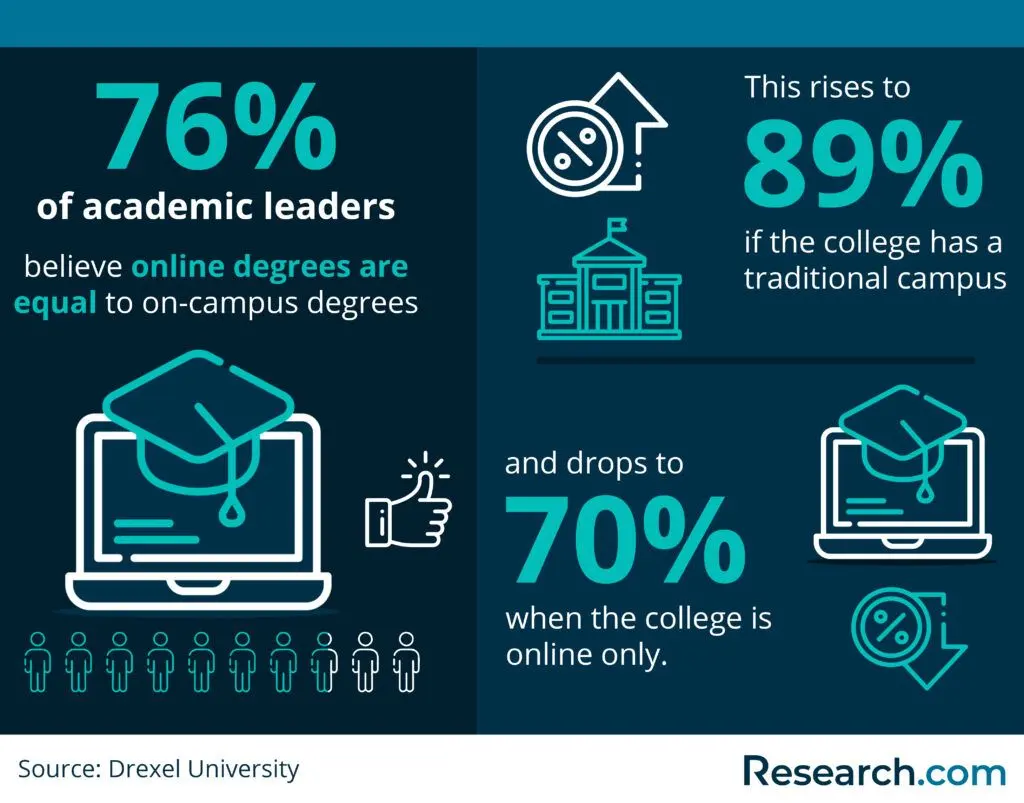
Yes. A licensed RN can earn a legitimate BSN through an accredited online RN to BSN program in Massachusetts. The key is accreditation and program fit. An online format does not make the degree less valid when the school is properly accredited and the curriculum meets bachelor’s-level nursing standards.
Online RN to BSN programs are especially useful for working nurses because they allow students to keep practicing while completing leadership, research, public health, and evidence-based practice coursework. Still, “online” does not always mean self-paced. Some programs have weekly deadlines, live sessions, group projects, local practice assignments, or hybrid requirements.
| Online RN to BSN advantage | What it means in practice | What to verify before enrolling |
| Flexibility | You can often complete readings, discussions, and assignments around shift work. | Ask whether courses are asynchronous or require live attendance. |
| Convenience | You can study from home, work, a library, or another location with reliable internet. | Confirm whether any campus visits or in-person meetings are required. |
| Potential affordability | Online students may avoid commuting, relocation, and some campus-related expenses. | Compare total program cost, not only tuition per credit. |
| Academic quality | Accredited programs can offer the same degree outcome as campus-based BSN completion options. | Check CCNE or ACEN accreditation and graduate school acceptance if you plan to continue. |
Online Nursing Programs in Massachusetts for 2027
The following Massachusetts RN to BSN programs were selected based on factors such as accreditation, transfer-credit policy, course structure, tuition, and program features reported by schools and expert sources. Use this list as a starting point, then request current tuition, transfer evaluations, and curriculum details directly from each college before applying.
| School | Location | Program highlights | Tuition information stated |
| University of Massachusetts-Dartmouth | North Dartmouth | CCNE-accredited online RN to BSN with 28 nursing credits, three electives, leadership, management, community and public health, and research coursework. | $352 per credit for online undergraduate programs |
| Laboure College | Milton | Online RN to BSN that can be completed in 16 months, accepts up to 90 transfer credits, and requires 30 BSN credits plus a capstone. | $375 per credit |
| Endicott College | Beverly | 100% online accelerated RN to BSN completion program for new and experienced nurses; transfer up to 85 credits; total degree requirement is 126 credits. | $404 per credit hour |
| Elms College | Chicopee | CCNE-accredited RN to BSN for working RNs with synchronous and asynchronous options; completion possible in 12 to 15 months; transfer up to 90 credits. | $383 per credit |
| Curry College | Milton | Online or hybrid eight-week sessions; accepts up to 90 transfer credits; RN license automatically awards 34 transfer credits. | $375 per credit for fully online courses |
1. University of Massachusetts-Dartmouth
UMass Dartmouth, located in North Dartmouth, offers a CCNE-accredited online RN to BSN program built for licensed nurses who want bachelor’s-level preparation without leaving the workforce. The curriculum includes leadership and management, community and public health, and research. Students complete 28 nursing credits and three electives.
A notable feature of the program is its individualized study planning. Students can shape their pace around work and home responsibilities while still meeting assignment deadlines. The school also provides student-focused resources, including free tutoring online and in person.
UMass Dartmouth’s tuition per credit for online undergraduate programs is $352.
2. Laboure College
Laboure College in Milton offers an online RN to BSN program that can be completed in 16 months. Students may transfer up to 90 credits from prior college coursework and must complete 30 credits in the BSN plus a capstone course to graduate.
The program allows students to take two seven-week sessions each semester or move through courses at a pace that fits their schedule. It is best suited for self-directed learners who are comfortable with technology. Online students can use support services such as the Student Success Center, which helps create a more interactive classroom experience through real-time meetings.
Laboure College offers one of the lowest-priced online RN-BSN programs in Massachusetts at just $375 per credit.
Labouré College of Healthcare is accredited by the New England Commission of Higher Education (formerly the Commission on Institutions of Higher Education of the New England Association of Schools and Colleges, Inc.).
3. Endicott College
Endicott College in Beverly offers an online RN to BSN completion program for both newly licensed and experienced nurses who want to keep working while finishing the bachelor’s degree. The accelerated curriculum is intensive and includes psychosocial nursing, pharmacology, management, and community/population health.
The program is 100% online and flexible, with a completion window of 15 to 16 months. Students can transfer up to 85 credits, and the full degree requirement is 126 credits.
Tuition at Endicott is $404 per credit hour.
Endicott’s nursing program is accredited by ACEN.
4. Elms College
Elms College in Chicopee offers an online RN to BSN program designed for working registered nurses. The CCNE-accredited program includes both synchronous and asynchronous options and can be completed in 12 to 15 months.
Students may transfer up to 90 credits and need 30 Elms College credits to graduate. Courses include health assessment, healthcare ethics, genomics in nursing, and related BSN-level topics.
Elms emphasizes individualized advising and a supportive cohort-style experience. The program is designed to help nurses strengthen critical thinking and communication skills while preparing to contribute to patient safety and healthcare improvement.
Tuition at Elms College is $383 per credit.
5. Curry College
Curry College in Milton offers an RN to BSN program with online and hybrid learning options. Students may transfer up to 90 credits, and the RN license automatically awards 34 transfer credits. Courses are delivered in eight-week sessions designed for working adults.
The program is intended for ADN-prepared nurses who want to qualify for broader responsibilities or leadership-oriented roles. Coursework helps students build clinical reasoning, analytical ability, professional development, and an understanding of the economic, cultural, social, and political factors that shape healthcare delivery.
Tuition for fully online courses is $375 per credit. Curry College is accredited by the New England Association of Schools and Colleges, Inc (NEASC), and its RN to BSN program is accredited by the CCNE.
Is Massachusetts a Good State to Pursue an RN to BSN Program?
Massachusetts can be a strong state for RN to BSN students because it has a dense healthcare employment base, many hospital systems, and employers that often value bachelor’s-prepared nurses. The degree may be especially useful if you want to work in competitive hospital settings, pursue leadership, move into public health or case management, or prepare for graduate nursing study.
Employer preference is a major factor. According to a survey by the American Association of Colleges of Nursing, 94% of BSN nurses in the country secured employment four to six months after they graduated. Many employers now expect or prefer bachelor’s preparation. In fact, 25.0% of hospitals and other healthcare settings require new hires to have a BSN degree, while 69.8% of employers express a strong preference for BSN-prepared nurses. (AACN, 2024)
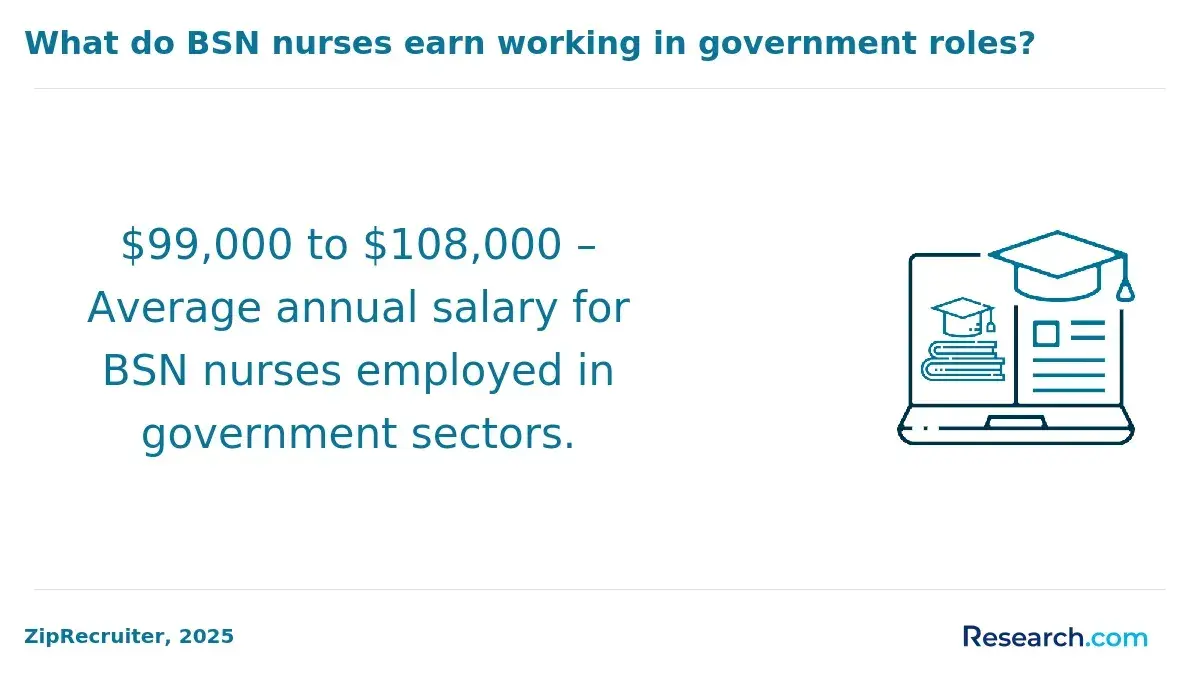
Salary potential may improve. RNs with a BSN degree are paid around $12,000 more per year than RNs with an ADN degree. According to Nightingale (2024), BSN nurses earn an average of $104,670, while RNs earn an average of $86,070.
The average salary of BSN nurses in Massachusetts as of March 2026, is $99,348 per year. Meanwhile, ADN nurses in Massachusetts earn an average of $86,581 per year (ZipRecruiter, 2026).
BSN preparation can expand professional autonomy. Bachelor’s-level nursing coursework often strengthens judgment in leadership, patient education, care coordination, community health, and evidence-based decision-making. This can be valuable in settings such as home care, where nurses may need to act independently and make timely decisions when other clinicians are not immediately present.
Greater autonomy can also mean a broader set of responsibilities, including coordinating care plans, working with new technologies, supporting interdisciplinary teams, and participating in quality improvement initiatives. These responsibilities can make the BSN more valuable than a credential alone; it can become a practical tool for taking on more complex work.
What Can I Do With an RN to BSN Degree in Massachusetts?
A BSN can help registered nurses compete for roles that emphasize leadership, care coordination, community health, public health, case management, and quality improvement. It also creates the academic foundation for graduate nursing degrees. Specialized roles such as nurse practitioner and APRN require additional graduate education, such as an MSN, DNP, or related pathway, including MSN to DNP programs.
BSN coursework typically goes beyond the ADN by adding research, leadership, population health, management, and evidence-based practice. These areas are useful for nurses who want to supervise teams, coordinate care, influence patient safety initiatives, or move toward administration. Nurses who want to focus specifically on management may later explore masters in nursing administration.
BSN-prepared nurses may also be better positioned for work across varied healthcare settings, including hospitals, home care, mental health, public health, critical care, and community-based organizations. Those planning to continue to graduate education can compare masters in nursing programs online, which can often be completed in an average of two years.
| Goal | How a BSN helps | Possible next step |
| Hospital advancement | Meets preferred or required education expectations at many healthcare organizations. | Apply for BSN-preferred RN roles, charge nurse opportunities, or specialty units. |
| Leadership | Adds preparation in management, communication, and systems-based care. | Seek charge nurse, unit coordinator, or nurse manager-track responsibilities. |
| Case management or public health | Builds population health, care coordination, and community health knowledge. | Explore roles in home care, public health, payer organizations, or community health centers. |
| Graduate school | Provides the bachelor’s credential needed for many MSN and DNP programs. | Compare MSN, DNP, nurse practitioner, or administration pathways. |
Advanced Nursing Specializations and Career Paths After an RN to BSN in Massachusetts
An RN to BSN program can be a career milestone, but it is often not the final step for nurses who want advanced practice, education, administration, or specialty clinical work. In Massachusetts, BSN graduates may use the degree as a bridge to graduate programs and advanced credentials.
Acute Care Nurse Practitioner (ACNP)
Acute Care Nurse Practitioners care for patients with acute, critical, or complex health needs. They often work in hospitals, trauma centers, and specialty practices. Their work can include patient assessment, treatment planning, illness management, and collaboration with physicians and interdisciplinary teams.
Massachusetts has major healthcare institutions where acute care expertise can be valuable. This path may fit nurses who are comfortable with high-acuity patients, fast decisions, and complex clinical environments.
BSN graduates interested in this route can review acute care nurse practitioner programs online to understand the education, clinical training, and credentialing steps involved.
Other Advanced Nursing Options
- Family Nurse Practitioner (FNP): Provides primary care across the lifespan, often focusing on prevention, chronic disease management, and patient education.
- Nurse Educator: Teaches nursing students or clinical staff in academic, healthcare, or professional development settings.
- Clinical Nurse Leader (CNL): Combines clinical knowledge and leadership skills to improve care coordination, safety, and patient outcomes.
Why Specialize After the BSN?
- Broader role options: Graduate study and specialty credentials can open doors in advanced practice, education, administration, and policy.
- Higher earning potential: Advanced practice and leadership roles often pay more than entry-level RN positions, though outcomes depend on credentials, location, employer, and experience.
- Focused professional purpose: Specialization allows nurses to align their work with a clinical population, care setting, or leadership interest.
Do Online RN to BSN Programs Meet State-Specific Licensure Standards in Massachusetts?
Accredited RN to BSN programs are designed for nurses who already hold RN licensure or are eligible for RN licensure. The BSN itself does not replace Massachusetts licensure requirements. Prospective students should confirm that the program’s curriculum, practice expectations, and academic policies align with professional standards and their individual licensure situation.
Before enrolling, review current nursing license requirements in Massachusetts, especially if you were educated outside Massachusetts, licensed in another state, or planning to pursue advanced practice later. If you have questions, contact both the school and the Massachusetts Board of Registration in Nursing.
How Can a BSN Lead to Advanced Practice Roles and Higher Earning Potential?
A BSN can be the academic bridge from staff RN work to graduate nursing education. Many nurse practitioner, nurse leadership, nurse educator, and DNP pathways require a bachelor’s degree before admission. BSN coursework also introduces the research, leadership, and systems-based thinking that graduate nursing programs build on.
The salary impact depends on role, employer, specialty, experience, location, and additional credentials. Nurses who pursue doctoral-level or advanced practice preparation can review state-by-state compensation context through resources such as doctor of nurse practitioner salary, but no degree guarantees a specific income.
What Technical and Digital Support Resources Can Improve Online Learning?
Online RN to BSN students rely heavily on digital platforms. A strong program should provide a clear learning management system, technical support, virtual library access, online tutoring, faculty communication channels, and orientation for new online learners. These resources can prevent small technical problems from becoming academic setbacks.
Students should also prepare their own setup: reliable internet, a working laptop, secure file storage, a webcam if required, and a calendar system for deadlines. Similar online learning support expectations apply across healthcare education programs, including medical assistant programs in Massachusetts.
What Success Metrics Should You Review Before Choosing a Program?
Program outcomes can reveal whether an RN to BSN program supports students effectively. Ask schools for graduation rates, retention rates, student satisfaction data, employment outcomes, and graduate school placement information when available. NCLEX pass percentages may be more relevant to pre-licensure programs, but they can still provide context about a nursing department’s overall performance.
Accreditation status, student support, faculty responsiveness, and employer reputation also matter. If you are still comparing credentials, review Is there a difference between RN vs BSN degree? to clarify how licensure and degree level differ.
What Student Support Resources Help Online RN to BSN Students Succeed?
Online nursing students need more than course access. Look for academic advising, nursing faculty availability, virtual tutoring, writing support, career counseling, library services, technical help, mentorship, and online peer communities. These supports are especially important for working RNs balancing unpredictable shifts and family responsibilities.
When comparing schools, review the support structure as carefully as the curriculum. You can also use lists of accredited nursing schools in Massachusetts to identify institutions with recognized nursing education infrastructure.
Can Online RN to BSN Programs Support Broader Nursing Role Transitions?
RN to BSN programs are primarily designed for registered nurses who already hold an ADN or nursing diploma, but the broader coursework can help nurses shift toward administration, case management, public health, informatics-related work, or graduate nursing pathways. Leadership, evidence-based practice, and healthcare systems courses are especially relevant for role transitions.
Licensed vocational or practical nurses must usually complete an RN pathway before entering a standard RN to BSN program. Those researching alternative nursing entry points can start with guidance on how to become an LVN nurse in Massachusetts.
How Can I Use My BSN for Immediate Career Advancement in Massachusetts?
The best time to plan career advancement is before graduation. Identify roles that require or prefer a BSN, update your resume with BSN coursework and projects, ask your manager about internal advancement tracks, and connect with faculty, alumni, and local nursing associations.
You can also target certifications, committee work, preceptor opportunities, quality improvement projects, and specialty-unit experience. If advanced practice is your long-term goal, begin researching how to become a nurse practitioner in Massachusetts so you can choose BSN electives and clinical experiences that support that path.
What Are the Potential Challenges of Enrolling in an Online RN to BSN Program and How Can They Be Managed?
Online RN to BSN programs offer flexibility, but they also require discipline. The students most likely to succeed are those who plan weekly study time, communicate early with instructors, and choose a course load that matches their work and personal life.
| Common challenge | Why it happens | Better strategy |
| Time management | Shift work, family duties, and deadlines can overlap. | Create a weekly study schedule before the term begins and protect specific study blocks. |
| Self-motivation | Online courses may not provide the same in-person accountability as campus classes. | Set short milestones, join study groups, and use assignment calendars. |
| Technical problems | Learning platforms, video tools, or file submissions may cause delays. | Test systems early, keep backup internet options, and know how to reach IT support. |
| Limited networking | Online students may interact less casually than campus students. | Participate in discussion boards, virtual events, alumni groups, and optional meetups. |
| Practice-based requirements | Some courses may require local clinical, community, or project-based work. | Ask about placement expectations before enrolling and coordinate early with advisors. |
| Financial pressure | Tuition, books, fees, and reduced work hours can add up. | Use employer reimbursement, scholarships, payment plans, and careful program comparison. |
Can an Online RN to BSN Program Help Me Transition Into Nurse Midwifery in Massachusetts?
An RN to BSN program can support a future nurse midwifery path by strengthening your bachelor’s-level preparation and preparing you for graduate study. Some BSN courses may include women’s health, maternal health, community health, and leadership concepts that are relevant to midwifery, but becoming a nurse midwife requires additional specialized graduate education and certification.
If this is your goal, choose a BSN program that prepares graduates for competitive graduate admission and review the steps in how to become a nurse midwife in Massachusetts.
Can an LPN Transition to an RN to BSN Program Online in Massachusetts?
An LPN usually cannot enter a standard RN to BSN program directly unless the program has a bridge structure. Most RN to BSN programs require active RN licensure, so LPNs typically need to complete an LPN-to-RN or LPN-to-BSN pathway first. After becoming an RN, they may qualify for RN to BSN completion options.
Admissions policies vary, so LPNs should ask schools about bridge options, prerequisite coursework, transfer credits, and Massachusetts licensure expectations. For an earlier step in the pathway, review how to become an LPN in Massachusetts.
How Can I Afford an RN to BSN Online Nursing Program in Massachusetts?
Paying for an RN to BSN program is easier when you compare total cost early and use multiple funding sources. Do not assume the cheapest tuition rate is the best deal, and do not assume financial aid will cover every expense. Build a funding plan before enrolling.
- Submit the FAFSA. The Free Application for Federal Student Aid determines eligibility for federal grants, work-study, and low-interest loans. It may also be used by schools and state programs to award aid.
- Search nursing scholarships. Nursing students in Massachusetts may find awards through professional associations, community organizations, schools, and national nursing groups such as the Massachusetts Nurses Association (MNA) and the National Student Nurses’ Association (NSNA).
- Ask about employer tuition reimbursement. Many healthcare employers support nurses who pursue BSN completion. Confirm annual limits, grade requirements, repayment obligations, and eligible schools.
- Review Massachusetts aid programs. State-specific options can include the Massachusetts State Grant Program and the Massachusetts Loan Repayment Program for nurses working in underserved areas.
- Use military or veteran education benefits if eligible. Programs such as the Post-9/11 GI Bill or the Montgomery GI Bill may help qualifying service members, veterans, or dependents.
- Consider school payment plans. Some institutions allow students to divide tuition across the term. Similar installment models may be available in other pathways, including online BSN programs for non-nurses.
- Use private scholarships before private loans. Community foundations, hospitals, and nursing organizations may offer smaller awards that reduce borrowing. Private loans should generally be considered after lower-cost aid options.
What Are the Clinical Training Opportunities for Online Nursing Students in Massachusetts?
RN to BSN programs are designed for already licensed registered nurses, so they usually do not repeat the same pre-licensure clinical training found in ADN or traditional BSN programs. However, many include practice-based learning, community health projects, capstones, leadership experiences, or population health assignments that connect coursework to real healthcare settings.
Massachusetts offers exposure to hospitals, community health centers, public health organizations, long-term care facilities, mental health settings, pediatrics, geriatrics, and specialty care environments. Students should ask each program whether placements are arranged by the school, completed at the student’s workplace, or coordinated independently with faculty approval.
Nurses who want advanced clinical preparation after the BSN can compare nurse practitioner programs in Massachusetts, which include more specialized graduate-level clinical training.
What Is the Job Market Outlook After Completing an Online RN to BSN Program in Massachusetts?
BSN-prepared nurses in Massachusetts enter a healthcare market where advanced education can influence hiring, advancement, and specialty access. Hospitals, community health organizations, and healthcare systems often value nurses who can contribute to evidence-based practice, care coordination, leadership, and patient safety initiatives.
A BSN does not guarantee a specific job or salary, but it can make an RN more competitive for roles that require bachelor’s-level preparation. If you are still planning the full licensure pathway, start with how to become an RN in Massachusetts.
How Can I Build a Professional Network While Enrolled in an Online RN to BSN Program in Massachusetts?
Online students need to be intentional about networking. Start with your cohort, faculty, alumni network, employer, clinical or project sites, and professional nursing organizations. Participate in virtual discussions, attend webinars, volunteer for workplace committees, and ask faculty about mentorship opportunities.
Networking can also extend beyond bedside nursing. Understanding adjacent healthcare roles, such as how to become a medical biller and coder in Massachusetts, can help nurses collaborate more effectively across documentation, reimbursement, compliance, and care coordination functions.
Common Mistakes to Avoid When Choosing an Online RN to BSN Program
| Mistake | Why it can hurt you | What to do instead |
| Choosing without checking accreditation | Non-accredited programs may limit employer recognition or graduate school options. | Verify CCNE or ACEN accreditation before applying. |
| Comparing tuition only | Fees, transfer-credit limits, and course load can change the real price. | Calculate total program cost after transfer evaluation. |
| Assuming online means self-paced | Many online programs still have weekly deadlines or live sessions. | Ask about synchronous requirements, assignment schedules, and term length. |
| Ignoring transfer policies | Rejected credits can add semesters and increase cost. | Request a written transfer-credit review. |
| Overloading courses while working full-time | Too many credits can lead to burnout or poor performance. | Start with a manageable load and accelerate later if realistic. |
| Not planning for graduate school | Some programs may not align well with future MSN or DNP goals. | Ask about graduate admission history and prerequisite preparation. |
Earn Your BSN Through an Online Nursing School in Massachusetts
For Massachusetts RNs with an ADN, an online RN to BSN program can be a practical way to finish a bachelor’s degree while continuing to work. The best program is not always the fastest or cheapest one. It is the accredited option that accepts the most relevant transfer credits, fits your schedule, supports online learners, and aligns with your next career step.
Other nursing professionals may have different bridge options. LPNs and CNAs should confirm whether they need an RN pathway before pursuing BSN completion. After earning the BSN and gaining experience, nurses may choose an advanced practice, leadership, education, or public health route, including a public health degree from an online program.
Key Insights
- Accreditation should be non-negotiable. Choose an RN to BSN program accredited by CCNE or ACEN to protect your degree’s value for employment and graduate study.
- The BSN is increasingly important in Massachusetts healthcare hiring. Many employers require or strongly prefer BSN-prepared nurses, especially for hospital and advancement-oriented roles.
- Transfer credits determine real cost and speed. Before enrolling, ask each school for a transfer evaluation so you know how many credits and dollars remain.
- Online does not always mean easy or fully flexible. Confirm deadlines, live sessions, local practice projects, technology expectations, and faculty availability.
- A BSN can support leadership and graduate school pathways. It can prepare RNs for case management, public health, charge nurse responsibilities, MSN programs, DNP programs, and nurse practitioner tracks.
- Salary gains are possible but not guaranteed. Massachusetts BSN nurses earn more on average than ADN nurses according to the cited data, but individual outcomes depend on employer, experience, role, specialty, and location.
- The right program should fit your life as a working nurse. A sustainable pace, strong advising, employer reimbursement, and realistic scheduling can matter as much as rankings or name recognition.
Related Articles for Nearby States
- 2027 Best Online Nursing Programs in Connecticut – Accredited RN to BSN Programs
- 2027 Best Online Nursing Programs in New Hampshire – Accredited RN to BSN Programs
- 2027 Best Online Nursing Programs in New York – Accredited RN to BSN Programs
- 2027 Best Online Nursing Programs in New Jersey – Accredited RN to BSN Programs
- 2027 Best Online Nursing Programs in Maine – Accredited RN to BSN Programs
- 2027 Best Online Nursing Programs in Pennsylvania: Accredited RN to BSN Programs
- 2027 Best Online Nursing Programs in Delaware – Accredited RN to BSN Programs
- 2027 Best Online Nursing Programs in Maryland – Accredited RN to BSN Programs
- 2027 Best Online Nursing Programs in Ohio – Accredited RN to BSN Programs
- 2027 Best Online Nursing Programs in West Virginia – Accredited RN to BSN Programs
References:
- Coherent Market Insights. (2025). Healthcare Staffing Market Size & YoY Growth Rate. https://www.coherentmarketinsights.com
- HRSA. (2025). 2024 National Sample Survey of Registered Nurses. https://bhw.hrsa.gov/data-research/access-data-tools/national-sample-survey-registered-nursesCoherent Market Insights
- NSI Nursing Solutions. (2025). 2025 NSI National Health Care Retention Report. https://nsi.com
- Precedence Research. (2025). Healthcare Staffing Market Size to Hit USD 82.47 Bn. https://www.precedenceresearch.com/healthcare-staffing-marketNSI Nursing Solutions
- U.S. Bureau of Labor Statistics. (2025). Occupational Outlook Handbook: Registered Nurses. https://www.bls.gov/ooh/healthcare/registered-nurses.htmNSICoherent Market Insights
Other Things You Should Know About Online Nursing Programs in Massachusetts
Most RN to BSN programs in Massachusetts require an active, unrestricted RN license issued by the Massachusetts Board of Registration in Nursing or a compact-state multistate RN license. Some schools also require proof of an associate degree in nursing, a minimum GPA, and current immunization and CPR records.
The duration varies based on whether you study full-time or part-time. Full-time programs can be completed in 1 to 2 years, while part-time programs may take 2 to 4 years. Some schools offer accelerated programs that can be completed in as little as 12 months.
Massachusetts online RN to BSN programs often include clinical practice placements at local healthcare facilities. Students typically must complete a set number of clinical hours, collaborating with hospitals or community health organizations in Massachusetts to fulfill the program's practical experience requirements.
Online programs offer flexibility, allowing you to study at your own pace and on your own schedule, which is beneficial for working RNs. They are also more convenient and often more affordable, as they eliminate costs associated with commuting and on-campus living.
In a 2027 online RN to BSN program in Massachusetts, you can expect courses on advanced nursing concepts, health assessment, community health, evidence-based practice, nursing leadership, and healthcare policy, equipping you with skills necessary for a broader range of clinical and administrative roles.
Massachusetts requires that online RN to BSN programs be accredited and approved by the Massachusetts Board of Registration in Nursing. This ensures that the program meets the state's educational standards and allows graduates to be eligible for licensure as registered nurses in Massachusetts.





