
2027 Best Nursing Schools in Louisiana – Accredited ADN, BSN, MSN Programs

Co-Founder and Chief Data Scientist
Choosing a nursing school in Louisiana is not just about finding the nearest campus or the lowest tuition. The program you choose can affect your eligibility for RN licensure, your clinical training, your NCLEX-RN preparation, your total debt, and your long-term career options. Louisiana has pathways for first-time college students, working LPNs, registered nurses returning for a BSN, and experienced nurses preparing for graduate-level practice.
This guide explains how nursing degrees in Louisiana work, which schools stand out, how online and campus programs compare, what admission and licensure steps to expect, and how to evaluate cost, accreditation, clinical placement, and career outcomes before enrolling.
Quick Answer: Is a Nursing Degree in Louisiana Worth It?
For many students, a nursing degree in Louisiana can be a practical path into healthcare because the state has multiple ADN, BSN, RN-to-BSN, MSN, and advanced practice options. There were 68,210 registered nurses in Louisiana in 2025, and the median annual salary for nurses in the state is around $78,880. However, the best choice depends on your current education level, whether you need a fast route to RN licensure, how much you can afford, and whether the program is accredited and approved for Louisiana licensure.
Key Nursing Facts for Louisiana Students
- There were 68,210 registered nurses in the state in 2025.
- The median annual salary for nurses in Louisiana is around $78,880.
- Among RNs in the state, 39% held ADNs while 51% were BSN degree holders.
- Louisiana is the 9th state most in need of RNs, with an estimated 11% shortage by 2038.
- Associate Degree in Nursing (ADN) programs at the top nursing schools in Louisiana typically span around two to three years of full-time study.
What are the main benefits of earning a nursing degree in Louisiana?
- Multiple entry points: Students can begin with an LPN pathway, ADN, traditional BSN, RN-to-BSN, MSN, or advanced practice program depending on their background.
- Strong career flexibility: Graduates may work in hospitals, clinics, long-term care, home health, schools, public health agencies, and specialty units.
- Competitive pay for licensed RNs: The median salary for RNs in Louisiana is around $78,880, though earnings vary by experience, specialty, employer, and location.
- Online completion options: Louisiana offers online RN-to-BSN programs that allow licensed RNs to continue working while completing bachelor’s-level coursework.
What can I expect from a nursing degree in Louisiana?
A nursing degree in Louisiana combines science coursework, nursing theory, skills labs, simulation, and supervised clinical practice. Students typically study anatomy, physiology, microbiology, pharmacology, patient assessment, health promotion, ethics, and care across the lifespan. Clinical rotations may take place in hospitals, community health centers, long-term care settings, outpatient clinics, and other approved healthcare environments.
The goal is not only to prepare students for graduation. A strong program should also prepare graduates for the NCLEX-RN, safe entry-level practice, teamwork with physicians and allied health professionals, and the realities of caring for patients with complex needs.
Where can I work with a nursing degree in Louisiana?
Louisiana nursing graduates can work in a wide range of healthcare settings. Newly licensed RNs often begin in medical-surgical units, emergency departments, long-term care, outpatient clinics, rehabilitation facilities, or home health. With experience or additional education, nurses may move into specialties such as critical care, pediatrics, women’s health, public health, leadership, education, or advanced practice.
Advanced roles, such as nurse practitioner or nurse anesthetist, require graduate education and additional credentialing. Students who already know they want an advanced role should compare programs based on accreditation, clinical placement support, graduate admission pathways, and state licensure alignment.
How much can I make with a nursing degree in Louisiana?
The median salary for RNs in Louisiana is around $78,880. Pay can rise with experience, specialty certification, leadership responsibilities, advanced education, and employment in higher-acuity settings. Salaries also differ by employer type, including hospitals, outpatient clinics, home care agencies, public health organizations, and long-term care facilities.
Because salary outcomes are not guaranteed, students should compare program cost against realistic local job options, expected debt, NCLEX-RN pass rates, and whether the degree supports the role they actually want.
- Best nursing schools in Louisiana for 2027
- How long does nursing school take in Louisiana?
- Online vs. campus nursing programs in Louisiana
- Average nursing school cost in Louisiana
- Financial aid for Louisiana nursing students
- Common nursing school prerequisites in Louisiana
- Typical nursing courses in Louisiana programs
- Louisiana nursing licensure and certification requirements
- Nursing specializations available in Louisiana
- Student support services at Louisiana nursing schools
- How to choose the right Louisiana nursing school
- Advanced nursing degree earning potential in Louisiana
- How to get a nursing license in Louisiana
- Nursing roles vs. allied healthcare roles in Louisiana
- How pharmacy knowledge can support a nursing career
- LPN advancement options in Louisiana
- How to check Louisiana nursing program quality
- Whether online LPN programs can speed up entry into nursing
- Using a nursing degree in allied healthcare careers
- Nurse midwife education requirements in Louisiana
- Career paths for Louisiana nursing graduates
- Online nursing programs for working professionals
- Career advancement options for Louisiana nurses
- Advanced practice roles through Louisiana nurse practitioner programs
- Flexible pathways to becoming a nurse in Louisiana
List of the Best Nursing Schools in Louisiana for 2027
The best nursing school for you is the one that matches your licensure goal, budget, schedule, academic background, and preferred clinical setting. Research.com reviewed Louisiana nursing programs using factors such as academic quality, curriculum structure, affordability, reputation, and available institutional data.
How do we rank schools?
Nursing school comparisons can be difficult because students must weigh accreditation, degree type, NCLEX preparation, clinical access, tuition, delivery format, and transfer policies at the same time. Research.com uses validated education datasets and institutional information to help students compare programs more clearly.
- Integrated Postsecondary Education Data System (IPEDS database)
- Peterson’s database, including their Distance Learning Licensed Data Set
- College Scorecard database
- National Center for Education Statistics
Louisiana Nursing School Comparison
| School | Program level | Program length | Required credits | Listed cost | Accreditation |
| Louisiana Tech University | Bachelor’s Degree | 4 years | 120 | $1,015 per credit | Accreditation Commission for Education in Nursing (ACEN) |
| University of Louisiana at Lafayette | RN to BSN | 1 year | 30 | $316 per credit | Accreditation Commission for Education in Nursing (ACEN) |
| Louisiana Delta Community College | Associate degree | 2 years | 70 | $209 per credit | Accreditation Commission for Education in Nursing (ACEN) |
| LSU Health Sciences Center New Orleans | RN to BSN | 2 years | 36 | $325 per credit | Accreditation Commission for Education in Nursing (ACEN) |
| Grambling State University | Master’s Degree | 2 years | 46 | $1,748 per credit | Accreditation Commission for Education in Nursing (ACEN) |
| Loyola University New Orleans | Bachelor’s Degree | 4 years | 120 | $1,501 per credit | Commission on Collegiate Nursing Education (CCNE) |
| Nicholls State University | Bachelor’s Degree | 4 years | 120 | $205 per credit | American Nurses Credentialing Center’s Commission |
| McNeese State University | Bachelor’s Degree | 4 years | 120 | $4,500 per semester | Commission on Collegiate Nursing Education (CCNE) |
| Northwestern State University of Louisiana | Associate’s Degree | 2 years | 72 | $375 per semester | Commission on Collegiate Nursing Education (CCNE) |
| Southern University | Bachelor’s Degree | 4 years | 120 | $475 per semester | Commission on Collegiate Nursing Education (CCNE) |
1. Louisiana Tech University
Louisiana Tech University offers a Bachelor of Science in Nursing program built around clinical competence, evidence-based care, and leadership development. Students complete nursing coursework, simulation experiences, clinical rotations, and community-focused learning designed to prepare them for professional RN practice.
- Program length: 4 years
- Program level: Bachelor’s Degree
- Tracks/concentrations: Nursing
- Cost per credit: $1,015
- Required credits: 120
- Accreditation: Accreditation Commission for Education in Nursing (ACEN)
2. University of Louisiana at Lafayette
The University of Louisiana at Lafayette provides an RN-to-BSN pathway for licensed registered nurses who want to complete a Bachelor of Science in Nursing. The program is structured for practicing RNs and emphasizes nursing theory, professional practice, and application of clinical knowledge in real healthcare settings.
- Program length: 1 year
- Program level: RN to BSN
- Tracks/concentrations: Nursing
- Cost per credit: $316
- Required credits: 30
- Accreditation: Accreditation Commission for Education in Nursing (ACEN)
3. Louisiana Delta Community College
Louisiana Delta Community College offers an Associate Degree in Nursing for students seeking a direct route toward RN eligibility. The curriculum focuses on foundational nursing judgment, patient care skills, and preparation for entry-level registered nursing roles in multiple healthcare environments.
- Program length: 2 years
- Program level: Associate degree
- Tracks/concentrations: Nursing
- Cost per credit: $209
- Required credits: 70
- Accreditation: Accreditation Commission for Education in Nursing (ACEN)
4. LSU Health Sciences Center New Orleans
LSU Health Sciences Center New Orleans offers an RN-to-BSN program for registered nurses who want to complete a bachelor’s degree while building broader professional skills. The pathway is designed for working nurses seeking stronger preparation for leadership, graduate study, or expanded clinical responsibility.
- Program length: 2 years
- Program level: RN to BSN
- Tracks/concentrations: Nursing
- Cost per credit: $325
- Required credits: 36
- Accreditation: Accreditation Commission for Education in Nursing (ACEN)
5. Grambling State University
Grambling State University offers Master of Science in Nursing options for nurses ready to advance beyond entry-level practice. Coursework includes nursing theory, pathophysiology, health assessment, and clinical components, with a structure intended to support working nurses pursuing graduate education.
- Program length: 2 years
- Program level: Master’s Degree
- Tracks/concentrations: Nursing
- Cost per credit: $1,748
- Required credits: 46
- Accreditation: Accreditation Commission for Education in Nursing (ACEN)
6. Loyola University New Orleans
Loyola University New Orleans offers a BSN program that combines nursing preparation with a liberal arts foundation. The program emphasizes patient-centered care, communication, ethical reasoning, clinical judgment, and leadership within Loyola’s Jesuit educational tradition.
- Program length: 4 years
- Program level: Bachelor’s Degree
- Tracks/concentrations: Nursing
- Cost per credit: $1,501
- Required credits: 120
- Accreditation: Commission on Collegiate Nursing Education (CCNE)
7. Nicholls State University
Nicholls State University provides a BSN program with an emphasis on practical learning and patient-centered care. Students train through classroom instruction, clinical experiences with healthcare partners, and preparation aligned with state board expectations.
- Program length: 4 years
- Program level: Bachelor’s Degree
- Tracks/concentrations: Nursing
- Cost per credit: $205
- Required credits: 120
- Accreditation: American Nurses Credentialing Center’s Commission
8. McNeese State University
McNeese State University offers a BSN program that blends classroom learning, clinical practice, and professional development. Students study areas such as anatomy, pharmacology, and nursing care while building communication, leadership, and patient advocacy skills.
- Program length: 4 years
- Program level: Bachelor’s Degree
- Tracks/concentrations: Nursing
- Cost per semester: $4,500
- Required credits: 120
- Accreditation: Commission on Collegiate Nursing Education (CCNE)
9. Northwestern State University of Louisiana
Northwestern State University of Louisiana offers an ASN pathway that can help students enter the nursing workforce faster than a traditional four-year BSN. The program includes clinical rotations in local healthcare settings so students can connect classroom concepts with direct patient care.
- Program length: 2 years
- Program level: Associate’s Degree
- Tracks/concentrations: Nursing
- Cost per semester: $375
- Required credits: 72
- Accreditation: Commission on Collegiate Nursing Education (CCNE)
10. Southern University
Southern University offers a BSN program focused on nursing fundamentals, patient-centered care, and cultural competence. The program prepares students for professional nursing practice across varied healthcare settings.
- Program length: 4 years
- Program level: Bachelor’s Degree
- Tracks/concentrations: Nursing
- Cost per semester: $475
- Required credits: 120
- Accreditation: Commission on Collegiate Nursing Education (CCNE)
How long does it take to complete a nursing program in Louisiana?
The time required depends on the credential. A full-time ADN program often takes about two years, while a traditional BSN usually takes four years. RN-to-BSN programs are designed for licensed RNs who already hold an ADN and may take 12-18 months. Graduate options, including an MSN degree online, may be completed within two years depending on program format and enrollment pace.
| Pathway | Typical student | Common completion time | Best fit |
| ADN | Student seeking a faster RN route | About two years | Students who want to enter the workforce sooner and may complete a BSN later |
| Traditional BSN | First-time college student or transfer student | 4 years | Students who want bachelor’s preparation from the start |
| RN-to-BSN | Licensed RN with an ADN | 12-18 months | Working nurses seeking advancement or graduate school preparation |
| MSN | Registered nurse pursuing graduate-level roles | Within two years | Nurses preparing for leadership, education, specialty, or advanced practice tracks |
How does an online nursing program in Louisiana compare to an on-campus program?
Online nursing programs can be a strong option for students who need flexibility, especially licensed nurses completing RN-to-BSN or graduate coursework. However, nursing is not fully online at the pre-licensure level because students still need supervised labs, simulations, and clinical rotations.
On-campus programs provide scheduled in-person lectures, labs, faculty interaction, and structured peer learning. Online programs usually deliver didactic coursework remotely, while clinical experiences must still occur in approved healthcare settings. Students changing careers can also explore online nursing programs for non nurses, but they should verify clinical requirements, state approval, and licensure eligibility before applying.
| Factor | Online nursing program | On-campus nursing program |
| Flexibility | Better for working adults who need asynchronous or limited campus requirements | Better for students who prefer fixed schedules and in-person accountability |
| Clinical training | Still required at approved healthcare sites | Arranged through program-affiliated clinical partners |
| Skills labs | May require campus visits or approved lab sessions | Usually completed on campus |
| Best for | RN-to-BSN, MSN, and some bridge students | Pre-licensure ADN and BSN students who need intensive hands-on instruction |
What is the average cost of a nursing program in Louisiana?
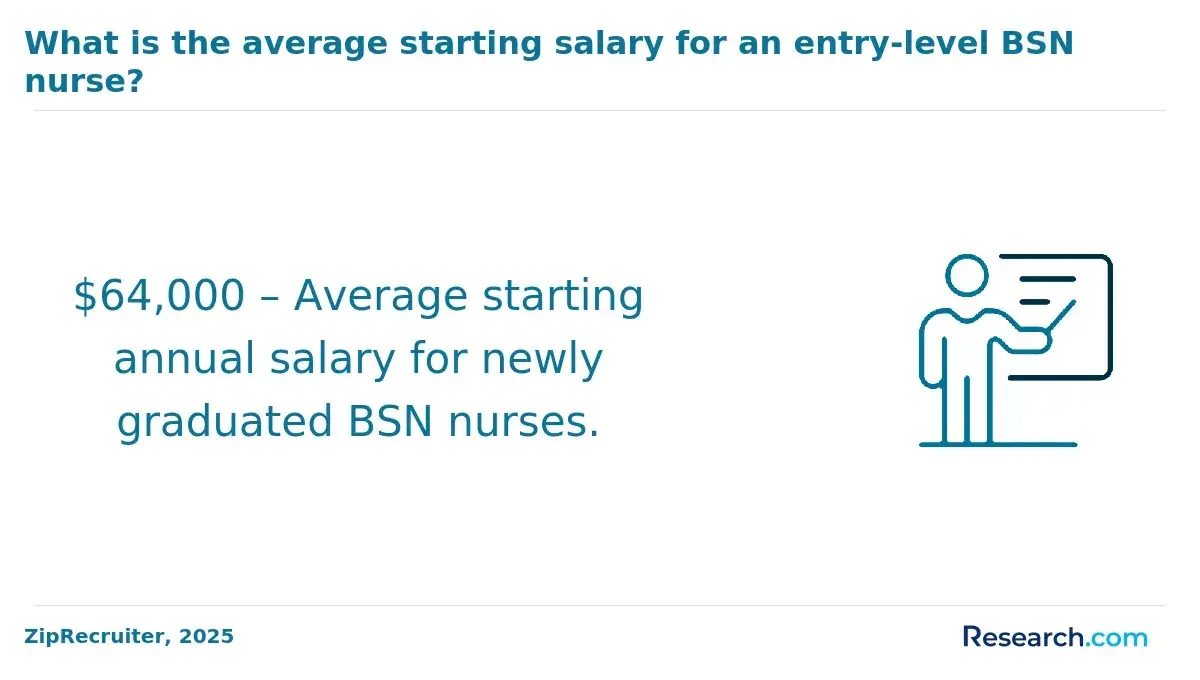
On average, the cost of two-year programs is approximately $3,780. For students attending public universities, the annual tuition for BSN programs can range from approximately $40,000 to $80,000. Published tuition is only one part of the total price, so students should also account for fees, uniforms, background checks, immunizations, testing fees, supplies, transportation to clinical sites, and possible reduced work hours.
Before enrolling, compare the full cost of attendance and review the expenses and costs associated with nursing school so you can estimate debt more realistically.
What are the financial aid options for students enrolling in a nursing program in Louisiana?
Louisiana nursing students may use a mix of federal grants, state aid, institutional scholarships, employer tuition assistance, and loans. The right funding strategy depends on residency, income, enrollment status, academic record, and whether the program participates in federal student aid.
- Federal Pell Grant: A need-based grant for eligible undergraduate students with significant financial need.
- Federal Supplemental Educational Opportunity Grant (SEOG): A need-based grant for students with exceptional financial need, often packaged with other federal aid.
- Louisiana Tuition Opportunity Program for Students (TOPS): A merit-based aid program for Louisiana residents enrolled in approved degree programs at participating institutions in the state.
- FAFSA (Free Application for Federal Student Aid): The main application used to determine eligibility for federal aid and often required by scholarship and grant programs.
How to reduce nursing school costs
- Choose an accredited public program if it meets your licensure and career goals.
- Ask whether previous college credits can transfer into prerequisites or general education requirements.
- Compare total program cost, not just tuition per credit.
- Look for employer tuition reimbursement if you already work in healthcare.
- Apply early for scholarships because nursing awards may have separate deadlines.
What are the prerequisites for enrolling in a nursing program in Louisiana?
Admission requirements vary by school and degree level, but Louisiana nursing programs commonly review prerequisite coursework, GPA, testing history, transcripts, background requirements, and readiness for clinical placement. Graduate programs usually require an active RN license, prior nursing education, and sometimes healthcare experience.
- Prerequisite courses: Some programs require courses such as microbiology, statistics, anatomy and physiology, or healthcare ethics before admission into the nursing major.
- Minimum GPA: Many programs set a minimum GPA requirement, often around 2.5-3.0 on a 4.0 scale.
- Standardized tests: Some schools may ask for ACT or SAT scores, especially from applicants with limited prior college coursework.
During the first quarter of 2025, 18 institutions offering ADN and BSN programs received pass rates higher than 80% for first-time takers. Meanwhile, seven institutions received rates lower than 80%.
What courses are typically in a nursing program in Louisiana?
Louisiana nursing curricula are designed to prepare students for safe practice and, for RN programs, the NCLEX-RN. Course names differ by institution, but most programs cover human biology, disease processes, medications, clinical judgment, patient assessment, communication, and care for different populations.
- Foundations of Nursing: Introduces nursing roles, patient communication, legal responsibilities, ethical practice, and basic healthcare terminology.
- Anatomy & Physiology: Covers the structure and function of body systems that nurses must understand for patient care.
- Pathophysiology: Explains how illness, injury, and disease processes affect normal body function.
- Pharmacology: Teaches medication classes, therapeutic uses, side effects, safety, and administration principles.
- Nursing Assessment: Builds skills in collecting health histories, performing physical assessments, interpreting vital signs, and identifying changes in patient status.
What types of specializations are available in a nursing program in Louisiana?
Pre-licensure nursing students usually complete broad generalist training first. Specialization often begins through electives, clinical experiences, postgraduate certificates, employer training, or graduate study. Common areas of interest include:
- Gerontological Nursing: Focuses on caring for older adults and managing health issues associated with aging.
- Critical Care Nursing: Prepares nurses for high-acuity settings such as ICUs where patients need close monitoring and complex interventions.
- Emergency Nursing: Develops skills for rapid assessment and urgent treatment in emergency departments.
- Women’s Health Nursing: Covers care related to reproductive health, pregnancy, gynecology, lactation, and care across the lifespan.
- Pediatric Nursing: Focuses on nursing care for infants, children, and adolescents in clinical and community settings.
Licensure and Certification Requirements for Louisiana Nursing Graduates
Louisiana nursing graduates must meet state licensure requirements before practicing as registered nurses. The Louisiana State Board of Nursing (LSBN) regulates RN licensure and reviews whether applicants have completed the required education, documentation, and examination steps.
After finishing an accredited nursing program, graduates must apply to the LSBN, submit official transcripts and required documentation, complete a criminal background check, and receive approval to test. Once approved, candidates receive an Authorization to Test (ATT) and can schedule the NCLEX-RN. Passing the NCLEX-RN is required for RN licensure.
Students considering bridge routes, such as LPN-to-RN pathways, or specialty certification should confirm whether additional requirements apply. Certifications in areas such as critical care, pediatrics, or wound care may support career growth but do not replace state licensure. For a step-by-step overview, review this guide on how to become an RN in Louisiana.
Licensed nurses must also maintain good standing through renewal requirements, continuing education where applicable, and compliance with Louisiana professional conduct standards.
What student life and support services are available at nursing schools in Louisiana?
Support services can make a major difference in nursing school, especially because students must balance demanding coursework, clinical hours, exams, and professional expectations. When comparing programs, look beyond admissions materials and ask how the school helps students stay on track.
- Clinical placement support: Ask whether the school arranges clinical sites or expects students to help secure placements.
- Academic tutoring: Strong programs often provide tutoring, skills lab practice, faculty office hours, and NCLEX preparation resources.
- Student organizations: Nursing clubs and professional groups can help students build peer support and early career networks.
- Counseling and wellness: Nursing school can be stressful, so access to mental health and wellness services matters.
- Career services: Career offices may help with resumes, interview preparation, employer connections, and entry-level job searches. Students interested in lower-stress starts can also review options for the easiest nursing jobs to get.
How to choose the best nursing school in Louisiana?
The best nursing program is not always the highest-ranked or most recognizable. It is the program that prepares you for licensure, fits your finances, supports your learning style, and gives you access to appropriate clinical training.
| What to check | Why it matters | Questions to ask |
| Accreditation and state approval | Licensure, transfer credit, graduate study, and employer acceptance may depend on program quality and approval | Is the program accredited by ACEN or CCNE? Is it approved for Louisiana licensure? |
| Program type | ADN, BSN, RN-to-BSN, MSN, and DNP pathways lead to different timelines and career options | Does this degree match the role I want next? |
| NCLEX-RN outcomes | Pass rates help indicate whether graduates are prepared for licensure | What are recent first-time NCLEX-RN pass rates? |
| Clinical placement | Nursing students need supervised patient care experience to graduate and qualify for licensure | Who arranges clinical sites, and how far might I need to travel? |
| Total cost | Fees, supplies, commuting, and lost work hours can change affordability | What is the full estimated cost from admission through graduation? |
| Faculty and mentoring | Experienced faculty can support clinical judgment, professionalism, and exam readiness | What faculty support, advising, or mentoring programs are available? |
- Accreditation: Accredited programs meet recognized quality standards. If you are comparing BSN or RN MSN programs online, confirm that the program includes the clinical components needed for your intended role.
- Program type: Decide whether you need an RN program, ADN, BSN, RN-to-BSN, MSN, DNP, or bridge option.
- Licensure pass rates: Review recent NCLEX-RN results because passing the exam is essential for RN practice.
- Clinical opportunities: Look for programs with reliable clinical placements in settings relevant to your goals.
- Faculty expertise: Review faculty credentials, specialty backgrounds, and student support availability.
- Curriculum: Make sure the coursework covers core nursing knowledge and aligns with your interests, such as pediatrics, emergency care, public health, or leadership.
Common Mistakes to Avoid When Choosing a Louisiana Nursing Program
| Mistake | Why it can hurt you | Better approach |
| Choosing based only on tuition | A low tuition rate may not include fees, supplies, testing, transportation, or delayed graduation costs | Compare full cost of attendance and expected timeline |
| Ignoring accreditation or state approval | You may face problems with licensure, transfer credits, or graduate admission | Verify ACEN, CCNE, and Louisiana board recognition before applying |
| Assuming online means no clinical hours | Nursing programs still require hands-on training | Ask where and how clinical rotations are completed |
| Overlooking NCLEX-RN pass rates | Poor outcomes may signal weak licensure preparation | Review recent first-time pass rates and remediation support |
| Relying only on rankings | A ranked school may still be a poor fit for your schedule, budget, or location | Use rankings as one input, then compare practical fit |
| Assuming salary outcomes are guaranteed | Pay depends on role, experience, employer, specialty, and location | Research local job postings and compare earnings against debt |
What is the earning potential of advanced nursing degrees in Louisiana?
Advanced nursing education can open doors to leadership, specialty, education, and advanced practice roles in Louisiana. Nurses who complete graduate degrees may qualify for jobs with broader scope, more autonomy, and higher earning potential than many entry-level RN roles. However, earnings vary by credential, employer, specialty, experience, and location.
Students weighing graduate school should compare tuition, clinical placement requirements, certification eligibility, and expected role outcomes. For broader salary context, review trends related to doctor of nurse practitioner salary data.
How can I obtain my nursing license in Louisiana?
To become licensed in Louisiana, start by completing an approved nursing program and gathering official transcripts and required documents. Next, apply through the Louisiana State Board of Nursing, complete the required background check, receive authorization to test, and pass the NCLEX-RN. After licensure, follow renewal and continuing education requirements to remain in good standing.
Because regulations and forms can change, applicants should review current instructions for a nursing license in Louisiana before making enrollment or testing plans.
How do nursing roles differ from allied healthcare positions in Louisiana?
Nursing and allied healthcare roles can overlap in patient-facing environments, but they differ in scope of practice, education, licensure, and responsibility. Registered nurses and licensed practical nurses are trained for clinical nursing care, assessment, medication-related responsibilities, patient education, and care coordination within their legal scope. Allied healthcare roles, such as medical assisting, often require different training and may focus on administrative tasks, basic clinical support, or specific technical duties.
If you are comparing healthcare careers before committing to nursing school, review the differences between licensed practical nurse LPN vs medical assistant to understand which path better fits your goals.
How can expanding into pharmacy roles complement your nursing career in Louisiana?
Medication safety is central to nursing practice, and stronger pharmaceutical knowledge can help nurses communicate more effectively with pharmacists, monitor adverse effects, support patient education, and participate in interdisciplinary care planning. Some healthcare professionals may also explore pharmacy as a separate licensed career path.
If you are interested in moving from nursing-adjacent patient care into medication-focused practice, learn more about how to be a pharmacist in Louisiana.
What opportunities exist for Licensed Practical Nurses to advance in Louisiana?
LPNs in Louisiana can build on practical nursing experience through LPN-to-RN, LPN-to-ADN, or other bridge pathways. These programs typically expand training in patient assessment, clinical decision-making, pharmacology, leadership, and RN-level responsibilities. Advancement may also support higher pay, broader job options, and preparation for future BSN or graduate study.
Before choosing a bridge program, review current LPN requirements in Louisiana and confirm how your prior coursework and license status will be evaluated.
How can I verify the accreditation and quality of Louisiana nursing programs?
Start with accreditation and state approval. Look for recognition from the Accreditation Commission for Education in Nursing (ACEN) or the Commission on Collegiate Nursing Education (CCNE), and confirm the program’s status with Louisiana nursing regulators. Accreditation alone is not enough, though. Review NCLEX-RN pass rates, graduation outcomes, clinical placement support, faculty credentials, student services, and employer reputation.
Students planning advanced practice should also compare graduate program quality indicators. This guide on how to become a nurse practitioner in Louisiana can help you understand additional requirements for specialized roles.
Can pursuing online LPN programs in Louisiana accelerate my nursing career?
Online LPN programs may appeal to students who need flexibility, but practical nursing still requires hands-on skills training and supervised clinical experience. A program that advertises online coursework should clearly explain lab requirements, clinical placement locations, state approval, faculty support, and eligibility for licensure.
If you want a faster entry point into nursing, compare program length, approval status, and clinical logistics carefully. You can begin by reviewing options described in this guide to the best online LPN programs in Louisiana.
Can a nursing degree pave the way for allied healthcare roles?
Nursing education builds transferable skills in communication, documentation, patient privacy, medical terminology, care coordination, and clinical reasoning. Some graduates use these skills in adjacent healthcare roles such as compliance, case coordination, administrative support, or medical documentation. However, moving into an allied role may require additional training or certification depending on the position.
For students interested in administrative healthcare work, this guide explains how to become a medical biller and coder in Louisiana.
What are the nurse midwife education requirements in Louisiana?
To become a Certified Nurse Midwife in Louisiana, candidates generally need an active RN license and an accredited graduate program in nurse midwifery. These programs include advanced coursework in women’s health, obstetrics, pharmacology, health assessment, and clinical practice in labor, delivery, and postpartum care. Graduates must meet state requirements and pass the required national certification exam to practice.
For more detail on prerequisites and training expectations, review the guide to nurse midwife education requirements in Louisiana.
What career paths are available for graduates of a nursing program in Louisiana?
A Louisiana nursing credential can lead to many roles, from an LPN online degree pathway to ADN, BSN, MSN, and advanced practice options. The right career path depends on your license, degree level, specialty interests, and desired work environment.
- Registered Nurse (RN): Provides direct patient care, administers medications, monitors patient status, educates patients, and collaborates with healthcare teams.
- Critical Care Nurse: Works with seriously ill patients in intensive care and other high-acuity units.
- Nurse Practitioner (NP): Completes additional education to assess, diagnose, manage treatment, prescribe medications where permitted, and care for patients in specialty or primary care settings.
- School Nurse: Supports student health, manages chronic conditions, responds to minor injuries, and promotes wellness in school communities.
- Home Health Nurse: Provides care in patients’ homes, including medication support, monitoring, education, and assistance with care plans.
Louisiana's job market for nursing graduates is supported by a growing demand for nurses related to an aging population and healthcare needs. There were approximately 68,210 registered nurses in the state in 2025. The median annual salary for nurses in Louisiana is around $78,880, though actual pay depends on experience, specialization, location, and employer. APRNs, including nurse practitioners and nurse anesthetists, earn between $125,000 and $150,000 or more. Nurses may also move into leadership, education, specialty practice, or graduate-level roles over time.
Are online nursing programs in Louisiana a viable option for working professionals?
Yes, online nursing programs in Louisiana can work well for many working professionals, especially licensed nurses pursuing RN-to-BSN, MSN, or specialty-focused education. These programs can make it easier to continue employment while completing academic coursework. Still, students should confirm clinical placement rules, required campus visits, technology expectations, and whether the program meets Louisiana licensure or certification requirements.
Working nurses can compare online nursing programs in Louisiana by delivery format, accreditation, cost, faculty access, and whether the curriculum supports specialties such as pediatrics, gerontology, leadership, or graduate study.
What are the unique career advancement opportunities for nurses in Louisiana?
Louisiana nurses can advance by specializing, earning graduate credentials, moving into leadership, teaching future nurses, or serving communities through public health and telehealth. Among the RNs in the state, 16% of them are also practicing APRNs.
- Advanced Practice Registered Nurse (APRN): RNs may pursue MSN or DNP programs to become nurse practitioners, nurse anesthetists, or clinical nurse specialists.
- Clinical Nurse Leader (CNL): CNLs coordinate care, support quality improvement, and help manage complex patient needs.
- Nursing Educator: Nurses with graduate preparation may teach in nursing schools or train clinical staff.
- Healthcare Administration and Management: Experienced nurses can move into roles such as nurse manager, director of nursing, or healthcare operations leader.
- Public Health Nursing: Public health nurses focus on prevention, education, community programs, and health equity.
- Specialty Certifications: Credentials such as Critical Care Nursing (CCRN), Pediatric Nursing (CPN), or Oncology Nursing (OCN) can support specialized practice.
- Telehealth Nursing: Virtual care roles can help nurses serve rural and underserved communities while using evolving healthcare technologies.
What advanced practice roles can I pursue through nurse practitioner programs in Louisiana?
Nurse practitioner programs in Louisiana prepare experienced nurses for advanced clinical practice in primary, acute, and specialty care. Students build skills in assessment, diagnosis, treatment planning, prescribing where permitted, leadership, and evidence-based care. Programs also require clinical practicum experiences that connect graduate coursework with real patient care.
To compare available options, review nurse practitioner programs in Louisiana and look closely at tracks, clinical placement support, certification eligibility, and state practice requirements.
Flexible Pathways to Becoming a Nurse in Louisiana
Louisiana offers several nursing pathways for students at different stages. The best route depends on whether you are entering college for the first time, already licensed as an LPN, already an RN, or preparing for advanced practice.
- Traditional Bachelor of Science in Nursing (BSN): A four-year path for students who want broad bachelor’s-level preparation, clinical training, and eligibility for RN licensure after meeting program and exam requirements.
- Associate Degree in Nursing (ADN): A shorter route that typically takes two years and prepares graduates for RN entry-level practice, with the option to complete an RN-to-BSN later.
- RN-to-BSN Programs: A flexible pathway for licensed RNs with an ADN who want to complete a bachelor’s degree while continuing to work.
If you are concerned about admissions competitiveness, reviewing the easiest nursing schools to get into can help you identify programs with more accessible entry points while still checking accreditation and licensure alignment.
Questions to Ask Before Applying to a Louisiana Nursing School
- Is the program approved for Louisiana licensure and accredited by a recognized nursing accreditor?
- What were the most recent first-time NCLEX-RN pass rates?
- Who arranges clinical placements, and where are the typical clinical sites?
- What is the full estimated cost, including fees, uniforms, supplies, testing, and travel?
- Can I transfer previous credits into the program?
- Does the schedule work with my job, caregiving, or commuting responsibilities?
- What academic support is available if I struggle with science courses or clinical skills?
- Does the program support my next goal, such as RN licensure, BSN completion, graduate school, or advanced practice?
Related Articles for Nearby States
- 2027 Best Nursing Schools in Mississippi – Accredited ADN, BSN, MSN Programs
- 2027 Best Nursing Schools in Arkansas – Accredited ADN, BSN, MSN Programs
- 2027 Best Nursing Schools in Texas – Accredited ADN, BSN, MSN Programs
- 2027 Best Nursing Schools in Alabama – Accredited ADN, BSN, MSN Programs
- 2027 Best Nursing Schools in Tennessee – Accredited ADN, BSN, MSN Programs
- 2027 Best Nursing Schools in Missouri – Accredited ADN, BSN, MSN Programs
- 2027 Best Nursing Schools in Oklahoma – Accredited ADN, BSN, MSN Programs
- 2027 Best Nursing Schools in Florida – Accredited ADN, BSN, MSN Programs
- 2027 Best Nursing Schools in Kentucky – Accredited ADN, BSN, MSN Programs
- 2027 Best Nursing Schools in Georgia – Accredited ADN, BSN, MSN Programs
Sources consulted:
- American Association of Colleges of Nursing. (2025). 2024-2025 Enrollment and Graduations in Baccalaureate and Graduate Programs. https://www.aacnnursing.org/news-data/all-news/schools-of-nursing-enrollment-increases
- Louisiana State Board of Nursing. (2024). 2024 Louisiana Nurse Supply Report. https://www.lsbn.state.la.us/wp-content/uploads/center-for-nursing/2024-nurse-supply-report-final.pdf
- Louisiana State Board of Nursing. (2025). April 24, 2025 Board Meeting. https://www.lsbn.state.la.us/wp-content/uploads/agendas/boardmeetingagenda04242025.pdf
- National Council of State Boards of Nursing. (2025). Number of Active RN Licenses by State. https://www.ncsbn.org/NND/Statistics/Aggregate-RNActiveLicensesTable.pdf
- U.S. Bureau of Labor Statistics. (2026). Occupational Employment and Wage Statistics - Louisiana, May 2024. Retrieved March 2026, from https://data.bls.gov/oes/#/area/2200000
- ZipRecruiter. (2026). BSN Nurse Salary. Retrieved March 2026, from https://www.ziprecruiter.com/Salaries/Bsn-Nurse-Salary
Key Insights
- Louisiana offers several nursing routes, including ADN, BSN, RN-to-BSN, MSN, LPN bridge, and advanced practice pathways.
- The fastest RN pathway is often an ADN, while a BSN may offer broader preparation and stronger positioning for advancement.
- Online nursing programs can be useful for working nurses, but clinical hours and licensure requirements still apply.
- Accreditation, state approval, NCLEX-RN pass rates, clinical placement support, and total cost should matter more than school name alone.
- The median annual salary for nurses in Louisiana is around $78,880, but earnings depend on specialty, experience, location, and employer.
- Before enrolling, confirm that the program fits your licensure goal, budget, schedule, and long-term career plan.
Other Things You Should Know About the Best Nursing School in Louisiana
Most Louisiana ADN, BSN, and MSN programs require a criminal background check, a drug screen, immunization records, CPR certification, and proof of health insurance before students enter clinical courses. Clinical sites often reject students who do not meet these compliance rules, even if they are academically eligible.
In 2027, Louisiana State University Health Sciences Center and Southeastern Louisiana University offer notable clinical placement opportunities. Both institutions partner with top medical facilities in New Orleans and Baton Rouge, providing diverse hands-on experiences in specialized units such as pediatrics, cardiology, and critical care.
In 2027, numerous scholarships are available for nursing students in Louisiana, including awards from the Louisiana Nursing Foundation and various school-specific scholarships. Eligibility often depends on academic achievement, financial need, or specialty interest. Check each institution's financial aid office for details.





