2027 How Hard is Nursing School

Co-Founder and Chief Data Scientist
Choosing a nursing school is not just about getting accepted. It is a decision that affects your schedule, finances, licensing eligibility, clinical training, and early career options. Nursing programs are demanding because they combine science-heavy coursework, skills labs, clinical rotations, high-stakes exams, and preparation for licensure. This guide explains what nursing school is really like, how to compare program options, what costs to expect, how to prepare academically and emotionally, and what paths are available after graduation.
If you are deciding between an ADN, BSN, online program, bridge program, accelerated track, or advanced nursing degree, use this guide to understand the trade-offs before you commit time and money.
Quick answer: Is nursing school hard, and is it worth it?
Nursing school is challenging because students must master medical science, clinical judgment, patient communication, ethics, documentation, and hands-on procedures while meeting strict attendance and clinical requirements. It can be worth it for students who want a licensed healthcare career with multiple work settings and advancement options. According to the cited U.S. Bureau of Labor Statistics data, the job outlook for registered nurses is projected to grow by six percent from 2022 to 2032, and there will be 193,100 job openings each year for RNs projected within the next decade. However, the best choice depends on program accreditation, total cost, clinical placement quality, NCLEX preparation, and whether the format fits your life.
What are the benefits of getting a nursing degree?
- Nursing can lead to a licensed healthcare career with employment options across hospitals, clinics, long-term care, community health, schools, and specialty settings.
- The cited labor-market outlook shows registered nursing employment projected to grow by six percent from 2022 to 2032, which is faster than average.
- A nursing degree can support long-term professional growth because nurses may continue into specialty certification, leadership, advanced practice, education, research, or graduate study.
- How hard is nursing school?
- What financial challenges should nursing students expect?
- How should students prepare before nursing school starts?
- How can nursing students protect work-life balance?
- How can students handle the emotional pressure of nursing training?
- Where can new nursing graduates work?
- What technology and education trends are changing nursing school?
- How does nursing school prepare students for clinical practice?
- What licensing exams and certifications come after nursing school?
- What are the advantages of online nursing programs?
- What are the job prospects for nursing graduates?
- Can bridge programs support advanced nursing goals?
- What extracurricular support helps nursing students succeed?
- What alternative pathways can lead to nursing?
- How can advanced nursing degrees build leadership skills?
- How do networking and mentorship affect nursing careers?
- How should students evaluate nursing school outcomes?
- Are accelerated nursing programs a realistic choice?
- How do nursing schools support diversity and inclusion?
- How do simulation labs and virtual learning improve clinical readiness?
- How can affordable nurse practitioner programs maintain quality?
- What does a typical nursing student day look like?
How hard is nursing school?
Nursing school is difficult because it requires both academic discipline and practical performance. Students study anatomy, physiology, pharmacology, pathophysiology, nursing theory, patient assessment, care planning, ethics, and safety. At the same time, they must complete labs and clinical rotations where they apply that knowledge under supervision.
The level of difficulty depends partly on the pathway you choose. Many students begin by comparing ASN and BSN degree options because each route can involve different timelines, costs, clinical expectations, and career goals. Students should also review the range of nursing degree paths before assuming one format is automatically easier than another.
| Challenge | Why it matters | How to prepare |
| Heavy science coursework | Nursing decisions depend on understanding body systems, medications, disease processes, and patient responses. | Strengthen biology, chemistry, anatomy, and physiology before the first term. |
| Clinical rotations | Students must learn to communicate with patients, follow safety protocols, document accurately, and work within healthcare teams. | Practice professionalism, punctuality, and basic patient-care communication early. |
| High exam pressure | Nursing exams often test application and judgment rather than simple memorization. | Use case-based practice questions and focus on why an answer is safest or most clinically appropriate. |
| Time demands | Lectures, labs, readings, care plans, clinical hours, and commuting can create a compressed schedule. | Build a weekly study calendar before classes begin and plan around clinical days. |
What financial challenges should nursing students expect?
Nursing school costs can include much more than tuition. Students may also pay for textbooks, lab fees, simulation fees, uniforms, nursing supplies, background checks, drug screening, immunizations, liability insurance, transportation to clinical sites, licensing exam preparation, and graduation-related fees. These expenses can affect whether a program is affordable, even when the advertised tuition appears manageable.
The chart below uses data from several universities to show the types of costs prospective nursing students may encounter. Costs vary by program type, school, and location. An ADN can cost around $10,000, including estimated expenses for uniforms, nursing supplies, and other exam fees. BSN programs range from $30,000 for in-state students to around $82,000 for out-of-state students. Graduate nursing programs can cost at least $80,000 for full-time students, depending on the specialization.
Questions to ask before choosing a nursing program based on cost
- Does the published price include uniforms, supplies, lab fees, clinical fees, testing fees, and insurance?
- Are clinical sites close enough to avoid high transportation costs?
- Can you work while enrolled, or does the program schedule make employment difficult?
- Does the school offer scholarships, payment plans, employer partnerships, or military benefits?
- What are the program’s NCLEX pass rates, graduation rates, and job placement support?
- Will transfer credits reduce the number of courses you need to pay for?
How should students prepare before nursing school starts?
Good preparation begins before the first lecture. Whether you plan to attend campus-based classes or compare online nursing degree programs, you should enter with realistic expectations about the workload, clinical requirements, and professional standards.
- Get exposure to healthcare settings. Volunteering, working as a caregiver, serving as a nursing assistant, becoming a medical scribe, or shadowing nurses can help you understand patient care before clinical rotations begin. Students interested in healthcare administration or technology exposure may also review accredited online medical billing and coding schools with financial aid.
- Build a strong academic base. Nursing courses move quickly, so students benefit from reviewing biology, chemistry, anatomy, physiology, dosage calculations, and basic medical terminology before enrollment.
- Research nursing roles before committing. Nursing includes bedside care, public health, mental health, pediatrics, critical care, case management, informatics, education, and advanced practice. Exploring related healthcare paths, including health psychology careers, can help clarify whether nursing matches your interests.
- Learn the ethical expectations of the profession. Nurses must protect patient privacy, advocate for safe care, communicate honestly, and recognize professional boundaries. Understanding nursing ethics early can make clinical learning less overwhelming.
How can nursing students protect work-life balance?
Work-life balance in nursing school is not about having unlimited free time. It is about building a schedule that prevents avoidable burnout while still meeting program expectations. Students who succeed usually treat nursing school like a structured professional commitment, not a flexible side project.
- Use active study methods. Instead of rereading notes repeatedly, explain concepts aloud, answer practice questions, build concept maps, and connect symptoms, labs, medications, and nursing interventions.
- Control your study blocks. A focused schedule works better than vague plans to “study more.” Some students use timed methods such as the Pomodoro approach, which involves studying for 25 minutes and then taking a short break.
- Track every deadline and clinical requirement. Use one calendar for exams, care plans, skills checkoffs, clinical shifts, immunization deadlines, and personal obligations.
- Set boundaries before the semester becomes intense. Tell family, employers, and friends when you are unavailable. Reduce optional commitments during exam weeks and clinical-heavy periods.
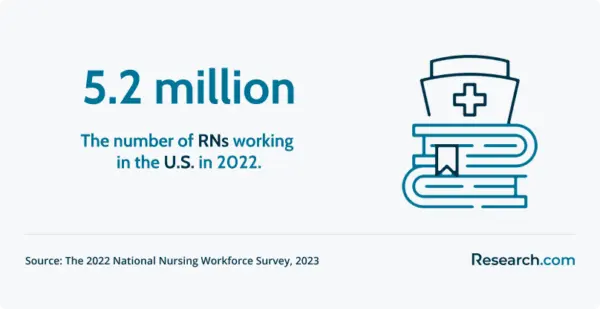
Nursing is one of the largest professions in the U.S., comprising nearly 5.2 million RNs nationwide. That scale reflects how central nurses are to healthcare delivery, but it also shows why nursing schools must prepare students with strong clinical judgment, communication skills, and professional habits before they enter practice.
How can students handle the emotional pressure of nursing training?
Nursing education can be emotionally intense. Students may encounter illness, pain, family distress, death, ethical uncertainty, and difficult team dynamics while still learning how to perform safely. Coping well requires more than “being tough.” It requires support systems, reflection, and healthy stress-management habits.
- Build peer support early. Classmates understand the workload and can help with study accountability, encouragement, and perspective during difficult weeks.
- Seek mentorship. Senior students, faculty, clinical instructors, and working nurses can explain what is normal, what needs improvement, and how to manage professional stress.
- Protect basic self-care. Sleep, meals, movement, hydration, and brief recovery periods are not luxuries. They affect learning, emotional regulation, and patient safety.
- Use counseling and student support services when needed. If anxiety, grief, panic, or exhaustion becomes hard to manage, campus counseling or professional support can provide practical help.
Where can new nursing graduates work?
New nursing graduates can start in many healthcare environments, although specific eligibility depends on license type, employer requirements, state rules, and experience level. Hospitals are common entry points, but they are not the only option.
- Hospitals. New graduates may work in medical-surgical units, emergency departments, maternity units, pediatrics, critical care, perioperative care, or specialty units depending on hiring practices and orientation programs.
- Clinics and outpatient centers. Ambulatory settings may involve routine assessments, patient education, procedures, follow-up care, and coordination with providers.
- Community health organizations. Public health agencies and nonprofits may hire nurses for prevention programs, education, outreach, vaccination efforts, and health promotion.
- Schools and educational settings. School nurses support student health, screenings, medication administration, emergency response, and wellness education.
- Psychiatric and behavioral health facilities. Nurses in mental health settings may support crisis care, medication management, therapeutic communication, and safety planning.
Location can also influence opportunity, pay, and competition. Students comparing regions may find it useful to review the best states for nurses. Nursing graduates may also consider adjacent healthcare roles. In the U.S., there are 601,820 nursing assistants, 229,740 physical therapists, 632,020 LPNs, and 162,800 health technologists.
Using data from the Bureau of Labor Statistics (BLS), the chart below shows job openings across several nursing-related subspecialties. Demand is influenced by healthcare needs, workforce turnover, population aging, technology, and care-delivery changes. Students interested in patient care with a behavioral health focus may also explore school psychology careers as a related path.
Some students also consider closely related clinical support roles. For example, an accelerated CMA program may appeal to learners who want a faster route into a medical assistant role before or instead of nursing school.
What technology and education trends are changing nursing school?
Nursing education is changing because healthcare itself is changing. Students are now expected to understand digital documentation, remote care, simulation-based practice, patient data, and interprofessional communication. These tools do not replace bedside judgment, but they increasingly shape how nurses learn and work.
- Health informatics and data use. Nurses increasingly work with electronic health records, patient dashboards, quality metrics, and clinical data. Nursing programs may introduce informatics so students can interpret information safely and accurately.
- Telehealth training. Virtual visits and remote patient monitoring require nurses to communicate clearly, assess symptoms from a distance, educate patients, and document care through digital systems.
- Simulation-based learning. High-fidelity mannequins, standardized patients, and scenario labs allow students to practice urgent or complex situations before caring for real patients.
- Online and hybrid education. Digital learning platforms can make lectures, discussions, exams, and resources more flexible, although clinical and skills requirements still require supervised practice.
How does nursing school prepare students for clinical practice?
Nursing school prepares students through layered training: classroom theory, lab practice, simulation, clinical rotations, instructor feedback, patient-care planning, and licensure preparation. The goal is not simply to memorize disease facts. Students must learn how to notice changes, prioritize risks, communicate concerns, and act within their scope of practice.
Students considering broader healthcare or social-service leadership paths may compare related graduate options such as MSW, MSSW, and MSSA programs, but nursing education has its own licensure-focused structure. Nursing programs emphasize medical sciences, nursing frameworks, ethics, cultural responsiveness, patient advocacy, and clinical judgment. Clinical rotations then require students to apply that knowledge in supervised healthcare environments.
| Training component | What students practice | Why it matters in real healthcare settings |
| Classroom coursework | Pathophysiology, pharmacology, nursing process, ethics, assessment, and care planning | Builds the knowledge base used for safe clinical decisions |
| Skills labs | Vital signs, sterile technique, medication preparation, assessment techniques, and procedure basics | Allows repeated practice before direct patient care |
| Simulation | Emergency response, communication, prioritization, and teamwork in controlled scenarios | Improves confidence and judgment before high-pressure clinical situations |
| Clinical rotations | Patient interaction, documentation, handoff communication, safety checks, and supervised care | Connects academic knowledge to real patient needs and healthcare workflows |
What licensing exams and certifications come after nursing school?
Licensing requirements depend on the type of nursing program completed and the state, province, or country where the graduate plans to practice. Students should verify requirements directly with the relevant board of nursing before enrolling and again before graduation.
- National Council Licensure Examination for Registered Nurses. Graduates usually need to complete an accredited registered nursing program, such as an Associate Degree in Nursing or Bachelor of Science in Nursing, before taking this standardized exam for entry-level RN practice.
- National Council Licensure Examination for Practical Nurses. Graduates of an accredited practical nursing program, such as a Practical Nursing Diploma, may take this exam for practical or vocational nursing practice.
- Professional certification. After licensure, nurses may pursue specialty credentials in areas such as pediatrics, critical care, oncology, or other fields. Specialty certification typically requires additional education, clinical experience, and passing an exam connected to the specialty.
What are the advantages of online nursing programs?
Online nursing programs can be useful for students who need more flexibility because of work, caregiving, location, or schedule constraints. The strongest online and hybrid programs still require rigorous coursework, supervised clinical experience, student support, and preparation for licensing requirements. Online does not mean easier; it means the lecture and academic components may be delivered differently.
Prospective students should confirm accreditation, state authorization, clinical placement support, faculty access, technology requirements, and NCLEX preparation before enrolling. Affordability is important, but it should not be the only deciding factor. Students comparing cost-conscious options can review affordable online ADN programs while also checking program quality indicators.
| Online nursing programs may fit if... | Campus-based programs may fit if... |
| You need flexibility for lectures, readings, and assignments. | You prefer in-person structure and direct classroom interaction. |
| You are comfortable with digital platforms, virtual discussions, and independent scheduling. | You learn best through scheduled face-to-face instruction. |
| The school provides approved clinical placements that work for your location. | You want the school’s local clinical partnerships and campus labs nearby. |
| You can manage deadlines without daily in-person reminders. | You benefit from frequent on-campus accountability and peer contact. |
What are the job prospects for nursing graduates?
Nursing graduates can pursue roles in hospitals, outpatient clinics, long-term care facilities, community health, education, research, behavioral health, and specialty practice. Career options expand with experience, additional education, specialty certification, and graduate training. Advanced practice roles may include nurse practitioner, nurse anesthetist, and nurse midwife, depending on education, licensure, and state rules.
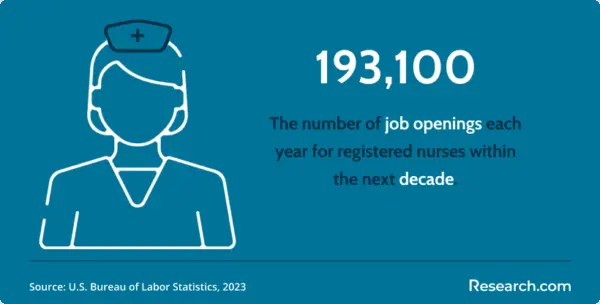
According to the cited U.S. Bureau of Labor Statistics data, there will be 193,100 job openings each year for RNs projected within the next decade. Demand is shaped by factors such as an aging population, healthcare technology, and increased attention to preventive care. Still, job availability and pay vary by region, employer, specialty, shift, and experience, so students should avoid assuming that any one nursing degree guarantees a specific salary or position.
Can bridge programs support advanced nursing goals?
Bridge programs can help licensed or previously trained healthcare professionals move toward the next nursing credential without starting over completely. These programs are designed to connect prior education with advanced coursework and clinical expectations. They may appeal to students who already have nursing experience and want a more efficient route to RN, BSN, MSN, or advanced practice preparation.
Before enrolling, compare accreditation, credit transfer rules, clinical hour requirements, state authorization, and whether the program aligns with your intended license or certification. Students interested in psychiatric-mental health advanced practice can explore ADN to PMHNP pathway options as one example of a bridge-oriented route.
What extracurricular support helps nursing students succeed?
Strong nursing students rarely succeed alone. Support outside required classes can improve study habits, confidence, professional identity, and emotional resilience. The best resources are the ones students actually use early, not only after they are failing a course.
- Student nursing organizations. Groups such as the National Student Nurses' Association (NSNA) can connect students with peers, professional development, events, mentorship, and leadership opportunities.
- Peer study groups. A focused study group can help students explain difficult concepts, compare practice questions, and prepare for exams without relying only on passive review.
- Faculty office hours and academic support. Meeting instructors early can clarify expectations, identify weak areas, and prevent small problems from becoming course-threatening issues.
- Tutoring. Tutoring can be especially valuable in challenging subjects such as pharmacology, anatomy, physiology, dosage calculations, and pathophysiology.
- Mental health and wellness services. Counseling, wellness workshops, and stress-management resources can help students cope with the emotional load of nursing education.
- Healthcare volunteering. Volunteer experiences can strengthen communication skills, expose students to patient-care environments, and help confirm whether nursing is the right fit.
What alternative pathways can lead to nursing?
Not every nursing student begins in the same place. Some enter directly from high school or college prerequisites. Others are career changers, LPNs, military veterans, or adults returning to school. Alternative pathways can make nursing more accessible, but each option should be checked for accreditation, licensure alignment, clinical support, and total cost.
- Accelerated nursing programs. Students who already hold a bachelor's degree in a non-nursing field may consider an accelerated nursing program. These programs typically last 12 to 18 months and are designed for career changers who want a faster route into registered nursing.
- Online nursing degrees for non-nurses. Some online or hybrid options allow students without a healthcare background to complete academic coursework remotely while meeting in-person clinical requirements. Students can compare online ADN programs for non-nurses to find formats that match their goals.
- LPN-to-RN bridge programs. Licensed practical nurses may use bridge programs to build on prior nursing education and experience while working toward registered nursing eligibility.
- Military-to-nursing pathways. Veterans with medical training may qualify for nursing programs that recognize prior healthcare experience and may offer flexible scheduling or financial support.
How can advanced nursing degrees build leadership skills?
Advanced nursing degrees can prepare nurses for roles that involve clinical leadership, systems improvement, education, policy, evidence-based practice, and interdisciplinary collaboration. Graduate-level study often emphasizes research use, quality improvement, population health, leadership communication, and advanced clinical reasoning.
Cost should be part of the decision, especially for nurses balancing work and graduate school. Students comparing doctoral options can review lower-cost online DNP programs while also evaluating accreditation, faculty expertise, clinical requirements, and post-graduation outcomes.
How do networking and mentorship affect nursing careers?
Mentorship can help nursing students and early-career nurses understand clinical expectations, build confidence, choose specialties, prepare for interviews, and avoid common professional mistakes. Networking also matters because many healthcare opportunities are shaped by clinical rotations, faculty recommendations, preceptors, professional organizations, and employer partnerships.
Students seeking a practical entry point into nursing should consider whether a program provides access to instructors, clinical partners, alumni, and career services. Those comparing LPN options can review affordable online licensed practical nurse programs and look closely at clinical placement support.
How should students evaluate nursing school outcomes?
Reputable nursing schools should be able to explain how students perform and what support is available when students struggle. Outcomes matter because nursing education leads to licensure, and licensure depends on meeting academic, clinical, and exam requirements.
| Outcome to review | Why it matters | What to ask the school |
| NCLEX pass rates | They help indicate how well the program prepares students for licensure exams. | What is the most recent pass-rate trend, and how does the school support students who are at risk? |
| Graduation and retention | High attrition may signal academic, financial, scheduling, or support challenges. | How many students complete the program, and what are the common reasons students leave? |
| Clinical placements | Clinical quality affects confidence, competence, and employability. | Who arranges clinical placements, and how far might students travel? |
| Career services | Job-search help can be important for new graduates entering competitive specialties. | Does the program provide resume help, interview preparation, employer connections, or alumni mentoring? |
Students researching advanced practice admissions can also review related guidance such as what to know about easier nurse practitioner program admissions, while remembering that admissions accessibility should never replace accreditation and licensing fit.
Are accelerated nursing programs a realistic choice?
Accelerated nursing programs can be practical for students who already have a degree or healthcare background and can handle an intensive academic schedule. The appeal is speed, but the trade-off is workload. Condensed courses, frequent exams, clinical requirements, and limited downtime can be difficult for students who need to work many hours or have unpredictable responsibilities.
Before choosing an accelerated route, confirm accreditation, clinical placement quality, financial aid availability, schedule intensity, transfer credit policies, and NCLEX preparation. Nurses who already hold an RN credential and want a faster bachelor’s completion route may compare fast-track RN to BSN online programs.
How do nursing schools support diversity and inclusion?
Nursing schools increasingly recognize that students must learn to care for patients from many racial, ethnic, cultural, economic, gender, language, and community backgrounds. This is relevant across program types, including online direct-entry MSN programs. Diversity and inclusion efforts should go beyond recruitment statements; they should appear in curriculum, student support, clinical experiences, and faculty practices.
- Recruiting a diverse student body. Programs may use outreach, scholarships, and advising to support students from underrepresented communities and nontraditional backgrounds.
- Inclusive curriculum design. Courses may address cultural competence, health disparities, social determinants of health, mental health access, communication barriers, and bias in healthcare.
- Support for underrepresented students. Mentoring, tutoring, academic coaching, counseling, and peer networks can help students navigate rigorous programs and persist to graduation.
- Cultural competency training. Students learn how beliefs, language, family structures, socioeconomic conditions, and lived experience can affect care decisions and patient trust.
- Diverse clinical exposure. Clinical placements can help students understand different communities and apply classroom learning to real patient needs.
- Gender inclusivity. Nursing programs may work to reduce stereotypes and support men and gender-diverse students in a profession historically associated with women.
- Inclusive school culture. Student organizations, faculty training, respectful classroom practices, and allyship initiatives can help create a learning environment where students feel valued.
How do simulation labs and virtual learning improve clinical readiness?
Simulation labs help students practice patient-care scenarios before they work with real patients. These environments may use high-fidelity mannequins, virtual scenarios, telehealth simulations, role-play, and structured debriefing. The value is not only technical practice. Simulation also builds communication, prioritization, teamwork, and clinical judgment.
Virtual learning can support simulation by allowing students to review cases, prepare for labs, practice documentation, and reflect on decisions. This blended model can be especially useful in bridge pathways such as an LPN to RN bridge program, where students may need to connect prior practical experience with registered nursing expectations.
How can affordable nurse practitioner programs maintain quality?
An affordable nurse practitioner program should not cut corners on accreditation, faculty qualifications, clinical placement expectations, or preparation for certification and practice. Lower cost can be valuable, but students should verify that the program meets professional and state requirements before enrolling.
Compare curriculum depth, clinical partnerships, student support, faculty access, board preparation, and graduate outcomes. A program’s transparency is often as important as its price. Students comparing cost-conscious graduate options can review affordable nurse practitioner programs.
What does a typical nursing student day look like?
A nursing student’s day may include lecture, lab, simulation, clinical preparation, patient-care assignments, studying, exams, and documentation practice. On classroom days, students might attend lectures in subjects such as pharmacology, anatomy, nursing theory, or assessment, then spend time reviewing notes, completing assignments, and working through practice questions.
Clinical days often start early and require preparation before arriving at the healthcare site. Students may receive patient assignments, review charts under supervision, perform assessments, practice communication, document care, and discuss clinical reasoning with instructors. Clinical experiences may take place in hospitals, clinics, long-term care facilities, or other approved settings.
Evenings may involve care plans, case studies, quizzes, medication research, skills practice, or group study. Because the schedule can shift from week to week, nursing students need strong organization and a realistic plan for meals, sleep, transportation, and family or work responsibilities.
The experience can be stressful and rewarding at the same time. Students may feel pressure from exams and patient-care responsibilities, but many remain motivated by skill growth and the opportunity to help patients. Licensed practical nurses who want to continue toward RN roles may consider flexible online LPN to RN programs.
Common mistakes to avoid when choosing a nursing school
- Choosing a school without checking accreditation. Accreditation can affect licensure eligibility, transfer credits, graduate school options, and employer confidence.
- Looking only at tuition. Supplies, testing fees, uniforms, transportation, background checks, and lost work hours can change the real cost.
- Assuming online programs are fully remote. Nursing programs generally require clinical or skills-based experiences that must be completed in approved settings.
- Ignoring state authorization and licensure rules. A program that works in one state may not automatically meet requirements in another.
- Choosing based only on speed. Accelerated and bridge programs can save time, but they can also create intense schedules that are not realistic for every student.
- Overlooking student outcomes. NCLEX pass rates, retention, clinical placement quality, and career support should all factor into the decision.
- Assuming salary or employment is guaranteed. Nursing demand is strong in many settings, but outcomes vary by location, license, specialty, experience, and employer.
References
- Allgeyer, R., Smiley, R., et al. (2023). The 2022 National Nursing Workforce Survey. Journal of Nursing Regulation. https://www.journalofnursingregulation.com/article/S2155-8256(23)00047-9/fulltext
- Cambridge College of Healthcare and Technology. (n.d.). How Long Does Nursing School Take to Complete. https://www.cambridgehealth.edu/nursing/nursing-school/how-long-does-nursing-school-take-to-complete
- McLennan Community College. (2023). Expenses in the ADN Program. https://www.mclennan.edu/health-professions/associate-degree-nursing/cost.html
- The University of Arizona. (2021). Tuition, Fees, and Financial Aid. https://www.nursing.arizona.edu/academics/bsn-program/costs-financial-aid
- University of Pennsylvania. (2023). Master’s & Post-Graduate Costs. https://www.nursing.upenn.edu/admissions/tuition-and-fees/masters-post-masters-costs
- U.S. Bureau of Labor Statistics. (2023). Occupational Outlook Handbook for Registered Nurses. https://www.bls.gov/ooh/healthcare/registered-nurses.htm#tab-6
Key Insights
- Nursing school is demanding because students must combine science knowledge, hands-on skills, clinical judgment, documentation, communication, and professional ethics.
- The best nursing pathway depends on your starting point: ADN, BSN, LPN-to-RN, accelerated, online, bridge, and graduate programs each serve different goals.
- Cost comparisons should include tuition plus supplies, lab fees, testing fees, clinical transportation, uniforms, background checks, and time away from work.
- Online nursing programs can add flexibility, but students still need approved clinical experiences and must verify accreditation and licensure alignment.
- Before enrolling, ask about NCLEX pass rates, clinical placements, graduation rates, accreditation, student support, and career services.
- Accelerated and bridge programs can shorten the route for some students, but they require careful planning because the workload can be intense.
- Nursing can offer broad career mobility, but salary, hiring, and advancement are never automatic; they depend on license level, location, experience, specialty, and employer needs.
Other things you should know about nursing schools
In 2027, nursing schools enhance academic support through personalized tutoring, online learning platforms, and simulation labs. These resources aim to bolster students' comprehension of complex medical concepts and prepare them thoroughly for clinical rotations. Faculty advisors and peer mentoring programs further assist students in navigating academic challenges and achieving success.
In 2027, nursing students facing difficulties can access a variety of support resources, including tutoring services, mental health counseling, and academic workshops. Many institutions also offer online resources, such as digital libraries and forums, to facilitate peer support and academic collaboration.
In 2027, nursing students have access to various academic supports including tutoring programs, online resources, and mentorship opportunities. Many schools also offer mental health services to assist with stress management, and faculty advisors work closely with students to ensure academic success and readiness for clinical challenges.