2027 ASN vs BSN: Which Degree Is Right for You?

Co-Founder and Chief Data Scientist
Choosing between an Associate of Science in Nursing (ASN) and a Bachelor of Science in Nursing (BSN) is one of the first major decisions future registered nurses make. Both degrees can lead to RN licensure, but they differ in cost, length, curriculum depth, employer preferences, and long-term advancement options. This guide is designed for high school graduates, career changers, licensed practical nurses, working RNs, and healthcare professionals comparing the fastest, most affordable, and most career-flexible path into nursing.
You will learn how ASN and BSN programs compare, how long each path takes, what they may cost, what financial aid options exist, how bridge programs work, and which degree may be better depending on your career goals. The goal is not to declare one degree universally better, but to help you choose the option that fits your timeline, budget, location, and professional plans.
Quick answer: ASN vs BSN
An ASN is usually the faster and less expensive route to becoming a registered nurse, while a BSN generally provides broader preparation for leadership, specialty nursing, graduate study, and long-term advancement. Both ASN and BSN graduates can qualify to take the NCLEX-RN, but some employers prefer or require a BSN for certain hospital, management, public health, and specialized nursing roles.
Key benefits of earning a nursing degree
- ASN and BSN programs can both prepare students for registered nurse licensure when they meet state board and accreditation requirements.
- Nursing offers entry into a large healthcare workforce with roles in hospitals, clinics, home health, rehabilitation centers, community health, outpatient care, and specialty units.
- BSN-prepared nurses often have access to more advancement opportunities and may earn more than ASN-prepared nurses, although pay still depends on role, employer, experience, state, and local labor conditions.
- Featured ASN and BSN Degree Programs for 2027
- ASN vs BSN: What Is the Difference?
- How Long Do ASN and BSN Programs Take?
- How Much Do ASN and BSN Programs Cost?
- Financial Aid Options for ASN and BSN Students
- Bridge Programs for ASN, ADN, LPN, RN, and BSN Students
- Career Paths for ASN and BSN Graduates
- Job Market for ASN and BSN Graduates
- Financial Benefits of an Online RN to BSN Program
- ASN vs BSN Salary Comparison
- How to Choose an Accelerated BSN Program
- How to Decide Between an ASN and a BSN
- Why Accreditation Matters in Nursing Education
- Accelerated Online Nursing Programs for Non-Nurses
- Long-Term Career Impact of ASN vs BSN
- Moving from a BSN to an FNP Online
- MSN Nurse Executive Leadership Opportunities
- Online LPN to BSN Opportunities
- RN to MSN Bridge Programs
- RN to BSN Programs With No Clinical Requirements
- Fast-Tracking the Nurse Practitioner Path
- Online ASN and BSN Program Flexibility
Featured ASN and BSN Degree Programs for 2027
How to use this program list
The programs below are examples of ASN, BSN, accelerated BSN, and RN-to-BSN pathways. Use them as a starting point, not as a final decision. Before applying, confirm accreditation, state board approval, clinical placement arrangements, total cost, NCLEX-RN preparation, transfer credit policies, and whether the program meets licensure requirements in the state where you plan to practice.
How Research.com evaluates schools
Because nursing education affects licensure, debt, and career mobility, program quality matters. Research.com reviews schools using industry statistics and data from the IPEDS database, Peterson’s database including the Distance Learning Licensed Data Set, the College Scorecard database, and the National Center for Education Statistics. Programs are reviewed against Research.com’s ranking principles and available statistical indicators. You can learn more in our methodology.
| School | Program | Length | Cost | Credits | Accreditation or approval listed |
| Duke University | Accelerated Bachelor of Science in Nursing for students who already hold a bachelor’s degree or higher | 16 months | $25,258 per semester | 58 | Commission on Collegiate Nursing Education (CCNE) |
| University of Pennsylvania | Bachelor of Science in Nursing combining nursing, science, and liberal arts preparation | 4 years | $58,620 per year | 36 | Commission on Collegiate Nursing Education (CCNE), Approved by the Pennsylvania State Board of Nursing |
| Santa Monica City College | Associate of Science in Nursing designed around California Board of Registered Nursing expectations | 4 years | $46 per credit | 68 | California Board of Registered Nursing, Accreditation Commission for Education in Nursing (ACEN) |
| The Ohio State University | Bachelor of Science in Nursing with general education and nursing science coursework | 4 years | $12,859 per year (Ohio resident); $38,365 per year (Non-resident) | 61 | Commission on Collegiate Nursing Education (CCNE) |
| University of Iowa | Online RN-to-BSN program for registered nurses with an ASN or ADN | 2.5 years (Part-time), 1.5 years (Full-time) | $376 per credit | 32 | Commission on Collegiate Nursing Education (CCNE) |
What Graduates Say About Their ASN or BSN Experience
-
: "
Completing my BSN online made nursing school possible while I continued managing work and family responsibilities. The flexible format helped me stay on track, and becoming a registered nurse gave me access to a career with multiple directions for growth. — Kate
"
-
: "
My ASN helped me move into nursing sooner than I expected. Studying online gave me enough structure to keep progressing while still working, and after licensure I found opportunities in hospitals, home care, and community health. — James
"
-
: "
The RN to BSN program strengthened my clinical judgment and leadership skills without forcing me to leave my job. The online format helped me balance school with my schedule, and the BSN opened the door to more specialized and higher-paying roles. — Susan
"
ASN vs BSN: What Is the Difference?
The main difference between an ASN and a BSN is the scope and depth of education. An ASN focuses on the core clinical knowledge and nursing skills needed to begin RN practice. A BSN includes that foundation plus more coursework in leadership, research, public health, evidence-based practice, informatics, and systems-level care. Both can lead to RN licensure if the program meets state requirements and the graduate passes the NCLEX-RN.
| Factor | ASN | BSN |
| Primary purpose | Prepare students for entry-level registered nursing practice | Prepare students for RN practice plus broader leadership, research, and specialty preparation |
| Typical provider | Community colleges, technical colleges, and vocational institutions | Colleges and universities |
| Licensure path | Can qualify graduates to sit for the NCLEX-RN | Can qualify graduates to sit for the NCLEX-RN |
| Best fit | Students who want the fastest lower-cost route into RN employment | Students who want broader long-term mobility, leadership options, or graduate school preparation |
| Common next step | RN-to-BSN bridge program after licensure | MSN, DNP, specialty certification, leadership roles, or advanced practice preparation |
What is an ASN?
An Associate of Science in Nursing is an undergraduate nursing degree commonly offered by community colleges and career-focused institutions. It usually emphasizes direct patient care, nursing fundamentals, pharmacology, anatomy and physiology, and supervised clinical practice. Graduates of eligible ASN programs can apply to take the NCLEX-RN and pursue RN licensure.
Advantages of an ASN
- Faster workforce entry: An ASN can help students reach RN eligibility sooner than a traditional BSN route.
- Lower upfront education cost: ASN programs are often less expensive because they are shorter and frequently offered by public community colleges.
- Practical first step: Graduates can begin gaining bedside experience and later complete an RN-to-BSN program while employed.
Limitations of an ASN
- Fewer advancement options at some employers: Certain hospitals, specialty units, and leadership tracks may prefer or require BSN-prepared nurses.
- Additional schooling may be needed later: If your long-term goal is management, advanced practice, education, or graduate study, you may eventually need a BSN.
- Narrower academic scope: ASN curricula may include less emphasis on research, population health, informatics, and organizational leadership than BSN programs.
What is a BSN?
A Bachelor of Science in Nursing is a four-year undergraduate degree offered by colleges and universities. BSN programs prepare students for RN practice while also developing skills in clinical reasoning, evidence-based care, public health, leadership, nursing informatics, and interdisciplinary collaboration. Like ASN graduates, BSN graduates from eligible programs can sit for the NCLEX-RN.
Advantages of a BSN
- Broader job access: A BSN may strengthen applications for hospital, specialty, public health, travel nursing, and nurse management positions.
- Stronger advancement foundation: BSN coursework is more aligned with leadership, quality improvement, research, and care coordination roles.
- Graduate school eligibility: A BSN is commonly required for MSN and DNP pathways. Students interested in advanced leadership preparation may also explore related options such as an online doctorate in leadership and management, depending on career goals.
Limitations of a BSN
- Longer time in school: Traditional BSN programs require more academic time before full-time RN employment.
- Higher total cost: Four-year programs, especially private universities, can create a larger financial commitment.
- Delayed earnings: Students who choose a traditional BSN may spend more time studying before earning RN wages compared with ASN graduates.
How Long Do ASN and BSN Programs Take?
ASN programs typically take 20-24 months, while BSN programs usually take around 36 months. Timelines vary by school, prerequisite requirements, transfer credits, enrollment status, clinical availability, and whether the student is entering nursing for the first time or already holds RN licensure.
| Pathway | Typical timeline stated | Who it is commonly designed for |
| ASN | 20-24 months | Students seeking a shorter route to RN eligibility |
| Traditional BSN | Around 36 months | Students who want a bachelor’s-level nursing education from the start |
| RN to BSN online | As little as one year | Licensed RNs who already completed an ASN or ADN |
| Accelerated BSN | 20 months in some universities | Students who already hold a bachelor’s degree in another field |
How Much Do ASN and BSN Programs Cost?
Program costs vary widely by institution type, residency status, delivery format, fees, supplies, transportation, clinical requirements, and whether students can transfer prior credits. In general, ASN programs are less expensive because they are shorter. ASN students spend about $15,000 per year, while tuition for BSN programs can go up to $17,000 per year in public universities. At private universities, ASN and BSN programs may range from $40,000 to $100,000 annually.
Do not compare programs by tuition alone. Nursing students should also review lab fees, uniforms, background checks, immunizations, exam fees, clinical travel costs, books, technology requirements, and lost income if the program requires full-time attendance. Bridge and online programs may reduce costs for some students, but only if they are properly accredited and meet the student’s state requirements.
Financial Aid Options for ASN and BSN Students
Nursing students can often combine several funding sources. The best strategy is to start with aid that does not need to be repaid, then use loans only after comparing total program cost and expected repayment obligations.
- Federal and state loans: Students can apply for federal aid through the Free Application for Federal Student Aid (FAFSA). Some states also offer nursing loan programs that may include service-based repayment options for graduates who work in medically underserved facilities.
- Scholarships and grants: Funding may be available from schools, professional associations, healthcare employers, and public agencies. Examples include the Nurse Corps Scholarship Program, American Association of Colleges of Nursing scholarships, and the Johnson & Johnson Andrea E. Higham Memorial Nursing Scholarship.
- Employer tuition support: Some hospitals and healthcare systems help employees pay for RN-to-BSN, BSN, MSN, or specialty training in exchange for continued employment.
- Private loans: Banks, credit unions, and private lenders may offer education loans, but students should compare interest rates, repayment terms, deferment options, and total repayment cost carefully.
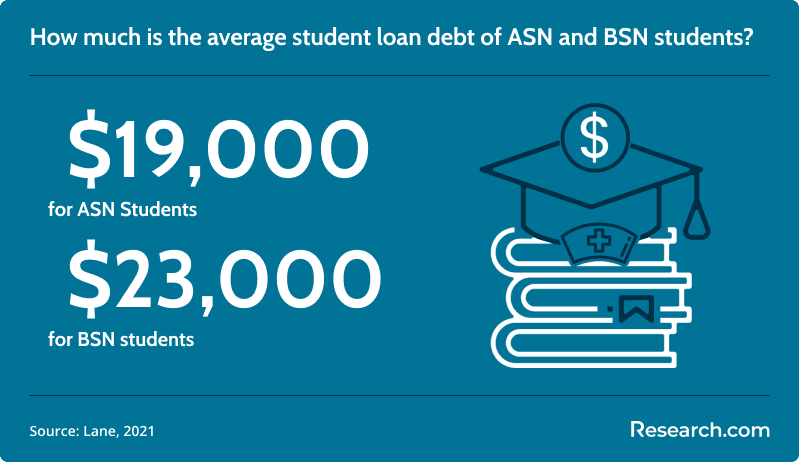
Nursing students frequently use loans to finance their education. Students in associate degree programs such as ASN programs have about $19,000 in student loans, while BSN students finish with $23,000 in loans after graduation. Before enrolling, ask the school for total cost of attendance, average borrowing, graduation rates, NCLEX-RN pass information, and employment support.
Bridge Programs for ASN, ADN, LPN, RN, and BSN Students
Nursing bridge programs help licensed or previously educated healthcare workers move to the next credential without repeating all earlier coursework. They can be efficient, but most advanced bridge options require current RN licensure or another eligible nursing credential. Always verify admission requirements before assuming you qualify.
| Bridge pathway | Who it is for | What it can help you do |
| RN-to-BSN | RNs with an ADN or ASN | Apply prior nursing education toward a BSN and strengthen leadership, public health, and evidence-based practice preparation |
| RN-to-MSN | RNs with an ASN or BSN, depending on program rules | Move into graduate nursing study more directly than completing separate traditional degrees |
| BSN-to-DNP | BSN graduates seeking doctoral-level nursing preparation | Pursue advanced clinical, leadership, or specialized roles through a Doctor of Nursing Practice pathway |
| LPN-to-BSN | Licensed practical nurses or licensed vocational nurses | Build on practical nursing experience and work toward BSN-prepared RN eligibility |
| ADN-to-BSN | Registered nurses with an ADN | Use prior coursework and RN experience toward bachelor’s-level nursing requirements |
Career Paths for ASN and BSN Graduates
ASN and BSN graduates commonly begin as registered nurses after passing the NCLEX-RN and meeting state licensure requirements. The difference is usually not whether you can become an RN, but how quickly you enter the field and how much flexibility you have later. ASN graduates often start in direct patient care and may later bridge to a BSN. BSN graduates may have stronger access to specialty units, leadership tracks, public health roles, and graduate nursing programs.
Common roles for ASN graduates
| Role | Typical responsibilities | Median annual salary stated |
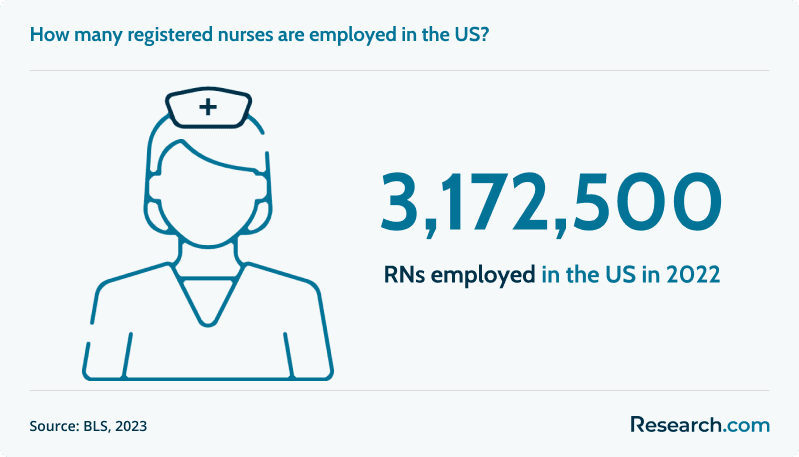
| Registered Nurse (RN) | Provide patient care, administer medications, monitor vital signs, coordinate care, and educate patients and families. In 2022, there are 3,172,500 employed RNs in the United States (BLS, 2023). | $81,220 |
| Home Care Nurse | Care for patients in their homes, including medication support, wound care, education, and help with daily health needs. | $$84,708 |
| Patient Coordinator | Help patients navigate appointments, communication, care coordination, and support services. | $96,580 |
| Clinical Associate | Support providers with patient care, documentation, record updates, laboratory coordination, and administrative tasks. Students interested in office-based healthcare operations may also compare a medical office administration diploma online. | $66,109 |
| Emergency Room Nurse | Assist with urgent and emergency care in fast-moving ER settings alongside physicians and other clinical staff. | $79,886 |
| Oncology Nurse | Support cancer patients, help administer treatments, coordinate with oncology teams, and educate patients during care. | $84,200 |
Common roles for BSN graduates
| Role | Typical responsibilities | Median annual salary stated |
| Psychiatric Nurse | Care for patients with mental health or substance use conditions, administer medications, monitor progress, and communicate with families. Nurses interested in behavioral health may also review related education paths such as a masters in behavioral psychology. | $83,500 |
| Community Health Nurse | Support wellness, prevention, vaccinations, public health outreach, and education in clinics, community programs, and government settings. | $68,003 |
| Critical Care Nurse | Provide care for seriously ill patients, often in intensive care units, using advanced assessment and monitoring skills. | $83,900 |
| Pediatric Nurse | Care for children and adolescents, assist pediatric providers, update records, administer medications, and coordinate tests. | $78,600 |
| Outpatient Nurse | Support patients receiving tests, procedures, and treatments without hospital admission. | $79,984 |
| Nurse Manager | Supervise nursing teams, manage staffing, support hiring, maintain standards of care, and guide unit operations. | $94,664 |
Job Market for ASN and BSN Graduates
The nursing labor market includes opportunities for both ASN- and BSN-prepared registered nurses, but employer expectations can differ by region and facility type. ASN graduates may be able to enter the workforce sooner, which can be useful for students who need to start earning quickly. BSN graduates may be more competitive for hospital-based positions, specialty units, leadership roles, and employers that prefer bachelor’s-prepared nurses.
A BSN can also support longer-term mobility. For students comparing nursing to other undergraduate options, the BSN is often discussed among the best bachelor’s degrees because it can connect to licensure, healthcare demand, and future graduate pathways. However, no degree guarantees a salary or job offer; local employer needs, clinical performance, licensure status, and experience still matter.
According to the Bureau of Labor Statistics, hospitals are the largest employer category for registered nurses, with 59% of RNs employed in hospitals. The chart below shows other major employer settings that new RNs may consider.
Financial Benefits of an Online RN to BSN Program
For licensed RNs who entered the profession through an ASN or ADN, an online RN-to-BSN program can be a practical way to improve long-term career options without leaving the workforce. These programs are usually built for working nurses, so coursework may be more flexible than a traditional campus schedule. The potential financial value comes from combining continued employment with a credential that may support specialty, leadership, or higher-paying opportunities.
Cost control is a major reason many RNs choose online programs. Affordable options, including the cheapest RN to BSN online programs, can help nurses compare tuition and format before committing. Students should still check total fees, clinical or practicum expectations, employer tuition reimbursement, transfer credit limits, and whether the school is properly accredited.
An RN-to-BSN program is usually most valuable when it aligns with a clear professional goal: moving into a preferred hospital system, qualifying for a specialty track, preparing for graduate school, or becoming eligible for leadership responsibilities. Without that goal, the added credential may still be useful, but the return on investment is harder to measure.
ASN vs BSN Salary Comparison
There can be a pay difference between ASN and BSN degree holders, but it is not automatic in every job or location. Based on the figures provided, BSN degree holders earn $33 per hour on average, while ASN degree holders earn $31 per hour. Differences may reflect employer preferences, role type, experience, shift differentials, geography, certifications, and advancement opportunities.
BSN-prepared nurses may also be considered for roles with more responsibility, such as head nurse, administrative nurse, or chief nursing officer tracks. Experience remains important, but a BSN can reduce barriers to advancement in organizations that use bachelor’s education as a screening requirement.
| Occupation | ASN degree holders (Salary per hour) | BSN degree holders (Salary per hour) |
| Registered nurse | $31 | $33 |
| ER nurse | $33 | $34 |
| Critical care nurse | $34 | $34 |
| Psychiatric nurse | $35 | $34 |
How to Choose an Accelerated BSN Program
An accelerated BSN can be a strong option for students who already have a bachelor’s degree and want to move into nursing faster. The trade-off is intensity. These programs often compress nursing coursework and clinical training into a demanding schedule, so applicants should evaluate readiness carefully before enrolling.
- Admission requirements: Confirm prerequisite courses, minimum grades, science GPA expectations, entrance tests, and prior healthcare experience preferences.
- Program length and schedule: Make sure the pace is realistic given your work, family, and financial obligations.
- Clinical placements: Ask whether the school arranges placements or expects students to find sites independently.
- Licensure support: Review NCLEX-RN preparation, advising, and state authorization policies.
- Total cost: Compare tuition, fees, supplies, testing expenses, commuting, and the income you may lose if you cannot work during the program.
If you want an accelerated route with clearer admission expectations, compare options such as the easiest BSN program to get into, while still checking accreditation, outcomes, and clinical quality.
How to Decide Between an ASN and a BSN
The right choice depends on your constraints and goals. An ASN may be the smarter first step if speed and affordability are your top priorities. A BSN may be better if you want maximum long-term flexibility, plan to work in competitive hospital systems, or expect to pursue graduate nursing education.
| Choose this path if... | ASN may fit better | BSN may fit better |
| You need to start earning as an RN as soon as possible | Yes | Possibly, if an accelerated or transfer-friendly option is available |
| You want the lowest upfront education cost | Often yes | Less often, unless aid or transfer credits reduce cost |
| You want leadership, public health, or management roles | May require a later RN-to-BSN | Yes |
| You plan to pursue an MSN, DNP, or advanced practice role | Only after additional education | Yes |
| You are changing careers and already hold a bachelor’s degree | Possible | Accelerated BSN may be efficient |
Factors to compare before applying
- Prerequisites: Both ASN and BSN programs generally require at least a high school diploma, and many require prerequisite science courses such as biology or chemistry. If you already have a specialty interest, such as reproductive care, it may help to research paths like how to become a fertility nurse before choosing electives or clinical preferences.
- Cost and time: ASN programs may reduce upfront cost and allow earlier employment. BSN programs take longer but can provide broader preparation. Students who need flexible formats can compare the best online schools while verifying that nursing clinical requirements can be completed locally.
- Target job responsibilities: BSN graduates may be more competitive for leadership and specialized roles. ASN graduates can still enter healthcare quickly and may also explore related entry-level pathways such as how to become a certified medical assistant if they are comparing clinical support roles before committing to RN training.
- Licensure preparation: Both ASN and BSN programs can prepare students for the NCLEX-RN when they meet state requirements. If the fastest path to RN licensure is your priority, an ASN may be more practical.
Both ASN and BSN degrees can lead to registered nursing practice. In 2022, there were around 3.17 million RNs working in the US.
Why Accreditation Matters in ASN and BSN Programs
Accreditation is one of the most important checks in nursing education. It helps confirm that a program’s curriculum, faculty, clinical expectations, and student support meet recognized standards. Accreditation can affect licensure eligibility, credit transfer, graduate school admission, employer recognition, and access to some forms of financial aid.
Before enrolling, verify both institutional accreditation and nursing program accreditation or approval. Common nursing accreditors include CCNE and ACEN, while state boards of nursing determine whether graduates are eligible for licensure in that state. This matters especially for online students, military families, and students planning to move after graduation.
Accreditation also supports future pathways. Nurses who later want advanced practice roles should choose a foundation that will be accepted by graduate programs, including options such as nurse practitioner classes online.
Are Accelerated Online Nursing Programs for Non-Nurses Effective for Career Changers?
Accelerated online nursing programs for non-nurses can work well for students who already have college experience and can handle an intensive academic schedule. These programs typically combine online didactic coursework with required in-person clinical training, simulations, labs, or local placements. They are not fully hands-off or entirely remote because nursing licensure requires supervised practice.
The best candidates are organized, academically prepared in science prerequisites, financially ready for a compressed schedule, and able to attend required clinical experiences. Career changers should compare admission standards, clinical placement support, state authorization, graduation expectations, and NCLEX-RN preparation. For a deeper look at this pathway, review accelerated online nursing programs for non nurses.
Long-Term Career Impact of Choosing ASN vs BSN
The ASN-vs-BSN decision can shape your career timeline. The ASN may help you become an RN faster and start earning earlier. The BSN may require more upfront time and money but can reduce barriers to leadership, specialty practice, and graduate education.
| Long-term factor | ASN impact | BSN impact |
| Career advancement | Strong entry into direct care, but advancement may require a later BSN | Better alignment with leadership, specialty, and administrative opportunities |
| Earning potential | Can grow with experience, certifications, shifts, and location | May support higher-paying roles where employers value bachelor’s preparation |
| Job competitiveness | May be enough for many RN roles, depending on employer and region | Can be more competitive for hospitals and employers that prefer BSN-prepared nurses |
| Specialization | Possible after experience and certifications, but may require further education | Often stronger preparation for specialty, public health, informatics, and leadership tracks |
| Graduate education | Usually requires completing a BSN before MSN or DNP entry | Provides a direct academic foundation for MSN, DNP, and advanced practice programs |
| Professional flexibility | Faster start with a likely need for future bridge education | Broader long-term mobility from the beginning |
Decision rule
- Choose an ASN if your main priority is becoming an RN quickly with lower upfront cost, especially if you are willing to complete an RN-to-BSN later.
- Choose a BSN if you want stronger long-term access to specialty, leadership, graduate study, or competitive hospital roles.
How Can You Transition from a BSN to an FNP Through Online Programs?
BSN-prepared registered nurses who want advanced practice responsibility may pursue a Family Nurse Practitioner pathway through an MSN or DNP program with a family practice focus. FNPs provide primary care services, assess patients, order and interpret tests within their scope, manage treatment plans, and support long-term wellness across patient populations.
Why BSN-prepared nurses pursue FNP training
- Expanded clinical scope: FNP preparation supports more independent assessment, diagnosis, treatment, and patient management responsibilities, subject to state practice laws.
- More career settings: FNPs may work in clinics, hospitals, private practices, community health organizations, and primary care environments.
- Deeper patient relationships: Family practice often involves ongoing care across the lifespan.
- Graduate-level mobility: FNP programs can help nurses move beyond bedside RN roles into advanced practice.
Online BSN to FNP online programs can make this transition more manageable for working nurses. However, students should expect in-person clinical practicums, state authorization checks, and rigorous graduate-level coursework even when lectures or assignments are online.
Can an MSN Degree Lead to Nurse Executive Leadership Opportunities?
An MSN with a nurse executive leadership focus can help experienced nurses move from clinical practice into organizational leadership. These programs commonly emphasize strategic planning, staffing, quality improvement, finance, healthcare operations, and systems management. Nurses considering this route should already enjoy coordination, decision-making, mentoring, and process improvement.
For career-specific examples, review nurse executive leader MSN jobs.
What Opportunities Do LPN to BSN Online Programs Offer?
Licensed practical nurses and licensed vocational nurses who want to become bachelor’s-prepared RNs may consider LPN to BSN online programs. These pathways build on prior practical nursing experience while adding RN-level theory, clinical reasoning, leadership, and bachelor’s-level nursing coursework.
The key questions are whether the program accepts your current license, how it handles clinical placements, whether it meets your state’s RN licensure requirements, and how much prior credit you can transfer. Online coursework can improve flexibility, but clinical and lab requirements still need careful planning.
Can an RN to MSN Bridge Accelerate an Advanced Nursing Career?
An RN-to-MSN bridge can help registered nurses move into graduate-level preparation without completing every step through a separate traditional pathway. These programs may build on existing RN knowledge while adding bachelor’s-level bridge coursework and master’s-level nursing content.
This option can be useful for nurses who already know they want advanced practice, education, informatics, administration, or leadership roles. It can also reduce duplicated coursework for eligible students. Compare admission standards, accreditation, clinical requirements, specialty tracks, and total cost before choosing an RN to MSN bridge.
Is It Possible to Complete an RN to BSN Program With No Clinical Requirements?
Some RN-to-BSN programs for experienced registered nurses place greater emphasis on leadership, evidence-based practice, community health, informatics, and applied projects rather than traditional bedside clinical rotations. However, “no clinicals” can mean different things by school. Some programs may still require a practicum, capstone, community project, simulation, or workplace-based experience.
Before enrolling, confirm whether the program satisfies your employer, graduate school, and state expectations. Options such as RN to BSN online with no clinicals may be worth comparing if you already have RN experience and need a flexible completion pathway.
Can You Fast-Track the Path to Becoming a Nurse Practitioner?
Some nursing pathways can shorten the route to nurse practitioner preparation by using accelerated coursework, bridge structures, and carefully sequenced clinical training. Fast-tracking works best for nurses who already meet prerequisites, can handle a rigorous schedule, and understand licensure and certification requirements in their state.
A structured guide to how to become a nurse practitioner in 2 years can help nurses compare realistic timelines. The shortest option is not always the best option if it weakens clinical readiness, increases debt, or creates licensing complications.
How Online ASN and BSN Programs Offer Flexibility and Career Advancement
Online nursing programs can make coursework more accessible for working adults, parents, rural students, and career changers. However, nursing cannot be learned entirely online. Even when lectures, discussions, and assignments are virtual, students usually complete in-person labs, simulations, and clinical hours in approved healthcare settings.
When online ASN or BSN study makes sense
- You need flexible coursework but can attend required clinical experiences.
- You live far from campus but have access to approved healthcare facilities for placements.
- You are already an RN and want an RN-to-BSN program that fits around shifts.
- You are comparing cost-saving options and can verify accreditation, state authorization, and support services.
What to expect from online nursing programs
Online ASN and BSN programs often cover the same core subjects as campus programs, including anatomy, physiology, pharmacology, patient care, nursing fundamentals, and clinical decision-making. BSN programs add more coursework in leadership, research, community health, informatics, and evidence-based practice. The online portion may be flexible, but students should ask who arranges clinical placements and whether placements are available near them.
Accelerated online options
Students who want a shorter route may consider accelerated online ASN or BSN formats, especially if they already have college credits or a prior degree. Some programs allow students to earn a BSN in as little as 12 to 18 months. To compare shorter options, review 12-month accelerated nursing programs online, then verify clinical expectations, admission standards, and state eligibility.
Common Mistakes to Avoid When Choosing ASN vs BSN
- Choosing only by tuition: Low tuition does not always mean low total cost. Add fees, clinical travel, supplies, books, testing, uniforms, and lost work hours.
- Ignoring accreditation and state approval: A non-approved program can create licensure, transfer, and employment problems.
- Assuming online means fully remote: Nursing programs usually require in-person clinical training, labs, simulations, or practicums.
- Relying only on rankings: Rankings can help you create a shortlist, but licensure eligibility, clinical placement quality, NCLEX-RN support, and affordability matter more.
- Overlooking bridge options: An ASN followed by an RN-to-BSN may be more practical for some students than paying for a traditional BSN upfront.
- Assuming salary outcomes are guaranteed: Pay varies by location, employer, role, shift, certifications, and experience.
Questions to Ask Before Enrolling
- Is the nursing program accredited and approved by the state board where I plan to seek licensure?
- What are the total tuition, fees, supplies, testing, and clinical travel costs?
- Who arranges clinical placements, and are placements available near me?
- What prerequisite courses must I finish before admission?
- What are the graduation, retention, and NCLEX-RN support resources?
- Can I transfer previous credits or nursing coursework?
- Does the program support working students, part-time students, or students with caregiving responsibilities?
- If I choose an ASN, how easily can I later enter an RN-to-BSN program?
- If I choose a BSN, does the program prepare me for my intended specialty or graduate pathway?
Key Insights
- An ASN is usually the faster, lower-cost route to RN eligibility; a BSN usually offers stronger long-term mobility.
- Both ASN and BSN graduates can take the NCLEX-RN when they complete an eligible program, but employer preferences may differ.
- Program quality depends heavily on accreditation, state approval, clinical placement support, and licensure preparation.
- Online nursing programs can improve flexibility, but students should expect in-person clinical or practicum requirements.
- ASN graduates who want leadership, specialty, or graduate options can use RN-to-BSN or RN-to-MSN bridge programs to advance.
- BSN graduates may be better positioned for management, public health, specialty care, and advanced practice pathways such as FNP programs.
- The best choice is personal: choose ASN for speed and affordability, BSN for broader future options, and a bridge program if you want to combine early RN employment with later advancement.
References:
- U.S. Bureau of Labor Statistics (2023 November 27). Registered Nurses. Occupational Outlook Handbook. BLS.
- Lane, R. (2021 May 21). Average Nursing Student Debt: How Much Debt Do Nurses Have? Nerdwallet.
- Payscale (2023 December 5). Average Nursing Manager Salary. Payscale.
- Payscale (2023 December 13). Bachelor of Science in Nursing (BSN) Degree. Payscale.
- Salary.com (2023 November 27). Community Health Nurse Salary in the United States. Salary.com.
- Salary.com (2023 November 27). Critical Care Nurse Salary in the United States. Salary.com.
- Salary.com (2023 November 27). Oncology Nurse Salary in the United States. Salary.com.
- Salary.com (2023 November 27). Patient Care Coordinator Salary in the United States. Salary.com.
- Salary.com (2023 November 27). Pediatric Nurse Salary in the United States. Salary.com.
- Salary.com (2023 November 27). Psychiatric Nurse Salary in the United States. Salary.com.
- Salary.com (2023 November 27). Staff Nurse RN Home Care Salary in the United States. Salary.com.
- Salary.com (n.d.). Clinical Associate Salary in the United States. Salary.com.
Other Things You Should Know About ASN vs BSN Degree Programs
Yes. Most RN-to-BSN bridge programs accept licensed registered nurses with an ASN or ADN and award 30 to 60 credits for prior nursing coursework and licensure. Many can be finished in 12 to 24 months, and some require a current RN license and an accredited associate degree.
The prerequisites for enrolling in an ASN program typically include a high school diploma and completion of certain science courses. For a BSN program, prerequisites often include a higher GPA, completion of science and math courses, and sometimes clinical experience. Requirements vary by institution.
ASN programs typically provide foundational clinical skills over a shorter period, focusing on essential nursing practices. BSN programs, in contrast, offer extensive clinical training, including leadership, public health, and specialized care areas, over a longer duration. This difference enhances the critical thinking and management capacities of BSN graduates. **Question** What are the career prospects for ASN vs BSN graduates in 2027? **Answer** In 2027, BSN graduates generally have broader career prospects, including leadership roles and opportunities in specialized fields, due to a more comprehensive education. ASN graduates can enter the workforce quicker but may be limited to entry-level positions, with a trend towards BSN preference in many healthcare facilities. **Question** How do job opportunities vary between ASN and BSN graduates in 2027? **Answer** Job opportunities in 2027 tend to favor BSN graduates, as they are often preferred for advanced positions and leadership roles due to their extensive training. ASN graduates can secure entry-level roles more quickly but might face limitations in career progression without further education.