2027 How to Become a Fertility Nurse

Co-Founder and Chief Data Scientist
Becoming a fertility nurse is a specialized nursing path for registered nurses who want to work at the intersection of reproductive medicine, patient education, clinical coordination, and emotional support. Fertility treatment can be medically complex and emotionally demanding, so patients often rely on fertility nurses to explain procedures, organize care, administer medications, and help them cope with uncertainty during treatment.
This guide explains how to become a fertility nurse in the U.S., what the job involves, what education and licensure you need, where fertility nurses work, how much they earn, and how to decide whether this career fits your strengths. It is written for aspiring nurses, current RNs considering a specialty change, and nursing students comparing reproductive health careers.
What are the benefits of being a fertility nurse?
- Fertility nurses are registered nurses who specialize in reproductive health and typically work in fertility clinics, OB/GYN practices, hospitals, or reproductive endocrinology and infertility departments.
- The average base salary for RNs in the US in 2023 is $92,850.
- The projected job growth for RNs in the US, from 2022 to 2032, is faster than average at 6%.
- The role can be personally meaningful because fertility nurses support patients through one of the most important and stressful healthcare journeys they may experience.
- It offers a pathway into advanced reproductive health practice, nursing leadership, patient education, research, or nurse practitioner roles.
- What do fertility nurses do?
- What is the job outlook for fertility nurses?
- What are the steps to become a fertility nurse?
- How much do fertility nurses make?
- Are there internships or externships specifically focused on fertility nursing?
- How do fertility nurses provide emotional support to individuals and couples?
- Are there challenges in patient care unique to fertility nursing?
- What reproductive health technologies do fertility nurses work with?
- What ethical considerations do fertility nurses face in their practice?
- How do fertility nurses stay updated on the latest reproductive technologies?
- What are the current trends in fertility nursing practices?
- How can fertility nurses integrate telehealth and digital solutions into their practice?
- What legal and regulatory considerations should fertility nurses be aware of?
- What benefits do post-graduate certificate programs offer to fertility nurses?
- What types of advanced degrees can fertility nurses pursue?
- How can fertility nurses build a strong professional network?
- Should I pursue a BSN to advance my fertility nursing career?
- How can fertility nurses develop leadership and business acumen?
- Why should I consider online nurse practitioner programs?
- Where can I pursue a career as a fertility nurse?
- What location factors should aspiring fertility nurses compare?
- How are assisted reproductive technologies connected to fertility nursing?
Quick Answer: How do you become a fertility nurse?
To become a fertility nurse, you must first become a registered nurse by completing an ADN or BSN program, passing the NCLEX-RN exam, and meeting your state’s RN licensure requirements. After that, the most direct route is to gain experience in women’s health, obstetrics, gynecology, reproductive endocrinology, or a related clinical setting. Employers often prefer RNs who understand reproductive health, patient education, medication teaching, ultrasound monitoring workflows, and the emotional challenges of infertility care.
A BSN is not always mandatory, but it can improve competitiveness for fertility clinic roles, leadership positions, and graduate study. Certification in reproductive nursing, advanced education in women’s health, and continuing education in assisted reproductive technology can further strengthen your qualifications.
Key Findings
- Fertility nursing is a specialty within registered nursing, so the first required credential is RN licensure.
- The job outlook for fertility nurses is supported by broader RN employment growth, with projected 6% growth from 2022 to 2032, compared with the national average of 3%.
- In 2024, fertility nurses earn an average annual salary of $80,321 or $39 per hour.
- Most RNs work in state, private, and local hospitals (59%) and ambulatory healthcare services (18%); fertility nurses are most commonly found in fertility clinics, OB/GYN offices, and reproductive endocrinology settings.
- Fertility nurses may also support patients in labor and delivery settings, especially when pregnancy followed fertility treatment.
- Beyond clinical work, fertility nurses can contribute to research, patient education, care coordination, ethical decision-making, and improvements in reproductive health technologies.
Here’s What Nursing Graduates Have to Say
“Studying nursing online helped me keep my education moving while managing the rest of my life. The virtual platform made the academic side easier to access, and the clinical components helped connect what I learned to real patient care.” Jake
“The online format gave me the flexibility I needed as a working student. Interactive simulations and virtual activities helped me understand difficult concepts before applying them in clinical settings.” Maya
“An online nursing degree let me study at a pace that fit my schedule. The combination of practical assignments, digital resources, faculty support, and peer interaction helped me prepare for the realities of nursing practice.” Ethan
What do fertility nurses do?
Fertility nurses are licensed registered nurses who care for individuals and couples receiving fertility evaluation or treatment. They often work in fertility clinics, OB/GYN offices, reproductive endocrinology and infertility departments, or hospital-based reproductive health programs. Their work overlaps with women’s health and obstetrics, but it is not identical to the path described in guides on how to become an OB nurse. Fertility nursing focuses heavily on assisted reproduction, treatment monitoring, medication teaching, cycle coordination, and counseling before pregnancy occurs.
Employers commonly look for RNs with experience in women’s health, obstetrics, gynecology, endocrinology, ambulatory care, surgical nursing, or patient education. The reason is simple: fertility nurses must understand both clinical protocols and the emotional pressure that often surrounds infertility, miscarriage, unsuccessful treatment cycles, donor decisions, genetic testing, and financial barriers.
| Responsibility | What it looks like in practice | Why it matters |
| Patient education | Explaining fertility testing, medication timing, injections, procedures, and next steps in plain language. | Patients often make time-sensitive decisions and need clear instructions to follow treatment plans safely. |
| Care coordination | Scheduling monitoring visits, communicating with physicians, tracking lab work, and helping patients move through treatment phases. | Fertility care involves multiple appointments, tests, and deadlines; poor coordination can disrupt care. |
| Clinical support | Administering medications, preparing patients for procedures, assisting with monitoring, and supporting fertility testing workflows. | Patients need accurate clinical care and reassurance during procedures that may be unfamiliar or stressful. |
| Emotional support | Listening to concerns, validating disappointment, helping patients manage uncertainty, and connecting them to counseling or support groups when appropriate. | Infertility care can affect mental health, relationships, finances, and identity. |
| Patient advocacy | Clarifying patient preferences, supporting informed consent, protecting privacy, and helping patients understand options. | Fertility treatment often involves sensitive ethical, medical, and personal choices. |
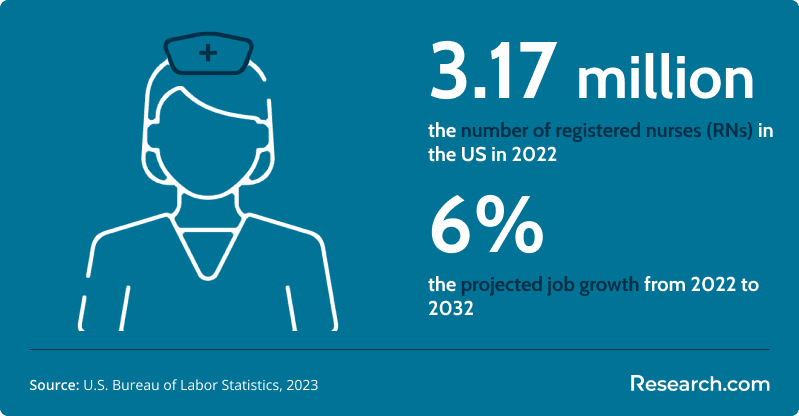
In 2022, there were 3.17 million registered nurses (RNs) in the U.S. RNs may qualify to pursue fertility nursing roles in public and private healthcare settings, although employers may require or prefer specialty experience.
What is the job outlook for fertility nurses?
The employment outlook for fertility nurses is tied to the broader registered nursing labor market. According to the U.S. Bureau of Labor Statistics, RN employment is projected to grow 6% from 2022 to 2032, which is faster than the national average of 3%. That does not guarantee a fertility clinic opening in every area, but it does indicate continued demand for licensed nurses across healthcare settings.
If you are concerned that nursing school is hard, it is worth weighing the challenge against the long-term flexibility of the RN credential. A registered nursing license can support work in hospitals, ambulatory care, women’s health, reproductive medicine, and other specialties if your career interests change.
In 2022, RNs worked mainly in state, private, and local hospitals (59%), ambulatory healthcare services (18%), and nursing and residential care facilities (6%). Fertility nurses are most likely to work in the first two categories, especially fertility clinics, OB/GYN practices, and reproductive endocrinology and infertility departments.
| Work setting | Share of RN employment stated in source | How it relates to fertility nursing |
| State, private, and local hospitals | 59% | May include reproductive endocrinology departments, women’s health units, and related specialty services. |
| Ambulatory healthcare services | 18% | Includes many outpatient fertility clinics, OB/GYN offices, and reproductive health centers. |
| Nursing and residential care facilities | 6% | Less directly connected to fertility nursing but still part of the broader RN employment landscape. |
Some fertility nurses with relevant experience may also work in labor and delivery departments, particularly when caring for patients who conceived after fertility treatment. The chart below provides more detail on RN employment patterns.
What are the steps to become a fertility nurse?
The path to fertility nursing begins with RN licensure, then moves into reproductive health experience and specialized training. You do not usually start as a fertility nurse on day one of nursing school. Most candidates build a foundation in general nursing first, then pursue clinical roles that bring them closer to women’s health, reproductive endocrinology, or fertility care.
Step-by-step path to becoming a fertility nurse
- Complete a nursing education program. Choose an Associate’s Degree in Nursing (ADN) or a Bachelor of Science in Nursing (BSN). An ADN is usually the faster route, while a BSN may improve access to competitive roles, leadership pathways, and graduate education.
- Pass the NCLEX-RN and become licensed. After completing your nursing program, you must pass the NCLEX-RN and meet your state board of nursing requirements.
- Gain relevant RN experience. Look for roles in women’s health, OB/GYN, labor and delivery, ambulatory care, endocrinology, surgical services, or reproductive medicine.
- Apply to fertility clinics or reproductive health departments. Highlight patient education, medication administration, communication, scheduling, and comfort with sensitive conversations.
- Build specialty knowledge. Learn fertility medications, cycle monitoring, IVF workflows, IUI, cryopreservation, genetic testing, consent processes, and patient privacy expectations.
- Consider certification or graduate education. A fertility nurse certification or advanced degree is not always required, but it can help nurses qualify for more specialized or senior roles.
What qualifications do you need to become a fertility nurse?
Education and licensure. You must first meet fertility nurse education requirements by becoming an RN. This can be done through an ADN or BSN program, followed by the NCLEX-RN and state licensure. Some nurses begin as LPNs and later use bridge options such as LPN to RN online programs to move into registered nursing.
Advanced education and specialty credentials. A Master of Science in Nursing with reproductive health, women’s health, family practice, or advanced clinical coursework may support career growth. Bridge routes such as ADN to NP programs can help nurses move from associate-level preparation toward advanced practice. The Certified Reproductive Nurse credential can demonstrate specialized fertility knowledge. Related credentials such as Certified Lactation Consultant (CLC) or Pelvic Floor Therapist training may also strengthen a nurse’s reproductive health profile, depending on the role.
ADN vs. BSN for fertility nursing
| Path | Typical advantage | Possible limitation | Best fit |
| ADN | Usually takes two years and can be the fastest route to RN eligibility. | Some employers may prefer a BSN, especially for competitive specialty roles. | Students who want a quicker, lower-time pathway into RN practice. |
| BSN | Provides broader preparation in theory, leadership, research, and evidence-based practice. | Usually takes four years, which can delay entry into the workforce. | Students who want stronger preparation for advancement, graduate study, or leadership. |
| LPN-to-RN bridge | Allows licensed practical nurses to build on prior nursing education. | Still requires RN preparation, clinical requirements, and NCLEX-RN eligibility. | LPNs who want to qualify for RN-level fertility nursing roles. |
Continuing education matters in fertility nursing
Fertility care changes as medications, laboratory methods, genetic testing, patient counseling practices, and digital health tools evolve. Fertility nurses should expect to keep learning through workshops, webinars, conferences, employer training, professional journals, and mentorship with reproductive endocrinology teams.
A study found that participation in academic conferences, along with psychological care and a positive work environment, can support career success among nurses practicing in assisted reproductive technology. Nurses who want to keep advancing may also consider additional certifications, specialty coursework, or advanced practice pathways such as accelerated NP programs.
What is the fastest way to become a fertility nurse?
The fastest route is usually to complete an ADN, which usually takes two years, pass the NCLEX-RN, obtain RN licensure, and then pursue fertility-related clinical experience. This route can get you into registered nursing more quickly than a four-year BSN.
Speed is not the only factor, however. ADN programs emphasize hands-on nursing skills and clinical preparation, while BSN programs usually include more leadership, research, theory, and population health coursework. If your goal is to enter the workforce quickly, an ADN may make sense. If you want stronger long-term preparation for leadership or graduate education, a BSN may be the better investment. Some employers may prefer BSN-prepared nurses, which is why many students compare nursing options through resources on college majors for nursing.
Can I become a fertility nurse with an online degree?
Yes, but not through an entirely online pre-licensure nursing program. Nursing requires direct patient care, so even programs with online coursework must include in-person clinical experiences. Online nursing options can still be useful for students comparing flexibility, commuting demands, and the overall nursing degree cost.
Students considering nursing school online should check three things carefully: whether the program is properly accredited, whether it meets state licensure requirements, and where clinical placements are completed. Fertility nursing requires not only classroom knowledge but also communication skills, patient assessment, medication safety, and comfort in sensitive conversations.
Online delivery is often more common at the graduate level because MSN and Doctor of Nursing Practice students are already licensed nurses with clinical experience. Some graduate programs may be fully online for didactic coursework, but clinical or practicum expectations still depend on the program and state requirements.
| Program format | What can often be online | What usually requires in-person participation | What to verify before enrolling |
| Pre-licensure ADN or BSN | Some general education and nursing theory coursework. | Clinical rotations, skills labs, simulations, and patient care requirements. | Accreditation, NCLEX-RN eligibility, state approval, and clinical placement support. |
| RN-to-BSN | Many courses may be online because students are already licensed RNs. | Any required practice-based projects or local clinical activities. | Transfer credit policy, tuition, schedule flexibility, and employer recognition. |
| MSN or DNP | Advanced coursework may be fully online in some programs. | Practicums, clinical hours, or local preceptor experiences when required. | Specialization, state authorization, clinical requirements, and licensure alignment. |
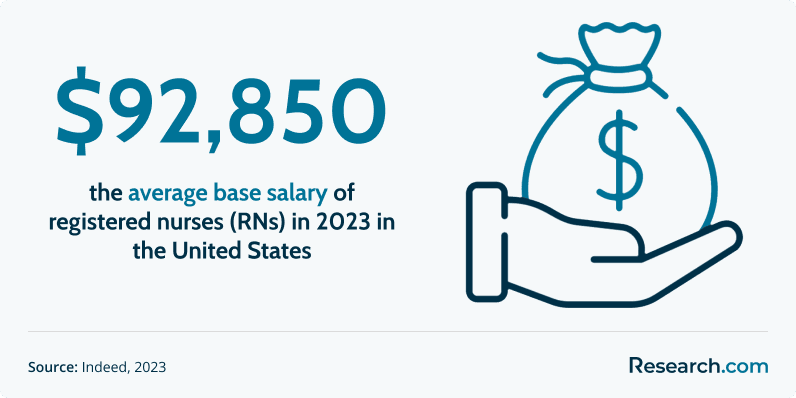
Online options may improve return on investment for some students if they reduce relocation, commuting, or scheduling costs. That said, the RN salary in the U.S. in 2023 averaged $92,850, and individual outcomes depend on location, employer, specialty, experience, and education level.
How much do fertility nurses make?
Fertility nurse pay varies by employer, region, years of experience, RN education level, specialty knowledge, and whether the nurse works in a hospital, outpatient fertility center, or reproductive endocrinology practice. In 2022, the median annual salary for RNs was $81,220. Among top RN-employing industries, government organizations reported the highest median annual salary at $92,310, followed by local, state, and private hospitals at $82,250. In 2023, the average annual base salary for RNs is $92,850.
In 2024, the average salary for fertility nurses stands at $80,321 per year or $39 per hour. This compensation is competitive within nursing, although it may differ from advanced or acute-care roles such as those discussed in guides on critical care nurse practitioner salary.
| Salary figure | Amount stated | What it represents |
| RN median annual salary in 2022 | $81,220 | Median annual wage for registered nurses. |
| Government RN median annual salary in 2022 | $92,310 | Median annual salary in the highest-paying listed RN industry. |
| Local, state, and private hospitals RN median annual salary in 2022 | $82,250 | Median annual salary for RNs in hospital settings. |
| Average annual base salary for RNs in 2023 | $92,850 | Average RN base salary figure cited for 2023. |
| Average fertility nurse salary in 2024 | $80,321 per year or $39 per hour | Average fertility nurse salary figure cited for 2024. |
Salary should not be evaluated in isolation. Compare benefits, schedule expectations, on-call requirements, patient load, training support, advancement options, and whether the employer pays for continuing education or certification.
Are there internships or externships specifically focused on fertility nursing?
Yes. Some fertility clinics, reproductive health centers, hospital-based women’s health departments, and healthcare institutions offer internships, externships, shadowing opportunities, or structured training experiences related to fertility nursing. Availability varies by region and employer, so students and new nurses should ask directly about reproductive health rotations or outpatient fertility exposure.
These experiences can help aspiring fertility nurses observe assisted reproductive technology workflows, patient counseling, medication education, cycle monitoring, interdisciplinary communication, and the emotional dynamics of fertility care. They can also help you decide whether the specialty fits your communication style and stress tolerance.
How to find fertility nursing experience
- Ask nursing faculty whether OB/GYN, women’s health, reproductive endocrinology, or fertility clinic rotations are available.
- Contact local fertility clinics about shadowing, externships, or new graduate RN pathways.
- Apply first to OB/GYN, labor and delivery, ambulatory surgery, endocrinology, or women’s health roles if fertility clinic openings are limited.
- Join reproductive health or nursing associations that post training opportunities and continuing education events.
- Use clinical interviews to ask whether the employer trains RNs in IVF, IUI, fertility medications, and patient counseling.
How do fertility nurses provide emotional support to individuals and couples?
Fertility nurses support patients by combining accurate clinical guidance with steady, compassionate communication. Patients may arrive with fear, grief, frustration, financial stress, relationship strain, or uncertainty about treatment outcomes. The nurse’s role is not to promise success, but to help patients understand what is happening, what choices they have, and where to find additional support.
Effective emotional support includes active listening, normalizing difficult emotions, explaining next steps clearly, encouraging questions, and connecting patients with counseling services or support groups when appropriate. Fertility nurses also help patients prepare for both positive and negative outcomes, which can make treatment feel less isolating.
| Patient need | How fertility nurses can respond |
| Confusion about treatment | Break instructions into clear steps and confirm understanding before the patient leaves or ends the call. |
| Anxiety about injections or medications | Demonstrate technique, provide written instructions, and encourage patients to ask follow-up questions. |
| Disappointment after an unsuccessful cycle | Acknowledge the loss, avoid minimizing the experience, and explain when the care team will review next options. |
| Privacy concerns | Protect confidentiality and communicate only through approved channels. |
| Decision fatigue | Help patients identify which decisions are urgent, which can wait, and which questions should be discussed with the physician. |
Are there challenges in patient care unique to fertility nursing?
Fertility nursing can be rewarding, but it is not an easy specialty. Nurses must support patients through treatment cycles that may involve hope, loss, uncertainty, cost concerns, and difficult decisions. A single patient may need detailed medication teaching, rapid appointment coordination, emotional reassurance, and privacy-sensitive communication in the same day.
Assisted reproductive technologies can also change quickly, which means nurses must keep learning. Ethical concerns around embryo storage, genetic testing, donor arrangements, surrogacy, informed consent, and access to treatment require careful communication and respect for patient autonomy.
If the emotional intensity of fertility care makes you reconsider this specialty, you may want to compare it with other roles listed among the least stressful nursing jobs. No nursing role is free of stress, but the type and frequency of stress can differ significantly by setting.
Common challenges and better ways to prepare
| Challenge | Why it is difficult | How to prepare |
| Emotional highs and lows | Patients may experience intense hope and grief during treatment. | Develop therapeutic communication skills and learn when to refer patients to mental health support. |
| Complex medication schedules | Timing errors can affect treatment cycles. | Use clear teaching, teach-back methods, and careful documentation. |
| Privacy-sensitive information | Fertility care involves highly personal medical and family information. | Follow confidentiality policies and use approved communication systems. |
| Ethical decision-making | Patients may face decisions about embryos, donors, genetic information, or surrogacy. | Understand informed consent, clinic policies, and professional boundaries. |
| Rapidly changing technology | New procedures and testing approaches can alter workflows. | Commit to continuing education and interprofessional learning. |
What reproductive health technologies do fertility nurses work with?
Fertility nurses may support care involving several assisted reproductive and fertility-related technologies. The exact scope depends on the clinic, state rules, employer policies, and the nurse’s training.
- In vitro fertilization (IVF). Nurses help patients understand the IVF process, coordinate cycle steps, teach medication use, and support care before and after procedures.
- Intrauterine insemination. Nurses may help prepare patients for IUI, explain timing, and coordinate related monitoring.
- Ovulation induction. Nurses support protocols that stimulate egg production and help patients follow medication and monitoring instructions.
- Cryopreservation. Nurses may help coordinate the storage and later use of frozen embryos, eggs, or sperm.
- Preimplantation genetic testing (PGT). Nurses assist with patient education and care coordination when embryos are tested for genetic abnormalities before transfer.
- Assisted hatching. Nurses may educate patients about procedures designed to support embryo implantation.
- Egg and sperm donation. Nurses help coordinate screening, counseling, medication schedules, and communication among the care team.
- Surrogacy. Nurses may support intended parents and surrogates through coordination, education, documentation, and communication.
Because fertility technology evolves, nurses need ongoing training to provide safe, accurate, and current patient education.
What ethical considerations do fertility nurses face in their practice?
Fertility nursing involves ethical questions that may be more common or more visible than in many general nursing roles. Patients may be making decisions about embryos, genetic testing, donors, surrogacy, treatment costs, and family-building options. Nurses must support patient autonomy without pressuring patients toward a particular choice.
- Informed consent. Patients must understand the risks, benefits, alternatives, and limitations of treatments such as IVF, IUI, genetic testing, or fertility preservation.
- Confidentiality. Reproductive health information is deeply personal, so nurses must protect privacy in documentation, calls, emails, portal messages, and in-person conversations.
- Access to treatment. Financial, geographic, cultural, and insurance-related barriers may affect whether patients can pursue treatment. Nurses can help patients understand resources without making promises about affordability or outcomes.
- Embryo and genetic decisions. Questions about embryo storage, disposal, transfer decisions, and genetic selection require careful, nonjudgmental communication.
- Professional boundaries. Emotional closeness can develop during long treatment journeys, but nurses still need clear professional limits and consistent standards of care.
How do fertility nurses stay updated on the latest reproductive technologies?
Fertility nurses stay current through continuing education, employer training, conferences, professional workshops, online learning, journal reading, and collaboration with reproductive endocrinologists, embryologists, genetic counselors, and advanced practice nurses. In-house training is especially important because fertility clinics may use specific protocols, technology platforms, lab workflows, and patient education systems.
A practical professional development plan should include both clinical updates and communication training. Technical knowledge helps nurses explain procedures accurately, while counseling skills help them support patients through uncertainty and emotionally difficult outcomes.
What are the current trends in fertility nursing practices?
Current fertility nursing practice is shaped by changes in reproductive technology, digital communication, patient expectations, and related maternal health care. Fertility nurses increasingly need to understand how genetic testing, medication protocols, telehealth, and patient portals affect education and coordination.
One developing area mentioned in reproductive and maternal health discussions is prenatal genetic testing for monogenic diabetes, including fetal genetic testing using cell-free DNA in maternal blood. Fertility nurses may not perform this testing themselves, but they may care for patients whose reproductive planning or pregnancy care intersects with genetic counseling and testing.
Another area connected to maternal health is the early use of metformin in the treatment of gestational diabetes mellitus. Recent trials indicate that initiating metformin at the time of GDM diagnosis, irrespective of glycemic control, leads to improved clinical outcomes. Fertility nurses who follow patients into early pregnancy or coordinate with OB/GYN teams should understand how fertility treatment can connect to later prenatal care conversations.
Assisted hatching in IVF is another technique fertility nurses may need to explain in patient-friendly terms. In addition, fertility intentions and contraceptive practices are changing as more couples delay parenthood for personal goals and some single women pursue motherhood independently. These shifts make individualized counseling, inclusive language, and culturally responsive care increasingly important.
How can fertility nurses integrate telehealth and digital solutions into their practice?
Telehealth and digital tools can make fertility care easier to access, but they also require disciplined communication. Fertility nurses may use virtual consultations, remote follow-up, electronic health records, secure messaging, mobile apps, online education materials, and digital medication reminders to support patients who may have frequent appointments and time-sensitive instructions.
Digital care works best when nurses confirm that patients understand what must be done in person, what can be handled remotely, and whom to contact after hours. Fertility nurses interested in women’s health and digital care may strengthen their skills through advanced programs such as the easiest WHNP online programs to get into.
What legal and regulatory considerations should fertility nurses be aware of?
Fertility nurses must understand the legal and regulatory boundaries that affect reproductive healthcare. Important areas include HIPAA, state nursing scope of practice, informed consent, documentation, medication administration rules, patient confidentiality, malpractice risk, and clinic policies for assisted reproductive medicine.
State requirements can differ, so nurses should not assume that one clinic’s procedures apply everywhere. Accurate documentation is especially important in fertility care because treatment timelines, consent forms, medication instructions, lab results, and patient communications may all affect clinical decisions. Nurses who want to move into advanced clinical leadership may consider doctoral options such as a 12 month DNP program online, especially if they want stronger preparation in quality improvement, compliance, and systems-level practice.
What benefits do post-graduate certificate programs offer to fertility nurses?
Post-graduate certificate programs can help experienced nurses gain focused skills without committing to a full additional degree. For fertility nurses, the right certificate can deepen knowledge in family practice, women’s health, reproductive health, leadership, evidence-based care, or advanced patient management.
These programs are most useful when they align with a specific career goal. For example, a nurse who wants broader primary care authority may compare post-graduate FNP programs, while a nurse focused on women’s health may look for reproductive or gynecologic health content. Before enrolling, verify clinical hour requirements, state authorization, accreditation, tuition, and whether the certificate supports the role you want.
What types of advanced degrees can fertility nurses pursue?
Fertility nurses who want to advance can pursue graduate nursing degrees that support clinical practice, leadership, education, research, or administration. Common options include MSN programs, nurse practitioner pathways, DNP programs, and dual-degree programs. Students comparing graduate routes can start by reviewing the types of master degree in nursing.
| Advanced education option | Potential use for fertility nurses | Best for nurses who want to |
| MSN | Build advanced clinical, educational, or leadership knowledge. | Move into specialized practice, teaching, management, or graduate-level nursing roles. |
| Nurse practitioner program | Prepare for more autonomous assessment, treatment planning, and patient management, depending on specialty and state rules. | Provide advanced clinical care in women’s health, family practice, or related fields. |
| DNP | Develop skills in systems leadership, quality improvement, evidence-based practice, and advanced care delivery. | Lead clinical programs, improve care models, or pursue the highest level of nursing practice preparation. |
| MSN/MBA | Combine nursing leadership with business, finance, operations, and management training. | Manage clinics, lead teams, or move into healthcare administration. |
How can fertility nurses build a strong professional network?
Networking helps fertility nurses find mentors, learn about openings, stay current on technology, and understand how other clinics manage patient education and care coordination. Good networks include fertility clinic colleagues, OB/GYN nurses, reproductive endocrinology teams, embryologists, genetic counselors, nurse practitioners, academic faculty, and professional associations.
Aspiring nurses can also use networking to find clinical opportunities and compare schools. If admission competitiveness is a concern, resources such as a nursing school with high acceptance rate can help students identify programs to research more closely. Acceptance rate should never be the only factor; accreditation, licensure outcomes, clinical placement quality, and cost matter more for long-term success.
Should I pursue a BSN to advance my fertility nursing career?
A BSN can be a smart move for fertility nurses who want more career flexibility. While an ADN can qualify you for RN licensure, a BSN typically adds deeper coursework in evidence-based practice, leadership, public health, research, and systems-based care. Those topics become valuable when you want to move into fertility clinic leadership, advanced practice, education, or graduate nursing programs.
Working RNs who already hold an ADN may prefer an online completion pathway such as the easiest RN to BSN program online. Before enrolling, compare transfer credits, total cost, schedule format, employer tuition support, accreditation, and whether the program fits your state and career plans.
What are the career advancement opportunities for fertility nurses?
Fertility nurses can advance by deepening their clinical expertise, earning specialty credentials, pursuing graduate education, moving into leadership, joining research teams, or becoming nurse practitioners. Advancement does not always mean leaving bedside or patient-facing care; some nurses become senior educators or lead coordinators within fertility clinics.
Some fertility nurses pursue the Certified Reproductive Nurse credential to document specialized knowledge in reproductive health. Others continue into nurse practitioner roles, which may allow more advanced assessment, treatment planning, prescribing, and patient consultation depending on the state and specialty. Nurses considering that path can review the steps in this guide on how to become a nurse practitioner.
Research and academia are also possible directions. Fertility nurses can contribute to studies on patient education, emotional support, treatment adherence, reproductive technologies, and clinic workflows. These contributions can improve care while opening doors to teaching, publication, or quality improvement roles.
How can fertility nurses develop leadership and business acumen?
Fertility care depends on strong operations: appointment timing, lab coordination, medication teaching, staffing, billing workflows, patient communication, compliance, and quality improvement. Nurses who understand both clinical care and business operations can become valuable leaders in fertility clinics and reproductive health programs.
Leadership development may include charge nurse experience, committee work, quality improvement projects, mentorship, graduate education, and business training. Nurses interested in administrative leadership may compare MSN/MBA dual degree online programs, which combine nursing knowledge with management, finance, operations, and organizational strategy.
How can aspiring fertility nurses engage in research within the field?
Aspiring fertility nurses can begin with research-focused coursework, evidence-based practice projects, and mentorship from faculty or clinicians involved in reproductive health studies. Understanding research methods helps nurses evaluate new fertility technologies, patient education strategies, and care models more critically.
Conferences and seminars in fertility and reproductive medicine can expose nurses to current studies and potential collaborators. Within clinics or hospitals, nurses can ask about quality improvement projects, patient outcome tracking, education audits, or opportunities to assist with approved research initiatives.
Mentorship is especially useful. Experienced fertility specialists, nurse researchers, reproductive endocrinology teams, and academic advisors can help new nurses identify realistic research questions and understand ethical review, data collection, and publication expectations.
Why should I consider online nurse practitioner programs?
Online nurse practitioner programs may appeal to fertility nurses who want advanced education without leaving the workforce. They can offer flexibility, but students should evaluate them carefully because clinical placements, state authorization, accreditation, and specialty alignment are critical.
- Potentially lower tuition. Some online programs may cost less than campus-based options, although total cost depends on fees, clinical travel, books, and other expenses.
- Schedule flexibility. Online coursework can make it easier for working nurses to continue employment while studying.
- Relevant specialization. Some programs include tracks or coursework in women’s health, family practice, reproductive health, or related areas.
- Career mobility. Graduate education can support advanced clinical roles, leadership, education, and specialized reproductive health practice.
Cost is a major concern for many nurses considering graduate school. Fertility nurses looking for affordable advanced practice options can compare cheapest online nurse practitioner programs while also checking accreditation, clinical support, board eligibility, and state licensure alignment.
Where can I pursue a career as a fertility nurse?
Fertility nurse opportunities are most common in areas with fertility clinics, reproductive endocrinology practices, OB/GYN groups, academic medical centers, and specialized hospital departments. Larger healthcare markets may offer more openings, but smaller regions with growing access to reproductive healthcare may also need trained nurses.
States such as California and New York are known for advanced fertility clinics and large healthcare systems. Texas and Florida may also offer opportunities because of growing populations and expanding healthcare access. However, job availability and compensation vary by employer, city, clinic volume, and nurse experience.
Location also affects pay. Nurses comparing relocation or job offers should evaluate salary, cost of living, benefits, scheduling, professional development support, and advancement potential. For broader RN location comparisons, review the highest paying states for nurses.
Questions to ask before choosing fertility nursing
- Am I comfortable supporting patients through emotionally difficult outcomes without promising results?
- Do I enjoy patient education, detailed scheduling, medication teaching, and care coordination?
- Can I maintain professional boundaries while still showing empathy?
- Am I willing to keep learning as reproductive technologies and clinic protocols change?
- Do I prefer outpatient specialty care, or would I be happier in a hospital-based role?
- Does my area have fertility clinics or reproductive health employers, or would I need to relocate?
- Would a BSN, certification, MSN, or NP program help me reach my specific career goal?
Common mistakes aspiring fertility nurses should avoid
| Mistake | Why it can hurt your career plan | Better approach |
| Choosing a nursing program without checking accreditation and state approval. | You may risk problems with licensure eligibility or employer recognition. | Confirm accreditation, state board approval, NCLEX-RN eligibility, and clinical placement quality before enrolling. |
| Assuming online nursing programs are fully remote. | Pre-licensure nursing requires in-person clinical and skills training. | Ask exactly where clinical hours occur and whether the school helps secure placements. |
| Focusing only on tuition. | Fees, travel, lost work time, supplies, and clinical requirements can change the real cost. | Compare total program cost, time to completion, transfer credits, and employer tuition assistance. |
| Waiting for a fertility clinic job without building related experience. | Specialty openings may be competitive or limited in some regions. | Gain experience in OB/GYN, women’s health, ambulatory care, endocrinology, or patient education. |
| Assuming salary outcomes are guaranteed. | Pay depends on location, employer, experience, education, and role responsibilities. | Research local job postings and compare total compensation, not just hourly or annual pay. |
| Ignoring the emotional demands of infertility care. | Burnout risk can increase if you are unprepared for repeated patient grief and uncertainty. | Develop communication skills, seek mentorship, and learn healthy professional boundaries. |
References
- Indeed. (2023). Registered nurse salary in United States. Retrieved December 15, 2023, from Indeed.
- Li, W., Honggui, W., Hong, P., & Hong, L. (2023). Factors that affect career success of nurses who practice in assisted reproductive technology. Revista Latino-Americana de Enfermagem, 31(2023). PubMed.
- U.S. Bureau of Labor Statistics. (2023). Registered nurses. Retrieved December 15, 2023, from BLS.
- ZipRecruiter. (2024). Fertility nurse salary. Retrieved January 10, 2024, from ZipRecruiter.
Key Insights
- Fertility nursing is not a separate entry-level license; it is a specialty path for registered nurses.
- The fastest route is usually an ADN, which usually takes two years, followed by the NCLEX-RN and RN licensure, but a BSN can improve competitiveness and support future advancement.
- Employers often prefer RNs with women’s health, OB/GYN, reproductive endocrinology, ambulatory care, or related experience.
- The role combines clinical precision with emotional support, making communication skills as important as technical nursing ability.
- Fertility nurses work with technologies such as IVF, IUI, ovulation induction, cryopreservation, preimplantation genetic testing, assisted hatching, donor processes, and surrogacy coordination.
- Before choosing this path, compare education cost, accreditation, clinical placement quality, local job availability, emotional fit, and long-term goals such as certification, BSN completion, NP preparation, leadership, or research.
Other Things You Should Know About Becoming a Fertility Nurse
Most fertility nurses need an active registered nurse license, an accredited nursing degree, and clinical experience in women’s health, labor and delivery, med-surg, or reproductive care. Some employers prefer the CNON certification from the IVF Nurses Certification Board after you meet its eligibility requirements.
In 2027, fertility nurses can pursue certifications like the RNC-MNN by the National Certification Corporation, enhancing their skills in maternal-neonatal nursing. Specialization through such certifications can improve job prospects and expertise in reproductive health.