
2027 Average Certified Nurse Assistant (CNA) Salary by State

Co-Founder and Chief Data Scientist
Choosing where to work as a Certified Nurse Assistant (CNA) is not only a career decision; it is a financial one. CNA pay varies widely by state, employer type, experience level, and local cost of living. A job that looks better on paper may not stretch as far after housing, transportation, taxes, and healthcare costs are considered.
This guide explains the average certified nurse assistant salary by state using the salary figures and labor-market data available for 2024. It is designed for students comparing CNA training programs, new CNAs evaluating job offers, and working nursing assistants deciding whether to relocate, specialize, or move into advanced nursing roles. You will learn where CNAs tend to earn the most, where wages are lowest, what benefits matter, how experience changes pay, and which career moves can improve long-term earning potential.
Quick Answer: CNA Salary Snapshot
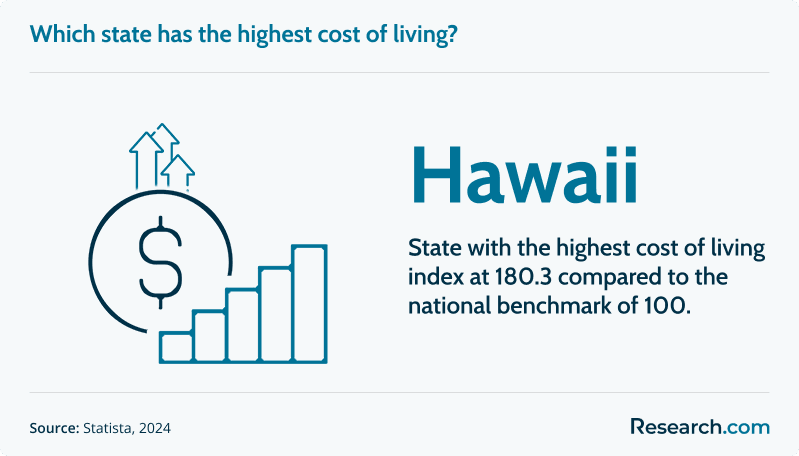
The average CNA salary in the United States is $38,200 per year, while the median annual wage is around $39,000 in 2024. Pay is not uniform across the country. Hawaii reports the highest average CNA salary at $45,187 annually, while Mississippi reports the lowest at $25,164 annually. However, salary alone should not drive your decision because Hawaii also has the highest cost of living, with a benchmark of 180.3.
| Key CNA Salary and Career Point | What the Data Shows |
| Average CNA salary in the U.S. | $38,200 per year |
| Median annual CNA wage in 2024 | Around $39,000 per year |
| Highest-paying state | Hawaii, with an average salary of $45,187 annually |
| Highest cost-of-living state | Hawaii, with a benchmark of 180.3 |
| Projected CNA job growth | 4% from 2022 to 2032 |
| Projected annual openings | Around 56,500 job openings for CNAs each year |
- What is the average CNA salary in the US for 2027?
- What factors influence the average CNA salary in the US?
- Which states offer the highest CNA salaries for 2027?
- Which states offer the lowest CNA salaries for 2027?
- How does the cost of living affect CNA salaries by state?
- How do CNA salaries vary by employer type?
- What benefits do employers offer to CNAs?
- How does experience affect CNA salaries for 2027?
- What strategies can CNAs use to increase their salaries?
- What is the job outlook for CNAs for 2027?
- What tips can help CNAs advance their careers?
- What emerging trends are shaping CNA roles in healthcare?
- What career advancement opportunities exist for CNAs?
- What are the steps to become a functional medicine nurse practitioner?
- What challenges can CNAs face while advancing their careers?
- How can CNAs secure funding for advanced education?
- What affordable online education options are available for CNAs?
- How can CNAs develop leadership skills to advance their careers?
- What nursing certifications can CNAs pursue to enhance their career prospects?
- What educational pathways can CNAs explore to specialize or advance their careers?
- How can CNAs leverage their clinical experience for advanced practice roles?
- How can CNAs transition to non-clinical roles in healthcare?
Here’s What Graduates Have to Say About Their Career as a CNA
"CNA training gave me a direct path into healthcare and a daily opportunity to support people who truly need help. The work can be demanding, but the patient interaction makes it meaningful. For me, becoming a certified nursing assistant was the right first step into a caring profession." - Gene
"My CNA program helped me build practical patient-care skills before entering the workforce. The clinical practice prepared me for real responsibilities, from assisting with daily activities to communicating with nurses. It showed me how many healthcare paths can start with CNA experience." - Laslow
"Working as a CNA has allowed me to turn my interest in helping others into a stable career. The job requires patience and stamina, but seeing patients feel safer and more comfortable is deeply rewarding. CNA training opened the door to work I am proud to do." - Senna
What is the average CNA salary in the US for 2027?
In 2024, the average certified nurse assistant salary in the United States is around $39,000 per year. This figure represents the median annual wage, so half of CNAs earn more than this amount and half earn less. The wage range is broad: the lowest 10% of CNAs earn less than $30,020 annually, while the top 10% earn more than $48,780.
For most CNAs, earnings depend more on location, work setting, shift differentials, overtime, and years of experience than on one national average. Advanced degrees are not required to become a CNA, but workers who later move into nursing, healthcare management, or advanced clinical roles may consider broader education options, including one-year online master's programs, depending on their long-term goals.
What factors influence the average CNA salary in the US?
CNA pay is shaped by several variables. Some are within your control, such as experience, certifications, schedule flexibility, and career progression. Others, such as state labor markets and local cost of living, require careful comparison before accepting a job or relocating.
| Salary Factor | How It Can Affect CNA Pay | What to Consider Before Deciding |
| Location | States and metropolitan areas with higher healthcare demand or higher living costs often pay more. | Compare pay with rent, transportation, taxes, and commute time rather than looking only at hourly wages. |
| Experience | More experienced CNAs often qualify for higher pay, lead aide responsibilities, or preferred shifts. | Ask employers how raises are structured and whether experience from other facilities is credited. |
| Employer type | Hospitals, government settings, specialty facilities, and some educational or research employers may pay differently than long-term care or home health employers. | Review total compensation, staffing ratios, scheduling, and benefits, not just base pay. |
| Certifications and education | Additional training can help CNAs qualify for specialized units, patient care technician roles, LPN pathways, or future nursing programs. | Choose credentials that match real job openings in your area. Some CNAs later explore advanced paths such as accelerated RN to NP programs, but these require substantial additional education and licensure. |
| Local demand | Areas with staffing shortages or strong demand for long-term care may offer better wages, bonuses, or more overtime opportunities. | Check multiple job postings and ask whether the facility has high turnover before accepting an offer. |
Which states offer the highest CNA salaries for 2027?
According to 2024 data from Zippia, Hawaii reports the highest average certified nurse assistant salary in the United States. High-paying states can be attractive, but they also require a cost-of-living check before making relocation plans.
| Rank | State | Average Annual CNA Salary | Decision Note |
| 1 | Hawaii | $45,187 | Highest listed average salary, but also the highest cost of living with a benchmark of 180.3. |
| 2 | Alaska | $42,735 | Higher wages may reflect remote locations and the need for healthcare workers in hard-to-staff communities. |
| 3 | Vermont | $40,762 | Offers pay above many states and may appeal to CNAs seeking smaller healthcare systems. |
| 4 | Maine | $38,575 | Demand for long-term care services can support CNA opportunities. |
| 5 | New Hampshire | $37,696 | Provides competitive pay and potential healthcare career mobility in the region. |
Which states offer the lowest CNA salaries for 2027?
In 2024, Mississippi reports the lowest average CNA salary at $25,164 annually. Lower average pay does not automatically mean a state is a poor choice, but it does mean CNAs should examine living costs, benefits, overtime opportunities, and advancement options carefully.
| State | Average Annual CNA Salary |
| Mississippi | $25,164 |
| Louisiana | $25,719 |
| South Carolina | $25,978 |
| Georgia | $26,394 |
| Arkansas | $26,863 |
| Texas | $27,265 |
| Florida | $27,476 |
| Tennessee | $27,747 |
| North Carolina | $27,842 |
| Alabama | $27,943 |
These lower wage averages may reflect lower local living costs, different state healthcare funding environments, regional labor supply, and employer budgets. CNAs considering these states should compare the complete compensation package, including health insurance, shift differentials, tuition support, and paid time off.
Here is the complete state-by-state CNA salary list:
How does the cost of living affect CNA salaries by state?
Cost of living can change the real value of a CNA salary. A higher paycheck in an expensive state may leave less disposable income than a lower salary in a more affordable area. Housing is often the largest difference, but transportation, food, childcare, insurance, and taxes also matter.
For example, Hawaii has the highest average CNA salary in the listed data at $45,187 annually, but it also has the highest cost of living, with a benchmark of 180.3. That means CNAs should evaluate purchasing power, not just salary rank.
| When Comparing States | Ask This Before Accepting a CNA Job |
| Housing | Can the wage cover rent or mortgage costs near the facility, or will commuting costs erase the pay advantage? |
| Transportation | Will you need a car, paid parking, tolls, or long commutes for shift work? |
| Schedule | Are night, weekend, holiday, or overtime shifts available, and are differentials clearly stated? |
| Benefits | Does the employer offer health insurance, retirement contributions, PTO, or tuition reimbursement? |
| Career mobility | Can the job help you move into LPN, RN, patient care technician, supervisor, or specialty roles? |
How do CNA salaries vary by employer type?
CNA wages can differ substantially by setting. The highest-paying industries may not always have the largest number of CNA jobs, but they show how employer type can influence compensation.
| Employer Type or Industry | Average Annual Salary | Why Pay May Differ |
| Offices of Dentists | $57,450 | These roles may involve specialized clinical support in dental care environments. |
| Junior Colleges | $54,820 | CNAs may support health programs, campus care needs, or training environments. |
| Federal, State, and Local Government | $48,580 | Government roles may include public health, correctional healthcare, or public healthcare services. |
| Scientific Research and Development Services | $48,490 | CNAs may assist with participant care, clinical trials, or research-related health services. |
| Technical and Trade Schools | $46,850 | These positions may combine care support with healthcare training responsibilities. |
CNAs who want to move away from direct bedside care may also compare related healthcare support fields. Medical billing and coding, for example, is more administrative and technology-centered than hands-on patient care. To compare responsibilities, review what medical billing and coding professionals do. If that path fits your interests, you can also explore free medical billing and coding classes.
What benefits do employers offer to CNAs?
For CNAs, benefits can be as important as hourly wage. A slightly lower-paying job with strong health coverage, paid leave, and tuition support may be more valuable than a higher hourly rate with few protections.
| Common CNA Benefit | Why It Matters | What to Ask the Employer |
| Health insurance | Medical, dental, and vision coverage can reduce out-of-pocket healthcare costs. | When does coverage begin, and what are the employee premiums and deductibles? |
| Retirement plans | 401(k), pension plans, or employer matching can support long-term financial security. | Is there an employer match, and when are contributions vested? |
| Paid time off | Vacation, sick leave, and holiday pay help prevent income loss during necessary absences. | How is PTO earned, and are holidays paid at a different rate? |
| Tuition reimbursement | Education support can help CNAs move toward LPN, RN, or other healthcare credentials. | Which programs qualify, and is there a work commitment after reimbursement? |
| Flexible scheduling | Part-time, weekend, evening, or varied shifts can help CNAs balance work, school, and family obligations. | Can schedules change unexpectedly, and how far in advance are shifts posted? |
| Employee assistance programs | Counseling, legal support, and financial guidance can help workers manage stress and personal challenges. | Are services confidential, and are they available to family members? |
| Continuing education | Training can help CNAs stay current, qualify for new duties, and prepare for higher-paying roles. | Does the employer pay for certifications, required renewals, or exam fees? |
If your long-term plan includes moving beyond CNA work, use employer education benefits strategically. Some CNAs later pursue broader academic programs or compare high-paying bachelor's degree options to determine which healthcare or non-healthcare path offers the best fit.
How does experience affect CNA salaries for 2027?
Experience usually improves CNA earning potential, but the size of the increase depends on the employer, state, shift, and whether the CNA takes on additional skills or responsibilities. A facility with a formal wage ladder may reward experience more predictably than one without transparent pay steps.
| Experience Level | Typical Annual Salary Range or Amount | How to Use This Stage Strategically |
| Entry-Level CNAs | Around $28,000 with less than one year of experience | Build strong attendance, documentation habits, patient-care fundamentals, and references. |
| Mid-Level CNAs | About $32,000 to $35,000 with 1-4 years of experience | Request cross-training in high-need units and ask how raises are evaluated. |
| Experienced CNAs | Approximately $37,000 to $40,000 with 5-9 years of experience | Consider specialized training or online certifications that pay well when they align with healthcare job openings. |
| Highly Experienced CNAs | Between $42,000 and $45,000 with 10-19 years of experience | Look for lead CNA, preceptor, patient care technician, or unit support roles. |
| Veteran CNAs | Upwards of $48,000 with 20 or more years of experience | Use deep clinical experience to mentor newer aides, pursue supervisor opportunities, or transition into training roles. |
What strategies can CNAs use to increase their salaries?
CNAs can raise earnings by combining smart job selection with skill development and long-term career planning. The most effective approach depends on whether you want higher CNA pay now, a bridge into nursing, or a move into a different healthcare role.
| Salary Strategy | Best For | Important Caution |
| Pursue additional certifications | CNAs who want specialty knowledge in areas such as gerontology, dementia care, wound care, or hospice care. | Choose certifications that employers in your area actually reward with higher pay or better roles. |
| Gain experience intentionally | New CNAs building a stronger resume. | Time alone may not increase pay unless the employer has raises or promotion steps. |
| Continue nursing education | CNAs interested in LPN, RN, or advanced nursing pathways. | Programs leading to roles such as nurse practitioner require far more education and licensure than CNA training. Research options carefully, including online FNP programs only if they match your future licensure goals. |
| Negotiate pay | CNAs changing employers or bringing strong experience. | Use local wage data, shift availability, certifications, and performance history rather than asking without evidence. |
| Target higher-paying states | CNAs open to relocation. | Calculate cost of living first. A higher salary can be offset by housing and transportation costs. |
| Apply to higher-paying employers | CNAs seeking a better compensation package without changing careers. | Compare staffing levels, workload, benefits, and turnover before accepting. |
| Work overtime or difficult shifts | CNAs who can safely handle additional hours. | Watch for burnout, fatigue, and patient-safety risks. |
| Join professional networks | CNAs looking for job leads, advocacy, and continuing education resources. | Organizations such as the National Association of Health Care Assistants (NAHCA) can support networking, but membership alone does not guarantee higher pay. |
| Track healthcare technology and practice changes | CNAs who want to remain competitive. | Focus on practical skills used in your workplace, such as electronic documentation and safe patient mobility. |
| Demonstrate leadership | Experienced CNAs seeking lead aide, preceptor, or supervisory opportunities. | Document examples of mentoring, reliability, conflict resolution, and patient-care improvements. |
The chart below shows the most common educational attainment among CNAs, based on 2024 data from Zippia.
What is the job outlook for CNAs for 2027?
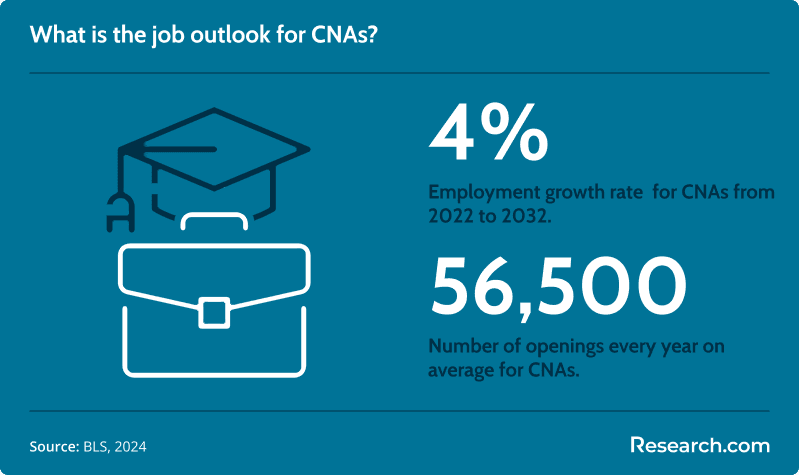
The job outlook for CNAs remains steady. Overall employment is projected to grow by 4 percent from 2022 to 2032, which is about average for all occupations. Around 56,500 openings for nursing assistants are projected each year.
Demand is supported by the aging population, continued need for long-term care, and the role CNAs play in daily patient support. At the same time, the field can have high turnover because the work is physically and emotionally demanding. That turnover creates openings, but it also makes employer quality important. CNAs should look closely at staffing levels, workplace safety, scheduling practices, and supervisor support before choosing a job.
What tips can help CNAs advance their careers?
Career advancement for CNAs usually comes from one of three moves: specializing within direct care, moving into nursing through additional education, or shifting into administrative and support roles. The right move depends on your stamina for bedside care, academic goals, finances, and desired work schedule.
- Continue your education with a defined goal: Do not enroll in a program simply because it sounds advanced. If you want to become an RN, compare nursing pathways and learn about the fastest paths to becoming a nurse before committing time and money.
- Build experience in high-need settings: Long-term care, emergency care, intensive care support, and other demanding environments can strengthen your resume when they are well supervised and safe.
- Improve communication and documentation: CNAs who can clearly report patient changes, follow care plans, and document accurately are more valuable to clinical teams.
- Find a mentor: A nurse manager, RN, LPN, experienced CNA, or instructor can help you understand which credentials matter and which programs are worth avoiding.
- Keep skills current: Stay informed about patient-care practices, infection control, mobility assistance, and healthcare technology used in your facility.
What emerging trends are shaping CNA roles in healthcare?
CNA work is being influenced by changes in how healthcare is delivered. Electronic health records, digital care coordination, remote monitoring, and telehealth-supported workflows can require CNAs to become more comfortable with technology. In many settings, CNAs also help care teams identify changes in patient mobility, mood, nutrition, and daily functioning.
Mental health awareness is another important trend. CNAs may not diagnose or provide independent clinical treatment, but they often spend significant time with patients and can notice changes that should be reported to licensed staff. CNAs interested in mental health nursing as a long-term advanced path can research programs such as the shortest PMHNP program, while recognizing that psychiatric-mental health nurse practitioner roles require advanced nursing education and licensure beyond CNA work.
What career advancement opportunities exist for CNAs?
CNA experience can be a starting point for many healthcare careers. Some routes keep you close to bedside care, while others lead into education, supervision, administration, or technical healthcare fields.
| Career Path | What It Involves | When It Makes Sense |
| Licensed Practical Nurse (LPN) | Additional education and licensure that allow broader nursing duties than CNA work. | Best for CNAs who want more clinical responsibility without immediately pursuing an RN degree. |
| Registered Nurse (RN) | Nursing education, licensure, and expanded patient-care responsibilities. | Best for CNAs who want stronger long-term mobility, specialized roles, and higher earning potential. |
| Specialized CNA roles | Focused work in areas such as geriatrics, pediatrics, hospice, or wound care support. | Best for CNAs who enjoy direct care and want to deepen expertise. |
| Nursing supervisor or lead aide | Supporting schedules, mentoring staff, monitoring care quality, or coordinating support teams. | Best for experienced CNAs with strong communication and leadership skills. Advanced education, including options such as the cheapest online doctoral programs, may be relevant only for much later academic or leadership goals. |
| Healthcare administration | Operations, scheduling, patient services, compliance support, or care coordination. | Best for CNAs who want healthcare work with less physical bedside care. |
| Clinical instructor | Training new CNAs in vocational, employer-based, or academic settings. | Best for experienced CNAs who enjoy teaching and mentoring. |
| Home health aide supervisor | Coordinating and overseeing home-based care support. | Best for CNAs familiar with home care and independent work environments. |
| Patient Care Technician (PCT) | Additional clinical support duties that may include more advanced patient-care tasks depending on employer and state rules. | Best for CNAs who want broader hands-on responsibilities before or during nursing school. |
Some students choose to bypass CNA training and enter nursing through direct degree pathways. For example, online BSN programs for non nurses may fit career changers who already know they want RN preparation. Others compare advanced earning outcomes, such as the average travel nurse salary by state, which is $83,200 annually, when planning a longer nursing career.
What are the steps to become a functional medicine nurse practitioner?
Functional medicine nurse practitioner is not a direct CNA promotion. It is an advanced nursing route that requires several major steps beyond CNA certification, including nursing education, RN licensure, graduate-level nurse practitioner preparation, and additional training related to integrative or functional medicine approaches.
- Start with patient-care experience: CNA work can help you understand patient needs, care coordination, and the realities of clinical practice.
- Become a nurse: Move into an LPN or RN pathway depending on your state, school options, and long-term goals.
- Build licensed clinical experience: Advanced practice programs typically expect applicants to have nursing preparation and clinical readiness.
- Complete graduate nurse practitioner education: Choose an accredited program aligned with your intended population focus and state licensure requirements.
- Add functional medicine training: Seek evidence-informed education in lifestyle, nutrition, environmental, and systems-based approaches to care.
For a more detailed route, review this guide on how to become a functional medicine nurse practitioner.
What challenges can CNAs face while advancing their careers?
CNAs often face real barriers when trying to move up: demanding work schedules, physical fatigue, burnout, limited tuition support, and confusion about which credentials actually lead to better jobs. Certification and licensure rules can also vary by state, so a program that works for one student may not meet another student's career requirements.
| Common Challenge | Why It Can Slow Advancement | Better Approach |
| Burnout | Long shifts, high patient loads, and emotional stress can make school or certification study difficult. | Choose realistic course loads and look for employers with safer staffing and scheduling practices. |
| Unclear credential value | Some certificates may not improve pay or qualify you for new responsibilities. | Check job postings and speak with nurse managers before paying for training. |
| Cost of education | Tuition, books, fees, transportation, and unpaid clinical time can create financial pressure. | Compare employer reimbursement, scholarships, and flexible programs, including options such as affordable online nurse practitioner programs if your long-term goal is advanced practice. |
| State requirements | Nursing licensure and certification rules differ by state. | Verify requirements through your state board or relevant licensing agency before enrolling. |
| Work-school balance | Rotating shifts and mandatory overtime can conflict with classes and clinicals. | Ask schools about part-time options, evening schedules, and clinical placement flexibility. |
How can CNAs secure funding for advanced education?
CNAs planning to continue their education should create a funding strategy before enrolling. The goal is to reduce debt while choosing a program that leads to a recognized credential, licensure eligibility, or clear career outcome.
- Ask about employer tuition reimbursement: Many healthcare employers offer education support, but rules vary. Confirm eligible programs, reimbursement limits, grade requirements, and post-completion work commitments.
- Search for healthcare scholarships: Professional associations, local hospitals, workforce boards, and community foundations may offer aid for nursing and allied health students.
- Use financial aid carefully: Federal or private loans can help cover costs, but repayment should be weighed against realistic salary outcomes.
- Compare total program cost: Tuition is only one part of the price. Include fees, books, uniforms, exams, clinical travel, and lost work hours.
- Prioritize accredited and licensure-aligned programs: A cheaper program can become expensive if credits do not transfer or the credential is not accepted.
CNAs considering advanced nursing education can compare cost-focused resources such as the most affordable DNP online program, while remembering that doctoral nursing programs are intended for advanced nursing professionals and require prior education and licensure.
What affordable online education options are available for CNAs?
Online and hybrid programs can help working CNAs continue their education, but not every healthcare credential can be completed fully online. Clinical training, labs, and supervised practice are often required for nursing and allied health programs. Before enrolling, confirm accreditation, state approval, clinical placement responsibilities, transfer credit policies, and licensure outcomes.
| Education Option | Potential Fit for CNAs | Key Question to Ask |
| LPN programs | Good for CNAs who want a practical step into licensed nursing. | Does the program meet state LPN licensure requirements, and where are clinicals completed? |
| RN associate degree programs | Useful for CNAs who want to become registered nurses through a community college or similar pathway. | Are prerequisites, clinical placements, and NCLEX preparation clearly explained? |
| BSN programs | Appropriate for students seeking broader RN preparation and long-term nursing mobility. | Are transfer credits accepted, and does the program fit your work schedule? |
| Healthcare administration programs | May fit CNAs who want non-clinical healthcare roles. | What jobs do graduates pursue, and are internships or employer partnerships available? |
| Medical billing and coding training | Can suit CNAs who want administrative healthcare work and possible remote options. | Does the program prepare students for recognized certification exams? |
For a practical next step, CNAs who want to move toward licensed nursing can compare an affordable licensed practical nurse online program and verify whether the online format includes approved in-person clinical requirements.
How can CNAs develop leadership skills to advance their careers?
Leadership for CNAs starts before a formal supervisor title. Reliable communication, calm decision-making, ethical conduct, mentoring, and conflict management all signal readiness for additional responsibility.
- Ask to precept new CNAs: Training new staff builds coaching and accountability skills.
- Document measurable contributions: Track examples such as improved shift communication, patient safety observations, or successful team coordination.
- Learn basic management concepts: Scheduling, delegation boundaries, conflict resolution, and quality improvement are useful for lead roles.
- Seek feedback from nurses and supervisors: Ask which leadership skills you need to strengthen before applying for advancement.
- Plan education around career goals: Advanced programs, including an easiest nurse practitioner online degree, should be evaluated carefully for accreditation, clinical requirements, and licensure alignment rather than chosen only for convenience.
What soft skills are essential for CNAs to excel in their roles?
Technical competence matters, but CNA success also depends heavily on interpersonal skills. CNAs are often the staff members who spend the most time helping patients with daily needs, so communication and emotional awareness directly affect care quality.
| Soft Skill | How It Helps in CNA Work |
| Empathy and compassion | Helps patients feel respected, safe, and less anxious during vulnerable moments. |
| Communication | Supports clear reporting to nurses, respectful patient interaction, and better teamwork. |
| Patience | Essential when helping patients with mobility limits, cognitive changes, pain, or anxiety. |
| Attention to detail | Helps CNAs notice condition changes, follow care plans, and reduce preventable mistakes. |
| Adaptability | Allows CNAs to respond to changing patient needs, shift demands, and urgent situations. |
| Teamwork | Improves coordination with nurses, physicians, therapists, and other support staff. |
What nursing certifications can CNAs pursue to enhance their career prospects?
Additional certifications can help CNAs show commitment to specialized patient care, but they should be chosen carefully. Strong options often relate to the population or setting where the CNA works, such as gerontology, hospice care, dementia care, wound care support, palliative care, or medical terminology.
CNAs should ask employers whether a specific certification leads to a pay increase, preferred shifts, unit transfer eligibility, or advancement opportunities. To compare options, review nursing certifications online and focus on credentials that align with your intended role.
What educational pathways can CNAs explore to specialize or advance their careers?
CNA experience can support many educational pathways, but the best option depends on whether you want to remain in direct care, become a licensed nurse, enter a technical allied health field, or move into administration.
| Pathway | Typical Direction | Best Fit |
| Licensed Practical Nurse (LPN) programs | CNAs can complete an LPN program, which typically takes 12-18 months. | CNAs who want a faster move into licensed nursing responsibilities. |
| Registered Nurse (RN) pathways | Associate or bachelor’s nursing programs can lead toward RN licensure. | CNAs seeking broader clinical practice, specialization, and long-term nursing mobility. |
| Specialized certifications | Training in geriatrics, wound care, palliative care, or related areas. | CNAs who want to strengthen direct-care expertise without immediately entering a degree program. |
| Healthcare administration degrees | Study in healthcare operations, management, compliance, or patient services. | CNAs who prefer non-bedside work while staying in healthcare. |
| Allied health professions | Technical healthcare fields such as diagnostic imaging or radiology technology. | CNAs interested in more technology-focused clinical work. One possible comparison point is online radiology technician programs. |
| Advanced nursing education | BSN, MSN, or other nursing degrees after meeting earlier education and licensure steps. | CNAs planning long-term roles such as nurse practitioner, nurse educator, or nurse leader. |
How can CNAs leverage their clinical experience for advanced practice roles?
CNA work can provide a strong foundation for advanced healthcare careers because it builds patient contact, bedside awareness, teamwork, and familiarity with clinical environments. However, CNA experience alone does not qualify someone for advanced practice nursing. The usual progression requires becoming an RN, gaining licensed nursing experience, and completing graduate-level education that meets state licensure rules.
CNAs who already know they want to become nurse practitioners should map the route early. That may include prerequisites, nursing school admission requirements, RN licensure, clinical experience, graduate program selection, and state certification rules. Some nurses later compare bridge options such as accelerated BSN to NP programs, but applicants should verify admission requirements, clinical placement support, accreditation, and licensure alignment before enrolling.
How can CNAs transition to non-clinical roles in healthcare?
CNAs who want to stay in healthcare without continuing bedside care can move into administrative, technical, education, or patient-support roles. These careers may reduce physical strain while still using knowledge gained from direct patient care. For example, medical billing and coding can offer a different work style, and CNAs can compare duties and pay through this guide to medical billing and coding salary.
| Non-Clinical Path | What the Role May Involve | Why CNA Experience Helps |
| Healthcare administration | Scheduling, patient services, front-office coordination, or operational support. | CNAs understand patient flow, clinical team needs, and care environments. |
| Health information management | Patient records, documentation systems, privacy compliance, and data accuracy. | CNAs are familiar with documentation expectations and the importance of accurate patient information. |
| Medical billing and coding | Insurance claims, coding systems, billing processes, and reimbursement support. | Clinical vocabulary and patient-care familiarity can make healthcare documentation easier to understand. |
| Healthcare training and education | Teaching, mentoring, skills labs, or onboarding new CNAs. | Experienced CNAs can translate real workplace situations into practical instruction. |
| Patient advocacy | Helping patients understand care processes, communicate concerns, and navigate healthcare systems. | CNAs often understand patient fears, daily care needs, and communication gaps. |
Common Mistakes to Avoid When Comparing CNA Salaries
| Mistake | Why It Can Hurt Your Decision | Better Choice |
| Choosing a state based only on average salary | High wages may be offset by high housing, transportation, and living costs. | Compare take-home pay and cost of living together. |
| Ignoring benefits | A job with fewer benefits may cost more in healthcare, time off, and retirement savings. | Evaluate total compensation, not just hourly wage. |
| Assuming all healthcare employers pay similarly | Hospitals, long-term care facilities, government employers, home health agencies, and schools may have different pay structures. | Compare employer type, shift differentials, staffing, and advancement policies. |
| Paying for certifications without checking employer demand | Some credentials may not lead to raises or new duties. | Ask employers and review job postings before enrolling. |
| Overlooking accreditation and licensure requirements | Education that does not meet state or employer standards may not help you advance. | Verify program approval, accreditation, clinical requirements, and state rules. |
| Assuming salary outcomes are guaranteed | Averages do not reflect every worker’s pay, schedule, region, or experience. | Use salary data as a planning tool, then confirm with local job postings and employer offers. |
Key Insights
- The average CNA salary in the U.S. is $38,200 per year, and the median annual wage in 2024 is around $39,000.
- Hawaii has the highest listed average CNA salary at $45,187 annually, but it also has the highest cost of living, with a benchmark of 180.3.
- Mississippi reports the lowest listed average CNA salary at $25,164 annually, followed by Louisiana at $25,719 and South Carolina at $25,978.
- Employer type matters. Some settings, including offices of dentists, junior colleges, government employers, research services, and technical or trade schools, report higher average CNA wages than many traditional care settings.
- Experience can raise pay, but CNAs should also seek clear wage ladders, shift differentials, benefits, and advancement pathways.
- The CNA job outlook is stable, with projected employment growth of 4 percent from 2022 to 2032 and around 56,500 openings expected each year.
- Salary should be evaluated alongside benefits, cost of living, workload, scheduling, staffing levels, and long-term career goals.
- CNAs who want higher earnings can specialize, negotiate strategically, target better-paying employers, pursue LPN or RN pathways, or move into non-clinical healthcare roles.
References:
- Bureau of Labor Statistics (BLS). (2024a). 31-1131 Nursing Assistants. Occupational Employment and Wages, May 2023. BLS.
- Bureau of Labor Statistics (BLS). (2024b). Nursing Assistants and Orderlies. Occupational Outlook Handbook. BLS.
- Gilmartin, D. J. & Saver, C. (2023). 2023 nursing trends and salary survey results. American Nurse Journal.
- Statista Research Department. (2024). Composite cost of living index in the different states of the United States in 2023. Economy. Statista.
- Zippia. (2024a). Certified Nursing Assistant Salary. Zippia.
- Zippia. (2024b). Certified Nursing Assistant Education Requirements. Zippia.
Other Things You Should Know About CNA Salaries
In 2027, the average salary for Certified Nurse Assistants (CNAs) varies substantially across states. For example, CNAs in states like California and New York tend to earn higher wages, often exceeding $35,000 annually, while those in states with lower costs of living, such as Mississippi, may see average salaries closer to $28,000.
In 2027, CNA salaries are significantly influenced by shifts and overtime; states offering higher pay for night shifts or overtime can lead to increased earnings. States with a high cost of living or workforce needs might offer additional pay incentives, affecting the overall average salary.


