
2027 How to Go from RN to Nurse Practitioner

Co-Founder and Chief Data Scientist
Moving from registered nurse to nurse practitioner is one of the most common advancement goals for experienced RNs who want more clinical authority, higher earning potential, and a larger role in patient decision-making. It is also a major education and licensing decision. RN-to-NP programs can shorten the path, but they vary widely in admission rules, cost, clinical placement support, specialty options, and state licensure alignment.
This guide explains what nurse practitioners do, how RN-to-NP programs work, how long the transition usually takes, what the programs cost, which NP specialties are available, and how to decide whether this path is worth the time and financial commitment. It is written for RNs comparing MSN, DNP, bridge, online, and accelerated pathways before applying.
Quick Answer: Is Becoming a Nurse Practitioner Worth It for RNs?
For many RNs, becoming a nurse practitioner can be a strong career move because it expands clinical scope, increases autonomy, and often leads to higher pay. The trade-off is significant: NP preparation requires graduate-level coursework, clinical hours, certification, state licensure, and a careful review of program quality and cost. A 2023 survey found that 38% of nurses said higher pay would improve their job satisfaction, and the salary difference between RNs and NPs is one reason many nurses consider this path.
Key Benefits of Becoming a Nurse Practitioner
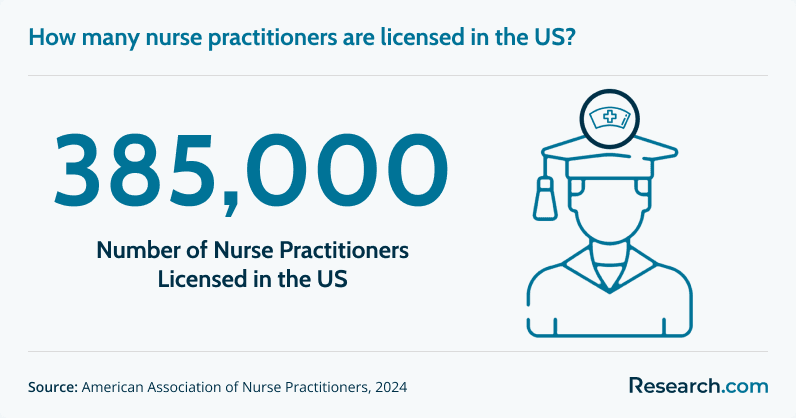
- In 2023, the United States had over 385,000 licensed NPs.
- An RN earns a median annual salary of $86,070.
- NPs earn a median average salary of $126,260 and an average annual salary of $128,490.
- RNs with an ADN degree can become NPs in about five to six years through an RN to NP program.
- The employment of registered nurses in the United States from 2022 to 2032 is anticipated to grow by 6%.
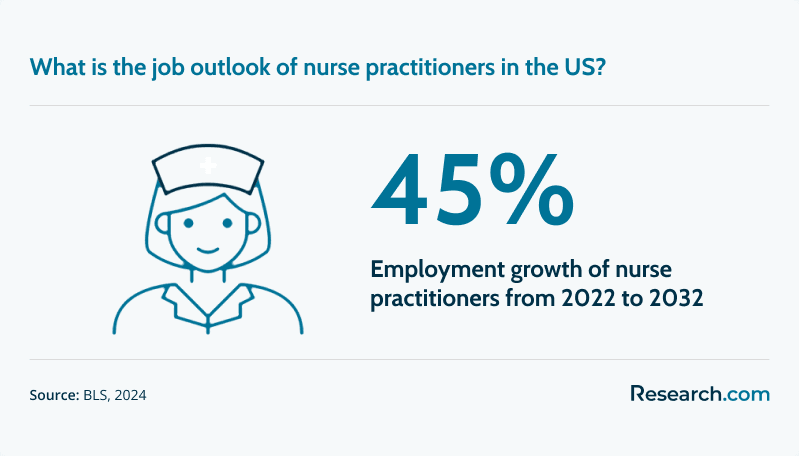
- The employment of NPs in the United States from 2022 to 2032 is set to jump by a staggering 45%.
- What does a nurse practitioner do?
- What are the main benefits of moving from RN to NP?
- How do RNs become nurse practitioners?
- Which nurse practitioner specialty should you choose?
- How much do RNs and nurse practitioners earn?
- How long does an RN-to-NP program take?
- What are the admission requirements for RN-to-NP programs?
- What courses do RN-to-NP students take?
- How much does an RN-to-NP program cost?
- What is the job outlook for nurse practitioners?
- What do accelerated online NP programs offer?
- How should you judge RN-to-NP program quality?
- Can accelerated bridge programs help future NPs?
- Is an accelerated RN-to-BSN program the fastest NP starting point?
- What outcomes should RN-to-NP graduates review?
- What are the most affordable RN-to-NP options?
- How do public health trends affect NP careers?
- What challenges should RNs expect when becoming NPs?
- What online resources can help NPs keep advancing?
- What advancement paths are available for nurse practitioners?
- How do state laws affect RN-to-NP programs?
- How are nurse practitioners different from physicians?
What Nurse Practitioners Say About the Career Change
"Becoming an NP required serious time and discipline, but the added clinical responsibility has been worth it. I now participate more directly in diagnosing, treating, and following patients over time, which makes the work feel more connected and meaningful." - Chloe
"The RN-to-NP transition changed the direction of my career. I developed advanced clinical judgment, gained a broader role in patient care, and found new professional opportunities that were not available to me as an RN." - Jennifer
"As an RN, I often wanted a larger role in care planning. My RN-to-NP program helped me move into diagnosis, prescribing, and collaborative treatment decisions. The learning curve was steep, but the professional growth has been significant." - Liam
What does a nurse practitioner do?
A nurse practitioner is an advanced practice registered nurse, or APRN, with graduate education in a defined area of patient care. NPs usually hold either a Master of Science in Nursing or a Doctor of Nursing Practice. Their training prepares them to assess patients, diagnose conditions, order and interpret tests, prescribe medications when authorized, manage treatment plans, and provide preventive care.
The exact scope of practice depends on state law, specialty, workplace policy, and the NP's certification area. In some settings, NPs practice with a high level of independence. In others, they work under collaborative agreements or physician oversight. Because of this, prospective students should always compare NP programs against the rules of the state where they plan to practice.
According to the American Association of Nurse Practitioners, the United States has over 385,000 licensed NPs.
Common NP responsibilities include:
- Assessing patients and forming differential diagnoses
- Creating and managing treatment plans
- Prescribing and monitoring medications when permitted by state law
- Ordering, reviewing, and explaining diagnostic tests
- Providing preventive screenings and wellness counseling
- Educating patients about disease management, medications, and lifestyle changes
- Coordinating care with physicians, nurses, therapists, social workers, and other clinicians
- Managing acute, chronic, or specialty-specific conditions depending on certification
| RN Role | NP Role | What Changes After Becoming an NP |
| Provides direct nursing care, monitors patients, administers treatments, and coordinates bedside care | Assesses, diagnoses, treats, prescribes when authorized, and manages patient care plans | The role shifts from implementation-focused care to advanced clinical decision-making |
| Works under RN scope of practice and employer protocols | Practices under APRN scope of practice and state-specific NP rules | Licensure, certification, and state law become more central to daily responsibilities |
| May specialize through clinical experience or specialty nursing credentials | Must complete graduate education and national certification in an NP population focus | Specialty choice shapes the patient population and eligible jobs |
What are the main benefits of moving from RN to NP?
The strongest reasons to pursue an RN-to-NP program are expanded practice authority, deeper clinical training, more career options, and higher earning potential. The benefits are real, but they are not automatic. They depend on program quality, specialty demand, state practice rules, work setting, and the graduate's ability to move into advanced practice responsibilities.
- More clinical autonomy. NPs often have a larger role in assessment, diagnosis, treatment planning, and medication management than RNs. The level of independence varies by state and employer.
- Broader patient care responsibilities. NP preparation allows nurses to manage a wider range of acute, chronic, primary care, behavioral health, pediatric, adult-gerontology, or specialty needs depending on their certification.
- Advanced clinical knowledge. RN-to-NP programs build graduate-level competence in pathophysiology, pharmacology, advanced assessment, evidence-based practice, and specialty care.
- Higher earning potential. NP salaries are substantially higher than RN salaries in the BLS figures cited in this guide, although actual pay depends on location, specialty, setting, experience, and schedule.
- Greater influence on patient outcomes. Many RNs pursue NP practice because they want a more direct role in diagnosis, prevention, long-term management, and care coordination.
- More leadership options. NP training can support future roles in clinical leadership, education, administration, consulting, specialty practice, or entrepreneurship.
| Benefit | Why It Matters | When It May Not Be Enough |
| Higher pay potential | NP compensation is higher than RN compensation in national BLS salary data | High tuition or heavy student loans can reduce the financial return |
| Expanded scope | NPs can take on diagnosis, treatment, and prescribing responsibilities when authorized | State laws and employer policies may limit independence |
| Specialized practice | Students can train for family care, pediatrics, psychiatric-mental health, acute care, and other areas | Choosing a specialty without local demand can narrow job options |
| Career mobility | NP credentials can open clinical, leadership, education, and consulting paths | Advancement still depends on experience, certification, performance, and market conditions |
How do RNs become nurse practitioners?
The RN-to-NP path usually requires an RN license, graduate nursing education, clinical training, national certification, and state APRN licensure. The best route depends on the nurse's current degree. An RN with a BSN may enter an MSN-NP or DNP program, while an RN with an ADN may need an RN-to-BSN, RN-to-MSN, ADN-to-MSN, or another bridge pathway.
Step 1: Confirm your starting point
Before comparing schools, identify whether you are starting with an ADN, BSN, MSN, or another degree. This determines whether you need a bridge program, a BSN completion program, or a direct graduate NP track. RNs who still need a bachelor's degree may compare the most affordable online RN to BSN programs or look at the easiest online RN to BSN programs if flexibility and admission accessibility are priorities.
Cost-sensitive students can also review affordable online colleges that offer accredited nursing pathways, but low tuition should never replace checks for nursing accreditation, clinical placement support, and licensure alignment.
Step 2: Choose the right NP degree level
Most future NPs enter a graduate nursing program with a specialty track. MSN programs remain a common entry route, while DNP programs provide doctoral-level preparation. Some nurses choose a BSN-to-DNP or ADN-to-MSN bridge when they want a more compressed pathway, but accelerated options usually require stronger time management and heavier course loads.
Step 3: Select a population focus or specialty
NP certification is tied to a patient population or specialty area, such as family practice, adult-gerontology, pediatrics, psychiatric-mental health, women's health, or acute care. This decision affects your clinical placements, board certification exam, state licensure, and future job market.
Step 4: Complete didactic coursework and clinical practicum hours
RN-to-NP programs combine graduate nursing courses with supervised clinical experiences. Students study advanced assessment, pharmacology, pathophysiology, evidence-based practice, healthcare systems, and specialty-specific diagnosis and management. Clinical rotations allow students to apply these skills under qualified supervision.
Step 5: Pass national certification
After finishing program requirements, graduates generally sit for a national certification exam in their NP specialty. Certification may be offered through organizations such as the American Association of Nurse Practitioners or the American Nurses Credentialing Center, depending on the specialty and credential sought.
Step 6: Apply for state APRN licensure
Certification alone is not enough to practice as an NP. Graduates must meet the APRN licensure rules in the state where they plan to work. Requirements can include proof of education, certification, an active RN license, background checks, state applications, fees, and other state-specific documentation.
Step 7: Move into advanced practice carefully
New NPs often begin with structured onboarding, mentoring, or collaborative practice arrangements. The transition from RN to NP requires a change in clinical mindset: instead of primarily carrying out care plans, NPs are accountable for forming, explaining, and adjusting those plans.
| Current Credential | Common NP Pathway | Best Fit |
| ADN-prepared RN | RN-to-BSN followed by MSN-NP, or an ADN-to-MSN bridge | RNs who need a bachelor's-level foundation before graduate NP study |
| BSN-prepared RN | MSN-NP or BSN-to-DNP | RNs ready for graduate-level advanced practice preparation |
| MSN-prepared nurse | Post-master's NP certificate or DNP with NP focus if eligible | Nurses who already have graduate nursing education and want NP certification |
Which nurse practitioner specialty should you choose?
The best NP specialty is the one that fits your preferred patient population, clinical setting, state practice environment, and local hiring market. Do not choose only based on salary or program speed. A specialty that looks attractive online may not match your temperament, schedule needs, or available clinical sites.
- Family Nurse Practitioner. FNPs are prepared for primary care across the lifespan, including infants, children, adults, and older adults. This is a flexible option for nurses interested in broad primary care. Students comparing cost-conscious routes can review affordable online FNP programs, while those looking for shorter pathways may explore a 12-month FNP program online.
- Adult-Gerontology Nurse Practitioner. AGNP programs focus on adults and older adults. This path may appeal to nurses interested in primary care, complex chronic disease management, aging-related care, or adult acute care depending on the track.
- Pediatric Nurse Practitioner. PNP programs prepare nurses to care for infants, children, and adolescents. Students learn pediatric assessment, developmental screening, family education, and management of common and complex pediatric conditions.
- Psychiatric-Mental Health Nurse Practitioner. PMHNP programs train nurses to assess, diagnose, and treat mental health and substance use conditions. This specialty may include psychiatric medication management and psychotherapy-related training, depending on program design and state rules.
- Women's Health Nurse Practitioner. WHNP programs center on reproductive, gynecologic, prenatal, family planning, menopausal, and preventive health services for women across the lifespan.
- Acute Care Nurse Practitioner. ACNP programs prepare NPs for acutely ill patients in hospitals, intensive care units, emergency departments, and specialty services. This path is often best for nurses comfortable with high-acuity environments.
| Specialty | Typical Patient Population | Common Work Settings | Good Fit For |
| FNP | Patients across the lifespan | Primary care clinics, community health, urgent care | RNs who want broad primary care flexibility |
| AGNP | Adults and older adults | Primary care, specialty clinics, long-term care, hospitals depending on track | RNs interested in adult chronic disease, aging, or adult acute care |
| PNP | Infants, children, and adolescents | Pediatric practices, children's hospitals, specialty clinics | RNs who prefer child and family-centered care |
| PMHNP | Patients with mental health or substance use needs | Behavioral health clinics, hospitals, telehealth, community programs | RNs interested in psychiatric assessment and treatment |
| WHNP | Women across the lifespan | OB-GYN clinics, reproductive health, public health settings | RNs focused on reproductive and gynecologic health |
| ACNP | Acutely or critically ill patients | Hospitals, ICUs, emergency departments, specialty services | RNs with strong interest in high-acuity care |
The chart below shows the specializations with the most certified NPs.
How much do RNs and nurse practitioners earn?
National salary data show a clear earnings difference between RNs and NPs. According to 2024 data from the United States Bureau of Labor Statistics, an RN receives a median annual salary of $86,070, which is higher than the collective median annual salary of all jobs in the country, which is $48,060.
NPs take home a median average salary of $126,260 and an average annual salary of $128,490. This includes the typical critical care NP salary. Pay can be higher in certain settings. Outpatient care centers and hospitals offer median annual salaries of $136,920 and $136,050, respectively.
| Role or Setting | Salary Figure Cited | What It Means for RNs Comparing NP Programs |
| Registered nurse | Median annual salary of $86,070 | This is the baseline many RNs use when calculating whether graduate school is financially worthwhile |
| All jobs in the country | Collective median annual salary of $48,060 | RN pay is already above this national comparison point |
| Nurse practitioner | Median average salary of $126,260 and average annual salary of $128,490 | The NP salary premium can help justify graduate study if debt and program quality are managed carefully |
| Outpatient care centers | Median annual salary of $136,920 | Some practice settings may offer higher compensation than the overall NP median |
| Hospitals | Median annual salary of $136,050 | Hospital-based NP roles can be financially attractive, especially in high-acuity or specialty settings |
Salary should not be the only reason to choose NP school. Prospective students should compare tuition, loan repayment, lost work hours, clinical placement obligations, state practice authority, and local hiring demand before assuming the degree will deliver a specific return.
How long does an RN-to-NP program take?
The timeline depends mainly on your current degree and whether you study full time or part time. Students who already hold a bachelor's degree usually take two to three years of full-time study to complete an RN to NP program. RNs with an associate degree in nursing typically need four to five years of full-time study.
Bridge programs can shorten the overall path by combining degree requirements, but they often move quickly and may carry heavier term-by-term workloads. After graduation, students may need additional time to pass the APRN certification exam and secure NP licensure. For ADN-prepared RNs, the full transition to NP practice can take about five to six years through an RN to NP program.
| Path | Average Duration Stated | Important Consideration |
| BSN | 4 years | Often required before standard MSN-NP admission unless using a bridge pathway |
| MSN | 2 years | Common graduate entry point for NP preparation |
| DNP | 4 years | Doctoral option that may require more time than an MSN pathway |
| BSN-prepared RN to NP | Two to three years of full-time study | Usually the shortest standard route for nurses who already hold a BSN |
| ADN-prepared RN to NP | Four to five years of full-time study, plus possible certification and licensure time | May take about five to six years overall through an RN to NP program |
Some students enter nursing after earning a different degree. Those exploring nursing entry routes can compare the best online ADN programs for non nurses and then plan for BSN and RN-to-NP progression later. Nurses already near the advanced practice stage may also research 1 year NP programs, but shortened programs should be reviewed carefully for eligibility rules, accreditation, clinical expectations, and certification alignment.
What are the admission requirements for RN-to-NP programs?
RN-to-NP admissions are designed to verify that applicants have the nursing foundation, licensure status, academic preparation, and clinical readiness needed for graduate-level advanced practice training. Requirements differ by school and pathway, especially for ADN-to-MSN and RN-to-MSN bridge programs.
- Nursing degree. Many NP programs expect a BSN from an accredited institution, while bridge programs may admit ADN-prepared RNs under additional conditions.
- Active RN license. Applicants generally need an active registered nurse license. This is also commonly required for programs such as the cheapest RN to MSN online programs.
- Minimum GPA. Programs often set a cumulative GPA threshold, frequently between 3.0 to 3.5, though exact rules vary.
- Clinical experience. Some programs require or strongly prefer relevant nursing experience. Specialty-focused programs may value experience related to the intended NP track.
- Letters of recommendation. Schools may ask for references from supervisors, faculty members, advanced practice clinicians, or other professionals who can speak to the applicant's readiness.
- Personal statement. Applicants are commonly asked to explain their professional goals, specialty interest, nursing background, and reasons for pursuing advanced practice.
- Resume or curriculum vitae. A resume helps programs evaluate work history, certifications, leadership, clinical exposure, and professional development.
- Standardized test scores. Some programs may request GRE or MAT scores, while others make them optional or do not require them.
| Question to Ask Before Applying | Why It Matters |
| Does the program admit ADN-prepared RNs, or is a BSN required first? | This determines whether you need a bridge route or a BSN completion program |
| Does the program meet licensure requirements in my state? | Online programs may not satisfy every state's APRN education rules |
| Who arranges clinical placements? | Students may face delays if they must find their own preceptors without strong school support |
| Which certification exam does the specialty prepare graduates to take? | Certification eligibility is essential for licensure and employment |
| Are there on-campus intensives, travel requirements, or synchronous class times? | These requirements affect working RNs, parents, and students outside the school's region |
What courses do RN-to-NP students take?
RN-to-NP coursework varies by specialty, but most programs share a core set of advanced nursing courses. These courses are also commonly part of accredited online MSN programs. The goal is to move students beyond RN-level care delivery into advanced assessment, diagnosis, treatment planning, prescribing knowledge, population-focused care, and evidence-based decision-making.
- Advanced Pathophysiology. Students examine disease mechanisms, clinical presentations, and complex physiologic changes across body systems.
- Advanced Pharmacology. This course develops knowledge of medication actions, drug movement through the body, prescribing principles, safety monitoring, and patient education.
- Advanced Health Assessment. Students strengthen history-taking, physical examination, diagnostic reasoning, and specialty-specific assessment techniques.
- Advanced Nursing Practice Theories and Models. This course connects nursing frameworks to advanced clinical judgment, patient-centered care, and systems-level practice.
- Evidence-Based Practice. Students learn to evaluate research, apply reliable evidence, and improve patient care using current clinical knowledge.
| Course Area | What Students Learn | Why It Matters in NP Practice |
| Pathophysiology | How disease processes develop and present clinically | Supports diagnosis and treatment planning |
| Pharmacology | Medication selection, safety, monitoring, and patient counseling | Prepares NPs for prescribing responsibilities where authorized |
| Health assessment | Advanced physical exams, histories, and diagnostic reasoning | Builds the foundation for independent or collaborative patient evaluation |
| Evidence-based practice | How to interpret research and apply best practices | Helps NPs make defensible, current clinical decisions |
| Specialty management | Population-specific diagnosis and care planning | Connects the program to board certification and future employment |
How much does an RN-to-NP program cost?
Even with many affordable online nursing programs available, RN to NP programs can cost around $63,000 to $100,000, and they can reach $200,000 at some renowned institutions. The cost is often high because bridge and advanced practice pathways may include multiple degree components, graduate tuition, clinical fees, technology fees, travel, books, background checks, and certification-related expenses.
Students should start with the Free Application for Federal Student Aid (FAFSA) and then compare grants, scholarships, employer tuition assistance, state programs, institutional aid, and loan options. Free aid should generally be prioritized before borrowing.
Loans require careful review. The average loan debt of master's students in nursing is $51,420, while doctoral students typically deal with a loan debt of $69,890. Those figures make program affordability and expected repayment capacity central to the decision.
| Cost Factor | What to Check | Why It Can Change the Real Price |
| Tuition | Per-credit rate, total credits, in-state versus out-of-state pricing | A low per-credit rate may still be expensive if the program requires many credits |
| Clinical placement costs | Placement fees, travel, lost work hours, preceptor requirements | Clinical obligations can affect income and scheduling |
| Online fees | Technology fees, distance learning fees, software, testing platforms | Online programs may still have substantial non-tuition charges |
| Residencies or intensives | Campus visits, lodging, transportation, time off work | Hybrid requirements can add costs for out-of-state students |
| Certification and licensure | Exam fees, state applications, background checks, renewals | Graduation is not the final cost before practice |
| Loan repayment | Interest rate, repayment plan, employer support, income expectations | Borrowed cost can exceed listed tuition over time |
What is the job outlook for nurse practitioners?
According to 2024 data from the BLS, the employment of registered nurses in the United States from 2022 to 2032 is anticipated to grow by 6%, which is twice as large as the national average. Demand for RNs remains strong, but the projected growth for nurse practitioners is much higher.
During the same period, the employment of NPs is set to jump by a staggering 45%, 7.5 times larger than the growth of RN jobs. In the given period, RNs had 193,100 annual job openings, while the openings for NPs, nurse anesthetists, and nurse midwives totaled 29,200.
The outlook reflects several ongoing pressures in healthcare: demand for primary and specialty care access, chronic disease management needs, aging-related care, behavioral health demand, and the growing use of advanced practice clinicians in team-based care. However, job availability still varies by state, specialty, payer environment, and local employer demand.
Students considering other healthcare careers may also compare adjacent life science paths. For example, those curious about veterinary medicine can review what degree a veterinarian needs before deciding which healthcare route fits best.
What do accelerated online NP programs offer?
Accelerated online NP programs are designed for eligible nurses who want a shorter and more structured route to advanced practice preparation. They may compress coursework, use intensive terms, and combine online instruction with required clinical rotations. For working RNs, the main appeal is speed and flexibility, but the faster schedule can be demanding.
Before enrolling in accelerated nurse practitioner programs online, verify accreditation, board certification alignment, clinical placement policies, state authorization, faculty support, and whether the pace is realistic with your work schedule. A fast program is only helpful if it leads to certification eligibility and licensure in your intended state.
How should you judge RN-to-NP program quality?
Program quality should be evaluated before cost, convenience, or speed. A credible RN-to-NP program should have appropriate nursing accreditation, clear specialty outcomes, transparent certification preparation, qualified faculty, meaningful clinical partnerships, and support for students who need placements. Graduation data, certification pass rates, and employment outcomes are useful when available, but they should be interpreted in context.
Bridge pathways can be valuable for ADN-prepared nurses, including options such as an ADN to MSN program. The key is to confirm that the bridge does not sacrifice clinical depth, certification eligibility, or state licensure readiness for speed.
| Quality Factor | What Strong Programs Provide | Red Flag |
| Accreditation | Recognized nursing accreditation and clear public documentation | Vague claims about approval without verifiable accreditation details |
| Licensure alignment | State-by-state disclosure for online students | No clear answer about whether graduates qualify in your state |
| Clinical placement support | Documented partnerships or active placement assistance | Students are fully responsible for finding preceptors with little help |
| Certification preparation | Curriculum tied to the appropriate NP certification exam | Unclear specialty outcomes or board exam eligibility |
| Student support | Advising, tutoring, faculty access, technology help, and practicum coordination | Limited access to faculty or slow responses during clinical planning |
Can accelerated bridge programs help future NPs?
Accelerated bridge programs can help nurses move efficiently from one credential level to the next, especially when they are designed for students who already have healthcare experience. These pathways may combine online coursework, compressed academic terms, and targeted clinical experiences. They can be useful, but only when the student can handle the pace and when the program is properly accredited and licensure-aligned.
Some nurses use earlier bridge options as stepping stones, such as a 6-month LPN to RN program, before advancing through RN, BSN, MSN, and NP preparation. At every stage, confirm that credits transfer, clinical hours are accepted, and the program fits your long-term NP goal.
Is an accelerated RN-to-BSN program the fastest NP starting point?
For ADN-prepared RNs, an accelerated RN-to-BSN program can be a practical way to build the academic foundation needed for many NP programs. Some nurses look for formats such as RN to BSN online 9 months programs because they want to enter graduate study sooner.
This can be an efficient strategy, but speed should not be the only criterion. Check whether the BSN program is accredited, whether graduate NP programs accept its credits, whether the schedule is manageable while working, and whether the total cost of the BSN plus NP program still makes financial sense.
What outcomes should RN-to-NP graduates review?
Strong RN-to-NP programs should be willing to discuss outcomes that matter after graduation. These include certification exam preparation, clinical placement completion, graduate employment patterns, alumni satisfaction, and the kinds of settings where graduates work. Some schools publish these outcomes clearly; others require applicants to ask admissions or program directors directly.
Students who still need a bachelor's degree can compare paths from easy RN to BSN online options to graduate NP programs, but an easy admission process should not be confused with strong NP preparation. The end goal is not simply completing the degree. It is becoming eligible, competent, and employable in advanced practice.
What are the most affordable RN-to-NP options?
The most affordable RN-to-NP option is not always the program with the lowest tuition. The better question is which accredited program offers the lowest total cost while still providing licensure alignment, clinical placement support, certification preparation, and a realistic schedule. Online programs can reduce commuting and relocation costs, but they may still include fees, travel for intensives, and clinical placement expenses.
Students interested in psychiatric-mental health practice can compare the cheapest online psychiatric nurse practitioner programs, while still checking accreditation, state authorization, and PMHNP certification preparation. Affordability should be balanced with outcomes and support.
To reduce costs, apply for scholarships, employer tuition reimbursement, grants, state nursing workforce programs, and institutional aid. If borrowing is necessary, calculate the monthly repayment obligation against realistic NP salary expectations in your target specialty and region.
How do public health trends affect NP careers?
Public health needs can shape where nurse practitioners are hired and what skills employers value. NPs may be asked to support chronic disease prevention, community-based care, behavioral health access, vaccination counseling, maternal and child health, older adult care, and health education. Nurses who understand population health can often connect individual patient care with broader community needs.
RNs interested in combining advanced practice with population health may review how public health training connects to roles and compensation, including information on MSN public health nursing salary. This can be especially useful for nurses considering community health, policy, leadership, or preventive care roles.
What challenges should RNs expect when becoming NPs?
The RN-to-NP transition is rewarding for many nurses, but it is not simply a promotion. It is a shift into a different level of accountability. Students must prepare for graduate academics, clinical reasoning, diagnostic responsibility, certification pressure, and possible financial strain.
- Graduate academic intensity. NP courses require advanced study in diagnostics, pharmacology, pathophysiology, and patient management.
- Time pressure. Working RNs may need to balance shifts, assignments, exams, family responsibilities, and clinical rotations.
- Role identity shift. RNs moving into NP practice must become comfortable making diagnostic and treatment decisions rather than mainly carrying out orders and care plans.
- Financial risk. Tuition, fees, reduced work hours, and loans can create pressure before the salary benefit is realized.
- Clinical placement logistics. Finding and completing practicum hours can be one of the most stressful parts of NP education, especially in regions with limited preceptor availability.
- State law complexity. A program that works for one state may not meet requirements in another, especially for online students.
| Common Mistake | Why It Causes Problems | Better Approach |
| Choosing only the fastest program | Acceleration can mean heavier workloads and less flexibility | Compare pace, support, clinical expectations, and certification outcomes |
| Ignoring accreditation | Accreditation can affect certification eligibility, licensure, transfer, and employer acceptance | Verify nursing accreditation before applying |
| Assuming online means fully remote | Many online NP programs still require local clinicals or campus intensives | Ask about travel, synchronous sessions, and practicum rules |
| Focusing only on tuition | Fees, travel, lost income, and loan interest can change the total cost | Build a full cost estimate before enrolling |
| Choosing a specialty without market research | Local demand may vary by specialty and state practice rules | Review job postings, talk to NPs, and ask employers what they hire for |
| Assuming salary outcomes are guaranteed | Pay varies by specialty, region, setting, schedule, and experience | Use national data as a benchmark, then research your local market |
What online resources can help NPs keep advancing?
Nurse practitioners and aspiring NPs can use online resources to compare programs, prepare for certification, follow regulatory updates, join professional communities, and learn about emerging clinical practice issues. For nurses still choosing a program, online NP programs can provide flexible routes into advanced practice when they are properly accredited and aligned with state requirements.
Professional organizations, state nursing boards, certification bodies, academic journals, employer education benefits, and continuing education platforms can also help NPs maintain competence and plan future advancement. The best resources are those tied to verified requirements, not informal advice alone.
What advancement paths are available for nurse practitioners?
After gaining experience, nurse practitioners can move into advanced clinical, leadership, education, consulting, and entrepreneurial roles. The right path depends on specialty, state law, employer structure, business skills, and professional goals.
- Healthcare leadership. NPs may become clinical managers, service line leaders, directors of nursing, or advanced practice leaders who help manage care quality and staffing models.
- Additional specialization. Some NPs pursue further certifications or focused experience in areas such as oncology, cardiology, dermatology, orthopedics, or other specialty fields.
- Teaching and academic roles. Experienced NPs may teach nursing students, mentor future advanced practice nurses, or contribute to curriculum development and clinical education.
- Consulting. NPs with deep clinical or operational experience may advise healthcare organizations on workflows, patient care processes, compliance, or quality improvement.
- Entrepreneurship. In states and settings where legally and financially feasible, experienced NPs may open or help operate practices or specialized services. This path offers autonomy but also requires business, billing, compliance, and management skills.
- Online teaching and program development. Some NPs support distance education, including online MSN programs for non-nurses, especially when they have strong teaching and clinical supervision experience.
How do state laws affect RN-to-NP programs?
State regulations influence NP education, licensure, prescribing authority, physician collaboration rules, and practice autonomy. For students, this means the same online RN-to-NP program may be a good fit in one state and a poor fit in another. Always check the board of nursing in the state where you plan to practice before enrolling.
Ask whether the program is authorized to enroll students from your state, whether it meets your state's APRN education requirements, whether clinical placements can be completed locally, and whether graduates are eligible for the correct certification and licensure pathway. State law can also affect long-term career options, including independent practice, reimbursement, and practice ownership.
Students interested in broader scientific preparation can also review interdisciplinary options such as an online bachelor's degree biology, although biology degrees do not replace nursing licensure requirements for NP practice.
How are nurse practitioners different from physicians?
Nurse practitioners and physicians both diagnose, treat, prescribe, and manage patient care within their legal scope, but they take different educational routes and often practice under different regulatory structures. RNs considering NP school should understand that becoming an NP is not the same as becoming a physician; it is an advanced nursing pathway with its own model of care, certification requirements, and state practice rules.
| Category | Nurse Practitioner | Physician |
| Education | Typically earns an MSN or DNP with a defined NP specialty focus | Completes an MD or DO degree followed by residency training |
| Training model | Advanced nursing model with emphasis on patient-centered care, prevention, education, and specialty management | Medical model with extensive physician training in diagnosis, treatment, procedures, and specialty medicine |
| Scope of practice | Varies by state and may include assessment, diagnosis, prescribing, and management independently or collaboratively | Broad medical scope, including complex procedures and surgeries depending on specialty |
| Career path for RNs | RN-to-NP, MSN-NP, DNP, or post-master's certificate routes may be available | Requires medical school admission and physician training pathway |
RNs who already hold graduate nursing education and want a focused family practice credential may compare 1 year post master's FNP online options. As with all accelerated or certificate pathways, verify certification eligibility and state licensure alignment before applying.
References
- American Association of Nurse Practitioners (2024, February). NP Fact Sheet. American Association of Nurse Practitioners
- BLS (2024, April 3). 29-1171 Nurse Practitioners. BLS
- BLS (2024, April 17). Nurse Anesthetists, Nurse Midwives, and Nurse Practitioners. BLS
- BLS (2024, April 17). Registered Nurses. BLS
- Coursera (2023, November 30). How Long Does It Take to Become a Nurse Practitioner (NP)? Coursera
- Hanson, M. (2023, August 16). Student Loan Debt by Major. Education Data Initiative
- Harstein, L. (2024, April 25). How Much Does Nursing School Cost? Inspira Advantage Coursera
- Monteiro, I. (2024, April 19). How Long Does It Take To Become a Nurse Practitioner (NP)? Indeed BLS nurse practitioner wage data
- Roqiues, D. (2024). Nursing Trends: 2024 Report for Healthcare Employers. IntelyCare BLS occupational employment data BLS NP data
Key Insights
- RN-to-NP programs can be worthwhile for nurses who want advanced clinical responsibility, but the decision should be based on specialty fit, state licensure rules, program quality, cost, and local job demand.
- The salary difference is significant: RNs earn a median annual salary of $86,070, while NPs earn a median average salary of $126,260 and an average annual salary of $128,490.
- Timeline depends on your starting credential. BSN-prepared RNs often finish in two to three years of full-time study, while ADN-prepared RNs may need about five to six years overall through an RN to NP program.
- Specialty choice matters. FNP, AGNP, PNP, PMHNP, WHNP, and ACNP tracks prepare graduates for different patient populations, clinical settings, and certification exams.
- Do not enroll before checking accreditation, clinical placement support, certification eligibility, and whether the program meets APRN licensure requirements in your state.
- Affordability requires more than comparing tuition. Include fees, travel, clinical placement costs, lost income, certification expenses, and loan repayment in your ROI calculation.
- Accelerated and online programs can save time and improve flexibility, but they are only good options when they maintain academic rigor, clinical quality, and licensure alignment.
Other Things You Should Know About Going from an RN to a Nurse Practitioner
Most RN-to-NP graduates must pass a national certification exam in their specialty before state licensure. Common options include the AANP or ANCC exams for adult, family, pediatric, women’s health, psychiatric-mental health, or acute care NP tracks.
To transition from RN to Nurse Practitioner, you'll need a Master of Science in Nursing (MSN) or Doctor of Nursing Practice (DNP) degree. This includes completing specific graduate coursework and clinical practice hours approved by nursing accreditation bodies like the Commission on Collegiate Nursing Education.


