2027 Online Electrical Engineering Degrees With Practice-Focused Curricula

Co-Founder and Chief Data Scientist
Choosing an online electrical engineering degree is really a question of whether remote study can still build real engineering judgment. It can, but only when the program includes ABET-aligned coursework, design projects, simulation tools, and supervised lab experiences.
The stakes are high: BLS May 2024 wage data places the median annual pay for electrical engineers at about $111,910, making program quality and accreditation important ROI factors. This guide is for prospective bachelor's and master's students comparing flexible programs, hands-on learning, costs, admissions, and career outcomes.
Key Things You Should Know
- For bachelor's programs, ABET accreditation is the strongest signal that an online electrical engineering curriculum meets widely recognized engineering standards; master's programs may be reputable without ABET, but should still show strong faculty, labs, and employer recognition.
- Practice-focused online programs should include circuit labs, electronics, signals, controls, embedded systems, power systems, senior design, simulation software, and documented opportunities to build or test real systems.
- According to BLS May 2024 data, electrical engineers had a median annual wage near $111,910, but outcomes vary by industry, location, experience, security clearance, graduate study, and whether the role is hardware-, software-, or power-focused.
What is an online electrical engineering degree with a practice-focused curriculum?
An online electrical engineering degree with a practice-focused curriculum is a bachelor's or master's program that teaches electrical engineering theory while requiring students to apply it through labs, projects, simulations, design reviews, and technical documentation. The goal is not just to understand equations, but to use them to design, test, troubleshoot, and improve electrical or electronic systems.
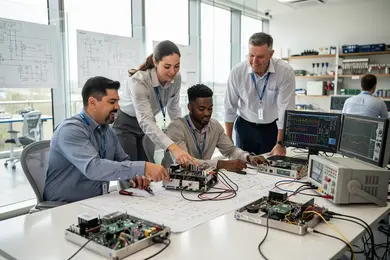
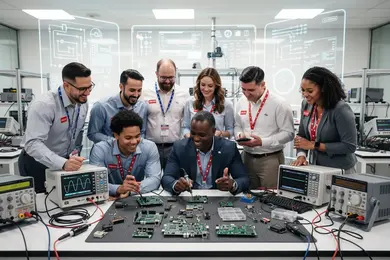
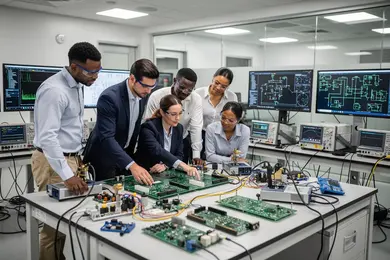
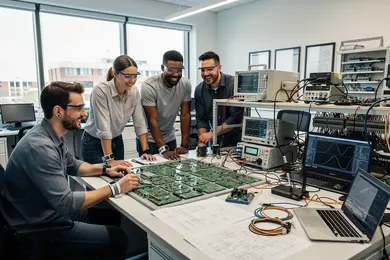
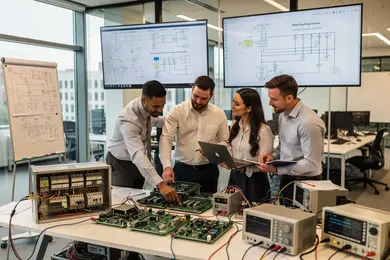
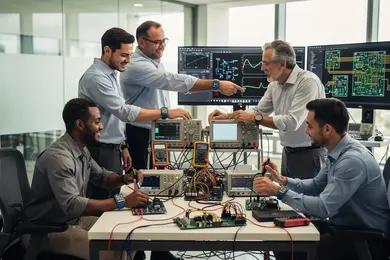
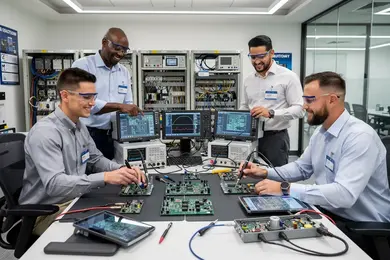
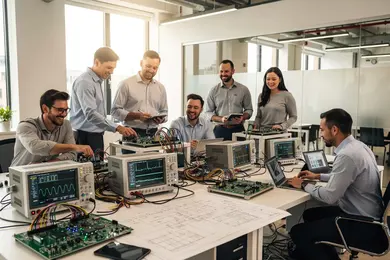
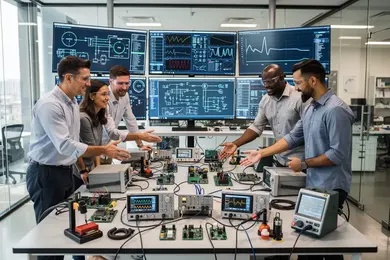
In electrical engineering, "practice-focused" usually means the curriculum goes beyond recorded lectures and exams. Students may use circuit simulation platforms, FPGA or microcontroller kits, remote lab equipment, virtual instrumentation, capstone projects, and team-based engineering design. Strong programs also require students to explain trade-offs, follow safety procedures, write lab reports, and defend design decisions.
The best fit depends on the credential level and career target. A bachelor's degree is the usual entry point for electrical engineering roles, especially in power, electronics, controls, communications, and hardware-adjacent fields. A master's degree is usually better for engineers who already have a technical background and want to specialize in areas such as power electronics, signal processing, robotics, semiconductor systems, wireless communications, or embedded systems.
This comparison shows how the main online electrical engineering degree options differ. Use it to match the credential to your current background rather than assuming the fastest or highest degree is automatically the best choice.
| Program type | Best for | Typical practice-focused components | Decision point |
| Online bachelor's in electrical engineering | Students seeking entry-level engineering roles | Core engineering labs, circuits, electronics, programming, senior design, team projects | Prioritize ABET accreditation if you may pursue engineering licensure or traditional engineering roles |
| Online bachelor's completion program | Transfer students with prior math, science, or engineering credits | Upper-division labs, design projects, remote experiments, applied electives | Check transfer rules carefully because missing prerequisites can extend the timeline |
| Online master's in electrical engineering | Working engineers or STEM graduates seeking specialization | Advanced simulations, research projects, applied design assignments, thesis or non-thesis project options | ABET is less common at the graduate level, so evaluate faculty expertise and employer alignment |
| Online engineering technology degree | Students who prefer applied technical implementation over engineering design theory | Instrumentation, troubleshooting, applied electronics, industrial systems labs | May lead to technologist roles rather than the same engineering roles as an electrical engineering degree |
How do online electrical engineering programs compare to campus-based programs for hands-on learning?
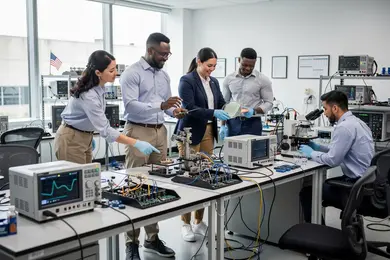
Online programs can support hands-on learning, but they do it differently from campus-based programs. Campus students may have easier access to physical labs, machine shops, oscilloscopes, power benches, faculty-supervised lab sections, and informal peer collaboration. Online students rely more on home lab kits, simulation software, remote-access equipment, short residencies, recorded demonstrations, and structured project deliverables.
The main question is not whether a program is online or on campus. The better question is whether the program can prove that students design, measure, test, revise, and document engineering work. A weak campus program can be lecture-heavy, while a strong online program can require rigorous lab evidence and faculty feedback.
The table below compares the hands-on learning trade-offs most students should evaluate before enrolling. It can help you decide whether online learning fits your schedule, learning style, and career goal.
| Learning feature | Online practice-focused program | Campus-based program | What to ask before enrolling |
| Circuit and electronics labs | Often delivered through lab kits, simulations, remote instruments, or scheduled intensive sessions | Usually completed in dedicated instructional labs | What equipment will I personally use, and how will my lab work be assessed? |
| Team design projects | Completed through virtual collaboration, shared repositories, video reviews, and project milestones | Completed through in-person teams, lab meetings, and physical prototyping spaces | Are online students assigned real team design work or only individual simulations? |
| Faculty feedback | May occur through discussion boards, recorded feedback, office hours, and design reviews | May include direct in-lab coaching and live troubleshooting | How quickly do instructors respond when students get stuck in labs? |
| Flexibility | Stronger fit for working adults, military learners, caregivers, and students far from campus | Stronger fit for students who want daily campus access and structured lab schedules | Are any required sessions synchronous, on campus, or limited to specific time zones? |
| Professional networking | Requires intentional use of faculty, online teams, internships, and professional societies | May offer more spontaneous access to peers, labs, clubs, and recruiters | How does the program connect online students to internships and employers? |
Online learning is a stronger fit if you are self-directed, comfortable troubleshooting software and hardware remotely, and able to set aside consistent time for labs. Campus learning may be better if you need frequent in-person guidance, want extensive access to physical equipment, or are targeting research-heavy undergraduate experiences.
Which U.S. online electrical engineering degrees are accredited and industry-recognized?
Accreditation is one of the most important filters for online electrical engineering degrees. For U.S. bachelor's programs, ABET accreditation is the clearest industry-recognized marker because it evaluates curriculum, faculty qualifications, student outcomes, continuous improvement, and engineering design preparation. If a program is not ABET-accredited, you should understand exactly how that affects licensure eligibility, employer screening, transfer options, and graduate school plans.
Several U.S. universities have offered online or distance-access electrical engineering pathways with strong recognition, but availability, delivery format, and accreditation status can change. Always verify the program directly in the ABET database and on the university's official program page before applying.
Students with military experience should also examine credit for prior learning, deployment flexibility, GI Bill support, and advising; a veteran-friendly online electrical engineering degree can make a major difference in persistence and cost planning.
This table summarizes the types of recognition to look for. It is not a substitute for checking the current accreditation record, but it shows which signals matter most.
| Recognition signal | Why it matters | Most important for | Red flag to avoid |
| ABET accreditation for the specific degree | Shows the program has met recognized engineering education standards | Bachelor's students, future PE licensure candidates, traditional engineering roles | Assuming the university is accredited when the specific engineering program is not |
| Regional institutional accreditation | Supports federal financial aid eligibility, transferability, and graduate school recognition | All degree seekers | Choosing a school with unclear or nonstandard accreditation claims |
| Faculty expertise in electrical engineering | Indicates whether advanced electives and projects align with current industry needs | Master's students and specialization-focused learners | Programs with few full-time engineering faculty or vague instructor credentials |
| Employer and industry alignment | Can improve relevance of capstones, internships, and applied projects | Students seeking power, defense, semiconductor, automation, or electronics roles | Programs that cannot explain where graduates work or what projects students complete |
| Licensure preparation transparency | Helps students understand the path toward Fundamentals of Engineering and Professional Engineer credentials | Students interested in power, utilities, consulting, or public infrastructure | Admissions teams that imply licensure is automatic after graduation |
For master's degrees, ABET accreditation is less central because ABET primarily matters at the undergraduate engineering level in many licensure pathways. Still, a reputable online master's should have rigorous admissions standards, clearly defined specializations, substantial engineering faculty, and applied coursework that matches your intended industry.
What core courses and lab experiences are included in practice-focused online curricula?
Practice-focused electrical engineering curricula usually combine mathematical foundations, engineering science, programming, hardware analysis, and design. The strongest programs sequence courses so that students first learn how systems behave, then use labs and projects to test those behaviors under realistic constraints.
At the bachelor's level, the curriculum typically begins with calculus, physics, programming, differential equations, and basic engineering design. Upper-division work then moves into circuits, electronics, electromagnetic fields, signals and systems, digital logic, control systems, microprocessors, power systems, communications, and a senior capstone.
Students who discover they prefer software-heavy systems may also compare embedded systems or computing pathways with computer science degrees online, especially if their preferred roles involve algorithms, cloud systems, AI tools, or software engineering more than physical hardware.
Common practice-focused components include several types of learning evidence. These experiences matter because employers and graduate programs often want proof that students can apply engineering concepts, not just pass exams.
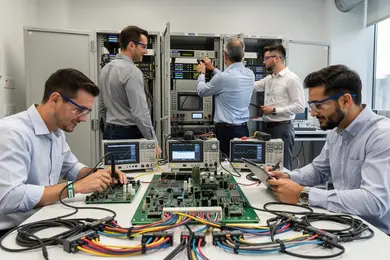
- Lab kits that let students build and measure circuits using components, breadboards, microcontrollers, sensors, and basic test equipment.
- Simulation assignments using circuit, signal, control, electromagnetic, or power-system software to model behavior before building or testing.
- Remote labs where students control real equipment through an online interface and analyze measured data.
- Design reviews that require students to explain assumptions, constraints, component choices, safety issues, and failure modes.
- Capstone or project courses where students produce a working prototype, technical report, presentation, or validated design.
- Industry-style documentation, including lab notebooks, schematics, test plans, version control records, and engineering reports.
One common mistake is choosing a program with impressive course titles but little evidence of lab depth. Ask for sample lab requirements, senior design examples, software access details, and whether online students complete the same outcomes as campus students.
What are the admission requirements for online bachelor's and master's degrees in electrical engineering?
Admission requirements vary by degree level, but electrical engineering programs are usually more prerequisite-driven than many online majors. Schools need evidence that students are ready for calculus-based physics, circuit analysis, programming, and upper-division engineering math.
For bachelor's programs, first-year applicants are often evaluated on high school math and science preparation, transcripts, GPA, and sometimes test scores depending on the institution's current policy. Transfer and degree-completion applicants are usually reviewed more closely for calculus, physics, chemistry, programming, and lower-division engineering credits. Missing prerequisites can add semesters, even if you have many general education credits.
For master's programs, applicants generally need a bachelor's degree in electrical engineering, computer engineering, or a closely related STEM field. Students from physics, math, mechanical engineering, or computer science may be admitted with bridge courses, but they should confirm whether prerequisite gaps will delay graduation.
Before applying, gather the requirements that most often affect admission and time to completion. This list can help you avoid applying to programs that look flexible but are not a good academic match.
- Official transcripts from all colleges attended, including community college and military or professional training records when applicable.
- Evidence of calculus, differential equations, calculus-based physics, programming, and foundational engineering coursework.
- Minimum GPA requirements, which may differ for overall GPA, major GPA, transfer GPA, or graduate admission.
- Statement of purpose for graduate programs, especially if you are changing specializations or entering from a related STEM field.
- Letters of recommendation when required, ideally from engineering faculty, technical supervisors, or project mentors.
- English language proficiency documentation for applicants whose prior education does not meet the school's waiver criteria.
A practical admissions strategy is to request a preliminary transfer or prerequisite review before committing. This is especially important for adult learners who may have older credits, military technical training, associate degrees, or coursework from multiple institutions.
How long do online electrical engineering degrees take, and what do they cost?
Online electrical engineering degrees vary widely in length and cost because students enter with different credits, schools charge different tuition rates, and lab-based engineering courses may include additional fees or equipment requirements. A full bachelor's degree typically takes about four years of full-time study, while a bachelor's completion pathway may take two to three years after transfer credits.
Many online master's programs take roughly two to three years part time, depending on course load and thesis or project requirements.
Cost should be evaluated as total program cost, not only tuition per credit. Engineering students may pay for lab kits, software access, exam proctoring, residency travel, textbooks, graduation fees, and technology.
NCES data published in 2024 shows that average published tuition and fees differ sharply between public and private nonprofit four-year institutions, which means residency status and institution type can materially affect affordability even before scholarships or employer tuition assistance are applied.
When comparing schools, separate direct prices from indirect expenses. These are the cost categories most likely to affect your budget:
- Tuition charged per credit, per course, per semester, or by flat-rate enrollment band.
- Engineering lab fees, hardware kits, components, shipping, and replacement parts.
- Required software, cloud lab access, simulation platforms, or campus technology fees.
- Travel costs for any required campus residency, orientation, exam, or intensive lab session.
- Books, calculators, test equipment, computer upgrades, webcams, and proctoring tools.
- Opportunity cost from reducing work hours during demanding lab or capstone terms.
The table below summarizes typical timing and cost considerations by pathway. Use it as a planning framework, then verify exact tuition and fees with each school.
| Pathway | Typical timeline | Main cost drivers | Best affordability strategy |
| Full online bachelor's in electrical engineering | About four years full time; longer part time | Credit load, lab fees, software, general education requirements | Compare ABET-accredited public options, transfer policies, and in-state or online tuition rules |
| Online bachelor's completion program | Often two to three years after prerequisites | Accepted transfer credits, missing prerequisites, upper-division engineering tuition | Complete lower-division math and science courses affordably before transfer, if approved |
| Online master's in electrical engineering | Often two to three years part time | Graduate tuition, specialization courses, software, thesis or project requirements | Use employer tuition assistance and choose electives tied to promotion or specialization goals |
| Graduate certificate before a master's | Often one year or less | Per-credit graduate tuition and whether credits later transfer | Use it to test a specialization before committing to a full degree |
Do not assume the cheapest program has the best return. A lower-cost program that lacks accreditation, has weak lab support, or does not accept your transfer credits may cost more in time and missed opportunities than a higher-tuition program with stronger alignment.
What electrical engineering careers can you pursue with an online degree?
An online electrical engineering degree can support many careers, but the best path depends on degree level, specialization, internship experience, software skills, and industry exposure. Electrical engineering is broad: some roles focus on power grids and renewable energy, while others involve chips, robotics, aerospace systems, telecommunications, vehicles, medical devices, or industrial automation.
Students should think in terms of technical clusters rather than a single job title. The table below connects common career directions with the kinds of work graduates may perform.
| Career direction | Typical responsibilities | Helpful curriculum focus | Common employers |
| Power systems engineering | Analyze generation, transmission, distribution, protection systems, and grid reliability | Power systems, machines, power electronics, controls, renewable energy | Utilities, energy developers, consulting firms, manufacturers, government agencies |
| Electronics design | Design, test, and troubleshoot analog or digital electronic circuits and devices | Circuits, electronics, PCB design, instrumentation, embedded systems | Consumer electronics, defense, medical devices, industrial technology companies |
| Embedded systems engineering | Develop hardware-software systems using microcontrollers, sensors, firmware, and communication interfaces | Programming, digital logic, microprocessors, real-time systems, controls | Automotive, robotics, aerospace, IoT, manufacturing automation firms |
| Controls and automation | Design systems that regulate machines, processes, motors, robotics, or industrial equipment | Control systems, signals, sensors, PLCs, robotics, systems modeling | Manufacturing, energy, robotics, logistics, process industries |
| Communications and signal processing | Work on wireless systems, data transmission, radar, image processing, or sensor data | Signals and systems, communications, probability, DSP, electromagnetics | Telecommunications, aerospace, defense, semiconductor, research organizations |
| Semiconductor and hardware engineering | Support chip design, testing, validation, reliability, or manufacturing processes | Electronics, solid-state devices, VLSI, electromagnetics, verification tools | Semiconductor companies, electronics manufacturers, research labs |
Some students begin in adjacent technical roles before moving into engineering positions. Electrical engineering technician, test engineer, field applications engineer, controls specialist, or systems integration roles can build practical experience, particularly for students who are completing a degree while working.
Technology trends are changing the skill mix. AI-assisted design tools, simulation automation, digital twins, electrification, renewable integration, advanced manufacturing, and semiconductor investment are increasing the value of engineers who can combine fundamentals with software fluency. That does not mean every electrical engineer becomes a software developer, but it does mean programming, data analysis, and model-based design are increasingly useful.
What salary ranges and earning potential do electrical engineers have in the United States?
Electrical engineering can offer strong earning potential, but salary ranges depend heavily on region, industry, experience, education level, and specialization. BLS May 2024 wage data reports a median annual wage of about $111,910 for electrical engineers in the United States. For readers, the key takeaway is that electrical engineering can support above-average pay, but the median is not a promise for new graduates or career changers.
Entry-level compensation is commonly lower than the occupational median, while experienced engineers in high-demand industries may earn more. Specialized work in semiconductors, defense systems, aerospace, power infrastructure, electronics design, and advanced controls may pay differently from roles in smaller local firms or public-sector organizations.
The table below explains how to interpret salary differences without treating any figure as a guaranteed outcome. It is most useful for comparing the factors that influence pay.
| Salary factor | How it affects earning potential | How students can respond |
| Industry | Defense, semiconductor, energy, aerospace, and advanced manufacturing roles may price skills differently | Choose electives and projects aligned with the industry you want to enter |
| Location | High-cost metro areas may post higher wages, but living costs can offset the difference | Compare salary with cost of living, remote policies, and relocation requirements |
| Experience | Internships, co-ops, military technical work, and project portfolios can influence early opportunities | Build documented projects and seek applied experience before graduation |
| Licensure | Professional Engineer credentials may matter more in power, utilities, consulting, and public infrastructure | Check whether your target path values FE and PE progression |
| Graduate specialization | A master's degree may help in specialized roles but is not necessary for every engineering job | Pursue graduate study when it clearly supports a technical specialization or promotion path |
To evaluate ROI, compare expected total program cost with realistic early-career roles, not only with national median pay. Also consider whether you can keep working while studying, whether your employer offers tuition assistance, and whether the program helps you build a portfolio that supports interviews.
What is the job outlook for electrical engineers and related technical roles?
The job outlook for electrical engineers is shaped by electrification, grid modernization, automation, semiconductor manufacturing, defense systems, telecommunications, and the growth of connected devices. BLS projections published for the current 2024-2034 cycle indicate continued national demand for architecture and engineering talent, but prospects vary by specialization and region.
For electrical engineering students, the strongest lesson from the labor market is to avoid being too generic. Employers increasingly value engineers who can use simulation tools, write code, interpret test data, collaborate across disciplines, and understand industry-specific standards.
Related technical roles can also expand options. Graduates and students may consider test engineering, systems engineering, controls engineering, field applications engineering, reliability engineering, or technical sales engineering, depending on their strengths. Those who enjoy environmental systems, subsurface data, or energy exploration more than circuits may compare electrical engineering with online geology programs before committing to a hardware-focused path.
Current trends that can influence hiring include several practical shifts. Understanding them can help you choose electives, projects, and internships strategically.
- Electrification is increasing attention on power electronics, batteries, charging infrastructure, motors, and grid integration.
- Semiconductor investment is supporting demand for engineers with electronics, fabrication, testing, validation, and reliability knowledge.
- AI and automation are changing engineering workflows by accelerating simulation, documentation, testing, and design iteration.
- Cyber-physical systems are making embedded software, sensors, networking, and hardware security more important in many industries.
- Renewable energy and grid resilience are creating opportunities for engineers who understand power systems and controls.
A common mistake is assuming the degree alone will carry the job search. A better strategy is to graduate with evidence: design projects, lab reports, GitHub or portfolio work where appropriate, internship experience, FE exam progress if relevant, and a clear technical focus.
How can you evaluate and choose a high-quality practice-focused online electrical engineering program?
Choosing a high-quality practice-focused online electrical engineering program requires more than scanning rankings or tuition pages. You need to verify accreditation, lab delivery, faculty support, transfer policies, career alignment, and total cost. The best program is the one that credibly prepares you for your target role within a timeline and budget you can sustain.
Use the following steps as a practical decision process. They are ordered to help you eliminate poor fits early before spending time on applications.
- Confirm institutional accreditation and, for bachelor's electrical engineering programs, verify ABET accreditation for the exact degree name and delivery format.
- Ask how online labs work, including what equipment is shipped, what software is required, how remote labs are scheduled, and how faculty assess hands-on competence.
- Request a transfer or prerequisite review before enrolling, especially if you have community college, military, international, or older STEM credits.
- Compare the curriculum with your career goal, such as power systems, embedded systems, electronics, communications, controls, or semiconductor work.
- Review faculty profiles, elective availability, capstone examples, and whether online students can access research, internships, or employer projects.
- Calculate total program cost, including tuition, fees, lab kits, software, travel, books, and the effect of course load on your work schedule.
- Ask about student support, including tutoring, advising, career services, disability services, veteran services, and technical support hours.
- Check whether the program prepares you for FE exam eligibility or PE licensure expectations if your target field values professional engineering credentials.
There are also red flags worth taking seriously. Be cautious if a school cannot clearly explain lab requirements, makes vague accreditation claims, pressures you to enroll quickly, refuses to provide transfer clarity, or suggests that an online degree automatically leads to a specific salary or job title.
Finally, compare the degree against your broader career direction. If you want an online graduate credential but prefer information organization, research services, or digital knowledge systems over engineering design, a master of library science may be a better match than forcing yourself into a hardware-intensive engineering path.
Other Things You Should Know About Electrical Engineering
Yes, but it is demanding. Many working students take a part-time course load because labs, programming assignments, and design projects require focused blocks of time. Ask the school how many hours per week students typically spend in upper-division engineering courses.
Yes, if the program meets ABET’s engineering criteria and includes equivalent laboratory and design experiences. ABET does not require every lab to be physical, but schools must show students can complete hands-on outcomes through simulations, remote labs, or mailed kits that support measurable engineering practice.
In 2027, many online electrical engineering programs are designed with flexible scheduling to accommodate full-time workers. Self-paced courses, asynchronous lectures, and recorded sessions allow students to manage their studies around their work commitments, providing an opportunity to balance both effectively.
Possibly, but requirements vary by state. For many candidates, an ABET-accredited bachelor's degree, passing the FE exam, qualifying work experience, and passing the PE exam are important steps. Check your state licensing board before enrolling.
References
- Electrical Engineer Salary in the United States 2026 | Cake https://www.cake.me/resources/industry-job-overview/electrical-engineer-salary
- Inside the Best Online Bachelor's in Electrical Engineering Degrees https://www.onlinecolleges.me/engineering-degrees/bachelors/electrical-engineering/
- Find Programs - ABET https://www.abet.org/accreditation/find-programs/
- Electrical Engineering https://fh-ooe.at/en/degree-programs/electrical-engineering-bachelor
- Best Online Ph.D. and Doctoral Programs | OEDb https://www.oedb.org/rankings/online-phd-programs/
- What Careers Can You Pursue With an Electrical Engineering Degree? https://resources.pcb.cadence.com/blog/what-careers-can-you-pursue-with-an-electrical-engineering-degree-2
- Best Online Electrical Engineering Master’s Degree Programs in 2025 https://www.onlinemastersdegrees.org/best-programs/engineering/electrical-engineering/
- Curriculum and Instruction https://www.albany.edu/education/programs/phd-curriculum-and-instruction
- Online Electrical Engineering Degrees - BSEE, MSEE https://www.onlineengineeringprograms.com/electrical