2027 How to Compare Online Electrical Engineering Degrees Beyond Tuition

Co-Founder and Chief Data Scientist
Choosing an online electrical engineering degree is not just a price comparison; it is a career-risk decision. The U. S. Bureau of Labor Statistics projects employment for electrical and electronics engineers to grow 9% from 2023 to 2033, faster than the average for all occupations. That demand makes program quality, accreditation, labs, faculty access, transfer policies, and career support especially important. This guide is for prospective undergraduate and graduate students who want to compare programs clearly, avoid costly mistakes, and choose an online degree that fits their goals.
Key Things You Should Know
- ABET accreditation is often the most important filter for bachelor's-level electrical engineering programs because it can affect employer recognition, graduate school options, and Professional Engineer licensure eligibility.
- The BLS reported a May 2024 median annual wage of $118,780 for electrical and electronics engineers, but outcomes vary by industry, location, experience, security clearance, and technical specialization.
- Total cost should include tuition, fees, lab kits, software, travel for required labs, transfer-credit loss, and time to completion; College Board's 2024 pricing data shows published public four-year in-state tuition and fees averaged $11,610 for 2024-2025 before living costs and aid.
What key factors should you compare in online electrical engineering degrees beyond tuition?
The best online electrical engineering degree for you is the one that matches your technical goals, learning style, schedule, and risk tolerance. Tuition matters, but it can be misleading if a lower-cost program lacks the accreditation, lab access, advising, or employer connections you need.
Use the table below to compare the factors that most directly affect academic quality, career value, and total investment.
Comparison factor | Why it matters | What to look for |
Accreditation | Confirms that the institution or engineering program has been externally reviewed. | Institutional accreditation plus ABET accreditation when relevant to your goals. |
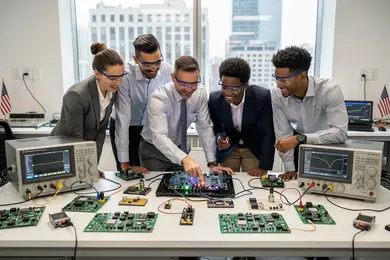
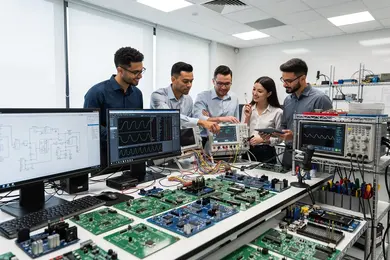
Lab delivery | Electrical engineering requires hands-on work with circuits, instrumentation, signals, and design tools. | Remote labs, mailed lab kits, simulation tools, or short campus residencies with clear schedules. |
Curriculum depth | Employers often look for applied skills in circuits, controls, embedded systems, power, communications, or electronics. | Required design projects, math sequence, programming, and electives aligned with your target role. |
Student support | Online engineering coursework is rigorous, especially for students balancing work or family responsibilities. | Engineering-specific tutoring, faculty office hours, advising, disability services, and career coaching. |
Completion structure | A flexible program can still become expensive if courses are offered infrequently or prerequisites delay progress. | Published course rotations, transfer maps, part-time plans, and clear capstone requirements. |
Career alignment | Electrical engineering is broad, and not every program prepares equally for every industry. | Industry projects, internship support, alumni outcomes, and electives tied to power, electronics, robotics, or communications. |
A strong program should make these details easy to verify before you apply. If a school cannot explain how labs work, which courses are offered online, or whether the program fits licensure-oriented goals, treat that as a red flag.
Online electrical engineering can be a good fit if you are self-directed, mathematically prepared, and need schedule flexibility. It may be a poor fit if you need frequent in-person coaching, want daily access to physical labs, or are choosing the degree mainly because it sounds high-paying without confirming your interest in calculus, physics, programming, and design work.
How can you verify that an online electrical engineering program is properly accredited?
Accreditation is the first checkpoint because it affects credit transfer, federal financial aid eligibility, graduate admissions, employer screening, and in some cases engineering licensure. For electrical engineering, you should understand two levels: institutional accreditation for the school and programmatic accreditation for the engineering degree.
ABET accreditation is especially important for many bachelor's-level engineering degrees in the United States. Some employers and state licensing boards may prefer or require an ABET-accredited engineering degree, although exact rules vary by state and credential.
Follow this verification sequence before relying on any claim made in an advertisement or admissions call.
- Confirm that the institution is accredited by an agency recognized by the U.S. Department of Education or the Council for Higher Education Accreditation.
- Search the ABET database for the exact program name, degree level, campus or online designation, and accreditation dates.
- Check whether the listed degree is "electrical engineering," "electrical and computer engineering," or "electrical engineering technology," because these are not always equivalent for career or licensure purposes.
- Ask the program whether online students earn the same transcript and diploma wording as campus students.
- If Professional Engineer licensure may matter later, review your state licensing board's education rules before enrolling.
A common mistake is assuming that a school's overall accreditation automatically means the engineering program is ABET-accredited. Another mistake is confusing engineering technology programs with engineering programs. Engineering technology degrees can be valuable and career-relevant, but they often emphasize application and implementation more than theoretical engineering design, and they may be treated differently by licensing boards or graduate engineering programs.
What are the main differences between online and campus electrical engineering degrees?
Online and campus electrical engineering degrees can cover similar academic content, but the learning experience is different. The biggest differences usually involve lab access, scheduling, peer interaction, faculty access, and how easily students can join research or project teams.
The table below summarizes the practical trade-offs so you can decide which format supports your learning style and career goals.
Area | Online electrical engineering degree | Campus electrical engineering degree |
Schedule | Often better for working adults, military students, caregivers, and students far from campus. | Usually better for students who can attend fixed classes and labs during the week. |
Labs | May use remote instrumentation, simulations, mailed lab kits, or short residencies. | Provides direct access to physical equipment, lab assistants, and campus facilities. |
Networking | Requires more intentional participation in online groups, office hours, projects, and career events. | Offers easier informal interaction with classmates, faculty, clubs, and recruiters. |
Research access | Possible but more limited unless the program has remote research teams or industry projects. | Often stronger for students seeking undergraduate research or faculty-led lab experience. |
Best fit | Students who need flexibility and can manage independent study. | Students who learn best through in-person instruction and frequent hands-on support. |
Online does not automatically mean easier, and campus does not automatically mean better. For example, a well-designed online engineering program with structured labs, responsive faculty, and ABET accreditation may be stronger than a poorly supported campus option.
If you are comparing engineering fields more broadly and affordability is a major factor, reviewing a cheapest online mechanical engineering degree guide can help you see how lab-heavy engineering disciplines handle cost, online delivery, and accreditation trade-offs.
What prerequisite education and admission requirements do online electrical engineering programs have?
Admission requirements depend on degree level. Online bachelor's programs usually focus on high school preparation, transfer coursework, and math readiness. Online master's programs usually expect an engineering, physics, computer science, or closely related technical background.
Before applying, compare requirements carefully because missing prerequisites can add semesters and costs. Most programs evaluate some combination of the following items.
- High school diploma, GED, or prior college coursework for bachelor's admission.
- Completed prerequisites in calculus, physics, chemistry, programming, or introductory circuits for transfer or upper-division entry.
- Minimum GPA requirements that may differ for general admission, engineering admission, and transfer admission.
- Official transcripts from every prior college attended.
- Placement testing or proof of readiness for college-level calculus and physics.
- For master's programs, a bachelor's degree in electrical engineering or a related technical field, sometimes with bridge courses for applicants from adjacent majors.
- Optional or required letters of recommendation, statement of purpose, resume, or GRE scores depending on the institution.
The most important practical question is not only whether you can be admitted, but whether you can start the engineering sequence immediately. A student admitted to the university but not yet ready for calculus-based physics may need additional preparatory terms before reaching core electrical engineering courses.
Transfer students should request a course-by-course evaluation before enrolling. Losing credits in calculus, physics, programming, or general education can erase the savings of a lower tuition rate.
How long do online electrical engineering degrees typically take, and what affects program length?
Program length depends on degree level, transfer credits, course load, prerequisite readiness, and whether courses are offered every term. Electrical engineering is sequential, so one missing prerequisite can delay multiple later courses.
The table below shows common completion timelines and the factors that can make them shorter or longer.
Program type | Typical full-time length | What can affect timing |
Associate-to-bachelor's transfer path | About 2 to 3 years after transfer, depending on accepted credits. | Calculus and physics alignment, articulation agreements, and upper-division course availability. |
Bachelor's degree from start | Usually about 4 years of full-time study. | Math placement, lab scheduling, co-ops, failed or repeated prerequisites, and part-time enrollment. |
Online master's degree | Often about 1.5 to 3 years. | Thesis versus non-thesis option, employer workload, graduate prerequisites, and course rotation. |
Graduate certificate | Often less than a full degree. | Number of credits, whether courses can later apply to a master's degree, and technical background. |
Part-time study can be a smart choice for working adults, but it can also increase the chance that courses expire, degree plans change, or life responsibilities interrupt progress. Ask whether the program has a maximum time-to-degree policy and whether required courses are offered at least once per year.
To avoid surprises, build a term-by-term plan before committing. Include prerequisites, lab requirements, summer options, capstone timing, and any campus visits. If the school cannot produce a clear plan for your specific transfer record and schedule, keep comparing.
What core courses and technical specializations are included in online electrical engineering curricula?
Electrical engineering curricula usually combine advanced math, physics, computing, circuit analysis, electronics, signals, systems, and design. The strongest online programs do more than stream lectures; they require students to solve design problems, use engineering software, complete labs, and communicate technical decisions.
The table below groups common course areas with the skills they typically build and the career directions they may support.
Course or specialization area | Skills developed | Possible career relevance |
Circuits and electronics | Analyzing analog and digital circuits, using test equipment, and designing electronic systems. | Electronics design, testing, product development, and hardware support. |
Signals and communications | Working with signal processing, frequency analysis, modulation, and data transmission. | Telecommunications, aerospace, defense, wireless systems, and audio or imaging systems. |
Power and energy systems | Studying generation, transmission, distribution, power electronics, and grid reliability. | Utilities, renewable energy, electric vehicles, microgrids, and industrial power systems. |
Controls and robotics | Modeling dynamic systems, feedback control, sensors, actuators, and automation. | Manufacturing, robotics, aerospace, autonomous systems, and process control. |
Embedded systems and computing | Programming microcontrollers, integrating hardware and software, and designing real-time systems. | IoT devices, automotive electronics, medical devices, consumer electronics, and defense systems. |
Capstone design | Applying engineering design, teamwork, documentation, testing, and project management. | Portfolio development and interview preparation for engineering roles. |
Current trends make specialization more important. Electrification, renewable power integration, semiconductor investment, automation, and AI-enabled design tools are changing what employers expect from new engineers. Students who can combine electrical engineering fundamentals with programming, simulation, data analysis, and systems thinking may be better prepared for technical interviews and project-based work.
Some students compare electrical engineering with adjacent STEM paths before choosing a major. If you are drawn to energy, earth systems, and environmental applications, a geologist degree online may be worth comparing with power systems or renewable energy tracks.
How should you evaluate faculty experience, teaching quality, and student support in online programs?
Faculty quality and support services can determine whether an online engineering program feels rigorous and manageable or isolating and confusing. Electrical engineering students often need timely help with problem sets, labs, debugging, and mathematical concepts, so responsiveness matters.
When comparing schools, ask questions that reveal how the program actually works for online students, not just how it is marketed.
- Do full-time engineering faculty teach the online courses, or are most courses assigned to temporary instructors?
- What industry, research, or professional engineering experience do faculty members bring to the classroom?
- How quickly do instructors typically respond to technical questions, grading concerns, and lab issues?
- Are office hours offered at times that work for students in different U.S. time zones?
- Is tutoring available for calculus, physics, circuits, programming, and engineering software?
- Does the program provide online access to library databases, writing help, career advising, internship support, and disability accommodations?
- Can prospective students sit in on an online class demo or speak with current students or alumni?
Teaching quality is not always visible in rankings. Look for evidence such as sample syllabi, instructor feedback practices, lab manuals, project examples, student retention indicators, and career services designed specifically for engineering majors.
A major red flag is a program that offers flexibility but little structure. Engineering students need clear weekly expectations, regular feedback, accessible technical support, and predictable course sequencing. Flexibility should not mean "figure it out alone."
What total costs, financial aid options, and hidden fees should you consider besides tuition?
Tuition is only one part of the cost of an online electrical engineering degree. Because engineering programs often require software, lab equipment, proctoring, and specialized course materials, students should calculate the full cost of attendance before comparing schools.
College Board's 2024 Trends in College Pricing reported average published tuition and fees of $11,610 for in-state students at public four-year institutions for 2024-2025. That figure is a useful benchmark, but online students may pay different rates and should also account for fees, technology, and living expenses.
Request a written cost estimate that includes every recurring and one-time charge. The most common cost categories include the following.
- Tuition by credit hour or term.
- Mandatory online learning, technology, distance education, engineering, or student service fees.
- Lab kits, circuit components, meters, breadboards, microcontrollers, or shipping costs.
- Engineering software, cloud computing access, simulation tools, or required computer hardware.
- Textbooks, access codes, exam proctoring, and graduation fees.
- Travel, lodging, meals, or unpaid time off if the program requires campus residencies or in-person labs.
- Extra semesters caused by transfer-credit loss, prerequisite gaps, or limited course availability.
Financial aid options may include federal grants, federal student loans, state aid, institutional scholarships, employer tuition assistance, military education benefits, and paid internships or co-ops. To access federal aid, the institution must be eligible, and students generally need to submit the FAFSA and meet enrollment and satisfactory academic progress rules.
The biggest hidden cost is time. A program with lower tuition can become more expensive if it accepts fewer transfer credits or offers required courses only once a year. Compare total completion cost, not just the advertised per-credit rate.
What electrical engineering careers, industries, and roles can online graduates pursue?
Graduates of reputable online electrical engineering programs can pursue many of the same roles as campus graduates, especially when the degree is properly accredited and the student can demonstrate strong projects, lab experience, and technical skills. Employers typically care about degree credibility, skill match, internships, portfolio quality, and interview performance.
The table below shows common career directions and how they connect to electrical engineering preparation.
Career area | Typical responsibilities | Industries that may hire |
Electrical design engineer | Designing, testing, and improving electrical systems, components, or subsystems. | Manufacturing, aerospace, construction, defense, transportation, and consumer products. |
Power systems engineer | Analyzing power distribution, grid reliability, protection systems, and energy integration. | Utilities, renewable energy, industrial facilities, government, and consulting firms. |
Electronics engineer | Developing circuits, printed circuit boards, sensors, and electronic devices. | Semiconductors, medical devices, automotive, robotics, telecommunications, and defense. |
Controls engineer | Designing feedback systems, automation logic, sensors, and process controls. | Manufacturing, energy, aerospace, robotics, logistics, and industrial automation. |
Embedded systems engineer | Integrating hardware and software for microcontroller-based or real-time systems. | IoT, automotive, consumer electronics, medical technology, and aerospace. |
Test or validation engineer | Creating test plans, collecting data, troubleshooting failures, and verifying performance. | Electronics manufacturing, automotive, aerospace, semiconductors, and product development. |
Students should also consider whether they want an engineering role, a technical sales role, a systems role, or a path toward management. Entry-level positions often emphasize fundamentals, documentation, teamwork, and problem-solving, while advancement may require deeper specialization, a master's degree, certifications, security clearance, or licensure.
If you are still comparing STEM and health-related online options, an online exercise science degree can offer a useful contrast because it leads toward very different roles, science applications, and graduate-school pathways than electrical engineering.
What salary ranges and job outlook can electrical engineers expect after earning an online degree?
Salary should be part of your decision, but it should not be treated as a guaranteed return. Pay varies by employer, location, industry, degree level, internships, specialization, clearance status, and experience. The value of an online degree depends heavily on whether the program helps you build marketable engineering skills.
The BLS reported a May 2024 median annual wage of $118,780 for electrical and electronics engineers. This median is useful because it reflects the broader labor market, but it does not predict what a new graduate, career changer, or master's graduate will earn in a specific role.
The table below summarizes salary and outlook context using national labor-market framing rather than school-specific promises.
Labor-market measure | Current U.S. context | How to use it when comparing programs |
Median pay | The May 2024 median annual wage for electrical and electronics engineers was $118,780. | Use it as a broad benchmark, then research entry-level pay in your state and target industry. |
Projected growth | BLS projects 9% employment growth for electrical and electronics engineers from 2023 to 2033. | Look for programs aligned with growth areas such as power, automation, electronics, communications, and embedded systems. |
ROI sensitivity | Debt, completion time, transfer credits, and opportunity cost can change the value of the degree. | Compare total cost to realistic local salary ranges, not national medians alone. |
Career mobility | Electrical engineering skills can transfer across energy, manufacturing, aerospace, electronics, and computing-adjacent roles. | Choose electives and projects that create a clear technical story for employers. |
To evaluate return on investment, estimate your total borrowing, likely time to completion, and realistic first-job options. A lower-cost program with poor support may not be the best value, while a more expensive program may be worthwhile if it offers accreditation, strong labs, employer-recognized coursework, and better completion support.
It can also help to compare ROI thinking across fields. For example, questions similar to is a masters in library science worth it show why students should weigh credential cost, job market demand, salary ceilings, and career fit before committing to any graduate or professional degree.
Other Things You Should Know About Electrical Engineering
Often, yes. Many programs require a reliable computer, high-speed internet, engineering software, and sometimes lab kits with components such as breadboards, meters, or microcontrollers. Ask for a complete equipment list before enrolling.
Yes, but you may need to be proactive. Online students should ask whether the school supports remote students with internship postings, employer events, resume reviews, and local co-op arrangements. Work experience can be especially valuable for engineering job searches.
A strong online electrical engineering degree should include at least 6 to 12 lab credit hours in circuits, electronics, and engineering physics. Look for programs that use remote labs, simulation software, or short campus residencies, and verify that labs satisfy the curriculum’s core ABET requirements.
References
- Find Programs - ABET https://www.abet.org/accreditation/find-programs/
- Best Online Electrical Engineering Degrees 2025 https://www.onlineu.com/degrees/electrical-engineering
- How Long Does It Take to Become an Electrical Engineer? https://bestelectriczone.com/how-long-does-it-take-to-become-an-electrical-engineer/
- Is Your Online Degree Legitimate? How to Verify Private University Approval https://matchtocollege.com/blog/verify-private-university-online-degree-approval
- Electrical Engineering Degree https://universitycompare.com/guides/subject/electrical-engineering
- Electrical Engineering Salaries: Knowing Fact from Myth https://floridapoly.edu/news/electrical-engineering-salaries-knowing-fact-from-myth/
- Hidden College Costs https://www.savingforcollege.com/article/hidden-college-costs