2027 Best Online Electrical Engineering Degrees for Future Electrical Engineers

Co-Founder and Chief Data Scientist
Choosing an online electrical engineering degree is a high-stakes decision because accreditation, labs, licensure, and cost can affect your career options. The U.S. Bureau of Labor Statistics projects 9% employment growth for electrical and electronics engineers from 2023 to 2033, which is faster than the average for all occupations.
This guide is for future engineers comparing online bachelor's and master's options. You will learn how to judge program quality, estimate total cost, plan for licensure, and connect the degree to realistic job and salary outcomes.
Key Things You Should Know
- The best online electrical engineering degrees are usually regionally accredited, ABET-accredited when licensure is a goal, and transparent about labs, proctoring, transfer credits, faculty credentials, and career outcomes.
- Electrical and electronics engineers had a 2024 median pay of $118,780, according to the U.S. Bureau of Labor Statistics, but outcomes vary by role, location, industry, experience, and whether the job requires professional licensure.
- Online EE bachelor's programs commonly take about 4 years full time, while online master's programs often take 1.5 to 3 years; total cost depends heavily on residency, transfer credit, public vs. private pricing, fees, and required lab or software expenses.
What makes an online electrical engineering degree reputable?
A reputable online electrical engineering degree is not just a program with recorded lectures. It should teach the same core engineering principles as an on-campus program, provide credible lab experiences, and prepare students for the level of responsibility employers expect from electrical engineers.
For students who may later seek licensure, program quality is especially important because state boards often review accreditation and education history.
The best way to compare programs is to separate reputation signals from marketing language. A school can advertise flexibility, affordability, or innovation, but future engineers should look for evidence that the program can support rigorous technical training:
| Quality factor | Why it matters | What to verify before enrolling |
| Institutional accreditation | Confirms that the college or university has been reviewed by a recognized accreditor. | Check that the institution is accredited by an accreditor recognized by the U.S. Department of Education or CHEA. |
| ABET program accreditation | Often matters for engineering licensure, graduate study, and employer screening. | Confirm the exact degree title and delivery format in ABET's public program search. |
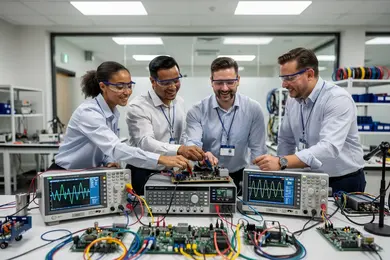
| Hands-on lab model | Electrical engineering requires circuit analysis, instrumentation, simulation, testing, and design experience. | Ask whether labs are remote, kit-based, simulation-based, on-campus intensives, or completed through approved local facilities. |
| Faculty and advising support | Engineering coursework is cumulative, so students need timely academic and technical help. | Review faculty qualifications, office-hour access, tutoring, cohort support, and advisor availability. |
| Career and licensure alignment | The same degree may prepare students differently for power systems, electronics, embedded systems, or graduate study. | Ask for career placement context, FE exam preparation, employer partnerships, and alumni pathways. |
One common mistake is choosing the cheapest or fastest program without checking whether it supports your intended outcome. If your goal is power engineering, control systems, semiconductor design, robotics, or a Professional Engineer pathway, the degree's technical depth and accreditation status usually matter more than convenience alone.
Is electrical engineering accredited online?
Yes, electrical engineering can be accredited online, but students need to verify the exact program rather than assuming accreditation applies to every degree at a school. In the U.S., institutional accreditation applies to the college or university, while programmatic accreditation for engineering is most commonly handled by ABET.
ABET evaluates outcomes, curriculum, faculty, continuous improvement, facilities, and student preparation, and online programs can be reviewed under the same general expectations as campus-based programs.
This distinction matters because accreditation can affect transfer credit, graduate admissions, employer recognition, financial aid eligibility, and engineering licensure. A school may be legitimate at the institutional level but still offer an electrical engineering program that is not ABET-accredited.
Before you apply, use this sequence to check accreditation carefully:
- Search the school's official accreditation page and confirm the name of the institutional accreditor.
- Use ABET's public program search to look up the exact degree name, campus or delivery location, and accreditation status.
- Ask admissions whether online students earn the same degree title as campus students and whether the transcript identifies the format.
- If you plan to pursue licensure, contact your state engineering board and ask how it evaluates online, ABET-accredited, non-ABET, or international engineering coursework.
- Save written documentation from the school and state board before making a deposit.
A useful red flag is vague language such as "ABET-aligned," "based on ABET standards," or "preparing for accreditation." Those phrases do not mean the program is currently ABET-accredited. They may still describe a serious program, but they should not be treated as equivalent to an accredited listing.
Can you become a licensed electrical engineer online?
You can complete some or all of the education needed for electrical engineering licensure online, but becoming a licensed Professional Engineer is not automatic. Licensure is controlled by state engineering boards, and requirements usually include an approved engineering degree, passing the Fundamentals of Engineering exam, supervised engineering experience, and passing the Principles and Practice of Engineering exam. The details vary by state.
Licensure is most relevant for electrical engineers who sign and seal engineering documents, work in public utilities or infrastructure, consult for the public, or move into senior responsibility for systems that affect safety. It may be less central in some electronics, software-adjacent, product development, or private-sector design roles, though it can still strengthen credibility.
The typical licensure pathway looks like this, but students should always confirm state-specific rules:
- Earn an engineering degree that your state board recognizes, ideally an ABET-accredited electrical engineering degree if licensure is a possibility.
- Take the FE exam, often near graduation or shortly after completing the degree.
- Work under appropriate engineering supervision and document qualifying experience.
- Apply to your state board once you meet education and experience requirements.
- Pass the PE Electrical and Computer exam in the discipline area that matches your work, such as power.
The biggest mistake is assuming that "online" is the issue. In most cases, the more important questions are whether the program is properly accredited, whether your state board accepts it, and whether your work experience will qualify. If you are choosing between online and campus programs, licensure planning should happen before enrollment rather than after graduation.
What courses are in an online electrical engineering degree?
An online electrical engineering degree combines advanced math, physics, computing, circuits, electronics, systems, and design. The online format may change how lectures, labs, exams, and group projects are delivered, but the core academic expectations should remain rigorous. Students should expect sequential coursework, meaning weak preparation in calculus or physics can make later classes much harder.
The following table summarizes common course areas and how they support real engineering work. Course names vary by school, but reputable programs should cover most of these foundations at the bachelor's level, while master's programs usually go deeper into selected specialties:
| Course area | What students learn | Why it matters professionally |
| Calculus and differential equations | Mathematical modeling, rates of change, systems behavior, and engineering analysis. | Supports circuit theory, signal processing, controls, electromagnetics, and power systems. |
| Physics for engineers | Mechanics, electricity, magnetism, and wave behavior. | Builds the scientific foundation for electrical devices, fields, and energy systems. |
| Circuit analysis | Voltage, current, resistance, network theorems, transient response, and AC analysis. | Forms the base for electronics, power, instrumentation, and embedded hardware work. |
| Digital logic and embedded systems | Boolean logic, microcontrollers, computer architecture, and hardware-software interaction. | Supports careers in controls, robotics, IoT, consumer electronics, and automation. |
| Signals and systems | Frequency response, filtering, transforms, and system modeling. | Applies to communications, imaging, radar, audio, controls, and data acquisition. |
| Electronics and semiconductor devices | Diodes, transistors, amplifiers, integrated circuits, and device behavior. | Prepares students for electronics design, testing, manufacturing, and hardware development. |
| Power systems | Generation, transmission, distribution, machines, and grid operation. | Important for utilities, renewable energy, electrification, and infrastructure roles. |
| Senior design or capstone | Team-based design, testing, documentation, and presentation. | Shows whether students can integrate theory into a working engineering solution. |
Online students should pay special attention to lab delivery. A strong program should explain whether students use mailed lab kits, remote-controlled lab equipment, simulation tools, local partner sites, or short campus residencies. Simulation is useful, but it should not replace all opportunities to measure, troubleshoot, and validate real systems when the learning outcome requires hands-on work.
What admissions requirements do online EE programs require?
Admissions requirements vary by degree level. Online bachelor's programs usually focus on high school preparation, transfer credits, math readiness, and prerequisite science courses. Online master's programs usually expect an ABET-accredited or closely related engineering bachelor's degree, though some schools admit students from physics, computer engineering, or other technical fields after prerequisite review.
Because electrical engineering is math-intensive, admissions standards often tell you whether the program is designed for beginners, transfer students, working technicians, or experienced engineers.
The table below helps you compare common requirements by program type:
| Program type | Common admissions requirements | Best fit |
| Online bachelor's in electrical engineering | High school diploma or equivalent, transcripts, math placement, calculus readiness, physics background, and sometimes transfer coursework. | First-time students, community college transfers, military students, and technicians seeking an engineering credential. |
| Online bachelor's completion program | Prior college credit, completed lower-division math and science courses, minimum GPA, and official transcripts. | Students who already completed general education, calculus, physics, or engineering prerequisites elsewhere. |
| Online master's in electrical engineering | Bachelor's degree in electrical engineering or related field, transcripts, minimum GPA, prerequisite review, resume, statement of purpose, and sometimes recommendation letters. | Engineers who want specialization in power, communications, controls, electronics, photonics, or embedded systems. |
| Bridge or non-engineering pathway | Technical bachelor's degree plus required leveling courses in circuits, signals, math, programming, or physics. | Applicants from adjacent STEM fields who need formal EE preparation before graduate-level work. |
Before applying, ask admissions advisors direct questions that reveal whether the program fits your background and goals:
- Which calculus, physics, programming, and circuits prerequisites must be completed before upper-division EE courses?
- How many transfer credits are accepted, and will engineering credits expire after a certain number of years?
- Are lab kits, software licenses, proctored exams, or campus visits required?
- Can part-time students access the same course sequence, advising, and technical support as full-time students?
- Does the program prepare students for the FE exam or a specific electrical engineering specialization?
Avoid applying only to programs with the lowest stated admissions barrier. Less selective admissions can be helpful for access, but it may also mean you need strong self-discipline, tutoring, and prerequisite planning to succeed in demanding technical courses.
How long does an online electrical engineering degree take?
The time required depends on degree level, transfer credits, course load, prerequisite readiness, and whether the program offers courses year-round. A traditional online bachelor's degree in electrical engineering commonly takes about four years of full-time study.
Students entering with substantial transfer credit may finish faster, while part-time working students may need five to six years. Online master's programs often take about 1.5 to 3 years, depending on credit requirements and whether students choose a thesis, project, or coursework-only path.
Timeline is not just a convenience issue. Electrical engineering courses are sequenced, so a missed prerequisite can delay graduation by a full term. This is why accelerated programs are less common in EE than in some other online fields.
Students comparing speed-focused online degrees in other areas, such as an accelerated exercise science degree online, should recognize that engineering acceleration is constrained by labs, math prerequisites, and design-course sequencing.
| Student situation | Typical timeline | Main trade-off |
| First-time full-time bachelor's student | About 4 years | Fastest traditional route, but requires sustained math and science workload. |
| Transfer student with completed prerequisites | About 2 to 3 years | Can save time, but only if prior credits match the engineering curriculum. |
| Working adult bachelor's student | About 5 to 6 years | More manageable weekly workload, but longer time before career transition. |
| Full-time online master's student | About 1.5 to 2 years | Quicker completion, but harder to balance with full-time engineering work. |
| Part-time online master's student | About 2 to 3 years | Better for employed engineers, but delays credential completion. |
To avoid timeline surprises, map the full course sequence before enrolling. Confirm which courses are offered every term, which are offered only once a year, and whether summer terms include required EE courses or only general education options.
How much does an online electrical engineering degree cost?
The cost of an online electrical engineering degree varies widely. Tuition is the biggest expense, but students should also budget for fees, textbooks, lab kits, software, proctoring, travel for any required residencies, and extra terms if prerequisite courses are needed.
College Board's 2024 pricing data placed average published tuition and fees at $11,610 for in-state students at public four-year institutions and $43,350 at private nonprofit four-year institutions for 2024-25, which shows why residency status and institution type can strongly affect total cost.
For electrical engineering specifically, total cost should be evaluated against accreditation, transfer acceptance, lab access, and career alignment. A lower tuition rate is not always the better deal if the program delays graduation, lacks required accreditation for your goal, or requires expensive travel that is not obvious at first glance.
- Public in-state online tuition is often the most affordable route when the program accepts your residency classification and offers the EE courses you need on schedule.
- Public out-of-state tuition can be competitive if the university uses a special online tuition rate, but students should verify whether engineering differential fees apply.
- Private nonprofit programs may cost more, but some offer strong advising, employer recognition, scholarships, or flexible pacing that can improve fit for working adults.
- Master's programs may be less expensive in total than a bachelor's degree because they require fewer credits, but they usually require a prior engineering or technical bachelor's degree.
Students comparing engineering graduate costs across disciplines may also want to review options such as the cheapest online master's mechanical engineering programs to understand how tuition models differ by engineering field and institution.
Use these steps to estimate your real cost before enrolling:
- Multiply the tuition rate by the exact number of required credits after transfer evaluation.
- Add mandatory online, technology, engineering, lab, graduation, and proctoring fees.
- Ask for a list of required software, hardware, lab kits, calculators, and testing tools.
- Confirm whether any campus intensives, orientation sessions, or exams require travel.
- Compare net price after scholarships, employer tuition assistance, military benefits, grants, and federal aid.
- Estimate the cost of extending enrollment if you study part time or repeat a prerequisite course.
A practical affordability rule is to compare total cost, not advertised tuition. The best-value program is the one that provides the necessary accreditation, technical training, flexibility, and career fit at a cost you can manage without overborrowing.
What jobs can you get with an electrical engineering degree?
An electrical engineering degree can lead to roles in power, electronics, telecommunications, automation, aerospace, defense, transportation, medical devices, semiconductors, energy, and computing-adjacent hardware fields. The degree is versatile because it teaches students to design, analyze, test, and improve electrical and electronic systems.
The table below connects common EE-related jobs with typical responsibilities. Job titles vary by employer, and some roles may require a master's degree, security clearance, industry experience, or licensure:
| Job title | Typical responsibilities | Where the role commonly appears |
| Electrical engineer | Designs, tests, and improves electrical systems, equipment, and components. | Utilities, manufacturing, consulting, transportation, construction, and energy. |
| Electronics engineer | Develops and tests electronic circuits, devices, sensors, and communication equipment. | Consumer electronics, defense, aerospace, medical devices, and telecommunications. |
| Power systems engineer | Works on generation, transmission, distribution, grid reliability, and protection systems. | Utilities, renewable energy companies, infrastructure firms, and industrial facilities. |
| Controls engineer | Designs automation and control systems for machines, processes, and robotics. | Manufacturing, robotics, automotive, aerospace, and process industries. |
| Embedded systems engineer | Develops hardware-software systems for devices, sensors, controllers, and connected products. | IoT, automotive, robotics, consumer devices, medical technology, and industrial automation. |
| Test engineer | Builds test plans, validates performance, troubleshoots failures, and documents results. | Electronics manufacturing, semiconductors, aerospace, defense, and product development. |
| Field applications engineer | Helps customers implement technical products and solve design or integration problems. | Semiconductor firms, equipment vendors, electronics suppliers, and technical sales teams. |
Current trends are expanding the skill set employers value. Electrification, renewable energy integration, grid modernization, advanced manufacturing, semiconductor investment, robotics, and AI-enabled design tools are increasing demand for engineers who can combine fundamentals with software, data, and systems thinking.
Electrical engineers do not need to become data scientists, but familiarity with programming, modeling, signal data, and automation can make a candidate more competitive. Students interested in deeper analytics careers can compare the EE path with advanced options such as an online PhD data science program, especially if their long-term goal is research, AI systems, or computational modeling.
Electrical engineering is a strong fit for students who enjoy math, physics, troubleshooting, design constraints, and technical problem-solving. It may not be the best fit for students who want minimal math, a purely self-paced degree, or a career path with little need for continuous technical learning.
What salary can electrical engineering graduates expect?
Electrical engineering can offer strong earning potential, but salary depends on specialization, region, industry, degree level, experience, and responsibility. The U.S. Bureau of Labor Statistics reported a 2024 median annual wage of $118,780 for electrical and electronics engineers. Readers should treat this as a national midpoint for a broad occupation group, not as a starting salary or a guaranteed outcome for every graduate.
The salary picture becomes clearer when you compare career stages and work settings. Entry-level roles often focus on testing, documentation, design support, or troubleshooting. Mid-career engineers may lead projects, own subsystems, mentor junior engineers, or interface with clients.
Senior engineers and engineering managers may take responsibility for budgets, safety-critical decisions, architecture, compliance, and business strategy.
| Career stage | Typical focus | Salary factors that matter most |
| Entry level | Testing, CAD or simulation support, design documentation, lab work, and supervised engineering tasks. | Internships, ABET degree status, location, technical portfolio, and industry. |
| Early career | Independent design assignments, troubleshooting, customer requirements, and subsystem ownership. | Specialization, FE exam progress, software skills, and performance history. |
| Mid-career | Project leadership, system design, vendor coordination, and mentoring. | PE license where relevant, advanced degree, domain expertise, and client-facing experience. |
| Senior or lead engineer | Architecture, technical authority, risk review, compliance, and strategic planning. | Leadership record, specialized expertise, licensure, patents, publications, or high-impact project experience. |
To evaluate return on investment, compare the total degree cost with your likely career path, not just the national median. A student using an online EE degree to move from technician to engineer may evaluate ROI differently from a working engineer seeking a master's degree for promotion, specialization, or employer-supported advancement.
What certifications help electrical engineers advance?
Certifications can help electrical engineers advance, but they are not substitutes for a strong degree, relevant experience, or licensure when licensure is required. The right credential depends on your target role. A power engineer, controls engineer, embedded systems engineer, and project manager may all benefit from different credentials.
The table below summarizes credentials that may support advancement. Requirements, exam formats, and employer value can change, so candidates should verify current rules with the credentialing organization before paying fees:
| Credential | Best for | How it can help |
| Engineer in Training or Engineering Intern status | Graduates who pass the FE exam and plan to pursue PE licensure. | Signals progress toward professional engineering licensure. |
| Professional Engineer license | Engineers in power, utilities, consulting, infrastructure, and public-facing engineering services. | May be required to sign and seal engineering work and can support senior responsibility. |
| Project Management Professional | Engineers moving into project leadership or program coordination. | Shows formal project management knowledge for scope, schedule, cost, and stakeholder work. |
| Certified Energy Manager | Engineers working in energy efficiency, facilities, utilities, and sustainability. | Supports roles involving energy audits, optimization, and energy management planning. |
| Automation or controls vendor certifications | Controls, manufacturing, robotics, and industrial automation engineers. | Demonstrates hands-on familiarity with specific platforms used by employers. |
| IPC electronics credentials | Electronics manufacturing, PCB design, quality, and assembly roles. | Can support work involving electronics standards, inspection, and production quality. |
Choose certifications based on job postings and supervisor feedback, not simply on name recognition. If several postings for your target role mention power systems studies, PLC platforms, PCB design tools, safety standards, or project management, those clues can guide which credential or training is worth pursuing.
Some students comparing credential-based professional fields also explore other online graduate routes, such as an online library science degree, but engineering credentials tend to be more tightly connected to technical tools, licensure, safety, and industry-specific systems.
Other Things You Should Know About Electrical Engineering
Many do, but the format varies. Some programs use mailed lab kits, remote access to equipment, simulation software, local proctoring sites, or short campus residencies. Ask for examples of required labs before enrolling.
In 2027, Embry-Riddle Aeronautical University's online electrical engineering program stands out for its robust virtual lab component, offering state-of-the-art simulation tools and remote hardware kits that ensure students gain practical, hands-on experience despite the online setting.
Students commonly need a reliable laptop that can run engineering software, simulation tools, programming environments, and video conferencing. Requirements vary by school, so use the program's official hardware list rather than buying equipment based on general advice.
Many reputable online electrical engineering bachelor’s programs are ABET-accredited by the Engineering Accreditation Commission. ABET accreditation matters for licensure, employer review, and graduate school admission. Students should verify the exact program on the ABET directory before enrolling, because institutional accreditation alone is not enough.
References
- What is the Average Salary of an Electrical Engineer? - Samuel Frank Recruitment https://samuelfrank.com/average-salary-of-electrical-engineers/
- Free Online Electrical Engineering Courses | Alison https://alison.com/tag/electrical-engineering
- What can you do with an electrical engineering degree? - People of Pacific https://www.pacific.edu/blog/2025/01/24/what-can-you-do-with-an-electrical-engineering-degree/
- Online Electrical Engineering Degrees https://www.affordablecollegesonline.org/degrees/engineering-programs/electrical-engineering/
- Why Electrical Engineering Certification is Important for Your Career https://www.koenig-solutions.com/blog/electrical-engineering-certification