2027 Best CSWE Accredited Online MSW Programs

Co-Founder and Chief Data Scientist
Choosing an online Master of Social Work program is not just a question of convenience. It is a decision about licensure eligibility, field placement quality, total debt, career direction, and whether the program can realistically fit around your job, family, and state requirements. An online MSW can be a strong path for students who want advanced social work roles without relocating, but it is not automatically the right choice for everyone. This guide explains what an online MSW includes, how it compares with campus-based study, what it may cost, which careers it can support, and how to evaluate programs before you apply.
Quick Answer: Is an Online MSW Worth It?
An online MSW can be worth it if the program is accredited by the Council on Social Work Education, meets your state’s licensure requirements, provides supervised field placements in your area, and leads to the type of social work role you want. It is especially practical for working adults, career changers, and students who do not live near a campus-based MSW program. However, students should compare total program cost, placement support, licensure outcomes, and specialization options before enrolling.
What are the benefits of getting an online MSW degree?
- Online MSW programs can make graduate study more manageable for students who need to complete coursework from home or outside traditional campus schedules.
- Many online programs attract students from different regions and may offer more specialization choices than a nearby local campus.
- The average annual salary of a social worker is around $71,534 (Salary.com, 2023), though earnings vary by role, license level, employer, location, and experience.
What can I expect from an Online MSW degree?
An online MSW is a graduate-level professional degree designed to prepare students for advanced social work practice. The curriculum usually combines online coursework, live or recorded class sessions, research and policy training, ethics, human behavior, and supervised field education. Although classes may be online, the field placement component is typically completed in person at an approved agency, school, hospital, clinic, or community organization.
Graduates may pursue roles in healthcare, mental health, child welfare, schools, substance abuse treatment, nonprofit management, policy advocacy, and community-based services. Some positions are available with a bachelor’s degree in social work, but many clinical, supervisory, and advanced practice roles require an MSW and, in many cases, state licensure.
| What to evaluate | Why it matters | What to ask before applying |
| CSWE accreditation | Most states use CSWE-accredited education as a core licensure requirement. | Is the online MSW currently accredited by the Council on Social Work Education? |
| Field placement support | Online coursework is only one part of the degree; supervised practice is essential. | Does the school find placements for students, or must students secure their own sites? |
| State licensure alignment | Licensure rules differ by state and by level of practice. | Does this program meet the educational requirements in the state where I plan to work? |
| Total cost | Tuition, fees, travel, technology, books, and unpaid field hours can affect affordability. | What is the full estimated cost from enrollment through graduation? |
| Specialization fit | Your concentration can influence field placements, electives, and early career options. | Does the program support my intended area, such as clinical, school, healthcare, or policy practice? |
Where can I work with an MSW Degree?
An MSW can qualify graduates for work across clinical, community, healthcare, education, government, nonprofit, and private-sector settings. A BSW may be enough for some entry-level roles, but clinical social work, therapy-related positions, and many leadership jobs commonly require graduate training and state authorization.
Common work settings for MSW graduates include the following:
- Direct practice environments:
- Child protective services agencies
- Mental health and substance abuse treatment programs
- School-based settings
- Long-term care facilities
- Home-based service programs
- Hospitals and other healthcare organizations
- Direct practice job titles:
- Mental health case manager
- Child welfare specialist
- Substance abuse counselor
- Social worker
- Policy, advocacy, and systems-focused roles:
- Policy and advocacy: Social workers in this area may work for government agencies, nonprofit organizations, or advocacy groups to improve laws, funding systems, and public services.
- Administration and supervision: Experienced MSW graduates may oversee programs, supervise practitioners, manage budgets, or lead service delivery teams.
- Additional roles commonly connected to MSW training:
- Behavioral healthcare manager
- Client care coordinator
- Clinical case manager
- Clinical social work therapist
- Forensic social worker
- Hospice social worker
- Medical social worker
- Program coordinator
- School social worker
How much can I make with an online MSW degree?
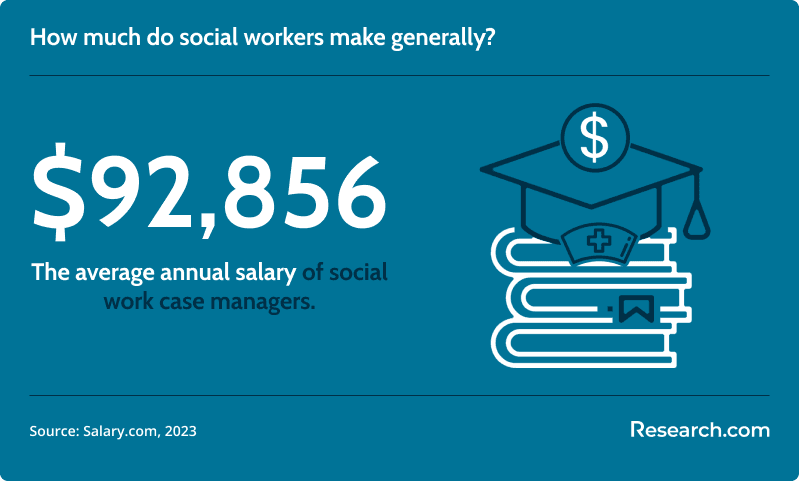
Salary outcomes depend on licensure, employer type, location, years of experience, specialization, and whether the role is clinical, administrative, medical, school-based, or policy-focused. Some of the highest-paying MSW jobs include clinical social worker, child protective services worker, and social work case manager, where salaries range from $79,437 to $92,856. These figures should be viewed as reference points rather than guaranteed earnings.
- 2027 Online MSW Programs and Universities
- How long does it take to complete an online MSW program?
- How does an online MSW degree compare to an on-campus program?
- What is the average cost of an online MSW program?
- What are the financial aid options for students enrolling in an online MSW program?
- What are the prerequisites for enrolling in an online MSW program?
- What courses are typically in an online MSW program?
- How do you choose the best online MSW program?
- What career paths are available for graduates of online MSW programs?
- What is the job market for graduates with an online MSW degree?
- What is the importance of experience in online MSW programs?
- How can an online MSW lead to a career in forensic social work?
- What are the key considerations for affordability in online MSW programs?
- Is social work a good major to pursue a fulfilling career?
- What unique career opportunities can I pursue with an online MSW degree?
- What steps should I follow to meet state-specific licensure requirements?
- Can online accelerated MSW programs fast-track my career progression?
- Do employers value an online MSW degree?
- Should I consider advancing to a doctorate after my online MSW?
- What is the return on investment for an online MSW program?
- What professional certifications or licensures are required after earning an MSW degree?
2027 List of Programs/Universities
The following program list is intended to help prospective students compare online MSW options by accreditation, credits, duration, tuition, and concentration structure. Use the list as a starting point, not as the only basis for enrollment. Before applying, confirm current tuition, admission requirements, field placement policies, and whether the program satisfies licensing rules in your state.
How do we rank schools?
Research.com evaluates schools using a methodology designed to support transparency and comparability. The analytics team reviews institutional and program information from recognized education databases and public sources so students can compare programs with clearer context. Data sources used in the process include:
- Integrated Postsecondary Education Data System (IPEDS database)
- Peterson’s database, including their Distance Learning Licensed Data Set
- College Scorecard database
- National Center for Education Statistics
1. University of West Florida
The University of West Florida offers an online Master of Social Work with a clinical emphasis. The curriculum combines advanced practice coursework with clinical internships, and students with a BSW may qualify for a shorter advanced standing route. Students without prior social work training complete foundational study first. The program is accredited and is designed to prepare graduates for clinical social work licensure in Florida.
- Program Length: 2 years
- Tracks/concentrations: Social Work
- Cost: Florida in-state tuition per credit hour: $384.60; full out-of-state tuition per credit hour: $1,044.24; 90% out-of-state tuition waived, per credit hour: $478.83
- Required Credits to Graduate: Traditional Track - 60 hours; Advanced Standing Track - 30 hours
- Accreditation: Council on Social Work Education
2. University of Houston
The University of Houston Graduate College of Social Work offers an online MSW for students who can manage independent graduate study while participating in a cohort model. The program includes online coursework and supervised practicum training. Applicants must reside in the US, except for those located on military bases, and should confirm state authorization before enrolling.
- Program Length: 3 years for full program; 2 years for advanced standing
- Tracks/concentrations: Social Work - Clinical Practice, Macro Practice
- Tuition Cost: $474.76 tuition and consolidated fees per semester
- Required Credits to Graduate: 51 + 900 clock hours of practicum
- Accreditation: Council on Social Work Education
3. California State University, Fresno
California State University, Fresno prepares MSW students to address complex social challenges affecting diverse and at-risk populations. The program emphasizes social justice, culturally responsive practice, and service to communities in the Central Valley, across California, and beyond. Students build skills in counseling, advocacy, collaboration, and service delivery for populations facing poverty, homelessness, abuse, mental health needs, and disability-related barriers.
- Program Length: 2 years fulltime; 4 years part-time
- Tracks/concentrations: Child Welfare (CW, also Title IV-E), School Social Work (SSW, PPS program), and Behavioural Health & Integrated Practice (BHIP)
- Tuition Cost: $3,588.00 per year; Non-Resident Tuition Fee at $396.00 per unit additional
- Required Credits to Graduate: 60
- Accreditation: Council on Social Work Education
4. University of Oklahoma
The University of Oklahoma offers an MSW built around integrative practice and preparation for social work roles in schools, hospitals, mental health clinics, and related settings. Students study advanced practice methods while examining social justice, oppression, and the needs of marginalized groups.
- Program Length: 2 years
- Tracks/concentrations: Social Work
- Cost per Credit: $625
- Required Credits to Graduate: 60
- Accreditation: Council on Social Work Education
5. University of Illinois at Urbana-Champaign
The online MSW at the University of Illinois at Urbana-Champaign includes study in human behavior, practice methods, policy, research, and field education. Its agency network supports placement opportunities in areas such as child welfare, corrections, healthcare, mental health, and substance abuse services.
- Program Length: 2 years
- Tracks/concentrations: Social Work
- Cost per Credit: $603
- Required Credits to Graduate: 64
- Accreditation: Council on Social Work Education
6. University of Iowa
The University of Iowa online MSW offers structured graduate training in human behavior, social work practice, social policy, research, and field education. Students follow a defined course sequence while accessing the academic resources of a major research university.
- Program Length: 2 years
- Tracks/concentrations: Social Work
- Cost per Credit: $626
- Required Credits to Graduate: 54
- Accreditation: Council on Social Work Education
7. Troy University
Troy University offers an online MSW with a flexible format and two specialization areas: Direct Practice with an emphasis on military families, and Organizational Leadership and Management with an international social work focus. The military family emphasis may appeal to students who want to serve active-duty personnel, veterans, and their families.
- Program Length: 2 years
- Tracks/concentrations: Social Work
- Cost per Credit: $475
- Required Credits to Graduate: 60
- Accreditation: Council on Social Work Education
8. Stephen F. Austin State University
Stephen F. Austin State University offers an MSW centered on advanced generalist practice with systems affected by rural and frontier communities. Students study human behavior, social work practice, policy, research, and field education with attention to the needs of underserved areas.
- Program Length: 2 years
- Tracks/concentrations: Social Work
- Cost per Credit: $463
- Required Credits to Graduate: 60
- Accreditation: Council on Social Work Education
9. Simmons University
Simmons University offers an MSW with preparation in clinical social work, scholarship, and social action. Students receive coordinated academic guidance, and the foundation curriculum emphasizes diversity, oppression, and lifespan development.
- Program Length: 2 years
- Tracks/concentrations: Social Work
- Cost per Credit: $1,148
- Required Credits to Graduate: 65
- Accreditation: Council on Social Work Education
10. St. Louis University
Saint Louis University offers an MSW designed for students who want to work with vulnerable populations. The curriculum covers human behavior, practice skills, social justice, and the ways oppression affects disadvantaged communities.
- Program Length: 2 years
- Tracks/concentrations: Social Work
- Cost per Credit: $480
- Required Credits to Graduate: 48
- Accreditation: Council on Social Work Education
How to use this online MSW program list
Do not choose an MSW program based only on name recognition or tuition. Start by confirming CSWE accreditation, then compare the degree structure against your licensure goals. If you want clinical practice, ask how the program supports clinical supervision, field placement quality, and preparation for post-graduate licensure. If you want policy, administration, school social work, or community leadership, review concentration courses and placement partners carefully.
Students should also contact admissions and field education offices before applying. A strong online MSW program should be able to explain where students complete practicum hours, how online students interact with faculty, whether placements are available near your location, and what happens if a placement falls through.
Key Findings
- Online MSW programs at private institutions can be substantially more expensive, averaging $26,621 per year compared with $12,394 at public universities. Total program costs can range from under $40,000 to over $89,000.
- Entry-level licensed social workers and certified school social workers can expect median annual salaries of around $53,000 to $54,000.
- Community and social service occupations report a median salary of $58,910.
- Medical social workers can earn a median salary of $62,340, while mental health clinicians can expect $66,157.
- Social workers and medical social workers with a master's degree (MSW) have median salaries above $71,000, with higher earning potential for MSWs in home care settings.
- Licensed clinical social workers (LCSWs) and social science researchers can expect median annual salaries exceeding $80,000.
- Experienced social work case managers can expect a median annual salary exceeding $90,000.
How long does it take to complete an online MSW program?
Many online MSW programs take about two years for full-time students, typically combining coursework and field education over four semesters. Some accelerated options can be completed in 16 months. Students who already hold a Bachelor of Social Work may qualify for advanced standing, which can reduce completion time to as little as 12 months.
| Student pathway | Typical completion time | Best fit |
| Traditional online MSW | Often about 2 years full time | Students with a bachelor’s degree in another field or without a BSW |
| Advanced standing MSW | As little as 12 months | Students with a qualifying BSW from an accredited program |
| Accelerated MSW | Some options can be completed in 16 months | Students who can handle a heavier academic and fieldwork pace |
| Part-time MSW | Varies by program | Working adults or students balancing family, employment, and placement hours |
How does an online MSW degree compare to an on-campus program?
Online and campus-based MSW programs can lead to similar outcomes when they are properly accredited and meet state licensing standards. The main differences are delivery format, student experience, scheduling, access to campus resources, and how field placements are coordinated. Online programs are often better for students who need flexibility, while campus programs may be better for those who prefer in-person discussion, local networking, and more direct access to faculty and student services.
A study of adult part-time students found that many had a positive view of online lectures, with most adapting quickly and reporting that the benefits outweighed the challenges of online learning (Fiorini, Borg, and Debono, 2022).
| Factor | Online MSW | On-campus MSW |
| Schedule | Often more flexible, especially with asynchronous coursework | Usually requires regular campus attendance |
| Fieldwork | Completed in person, often near the student’s location | Completed in person, often through local campus partners |
| Networking | Requires intentional online engagement with faculty, peers, and agencies | May offer more frequent face-to-face networking |
| Best for | Working adults, remote learners, and students unable to relocate | Students who prefer structured in-person learning and campus resources |
What is the average cost of an online MSW program?
The cost of an online Master’s Degree in Social Work can sometimes be lower than a campus-based option, but this depends heavily on institution type, residency status, fees, and credit requirements. For example, at the University of West Florida, an online MSW program can cost $450 per credit hour.
- Public universities offering online MSW programs typically charge around $12,394 per year in tuition and fees.
- Online MSW programs at non-profit private graduate schools average $26,621 per year.
- The total cost of an online MSW program can range widely, from under $40,000 to over $89,000.
To compare programs accurately, calculate total credits multiplied by tuition per credit, then add fees, technology costs, books, residency requirements, travel for field placements, and any expenses tied to licensure preparation.
What are the financial aid options for students enrolling in an online MSW program?
Online MSW students may qualify for several forms of financial aid, but eligibility depends on the institution, enrollment status, accreditation, and individual circumstances. Students should complete aid applications early and ask each school whether online students receive the same aid access as campus students.
- Federal Financial Aid: Students can submit the FAFSA to be considered for federal grants, loans, and work-study opportunities.
- Scholarships and Grants: Social work associations, universities, foundations, and community organizations may offer awards based on financial need, academic merit, background, or intended area of practice.
- Loan Options:
- Federal Loans: These often provide borrower protections and may have lower interest rates than private alternatives.
- Private Loans: These may help close funding gaps, but students should compare interest rates, repayment terms, and borrower protections carefully.
- Loan Forgiveness Programs: Public Service Loan Forgiveness (PSLF) and related programs may help eligible graduates working in qualifying public service jobs manage repayment.
- Additional funding sources:
- State grants and scholarships
- Institutional scholarships or assistantship-style aid
- Independent scholarships based on identity, service history, location, or career goals
- Common aid types:
- Grants, which are often need-based and usually do not require repayment
- Scholarships, which may be awarded for merit, need, service, or specialization
- Federal work-study jobs, which may provide part-time employment
- Student loans, which must be repaid with applicable interest
Students interested in lower-cost options can also compare affordable program lists and ask employers about tuition assistance, especially if they already work in human services, healthcare, education, or government.
What are the prerequisites for enrolling in an online MSW program?
Admission requirements vary, but online MSW programs commonly expect applicants to show academic readiness, professional motivation, and a clear understanding of social work values. Students coming from related fields, including those exploring clinical psychology careers, may be considered if they meet the school’s academic and application requirements.
- Bachelor’s Degree: Applicants generally need a completed bachelor’s degree from an accredited institution. Some programs require or prefer a BSW for advanced standing, while traditional tracks may admit students from psychology, sociology, human services, public health, education, or other fields.
- GPA: Many schools set a minimum GPA, often ranging from 2.5 to 3.0 on a 4.0 scale.
- Transcripts: Official transcripts from every college or university attended are typically required to verify academic history and prerequisites.
- Letters of Recommendation: Programs may request recommendations from faculty members, supervisors, employers, or professionals who can speak to the applicant’s readiness for graduate-level social work training.
What courses are typically in an online MSW program?
Online MSW curricula vary by school, track, and specialization, but most programs combine foundation courses, advanced practice classes, research, policy, ethics, and field education. Review course descriptions rather than relying only on course titles, because coverage and practicum expectations can differ across institutions.
- Child Welfare: Examines child protection, youth services, foster care, adoption, and family-centered interventions.
- Clinical Social Work Practice: Builds assessment, diagnosis, treatment planning, and intervention skills for clinical MSW students.
- Counseling: Covers support strategies for individuals, families, couples, and groups.
- Community Organizing: Teaches students to mobilize communities, identify shared priorities, and advocate for structural change.
- Diversity: Focuses on culturally responsive practice with individuals and communities from varied backgrounds.
- Essentials of Interpersonal Practice: Introduces communication, assessment, intervention, ethics, and helping relationships.
- Evidence in Social Work Practice: Trains students to evaluate research and use evidence to guide professional decisions.
- Foundations of Social Work: Reviews the history, values, ethics, and professional standards of social work.
- Gerontology: Explores aging, family caregiving, long-term services, and the needs of older adults.
- Grant Writing: Develops skills for finding and writing proposals to support social programs.
- Human Behavior and the Social Environment: Studies how individuals, families, groups, and communities function within social systems.
- Mental health: Provides preparation for serving clients with behavioral health and emotional challenges.
- Outcomes Assessments: Covers ways to measure whether programs and interventions are effective.
- Program Design: Teaches planning and development of social service programs.
- Program Evaluation: Builds skills for analyzing program performance and recommending improvements.
- Psychology: Helps students understand behavior, mental processes, and intervention planning. Some students also compare related study options such as the most affordable online psychology degree programs.
- Social Justice: Examines equity, oppression, advocacy, and systems-level change.
- Social Justice, Diversity, and Oppression in Social Work: Connects cultural competence, power, exclusion, and advocacy in practice settings.
- Social Policy and Service Delivery: Reviews public programs, policy systems, and how service structures affect individuals and communities.
- School Social Work: Prepares students to support students’ academic, social, emotional, and family-related needs.
- Social Welfare Policy: Studies social programs and their effects on different populations.
- Social Work Intervention: Introduces methods for addressing social problems and supporting well-being.
- Social Work Policy and Advocacy: Builds skills for influencing policies that shape access, equity, and services.
- Social Work Practice: Covers practice with individuals, families, groups, organizations, and communities.
- Social Work Research: Teaches research methods used to evaluate evidence and improve practice.
- Substance Abuse: Focuses on treatment, recovery support, family impact, and intervention strategies for substance use concerns.
These courses can support multiple career directions, but students should match electives and practicum placements to their intended license or specialization.
The chart above shows that entry-level licensed social workers and certified school social workers can expect median annual salaries of around $53,000 to $54,000. Community and social service occupations show a median salary of $58,910. With additional experience and specialization, pay may rise. Medical social workers typically earn a median salary of $62,340, while mental health clinicians can expect $66,157.
For social workers and medical social workers with a master's degree (MSW), median salary levels climb to over $71,000, with higher potential for medical social workers in home care settings.
At the higher end of the salary range, licensed clinical social workers and social science researchers can expect median annual salaries exceeding $80,000.
What types of specializations are available in an online MSW program?
Online MSW programs may offer concentrations that prepare students for different practice settings in the field of social work. Not every school offers every specialization, so students should compare course sequences, practicum options, and licensure alignment.
- Administration and Leadership: Focuses on planning, managing, supervising, and improving social service organizations.
- Children, Families, and Couples: Prepares students to support families, couples, and children facing relational, developmental, and social challenges.
- Child Welfare Social Work: Trains students to work with children and families involved in safety, placement, reunification, and adoption systems. This area may also interest students exploring alternative careers for school psychologists.
- Children, Youth & Families: Centers on the needs of children, adolescents, parents, caregivers, and family-serving organizations.
- Clinical Social Work: Prepares students for mental health and behavioral health practice with individuals, families, and groups. It may include coursework in assessment, psychopathology, evidence-based intervention, and clinical fieldwork through clinical social work programs.
- Criminal Justice: Examines the role of social work in courts, corrections, reentry, victim services, and justice-related systems.
- Disaster, Crisis, and Intervention: Prepares students to respond to trauma, crisis events, disasters, and community emergencies.
- Gerontology: Focuses on aging, older adults, caregivers, long-term care, and age-related policy issues.
- Geriatric Social Work: Specializes in direct service and advocacy for older adults, including long-term care and end-of-life planning.
- Healthcare Social Work: Prepares students to help patients and families navigate illness, discharge planning, emotional stress, and care coordination.
- Medical Social Work: Focuses on psychosocial support for patients and families managing illness, treatment, and healthcare access.
- Macro-Level Social Work: Emphasizes program development, policy analysis, community organizing, and organizational change.
- Mental Health and Adult Social Work: Prepares students to support adults in hospitals, outpatient clinics, residential programs, and community mental health settings.
- Military Social Work: Trains students to support service members, veterans, and families affected by combat trauma, PTSD, relocation, and reintegration.
- School Social Work: Prepares students to support attendance, behavior, mental health, family systems, and student success in educational settings.
- Social Justice and Advocacy: Focuses on policy change, community engagement, equity, and systems-level reform.
- Substance Abuse Counseling: Prepares students to work with individuals and families affected by substance use and recovery challenges.
How do you choose the best online MSW program?
The best online MSW program is the one that fits your career goal, state licensing requirements, budget, schedule, and field placement needs. A program that is excellent for school social work may not be ideal for clinical practice, and a low-tuition option may become less affordable if it offers weak placement support or requires travel you did not expect.
- Confirm accreditation: Make sure the program is accredited by the Council on Social Work Education. Most states require applicants for social work licensure to graduate from a CSWE-accredited program.
- Compare total cost: Look beyond tuition. Include fees, books, technology, travel, placement-related expenses, and lost income if field hours reduce your work schedule.
- Evaluate flexibility: Check whether classes are synchronous, asynchronous, or blended, and whether the schedule fits your employment and caregiving responsibilities.
- Understand the format: Ask how online students participate in class, meet faculty, complete group work, access advising, and fulfill in-person field education requirements.
- Match specializations to goals: Choose a program with electives, faculty expertise, and field placement options related to your intended area of practice.
Common mistakes to avoid when choosing an online MSW
- Enrolling before verifying CSWE accreditation and state licensure alignment.
- Comparing only tuition per credit instead of total program cost.
- Assuming the school will automatically place you near your home without confirming field placement procedures.
- Choosing a clinical track without understanding post-graduate supervised hour requirements.
- Relying only on rankings instead of reviewing curriculum, outcomes, and student support.
- Assuming an online degree is easier than a campus degree; fieldwork and graduate coursework can be demanding in either format.
What career paths are available for graduates of online MSW programs?
Online MSW graduates can pursue many roles, depending on specialization, field experience, state credentials, and employer requirements. Some roles require additional licensure or certification after graduation.
- Behavioral Healthcare Manager: Coordinates or oversees mental health and substance abuse service programs.
- Child Welfare Social Worker: Supports child safety, family preservation, permanency planning, and child welfare case management.
- Clinical Social Worker: Provides therapy and counseling after meeting applicable licensing requirements.
- Community Organizer: Helps communities identify priorities, build coalitions, and advocate for resources or policy change.
- Forensic Social Worker: Works at the intersection of social services and legal systems.
- Medical Social Worker: Supports patients and families dealing with illness, care transitions, and healthcare access. Students comparing healthcare graduate paths may also review accredited online MSN programs.
- Mental Health Case Manager: Coordinates treatment, benefits, housing, crisis care, and community services for clients with mental health needs.
- Military Social Worker: Supports service members, veterans, and families with trauma, addiction, deployment stress, and civilian transition.
- Program Coordinator: Helps plan, operate, and evaluate social service programs.
- Program Manager or Director: Leads nonprofit, government, or human service programs.
- Researcher or Policy Analyst: Studies social problems and uses evidence to influence programs or policy.
- School Counselor: Provides student support in educational environments, subject to role and credential requirements.
- School Social Worker: Helps students address academic, emotional, behavioral, and family-related barriers.
- Social Policy Analyst: Evaluates how policies affect communities and vulnerable populations.
- Substance Abuse Counselor: Works with individuals and families affected by substance use disorders.
The National Association of Social Workers chart below illustrates social worker settings that Americans are aware of.
What is the job market for graduates with an online MSW degree?
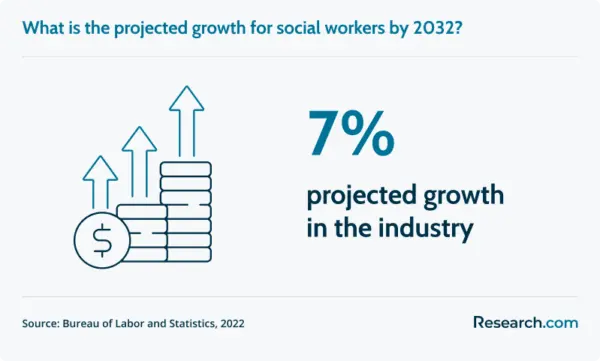
The job market for MSW graduates can be favorable in areas such as rural practice, children and family services, healthcare, mental health, and substance abuse treatment. The value of the degree depends on local employer demand, licensure level, and specialization. An online MSW can be worthwhile for students who meet licensing expectations, especially because social worker roles are expected to grow by seven percent by 2032, according to the Bureau of Labor and Statistics.
What is the importance of experience in online MSW programs?
Field education is one of the most important parts of an MSW. It gives students supervised practice with real clients, agencies, systems, ethical issues, documentation, and interdisciplinary teams. Online students should expect fieldwork to be in person, even when academic courses are delivered remotely.
Programs typically require students to complete a set number of field hours in approved settings such as schools, hospitals, community agencies, clinics, or social service organizations. These placements help students connect classroom theory with professional judgment and practical intervention skills.
Strong online MSW programs have clear systems for arranging or approving placements, training field instructors, monitoring student progress, and resolving placement problems. Students should ask how placements are found, whether evening or weekend options exist, and what support is available if they live far from the university.
Field experience can also shape the first job after graduation. Students who choose placements aligned with their intended career path often graduate with stronger references, clearer specialization experience, and a better understanding of the populations they want to serve.
How can an online MSW lead to a career in forensic social work?
Forensic social work combines social work practice with legal, correctional, family court, victim services, and public safety systems. Online MSW students interested in this path should look for coursework or field placements connected to criminal justice, child welfare, domestic violence, reentry, behavioral health, or court-involved populations.
Forensic social workers may conduct assessments, support victims, work with offenders, assist in custody or domestic violence cases, provide court-related recommendations, or help clients access treatment and community services. Their work can influence legal decisions while keeping client welfare, safety, and rehabilitation in view.
Students who want this path should learn the requirements and practice expectations for becoming a forensic social worker. The specialization can expand the reach of an MSW by connecting social justice, client advocacy, and legal-system practice.
What are the key considerations for affordability in online MSW programs?
Affordability should be measured by total cost, not only by tuition. Online students may still pay technology fees, field placement expenses, books, licensing exam costs, background checks, travel, and lost work hours during practicum. A program with a lower tuition rate may not be the cheapest option if it offers limited placement support or requires costly travel.
Scholarships, grants, federal aid, payment plans, and employer tuition benefits can reduce out-of-pocket costs. Students who already work in social services, healthcare, education, or government should ask whether their employer offers tuition reimbursement or schedule flexibility for field hours.
Students looking for the cheapest online master's degree in social work should compare affordability alongside accreditation, licensure alignment, faculty support, and graduation requirements. A low-cost program is only a good investment if it helps you graduate, qualify for the credential you need, and enter the practice area you are targeting.
Is social work a good major to pursue a fulfilling career?
Social work can be a strong choice for people who want a service-oriented career focused on individuals, families, communities, and social systems. It may be a good fit if you are prepared for emotionally demanding work, complex ethical decisions, documentation requirements, and long-term professional development. Students asking is social work a good major should compare the field’s purpose, salary expectations, licensing requirements, and day-to-day responsibilities before committing.
What unique career opportunities can I pursue with an online MSW degree?
An MSW can support more than traditional casework or therapy roles. Graduates may move into policy development, nonprofit leadership, public health programs, program evaluation, community advocacy, employee assistance, crisis response, or government service. Students interested in broader human service roles may also find value in comparing related pathways such as what can I do with a degree in human services?.
What steps should I follow to meet state-specific licensure requirements?
Licensure is regulated at the state level, so students should verify requirements before choosing a program and again before applying for a license. Start by identifying the state where you plan to practice, then review education requirements, required supervised hours, exam rules, background checks, continuing education expectations, and title restrictions. For related credential information and guidance on how to get a counseling license, consult state boards and official licensing resources.
Can online accelerated MSW programs fast-track my career progression?
Accelerated online MSW programs can shorten time to graduation for students who can handle a demanding pace. These programs may be useful for career changers, BSW graduates in advanced standing tracks, or professionals who want to move quickly into advanced roles. However, faster does not always mean better. Students should confirm that online accelerated MSW programs are CSWE-accredited, meet state licensing expectations, and provide realistic field placement scheduling.
Do employers value an online MSW degree?
Employers generally focus on accreditation, licensure eligibility, field experience, skills, and fit for the role rather than the course delivery format alone. An online MSW from a reputable, CSWE-accredited program can be viewed similarly to an on-campus degree when it includes rigorous coursework and supervised field education. Graduates seeking master of social work degree jobs should highlight practicum experience, license progress, population expertise, and measurable accomplishments in service settings.
Should I Consider Advancing to a Doctorate After My Online MSW?
A doctorate may make sense for MSW graduates who want senior leadership, applied research, teaching, policy influence, or advanced practice development. A Doctorate in Social Work often emphasizes applied research and leadership rather than entry-level practice preparation. Before enrolling, compare cost, time commitment, career benefit, and whether the credential is necessary for your target role. Students focused on cost can explore the cheapest DSW programs online as part of their research.
What is the return on investment for an online MSW program?
The ROI of an online MSW depends on tuition, fees, time to graduation, fieldwork burden, loan repayment, licensure success, and career advancement. Students in accelerated or advanced standing pathways may enter the workforce sooner, but only if they can complete the program successfully and meet licensing requirements. To estimate value, compare total program cost against realistic salary expectations for your state, specialization, and license level. Students with a qualifying BSW may also consider the top online MSW advanced standing options to reduce time and credits.
What professional certifications or licensures are required after earning an MSW degree?
Many MSW graduates pursue licensure or professional certification after graduation. Requirements vary by state and role, so students should verify rules with the relevant licensing board before beginning a program.
- Licensed Social Worker (LSW): This entry-level license allows graduates to practice social work in many states. It typically requires a bachelor's or master's degree in social work and passing a state exam. The LSW is often an early step toward advanced licensure.
- Licensed Clinical Social Worker (LCSW): This credential is common for graduates who want to provide therapy or other clinical mental health services. It usually requires a clinical exam, post-graduate supervised clinical hours, and additional state-specific requirements.
- Certified Social Work Case Manager (C-SWCM): Offered by the National Association of Social Workers, this certification recognizes case management skills in healthcare, behavioral health, and social service environments.
- School Social Worker Certification: MSW graduates who plan to work in schools may need state-specific school social work credentials in addition to the degree.
- Substance Abuse Certification: Graduates specializing in mental health or substance abuse may pursue credentials through organizations such as the National Association for Alcoholism and Drug Abuse Counselors.
- Online Clinical MSW Programs and Continuing Education: Students pursuing clinical practice may benefit from online clinical MSW programs that include focused preparation in areas such as trauma-informed care, assessment, and evidence-based practice.
Current trends affecting online MSW students
- Licensure scrutiny remains important: Students must confirm state-specific requirements because online delivery does not automatically guarantee eligibility in every jurisdiction.
- Field placement quality is a major differentiator: As online options expand, strong placement support is one of the clearest signs of a student-centered program.
- Behavioral health demand influences career choices: Mental health, substance abuse, healthcare, and child and family services remain common employment areas for MSW graduates.
- Employers expect practical technology skills: Social workers increasingly use electronic records, telehealth platforms, data systems, and digital communication tools, especially in healthcare and behavioral health settings.
- Cost sensitivity is rising: Students are comparing tuition, loan repayment, employer reimbursement, and advanced standing options more carefully before enrolling.
Key Insights
- An online MSW is most valuable when it is CSWE-accredited, licensure-aligned, and supported by strong field placement systems.
- The degree can lead to clinical, school, healthcare, child welfare, policy, nonprofit, military, forensic, and administrative roles, but some positions require additional licensure after graduation.
- Program cost varies widely, from under $40,000 to over $89,000, so students should calculate total cost rather than relying only on tuition per credit.
- Advanced standing can shorten the path for eligible BSW graduates, sometimes to as little as 12 months.
- Online learning can be respected by employers when the program is accredited and includes rigorous supervised practice.
- The biggest mistakes are ignoring accreditation, assuming all programs meet state licensure rules, underestimating fieldwork demands, and choosing a program based only on rankings or price.
- Before applying, ask each school how field placements work, whether online students receive equal support, what licensure outcomes look like, and how the curriculum connects to your intended career path.
References:
- Bureau of Labor and Statistics. (2022). Occupational Outlook Handbook: Social Workers. Bureau of Labor and Statistics.
- Bureau of Labor and Statistics. (2022). Occupational Outlook Handbook: Substance Abuse, Behavioral Disorder, and Mental Health Counselors. Bureau of Labor and Statistics.
- Columbia University. (2022). Careers as Change Agent: What Can You Do With a Master’s in Social Work? Columbia University.
- Fiorini, Borg, and Debono. (2022). Part-time adult students’ satisfaction with online learning during the COVID-19 pandemic. NIH.
- Indeed. (2023). 23 Jobs You Can Do With a Master’s in Social Work (MSW). Indeed.
- National Association of Social Workers. (2023). National Social Work Public Opinion Survey. National Association of Social Workers.
- Payscale.com. (2024) Average Social Worker (MSW) Salary. Payscale.com.
- Salary.com. (2023). Social Worker (MSW) Salary in the United States. Salary.com.
- Indeed.com. (2024). Instructor - Social Work Salaries in the United States. Indeed.com.
- Salary.com. (2024). Licensed Clinical Social Worker Salary in the United States. Salary.com.
- Salary.com. (2024). Medical Social Worker (BSW) - Home Care Salary in the United States. Salary.com.
- Salary.com. (2024). Medical Social Worker (BSW) Salary in the United States. Salary.com.
- Salary.com. (2024). Medical Social Worker (MSW) - Home Care Salary in the United States. Salary.com.
- Salary.com. (2024). Medical Social Worker (MSW) Salary in the United States. Salary.com.
- Salary.com. (2024). Mental Health Clinician (MSW) Salary in the United States. Salary.com.
- Salary.com. (2024). Social Worker (MSW) Salary in the United States. Salary.com.
- Salary.com. (2024). Social Worker (MSW) Salary in the United States. Salary.com.
- U.S. Bureau of Labor Statistics. (2024). Earnings and unemployment rates by educational attainment. U.S. Bureau of Labor Statistics.
- U.S. Bureau of Labor Statistics. (2024). Social Workers. U.S. Bureau of Labor Statistics.
Other Things You Should Know About Online MSW Programs
The 2027 best CSWE-accredited online MSW programs typically require at least 900 hours of supervised fieldwork, aligned with CSWE standards. This practical experience is completed at approved social work settings and is essential for bridging theory and practice in social work education.
The admissions process for the top 2027 CSWE-accredited online MSW programs typically includes submitting an application, transcripts, a resume, a personal statement, and letters of recommendation. Deadlines vary by school, so check specific program websites for accurate dates and requirements.
Yes. CSWE-accredited online MSW programs often accept students from any undergraduate major if they hold a regionally accredited bachelor’s degree and submit transcripts, letters of recommendation, and a personal statement. Some programs require prerequisite courses or conditional admission before starting advanced coursework.