2027 What Degree Do You Need To Be a Social Worker: Education Requirements in Delaware

Co-Founder and Chief Data Scientist
Planning a social work career in Delaware starts with one practical question: which degree will actually qualify you for the role you want? The answer depends on whether you want entry-level casework, school or healthcare practice, clinical mental health services, supervision, research, or leadership. Delaware ties social work licensure closely to accredited education, supervised experience, and exams, so choosing the wrong program can delay licensing or limit your job options.
This guide explains the social work degree requirements in Delaware for 2026 planning, including BSW, MSW, doctoral, online, and alternative pathways. It also covers typical coursework, timelines, costs, financial aid, accreditation, fieldwork, career outlook, and questions to ask before enrolling so you can compare programs with less guesswork.
Quick Answer: What Degree Do You Need to Become a Social Worker in Delaware?
For entry-level social work roles in Delaware, a Bachelor of Social Work (BSW) is generally the minimum degree. For clinical practice and independent mental health work, students usually need a Council on Social Work Education-accredited Master of Social Work (MSW), supervised post-graduate clinical experience, and the required licensing exam. Delaware commonly references supervised clinical experience after the MSW, including 3,000 hours over two years, while some clinical pathway descriptions cite at least 3,200 hours; applicants should verify the current requirement directly with the Delaware Board of Social Work Examiners before planning their timeline.
Key Things to Know About Social Work Education Requirements in Delaware
- A BSW can open the door to generalist roles. It is the usual starting point for entry-level social work jobs and the Licensed Bachelor Social Worker pathway.
- An MSW is the key degree for advanced and clinical practice. Students interested in therapy, diagnosis, independent practice, or many specialized roles should plan for a CSWE-accredited MSW.
- Related degrees may help, but they are not always enough. Psychology, sociology, human services, and criminal justice backgrounds can support admission to an MSW program or qualify graduates for adjacent jobs, but additional coursework, fieldwork, or licensure steps may still be required.
- Minimum degree required for social work licensure in Delaware
- Courses included in Delaware social work programs
- How long social work degrees take in Delaware
- Social work degree costs in Delaware
- Degrees needed for social work specializations
- Financial aid for Delaware social work students
- Alternative ways to enter social work
- Delaware social work job outlook
- Professional development for social work graduates
- Recognition of online social work degrees
- Accreditation for social work programs
- Delaware institutions offering social work programs
- What Delaware social workers say about their degree
- Can you become a social worker in Delaware without a social work degree?
- Do you need a doctorate for clinical social work in Delaware?
- Do Delaware community colleges offer social work degrees?
- BSW admission requirements in Delaware
- References
- Key insights
- Source list
What is the minimum degree required to become a licensed social worker in Delaware?
Delaware separates social work roles by education level, scope of practice, and licensing expectations. The right degree depends on whether you want generalist services, supervised practice, clinical work, or advanced leadership. A CSWE-accredited degree is especially important because Delaware uses accreditation as a major standard for licensure eligibility.
| Career goal | Typical degree needed | What it can support | Important decision point |
| Entry-level social work and human services | Bachelor of Social Work (BSW) | Generalist practice, case management, community services, and the Licensed Bachelor Social Worker route | Choose a CSWE-accredited BSW if you may later pursue advanced standing MSW admission. |
| Advanced practice or clinical preparation | Master of Social Work (MSW) | Licensed Clinical Social Worker preparation, independent client services, administrative roles, and specialized practice | Confirm that the MSW is CSWE-accredited and meets Delaware licensing expectations. |
| Research, teaching, policy leadership, or executive roles | Doctorate in Social Work, DSW, or PhD | Higher-level academic, research, consulting, and organizational leadership opportunities | A doctorate is not the standard requirement for Delaware social work licensure. |
- Bachelor of Social Work (BSW): A BSW is the usual undergraduate credential for people seeking entry into recognized social work roles in Delaware. It can support the Licensed Bachelor Social Worker pathway and provides broad preparation in human behavior, policy, ethics, and field practice.
- Master of Social Work (MSW): An MSW is the central degree for students who want clinical licensure, more independent responsibility, or advanced practice options. Delaware expects MSW programs to meet CSWE accreditation standards for licensure purposes.
- Doctorate in Social Work: A doctoral degree can be useful for professionals aiming at university teaching, advanced research, high-level administration, or policy leadership. It is not normally required to become a clinical social worker in Delaware.
If your long-term goal is therapy, behavioral health, supervision, or advanced agency leadership, do not stop your planning at the BSW. Review how an MSW can shape future options by comparing career paths for social workers before choosing a program.
What courses are covered in a social work degree program in Delaware?
Social work programs in Delaware are designed to prepare students for ethical, evidence-informed, and client-centered practice. While individual schools may organize courses differently, CSWE-accredited BSW and MSW programs generally combine classroom learning with supervised field education.
| Course area | What students learn | Why it matters for practice |
| Introduction to Social Work and Human Services | Professional values, history, ethics, service systems, and the role of social workers | Helps students understand the profession before entering field placements. |
| Social Welfare Policies and Programs | How U.S. social service systems are structured and how policy affects vulnerable groups | Prepares students to navigate benefits, agencies, eligibility rules, and advocacy work. |
| Human Behavior and the Social Environment | Developmental, behavioral, family, community, and systems theories | Builds the foundation for assessment and intervention across different client populations. |
| Social Work Practice | Engagement, interviewing, assessment, intervention planning, documentation, and evaluation | Connects theory to everyday client and agency work. |
| Research Methods in Social Work | Reading research, evaluating evidence, and designing practice-related studies | Supports evidence-based decision-making and program improvement. |
| Field Practicum or Internship | Supervised practice in a real agency or community setting | Required for applying classroom skills; one state example includes 12 credit hours at Delaware State University. |
| Diversity, Oppression, and Social Justice | Cultural humility, inequity, discrimination, power, and advocacy | Prepares graduates to serve Delaware’s diverse individuals, families, and communities. |
| Social Welfare Policy Analysis | Policy development, implementation, evaluation, and reform | Helps students connect direct practice to larger systems and public decision-making. |
Delaware does not list a separate set of state-only social work courses for BSW and MSW students. Instead, the key requirement is that programs meet Council on Social Work Education standards. Delaware State University and the University of Delaware structure their MSW options with different emphases, but both are built around national professional competencies, field preparation, and workforce needs.
How long does it take to complete a social work degree program in Delaware?
The time needed to become a social worker in Delaware depends on the degree level, whether you study full time or part time, whether you already hold a CSWE-accredited BSW, and how your field placement is scheduled. Students should plan around both coursework and practicum hours because field education is not optional.
| Degree or pathway | Typical full-time length | Typical part-time length | Best fit |
| BSW | Four years | Five years or more | Students starting with undergraduate preparation for generalist social work. |
| Traditional MSW | Two years | Up to four years | Students with a bachelor’s degree in another field or a non-advanced-standing route. |
| Advanced Standing MSW | One year | Two years | Graduates of CSWE-accredited BSW programs who qualify to skip some foundation coursework. |
| Accelerated MSW | Some options are structured around a 16-month full-time program | Varies by school | Students who can handle a compressed academic and fieldwork schedule. |
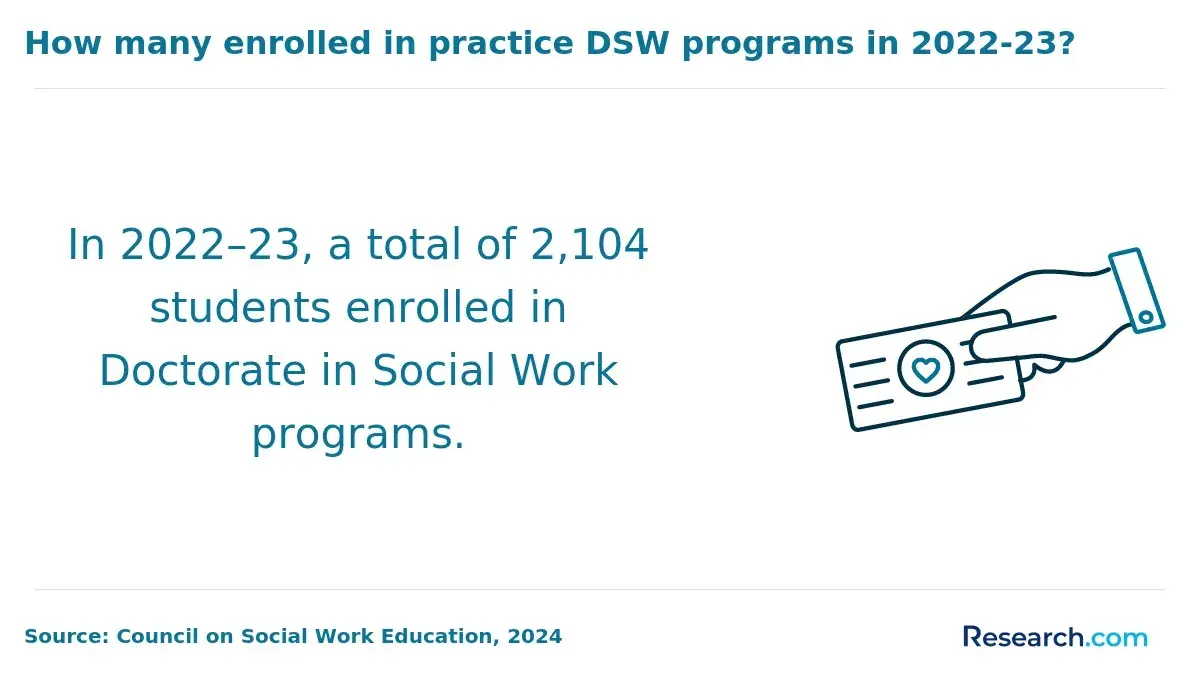
| DSW or PhD | Three to five years full time | Varies widely | Professionals seeking research, teaching, or senior leadership roles, often through online or out-of-state programs. |
Part-time enrollment can be a smart choice for working adults, caregivers, or students who need to reduce each semester’s workload. The trade-off is time. A slower pace may delay licensing and earnings growth, but it can also make field placement, tuition payments, and personal responsibilities easier to manage.
One Delaware social worker who completed a local MSW described the part-time path as demanding but realistic. Because she worked full time and had family responsibilities, her MSW stretched to almost four years. She noted that the practicum schedule was the hardest part because it required consistent weekly availability, even when work and home obligations were heavy.
Her experience shows why students should ask programs detailed scheduling questions before enrolling. Accelerated degrees can be efficient, but they are not always practical for students who cannot pause work or rearrange family care.
How much does a social work degree cost in Delaware?
The cost of a Delaware social work degree varies by school, residency, degree level, format, fees, and field placement logistics. Tuition is only one part of the total cost. Students should also budget for books, technology fees, transportation to practicum sites, exam fees, licensing costs, and unpaid or low-paid internship time.
| Degree level | Cost information cited for Delaware students | Cost issue to check before enrolling |
| BSW | Public institutions typically charge $7,000–$10,000 annually for in-state students; out-of-state tuition can be double or higher; private colleges, where available, often exceed $35,000 per year. | Ask whether the program is CSWE-accredited and how much field placement travel may add. |
| MSW | In-state MSW tuition at public Delaware universities ranges from $8,000 to $12,000; out-of-state rates can reach $18,000–$24,000; online programs may cost a similar amount or slightly more because of technology fees. | Compare total program cost, not just per-credit tuition. |
| DSW | Often completed online through out-of-state schools; total tuition can vary from $20,000–$40,000, with per-credit costs between $500 and $1,000. | Confirm whether the doctorate supports your career goal before taking on added debt. |
| PhD in Social Work | Programs are uncommon in Delaware; costs often begin around $20,000 and can exceed $50,000, with public universities generally offering lower resident rates than private institutions. | Look for funding, assistantships, and research support before committing. |
Online programs may reduce relocation or commuting expenses, but they can still include fees and local field placement requirements. Students should compare the degree cost against expected career goals and required credentials. It also helps to review the skills needed for a social work career so you can choose a program that matches both licensing rules and employer expectations.
How to compare costs more accurately
- Calculate the full degree price. Include tuition, fees, books, transportation, field placement expenses, and licensure-related costs.
- Ask whether tuition differs by residency. In-state and out-of-state rates can change the return on investment substantially.
- Check transfer and advanced standing rules. A qualifying BSW may shorten an MSW and reduce total cost.
- Compare aid before loans. Scholarships, grants, assistantships, work-study, and employer support can reduce borrowing.
- Be cautious with doctoral debt. A doctorate can be valuable for specific goals, but it is not required for standard clinical licensure.
What degrees are required for different social work specializations in Delaware?
Social work specializations differ in legal authority, client risk, clinical responsibility, and workplace expectations. A BSW may be enough for some entry-level service roles, but many specialized jobs favor or require an MSW because the work involves assessment, intervention planning, supervision, or clinical judgment.
| Specialization | Common degree expectation | Typical preparation | When an MSW matters most |
| Clinical Social Work | MSW or related graduate degree | At least 3,200 hours of supervised clinical work and the ASWB clinical exam are described in this pathway. | Required for mental health diagnosis, therapy, and independent clinical practice. |
| School Social Work | Usually a CSWE-accredited MSW | Field experience in school or youth-serving settings | Important for intervention, crisis response, family engagement, and school-based services. |
| Healthcare Social Work | Usually an MSW | Medical, hospital, clinic, long-term care, or behavioral health field education | Helpful for discharge planning, psychosocial assessment, care coordination, and patient advocacy. |
| Child and Family Services | BSW may support entry-level work; MSW is often expected for advanced or supervisory roles | Child welfare, family preservation, trauma-informed practice, and policy knowledge | Useful for complex cases, leadership, and specialized family services. |
Delaware licensing pathways also include the Licensed Bachelor Social Worker and Licensed Master Social Worker designations. The LBSW route is tied to undergraduate preparation and experience, while the LMSW route requires an MSW and further professional steps. Because licensing and job titles can be technical, students should match their intended specialization to the degree, field placement, exam, and supervision requirements before enrolling.
What financial aid options are available to social work students in Delaware?
Financial aid can make the difference between a manageable degree and excessive debt. Social work students should begin with the FAFSA, then compare state aid, institutional scholarships, assistantships, employer benefits, and outside awards before relying heavily on loans.
| Aid option | Who it may help | What to know |
| Federal Grants | Undergraduate students with financial need | Pell Grants do not have to be repaid and are based on FAFSA eligibility. |
| State Scholarships | Delaware residents pursuing qualifying fields | The Career-Based Scholarship can award up to $5,000 annually to eligible social work students and may be renewable. |
| University Scholarships and Grants | BSW and MSW students meeting academic, need-based, or demographic criteria | Schools such as the University of Delaware may require FAFSA completion for full consideration. |
| Federal Work-Study | Students who qualify for campus or community-based part-time work | Can help with expenses while providing experience relevant to human services. |
| Student Loans | Students with remaining costs after grants and scholarships | Federal Direct Loans often have better borrower protections than private loans, but graduate borrowing should be planned carefully. |
| Graduate Assistantships | MSW students at programs with available research or teaching support roles | May include stipends or tuition support, but availability differs by department. |
| Professional and National Scholarships | Students connected to professional goals, populations, or associations | Groups such as the National Association of Social Workers may offer targeted scholarships. |
| Outside Scholarships | Students who meet foundation, employer, community, merit, or service criteria | Can be combined with institutional aid in some cases. |
| Delaware-Specific Aid and Payment Plans | Residents managing tuition in installments or seeking state-based support | Can reduce upfront costs and lower dependence on loans. |
Students comparing flexible and lower-cost graduate options should also review affordable online MSW programs, but affordability should never be separated from accreditation, field placement quality, and Delaware licensure eligibility.
What are the alternative pathways to become a social worker in Delaware?
You do not always need to start over if your first degree is not in social work. Delaware students with backgrounds in psychology, sociology, criminal justice, education, public health, or human services may be able to move into the field through an MSW or related bridge option. The important distinction is that related experience may strengthen your application, but it does not automatically replace accredited social work education for licensure.
- Traditional MSW for non-BSW graduates: Students with a bachelor’s degree in another field can often enter a full MSW program. This route commonly takes two years full time and may include flexible pacing.
- Advanced Standing MSW for BSW graduates: Students with a CSWE-accredited BSW can sometimes complete the MSW faster because foundation coursework may be waived.
- Related-degree transition: Degrees in psychology, sociology, human services, or similar areas can provide useful background. Some programs may still require prerequisites or foundation social work courses.
- Post-bachelor’s certificates or bridge coursework: These options are not widespread in Delaware, but nearby or online programs may help students prepare for graduate admission.
- Licensure routes recognizing varied backgrounds: Delaware’s licensing system includes different credential levels, but applicants still need to confirm that their education and supervised experience meet Board requirements.
A Delaware practitioner who moved from criminal justice into social work described the transition as both practical and personal. He said the hardest part was not only learning new material, but shifting from a justice-system mindset to a social work framework focused on systems, ethics, client autonomy, and community context. Flexible course options and recognition of prior experience helped make the career change possible.
What is the job outlook for social workers in Delaware?
Delaware employs over 1,200 social workers statewide, and local need is shaped by healthcare access, mental health demand, child and family services, aging populations, schools, public agencies, and nonprofit organizations. Employers generally look for candidates who combine accredited education, field experience, strong documentation skills, cultural competence, and the ability to work across systems.
Job prospects can vary by specialization. Clinical, healthcare, school, child welfare, and community-based roles may require different credentials and supervision histories. Graduates who want a step-by-step licensing roadmap can use Research.com’s guide on how to become a social worker in Delaware to connect education requirements with licensure steps.
Current trends affecting Delaware social work students
- More demand for behavioral health skills: Employers increasingly value training in trauma-informed care, crisis response, substance use, and mental health intervention.
- Field experience is a hiring signal: Practicum sites can become references, networking sources, and job leads, especially in a small state labor market.
- Online education is more accepted, but fieldwork remains local: Students can complete coursework remotely in many programs, but internships still require supervised practice with approved agencies.
- Credential clarity matters: Graduates should understand the difference between BSW-level roles, LMSW-level practice, and LCSW clinical authority before applying for jobs.
How can social work graduates enhance their career prospects through professional development opportunities in Delaware?
Graduation is not the end of professional preparation. Delaware social workers can improve their job prospects by pursuing continuing education, supervision, specialized training, association membership, and mentorship. Professional development is especially useful for graduates moving into clinical practice, school settings, healthcare, child welfare, trauma-informed care, or leadership roles.
| Professional development option | Why it helps | Best for |
| Clinical supervision | Builds competence for advanced licensure and ethical clinical decision-making | MSW graduates pursuing clinical practice |
| Specialized certificates or workshops | Signals focused skill development in areas such as trauma, substance use, youth services, or healthcare | Graduates targeting specialized employers |
| Professional associations | Supports networking, continuing education, advocacy, and job awareness | Students and licensed professionals at any stage |
| Mentorship | Helps new practitioners navigate agencies, licensure, documentation, and career choices | Recent graduates and career changers |
| Leadership and policy training | Prepares social workers for supervision, program management, grant work, and systems advocacy | Experienced practitioners seeking advancement |
Some social work graduates also consider counseling-related credentials or adjacent mental health roles. If that path interests you, compare requirements using the guide to the fastest way to become a counselor in Delaware before assuming the licensing process is the same.
Are online social work degrees recognized in Delaware?
Online BSW and MSW programs can be recognized in Delaware when they meet the same accreditation and field education standards as campus-based programs. The delivery format is less important than whether the program is CSWE-accredited, whether field placement is approved, and whether the degree supports the Delaware license you plan to pursue.
Employer acceptance of online social work education has grown. Recent data shows that over 70% of employers nationwide make no distinction between online and campus degree formats. Delaware State University also reflects this shift, with over half of its 5,826 students enrolled in online or hybrid social work programs in 2024.
Still, online does not mean fully remote in every practical sense. BSW and MSW students must complete supervised fieldwork, and that experience usually occurs in person with an approved agency. Hybrid programs may work better for students who want some campus interaction, while fully online coursework may suit working adults who need schedule flexibility.
Checklist before choosing an online social work degree
- Confirm CSWE accreditation. Do not rely on marketing language; check the accreditor and program status directly.
- Ask how Delaware field placements are arranged. Some schools help secure placements, while others expect students to identify agencies.
- Verify licensure eligibility with Delaware. A program can be legitimate but still not align perfectly with a specific licensing plan.
- Compare online fees. Technology fees can offset some savings from reduced commuting or relocation.
- Check whether the program has full accreditation or is still pursuing it. Programs such as the University of Delaware’s MSW are described as still pursuing full accreditation, which can affect immediate eligibility.
What organizations accredit social work degree programs in Delaware?
Accreditation is one of the most important checks a Delaware social work student can make. It affects licensure eligibility, transfer value, employer confidence, federal financial aid access, and the credibility of the degree. For social work specifically, the key programmatic accreditor is the Council on Social Work Education.
- Council on Social Work Education (CSWE): CSWE is the national accreditor for social work education in the United States. Delaware licensure pathways rely on CSWE-accredited BSW and MSW degrees as the recognized academic standard.
- Middle States Commission on Higher Education (MSCHE): MSCHE reviews the overall institutional quality of many colleges and universities in the region. It is not social-work-specific, but institutional accreditation is important for degree legitimacy and federal financial aid.
- Delaware Department of Education and Delaware Board of Social Work Examiners: These entities do not replace CSWE program accreditation. The Department authorizes educational operations, while the Board sets licensing rules and recognizes qualifying degrees.
Students aiming to become a clinical social worker should treat accreditation as non-negotiable. A low-cost or convenient program can become expensive if it does not support the license you need.
What are the top institutions offering social work degree programs in Delaware?
The best social work program for you is not always the most recognizable name. It is the program that matches your licensing goal, budget, schedule, field placement needs, and preferred specialization. Delaware students should compare accreditation status, practicum support, online flexibility, faculty expertise, and total cost before applying.
- Delaware State University: Offers the state’s only CSWE-accredited Master of Social Work program and uses an advanced generalist approach with two intensive internship practicums, empowerment-focused training, and a global perspective.
- University of Delaware: Provides flexible MSW pathways that can range from one to three years, with specialization options in childhood trauma and school social work, along with community and healthcare practicum connections.
- Wilmington University: Offers a Bachelor of Science in Social Work designed for entry-level practice or preparation for MSW study, with evening and online accessibility and field partnerships in local agencies.
- Widener University, Delaware Law Campus: Although best known for law, it offers social work-related coursework and dual-degree possibilities for students interested in policy, advocacy, and legal systems.
- Online accredited options: Delaware residents may also compare accredited online BSW and MSW programs, including options such as Western New Mexico University and Boise State University, while arranging approved local internships. Students researching flexible undergraduate routes can explore online bachelor’s programs in social work.
Questions to ask every Delaware social work program
- Is the BSW or MSW program currently CSWE-accredited, in candidacy, or not accredited?
- Will this program meet Delaware licensure requirements for the credential I want?
- Who finds the field placement: the school or the student?
- Can working adults complete field hours outside traditional business hours?
- What is the total cost after tuition, fees, books, transportation, and internship expenses?
- Does the program offer advanced standing for CSWE-accredited BSW graduates?
- What graduate outcomes, licensure exam support, and employer partnerships are available?
What Do Social Workers in Delaware Say About Their Degree
My social work education at Wilmington University changed the direction of my career because it paired demanding coursework with hands-on field experience in Delaware communities. The faculty support and local focus helped me feel ready for school-based practice, where I began working after graduation. Seeing students make progress reminds me why this work matters. - Buck
Studying at Delaware State University pushed me to grow in ways I did not expect. The program’s attention to Delaware’s diverse communities and social challenges helped me build resilience and a stronger professional identity. Starting in a local school setting has been meaningful because I can see how my work affects children and families directly. - Mitchell
The University of Delaware connected me with professional development and networking opportunities that I had not known about before enrolling. Delaware’s social work community is collaborative, and continuing education has helped me keep improving. My first role in a nearby school has challenged me to apply culturally responsive strategies that fit the needs of local families. - Joni
Can you become a social worker in Delaware without a degree in social work?
You may qualify for some human services, case aide, outreach, advocacy, or social service support roles with a degree in a related field, but licensed social work is different. Delaware licensure generally depends on meeting specific degree, accreditation, exam, and supervision requirements. If your bachelor’s degree is in psychology, sociology, criminal justice, education, or another field, the most common route into licensed practice is a traditional MSW program rather than a second bachelor’s degree.
Do you need a doctorate to become a clinical social worker in Delaware?
No. A doctorate is not the standard requirement for clinical social work licensure in Delaware. The usual clinical route centers on a qualifying MSW, supervised post-graduate clinical experience, and the required clinical exam. A DSW or PhD may be useful for university teaching, research, consulting, senior administration, or policy leadership, but it is not required for typical LCSW preparation.
Do community colleges in Delaware offer social work degrees?
Community colleges can be useful starting points for students who want to complete general education courses, reduce costs, or explore human services before transferring. However, an associate degree alone is not the usual educational requirement for Delaware social work licensure. Students starting at a community college should confirm transfer agreements, prerequisite alignment, and whether credits will apply toward a CSWE-accredited BSW or later MSW pathway.
What are the admission requirements for a BSW degree in Delaware?
Admission requirements vary by institution, but BSW applicants should expect to submit standard undergraduate materials and, in many cases, complete prerequisite coursework before formal admission to the social work major. Programs may also consider GPA, writing ability, volunteer or human services experience, professional fit, references, and a personal statement. Because field education involves direct work with clients and agencies, schools may also require background checks or professional conduct standards before placement.
Common mistakes to avoid when choosing a Delaware social work program
| Mistake | Why it can hurt you | Better approach |
| Choosing a program without checking CSWE accreditation | The degree may not support Delaware licensure. | Verify accreditation directly before applying or paying deposits. |
| Looking only at tuition | Fees, books, transportation, and field placement costs can change affordability. | Compare the full cost of attendance and likely borrowing. |
| Assuming online means no in-person requirements | Field practicum hours still require supervised agency-based work. | Ask how local placements are approved and scheduled. |
| Ignoring advanced standing rules | BSW graduates may miss a faster MSW option. | Ask whether your BSW qualifies for advanced standing before choosing a graduate program. |
| Assuming every social service job leads to licensure | Work experience alone may not count without the right degree and supervision. | Map your job, degree, supervision, and exam steps to the credential you want. |
| Relying only on rankings or name recognition | A well-known school may not be the best fit for schedule, fieldwork, cost, or licensure. | Compare outcomes, accreditation, placements, and student support. |
Related Articles for Nearby States
- 2027 What Degree Do You Need To Be a Social Worker: Education Requirements in Maryland
- 2027 What Degree Do You Need To Be a Social Worker: Education Requirements in New Jersey
- 2027 What Degree Do You Need To Be a Social Worker: Education Requirements in Pennsylvania
- 2027 What Degree Do You Need To Be a Social Worker: Education Requirements in Virginia
- 2027 What Degree Do You Need To Be a Social Worker: Education Requirements in West Virginia
- 2027 What Degree Do You Need To Be a Social Worker: Education Requirements in New York
- 2027 What Degree Do You Need To Be a Social Worker: Education Requirements in Connecticut
- 2027 What Degree Do You Need To Be a Social Worker: Education Requirements in Rhode Island
- 2027 What Degree Do You Need To Be a Social Worker: Education Requirements in North Carolina
- 2027 What Degree Do You Need To Be a Social Worker: Education Requirements in Ohio
References:
- Council on Social Work Education. (2024). Annual Survey of Social Work Programs. Council on Social Work Education annual survey
- Delaware.gov. (2025). Division of Professional Regulation. Delaware administrative code for social work regulation
- Delaware County Community College. (2025). Social Work, Associate in Arts (SWO). DCCC
- Delaware State University. (2025). Social Work, BSW. Delaware State University BSW information
- Masters in Social Work Online. (n.d.). MSW Programs in Delaware Online. MSW programs in Delaware online
- Social Work Degrees. (n.d.). Delaware MSW Programs Guide. Delaware MSW program guide
- Social Work Education Center. (2025). Best MSW Programs in Delaware. MSW program information for Delaware Additional Delaware State University BSW source
- Social Work License Map with edX. (n.d.). Become a Social Worker in Delaware. Delaware social work licensure overview
- University of Delaware. (2025). Master of Social Work. University of Delaware MSW information CSWE annual survey source
Key Insights
- A BSW is the usual minimum for entry-level social work roles in Delaware, but an MSW is the better target for clinical and advanced practice.
- CSWE accreditation is the most important program check. Without it, a degree may not support Delaware licensure even if the school is legitimate.
- Clinical social work requires more than a degree. Students should plan for the MSW, supervised clinical experience, and the required exam, and should confirm whether their pathway requires 3,000 hours over two years, at least 3,200 hours, or another current Board-defined standard.
- Online programs can work for Delaware students if they are accredited and include approved field placements. Coursework may be remote, but practicum requirements still involve supervised practice.
- Cost comparisons should include the full degree, not just tuition. Fees, field placement travel, lost work time, books, and licensure expenses can change the real price.
- Career changers have viable routes into the profession. A related bachelor’s degree can support admission to a traditional MSW, but it usually does not replace the need for accredited social work education.
- The best program is the one that fits your license goal, schedule, budget, and specialization. Ask about accreditation, field placements, advanced standing, online fees, supervision, and graduate outcomes before enrolling.
Other Things You Need to Know About Becoming a Social Worker in Delaware
To become a certified social worker in Delaware in 2027, you must obtain a Bachelor of Social Work (BSW) or a Master of Social Work (MSW) from a CSWE-accredited program. Additionally, completing supervised work experience and passing the Association of Social Work Boards (ASWB) examination is required for certification.
Applying for a Bachelor of Social Work (BSW) program in Delaware typically requires a high school diploma or GED, completion of prerequisite courses, and a minimum GPA set by the institution. Some programs may also require an application essay or letters of recommendation.