
2027 Accelerated Social Work Degree Programs

Co-Founder and Chief Data Scientist
Choosing an accelerated social work degree is usually a trade-off: you want to qualify for social work roles sooner, but you also need a program that is accredited, affordable, realistic for your schedule, and aligned with licensure rules in your state. This guide explains how accelerated BSW and MSW pathways work, what they cost, how online and campus options compare, and which program features matter most before you enroll. It is designed for career changers, current BSW graduates considering advanced standing MSW programs, working adults comparing online options, and students who want a faster route into healthcare, school, clinical, community, or policy-focused social work.
Quick answer: Is an accelerated social work degree worth it?
An accelerated social work degree can be worth it if the program is CSWE-accredited, fits your field placement schedule, and helps you meet the education requirements for your target role or license. The strongest fit is often for BSW graduates entering advanced standing MSW programs, because these students may be able to finish a graduate degree in a shorter format. However, the faster timeline can be demanding, and the return on investment depends heavily on tuition, financial aid, state licensure requirements, and the salary range in your intended practice area.
What are the benefits of having a social work degree?
- Broader career options. A social work degree can prepare graduates for roles in healthcare, education, child welfare, mental health, public agencies, nonprofit organizations, and community-based services.
- Eligibility for advanced roles. Many clinical, supervisory, and specialized positions require an MSW and, in some cases, post-graduate supervised experience and licensure.
- Faster entry for qualified students. Accelerated formats, especially advanced standing MSW tracks, may shorten the path for students who already hold a CSWE-accredited BSW.
- Flexible study formats. Online accelerated social work programs may help working adults balance coursework, field education, family responsibilities, and career obligations.
- Long-term earning potential. The median annual wage for social workers in the US was $55,350 in 2022. In 2023, social workers with more than 10 years of experience earned an average of $76,423, while those with less than one year of experience earned about $59,622.
What can I expect from an accelerated social work degree?
An accelerated social work degree compresses the academic timeline while still requiring students to complete core social work coursework and supervised field education. At the undergraduate level, a BSW prepares students for entry-level generalist practice. At the graduate level, an MSW can support advanced practice, clinical preparation, leadership roles, and specialized work with individuals, families, groups, organizations, and communities.
Students interested in mental health practice may use the degree as part of a pathway toward roles such as clinical social worker or psychiatric social worker, though exact requirements vary by state. Students focused on systems-level change may pursue macro practice, program management, policy advocacy, or community organizing. A PhD is generally not required for most social work practice roles, but it may be useful for students who want to pursue research, teaching, or advanced scholarship.
| Degree path | Best fit | Typical outcome | Important caution |
| Accelerated BSW | Students beginning undergraduate social work preparation or transferring credits into a bachelor’s program | Entry-level social service roles and possible advanced standing eligibility for a future MSW | Check whether the BSW is CSWE-accredited before assuming it will qualify you for advanced standing MSW options. |
| Advanced standing MSW | Students who already earned a BSW from a CSWE-accredited program | Shorter graduate path toward advanced social work roles | Field placement requirements can still be intensive even when coursework is accelerated. |
| Traditional MSW with accelerated pacing | Career changers or graduates from non-BSW majors who want a faster graduate schedule | Graduate-level social work preparation without prior BSW standing | These programs may require more credits than advanced standing options. |
| Doctoral study | Professionals interested in research, teaching, leadership, or advanced practice development | DSW or PhD-level expertise | Doctoral degrees are not usually needed for entry-level or many licensed practice roles. |
Where can I work with an accelerated social work degree?
Graduates may work in public, private, nonprofit, educational, healthcare, and community-based settings. Common workplaces include hospitals, clinics, rehabilitation centers, schools, family service agencies, mental health clinics, correctional facilities, government offices, shelters, and advocacy organizations.
The right setting depends on your degree level and licensure status. For example, a BSW may support generalist case management or community service roles, while an MSW is often expected for advanced clinical practice, healthcare social work, school social work, and supervisory work. Some roles, such as clinical practice, require state licensure beyond the degree itself.
| Work setting | Possible responsibilities | Degree or credential considerations |
| Hospitals and healthcare systems | Discharge planning, patient advocacy, care coordination, crisis support, family communication | MSW often preferred or required for many advanced medical social work roles. |
| Schools | Student support, family engagement, behavioral interventions, crisis response, resource coordination | School-based roles may require state-specific school social work credentials. |
| Mental health agencies | Assessment, counseling support, case planning, referrals, crisis intervention | Clinical services usually require an MSW and appropriate licensure. |
| Child and family services | Child welfare, family support, safety planning, resource navigation, court-related documentation | Requirements vary by agency and state. |
| Nonprofits and community agencies | Program coordination, advocacy, outreach, grant-supported services, community education | BSW or MSW may be suitable depending on role seniority. |
| Corrections and justice-related agencies | Reentry planning, rehabilitation support, probation-related services, family resource coordination | Some roles may require agency-specific training or public-sector hiring requirements. |
How much can I make with an accelerated social work degree?
Social work pay varies by degree, role, location, employer type, experience, specialization, and licensure. The median annual wage for social workers in the US in 2022 was $55,350. As of writing, the average base salary for social workers in 2023 is $64,247. In 2023, social workers with less than one year of experience earned about $59,622, while those with more than 10 years of experience earned an average of $76,423.
Location can also make a major difference. The highest-paying locations cited here are Washington, DC ($100,871), Fresno, CA ($82,655), and Detroit, MI ($66,703). These figures should be used as planning benchmarks, not salary guarantees. Students comparing programs should look closely at tuition, field placement logistics, licensure costs, and local job openings before borrowing heavily for a degree.
- 2027 list of accelerated social work degree programs
- How long accelerated social work programs take
- Online vs. on-campus accelerated social work programs
- Average cost of an accelerated social work degree
- Financial aid options for social work students
- Admissions requirements and prerequisites
- Common courses in accelerated social work programs
- Social work specializations
- How to choose the right accelerated social work program
- Why accreditation matters
- Career paths after an accelerated social work degree
- Job market and employment outlook
- Challenges students should expect
- Return on investment
- Diversity and cultural competence
- Student support services
- Emerging trends in social work education
- Licensure preparation
- Credibility of accelerated degrees
- Technology in accelerated social work programs
- How psychology can complement social work
- Other academic paths that pair well with social work
- Professional development during the program
- Psychology-related considerations
- Technology-related considerations
- Additional questions about accelerated social work degrees
2027 List of the Best Accelerated Social Work Degree Programs
How do we rank schools?
This list was built using institutional and program data reviewed through Research.com’s research methodology. Sources include the IPEDS database from the National Center for Education Statistics, program information from Peterson's database, including its Distance Learning Licensed Data Set, and outcome and cost information from the College Scorecard.
Many programs below are accelerated MSW programs online with advanced standing options for students who already earned a BSW from a CSWE-accredited program. Advanced standing can reduce the time required to finish an MSW, but eligibility rules differ by school. When comparing these options, look beyond speed and review accreditation, field placement support, tuition, faculty experience, student outcomes, and how well the curriculum aligns with licensure in your state.
| School and program | Format | Program length | Credits | Cost information | Accreditation |
| Indiana Wesleyan University – Advanced Standing MSW | Online | 12 to 16 months | 30 | $559 per credit | Council on Social Work Education (CSWE) |
| Angelo State University – Master of Social Work | In-person or online | 1 year | 36 | $7,246 (Texas resident); $14,808.00 (non-resident) | Council on Social Work Education (CSWE) |
| Ursuline College – Online BSW | Online | 4 years | ~120 | $37,380 | Council on Social Work Education (CSWE) |
| Millersville University of Pennsylvania – Advanced Standing MSW | Online | 1 to 2 years | 36 | $516 per credit (in-state); $774 per credit (out-of-state) | Council on Social Work Education (CSWE) |
| University of Arkansas at Little Rock – Master of Social Work | In-person and online | 2 years | 60 | $325 per credit (in-state); $737 per credit (out-of-state) | Council on Social Work Education (CSWE) |
| Campbellsville University – Online Advanced Standing MSW | Online | 21 months to 2 years | 30-39 | $603 per credit | Council on Social Work Education (CSWE) |
| Liberty University – Online Advanced Standing MSW | Online | 1 year | 31 | $565 per credit (full-time); $615 per credit (part-time) | Council on Social Work Education (CSWE) |
| University of North Dakota – Master of Social Work | In-person and online | 3 semesters | 36 | $506.79 per credit (in-state); $643 per credit (Minnesota residents); $$760 per credit (out-of-state) | Council on Social Work Education (CSWE) |
| Brescia University – Online Advanced Standing MSW | Online | 1-2 years | 30 | $665 per credit | Council on Social Work Education (CSWE) |
| Aurora University – Advanced Standing MSW | On-campus and online | 1 to 2 years | 30 | $618 per credit | Council on Social Work Education (CSWE) |
Program notes for prospective students
- Indiana Wesleyan University. The online Advanced Standing MSW is designed for flexibility and can be completed in 12 to 16 months. Its 30-credit structure may appeal to BSW graduates who want a short graduate pathway with licensing preparation built into the curriculum.
- Angelo State University. This MSW can be completed in-person or online and includes an advanced standing route for CSWE-accredited BSW graduates. Students comparing master degree in social work online options should review the tuition difference between Texas resident and non-resident status.
- Ursuline College. The online BSW is built for students seeking an undergraduate social work foundation. Because advanced standing MSW eligibility often depends on graduating from a CSWE-accredited BSW, this pathway may support future graduate acceleration.
- Millersville University of Pennsylvania. The online MSW offers an advanced standing option that may allow qualified BSW graduates to complete the program in as little as 12 months.
- University of Arkansas at Little Rock. The MSW includes Advanced Direct Practice and Community and Organizational Impact options, making it relevant for students weighing clinical work against broader community or organizational change.
- Campbellsville University. The online Advanced Standing MSW is structured for students with a CSWE-accredited BSW and may fit those interested in community impact, including macro level social work.
- Liberty University. The online MSW lets students choose advanced generalist practice or individual and family clinical practice. Students should compare full-time and part-time per-credit costs before enrolling.
- University of North Dakota. UND offers full-time and part-time options and requires a minimum of 1,000 hours of field experience and practicums, which is an important planning factor for working students.
- Brescia University. The MSW includes a 30-credit-hour advanced standing option for students with a 3.21 social work GPA from a CSWE-accredited BSW program.
- Aurora University. Aurora’s advanced standing track is designed for BSW graduates who want a shorter path into advanced social work study with a focus on individuals, families, and communities.
Key Findings
- Accelerated social work degree programs commonly take 1 to 2 years, though some advanced standing MSW options can be shorter for eligible BSW graduates.
- Tuition for accelerated MSW options cited here ranges from $7,246 to $44,220 or more, so cost comparison should include fees, field placement expenses, books, and living costs.
- Online accelerated programs can be convenient, but students still need to complete supervised field education and confirm that the program meets state licensure expectations.
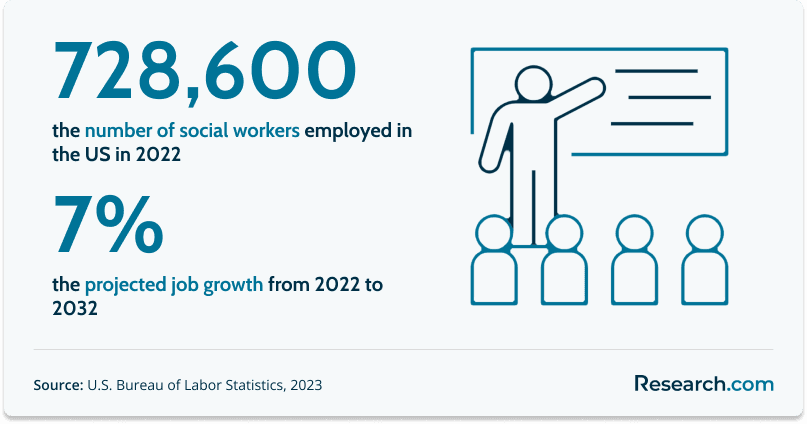
- The US had 728,600 social worker jobs in 2022, with projected growth of 7% up to 2032.
- Specializations such as healthcare, mental health, substance abuse, school social work, and child and family practice can affect licensure needs, field placements, and career options.
- Financial aid, scholarships, grants, employer support, and careful borrowing decisions are especially important because early-career social work salaries may be modest compared with graduate tuition.
How long does it take to complete an accelerated social work degree program?
Accelerated social work programs often take 12 to 24 months, depending on degree level, enrollment status, transfer credits, and whether the student qualifies for advanced standing. The fastest options are usually graduate-level advanced standing MSW programs for students who already hold a CSWE-accredited BSW. Students interested in research-heavy pathways can also explore graduate and PhD degree options, though those are typically not the shortest route into social work practice.
| Pathway | Who it is for | Typical time consideration | Decision point |
| Accelerated BSW | Undergraduate students and transfer students | May still require a full bachelor’s timeline unless transfer credits shorten completion | Ask how many credits will transfer before estimating your finish date. |
| Advanced standing MSW | CSWE-accredited BSW graduates | Often the fastest MSW route | Confirm GPA, recency of BSW, and field education eligibility rules. |
| Traditional MSW | Students without a BSW | Usually longer than advanced standing | Compare total credits and field hours, not just advertised program length. |
| Part-time accelerated format | Working adults who need schedule flexibility | May take longer than full-time study | Balance speed against burnout and field placement availability. |
How does an online accelerated social work degree program compare to an on-campus program?
Online accelerated social work programs can be a strong option for students who need flexibility, live far from campus, or plan to keep working while studying. On-campus programs may be better for students who want face-to-face learning, local networking, and campus-based support. The key issue is not whether the program is online or in person; it is whether the program is accredited, offers appropriate field placements, and matches your state’s licensure requirements.
| Factor | Online accelerated program | On-campus accelerated program | What to ask before enrolling |
| Schedule | Often more flexible, with asynchronous or hybrid coursework | More fixed class times and campus attendance | Are classes live, asynchronous, or both? |
| Field placement | May allow placement near the student’s location | Often uses local campus partnerships | Who secures the placement: the school or the student? |
| Networking | Virtual peers, online faculty access, remote events | In-person faculty, classmates, campus events, and local agencies | How does the program connect students with employers? |
| Technology demands | Requires reliable internet, video tools, LMS access, and digital communication | Still uses digital systems but may rely less on remote access | What technology is required for courses and field supervision? |
| Best for | Working adults, rural students, students who need location flexibility | Students who prefer in-person structure and local professional networks | Which format best supports your learning habits and weekly availability? |
What is the average cost of an accelerated social world degree program?
The price of an accelerated social work degree depends on institution type, residency status, credit requirements, online fees, campus fees, field placement costs, and how many credits you must complete. Tuition for the best accelerated Master of Social Work (MSW) programs in the United States can range from $$7,246 to $$44,220 or more. The average in-state per-credit tuition is $342.93, while the average out-of-state per-credit tuition is $498.94. The average total tuition is about $21,067.33 for in-state students, while the average out-of-state tuition stands at $26,684.
Students should not compare tuition alone. A lower tuition program may become more expensive if it requires travel, unpaid placement hours that reduce work income, high fees, or limited transfer credit acceptance. Since early-career income may be close to or below graduate tuition at some institutions, compare total program cost against realistic salary expectations. As a general pattern, MSW salary is typically higher than BSW salary, but earnings still vary by state, specialization, employer, and licensure.
What are the financial aid options for students enrolling in an accelerated social work degree program?
Students in accelerated social work programs may be able to use federal financial aid, institutional aid, scholarships, grants, loans, employer tuition benefits, work-study opportunities, and field-placement-related funding where available. Eligibility depends on the school, program level, enrollment intensity, FAFSA status, academic standing, and student circumstances.
| Funding option | How it may help | What to verify |
| Federal grants and loans | Can help cover tuition and eligible education expenses | Whether the program and enrollment status qualify for aid |
| Institutional scholarships | May reduce tuition for eligible students | Deadlines, GPA rules, renewal conditions, and whether awards apply to accelerated formats |
| Social work scholarships | May target students entering specific practice areas or serving certain communities | Eligibility, service commitments, and application materials |
| Employer tuition assistance | Can lower out-of-pocket cost for working adults | Reimbursement limits, grade requirements, and post-completion work commitments |
| Work-study or assistantships | May provide income or experience during school | Availability for online and accelerated students |
| Payment plans | May spread tuition across terms | Fees, due dates, and whether plans reduce or only delay borrowing |
Before borrowing, ask the financial aid office for a full cost of attendance estimate and compare it with expected income in your intended practice setting. Also ask whether unpaid field hours may affect your ability to maintain paid employment during the program.
What are the prerequisites for enrolling in an accelerated social work degree program?
Admissions requirements vary by degree level. Associate and bachelor’s programs typically require a high school diploma or equivalent and may review transfer credits. BSW completion programs may require previous college coursework. MSW programs usually require a bachelor’s degree, and advanced standing MSW programs commonly require a BSW from a CSWE-accredited program. Doctoral programs generally require a graduate degree and professional or academic preparation relevant to the program’s focus.
| Program level | Common prerequisites | Application materials to expect |
| Accelerated undergraduate social work | High school diploma or equivalent; possible transfer credits | Transcripts, application form, essays, and sometimes prerequisite coursework |
| BSW completion pathway | Prior college credits or associate degree, depending on school policy | Transfer credit evaluation, transcripts, personal statement, and academic plan |
| Traditional MSW | Bachelor’s degree in social work or another field | Transcripts, references, personal statement, resume, and possible experience documentation |
| Advanced standing MSW | CSWE-accredited BSW and program-specific GPA or recency rules | BSW verification, field education records, recommendations, and statement of purpose |
| Doctoral social work | Usually a master’s degree in social work or a related discipline | Writing sample, resume, references, statement of goals, and evidence of professional experience |
What courses are typically in an accelerated social work program?
Accelerated social work programs cover the same core areas students need for ethical, competent practice, but the pacing is more compressed. Courses vary by school and degree level, but students should expect a mix of theory, practice methods, research, policy, ethics, cultural competence, and field education.
- Human Behavior in the Social Environment. Students study how biological, psychological, social, economic, and cultural factors shape individual and community behavior.
- Social Work Practice with Individuals and Families. This course focuses on assessment, engagement, intervention planning, counseling approaches, and professional boundaries in direct practice.
- Social Policy and Advocacy. Students examine how policies affect communities and learn strategies for advocacy, systems change, and social justice work.
- Cultural Competence in Social Work. Coursework addresses diversity, power, identity, bias, oppression, and culturally responsive practice with varied populations.
- Research and Evidence-Based Practice. Students learn to evaluate research, use data, and apply evidence-informed strategies in practice settings.
- Field Education or Practicum. Supervised placement gives students a structured opportunity to apply classroom concepts in agencies, schools, hospitals, or community organizations.
In 2022, there were more than 725,000 social workers employed in the US across major practice areas. Social worker jobs are projected to grow at a strong rate of 7% from 2022 through 2032.
What types of specializations are available in accelerated social work programs?
Specializations help students connect their degree to a specific population, setting, or type of practice. Not every accelerated program offers every concentration, so students should compare available electives, field placements, faculty expertise, and licensure alignment.
- Clinical Social Work. Focuses on mental health, therapeutic interventions, assessment, and counseling-related practice.
- School Social Work. Prepares students to support children, families, teachers, and school systems around behavioral, emotional, academic, and social needs.
- Healthcare Social Work. Emphasizes patient advocacy, discharge planning, care coordination, family support, and healthcare navigation.
- Child and Family Social Work. Centers on child welfare, family systems, protective services, parenting support, and family stability.
- Substance Abuse Social Work. Prepares students to work with individuals and families affected by addiction, recovery, relapse risk, and related behavioral health challenges.
- Criminal Justice Social Work. Addresses social work practice in courts, corrections, reentry, rehabilitation, and legal settings. Students interested in this area can review resources from criminal justice system practice contexts.
How does one choose the best accelerated social work degree program?
The best accelerated social work program is not always the fastest or cheapest. The right program is one that is accredited, affordable for your circumstances, compatible with your weekly schedule, realistic for field placement, and appropriate for your state’s licensure rules.
- Confirm accreditation first. Use the Council on Social Work Education directory to verify program status before applying.
- Ask about field placement support. Find out whether the school secures placements, helps students locate placements, or requires students to arrange their own.
- Compare total cost. Include tuition, fees, travel, books, technology, lost work hours, licensure exam costs, and supervision expenses after graduation.
- Review advanced standing rules. If you have a BSW, ask whether your degree, GPA, field hours, and graduation date meet eligibility criteria.
- Check state licensure fit. Do not assume an online program automatically satisfies requirements in your state.
- Evaluate faculty expertise. Look for faculty whose practice, research, and field connections match your career goals.
- Study student support services. Accelerated pacing makes advising, tutoring, writing help, mental health support, and career services more important.
- Compare specialization access. Make sure the program offers courses and placements in your intended practice area.
- Talk to admissions and field education staff. Ask practical questions about weekly workload, placement hours, online attendance expectations, and support for working students.
- Use rankings carefully. Rankings can narrow your list, but they should not replace accreditation checks, cost analysis, and licensure research.
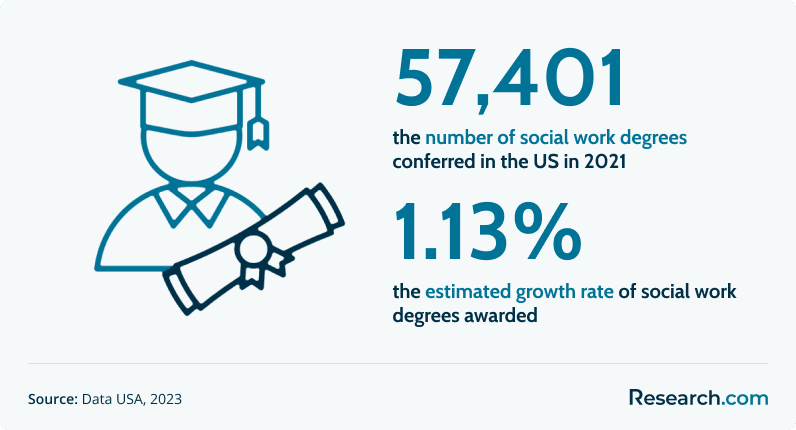
In 2021, there were 57,401 social work degrees conferred by both public and private institutions in the United States, reflecting both strong student interest and wide availability of social work education pathways.
How does accreditation impact accelerated social work degree programs?
Accreditation is one of the most important factors in choosing an accelerated social work program. In the United States, CSWE accreditation signals that a social work program meets recognized educational standards for curriculum, competencies, ethics, field education, and professional preparation.
Accreditation matters because it can affect licensure eligibility, advanced standing eligibility, employer recognition, financial aid access, transferability, and graduate school options. Undergraduate students who plan to pursue a faster MSW later should pay special attention to whether their BSW is CSWE-accredited, because advanced standing MSW programs commonly require it.
Students should also review social worker job requirements for their intended state and practice setting. A degree from an unaccredited program may limit licensing options or reduce the degree’s usefulness for advanced practice. Before enrolling, verify accreditation directly through the accreditor or licensing board rather than relying only on marketing language.
What career paths are available for graduates of accelerated social work degree programs?
Graduates can pursue many different practice areas, but the available roles depend on degree level, experience, field placement background, licensure, and state rules. Some roles are entry-level and generalist, while others require an MSW and clinical licensure.
| Career path | What the role often involves | Common preparation |
| Clinical Social Worker | Therapy, assessment, treatment planning, mental health support, and counseling services | MSW, supervised experience, and clinical licensure where required |
| Medical Social Worker | Patient advocacy, discharge planning, care coordination, crisis support, and family assistance | BSW or MSW depending on role and employer |
| School Social Worker | Student support, family outreach, behavioral intervention, and collaboration with educators | BSW or MSW plus state-specific school credentials where required |
| Child Welfare Social Worker | Child safety, family support, case documentation, investigations, and service coordination | BSW or MSW depending on agency and role |
| Substance Abuse Counselor | Support for individuals and families affected by substance use and recovery challenges | Social work degree plus state-specific counseling or addiction credentials where required |
| Geriatric Social Worker | Support for older adults, caregivers, housing, healthcare access, and end-of-life planning | BSW or MSW with aging-related experience |
| Policy Advocate or Analyst | Research, advocacy, program evaluation, legislation analysis, and systems-level change | MSW or related graduate preparation may be useful |
| Military Social Worker | Support for service members and families, including deployment stress and family dynamics | MSW and relevant credentials may be preferred for advanced roles |
| Private Practice Social Worker | Counseling or therapy services for individuals, couples, families, or groups | MSW, supervised clinical experience, licensure, and business compliance |
| Community Organizer | Community engagement, advocacy campaigns, resource development, and program coordination | BSW, MSW, or related community practice background |
What is the job market for graduates with an accelerated social work degree?
The social work job market is expected to grow faster than the national average for all occupations. In 2022, there were 728,500 social worker jobs in the US, with projected growth of 7% up to 2032. The national average for all occupations is 3%. By 2032, experts project an additional 53,800 social worker jobs.
Growth varies by specialization. Mental health and substance abuse social workers are projected to grow by 11%, while healthcare social workers are projected to grow by 10% during the same forecast period. Students who want stronger job-market alignment should compare local demand, field placement access, licensure rules, and whether their chosen program offers relevant specialization coursework.
What challenges might students encounter in accelerated social work programs?
Accelerated programs can be difficult because they compress reading, writing, group projects, assessment practice, and field education into a shorter timeline. Students often struggle most with time management, practicum scheduling, emotional fatigue, work-school balance, and the pace of feedback and deadlines.
| Common challenge | Why it matters | Better strategy |
| Underestimating weekly workload | Accelerated courses may move quickly, with limited time to recover from missed assignments | Ask for sample schedules and plan study blocks before the term begins. |
| Ignoring field placement logistics | Practicum hours can conflict with paid work and family obligations | Speak with the field education office before enrolling. |
| Choosing based only on speed | The fastest program may not be the best fit for licensure, support, or specialization | Compare accreditation, placement quality, cost, and outcomes. |
| Assuming online means self-paced | Many online programs still have deadlines, live sessions, and strict placement schedules | Confirm synchronous requirements and attendance policies. |
| Taking on too much debt | Social work salaries vary and may not support high monthly loan payments early in a career | Build a program budget and compare aid packages before committing. |
Students who need more flexibility or who are still comparing undergraduate routes can review online social work degrees before deciding on an accelerated format.
What is the return on investment for an accelerated social work degree?
The return on investment depends on how quickly you finish, how much you pay, whether you qualify for financial aid, how soon you can work in your target role, and whether the degree helps you meet licensure requirements. A shorter program can reduce time away from the workforce, but only if the schedule is manageable and the credential is recognized by employers and licensing boards.
When calculating ROI, compare total tuition with expected earnings, not advertised program length alone. Students considering graduate study should also research jobs you can get with a masters in social work to see whether an MSW is necessary for their intended role.
How do accelerated social work programs address diversity and cultural competence?
Social work education should prepare students to serve people across differences in race, ethnicity, culture, disability, age, gender, sexuality, religion, immigration status, income, and community context. Accelerated programs commonly address these topics through case studies, ethics coursework, policy analysis, field education, and practice courses focused on culturally responsive engagement.
Because the schedule is compressed, students should look for programs that integrate diversity and equity across the curriculum rather than confining them to a single course. Students interested in research, leadership, or advanced study related to equity and social systems may also consider the cheapest online doctorate in social work options as a later academic step.
How do accelerated social work programs support student success?
Strong accelerated programs provide more than fast coursework. They offer structured advising, writing support, field placement guidance, faculty access, peer connection, technology help, career counseling, licensure guidance, and early alerts when students fall behind. These services are especially important because compressed terms leave less time to correct problems.
Students comparing programs can also review features commonly found in an advanced standing MSW program online, including academic coaching, placement coordination, and career preparation for students moving quickly through graduate study.
What are the emerging trends in accelerated social work education?
Accelerated social work education is being shaped by online learning, telehealth preparation, data-informed practice, hybrid field supervision, interdisciplinary human services training, and employer demand for graduates who can work across healthcare, behavioral health, schools, and community systems. Programs are also placing more emphasis on cultural competence, trauma-informed practice, evidence-based intervention, and technology-supported service delivery.
Students interested in related helping professions can compare social work with broader human services degree jobs to decide whether they want a social work-specific licensure pathway or a wider human services career track.
Do accelerated social work programs adequately prepare students for licensure requirements?
Some accelerated programs prepare students well for licensure, but students must verify this carefully. Licensure rules are set by states, and requirements can include a CSWE-accredited degree, supervised post-graduate experience, exams, background checks, jurisprudence requirements, and continuing education.
Before enrolling, contact the program and your state licensing board. Ask whether the degree meets educational requirements in your state, whether field education hours align with state expectations, and what additional steps are required after graduation. Students comparing adjacent behavioral health routes can also review certifications and licensure for counselors to understand how regulated helping professions differ.
Are accelerated social work degrees as credible as traditional programs?
An accelerated social work degree can be as credible as a traditional program when it is properly accredited, academically rigorous, and includes appropriate field education. Employers and licensing boards generally care more about accreditation, competencies, supervised experience, and licensure than whether courses were delivered in a shorter format.
The risk comes from choosing a program that is fast but weak on accreditation, field placement quality, student support, or licensure alignment. Social workers planning advanced leadership, teaching, or practice development may later explore the best DSW programs online to deepen their credentials.
What role does technology play in accelerated social work programs?
Technology is central to many accelerated programs, especially online and hybrid MSW tracks. It supports course delivery, virtual discussions, simulations, telehealth training, research access, assignment submission, and communication with faculty and field supervisors.
Technology tools students should expect
- Learning management systems. Students use platforms to access lectures, readings, grades, discussions, assignments, and course calendars.
- Virtual simulations. Some programs use interactive client scenarios to help students practice assessment, engagement, crisis response, and decision-making.
- Telehealth preparation. Students may learn how to conduct ethical remote services, protect confidentiality, and communicate effectively by video.
- Digital research tools. Online libraries, databases, and analysis tools support evidence-based practice and program evaluation.
- Collaboration platforms. Video meetings, discussion boards, shared documents, and group project tools help students work together across locations.
How can accelerated psychology programs complement social work?
Psychology and social work overlap in their interest in human behavior, development, mental health, trauma, family systems, and intervention. Social work adds a strong focus on environment, policy, advocacy, social justice, and systems change. Students who understand both perspectives may be better prepared to assess client needs and collaborate across behavioral health settings.
Benefits of integrating psychology with social work
- Stronger understanding of behavior. Psychology coursework can deepen knowledge of cognition, emotion, development, mental health, and motivation.
- Improved assessment skills. Psychological concepts can support better screening, referral, and intervention planning.
- More interdisciplinary options. Students interested in clinical, counseling, school, or behavioral health settings may benefit from exposure to both fields.
Students who want a fast additional academic route can explore accelerated psychology programs. Before enrolling, compare accreditation, course relevance, transfer policies, and whether the program supports your social work goals.
What other academic paths can complement an accelerated social work degree?
Related fields can strengthen a social work career when they add useful knowledge in public health, psychology, human services, criminal justice, education, nonprofit management, public policy, data analysis, or counseling. The best complementary path depends on whether you want direct practice, clinical licensure, program leadership, policy work, or community development.
Students still completing an undergraduate degree may also compare flexible options such as the fastest bachelor degree online. This can be useful for students who need to finish a bachelor’s degree before applying to an MSW, but students should make sure any chosen major supports their long-term social work plan.
How important is professional development during accelerated social work programs?
Professional development is essential because accelerated coursework alone does not build a career. Students need field experience, supervision, networking, licensure planning, resume development, interview preparation, and continuing education habits. In social work, employers often look for evidence that graduates can apply ethical judgment, communicate under pressure, document accurately, collaborate with teams, and serve diverse clients.
- Field placement and internships. Practicum experiences help students apply classroom learning, test career interests, and build professional references.
- Certifications and focused training. Specialized training in areas such as school social work, substance abuse, healthcare, or clinical practice may strengthen a graduate’s profile.
- Mentorship and career counseling. Advisors and mentors can help students choose placements, prepare for licensure, and transition into employment.
- Continuing education. Social work practice changes as policies, treatment models, technology, and community needs evolve.
Students seeking lower-cost graduate options can compare inexpensive online MSW programs that combine flexible schedules with meaningful student support and field education planning.
Other things you should know about accelerated social work degree programs
What degree is best for social work?
The best degree depends on the role you want. A BSW can support entry-level generalist social work and may qualify graduates for advanced standing MSW admission. An MSW is often the key degree for advanced practice, clinical preparation, leadership, and specialized roles. Students who want research, teaching, or senior leadership may later consider a DSW or PhD.
What is a BS in Social Work major?
A Bachelor of Social Work major introduces students to social work values, ethics, human behavior, social welfare policy, research, diversity, advocacy, and generalist practice. It usually combines classroom learning with supervised field experience and can prepare graduates for entry-level service roles or future MSW study.
What are the degrees of a social worker?
Common social work degrees include the BSW, MSW, DSW, and PhD in Social Work. A BSW provides undergraduate preparation, an MSW supports advanced and often clinical practice pathways, and doctoral degrees are typically used for advanced practice leadership, research, teaching, or policy-focused work. Certifications and licenses may also be required depending on specialization and state rules.
Can you become a social worker online in Canada?
Yes, students can pursue social work education online in Canada through universities that offer online BSW and MSW options. However, students should verify accreditation, field education requirements, provincial recognition, and practice requirements before enrolling. Online coursework may be flexible, but supervised practice expectations still matter.
Common mistakes to avoid when choosing an accelerated social work degree
- Choosing a program before checking CSWE accreditation. Accreditation can affect licensure, advanced standing, employer recognition, and graduate study options.
- Focusing only on tuition. Fees, travel, books, technology, unpaid field hours, and lost work time can change the real cost.
- Assuming online programs are always easier. Online accelerated programs can be just as demanding as campus-based options.
- Ignoring field placement requirements. Practicum scheduling can be the biggest barrier for working students.
- Assuming all programs meet licensure rules everywhere. State requirements vary, so confirm directly with the licensing board.
- Borrowing without estimating repayment. Compare debt against realistic salary expectations in your target location and specialization.
- Relying only on rankings. Rankings can help you start a search, but they cannot replace accreditation checks, cost analysis, and program-fit questions.
Questions to ask before applying
- Is the program currently CSWE-accredited?
- Does the program meet educational requirements for licensure in my state?
- Am I eligible for advanced standing, and what documentation is required?
- How many field hours are required, and who helps secure placements?
- Can I complete field education while working full time?
- What is the total cost of attendance, including fees and placement-related costs?
- What scholarships, grants, or assistantships are available to accelerated students?
- What student support services are available online and after business hours?
- Which specializations and electives are offered in the accelerated format?
- What are recent graduates doing after completion?
Key Insights
- An accelerated social work degree is most valuable when it is accredited, affordable, and aligned with the student’s licensure and career goals.
- Advanced standing MSW programs are often the fastest route for students who already hold a CSWE-accredited BSW.
- Online programs can offer flexibility, but field placement requirements still require careful scheduling and local planning.
- Cost should be evaluated against total debt, expected salary, licensure expenses, and the ability to keep working during school.
- Social work employment is projected to grow by 7% from 2022 through 2032, with stronger growth cited for mental health and substance abuse social workers at 11% and healthcare social workers at 10%.
- Before enrolling, verify accreditation, ask about field placement support, confirm state licensure fit, and compare programs by outcomes rather than speed alone.
References:
- Data USA. (2023). Social work. Retrieved December 20, 2023, from Data USA.
- Indeed. (2023). Social worker salary in United States. Retrieved December 20, 2023, from Indeed.
- U.S. Bureau of Labor Statistics. (2023). Social workers. Retrieved December 20, 2023, from BLS.
Other things you should know about accelerated social work degree programs
Yes. Most accredited accelerated social work programs require supervised field education, usually 400 hours for a BSW and 900 hours for an MSW. The placements must be completed in approved agencies under a licensed field instructor to meet Council on Social Work Education standards.
Admission requirements for 2027 accelerated social work degree programs typically include a bachelor’s degree, a minimum GPA (often 3.0 or higher), letters of recommendation, a personal statement, and relevant work or volunteer experience. Some programs may also require GRE scores.


