2027 Counseling Certification Requirements: Licensure by State

Co-Founder and Chief Data Scientist
Counseling licensure is not one national process. It is a state-by-state credentialing decision.
If you want to practice as a licensed professional counselor, mental health counselor, behavioral disorder counselor, or related counseling professional, your path will depend heavily on where you plan to work. States set their own rules for graduate education, practicum and internship training, supervised post-master’s experience, exams, application documentation, fees, renewal, and continuing education. A program that prepares you well in one state may still leave you with extra coursework or supervision requirements in another.
This guide is designed for prospective counseling students, current graduate students, recent graduates, associate-level counselors, and licensed counselors considering relocation. You will learn the general licensing sequence, how state requirements differ, which exams are commonly required, how supervised hours work, how to compare counseling programs, and what mistakes can delay licensure.
Quick Answer: What Do You Usually Need to Become a Licensed Counselor?
- A qualifying graduate degree: Most states require at least a master's degree in counseling or a closely related field from an accredited institution. Some states specifically reference CACREP, CORE, regional accreditation, or equivalent coursework.
- Supervised clinical training: Candidates commonly complete post-master’s supervised practice before independent licensure. State requirements in this guide range from 400 hours for one license level to 4,500 hours in another state.
- Licensing exams: Common exams include the NCE, NCMHCE, CRCE, CRC, jurisprudence exams, law and ethics exams, and specialty exams depending on the license type.
- State board approval: You must submit transcripts, exam scores, supervision verification, fees, and other documentation to the relevant state board.
- Continuing education: After licensure, counselors must complete renewal requirements, which often include ethics, legal updates, cultural competency, clinical skills, or specialty training.
- Specialty credentials may add requirements: School counseling, rehabilitation counseling, marriage and family therapy, addiction counseling, and substance abuse counseling can follow different rules from general LPC or LMHC licensure.
Use this guide as a planning tool, then confirm details with the licensing board in the state where you intend to practice.
- General Requirements for Counseling Certifications and Licensure for 2027
- Requirements for Counseling Certifications and Licensure by State
- Why is post-master’s supervised clinical experience important for aspiring counselors?
- What are the typical exams you need to take for counseling certification or licensure?
- What are the key content areas typically included in a master’s program in counseling?
- What are the different counseling certifications?
- When do you need to get continuing education and how do you go about it?
- Can Accelerated MFT Programs Expedite Your Licensing Journey?
- How does licensure impact my long-term career growth?
- Should I consider pursuing an online PhD in psychology?
- How do I choose the right counseling degree program?
- What are the financial considerations for obtaining a counseling license?
- How can you identify affordable yet accredited counseling programs?
- What are the affordable online education options for aspiring counselors?
- What are common pitfalls to avoid during the counseling licensure process?
- What factors do licensing boards consider during your application?
- Do advanced online degrees enhance licensure success?
- How long does it take to become a certified or licensed counselor?
- What is state reciprocity in counselor licensure?
- Is becoming a licensed counselor worth it?
- Key Insights
General Requirements for Counseling Certifications and Licensure for 2027
Counselor licensure in the United States follows a similar broad sequence across states, but the details are never interchangeable. Before enrolling in a program or applying for a license, you should match your degree, coursework, supervised hours, and exam plan to the state board requirements where you intend to practice.
Typical Licensing Sequence
| Step | What Usually Happens | Why It Matters |
| 1. Complete a qualifying graduate degree | Most candidates earn a master’s degree in counseling, clinical mental health counseling, professional counseling, or a related field. | Licensing boards may reject degrees that do not include required credits, practicum, internship, or content areas. |
| 2. Complete practicum or internship | Graduate programs normally include supervised fieldwork before graduation. | These hours help demonstrate applied counseling training and may be required before postgraduate supervision begins. |
| 3. Register for associate, provisional, or intern status | Many states require candidates to practice under a temporary or associate credential before full licensure. | You generally cannot count supervised hours unless the board recognizes your status and supervisor arrangement. |
| 4. Accumulate supervised clinical experience | Candidates complete board-approved supervised counseling work after the master’s degree. | States often specify total hours, direct client contact, face-to-face supervision, supervisor qualifications, and time limits. |
| 5. Pass required exams | Common exams include the NCE, NCMHCE, CRCE, CRC, and state law or ethics exams. | Exam requirements vary by license title and state, so the correct exam matters. |
| 6. Submit the full application | Applicants provide transcripts, exam results, supervision forms, identification, fees, and sometimes background checks. | Missing documents are one of the most common reasons licensing applications stall. |
| 7. Maintain the license | Licensed counselors complete renewal forms, fees, and continuing education. | Failure to renew properly can limit your ability to practice, bill, supervise, or advertise as licensed. |
Education Requirements
- Graduate degree: All states require at least a master’s-level education for professional counseling licensure. The degree is commonly in counseling or a closely related field.
- Accreditation: Some states specifically reference CACREP, CORE, regional accreditation, national accreditation, or coursework equivalent to CACREP or CORE standards.
- Credit hours: Graduate credit requirements differ. For example, Alaska requires at least 60 graduate semester hours in counseling.
- Practicum and internship: Supervised field experiences are usually embedded in the counseling master’s program, but the exact hour requirements vary by board.
Supervised Clinical Experience
After the master’s degree, candidates typically complete supervised practice before becoming independently licensed. This period may include total clinical hours, direct client contact, individual or group supervision, and a minimum number of years. Because each state defines countable hours differently, candidates should have their supervision plan approved before they begin accumulating hours.
Examination Requirements
- National exams: Many states require the National Counselor Examination, the National Clinical Mental Health Counseling Examination, or the Certified Rehabilitation Counselor Examination.
- State exams: Some boards also require a jurisprudence, laws and rules, or ethics exam focused on state-specific practice standards.
Applications, Fees, Renewal, and Continuing Education
- Application materials: Boards commonly ask for official transcripts, supervision records, exam scores, identity documentation, and fees.
- Fees: Application and license fees differ by state and may include separate charges for temporary, associate, provisional, and full licensure.
- Renewal: Licensed counselors must renew on the schedule set by their board.
- Continuing education: Renewal often requires approved CE, including ethics or legal topics in many jurisdictions.
Requirements for Counseling Certifications and Licensure by State
The table below summarizes state-level requirements for professional counseling and related mental health counseling licensure. Use it to compare degree expectations, exam requirements, supervised hours, and fees, but always verify current rules with the governing board before enrolling, relocating, or applying.
| State | Governing Body | Education Requirement | Exam Requirement | Supervised Clinical Hours | Fees Listed |
| Alabama | Alabama Board of Examiners in Counseling | Master's degree or higher in counseling from a CACREP- or CORE-accredited program, or the content equivalent with a minimum of 48 graduate semester hours or 72 graduate quarter hours from a regionally accredited academic institution. | NCE | 3,000 hours | Application Fee: $200 | LPC License Fee: $300 |
| Alaska | Alaska Board of Professional Counselors | Master’s degree or higher in counseling or a related professional field from a regionally or nationally accredited institution of higher education approved by the board, with at least 60 graduate semester hours in counseling. | NCE or NCMHCE | 2 years/3,000 hours | Application Fee: $50 | Initial Licensure Fee: $200 |
| Arizona | Arizona State Board of Behavioral Health Examiners | Master's degree or higher in counseling or a related field from a CACREP- or CORE-accredited program. | NCE or NCMHCE or CRCE | 2 years/ 3,200 hours | Application fee: $250 | LPC License fee: $250 |
| Arkansas | Arkansas Board of Examiners in Counseling and Marriage & Family Therapy | Master's degree or higher in counseling from a program that reflects the CACREP or CORE curriculum and consists of 60 semester hours from a regionally accredited institution. | NCE, AR Jurisprudence Exam | 3,000 | Application Fee: $200 |
| California | California Board of Behavioral Sciences | Master's degree or higher from an accredited institution, counseling or psychotherapy in content, with 6 semester hours of practicum or field study and at least 3 semester hours of coursework in core content areas. | NCMHCE, CA Law & Ethics Exam | 2 years/3,000 hours | Not listed |
| Colorado | Colorado State Board of Licensed Professional Counselor Examiners | Master's degree or higher in professional counseling from a CACREP-accredited program. | NCE, CO Jurisprudence Exam | 2 years/2,000 hours | LPC License: $160 | Provisional License: $100 |
| Connecticut | Connecticut State Department of Public Health | Master's degree or higher in counseling or a related mental health field from a regionally accredited institution of higher education consisting of at least 60 semester hours and required coursework. | NCE or NCMHCE | 1 year/3,000 hours | Application Fee: $315 |
| Delaware | Delaware Board of Mental Health and Chemical Dependency Professionals | Master's degree or higher, including a minimum of 48 semester hours. | NCE | 2 years/3,200 hours | LPC License: $171 |
| District of Columbia | DC Board of Professional Counseling | Master's degree in counseling or a related field from an accredited institution, including 60 graduate semester hours. | NCE | 2 years/3,500 hours | Application fee: $85 | License fee: $145 |
| Florida | Florida Board of Clinical Social Work, Marriage & Family Therapy and Mental Health Counseling | Master's degree or higher from a CACREP-accredited mental health counseling program that includes 60 semester hours, a course in human sexuality, and a course in substance abuse plus an 8-hour laws and rules course and a 2-hour prevention of medical errors course from an approved provider. | NCMHCE | 2 years/1,500 hours | Application fee: $100 | Initial License fee: $105 |
| Georgia | Georgia Composite Board of Professional Counselors, Social Workers, and Marriage & Family Therapists | Master's degree or higher in a counseling or applied psychology program from an institution accredited by a regional body recognized by the Council on Higher Education Accreditation. | NCE or NCMHCE | 4 years/2,400 hours | LPC Application fee: $100 |
| Hawaii | Hawaii Department of Commerce and Consumer Affairs | Master's degree or higher in counseling or an allied field related to mental health counseling, with a minimum of 48 semester hours of coursework in core areas from an accredited institution. | NCE | 2 years/3,000 hours | Application Fee: $60 |
| Idaho | Idaho Licensing Board of Professional Counselors and Marriage and Family Therapists | Master's degree or higher in a counseling field from an accredited college/university, with 60 semester hours. | NCE | 2 years/2,000 hours | Application Fee: $75 | LPC/LCPC License Fee: $75 |
| Illinois | Illinois Professional Counselor Licensing and Disciplinary Board | Master's degree or higher in professional counseling or a related field from a regionally accredited college/university or a master's degree in a CACREP- and CORE-accredited program. | NCE, NCMHCE | 2 years/3,360 hours | LCPC License Fee: $150 |
| Indiana | Indiana Behavioral Health and Human Services Licensing Board | Master's degree or higher in an area related to mental health counseling from a CACREP- or CORE-accredited program, or equivalent program, from a regionally accredited institution with a minimum of 60 semester hours of graduate coursework in counseling in 12 specified content areas. | NCMHCE | 3,000 hours | Application Fee: $50 | Temporary Permit: $25 |
| Iowa | Iowa Board of Behavioral Science | Master's degree or higher in mental health counseling from a CACREP-accredited program, or the content equivalent, with at least 60 semester hours. | NCE or NCMHCE | 2 years/3,000 hours | Licensure fee: $120 |
| Kansas | Kansas Behavioral Sciences Regulatory Board | Master's degree in counseling from a university approved by the board that consists of 45 graduate semester hours distributed among 10 core categories. | NCE | 2 years/4,000 hours | Application Fee: $100 | LPC/LCPC License Fee: $150 |
| Kentucky | Kentucky Board of Licensed Professional Counselors | Master's degree or higher in professional counseling or a related field from a regionally accredited institution, with a minimum of 60 semester hours in 9 specified content areas. | NCE or NCMHCE | 4,000 hours | Application Fee: $150 |
| Louisiana | Louisiana State Board of Licensed Professional Counselors | Master's degree or higher in a professional mental health counseling program from a regionally accredited institution, with 48 semester hours and coursework in 8 content areas; or a master's degree in a CACREP-accredited counseling program. | NCE or NCMHCE | 2 years/3,000 hours | LPC Application Fee: $200 |
| Maine | Maine Board of Counseling Professionals Licensure | Master's degree or higher from a regionally and CACREP- or CORE-accredited institution, consisting of coursework in 10 core areas. | NCE for LPC | NCMHCE for Licensed Clinical Professional Counselor | 2 years/2,000 hours for LPC | 2 years/3,000 hours for LCPC | Application Fee: $25 | Licensing Fee: $200 |
| Maryland | Maryland Board of Professional Counselors and Therapists | Master's degree or higher in professional counseling or related field from an accredited educational institution, with a minimum of 60 graduate semester hours in specific coursework, including an alcohol and drug counseling course. | NCE, MD Law Exam | 3 years/3,000 hours | Application Processing Fee: $75 | Credentials Evaluation Fee: $25 | Certification and Licensure Fee: $100 |
| Massachusetts | Massachusetts Board of Allied Mental Health and Human Services Professions | Master's degree in mental health counseling or a related field from a regionally accredited institution of higher education, with coursework in each of the 10 content areas defined by the board. | NCMHCE | 2 years/3,360 hours | Application Fee: $117 |
| Michigan | Michigan Board Of Counseling | Master's degree or higher in professional counseling from a program that reflects the CACREP curriculum. | NCE | 2 years/3,000 hours | LPC License: $115 | LLPC License: $80 |
| Minnesota | Minnesota Board of Behavioral Health & Therapy | Master's degree or higher in counseling or a related field from a CACREP-accredited program or regionally accredited institution recognized by the Council for Higher Education Accreditation, including specific coursework in 10 core content areas. | NCMHCE | 2,000 hours | Application Fee: $150 | Initial License Fee: $250 |
| Mississippi | Mississippi State Board of Examiners for Licensed Professional Counselors | At least a master's degree or educational specialist's degree in counselor education or a related program from a regionally or nationally accredited college/university program. | NCE and NCMHCE | 2 years/3,500 hours | Application Fee: $100 |
| Missouri | Missouri Committee for Professional Counselors | Master's degree or higher in counseling, counseling psychology, clinical psychology, or school psychology from a regionally accredited college/university, with at least 48 semester hours reflecting the CACREP or CORE curriculum. | NCE, MO Legal and Ethical Responsibilities Exam | 2 years/3,000 hours | Application Fee: $150 |
| Montana | Montana Board of Behavioral Health | Graduate degree in counseling from an accredited institution. | NCE or NCMHCE | 3,000 hours | Application Fee: $50 |
| Nebraska | Nebraska Office of Behavioral Health & Consumer Services | Master's degree or higher from an approved educational program that is primarily therapeutic mental health in content, in a CACREP-accredited program from a regionally accredited institution. | NCE or NCMHCE | 2 years/3,000 hours | Independent Mental Health Practitioner License: $50 if applicant holds an LMHP, $155 if no LMHP | Mental Health Practitioner License: $38.75 or $155 depending on date application is submitted | Professional Counselor Certificate: $50 | Provisional Mental Health Practitioner License: $125 |
| Nevada | Board of Examiners for Marriage and Family Therapists and Clinical Professional Counselors | Master's degree or higher in mental health counseling or community counseling from a CACREP-approved program, or equivalent program. | NCMHCE | 2 years/3,000 hours | Initial Application Fee: $75 | Issuance of Initial License: $50 |
| New Hampshire | New Hampshire Board of Mental Health Practice | Master's degree or higher in counseling or psychology from a regionally accredited college/university. | NCMHCE | 2 years/3,000 hours | License Application Review Fee: $150 |
| New Jersey | New Jersey Professional Counselor Examiners Committee | Master's degree in counseling from a regionally accredited institution. | NCE | 3 years/4,500 hours | Application Fee: $75 | LPC Initial License Fee: $250 |
| New Mexico | New Mexico Counseling and Therapy Practice Board | Master's degree or higher in counseling or a counseling-related field with no less than 48 graduate hours from an accredited institution. | NCE and NCMHCE | 2 years/3,000 hours | Application Fee: $75 | Board Administrative Fee: $25 | License Fee: $220 |
| New York | New York State Board for Mental Health Practitioner | Master's degree or higher in counseling that includes 60 semester hours. | NCMHCE | 3,000 hours | Application Fee: $175 | Registration Fee: $196 | Limited Permit Fee: $70 |
| North Carolina | North Carolina Board of Licensed Clinical Mental Health Counselors | Master's degree or higher in counseling from a regionally accredited institution of higher education that includes coursework in 9 areas of study. | NCE or NCMHCE or CRC, NC Jurisprudence | 3,000 hours | Application Processing Fee: $100 |
| North Dakota | North Dakota Board of Counselor Examiners | Master's degree in counseling from an accredited college or university. | LPCC: NCMHCE | LPC: NCE | LPCC: 2 years/3,000 hours | LPC: 400 hours | LPCC License: $150 | LPC License: $100 | LAPC License: $150 |
| Ohio | Ohio Counselor and Social Worker Board | Master's degree or higher in counseling from an accredited program, with 60 semester hours or 90 quarter hours from an accredited institution. | NCMHCE | 2 years/3,000 hours | LPCC License: $75 | LPC License: $60 |
| Oklahoma | Oklahoma State Board of Behavioral Health | Master's degree or higher in counseling or a related mental health field, with 60 graduate semester hours from a regionally accredited college/university. | NCE, OK Legal and Ethical Responsibilities Exam | 3 years/3,000 hours | Application Fee: $145 | Initial License Fee: $90 |
| Oregon | Oregon Board of Licensed Professional Counselors and Therapists | Master's degree or higher in counseling, with 48 semester hours or 72 quarter hours in a CACREP- or CORE-accredited program, or the content equivalent, from a regionally accredited institution. | NCE or NCMHCE or CRC, OR Laws and Rules Exam | 3 years/2,400 hours | Application Fee: $125 |
| Pennsylvania | Pennsylvania State Board of Social Workers, Marriage and Family Therapists and Professional Counselors | Master's degree in professional counseling or in a field closely related to the practice of professional counseling. | NCE | 3 years/3,600 hours | Application and Initial License Fee: $45 |
| Rhode Island | Rhode Island Board of Mental Health Counselors and Marriage/Family Therapists | Master's degree or higher specializing in counseling/therapy from a college/university accredited by the New England Association of Schools & Colleges or an equivalent regional accrediting agency. | NCMHCE | 2 years/2,000 hours | Application Fee: $460 |
| South Carolina | South Carolina Board of Examiners for the Licensure of Professional Counselors, Marriage and Family Therapists, Addiction Counselors and Psycho-Educational Specialists | Master's degree or higher in professional counseling or related discipline from a regionally accredited institution that includes at least 48 graduate hours and coursework in 10 content areas. | NCE or NCMHCE | 2 years/1,500 hours | Application Fee: $170 |
| South Dakota | South Dakota Board of Examiners for Counselors & Marriage and Family Therapists | Master's in counseling-related program or higher. | NCE and NCMHCE | 2,000 hours | LPC-MH Application Fee: $100 | LCP-MH Initial Licensure Fee: $75 | LPC Application Fee: $100 | LPC Initial Licensure Fee: $100 |
| Tennessee | Tennessee Board for Licensed Professional Counselors, Licensed Marital and Family Therapists and Licensed Clinical Pastoral Therapists | Master's degree in professional counseling from an institution accredited by the Southern Association of Colleges & Schools, CACREP, or a comparable accrediting body. | NCE, NCMHCE, TN Jurisprudence Exam | 2 years/3,000 hours | LPC with/without MHSP Designation: $200 | MHSP Upgrade Fee: $85 | Temporary License: $150 | State Registration Fee: $10 |
| Texas | Texas State Board of Examiners of Professional Counselors | Master's degree or higher in professional counseling or related field from an accredited college/university consisting of 48 graduate semester hours. | NCE or NCMHCE, TX Jurisprudence Exam, Human Trafficking Awareness Course | 3 years/3,000 hours | Application Processing Fee: $98 | License Issue Fee: $106 |
| Utah | Utah Clinical Mental Health Counselor Board | Master's degree or higher in mental health counseling from a CACREP-accredited program, including a minimum of 60 graduate semester hours in specific coursework. | NCE, NCMHCE, Suicide Prevention Course | 2 years/4,000 hours | LPC Application Fee: $120 |
| Vermont | Vermont Board of Allied Mental Health | Master's degree or higher in counseling from an accredited institution, with a minimum of 60 semester hours. | NCE, NCMHCE | 2 years/3,000 hours | Application Fee: $125 |
| Virginia | Virginia Board of Counseling | Master's degree or higher in counseling that includes 60 semester hours or 90 quarter hours of graduate study in counseling. | NCMHCE | 4,000 hours | Application and Initial Licensure Fee: $140 |
| Washington | Washington State Department of Health | Master's degree or higher in mental health counseling or related field from a regionally accredited college or university. | NCE or NCMHCE | 3 years/3,000 hours | LMHC Application Fee: $150 | LMHC Initial License Fee: $125 |
| West Virginia | West Virginia Board of Examiners in Counseling | Master's degree or higher from a program accredited by CACREP or CORE, or a comparable accrediting body, that includes 60 graduate semester hours or 90 quarter hours. | NCE, NCMHCE, or CRC | 2 years/3,000 hours | Application Fee: $200 |
| Wisconsin | Wisconsin Joint Board of Marriage and Family Therapy, Professional Counseling, and Social Work | Master's degree or higher in professional counseling, or equivalent program approved by the board, from a regionally accredited institution that includes a minimum of 42 semester hours or 63 quarter hours. | NCE or NCMHCE or CRCE, WI Statutes and Rules Exam | 2 years/3,000 hours | Application and Initial Licensure Fee: $147 | Professional Counselor Training License: $75 |
| Wyoming | Wyoming Mental Health Professions Licensing Board | Master's degree or higher in counseling, with a minimum of 48 semester hours or 72 quarter hours from a CACREP- or CORE-accredited program, or a regionally accredited college or university that meets the CACREP criteria for coursework. | NCE or NCMHE or CRCC | 3,000 hours | LPC Application Fee: $200 | PPC Application Fee: $100 |
Why is post-master’s supervised clinical experience important for aspiring counselors?
Supervised post-master’s practice is the bridge between graduate training and independent clinical responsibility. It gives new counselors a structured way to treat real clients while receiving feedback from an experienced licensed professional.
- It turns classroom knowledge into clinical judgment. New counselors practice intake, assessment, treatment planning, documentation, intervention, and referral decisions with real clients rather than case examples alone.
- It protects clients. Supervision helps ensure that beginning clinicians understand confidentiality, mandated reporting, boundaries, informed consent, crisis response, and scope of practice.
- It builds professional confidence. Early-career counselors receive guidance on difficult cases, countertransference, ethical concerns, and clinical decision-making.
- It satisfies board requirements. Most states require thousands of hours before full independent practice. If hours are not documented correctly, a board may not count them.
- It can shape specialization. Supervised work in mental health clinics, schools, addiction treatment, family therapy settings, hospitals, or community agencies can influence long-term career direction.
What are the typical exams you need to take for counseling certification or licensure?
Most candidates must pass at least one licensing exam to become a licensed mental health counselor or related counseling professional. The correct exam depends on your state, license title, and specialization.
| Exam | Commonly Used For | What It Emphasizes |
| National Counselor Examination (NCE) | Licensed Professional Counselor pathways in many states | General counseling knowledge and skills through a 200-item multiple-choice exam administered by the National Board for Certified Counselors. |
| National Clinical Mental Health Counseling Examination (NCMHCE) | Clinical mental health counseling licensure in many states | Clinical assessment, diagnosis, case conceptualization, and treatment planning. |
| Examination for Professional Practice in Psychology (EPPP) | Psychologist licensure | Broad psychology knowledge for those pursuing clinical or counseling psychology licensure. |
| Certified Rehabilitation Counselor Examination (CRCE) | Rehabilitation counseling credentials | Disability-related counseling, vocational rehabilitation, case management, and independent living support. |
| Marriage and Family Therapy National Examination | Marriage and Family Therapist licensure | Family systems, relationship dynamics, treatment planning, and ethical MFT practice. |
| Alcohol and Drug Counselor Examinations | Addiction counseling credentials | Substance use treatment, prevention, case management, counseling skills, and recovery support. |
| State jurisprudence, law, or ethics exams | Required by some state boards | State statutes, board rules, ethical standards, reporting duties, and professional conduct. |
What are the key content areas typically included in a master’s program in counseling?
A counseling master’s program should prepare students for supervised clinical work, licensing exams, and long-term counseling careers. While course titles vary, licensing boards often look for coverage of core counseling domains.
- Counseling theories and helping techniques: Major models such as cognitive-behavioral, person-centered, psychodynamic, and other approaches.
- Human growth and development: Lifespan development and the emotional, psychological, social, and behavioral factors that influence clients.
- Ethics and professional practice: Confidentiality, informed consent, boundaries, documentation, legal duties, and ethical decision-making.
- Assessment and diagnosis: Screening, assessment tools, diagnostic reasoning, and clinical documentation.
- Multicultural counseling: The role of culture, race, ethnicity, gender, disability, socioeconomic status, religion, identity, and power in counseling relationships.
- Research and evidence-based practice: How to interpret research and apply evidence-informed methods in client care.
- Group counseling: Group process, facilitation, member dynamics, conflict, and therapeutic group design.
- Crisis and trauma counseling: Suicide risk, grief, violence, trauma response, safety planning, and crisis intervention.
- Substance abuse and addiction counseling: Addiction theory, treatment models, family impact, relapse prevention, and community resources.
- Practicum and internship: Supervised hands-on training that allows students to practice counseling skills before graduation.
What are the different counseling certifications?
Licensure gives legal authority to practice within a state. Certification usually signals additional professional competency, specialty training, or national recognition. Some certifications support portability or employability, but they do not automatically replace state licensure.
- National Certified Counselor: A broad NBCC credential that demonstrates general professional counseling competence and may support some licensure pathways.
- Certified Clinical Mental Health Counselor: An NBCC credential for counselors focused on clinical mental health practice and advanced clinical competencies.
- Master Addiction Counselor: An NBCC specialty credential for professionals working in substance use and addiction treatment.
- Certified Rehabilitation Counselor: A CRCC credential for counselors who assist people with disabilities, chronic illness, employment barriers, and rehabilitation needs.
- Licensed Marriage and Family Therapist: A license pathway for clinicians who specialize in couples, families, relational systems, and family-based treatment.
- Certified School Counselor: A school-based credential commonly issued through state education departments or school counseling authorities.
- Certified Grief Counselor: A specialty credential for counselors focused on bereavement, loss, and grief support.
- Certified Career Counselor: A credential for professionals who help clients with career development, transitions, employment planning, and workplace issues.
- Certified Trauma Professional: A specialty credential for clinicians using trauma-informed approaches with clients affected by PTSD, abuse, violence, or other traumatic experiences.
When do you need to get continuing education and how do you go about it?
Continuing education is part of staying licensed. It helps counselors keep up with changes in ethics, law, technology, treatment methods, telehealth practices, documentation, and client needs. Requirements vary by state and certification body.
- License renewal: Most states require CE during each renewal cycle, commonly every 1 to 2 years. Requirements often fall between 20 to 50 hours per renewal cycle.
- Specialty certification renewal: Credentials such as Certified Clinical Mental Health Counselor or Master Addiction Counselor may require continuing education to remain active.
- Ethics and legal updates: Some boards require specific CE in ethics, cultural competency, state law, supervision, or professional boundaries.
- Clinical skill development: CE can help counselors learn updated methods in trauma care, addiction treatment, crisis response, assessment, or teletherapy.
Common Ways to Complete Continuing Education
- Professional conferences and workshops: Organizations such as the American Counseling Association and NBCC-approved providers often offer in-person and virtual training.
- Approved online courses: Online CE can be convenient, but the provider must be accepted by your licensing board.
- Graduate coursework: Some boards allow relevant university courses to count toward CE.
- Webinars and supervised training: Live or recorded sessions may qualify if they meet provider and topic rules.
- Teaching, presenting, or publishing: Some boards allow professional scholarship or instruction to count, subject to limits.
Before paying for a CE course, check whether your state board accepts the provider, format, topic, and delivery method. Keep certificates and completion records in case of audit.
Can Accelerated MFT Programs Expedite Your Licensing Journey?
Accelerated marriage and family therapy programs may shorten the academic portion of preparation, but they do not eliminate state licensing rules. The key question is not just whether the program is faster; it is whether the program includes the required coursework, practicum, internship, accreditation status, and clinical preparation for the state where you plan to pursue licensure.
Accelerated formats can work well for focused students who can handle intensive coursework and clinical placement demands. They may be a poor fit if you need a slower pace, extensive advising, or more time to balance employment and fieldwork. When comparing accelerated MFT programs, ask whether graduates qualify for the license type you want, how placements are arranged, and whether the program has experience supporting students in your state.
How does licensure impact my long-term career growth?
Licensure can expand what you are legally allowed to do and how employers view your qualifications. Depending on the state and role, a license may be required for independent clinical practice, private practice, insurance billing, supervision, leadership roles, or advanced clinical positions.
Licensed counselors may move into clinical supervision, program management, private practice ownership, consulting, teaching, policy work, or specialized treatment settings. It can also create more mobility across counseling and related careers in psychology, although moving between states still requires board review.
Should I consider pursuing an online PhD in psychology?
An online doctoral degree may be useful if your goals include research, teaching, assessment-focused work, leadership, or advanced specialization. It is not automatically necessary for counseling licensure, and it may not substitute for the specific master’s-level counseling requirements set by a state board.
Before enrolling in online PhD psychology programs, clarify whether you want to practice as a counselor, psychologist, educator, researcher, or administrator. Psychology licensure and counseling licensure are different pathways, and doctoral programs can vary widely in clinical training, residency expectations, and licensure alignment.
How do I choose the right counseling degree program?
The right counseling program is the one that fits your target license, state requirements, schedule, budget, and preferred counseling population. Do not choose based on name recognition or tuition alone.
| Question to Ask | Why It Matters | What to Look For |
| Does the program meet my state’s licensure requirements? | State boards may require specific credits, course topics, practicum, internship, or accreditation. | Written licensure disclosures and advisor confirmation for your intended state. |
| Is the institution and program properly accredited? | Accreditation affects licensure eligibility, transfer options, and employer confidence. | Regional accreditation, CACREP or required equivalent when applicable. |
| How are clinical placements handled? | Online students may need local placements that meet state standards. | Placement support, supervisor qualification guidance, and clear fieldwork policies. |
| What is the total cost? | Tuition is only part of the financial commitment. | Fees, residency costs, technology costs, books, exam fees, supervision costs, and renewal expenses. |
| Does the program fit my life? | Intensive programs can be difficult for working adults or caregivers. | Part-time options, asynchronous coursework, evening classes, and predictable fieldwork schedules. |
If cost is a major concern, compare accredited options such as affordable masters in counseling programs, but confirm licensure fit before applying.
What are the financial considerations for obtaining a counseling license?
The cost of becoming licensed includes more than graduate tuition. Students and candidates should budget for education, fieldwork, exams, applications, supervision, background checks, professional memberships, insurance, continuing education, and renewal fees.
- Program cost: Compare total program price, not only per-credit tuition.
- Clinical training expenses: Some placements may require transportation, liability coverage, background checks, health records, or reduced work hours.
- Exam and application fees: State tables show that fees differ significantly across boards.
- Supervision costs: Some employers provide supervision; some candidates pay supervisors separately.
- Renewal and CE: Licensure remains an ongoing expense after approval.
Students trying to control costs can start by reviewing cheapest online LPC programs, while still checking accreditation, field placement quality, and board alignment.
How can you identify affordable yet accredited counseling programs?
An affordable counseling program is only a good value if it keeps you eligible for the license you want. A low price can become expensive if you later need extra coursework, delayed supervision approval, or a second graduate program.
- Verify accreditation first. Check institutional accreditation and program-level requirements for your state.
- Read licensure disclosures. Schools should explain whether the program meets educational requirements in specific states.
- Ask about supervised placement support. Affordable online programs vary in how much help they provide with practicum and internship sites.
- Compare completion costs. Include fees, travel, residencies, books, technology, and clinical requirements.
- Review outcomes carefully. Graduation, exam preparation, and licensure support matter more than marketing claims.
For students who specifically need CACREP-aligned affordability, cheapest CACREP-accredited programs online can be a useful comparison point.
What are the affordable online education options for aspiring counselors?
Online education can make counseling preparation more accessible, especially for students balancing work, family, or location constraints. The main risk is assuming that any online psychology or counseling degree will meet licensure requirements. It may not.
A bachelor’s degree can provide foundational preparation for graduate study, but independent counseling licensure usually requires a qualifying master’s degree. Students who are early in the process may compare options such as the cheapest online bachelor's in psychology, then plan carefully for a licensure-aligned graduate program.
What are common pitfalls to avoid during the counseling licensure process?
| Common Mistake | Why It Creates Problems | Better Approach |
| Choosing a program before checking state rules | The degree may miss required credits, content areas, or fieldwork standards. | Match the program to your target state board before enrolling. |
| Assuming online automatically means licensure-ready | Online delivery does not guarantee state approval. | Request written licensure disclosures for your state. |
| Counting supervised hours too early | Boards may reject hours completed before associate, intern, or provisional approval. | Confirm when hours begin counting and who may supervise them. |
| Focusing only on tuition | Fees, exams, supervision, travel, and CE can change the real cost. | Build a full licensure budget. |
| Ignoring relocation plans | License transfer is not automatic across states. | Research endorsement and portability rules before moving. |
| Keeping weak documentation | Missing forms can delay or block approval. | Store transcripts, syllabi, supervision logs, contracts, and CE certificates. |
Advanced programs such as the most affordable online PsyD programs may be relevant for some psychology-focused goals, but they should not be treated as a shortcut around counseling licensure requirements.
What factors do licensing boards consider during your application?
Licensing boards review whether you meet the legal standards for the specific credential. They are not simply checking whether you earned a degree.
- Degree eligibility: The board reviews institution type, program content, credits, practicum, internship, and required coursework.
- Exam completion: Your exam scores must match the exam required for that license.
- Supervision records: Boards may verify total hours, direct client contact, supervisor credentials, and supervision format.
- Ethical and legal fitness: Applications may ask about disciplinary history, criminal background, professional conduct, and prior licenses.
- Documentation quality: Incomplete or inconsistent records can slow approval even when the candidate appears qualified.
Related credentials, such as those connected to behavior analysis, can complement some career paths. If that direction interests you, compare options such as the cheapest BCBA program online separately from counseling licensure.
Do advanced online degrees enhance licensure success?
Advanced online degrees can strengthen knowledge, flexibility, leadership skills, and specialization, but they do not guarantee licensure. Licensing boards evaluate whether your education and supervised experience meet their rules. A higher degree that lacks required counseling coursework may not solve an eligibility problem.
Programs such as PsyD online programs may fit students pursuing psychology-focused clinical or leadership goals. For counselor licensure, however, the priority remains a qualifying counseling degree, approved supervision, and the correct exams.
How long does it take to become a certified or licensed counselor?
The pathway commonly takes 6 to 10 years, depending on your starting point, enrollment pace, state rules, supervised hour requirements, and exam timing.
| Stage | Typical Timeframe | Decision Point |
| Bachelor’s degree | 4 Years | Choose a major that prepares you for graduate study, such as psychology, social work, or a related field. |
| Master’s degree in counseling | 2 to 3 Years | Select a program that matches your intended license and state requirements. |
| Supervised clinical experience | 1 to 2 Years | Confirm supervisor approval, countable hours, documentation, and required direct service hours. |
| Licensing exam | Varies by State | Take the correct national and state-specific exams for your license type. |
| Optional specialty certification | Varies by Specialization | Pursue additional credentials only when they support your target role. |
The fastest way to become a counselor is usually to study full time, choose a licensure-aligned program early, avoid documentation mistakes, and complete supervised hours efficiently. Accelerated programs can help with the academic timeline, but they do not remove state supervision or exam requirements.
| Top Paying States for Substance Abuse, Behavioral Disorder, and Mental Health Counselors | Average Annual Salary |
| Alaska | $77,430 |
| Utah | $70,310 |
| District of Columbia | $67,750 |
| New Jersey | $67,250 |
| New York | $67,240 |
What is state reciprocity in counselor licensure?
State reciprocity means a counselor licensed in one state may be able to obtain licensure in another state without repeating the entire process. In practice, full automatic reciprocity is uncommon. Most states use endorsement or portability review, meaning they compare your existing license, degree, exams, supervised hours, and professional history with their own standards.
How License Transfer Usually Works
- Licensure by endorsement: A state board reviews your current license and determines whether your credentials are substantially equivalent.
- Portability options: Some states recognize processes intended to streamline movement between jurisdictions, such as the National Counselor Licensure Endorsement Process.
- Additional requirements: If your prior state required fewer supervised hours, different coursework, or a different exam, the new board may require extra steps.
How to Plan if You May Move
- Check the new board early. Do not wait until after relocating to learn that you need additional coursework or exams.
- Keep detailed records. Save syllabi, transcripts, supervision logs, licenses, CE certificates, and exam reports.
- Consider national credentials when useful. Credentials such as National Certified Counselor may support portability in some situations, but they do not override state law.
- Ask about telehealth rules. Practicing across state lines can require licensure where the client is located.
Is becoming a licensed counselor worth it?
Becoming licensed can be worth it if you want independent clinical responsibility, long-term stability in mental health work, and access to roles that require a state-recognized credential. It is also a serious investment, and the return depends on your state, debt level, workplace, specialization, and tolerance for emotionally demanding work.
Benefits
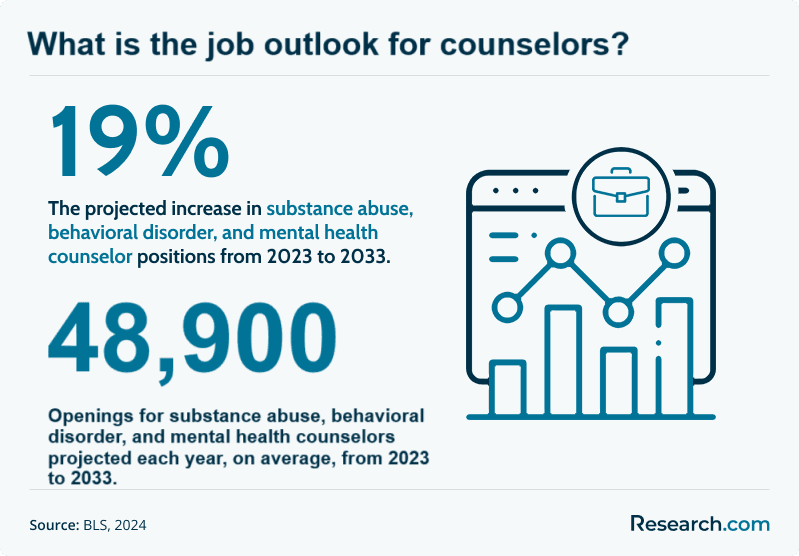
- Strong employment outlook: The U.S. Bureau of Labor Statistics projects 19% job growth for mental health counselors from 2023 to 2033, much faster than the average for all occupations.
- Meaningful work: Counselors support clients through mental health symptoms, grief, trauma, addiction, relationship stress, life transitions, and behavioral challenges.
- More career settings: Licensed counselors may work in private practice, clinics, hospitals, schools, rehabilitation programs, community agencies, telehealth, and employee support roles.
- Higher earning potential than many unlicensed roles: The average annual salary for mental health counselors is around $60,080. Actual counselor salary varies by state, setting, specialization, experience, and employment model.
- Advancement options: Licensure may support movement into supervision, program leadership, specialized clinical practice, or private practice.
Trade-Offs
- Long preparation time: The process can require 6 to 10 years of education, supervised experience, exams, and applications.
- Financial commitment: Tuition, fees, supervision, exams, renewal, and continuing education can add up.
- Emotional demands: Counselors regularly support people in distress, which requires boundaries, consultation, self-care, and ethical practice.
- State regulation: Licensure is not portable by default, and rules can change.
Key Insights
- Counseling licensure is state-specific. A degree, exam, or supervised hour plan that works in one state may not satisfy another state’s board.
- The master’s program decision is the foundation. Before enrolling, confirm accreditation, credit hours, coursework, practicum, internship, and state licensure alignment.
- Supervised experience must be documented carefully. Boards may reject hours if the supervisor, setting, credential status, or records do not meet their rules.
- Exams vary by license and state. The NCE and NCMHCE are common, but some states require jurisprudence, law and ethics, CRC, CRCE, or other specialty exams.
- Online programs can be legitimate, but not automatically licensure-ready. Always ask whether an online program meets the educational requirements for your state.
- Licensure can improve career mobility and advancement, but not instantly across state lines. Reciprocity and endorsement require board review and may involve extra steps.
- Cost planning should include the full pathway. Tuition is only one part of the investment; budget for exams, applications, supervision, renewal, and continuing education.
- Becoming licensed is often worthwhile for clinical counseling careers. It supports independent practice, stronger professional credibility, and access to many roles that unlicensed candidates cannot hold.
References
- American Counseling Association. Counseling Impact. counseling.org.
- American Counseling Association. Counseling Workforce Survey: Key Findings and Insights. counseling.org.
- Norris, L. Getting a Counseling License. counselingpsychology.org.
- Post University. Clinical Mental Health Counseling Licensure by State. post.edu.
- United States Bureau of Labor Statistics. May 2023 National Occupational Employment and Wage Estimates: United States. BLS.
- United States Bureau of Labor Statistics. Occupational Outlook Handbook: Substance Abuse, Behavioral Disorder, and Mental Health Counselors. BLS.
- World Population Review. LPC Requirements by State 2024. worldpopulationreview.com.
Other Things You Should Know About Counseling Certifications and Licensure Requirements
Most states require 2,000 to 4,000 supervised post-degree hours, which usually takes 1 to 3 years of full-time work. The hours must be logged under a board-approved supervisor and documented before the state counseling board accepts the licensure application.
In 2027, most states require supervised clinical hours for counseling licensure. For example, California mandates 3,000 hours, while Texas requires 3,500 hours. Prospective counselors should check specific state boards for detailed requirements and approved settings for clinical supervision.