
2027 Cheapest PhD in Counseling Online

Co-Founder and Chief Data Scientist
Choosing an online PhD in Counseling is not just a question of finding the lowest tuition. The better question is whether a doctoral program will help you move into the role you actually want: counselor educator, clinical supervisor, researcher, program leader, policy contributor, or advanced practitioner. Demand for mental health care has increased sharply, with nearly 59.2 million adults in the US receiving mental health treatment or counseling in 2023, compared with 42 million in 2020 and 2021 (Statista, 2024). That demand creates opportunities, but it also raises the stakes for choosing a credible, affordable, and career-aligned doctoral program.
This guide is designed for licensed or master’s-prepared counseling professionals who are comparing affordable online doctoral options. You will learn what an online PhD in Counseling involves, how programs differ, what accreditation means, how much programs can cost, what financial aid may be available, and which career paths may make the degree worthwhile. The goal is to help you narrow your choices based on cost, quality, flexibility, licensure relevance, and long-term professional fit.
Quick Answer: Is an Online PhD in Counseling Worth It?
An online PhD in Counseling can be worth it if you want to teach in counselor education programs, supervise counselors, conduct research, lead mental health organizations, or qualify for advanced roles beyond direct client care. It is usually not the fastest path to becoming a licensed counselor; most counseling licensure pathways require a qualifying master’s degree, supervised experience, and state exams. A doctoral degree is best viewed as an advanced leadership, research, education, or specialization credential.
- Best fit: Experienced counselors who want academic, supervisory, research, administrative, or specialized clinical roles.
- Main advantage: Online delivery can make doctoral study more manageable for working professionals, especially when coursework is asynchronous or hybrid.
- Key caution: Accreditation, residency requirements, internship expectations, and state licensure rules vary, so students should verify details before enrolling.
- Salary context: Graduates may pursue roles associated with annual wages ranging from $48,430 and $60,080 or more, with outcomes shaped by role, specialization, experience, employer, and location.
What are the benefits of getting an online PhD in Counseling?
- Flexible doctoral study: Online programs let many students continue working while completing advanced coursework, research, supervision training, and dissertation milestones.
- Broader professional options: A doctoral credential can support movement into roles such as clinical counselor, researcher, professor, supervisor, program director, or policy advisor.
- Advanced expertise: Students typically build deeper skills in counseling theory, evidence-based practice, ethics, supervision, teaching, assessment, leadership, and research design.
- Potential earnings growth: A PhD can qualify graduates for higher-level responsibilities, although salary is never guaranteed and depends heavily on sector, location, licensure, and experience.
What can I expect from an online PhD in Counseling program?
An online PhD in Counseling is an advanced graduate program for professionals who want to move beyond entry-level counseling practice into scholarship, supervision, leadership, or specialized clinical work. Most programs combine doctoral seminars, research training, clinical or supervisory experiences, and a dissertation or applied research project. The format may be mostly online, but many programs still include residencies, practicums, internships, or synchronous meetings.
| Program component | What it usually involves | Why it matters |
| Doctoral coursework | Advanced study in counseling theories, ethics, leadership, supervision, teaching, multicultural practice, and research methods. | Builds the academic and professional foundation needed for faculty, supervisory, and senior counseling roles. |
| Research training | Qualitative, quantitative, or mixed-methods research preparation, often leading to a dissertation. | Prepares students to evaluate evidence, publish research, improve programs, and contribute to the profession. |
| Clinical or supervisory experience | Practicum, internship, supervision, or field-based learning depending on the program structure. | Connects doctoral theory to counseling practice, counselor training, and leadership responsibilities. |
| Online learning tools | Recorded lectures, live sessions, discussion boards, digital libraries, online advising, and collaborative platforms. | Allows distance learners to interact with faculty and peers while managing work and personal obligations. |
| Residencies or intensives | Short in-person or synchronous experiences required by some programs. | May support skills assessment, mentoring, networking, and dissertation progress, but can add travel costs. |
Online doctoral study requires independence. Students need strong time management, comfort with academic writing, and the ability to stay engaged without daily campus routines. The strongest programs provide regular faculty contact, clear milestone tracking, access to research resources, and transparent expectations for fieldwork and dissertation completion.
Where can I work with a PhD in Counseling?
A PhD in Counseling can support work in clinical, educational, community, public sector, and organizational settings. The degree is especially useful when a role requires advanced supervision, research, teaching, leadership, program evaluation, or policy knowledge. According to U.S. Bureau of Labor Statistics data, counseling professionals are employed across several major work environments.
- Mental health and substance use treatment organizations: These include outpatient mental health and substance abuse centers, residential mental health and substance abuse facilities, nursing facilities, and residential care facilities. Counselors may provide therapy, develop treatment plans, support recovery, and coordinate long-term care.
- Healthcare and clinical practice settings: These include offices of other health practitioners and private practice environments. Doctoral-level professionals may conduct assessments, provide therapy, collaborate with healthcare teams, supervise clinicians, or lead clinical programs.
- Schools, colleges, and universities: In K-12 and higher education, counseling professionals may support student well-being, advise students, conduct research, train future counselors, or provide mental health programming.
- Community agencies and social service organizations: These settings include community food and housing programs, emergency and relief services, vocational rehabilitation services, and nonprofit organizations. Counselors often address trauma, crisis, employment barriers, and the mental health effects of socioeconomic stress.
- Government and policy settings: Doctoral graduates may contribute to public health initiatives, mental health policy, prevention programs, program evaluation, and services for at-risk populations.
- Corporate and workplace mental health programs: Organizations may use counseling expertise to support employee well-being, crisis response, training, wellness programming, and organizational consultation.
How much can I make with a PhD in Counseling?
Earnings after a PhD in Counseling vary by job title, license, employer, geographic area, specialization, and years of experience. A doctorate may improve access to senior roles, but it does not automatically guarantee a specific salary. The most useful approach is to compare likely career paths rather than assume all graduates enter the same job market.
- Annual wages: Mental health counselors are among the common roles connected to counseling training. At the 10th percentile, they earn $36,700 annually, while those at the 90th percentile earn as much as $89,920.
- Top-paying industries: Mental health counselors earn the most in business, professional, labor, political, and similar organizations, with an annual salary of $94,050. School, guidance, and career counselors working in the offices of health practitioners earn the most within that category, with an income of $104,640. Rehabilitation counselors in agencies, brokerages, and insurance companies earn $75,440.
- Top-paying states: Pay varies by counseling occupation, but competitive wages are reported in Alaska, California, New Jersey, and Washington D.C., with annual salaries ranging from $57,000 to $85,000.
| Career goal | How a PhD may help | Important limitation |
| Counselor educator | Supports teaching, research, supervision, and faculty roles in counseling programs. | Faculty hiring can depend on publications, teaching experience, accreditation fit, and institutional needs. |
| Clinical supervisor | Builds advanced supervision, ethics, assessment, and counselor development skills. | State rules may require specific supervisor credentials or years of licensed practice. |
| Program leader or administrator | Provides preparation in leadership, advocacy, research, and program evaluation. | Administrative roles may also require budgeting, operations, or healthcare management experience. |
| Researcher or policy contributor | Develops research design, data interpretation, publication, and evaluation skills. | Research-heavy roles may expect a strong dissertation, publications, or grant experience. |
- Cheapest Online PhD in Counseling Programs for 2027
- How long does an online PhD in Counseling take?
- Online vs. on-campus PhD in Counseling: which format fits?
- How much does an online PhD in Counseling cost?
- Financial aid options for online counseling doctoral students
- Admission requirements for online PhD in Counseling programs
- Why accreditation matters for online counseling doctorates
- Common courses in online PhD in Counseling programs
- Online PhD in Counseling vs. accredited online MFT programs
- Challenges of online doctoral counseling study
- Emerging trends in online counseling doctorates
- Student support and digital tools in online programs
- Complementary advanced degrees for counseling professionals
- Specializations in online PhD in Counseling programs
- Accelerated online PhD in Counseling options
- Interdisciplinary study and counseling expertise
- Mentorship and research opportunities
- Academic integrity and program quality
- How to choose an online PhD in Counseling program
- Career paths after an online PhD in Counseling
- ROI of an online PhD in Counseling
- Diversity and cultural competence in doctoral counseling programs
- Job market for PhD in Counseling graduates
Cheapest Online PhD in Counseling Programs for 2027
How do we rank schools?
Affordability is one of the most important factors for doctoral students, but low tuition should be considered alongside accreditation, program structure, faculty expertise, required credits, field experience, and dissertation support. Research.com’s ranking of affordable online PhD in Counseling options was developed using a transparent Research.com methodology and information from reputable education data sources, including the Integrated Postsecondary Education Data System, Peterson’s database and its Distance Learning Licensed Data Set, College Scorecard, and the National Center for Education Statistics (NCES).
| Rank | School | Program focus | Cost | Credits | Accreditation listed |
| 1 | University of the Cumberlands | Counselor Education and Supervision | $449 per credit | 66 | CACREP, SACSCOC |
| 2 | University of West Georgia | Professional Counseling and Supervision | $449.60 per credit | 39–60 | SACSCOC |
| 3 | Kansas State University Online | Counselor Education and Supervision | $551.14 per credit | 66 | CACREP |
| 4 | Liberty University | Counselor Education and Supervision | $595 full-time, $650 part-time | 60 | CACREP |
| 5 | Walden University | Counselor Education and Supervision | $615 per quarter hour credit | 85 quarter credits | CACREP |
| 6 | Hampton University | Counselor Education and Supervision | $695 per credit | 64 | SACSCOC |
| 7 | Grand Canyon University | Counselor Education and Supervision (Quantitative) | $740 per credit | 65 | HLC |
| 8 | Capella University | Counselor Education and Supervision | $730 per credit | 72 | CACREP, HLC |
| 9 | Regent University | Counselor Education & Supervision | $945 per credit | 66 | CACREP |
| 10 | Mississippi College | Education Specialist | $750 per credit | 66 | SACSCOC |
1. University of the Cumberlands
The online PhD in Counselor Education and Supervision at the University of the Cumberlands is built for students who want to teach, conduct research, and prepare future counselors. The program also emphasizes leadership for administrative roles in behavioral health organizations. Students complete doctoral coursework, field experiences, and a dissertation developed with faculty support.
- Program Length: Three to five years
- Tracks/Concentrations: Counselor Education and Supervision
- Cost per Credit: $449
- Required Credits to Graduate: 66
- Accreditation: Council for Accreditation of Counseling and Related Educational Programs (CACREP), Southern Association of Colleges and Schools Commission on Colleges (SACSCOC)
2. University of West Georgia
The University of West Georgia offers an Ed.D. in Professional Counseling and Supervision for counseling professionals who want to strengthen leadership, supervision, advocacy, and program evaluation skills. Instead of a traditional dissertation alone, students complete a professional practice dissertation focused on improving programs, addressing field problems, or supporting client and community outcomes.
- Program Length: Two to three years
- Tracks/Concentrations: Accelerated track for students with an EdS in Counseling; Standard track for students without an EdS in Counseling
- Cost per Credit: $449.60
- Required Credits to Graduate: 39–60
- Accreditation: SACSCOC
3. Kansas State University Online
K-State Online provides an online PhD in Counselor Education and Supervision for students preparing for counselor education, research, supervision, advanced counseling practice, and leadership. The program may fit professionals interested in college teaching, K-12 counseling program leadership, consultation, or community and business partnerships. Students complete at least 96 post-bachelor's credit hours, including counseling, supervision, leadership, research, 6 hours of specialized courses, and at least 12 hours of dissertation research.
- Program Length: Three to five years
- Tracks/Concentrations: Counselor Education and Supervision
- Cost per Credit: $551.14
- Required Credits to Graduate: 66
- Accreditation: CACREP
4. Liberty University
Liberty University offers a PhD in Counselor Education and Supervision that connects counseling theory, clinical practice, teaching, supervision, and ethical decision-making. The program includes a faith-informed perspective and is designed for students who want to strengthen clinical skills, train future counselors, or pursue academic roles. Liberty also offers related doctoral options, including a Doctor of Education in Community Care & Counseling and a Doctor of Ministry in Pastoral Counseling.
- Program Length: Two to four years
- Tracks/Concentrations: Counselor Education and Supervision
- Cost per Credit: $595 (full-time), $650 (part-time)
- Required Credits to Graduate: 60
- Accreditation: CACREP
5. Walden University
Walden University offers an online PhD in Counselor Education and Supervision with seven specialization options. Students study counseling theory, qualitative and quantitative research, individual and group counseling, teaching, supervision, and scholarly practice. The program also provides advising support, a Doctoral Degree Coach, and small class sizes of up to 12 students.
- Program Length: Three to five years
- Tracks/Concentrations: General Counseling, Clinical Mental Health Counseling, Addiction Counseling, School Counseling, Telehealth Counseling, Private Practice, and Supervision, Marriage, Couple, and Family Counseling
- Cost per Quarter Hour Credit: $615
- Required Credits to Graduate: 85 quarter credits
- Accreditation: CACREP
6. Hampton University
Hampton University offers an online PhD in Counselor Education and Supervision for licensed counselors seeking deeper clinical, teaching, and supervisory preparation. The accelerated 64-credit-hour curriculum includes counseling, supervision, and teaching, with concentrations connected to school counseling and community mental health counseling.
- Program Length: Three to four years
- Tracks/Concentrations: Counselor Education and Supervision
- Cost per Credit: $695
- Required Credits to Graduate: 64
- Accreditation: SACSCOC
7. Grand Canyon University
Grand Canyon University offers a PhD in Counselor Education and Supervision for students who want to teach counseling students, supervise clinical counselors, and complete original research. Students may focus on qualitative inquiry into human behavior and beliefs or quantitative analysis of data, depending on the program path. The program includes online resources and in-person residencies for faculty and peer feedback.
- Program Length: Three to five years
- Tracks/Concentrations: Counselor Education and Supervision (Quantitative)
- Cost per Credit: $740
- Required Credits to Graduate: 65
- Accreditation: Higher Learning Commission (HLC)
8. Capella University
Capella University offers an online PhD in Counseling designed for advanced clinical practice, leadership, counselor education, supervision, and advocacy. The curriculum includes graduate-level teaching preparation, counseling supervision, leadership, practicum, internship, and research training grounded in professional ethical expectations.
- Program Length: Four to five years
- Tracks/Concentrations: Counselor Education and Supervision
- Cost per Credit: $730
- Required Credits to Graduate: 72
- Accreditation: CACREP, HLC
9. Regent University
Regent University offers an online PhD in Counselor Education & Supervision with an in-person residency component. The program prepares students for leadership in mental health counseling and integrates a Christian perspective into teaching, research, and clinical practice. Students complete an internship, defend an original dissertation, and attend an annual residency at the Virginia Beach campus. Regent also offers a Ph.D. in Counseling & Psychological Studies with options such as Life Coaching and Addictions Counseling.
- Program Length: Four years
- Tracks/Concentrations: Counselor Education & Supervision
- Cost per Credit: $945
- Required Credits to Graduate: 66
- Accreditation: CACREP
10. Mississippi College
The Education Specialist in Counseling program at Mississippi College is intended for experienced counselors who want advanced preparation for professional counseling, supervision, program leadership, or specialized practice. Students study counseling theories and techniques, complete supervised clinical training, and may engage in program development or supervision projects for schools, universities, and agencies.
- Program Length: Three to five years
- Tracks/Concentrations: Education Specialist
- Cost per Credit: $750
- Required Credits to Graduate: 66
- Accreditation: SACSCOC
What Graduates Say About Online PhD in Counseling Programs
- “Before I enrolled, I wondered whether an online doctoral program could feel personal. What surprised me was the level of connection. Faculty were responsive, classmates showed up for one another, and group discussions made the work feel collaborative rather than isolated. Even though we were not in the same city, the program gave me a real academic community.” - Amelia
- “The online format helped me learn in a way that matched my schedule and study habits. I could replay lectures, spend more time with difficult research concepts, and organize my notes before discussions. It required discipline, but it also gave me control over how deeply I engaged with the material.” - Dexter
- “I was worried that online doctoral work would be too easy to put off. The opposite happened. Clear deadlines, regular faculty communication, and structured milestones kept me accountable. I became more independent, more resilient, and more confident as a scholar.” - Patrisha
Key Findings
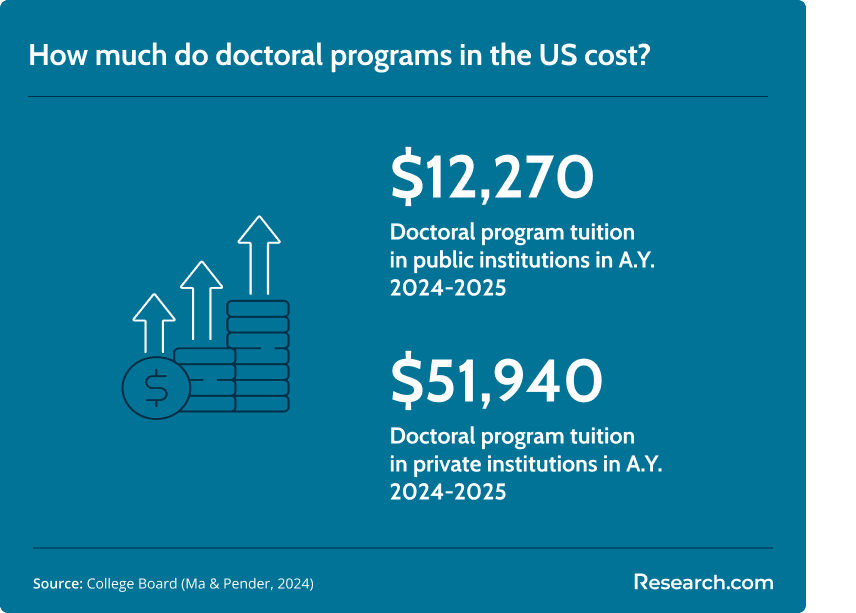
- The tuition and fees of doctoral programs in public institutions for the academic year 2024–2025 cost $12,270. In private institutions, this amount was $51,940.
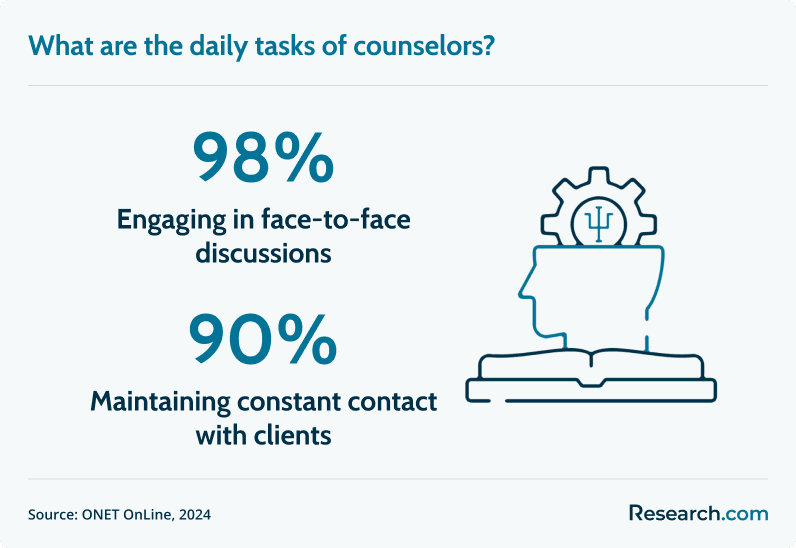
- 98% of counselors often engage in face-to-face discussions, and 90% maintain constant contact with others.
- A majority of the American Counseling Association’s members (77%) are practicing as professional counselors, 9% are master’s or doctoral students, and 6% are counselor educators.
- Counselors with a doctoral or professional degree earn as much as $80,423 yearly.
- The employment of substance abuse, behavioral disorder, and mental health counselors will increase by 18% from 2022 to 2032.
How long does it take to complete an online PhD in Counseling program?
Most online PhD in Counseling programs take three to five years for full-time students. That timeline is similar to many advanced clinical psychology pathways, including APA accredited PsyD clinical psychology programs. Some schools offer accelerated formats, while part-time enrollment, dissertation delays, clinical placements, or residency requirements can extend completion time.
Admission structure also affects the timeline. Some doctoral programs require a completed master’s degree before entry. A master’s program typically spans two years, while other doctoral programs include master’s-level coursework inside the doctoral curriculum, increasing total credits and time. Students who already completed one of the easy masters degrees online may be able to move more directly into doctoral coursework, depending on transfer policies and prerequisites.
| Timeline factor | How it can affect completion | What to ask before enrolling |
| Full-time vs. part-time enrollment | Full-time study may shorten the timeline, while part-time study can make the workload more manageable. | Is there a maximum time allowed to finish the degree? |
| Dissertation requirements | Research design, data collection, revisions, and committee review can add time. | What percentage of students complete the dissertation on schedule? |
| Residencies or intensives | Required in-person sessions may affect scheduling and travel planning. | How many campus visits are required, and when do they occur? |
| Internship or practicum | Fieldwork may depend on local placement availability and supervisor approval. | Does the school help students secure approved sites? |
| Transfer credits | Accepted graduate credits can reduce the total course load. | How many credits can transfer, and which courses are eligible? |
The practical takeaway: do not judge a program only by its advertised length. Ask about average completion time, dissertation support, credit transfer, residency schedules, and how often working students finish on time.
How does an online PhD in Counseling program compare to an on-campus program?
The main difference between an online PhD in Counseling and an on-campus program is delivery format, but the decision affects more than convenience. Online programs can be a good fit for working counselors who need flexible scheduling and want to avoid relocation. On-campus programs may offer more face-to-face mentoring, easier access to campus-based research activities, and a traditional academic environment. Students looking broadly at easy degrees to get online should understand that doctoral counseling programs are demanding, even when delivered remotely.
| Factor | Online PhD in Counseling | On-campus PhD in Counseling |
| Schedule | Often more flexible, especially with asynchronous coursework. | Usually tied to set class times and campus attendance. |
| Learning environment | Uses virtual classrooms, recorded lectures, discussion boards, and digital collaboration. | Relies more heavily on in-person seminars, campus meetings, and immediate face-to-face interaction. |
| Cost considerations | May reduce commuting, housing, and relocation expenses, though fees and residencies still matter. | Can include transportation, campus fees, housing, meal plans, and relocation costs. |
| Networking | Depends on virtual engagement, residencies, faculty access, and cohort design. | Often provides more spontaneous interaction with faculty, peers, research groups, and campus events. |
| Field experience | Students may need to arrange local practicum, internship, or supervision sites with school approval. | Schools may have established relationships with nearby agencies or clinical partners. |
| Best for | Working professionals, caregivers, students outside major campus areas, and self-directed learners. | Students who want a campus community, in-person research immersion, or structured daily routines. |
Both formats can be rigorous and valuable. The better choice depends on how you learn, whether you can travel, how much structure you need, and whether the program’s accreditation and fieldwork requirements match your goals.
What is the average cost of an online PhD in Counseling program?
Online PhD in Counseling costs vary widely by school type, required credits, residency fees, technology fees, and whether tuition is charged by credit, quarter credit, or term. Many programs list tuition from $500 to $1,500 per credit hour, with total program costs commonly falling between $30,000 and $60,000. Some public universities may offer lower rates or in-state tuition policies for qualifying students.
According to the College Board (Ma & Pender, 2024), tuition and fees for doctoral programs in public institutions for the academic year 2024–2025 cost $12,270. In private institutions, this amount was $51,940. Those figures are useful benchmarks, but students should also account for dissertation fees, clinical placement expenses, software, books, professional membership fees, travel for residencies, and possible lost income if reducing work hours.
| Cost category | Why it matters | How to compare programs |
| Tuition rate | The largest advertised cost, usually charged per credit or quarter credit. | Multiply tuition by required credits and confirm whether rates change by enrollment status. |
| Fees | Technology, graduation, dissertation, clinical, or distance learning fees can raise the final price. | Request a full program cost sheet, not just the tuition rate. |
| Residency travel | Hybrid or low-residency programs may require airfare, hotels, meals, and time away from work. | Ask how many residencies are required and whether they are optional or mandatory. |
| Field placement expenses | Background checks, liability insurance, supervision fees, or travel may apply. | Confirm which expenses students typically pay out of pocket. |
| Time to completion | Extra semesters can increase tuition, fees, and opportunity costs. | Ask about average completion time and dissertation continuation fees. |
The American Counseling Association (2024) reported that counselors with a doctoral or professional degree earn as much as $80,423 yearly. That figure can help frame ROI, but students should evaluate likely roles in their state, their current salary, and the specific career advancement a doctorate would support.
What are the financial aid options for students enrolling in an online PhD in Counseling program?
Doctoral counseling students may be able to use several funding sources, but availability depends on school eligibility, enrollment status, citizenship or residency requirements, academic standing, employer policies, and program structure. Start by asking each school for a full financial aid review before assuming the listed tuition is the actual amount you will pay.
- Federal Student Aid: Eligible students can complete the Free Application for Federal Student Aid (FAFSA) to be considered for federal loans and other aid. Funds may help cover tuition, fees, and eligible living expenses.
- Scholarships and Fellowships: Universities and external organizations, including the National Board for Certified Counselors Foundation and American Addiction Centers, may offer graduate funding for counseling students. Fellowships may include stipends or tuition support tied to research or teaching responsibilities.
- Employer Tuition Reimbursement: Counselors employed by healthcare systems, schools, agencies, nonprofits, or government organizations may be eligible for partial tuition support through workplace benefits.
- Graduate Assistantships: Some programs offer paid teaching, research, or administrative roles, though online doctoral students should confirm whether remote assistantships are available.
- Loan forgiveness pathways: Students working in nonprofit or government settings should review the Public Service Loan Forgiveness (PSLF) program requirements carefully before relying on it as a repayment strategy.
Questions to ask about funding
- Is the online doctoral program eligible for federal financial aid?
- Are scholarships available specifically for counseling doctoral students?
- Can online students receive assistantships or tuition discounts?
- Are residency, internship, or dissertation fees included in the aid estimate?
- What happens to aid eligibility if I enroll part time?
What are the prerequisites for enrolling in an online PhD in Counseling program?
Admission requirements vary, but most online PhD in Counseling programs expect applicants to show advanced academic preparation, professional readiness, and clear research or leadership goals. Many programs are designed for applicants who already hold a master’s degree in counseling or a closely related field, such as psychology, social work, or a substance abuse counseling degree.
- Graduate education: Applicants typically need a relevant master’s degree and official transcripts showing readiness for doctoral-level writing, research, and theory.
- Professional experience: Many programs prefer applicants with counseling, therapy, school counseling, behavioral health, or related human services experience. A resume or CV is commonly required.
- Licensure: Some programs require or strongly prefer a counseling license because doctoral coursework often assumes familiarity with professional standards, ethics, and practice.
- Recommendations: Schools usually request letters from academic or professional references who can evaluate the applicant’s counseling skills, scholarship potential, and readiness for doctoral work.
- Statement of purpose: Applicants often submit an essay explaining career goals, research interests, reasons for pursuing doctoral study, and fit with the program.
- Additional materials: Some schools may require GRE scores, an interview, a writing sample, or a copy of published or master’s-level scholarly work.
Students should also assess whether they have the interpersonal and communication skills required for counseling work. According to ONET OnLine, important skills include social perceptiveness, active listening, effective communication, reading comprehension, and service orientation. These skills matter because 98% of counselors often engage in face-to-face discussions, and 90% maintain constant contact with others. They are also important for students comparing related doctoral paths, including top APA-accredited PsyD programs.
Common admission mistakes
| Mistake | Why it can hurt you | Better approach |
| Applying without checking licensure assumptions | Some doctoral programs do not lead to initial counseling licensure. | Ask whether the program is designed for already-licensed counselors or pre-licensure students. |
| Choosing only by tuition | A cheap program may still have high fees, weak dissertation support, or poor fit. | Compare total cost, completion support, accreditation, and career outcomes together. |
| Ignoring research fit | Doctoral study depends heavily on faculty mentorship and dissertation alignment. | Review faculty research interests before applying. |
| Underestimating time demands | Online doctoral study can be difficult while working full time. | Ask current students how many hours per week the program realistically requires. |
Is Accreditation Essential for an Online PhD in Counseling Program?
Accreditation is one of the most important quality checks for an online PhD in Counseling. Institutional accreditation affects financial aid eligibility and signals that the school meets recognized academic standards. Programmatic accreditation, such as CACREP, may also matter for counselor education, supervision, employer recognition, and state licensure alignment. Students should not assume that every online doctoral counseling program meets the same professional requirements.
Before enrolling, confirm the school’s institutional accreditation, the program’s counseling-specific accreditation if applicable, and whether the curriculum supports your intended career path. If you are comparing broader counseling degree options by price and quality, Research.com’s guide to an affordable online counseling degree can help you understand related pathways.
What courses are typically in an online PhD in Counseling program?
An online PhD in Counseling usually blends advanced counseling content with research, supervision, teaching, leadership, and ethics. Course titles differ by university, but most doctoral programs are designed to prepare students to evaluate evidence, supervise counselors, teach graduate students, lead programs, and contribute original scholarship.
| Course area | What students study | Career relevance |
| Counseling Theories and Techniques | Advanced frameworks for understanding clients, selecting interventions, and applying evidence-based approaches. | Supports clinical decision-making, teaching, supervision, and consultation. |
| Ethics and Professional Standards | Legal duties, ethical dilemmas, professional codes, boundaries, documentation, and risk management. | Essential for supervisors, faculty, clinicians, and program leaders. |
| Multicultural Counseling | Cultural identity, bias, access, community context, and culturally responsive counseling strategies. | Prepares graduates to serve diverse populations and train counselors responsibly. |
| Research Methods and Statistics | Study design, data analysis, program evaluation, quantitative methods, qualitative methods, and scholarly writing. | Directly supports dissertation work, publication, grant activity, and evidence-based leadership. |
| Neuroanatomy & Behavioral Medicine | Brain-behavior relationships and the connection between health, behavior, and mental health practice. | Helps counselors integrate biological and behavioral perspectives into care. |
| Leadership and Advocacy in Counseling | Program development, policy advocacy, systems change, and strategies for reducing barriers to mental health services. | Useful for administrative, public sector, nonprofit, and counselor education roles. |
Specialized electives may cover addiction counseling, trauma-informed care, school counseling, telehealth, couple and family counseling, or educational leadership. Students who already completed related graduate study, such as one of the cheapest psychology masters programs, may find some topics familiar, but doctoral work typically requires deeper theory, research, and leadership application.
Many programs also include practicum, internship, supervision, or teaching experiences. These applied components are important because they allow students to connect doctoral-level theory with real counseling, supervision, teaching, or program evaluation tasks.
How does an online PhD in Counseling differ from accredited online MFT programs?
An online PhD in Counseling usually emphasizes counselor education, research, supervision, leadership, and advanced counseling scholarship. Accredited online marriage and family therapy programs focus more specifically on relational systems, couple dynamics, family therapy models, and direct clinical preparation for MFT practice. In short, a PhD in Counseling is often broader and more research- or education-oriented, while MFT programs are more specialized around family and relationship treatment.
| Path | Primary focus | Best fit |
| Online PhD in Counseling | Research, counselor education, supervision, leadership, advanced practice, and dissertation work. | Counselors seeking academic, supervisory, research, administrative, or specialized roles. |
| Accredited online MFT programs | Marriage and family therapy theories, relational assessment, family systems, and direct therapeutic practice. | Students focused on becoming marriage and family therapists or deepening family therapy practice. |
If you are deciding between these clinical pathways, compare curriculum, licensure alignment, supervised experience, and career goals. For program-specific options, review Research.com’s guide to accredited online MFT programs.
What challenges might I face in an online PhD in Counseling program?
Online doctoral counseling programs are flexible, but they are not easy. Students must manage advanced reading, research design, scholarly writing, clinical or supervisory expectations, and dissertation deadlines without the daily structure of a campus program. The biggest challenges are usually time management, isolation, technology demands, local field placement logistics, and maintaining momentum through the dissertation.
- Self-direction: Online students must set study routines, meet deadlines, and initiate communication with faculty.
- Research workload: Doctoral writing, statistics, methodology, and dissertation revisions can be demanding even for strong students.
- Placement logistics: Students may need to identify local practicum, internship, or supervision sites that meet program requirements.
- Mentorship access: Online learners should confirm how often they can meet with faculty advisors and dissertation chairs.
- Professional networking: Virtual programs require intentional participation in cohorts, conferences, professional associations, and research groups.
Students can reduce these risks by choosing programs with strong advising, clear dissertation milestones, active faculty communication, and practical exposure to counseling and mental health career paths.
How are emerging trends shaping online PhD in Counseling programs?
Online counseling doctoral programs are adapting to changes in mental health care, technology, and employer expectations. Many programs now place more emphasis on telehealth, digital ethics, data-informed practice, online supervision, culturally responsive care, and interdisciplinary collaboration. Some curricula also include virtual simulations, telehealth practicum experiences, or analytics for program evaluation and evidence-based decision-making.
These trends matter because counseling professionals increasingly work across digital, clinical, educational, and organizational settings. Students comparing doctoral psychology and counseling options may also see overlapping technology and research competencies in a doctorate in psychology online.
What support resources and digital tools are integrated into online PhD in Counseling programs?
Strong online PhD in Counseling programs do more than post lectures. They provide the academic infrastructure doctoral students need to progress through coursework, research, fieldwork, and dissertation requirements. Useful support services may include academic advising, technical support, digital library access, research databases, writing centers, statistical software guidance, virtual office hours, and dissertation milestone tracking.
- Academic advising: Helps students plan courses, residencies, fieldwork, and degree milestones.
- Research support: Provides access to scholarly databases, research librarians, writing support, and methodology resources.
- Faculty mentorship: Supports dissertation development, research identity, publication planning, and professional networking.
- Technology support: Assists with learning platforms, video tools, online testing systems, and digital collaboration.
- Career services: May help students prepare for academic applications, supervision roles, leadership jobs, or private practice growth.
If cost is a concern and you are still deciding whether a doctorate is necessary, Research.com’s guide to the cheapest masters in counseling programs may help you compare lower-cost counseling pathways.
Can complementary advanced degrees enhance my counseling expertise?
Some counseling professionals strengthen their doctoral work with adjacent training in behavior analysis, psychology, education, public health, healthcare administration, or organizational leadership. A related credential can be useful when it directly supports a student’s clinical population, research agenda, or leadership goal. For example, an online masters in applied behavior analysis may add behavioral assessment and intervention knowledge that complements counseling practice and research.
The key is focus. Adding another degree should solve a clear professional problem, not simply expand credentials. Before pursuing an additional program, ask whether it improves licensure eligibility, supervision capacity, research depth, client outcomes, or career mobility.
What types of specializations are available in online PhD in Counseling programs?
Specializations allow doctoral students to align coursework, research, field experience, and dissertation topics with a specific counseling population or professional role. If you are still asking, what counseling degree should I get, start with the job you want and work backward to the credential, accreditation, and licensure requirements.
| Specialization | What it emphasizes | Best for students who want to... |
| Counseling Education and Supervision | Teaching, supervision, counselor development, research, leadership, and professional identity. | Train future counselors, supervise clinicians, publish research, or work in counselor education. |
| Clinical Mental Health Counseling | Assessment, treatment planning, evidence-based therapy, and complex mental health needs. | Strengthen advanced clinical practice or lead mental health programs. |
| School Counseling | K-12 student development, academic support, mental health, family collaboration, and school systems. | Lead school counseling programs, conduct school-based research, or train school counselors. |
| Substance Abuse Counseling | Addiction treatment, relapse prevention, recovery systems, and co-occurring conditions. | Work in addiction treatment leadership, clinical supervision, or substance use research. |
| Marriage and Family Therapy | Relationships, family systems, couple conflict, and relational interventions. | Study counseling through a systemic and family-centered lens. |
The American Counseling Association reported that in 2024, 77% of its members are practicing as professional counselors, 9% are master’s or doctoral students, and 6% are counselor educators. These figures show that most members work in practice roles, while a smaller share are preparing for or working in education. For PhD students, specialization choice should reflect where they want to contribute: practice, supervision, research, teaching, or leadership.
This chart displays the diverse roles counselors can pursue within the profession.
Can I Complete an Online PhD in Counseling on an Accelerated Timeline?
Some online PhD in Counseling programs offer accelerated tracks for qualified students. These options may use shorter terms, heavier course loads, transfer credits, or advanced standing for students with strong graduate preparation. Accelerated study can reduce time in school, but it can also increase weekly workload and pressure during dissertation planning.
Students considering accelerated programs should ask about transfer credit limits, dissertation timelines, residency dates, faculty availability, and whether working full time is realistic. If speed is a major priority, it may also be useful to compare structures found in accelerated psychology degree programs.
How can interdisciplinary programs enhance my counseling expertise?
Interdisciplinary study can help counseling doctoral students address problems that do not fit neatly inside one field. For example, behavioral science may improve intervention design, organizational leadership may help with program management, and psychology may strengthen assessment and research understanding. This can be especially useful for professionals who want leadership roles in healthcare, education, community programs, or integrated behavioral health.
However, interdisciplinary study should not replace core counseling depth. The best approach is to use outside fields to strengthen a specific counseling goal. Students comparing broader doctoral pathways may find Research.com’s article on combined master's and PsyD programs useful for understanding how integrated credentials can support advanced mental health training.
What mentorship and research opportunities enhance online PhD in Counseling programs?
Mentorship can make or break the online doctoral experience. Strong programs match students with faculty whose research interests align with their goals and provide regular communication through virtual office hours, dissertation meetings, research groups, and publication guidance. Students should look for programs that make mentorship structured rather than optional.
- Faculty research alignment: Review faculty publications, grants, clinical interests, and dissertation supervision areas.
- Research seminars: Look for structured courses or workshops that help students move from topic ideas to researchable questions.
- Publication support: Strong programs encourage conference presentations, journal submissions, and collaborative scholarship.
- Grant and proposal guidance: Doctoral students benefit from feedback on research design, ethics review, and funding applications.
- Interdisciplinary partnerships: Some students may connect counseling research with behavior analysis, including topics similar to those in an affordable BCBA program online.
How do online PhD in Counseling programs ensure academic integrity and quality?
Quality online doctoral programs use multiple safeguards to protect academic standards. These may include proctored assessments, plagiarism detection, structured dissertation review, faculty oversight, standardized rubrics, secure learning platforms, regular course evaluations, and external accreditation review. Students should ask how the program verifies student identity, evaluates clinical or supervisory work, and monitors dissertation quality.
These quality controls are similar in purpose to those used in online PsyD programs, where remote delivery must still support rigorous scholarship, ethical practice, and reliable assessment.
How to choose the best online PhD in Counseling program?
The best online PhD in Counseling is the one that fits your professional objective, state requirements, research interests, budget, and learning style. Do not choose solely by ranking or tuition. A low-cost program can become expensive if it has poor dissertation support, unclear placement expectations, or limited relevance to your intended career.
| Selection factor | What to verify | Why it matters |
| Accreditation | Institutional accreditation and, when relevant, CACREP or Master’s in Psychology and Counseling Accreditation Council (MPCAC) status. | Can affect credibility, aid eligibility, employer perception, and professional alignment. |
| Program format | Asynchronous courses, live sessions, hybrid requirements, residencies, and cohort expectations. | Determines whether the program fits your schedule and location. |
| Specializations | Clinical counseling, school counseling, counselor education, supervision, research, or related tracks. | Helps align the degree with your career plan. |
| Faculty fit | Research areas, supervision style, dissertation expertise, and availability. | Critical for dissertation completion and scholarly development. |
| Student support | Advising, writing help, library services, research support, career services, and technical assistance. | Online doctoral students need strong infrastructure to stay on track. |
| Total cost | Tuition, fees, residency travel, clinical costs, dissertation continuation charges, and books. | Prevents surprises and supports realistic ROI planning. |
| Career outcomes | Graduate roles, faculty placements, licensure relevance, alumni networks, and employer connections. | Shows whether the program supports the outcomes you want. |
If your interests extend into behavioral science, you may also want to compare counseling doctorates with a behavioral science online degree. The right choice depends on whether you want counseling licensure, research preparation, behavior-focused intervention training, or broader psychology and human behavior study.
Questions to ask admissions advisors
- Is this program designed for licensed counselors, pre-licensure students, or both?
- Does the program meet requirements in my state for my intended role?
- How many campus visits or residencies are required?
- What is the average time to dissertation completion?
- How are dissertation chairs assigned?
- Can online students access assistantships, scholarships, or research projects?
- What support is available for practicum, internship, or supervision placements?
- What roles do graduates commonly obtain after completing the program?
What career paths are available for graduates of online PhD in Counseling programs?
Graduates of online PhD in Counseling programs can pursue several career directions, depending on licensure, specialization, experience, research record, and professional goals. The degree is especially relevant for roles that combine counseling knowledge with teaching, supervision, research, leadership, or policy work.
- Licensed Clinical Counselors: Provide advanced therapy to individuals, groups, or families and may specialize in complex mental health needs.
- Substance Abuse Counselors: Support addiction treatment, recovery planning, relapse prevention, and services for co-occurring conditions.
- School or College Counselors: Address academic, career, and personal needs in K-12 schools or higher education settings.
- University Professors: Teach counseling or psychology courses, mentor students, supervise research, and contribute to academic programs.
- Researchers: Study counseling methods, mental health outcomes, program effectiveness, policy, or underserved populations.
- Healthcare Administrators: Lead mental health programs in hospitals, clinics, agencies, or nonprofits. Students interested in administrative preparation may also compare options such as the cheapest online MBA healthcare management programs.
- Policy Advisors: Work with government agencies, advocacy organizations, think tanks, or public health programs to shape mental health policy.
- Consultants and private practice leaders: Apply counseling expertise to workplace mental health, nonprofit strategy, clinical supervision, training, or specialized private practice.
Students comparing counseling doctorates with doctoral psychology routes may also want to review the fastest PsyD programs available in their state, especially if their primary goal is clinical psychology practice rather than counselor education or supervision.
This chart illustrates the wage differences between counselors and similar jobs.
What is the return on investment for an online PhD in Counseling program?
ROI for an online PhD in Counseling depends on the relationship between cost, time, career advancement, salary potential, and professional goals. A doctorate may be a strong investment for students who need it for counselor education, supervision, research, senior leadership, or specialized practice. It may be a weaker investment for students whose goals can be met with a master’s degree, licensure, certification, or targeted professional training.
| ROI factor | Positive sign | Warning sign |
| Career goal | The role you want commonly requires or strongly prefers a doctorate. | You mainly want initial counseling licensure and do not need doctoral training. |
| Total cost | The program fits your budget after aid, employer support, or realistic borrowing. | You must borrow heavily without a clear salary or role change. |
| Completion support | The school provides strong dissertation advising, research support, and milestone tracking. | Students report unclear expectations or long dissertation delays. |
| Professional advancement | The degree supports promotion, faculty work, supervision, consulting, or leadership. | Your employer does not reward doctoral credentials or advanced responsibilities. |
| Salary context | You have compared realistic earnings using sources such as how much counselors make. | You are relying on broad salary claims that do not match your state, role, or license. |
To evaluate ROI, calculate the full program cost, estimate how long completion will take, compare likely roles, and identify whether the degree creates opportunities you could not access otherwise.
How is diversity and cultural competence addressed in online PhD in Counseling programs?
Diversity, equity, and cultural competence are central to modern counseling education. Online PhD programs often include coursework and field experiences focused on culturally responsive counseling, cross-cultural communication, ethical practice, bias awareness, social determinants of mental health, and adaptations of evidence-based interventions for diverse communities.
Doctoral students may also explore how counseling intersects with social work, psychology, education, public health, and community systems. Comparing related roles, such as in Research.com’s guide to social worker vs psychologist differences, can help students understand where counseling fits within the broader mental health workforce.
What is the job market for graduates with a PhD in Counseling?
The job market for counseling professionals is shaped by rising mental health needs, greater public awareness, workforce shortages in some settings, and demand for qualified providers in clinical, school, community, and public health environments. A PhD in Counseling may strengthen candidacy for senior roles, but job prospects still depend on licensure, specialization, work history, publications, geographic area, and employer requirements.
The U.S. Bureau of Labor Statistics projects growth across several counseling-related occupations. Employment of substance abuse, behavioral disorder, and mental health counselors will increase by 18% from 2022 to 2032. Employment of marriage and family therapists will grow by 15%, while school and career counselors will increase by 5%.
These projections translate to around 7,000 to 48,900 job openings for counseling-related jobs throughout the decade. For doctoral graduates, the strongest opportunities may be in roles that combine counseling expertise with supervision, teaching, leadership, program development, evaluation, research, or specialized clinical practice.
This chart displays the employment growth of counselors and similar professions.
Key Insights
- An online PhD in Counseling is most valuable for experienced professionals pursuing counselor education, supervision, research, leadership, policy, or advanced specialization—not for students seeking the quickest route to entry-level licensure.
- Affordability should be judged by total cost, not just tuition. Include required credits, fees, residency travel, field placement expenses, dissertation continuation charges, and the time needed to finish.
- Accreditation matters. Verify institutional accreditation, programmatic accreditation such as CACREP when relevant, and alignment with your state and career goals before enrolling.
- Online programs can be rigorous and flexible at the same time. Success depends on disciplined scheduling, strong writing skills, reliable faculty mentorship, and clear dissertation support.
- Specialization choice should follow your intended role. Counselor education and supervision fits academic and supervisory goals, while clinical mental health, school counseling, substance abuse counseling, and marriage and family therapy tracks support more focused practice or research interests.
- ROI is strongest when the doctorate opens a role you could not reasonably access with a master’s degree alone, such as faculty work, senior supervision, research leadership, or high-level program administration.
References:
- American Counseling Association. (2024). 2024 Counseling Workforce Report. https://www.counseling.org/resources/research-reports/counseling-workforce-report
- Statista. (2024, July). Number of U.S. adults who received mental health treatment or counseling in the past year from 2002 to 2023. https://www.statista.com/statistics/794027/mental-health-treatment-counseling-past-year-us-adults
- U.S. Bureau of Labor Statistics. (2024, January 9). Strong growth projected in mental health-related employment. https://www.bls.gov/opub/ted/2024/strong-growth-projected-in-mental-health-related-employment.htm
- U.S. Bureau of Labor Statistics. (2024, April 3). Occupational employment and wages, May 2023 - Substance Abuse, Behavioral Disorder, and Mental Health Counselors. Occupational Employment and Wage Statistics. https://www.bls.gov/oes/current/oes211018.htm
- U.S. Bureau of Labor Statistics. (2024, August 29). Substance Abuse, Behavioral Disorder, and Mental Health Counselors. Occupational Outlook Handbook. https://www.bls.gov/ooh/community-and-social-service/substance-abuse-behavioral-disorder-and-mental-health-counselors.htm
Other Things You Should Know About Online PhD in Counseling Programs
A cheap online PhD in Counseling should come from a university holding regional accreditation, and the counseling program should be aligned with CACREP standards when possible. CACREP accreditation matters because many state licensure boards and employers prefer, or require, counseling coursework that meets those standards.
Many programs offer tuition rebates or financial aid to reduce costs. You may find need-based scholarships, grants, or employer tuition assistance programs, which vary by institution. Checking with specific schools can reveal these options for 2027's cheapest PhD programs in Counseling.


