2027 LPC Counseling Licensure Requirements in Oklahoma

Co-Founder and Chief Data Scientist
Becoming a Licensed Professional Counselor in Oklahoma is a regulated process, not just a degree choice. If you want to provide professional counseling services, work independently with clients, or move into clinical leadership, you need to understand the state’s education, supervision, exam, application, and renewal rules before you invest time and money in a graduate program.
This guide is for students comparing counseling master’s programs, career changers entering mental health work, and out-of-state counselors considering Oklahoma licensure. It explains the LPC pathway step by step, highlights common delays, compares license stages, and shows how licensure can affect job options, salary potential, and long-term career growth in Oklahoma.
Quick answer: Oklahoma LPC licensure at a glance
To become an LPC in Oklahoma, you generally need a qualifying graduate degree in counseling or a closely related mental health field, required counseling coursework, supervised post-master’s clinical experience, and passing scores on required examinations. Oklahoma requires 3,000 hours of supervised post-graduate experience before full LPC licensure. The state also requires candidates to understand Oklahoma-specific legal and ethical responsibilities.
| Requirement | What Oklahoma candidates should plan for |
| Graduate education | A master’s degree in counseling or a closely related mental health field from a qualifying institution or approved program. |
| Credit and coursework review | State academic standards include required counseling content areas; candidates should confirm whether their program meets Oklahoma Board expectations before enrolling. |
| Supervised experience | 3,000 post-master’s supervised hours are required before full LPC licensure. |
| Exams | The National Counselor Examination and the Oklahoma Legal and Ethical Responsibilities Examination are central parts of the licensure process. |
| Career outlook | Oklahoma anticipates 15% growth in counseling jobs by 2030, reflecting continued need for qualified mental health professionals. |
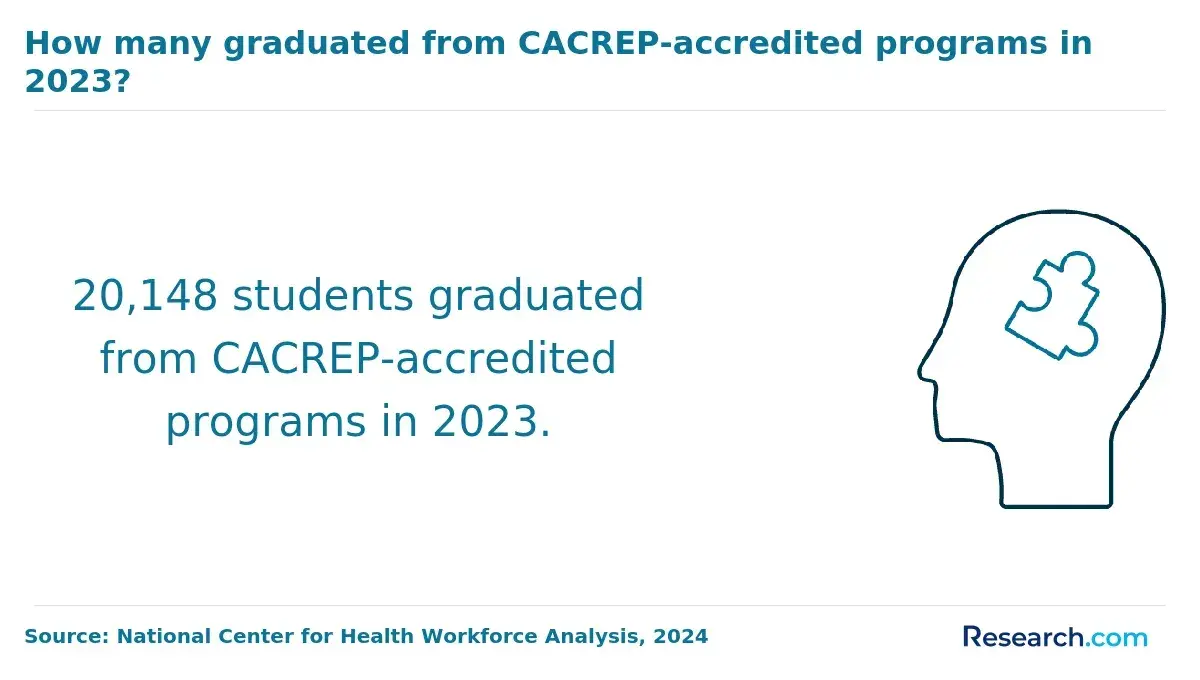
- Graduate education matters most at the start: A counseling or related mental health master’s degree should be checked against Oklahoma’s academic rules before you enroll, especially if the program is not CACREP-accredited or already approved by the state.
- Coursework must match state expectations: Candidates should be prepared to document counseling theories, ethics, assessment, development, research, practicum, and internship preparation. The original academic guidance also references at least 48 semester hours, so applicants with older or related degrees should confirm how their credits will be evaluated.
- The supervised practice phase is substantial: After the qualifying master’s degree, candidates must complete 3,000 supervised hours before applying for full LPC status in Oklahoma.
Article contents
- Degree requirements for Oklahoma LPC candidates
- Required LPC coursework in Oklahoma
- Supervised counseling hours required in Oklahoma
- Exams required for LPC licensure
- How to apply for Oklahoma LPC licensure
- Typical timeline to become an LPC
- Renewal and continuing education requirements
- Oklahoma LPC license types
- Licensure by endorsement for out-of-state counselors
- Demand for LPCs in Oklahoma
- How licensure changes career options
- Costs and fees for Oklahoma LPC licensure
What graduate degree do you need for LPC licensure in Oklahoma?
Oklahoma LPC candidates need graduate-level preparation that matches the state’s counseling education standards. The safest path is to choose a counseling master’s program that is clearly designed for professional counselor licensure and can document the required content areas. If you choose a related mental health degree, you may need a closer academic review to confirm that your coursework satisfies Oklahoma’s rules.
| Degree or program type | How it fits Oklahoma LPC planning | What to verify before enrolling |
| Master’s Degree in Counseling | A Board-approved graduate degree with 60 semester or 90 quarter credit hours in counseling from a regionally accredited institution is designed specifically for professional counseling preparation. | Ask whether the curriculum is built for Oklahoma LPC eligibility and whether graduates have met state academic requirements without extra coursework. |
| Master’s Degree in a Closely Related Mental Health Field | Programs such as clinical mental health counseling, marriage and family therapy, or rehabilitation counseling may qualify if they satisfy the state’s content and accreditation expectations. | Confirm that required counseling courses, practicum, internship, ethics, and assessment content are documented clearly on transcripts or syllabi. |
| CACREP-Accredited Graduate Programs | A CACREP-accredited master’s degree is automatically accepted without additional academic review. | Verify the program’s current CACREP status and make sure the track you choose is the licensure-focused counseling track. |
| In-State Board Pre-Approved Programs | Oklahoma-based graduate programs pre-approved by the Board are recognized as meeting the academic requirements directly. | Ask the school whether its approval applies to your catalog year, program format, and concentration. |
The main decision is not simply “online or campus” or “counseling or psychology.” The key question is whether the degree will be accepted for Oklahoma LPC licensure without forcing you to return for additional graduate courses after graduation.
Which courses are required for LPC licensure in Oklahoma?
Oklahoma’s coursework requirements are meant to ensure that LPC candidates understand human development, client assessment, counseling methods, ethics, research, and supervised practice before they begin post-graduate clinical work. When comparing programs, request a licensure map showing exactly which courses satisfy each Oklahoma content area.
| Required coursework area | Credit expectation stated in the source material | Why it matters in practice |
| Human Growth and Development | One 3-credit course | Covers intellectual, physical, social, and emotional development from prenatal stages through late adulthood. |
| Abnormal Human Behavior | One 3-credit course | Builds understanding of psychological dysfunction and social disorganization that counselors may encounter in clinical settings. |
| Appraisal/Assessment Techniques | Two 3-credit courses | Prepares candidates to use testing and non-testing assessment approaches responsibly. |
| Counseling Theories/Methods | Two 3-credit courses | Introduces major counseling frameworks and intervention strategies used with clients. |
| Professional Orientation/Ethics | One 3-credit course | Focuses on professional standards, counselor responsibilities, and ethical decision-making. |
| Research | One 3-credit course | Teaches research methods, evaluation, and how to apply evidence to counseling practice. |
| Practicum/Internship | At least one course with a minimum of 300 supervised practical counseling hours | Provides early supervised experience in classroom and field settings before post-master’s supervised practice begins. |
Electives can also matter. Courses in group counseling, crisis response, addiction counseling, trauma, career development, or family systems may strengthen your preparation for specific settings. If your long-term goal is a counseling psychology career, prioritize programs that combine state licensure alignment with supervised field placements that match the population you want to serve.
How many supervised hours do Oklahoma LPC candidates need?
Oklahoma requires 3,000 hours of supervised counseling experience for LPC licensure. These hours must be completed after the qualifying master’s degree and under an approved supervisor. Hours completed during a graduate practicum or internship do not replace the post-master’s supervised experience requirement.
- Direct client contact requirement: For every 1,000 hours of supervised experience, candidates need at least 350 hours of face-to-face client interaction. Across the full requirement, this supports the 1,050 direct client contact hours referenced in the application pathway.
- Supervision frequency: Candidates must receive at least 45 minutes of supervision for every 20 hours of counseling work. Supervision may be individual or group-based, but group supervision cannot make up more than half of the total supervision time.
- Full-time pace: Oklahoma treats 20 hours per week as full-time for this purpose. At that pace, candidates often plan for about three years, though part-time work, job changes, or supervisor availability can extend the timeline.
- Post-master’s timing: The 3,000 hours must be earned after the graduate degree is completed. Academic practicum and internship hours are separate educational requirements.
| Planning issue | Why candidates get delayed | Better approach |
| Finding a supervisor | Candidates accept a job before confirming whether supervision meets Oklahoma rules. | Secure a written supervision agreement and verify supervisor approval before counting hours. |
| Tracking hours | Direct contact, indirect work, and supervision are recorded inconsistently. | Use a weekly tracking system and reconcile records with your supervisor regularly. |
| Part-time employment | Lower weekly hours stretch the process beyond the expected three-year pace. | Estimate your realistic weekly hours before assuming a licensure completion date. |
| Job setting changes | Changing employers can disrupt supervision continuity. | Keep copies of signed forms, supervision logs, and role descriptions before leaving a site. |
A licensed professional counselor trained at a local Oklahoma university described the supervised phase as demanding but manageable with careful records. She noted that completing the hours while working part-time took just over three years and required steady coordination between client sessions, employment duties, and supervision meetings.
Her biggest advice was to treat documentation as part of the job, not an administrative afterthought. Regular supervision helped her connect theory to real client situations, and the post-master’s requirement gave her a structured bridge from graduate student to independent clinician.
Which exams are required for Oklahoma LPC licensure?
Oklahoma uses examinations to confirm that LPC applicants understand both national counseling knowledge and state-specific professional responsibilities. Candidates should plan exam timing carefully because test scheduling, score reporting, and retakes can affect the overall licensure timeline.
- National Counselor Examination (NCE): The NCE is a computer-based exam administered by the National Board for Certified Counselors. It includes 200 multiple-choice questions covering major counseling areas such as human development, psychopathology, counseling process, and professional ethics.
- Oklahoma Legal and Ethical Responsibilities Examination (OLERE): The OLERE focuses on Oklahoma laws, rules, and ethical responsibilities for counselors. A passing score of at least 80% is required, making state-specific preparation important even for candidates who perform well on national counseling exams.
The NCE is available through testing centers nationwide, while the OLERE is offered at multiple Oklahoma locations. Before registering, verify the current exam sequence with the Oklahoma Board of Behavioral Health Licensure, especially if you completed training in another state or are applying by endorsement. If you are still exploring mental health roles and are not ready for the LPC path, you may also want to compare alternatives in this guide on how to become a therapist without college.
How do you apply for LPC licensure in Oklahoma?
The Oklahoma LPC application process is sequential. You first need the right graduate education, then permission to begin supervised practice as a candidate, then completion of supervised experience and exams before full licensure review.
- Complete an eligible graduate degree: Earn a Board-approved 60 semester-hour or 90 quarter-hour graduate degree in counseling or a related field. The program should be regionally accredited, include a mental health curriculum, and include an internship. CACREP-accredited programs are pre-approved.
- Pass the OLERE: Candidates must pass the Oklahoma Legal and Ethical Responsibilities Examination, a one-hour test covering state laws and LPC regulations, before moving forward with supervised practice requirements.
- File the initial application with the BBHL: Submit the required application materials, which may include the OLERE passing score, official transcripts, a supervision agreement, a professional disclosure statement, and supervisor verification.
- Begin and complete post-graduate supervised experience: Accumulate 3,000 supervised counseling hours over a minimum of three years, including at least 1,050 direct client contact hours, under an approved LPC supervisor.
- Pass the National Counselor Examination: The NCE verifies broad counseling knowledge and is required before advancing to full licensure.
- Submit final licensure documentation: After finishing the supervised hours and exams, provide the Board with final evidence of experience, exam results, transcripts, and the required application materials.
- Pay required fees: Application, examination, background check, and renewal costs can occur at different points. The annual license renewal fee currently is $80, but candidates should confirm current amounts directly with the BBHL.
| Before you submit | Question to ask |
| Transcript review | Does every required counseling content area appear clearly on my transcript or supporting syllabi? |
| Supervision plan | Is my supervisor approved, and do I have the correct agreement in place before counting hours? |
| Professional disclosure statement | Does my disclosure statement accurately describe my role, supervision status, fees, and client rights? |
| Exam records | Have my scores been reported in the format the Board requires? |
| Fees and deadlines | Have I checked current Board fees instead of relying on older school or employer handouts? |
How long does it take to become an LPC in Oklahoma?
From the start of college through full LPC licensure, the process commonly takes seven to ten years. The exact timeline depends on whether you study full time, how quickly you complete graduate requirements, whether your degree is accepted without deficiencies, and how steadily you can accrue supervised hours after graduation.
| Stage | Typical time stated in the source material | What can speed up or slow down the stage |
| Bachelor’s degree | About four years of full-time study | Transfer credits, part-time enrollment, or changing majors can alter the timeline. |
| Master’s degree in counseling or related field | Usually two additional years of full-time study | Program format, internship placement availability, and prerequisite coursework can affect completion time. |
| Supervised post-master’s experience | 3,000 hours, often around three years at a full-time pace | Part-time work, supervision access, job changes, and documentation issues can extend this phase to two to five years. |
| Exams | Preparation and scheduling usually add several months | Retesting, score-report delays, or waiting to schedule the OLERE or NCE can add time. |
| Final application processing | Generally three to four weeks by mail or, in some cases, minutes in person | Incomplete documents, missing signatures, or fee issues can delay approval. |
The timeline is flexible, but it is not casual. One Oklahoma LPC who graduated from a local university described the full path as taking nearly eight years. He said the hardest part was not one single exam or course, but maintaining momentum while working, studying, and collecting supervised clinical hours.
His experience shows why candidates should build a practical plan early: choose a licensure-aligned graduate program, identify likely supervised employment settings, and understand how weekly work hours translate into progress toward the 3,000-hour requirement.
What are the renewal and continuing education requirements for Oklahoma LPCs?
After becoming licensed, Oklahoma LPCs must maintain their credential through renewal and continuing education. Renewal requirements are designed to keep counselors current in ethics, professional standards, clinical practice, and changes that affect client care.
LPCs in Oklahoma renew on a biennial cycle and should confirm current continuing education requirements directly with the Oklahoma State Board of Behavioral Health Licensure. Requirements can change, and not every training advertised to counselors will necessarily meet Board expectations. Counselors should keep proof of attendance, course descriptions, provider information, and completion certificates in case documentation is requested.
- Do not wait until the end of the cycle: Spreading continuing education over the renewal period reduces the risk of rushed, low-value courses.
- Prioritize ethics and practice updates: Ethics, legal responsibilities, documentation, telehealth, crisis work, and evidence-based methods are especially relevant to day-to-day counseling work.
- Check approval status: Before paying for a course, verify whether it qualifies for Oklahoma LPC continuing education credit.
For a broader career roadmap, see Research.com’s guide on how to become a mental health counselor in Oklahoma.
What LPC license types are available in Oklahoma?
Oklahoma uses license stages to separate supervised practice from independent practice and clinical supervision. Understanding these categories helps candidates know what they can do now, what they can do later, and what additional qualifications they need for advancement.
| License type | Who it is for | What it allows |
| Licensed Professional Counselor Candidate | Graduates with a qualifying master’s degree who still need supervised experience. | Allows supervised counseling practice while completing 3,000 hours, including the direct client contact requirement. The source material also references 1,000 direct client contact hours for this stage, so candidates should verify the current Board wording before filing forms. |
| Licensed Professional Counselor | Candidates who have met education, exam, and supervised experience requirements. | Allows independent counseling practice and diagnosis within the scope of the LPC credential. |
| Licensed Professional Counselor Supervisor | LPCs who have been licensed for two years and complete additional supervision requirements. | Allows qualified counselors to supervise LPC Candidates. |
| LPC with Specialty Designation | LPCs who meet Board-approved certification standards for a recognized specialty. | Allows counselors to document specialty preparation, such as Marriage/Family Counseling, when Board criteria are met. |
If you are comparing requirements across multiple states, use this overview of counseling licensure requirements by state to understand how Oklahoma differs from other jurisdictions.
Does Oklahoma accept LPC licenses from other states?
Oklahoma does not use automatic LPC reciprocity. Instead, out-of-state counselors apply through licensure by endorsement. This means the Board reviews the applicant’s existing license, background, experience, and education to decide whether Oklahoma requirements have been met or whether additional steps are needed.
Applicants must provide license verification from the state where they are currently licensed, complete a background check, and pay a $145 application fee. Counselors with less than five years of experience may face a more detailed review of academic credentials to determine whether their training meets Oklahoma standards.
| Applicant situation | What to expect | Best preparation step |
| Currently licensed in another state with substantial experience | The endorsement review may be more streamlined, but approval is still not automatic. | Gather license verification, supervision history, exam records, and disciplinary history documentation early. |
| Licensed out of state with less than five years of experience | Oklahoma may review academic coursework more closely. | Request official transcripts and keep syllabi for courses that may need content verification. |
| Graduate of a non-CACREP or related mental health program | Additional academic review may be required. | Map each course to Oklahoma’s required content areas before applying. |
The endorsement pathway is useful for counselor mobility, but it is not a shortcut that guarantees approval. Out-of-state LPCs should contact the Board before relocating or accepting a position that requires Oklahoma licensure.
What is the job demand for LPCs in Oklahoma?
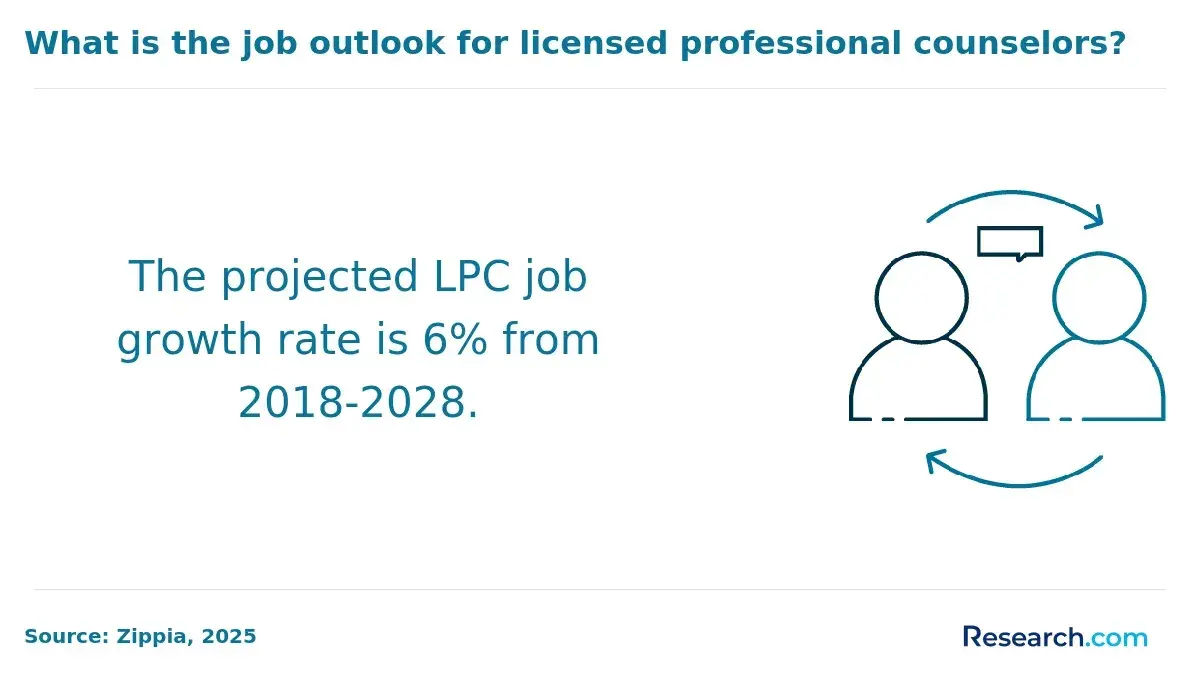
Oklahoma’s need for licensed counseling professionals is shaped by mental health access issues, demand in schools and community agencies, and the continued need for behavioral health services in hospitals, clinics, and private practice settings. The state anticipates 15% growth in counseling jobs by 2030, which points to continued opportunities for qualified LPCs.
LPCs may find roles in public schools, higher education, hospitals, outpatient clinics, community mental health agencies, correctional settings, nonprofit organizations, and private practices. Demand can vary by region and specialty, so candidates should evaluate both statewide trends and local hiring conditions before choosing a specialization or supervised work site.
- Schools and youth services: Counselors may support students dealing with anxiety, family stress, academic pressure, trauma, and behavioral concerns.
- Community agencies: LPCs may serve clients who need accessible mental health care, crisis support, case coordination, or referrals.
- Healthcare settings: Hospitals and clinics may rely on counselors to support integrated behavioral health, discharge planning, substance use treatment, and patient coping skills.
- Private practice: Fully licensed LPCs may work independently, though business development, insurance credentialing, and client acquisition require additional planning.
If you are deciding between counseling and social work, compare the difference between LPC and LCSW degrees before committing to a graduate program. The right path depends on whether you want a counseling-centered clinical role, a social work license with broader systems training, or flexibility across both direct practice and case-based services.
How can LPC licensure improve career growth in Oklahoma?
LPC licensure changes what you can legally do, where you can work, and how far you can advance in Oklahoma’s behavioral health field. It also signals that you have completed graduate training, supervised clinical practice, examinations, and professional oversight requirements.
- More job options: Many roles in private practice, hospitals, clinics, schools, and community agencies require or strongly prefer LPC licensure.
- Stronger earning potential: Licensed Professional Counselor salary growth Oklahoma shows average annual earnings of $66,402, with top counselors making over $90,000. Actual pay depends on setting, region, experience, specialization, and caseload.
- Independent practice eligibility: Full LPC status allows counselors to practice independently, which can create more control over schedule, client population, and practice model.
- Pathway to supervision: After two years of licensure, qualified counselors may pursue supervisor status and oversee LPC Candidates.
- Specialization options: LPCs can build focused expertise in areas such as addictions counseling, career development, family work, trauma, or school-connected services.
- Professional credibility: Licensure demonstrates that the counselor has met state academic, ethical, clinical, and examination standards.
- Leadership potential: Licensed counselors may qualify for roles such as clinical director, program manager, training lead, or behavioral health advocate.
For students asking whether the degree itself is worthwhile, this guide to what can I do with a counseling degree can help connect graduate study to real job paths.
What does Oklahoma LPC licensure cost?
Oklahoma LPC candidates should budget for more than tuition. Licensure costs can include application fees, exam fees, background checks, transcript requests, supervision-related expenses, continuing education, and renewal fees. Costs may change, so applicants should verify current fee schedules with the Oklahoma State Board of Behavioral Health Licensure before submitting applications or scheduling exams.
| Cost category | When it may occur | Planning advice |
| Graduate tuition and fees | During the master’s program | Compare total program cost, not just per-credit tuition. Include internship requirements, technology fees, travel, books, and time away from work. |
| Application fees | During candidacy and final licensure steps | Check the current BBHL fee schedule before applying. |
| Exam fees | When registering for the OLERE and NCE | Budget for preparation materials and possible retesting, even if you expect to pass the first time. |
| Background check | During application or endorsement review | Complete it according to Board instructions to avoid delays. |
| Endorsement application | For out-of-state licensed counselors | Oklahoma’s licensure by endorsement process requires a $145 application fee. |
| License renewal | After licensure | The annual license renewal fee currently is $80; confirm the current amount with the Board. |
| Continuing education | During each renewal cycle | Choose approved courses that improve practice rather than selecting only the cheapest option. |
To reduce costs, ask graduate programs about scholarships, graduate assistantships, employer tuition support, and whether courses are offered in formats that allow you to keep working. You can also review the fastest way to become a counselor in Oklahoma to understand how timeline choices may affect total expenses.
How should you choose an Oklahoma LPC master’s program?
The best program is not always the cheapest, fastest, or highest-ranked. For LPC candidates, the best program is one that satisfies Oklahoma academic requirements, offers strong supervised field placement support, fits your schedule, and prepares you for the populations you want to serve.
| Factor to compare | Why it matters | Question to ask the school |
| Licensure alignment | A mismatch can force you to take extra graduate courses later. | Can you provide a course-by-course map to Oklahoma LPC requirements? |
| Accreditation and approval | CACREP accreditation or Board pre-approval can simplify academic review. | Is this exact program and track accepted for Oklahoma LPC licensure? |
| Internship support | Field placement quality affects your readiness for supervised post-master’s work. | Who helps students secure practicum and internship sites? |
| Faculty experience | Instructors with counseling practice experience can connect coursework to real client work. | How many faculty members have clinical counseling backgrounds? |
| Online versus campus format | Online programs may be flexible, but placement and state approval still matter. | Does the online format meet Oklahoma licensure rules, including field experience expectations? |
| Cost and completion time | Lower tuition may not save money if the program delays graduation or licensure. | What is the total estimated cost through graduation, including fees and required residency or travel? |
Common mistakes that delay Oklahoma LPC licensure
Most licensure problems are preventable. Candidates usually run into trouble when they assume that a degree, job, exam, or supervisor automatically qualifies without confirming the details with the Board.
- Choosing a program without checking licensure fit: A counseling-related degree is not always enough. Confirm Oklahoma LPC eligibility before enrolling.
- Focusing only on tuition: A lower-cost program can become more expensive if it lacks placement support or requires extra courses later.
- Assuming online programs always qualify: Online delivery is not the issue by itself; state-approved coursework, practicum, internship, and documentation are what matter.
- Counting hours too early: Post-master’s supervised hours must be earned after the qualifying graduate degree, not during the academic practicum or internship.
- Using an unapproved supervision arrangement: Supervision must meet Oklahoma requirements, including documentation and supervision frequency.
- Waiting too long to prepare for the OLERE: The Oklahoma-specific exam requires knowledge of state laws and rules, not just general counseling ethics.
- Assuming salary outcomes are guaranteed: The stated average annual earnings of $66,402 and top earnings over $90,000 are useful benchmarks, but individual pay varies by role, region, experience, and practice model.
What do Oklahoma LPCs say about their work?
- My LPC training at the University of Central Oklahoma helped me build clinical skills while also learning how Oklahoma’s communities shape client needs. Working in a local school showed me how issues such as rural isolation and economic hardship can affect students. The work is challenging, but seeing counseling support improve a young person’s well-being and school experience makes the career deeply meaningful. Levi
- Starting my licensed professional counseling career in an academic setting gave me more growth opportunities than I expected. Serving a diverse student population required flexibility, creativity, and patience. My education at Oklahoma State University gave me a strong base, and the stability and advancement options in Oklahoma’s educational environments have made the profession feel both practical and purposeful. Carlos
- Training at the University of Oklahoma prepared me for work that is both personal and community-centered. Oklahoma’s cultural diversity and rural mental health needs continue to push me to improve my cultural responsiveness. I value the ongoing professional development in this field and the opportunity to contribute to mental wellness across the state. Ronald
Related Articles for Nearby States
- 2027 LPC Counseling Licensure Requirements in Texas
- 2027 LPC Counseling Licensure Requirements in Kansas
- 2027 LPC Counseling Licensure Requirements in Arkansas
- 2027 LPC Counseling Licensure Requirements in Missouri
- 2027 LPC Counseling Licensure Requirements in Colorado
- 2027 LPC Counseling Licensure Requirements in New Mexico
- 2027 LPC Counseling Licensure Requirements in Nebraska
- 2027 LPC Counseling Licensure Requirements in Louisiana
- 2027 LPC Counseling Licensure Requirements in Iowa
- 2027 LPC Counseling Licensure Requirements in Mississippi
References
- Licensed Professional Counselor https://oklahoma.gov/behavioralhealth/academic-requirements/licensed-professional-counselor.html
- How to Become a Licensed Counselor (LPC) in Oklahoma https://onlinecounselingprograms.com/become-a-counselor/counseling-licensure/how-to-become-a-counselor-in-oklahoma/
- Professional Counseling Admissions http://www.ou.edu/education/apply/graduate/professional-counseling-admissions.html
- UCO: Certificate in Licensed Professional Counseling https://www.uco.edu/programs/jcgs/ceps/certifications/licensed-pro-counseling
- How to Become a Licensed Counselor (LPC) in Oklahoma for 2025 | Research.com https://research.com/careers/how-to-become-a-licensed-counselor-lpc-in-oklahoma
- Licensed Professional Counselor | SWOSU https://swosu.edu/education/licensed-professional-counselor.php
- Oklahoma Counseling License | LPC Requirements and Resources in OK https://www.publichealthonline.org/mental-health/oklahoma-counseling-license/
- How Long Does It Take to Become a Counselor? | MACU https://www.macu.edu/blog/how-long-does-it-take-to-become-a-counselor/
- The state of Oklahoma's behavioral health workforce https://www.healthymindspolicy.org/research/state-of-workforce-2023
- 244 Lpc jobs in Oklahoma, United States (2 new) https://www.linkedin.com/jobs/lpc-jobs-oklahoma
Key Insights
- Oklahoma LPC licensure starts with the right master’s degree: Choose a counseling or closely related mental health program that clearly satisfies state academic requirements.
- Supervised experience is the longest licensure stage: Candidates need 3,000 post-master’s supervised hours, including required direct client contact and regular supervision.
- Exams test different knowledge areas: The NCE covers broad counseling knowledge, while the OLERE focuses on Oklahoma-specific legal and ethical responsibilities.
- Endorsement is not automatic reciprocity: Out-of-state LPCs must apply through Oklahoma’s endorsement process and may need additional review, especially with less than five years of experience.
- Licensure can expand career options: Full LPC status supports independent practice, clinical roles, supervision opportunities, leadership paths, and stronger earning potential.
- The smartest move is early verification: Before enrolling, accepting supervised work, or relocating, confirm requirements directly with the Oklahoma Board of Behavioral Health Licensure.
Other Things You Should Know About Being an LPC in Oklahoma
LPC licensure in Oklahoma requires 3,000 hours of supervised post-master's experience, including at least 1,200 hours of direct client contact. This must be completed under an approved supervisor within a timespan of at least 24 months, as mandated by the Oklahoma State Board of Behavioral Health Licensure.
In 2027, to be eligible for LPC licensure in Oklahoma, candidates must hold a graduate degree in counseling from a regionally accredited institution, complete specific coursework requirements, accumulate 3,400 hours of supervised experience, and pass the National Counselor Exam (NCE). Eligibility also requires adherence to professional ethical standards.