
2027 Best Online Master’s in Counseling with No GRE Requirement

Co-Founder and Chief Data Scientist
It can be frustrating to have years of professional experience but feel blocked by a single test. What many don't realize is that research shows 62.3% of GRE scores don't actually predict success in graduate school. This is why many top universities are moving away from the exam. For those ready to make a career change into counseling, finding the right path forward is what truly matters.
To help, our career planning experts with over a decade of experience created this guide. It is more than a list; it's your roadmap to finding a high-quality online master's in counseling no GRE that respects your background and leads directly to licensure.
What are the benefits of getting an online master’s in counseling with no GRE requirement?
- This degree prepares you for licensed, in-demand roles like school counselor or clinical mental health counselor, where you can directly support the well-being of others.
- You can significantly increase your earning potential, with the median salary for master's degree holders exceeding $95,000 per year.
- Online programs provide the flexibility to pursue your degree while managing your current career and family commitments.
What can I expect from an online master’s in counseling with no GRE requirement?
You can expect a rigorous graduate education that is equivalent to an on-campus program. The curriculum is clinically focused and designed to meet state licensure requirements. While your coursework is completed online, the degree has a mandatory in-person component. All accredited programs require you to complete a supervised practicum and internship at a local site.
This structure is designed to accommodate working professionals who are making a career change. In fact, the average age for counselors is 44, so you will be in good company. An online master's in counseling no GRE offers a respected and practical path to a new career.
Where can I work with an online master’s in counseling with no GRE requirement?
Graduates with a master's in counseling work in a wide variety of settings across the healthcare, education, and non-profit sectors. Your degree prepares you for impactful roles in many different environments.
- Healthcare Settings: A significant portion of counselors (27%) work in places like hospitals, outpatient centers, and residential care facilities.
- Non-Profit Organizations: Many counselors (21%) find fulfilling roles in community health centers and individual and family services agencies.
- Educational Institutions: Counselors are essential in K-12 schools and universities, with 15% of the workforce employed in education.
- Private and Professional Services: A growing number of counselors (12%) work in private practice or for professional services firms, including corporate wellness programs.
- Government Agencies: About 7% of counselors work in government roles at the state and local levels, serving the public in various capacities.
How much can I make with an online master’s in counseling with no GRE requirement?
Earning a master's in counseling provides a strong return on investment, with salaries influenced by your education, experience, and work setting. The national average salary for a licensed counselor is approximately $83,804.
- Educational Level: Earning a master's degree provides a significant salary advantage, with median weekly earnings of $1,840 compared to $1,543 for those with only a bachelor's degree.
- Years of Experience: Salaries grow with experience, starting around $53,000 for entry-level positions and rising to over $87,000 for counselors with 20+ years of experience.
- Industry and Work Setting: Your place of work matters, with roles in the education sector averaging around $82,651 per year.
- Geographic Location: Salaries vary by location and can be significantly higher in states like California.
- Specialization: Pursuing advanced degrees or specializations can lead to top-tier roles, with counseling psychologists earning a median salary of approximately $95,830.
- List of the Best Online Master’s in Counseling with No GRE Requirement for 2027 List of Programs
- How long does it take to complete an online master’s in counseling with no GRE requirement? Completion Time
- How does an online master’s in counseling with no GRE requirement compare to an on-campus program? How does an online master’s in counseling with no GRE requirement compare to an on-campus program?
- What is the average cost of an online master’s in counseling with no GRE requirement? Program Cost
- What are the financial aid options for students enrolling in an online master’s in counseling with no GRE requirement? Financial Aid
- What are the prerequisites for enrolling in an online master’s in counseling with no GRE requirement? What are the prerequisites for enrolling in an online master’s in counseling with no GRE requirement?
- What courses are typically in an online master’s in counseling with no GRE requirement? What courses are typically in an online master’s in counseling with no GRE requirement?
- What types of specializations are available in online master’s in counseling with no GRE requirement programs? Specializations
- How to Choose the Best Online Master’s in Counseling with No GRE Requirement How to Choose the Best Online Master’s in Counseling with No GRE Requirement
- What career paths are available for graduates of an online master’s in counseling with no GRE requirement? Career Paths
- What are the potential challenges of pursuing an online master’s in counseling with no GRE requirement? What are the potential challenges of pursuing an online master’s in counseling with no GRE requirement?
- What is the job market for graduates of an online master’s in counseling with no GRE requirement? Job Market
Best Online Master’s in Counseling Programs With No GRE Requirement for 2027
Choosing an online master’s in counseling without a GRE requirement can remove one major admissions barrier, but it does not make the decision simple. Prospective students still need to compare accreditation, licensure alignment, clinical placement support, cost, format, and specialization options before enrolling. This guide is designed for career changers, working adults, recent graduates, and future counselors who want a practical path into the mental health field without spending months preparing for a standardized test.
You will learn which online counseling master’s programs do not require the GRE, how long these programs usually take, what they cost, how online study compares with campus-based learning, what admissions committees look for instead of test scores, and how to choose a program that supports licensure and long-term career goals.
Quick Answer: Is an Online Master’s in Counseling With No GRE Worth Considering?
Yes, an online master’s in counseling with no GRE requirement can be a strong option if the program is accredited, meets your state’s licensure requirements, provides supervised clinical training, and fits your budget. The absence of a GRE requirement does not automatically mean a program is easier or lower quality. Most reputable no-GRE programs evaluate applicants through GPA, professional experience, recommendation letters, essays, interviews, and evidence of readiness for graduate-level counseling work.
The most important factor is not whether the GRE is required. It is whether the program prepares you for the credential you need, such as licensure as a professional counselor, school counselor, marriage and family therapist, substance abuse counselor, or rehabilitation counselor.
How We Rank Schools
Because a counseling master’s degree requires a major investment of time and money, Research.com evaluates programs using transparent, education-focused criteria. Our ranking process draws on established data sources, including the IPEDS database, Peterson's database, the College Scorecard database, and The National Center for Education Statistics.
These sources help us compare online master’s in counseling programs with no GRE requirement using measurable factors such as institutional data, affordability, student outcomes, and program characteristics. You can review the full evaluation process on Research.com’s methodology page.
At-a-Glance Comparison of Featured No-GRE Online Counseling Master’s Programs
| School | Program | Program Length | Credits | Cost per Credit | Accreditation Listed |
| Northwestern University | Master of Arts in Counseling | 18 to 36 months | 60 | $2,297.20 | Council for Accreditation of Counseling and Related Educational Programs (CACREP) |
| New York University | Online Master of Arts in Counseling for Mental Health and Wellness | 21 to 30 months | 60 | $2,272 | Masters in Psychology and Counseling Accreditation Council (MPCAC) |
| Butler University | Master of Science in Mental Health Counseling (Online) | 30 to 36 months | 60 | $700 | Council for the Accreditation of Educator Preparation (CAEP) |
| University of North Dakota | Master of Arts in Counseling | 2 to 3 years | 60 | $250 | Council for the Accreditation of Educator Preparation (CAEP) |
| Walsh University | Master of Arts in Counseling and Human Development | 3 years | 60 | $775 | Council for Accreditation of Counseling and Related Educational Programs (CACREP) |
| Nova Southeastern University | M.S. in Counseling | 2 to 5 years | 60 | $955 | Council for Accreditation of Counseling and Related Educational Programs (CACREP) |
| Methodist University | Master of Science in Clinical Mental Health Counseling | 2 years | 60 | $545 | Southern Association of Colleges and Schools Commission on Colleges (SACSCOC) |
| Commonwealth University | Master’s in Clinical Mental Health Counseling (M.S.) | 2.5 to 4 years | 60 | $534 (in-state); $801 (out-of-state) | Council for Accreditation of Counseling and Related Educational Programs (CACREP) |
1. Northwestern University - Master of Arts in Counseling
Northwestern University offers an online counseling master’s program built around clinical preparation, reflective practice, counseling theory, and supervised professional experience. The program combines online coursework with in-person learning components and clinical training for students preparing to enter mental health counseling roles.
- Program Length: 18 to 36 months
- Required Credits to Graduate: 60
- Cost per Credit: $2,297.20
- Accreditation: Council for Accreditation of Counseling and Related Educational Programs (CACREP)
2. New York University - Online Master of Arts in Counseling for Mental Health and Wellness
New York University prepares students to support clients across varied cultural, social, and personal backgrounds. The program emphasizes counseling skill development, culturally responsive practice, wellness-oriented care, and field training through practicum and internship experiences at NYU-approved sites.
- Program Length: 21 to 30 months
- Required Credits to Graduate: 60
- Cost per Credit: $2,272
- Accreditation: Masters in Psychology and Counseling Accreditation Council (MPCAC)
3. Butler University - Master of Science in Mental Health Counseling (Online)
Butler University offers an online mental health counseling curriculum designed around professional standards and licensure preparation. Students complete applied training, including 700 hours of practicum and internship work, and the program can support a pathway toward dual licensure in mental health and addictions counseling in Indiana.
- Program Length: 30 to 36 months
- Required Credits to Graduate: 60
- Cost per Credit: $700
- Accreditation: Council for the Accreditation of Educator Preparation (CAEP)
4. University of North Dakota - Master of Arts in Counseling
The University of North Dakota provides an online counseling degree grounded in psychology and professional practice. Students can select from several counseling tracks and develop applied skills through internships in community settings and supervised work connected to an on-campus clinic.
- Program Length: 2 to 3 years
- Specializations: Addiction Counseling; Community Mental Health Counseling; K-12 School Counseling; and Rehabilitation Counseling
- Required Credits to Graduate: 60
- Cost per Credit: $250
- Accreditation: Council for the Accreditation of Educator Preparation (CAEP)
5. Walsh University - Master of Arts in Counseling and Human Development
Walsh University offers a fully online counseling program for students seeking a flexible graduate pathway. The program uses eight-week terms and allows students to focus on either clinical mental health counseling or school counseling while developing the professional competencies needed for counseling practice.
- Program Length: 3 years
- Required Credits to Graduate: 60
- Cost per Credit: $775
- Accreditation: Council for Accreditation of Counseling and Related Educational Programs (CACREP)
6. Nova Southeastern University - M.S. in Counseling
Nova Southeastern University offers an online M.S. in Counseling with concentration options that help students match their studies to a specific professional direction. The program includes online coursework and a required three-day residential institute designed to support professional engagement and clarify clinical fieldwork expectations.
- Program Length: 2 to 5 years
- Required Credits to Graduate: 60
- Cost per Credit: $955
- Accreditation: Council for Accreditation of Counseling and Related Educational Programs (CACREP)
7. Methodist University - Master of Science in Clinical Mental Health Counseling
Methodist University delivers a 100% online clinical mental health counseling program for students preparing for professional counselor roles. Courses are offered in flexible eight-week terms, and students complete practicum and internship requirements that connect online academic learning with supervised counseling experience.
- Program Length: 2 years
- Required Credits to Graduate: 60
- Cost per Credit: $545
- Accreditation: Southern Association of Colleges and Schools Commission on Colleges (SACSCOC)
8. Commonwealth University - Master’s in Clinical Mental Health Counseling (M.S.)
Commonwealth University offers an online clinical mental health counseling program with a cohort structure, flexible pacing, and specialization options. The program is designed to prepare students for licensure-oriented work in professional counseling settings.
- Program Length: 2.5 to 4 years
- Required Credits to Graduate: 60
- Cost per Credit: $534 (in-state); $801 (out-of-state)
- Accreditation: Council for Accreditation of Counseling and Related Educational Programs (CACREP)
How Long Does an Online Master’s in Counseling With No GRE Requirement Take?
Most online master’s in counseling programs take about two to three years for full-time students. Part-time students, especially those balancing work, family, or caregiving responsibilities, should usually plan for three to five years. The timeline is shaped by the standard 60-credit curriculum and by clinical training requirements, which typically include supervised practicum and internship experiences that cannot be compressed as easily as online coursework.
Students looking for a shorter route may want to compare accelerated formats, including a fast track online masters in school counseling. Faster options can work well for students with strong time management skills, but they may require heavier course loads, more structured weekly schedules, and earlier planning for field placement.
The broader demand for graduate education is clear, as the number of master's degrees conferred has grown by 19% recently. Counseling remains a structured professional pathway, and program quality matters more than speed. More than 75,000 students are currently enrolled in CACREP-accredited master's programs, which shows the scale of licensure-focused counseling education.
| Enrollment Pace | Typical Time to Finish | Best For | Trade-Off |
| Full-time | About two to three years | Students who can prioritize graduate study and clinical training | Less scheduling flexibility while courses and fieldwork overlap |
| Part-time | Three to five years | Working adults and students with major personal commitments | Longer time before graduation and licensure progress |
| Accelerated | Varies by program | Students who can handle an intensive academic and clinical workload | Greater risk of overload if clinical placement, work, and coursework conflict |
Online vs. On-Campus Master’s in Counseling: Which Format Is Better?
For accredited counseling programs, online and campus-based formats can lead to the same academic credential and may support the same licensure goals. The key difference is how coursework, interaction, advising, and student support are delivered. Nearly a third of all master's students now earn their degrees online, which makes the format a mainstream option rather than an exception.
The right choice depends on your schedule, learning preferences, location, and access to approved clinical sites. A strong online program should still provide faculty interaction, advising, skills-based training, and practicum or internship support. A strong campus program should offer the same licensure preparation with more in-person structure.
Online Master’s in Counseling Programs
An online master’s in counseling with no GRE requirement can be a practical choice if you need flexibility, cannot relocate, or want access to programs outside your region. Many online programs use live class sessions, asynchronous coursework, virtual simulations, discussion boards, and local field placements to connect academic theory with clinical practice.
On-Campus Master’s in Counseling Programs
Campus-based counseling programs may be better for students who prefer face-to-face learning, fixed weekly schedules, in-person faculty access, and immediate use of campus facilities. This format can also make networking, group skills practice, and access to university-based clinics feel more direct.
| Factor | Online Program | On-Campus Program |
| Flexibility | Often better for working adults and students outside commuting range | Better for students who want fixed schedules and in-person routines |
| Clinical training | Usually completed locally through approved practicum and internship sites | May use local partner agencies, campus clinics, or regional placements |
| Peer interaction | Depends on live sessions, cohorts, group work, and online engagement | More frequent face-to-face interaction before and after class |
| Best fit | Self-directed learners who can manage deadlines independently | Students who want a traditional academic environment |
How Much Does an Online Master’s in Counseling With No GRE Requirement Cost?
The cost of an online master’s in counseling can vary sharply by institution type, tuition rate, residency status, fees, and clinical training expenses. Total tuition can range from as low as $15,000 for some public universities to over $137,000 for certain private institutions. Published tuition may not include books, technology fees, travel for immersions, background checks, liability insurance, or costs tied to clinical supervision.
When comparing costs, look beyond the per-credit price. A lower tuition rate may become less attractive if the program offers limited placement support, requires expensive travel, or does not align with licensure rules in your state. A higher-cost program may still be a reasonable investment if it has strong accreditation, robust advising, and clear clinical placement processes.
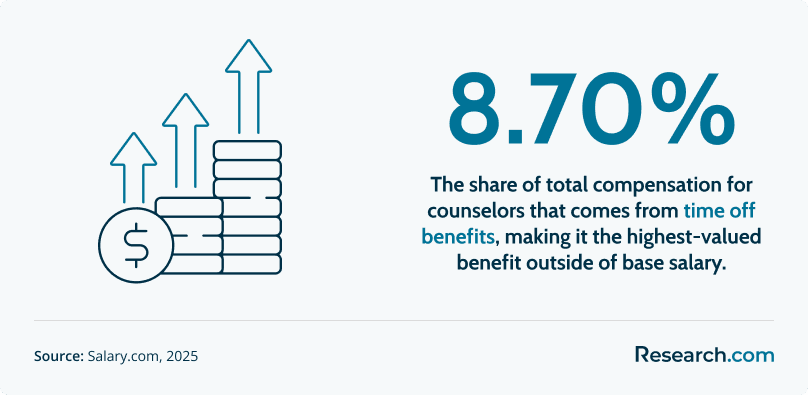
Return on investment should include both earnings and total compensation. For many counseling and helping-profession roles, paid time off is part of compensation and averages around 8.7%. That benefit can matter for students who value stability, predictable schedules, and long-term work-life balance.
| Cost Item | Why It Matters | Question to Ask |
| Tuition per credit | Most counseling master’s programs require 60 credits, so small per-credit differences can add up | What is the current cost per credit, and can it change while I am enrolled? |
| Fees | Online, technology, graduation, clinical, and student service fees can increase total cost | What mandatory fees are not included in advertised tuition? |
| Clinical placement costs | Students may need background checks, insurance, transportation, or supervision-related expenses | Does the program help arrange placements, and are there additional fieldwork costs? |
| Residency or immersion costs | Some online programs require in-person sessions | Will I need to travel, and how often? |
| Time to completion | Longer enrollment can increase indirect costs and delay licensure progress | What is the realistic graduation timeline for students with my schedule? |
Financial Aid Options for Online Master’s in Counseling Students
Many graduate counseling students use more than one funding source. Nearly 75% of graduate students receive some form of financial aid, but the amount and type of aid vary by student, school, and program.
- Federal Loans: Graduate students commonly begin by completing the Free Application for Federal Student Aid (FAFSA) to determine eligibility for federal loan options.
- Scholarships and Grants: Universities, professional associations, foundations, and local organizations may offer awards based on need, merit, service commitment, or career focus.
- Public Service Loan Forgiveness (PSLF): Graduates who work full-time for qualifying government or non-profit employers for 10 years may be eligible to have remaining qualifying federal student loan debt forgiven.
- Employer Tuition Assistance: Some employers help pay for graduate education, especially when the degree supports workforce needs in behavioral health, education, social services, or healthcare.
- Lower-Cost Program Selection: Choosing an affordable accredited program before borrowing is one of the most effective cost-control strategies. Students comparing broad access options can also review Research.com’s guide to the cheapest colleges with open admission.
Admissions Requirements for an Online Master’s in Counseling With No GRE
No-GRE counseling programs usually use holistic admissions. Instead of relying on a standardized test score, admissions committees review your academic record, communication skills, professional maturity, service experience, motivation for counseling, and readiness for graduate-level clinical training.
- Accredited Bachelor’s Degree: Applicants generally need a bachelor’s degree from a recognized institution. Your major does not always need to be psychology or counseling, although relevant coursework can help. Applicants from applied or nontraditional backgrounds, including those who completed an online fire science bachelor's degree, can use their experience to show discipline, service orientation, and crisis-response awareness.
- Minimum GPA: Many programs prefer an undergraduate GPA of 3.0 or higher, though some review applicants with lower GPAs if they can show strong professional experience or recent academic success.
- Statement of Purpose: This essay should explain why you want to become a counselor, what populations you hope to serve, and how your background has prepared you for ethical helping work.
- Letters of Recommendation: Strong letters usually come from supervisors, professors, mentors, or professionals who can describe your empathy, judgment, communication skills, and reliability.
- Professional Resume: A resume helps admissions teams understand your work history, volunteer experience, leadership, human services exposure, and transferable skills.
Typical Courses in an Online Master’s in Counseling Program
Accredited online counseling master’s programs are designed to prepare students for supervised practice and, when applicable, state licensure. Coursework usually combines counseling theory, ethics, assessment, diversity, diagnosis, research, and field experience. Students from many academic backgrounds can succeed, including those who developed analytical and research skills through a rigorous program such as an online physics bachelor's degree.
- Professional Counseling Orientation and Ethical Practice: Students examine the counseling profession, ethical decision-making, professional identity, legal responsibilities, and standards of care.
- Social and Cultural Diversity: This course prepares students to work respectfully and effectively with clients across different identities, communities, values, and lived experiences.
- Human Growth and Development: Students study development across the lifespan and learn how biological, psychological, social, and cultural factors shape client concerns.
- Counseling and Helping Relationships: This course introduces core counseling theories, relationship-building skills, interviewing techniques, and approaches to client change.
- Group Counseling and Group Work: Students learn how to plan, facilitate, and evaluate group counseling experiences in clinical, school, community, or organizational settings.
- Assessment and Testing: Coursework covers appropriate assessment use, diagnosis, treatment planning, interpretation, and ethical limits of testing.
A counseling master’s degree is not the same as a general psychology degree. Counseling programs are usually practitioner-focused and structured around direct client service and licensure preparation. Some online counseling psychology programs may emphasize research, theory, or psychology pathways that do not automatically lead to the same counseling license.
Common Specializations in Online Master’s in Counseling Programs
Your specialization should match the setting, population, and license you want to pursue. Students who are still deciding on an undergraduate pathway before graduate study can compare the best online bachelor's degrees to identify programs that support long-term counseling, psychology, education, or human services goals.
- Clinical Mental Health Counseling: This broad track prepares students to assess, diagnose, and treat mental and emotional concerns in community agencies, clinics, hospitals, private practice settings, and related environments.
- School Counseling: This specialization focuses on K-12 student development, academic planning, social-emotional support, crisis response, and collaboration with families and school personnel.
- Marriage, Couple, and Family Counseling: Students learn to work with relational patterns, communication, family systems, conflict, and life transitions involving couples and families.
- Addiction Counseling: This track prepares students to support individuals and groups affected by substance use disorders through assessment, treatment planning, relapse prevention, and recovery-focused care.
- Rehabilitation Counseling: Students learn to help people with physical, mental, developmental, or emotional disabilities pursue independence, employment, education, and community participation.
How Counseling Differs From Related Mental Health Careers
Counseling is one route into mental health care, but it is not the only one. Licensed professional counselors generally focus on therapy, assessment, treatment planning, and behavioral health support within their scope of practice. Psychiatric mental health nurse practitioners follow a nursing pathway and may have responsibilities that differ from counseling practice. For nurses considering that route, an MSN PMHNP program online may support preparation for advanced psychiatric nursing roles.
Clarifying these differences before enrolling can prevent costly mistakes. If your goal is psychotherapy and counseling licensure, a counseling master’s program may be appropriate. If your goal includes advanced nursing practice or medication-related responsibilities, a nursing-based psychiatric mental health pathway may be a better match.
How to Choose the Best Online Master’s in Counseling With No GRE Requirement
The best online counseling master’s program is the one that fits your licensure goal, state requirements, financial situation, clinical placement needs, and learning style. A no-GRE policy is helpful, but it should never be the main reason you choose a program.
- Verify Accreditation: Start by checking whether the program is accredited by the Council for Accreditation of Counseling and Related Educational Programs (CACREP) or another relevant accreditor for your intended path. Students in other regulated fields should use the same habit of checking field-specific accreditation; for example, engineering students may need an ABET accredited online engineering degree.
- Confirm State Licensure Alignment: Ask whether the program meets educational requirements in the state where you plan to practice. Do not assume that an online program approved in one state automatically satisfies rules in another.
- Match the Specialization to Your Career Goal: Clinical mental health, school counseling, addiction counseling, rehabilitation counseling, and family-focused tracks can lead to different roles and credentialing requirements.
- Evaluate Clinical Placement Support: Ask whether the school finds sites for online students, provides a placement team, approves student-identified sites, or leaves most of the search to you.
- Review Faculty Backgrounds: Look for faculty with counseling practice experience, licensure, supervision expertise, and research or service work in your area of interest.
- Assess Course Delivery: Determine whether classes are synchronous, asynchronous, hybrid, cohort-based, accelerated, or self-paced. The format should match your schedule and learning habits.
- Calculate Total Cost: Compare tuition, fees, travel, books, clinical expenses, and the income impact of reducing work hours during practicum or internship.
Questions to Ask Before Enrolling
| Question | Why It Matters |
| Does this program meet licensure requirements in my state? | Licensure rules are state-specific, and an incorrect choice can delay or limit your ability to practice. |
| Who is responsible for finding practicum and internship sites? | Clinical placement can be one of the hardest parts of an online counseling degree. |
| How are online students supervised and evaluated during skills training? | Counseling requires more than reading and exams; you need feedback on real helping skills. |
| Are there in-person residencies or travel requirements? | Travel can add cost and scheduling pressure, even in programs described as online. |
| What is the program’s policy on transfer credits? | Transfer credit rules can affect cost, time to completion, and course planning. |
| What student services are available online? | Advising, tutoring, library access, career support, and technology help can affect persistence and success. |
Career Paths for Graduates of Online Master’s in Counseling Programs
A master’s in counseling can prepare graduates for licensed or credentialed roles in clinical, school, community, rehabilitation, and behavioral health settings. Actual eligibility depends on the degree track, state licensure rules, supervised postgraduate hours, exams, and any additional credentialing requirements.
1. Licensed Professional Counselor (LPC)
LPCs provide counseling services to individuals, groups, couples, or families, depending on state scope of practice and training. They may assess concerns, create treatment plans, provide therapy, and work in community agencies, outpatient settings, hospitals, or private practice.
Median Salary: $53,000 per year.
2. School Counselor
School counselors support K-12 students with academic development, social-emotional concerns, career planning, crisis needs, and coordination among families, teachers, and administrators.
Median Salary: $60,000 per year.
3. Marriage and Family Therapist (MFT)
MFTs focus on relationship systems, family dynamics, communication challenges, and interpersonal conflict. Depending on state requirements, this pathway may require a specific marriage and family therapy curriculum or license.
Median Salary: $57,000 per year.
4. Substance Abuse Counselor
Substance abuse counselors help clients affected by substance use disorders through screening, treatment planning, counseling, group work, relapse prevention, and recovery support.
Median Salary: $49,000 per year.
5. Rehabilitation Counselor
Rehabilitation counselors assist people with disabilities as they pursue independent living, employment, education, community access, and personal goals.
Median Salary: $40,000 per year.
Professional development can continue after the master’s degree. Some counselors pursue specialty credentials, supervision training, doctoral study, or adjacent healthcare credentials. Nurses interested in advanced psychiatric practice can compare options such as a graduate certificate in PMHNP online.
| Role | Common Settings | Important Requirement to Check |
| Licensed Professional Counselor | Clinics, agencies, hospitals, private practice, outpatient care | State LPC or equivalent licensure rules |
| School Counselor | K-12 public and private schools | State school counseling certification or licensure |
| Marriage and Family Therapist | Family therapy clinics, agencies, private practice | State MFT education and supervised experience requirements |
| Substance Abuse Counselor | Treatment centers, community agencies, correctional settings, hospitals | State addiction counseling credential requirements |
| Rehabilitation Counselor | Vocational rehabilitation agencies, nonprofits, healthcare, community programs | Role-specific credentialing and employer expectations |
Challenges of Earning an Online Master’s in Counseling With No GRE
Online counseling programs can be flexible, but they are not easy. Students must manage graduate coursework, live or asynchronous class expectations, supervised fieldwork, technology requirements, and emotionally demanding content. The most common pressure point is clinical placement, especially for students in rural areas or states with limited approved sites.
Before enrolling, confirm that the program offers strong online student services, responsive advising, career support, and clear field placement procedures. Cost also deserves careful review. Students who need a lower-cost pathway can compare accredited options through Research.com’s guide to the cheapest online counseling degree.
Common Mistakes to Avoid
| Mistake | Why It Can Hurt You | Better Approach |
| Choosing a program only because it does not require the GRE | A no-GRE policy does not guarantee licensure alignment, strong faculty, or good clinical support. | Use no-GRE status as one factor, not the deciding factor. |
| Ignoring accreditation | Accreditation can affect licensure eligibility, employer recognition, and transfer options. | Verify institutional and programmatic accreditation before applying. |
| Assuming online means fully remote | Many programs require local fieldwork, skills practice, residencies, or on-site supervision. | Ask about every in-person requirement before enrolling. |
| Comparing only tuition | Fees, books, travel, clinical costs, and lost work hours can change the true price. | Build a full cost estimate for the entire degree. |
| Waiting too long to plan field placement | Approved sites may be competitive or limited in your region. | Ask about placement timelines during admissions, not after enrollment. |
| Assuming salary outcomes are guaranteed | Pay depends on role, location, licensure level, setting, experience, and employer. | Research local job postings and licensure steps before borrowing heavily. |
Job Market for Graduates of Online Master’s in Counseling Programs
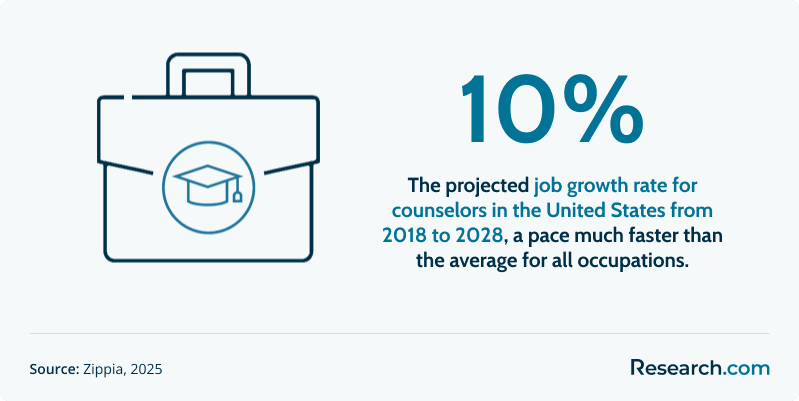
The employment outlook for counselors is strong. The U.S. Bureau of Labor Statistics projects that employment for counselors will grow by 10% over the next decade. This is faster than the average for all occupations and reflects continued need for behavioral health, school-based, substance use, rehabilitation, and community support services.
Demand is also tied to access gaps. An estimated 158 million Americans live in an area with a shortage of mental health professionals. Graduates who become licensed counselors can help address that need in clinics, schools, public agencies, nonprofit organizations, outpatient care centers, family service organizations, and private practice settings.
Current Trends Affecting Counseling Students and Graduates
- Greater acceptance of online graduate education: Online master’s programs are now common among graduate students, but employers and licensing boards still care most about accreditation, clinical training, and licensure eligibility.
- Rising need for mental health services: Shortages of mental health professionals continue to shape demand for qualified counselors, especially in underserved communities.
- More attention to cultural competence: Programs increasingly emphasize social and cultural diversity, ethical practice, and serving clients across different identities and life circumstances.
- Technology in counseling practice: Telehealth, digital documentation, online supervision tools, and virtual learning platforms are now part of many counseling training and practice environments.
- Credential scrutiny: Students must be careful to select programs that support the specific license or certification required in the state and setting where they plan to work.
What Graduates Say About Earning an Online Master’s in Counseling With No GRE
- Jerome: "I spent 15 years in corporate marketing and reached a point where I knew I needed more meaningful work. Preparing for the GRE felt like one more obstacle, but the program considered my leadership background and life experience. Online classes allowed me to keep working while I trained for a new profession, and I now run a private practice supporting professionals dealing with burnout."
- Lorena: "Living in a small town made a campus program unrealistic because the closest counseling department was three hours away. The online format let me stay with my family and still complete a strong graduate program. The school also helped me identify a local internship site, and I now serve clients in the same community where I grew up."
- Vincent: "Standardized tests never reflected my ability, even though I performed well in college. Finding a no-GRE program that looked at my GPA, volunteer work, recommendations, and personal statement gave me a fairer chance. That admissions process helped me feel seen, and I carry that same belief in potential into my counseling work today."
Sources and References
- Bureau of Labor Statistics. (2023). Counselors: Occupational employment and wages. Retrieved from BLS occupational wage data
- Bureau of Labor Statistics. (2024). Earnings and unemployment rates by educational attainment. Retrieved from BLS education and earnings data
- Bureau of Labor Statistics. (2024). Psychologists: Occupational outlook handbook. Retrieved from BLS occupational outlook information
- Council for Accreditation of Counseling and Related Educational Programs. (2024). 2023 vital statistics report. Retrieved from CACREP vital statistics report
- Counseling.org. (n.d.). The impact of counseling. Retrieved from Counseling.org counseling impact resource
- Education Data Initiative. (2024). Student loan debt statistics. Retrieved from EducationData student loan statistics
- Freeman News (Tulane University). (2025). Financial aid for graduate school: Everything you need to know. Retrieved from Tulane Freeman graduate aid guide
- National Association of Colleges and Employers. (2024). Graduate outcomes. Retrieved from NACE graduate outcomes
- National University. (2024). Master’s degree statistics. Retrieved from National University master’s degree statistics
- Salary.com. (2024). Counselor salary. Retrieved from Salary.com counselor salary data
- Survey Data Science (University of Michigan). (2024). Survey and data science job outlooks: Salaries with a master’s degree. Retrieved from UMich master’s salary resource
- Taylor & Francis. (2023). The role of higher education in workforce development. The Journal of Higher Education. Retrieved from Taylor & Francis higher education research
- Zippia. (2024). Counselor demographics. Retrieved from Zippia counselor demographics
- Zippia. (2024). Counselor skills. Retrieved from Zippia counselor skills
- Zippia. (2024). Counselor trends. Retrieved from Zippia counselor trends
- ZipRecruiter. (2024). Master’s-level counselor salary. Retrieved from ZipRecruiter master’s-level counselor salary.
Key Insights
- No GRE does not mean no standards. Strong programs still evaluate GPA, recommendations, essays, professional experience, and readiness for clinical training.
- Accreditation and licensure alignment matter most. Before applying, verify that the program supports the counseling license or credential required in the state where you plan to work.
- Most programs require 60 credits. Full-time students often finish in about two to three years, while part-time students may need three to five years.
- Clinical placement support can make or break the experience. Ask early who finds practicum and internship sites, how sites are approved, and what happens if placements are limited near you.
- Cost varies widely. Total tuition can range from as low as $15,000 for some public universities to over $137,000 for certain private institutions, so compare full program costs rather than tuition alone.
- Online and campus programs can both be credible. The better choice depends on your schedule, learning style, location, and need for in-person structure.
- The job outlook is favorable, but outcomes are not guaranteed. Employment for counselors is projected to grow by 10% over the next decade, yet salary and opportunities depend on licensure, specialization, location, setting, and experience.
Other Things You Should Know About Online Master’s in Counseling with No GRE Requirement Programs
Yes. Most CACREP-aligned online master’s in counseling programs require a practicum of at least 100 hours and an internship of at least 600 hours. These field experiences are usually completed at approved sites under supervision and are required for licensure-track counseling degrees.
Online master's in counseling programs without a GRE requirement in 2027 often offer financial aid options such as scholarships, grants, federal student loans, and work-study programs. Prospective students should check with individual schools for specific financial aid packages and eligibility criteria.


