
2027 LPC Counseling Licensure Requirements in New Jersey

Co-Founder and Chief Data Scientist
Becoming a Licensed Professional Counselor in New Jersey is a regulated, multi-step process. You need the right graduate education, approved coursework, supervised counseling experience, a national exam, and state approval before you can practice independently. The path takes planning because a missed requirement—such as the wrong program accreditation, incomplete coursework, or poorly documented supervision hours—can delay licensure.
This guide explains New Jersey LPC requirements in practical terms for students, career changers, Licensed Associate Counselors, and out-of-state counselors considering New Jersey practice. You will learn what degree you need, how supervised hours work, which exam is required, how long the process can take, what costs to expect, and how licensure can affect career options in a state where mental health counseling jobs are projected to grow by more than 25% by 2030.
Quick answer: New Jersey LPC requirements at a glance
- Graduate degree: New Jersey requires a master’s or doctoral degree in counseling or a closely related field that meets state standards. Programs accredited by CACREP or otherwise recognized by the New Jersey Board of Marriage and Family Therapy Examiners are commonly used to meet this requirement.
- Coursework: Candidates must complete at least 60 graduate semester hours, including required counseling content such as counseling techniques, ethics, human development, appraisal, group counseling, and professional orientation.
- Supervised experience: You must complete 4,500 hours of supervised counseling experience before qualifying for the LPC credential. At least 3,000 hours are typically completed after the graduate degree while holding the Licensed Associate Counselor credential.
- Exam: New Jersey uses the National Counselor Examination, commonly called the NCE, as the required licensing exam for counselor licensure.
- Licensure sequence: Most candidates earn a qualifying graduate degree, apply for the Licensed Associate Counselor credential, pass the exam, complete supervised experience, submit the LPC application, complete the background check, and pay the required licensing fee.
- What degree is required to become an LPC in New Jersey?
- What core coursework is required for LPC licensure in New Jersey?
- How many supervised counseling hours are required for LPC licensure in New Jersey?
- What exams are required for LPC licensure in New Jersey?
- How do you apply for LPC licensure in New Jersey?
- How long does it take to be a Licensed Professional Counselor in New Jersey?
- What are the costs and available financial supports for becoming an LPC in New Jersey?
- What types of LPC licenses are offered in New Jersey?
- Does New Jersey have LPC reciprocity with other states?
- What is the demand for LPCs in New Jersey?
- How does LPC licensure affect career growth in New Jersey?
- What are the renewal and continuing education requirements for maintaining an LPC license in New Jersey?
What degree is required to become an LPC in New Jersey?
New Jersey LPC candidates need graduate-level education that prepares them for professional counseling practice and satisfies state licensure rules. The safest route is a counseling graduate program designed specifically for LPC preparation. Candidates with related degrees may still qualify, but they often need a careful transcript review to confirm that their coursework matches New Jersey’s required counseling areas.
- Master’s degree in counseling: This is the most direct academic pathway. The program should be offered by a regionally accredited institution and include graduate counseling coursework that meets New Jersey standards.
- Doctoral degree in counseling: A PhD, EdD, or similar doctoral program may qualify if it includes the graduate counseling content required by the state.
- Master’s degree in a closely related field: Degrees in areas such as psychology, social work, or mental health counseling may be considered when the transcript includes enough qualifying counseling credits. Candidates with these degrees should expect closer review and may need additional graduate coursework.
| Degree option | When it makes sense | Possible risk to check before enrolling |
| Master’s in counseling | Best fit for students starting the LPC path from the beginning | Confirm the program meets New Jersey’s 60-credit and core content expectations |
| Doctoral degree in counseling | Useful for candidates interested in advanced clinical, academic, supervisory, or leadership roles | Do not assume a doctoral title alone satisfies all LPC coursework rules |
| Related graduate degree | May work for career changers or graduates from psychology, social work, or mental health programs | Transcript gaps can delay LAC or LPC approval if counseling-specific courses are missing |
Before committing to a program, ask the school whether its curriculum is designed for New Jersey LAC and LPC eligibility, whether graduates have successfully applied for licensure in the state, and how the program documents practicum and internship hours.
What core coursework is required for LPC licensure in New Jersey?
Coursework matters because New Jersey does not license counselors based on a degree title alone. The state reviews whether your graduate education includes enough counseling-specific preparation across required professional areas. This is why two programs with similar names may not produce the same licensure outcome.
- Minimum graduate credits: Candidates must complete a master’s or doctoral program with at least 60 semester hours from a regionally accredited institution.
- CACREP expectations: For degrees earned after October 2012, the program should be CACREP-accredited to align with state expectations for counselor preparation.
- Core counseling content: At least 45 graduate semester hours must address 8 of 9 required counseling areas. These areas include counseling theories, human growth, career development, appraisal, group counseling, social and cultural foundations, research, professional orientation, and diagnosis.
| Coursework area | Why it matters for LPC practice |
| Counseling theories and helping relationships | Builds the foundation for selecting appropriate counseling approaches |
| Human growth and development | Helps counselors understand client needs across life stages |
| Career development | Prepares counselors to support vocational, academic, and life-planning concerns |
| Appraisal and assessment | Supports ethical use of evaluation tools and client information |
| Group counseling | Develops skills for facilitating therapeutic, educational, or support groups |
| Social and cultural foundations | Strengthens culturally responsive practice with diverse New Jersey communities |
| Research | Helps counselors evaluate evidence, outcomes, and professional literature |
| Professional orientation and ethics | Clarifies legal duties, boundaries, confidentiality, and professional standards |
| Diagnosis | Supports clinical decision-making when working with mental health conditions |
If you are comparing counseling careers more broadly, Research.com’s guide to how to become a counselor can help you understand how education, supervised practice, and licensure fit together across counseling roles.
How many supervised counseling hours are required for LPC licensure in New Jersey?
New Jersey requires 4,500 hours of supervised counseling experience for LPC licensure. Candidates should plan carefully because the state looks not only at the total number of hours but also at when the hours were earned, who supervised them, how they were documented, and whether a supervision plan was in place.
- Total supervised experience: The LPC pathway requires 4,500 supervised counseling hours.
- Post-master’s experience: At least 3,000 hours are typically completed after the master’s degree while practicing as a Licensed Associate Counselor.
- Graduate practicum and internship credit: Up to 1,500 hours may count from practicum or internship experience if those hours were not already used to satisfy core course requirements.
- Annual supervision: Candidates need at least 50 hours of face-to-face supervision each year. This must include individual supervision, and up to 10 hours may be completed through group supervision.
- Weekly and monthly limits: Candidates may count up to 30 supervised hours per week or 125 hours per month.
- Documentation: Each worksite should have a formal supervision plan, and supervisors must verify the hours. Poor records can create problems when applying for the LPC.
| Supervised experience item | New Jersey requirement or limit | Practical planning tip |
| Total supervised counseling experience | 4,500 hours | Track hours from the start using a consistent log approved by your supervisor |
| Post-master’s experience as an LAC | At least 3,000 hours | Do not begin counting independent post-degree hours until your credentialing status allows it |
| Possible practicum or internship credit | Up to 1,500 hours | Ask your graduate program how these hours are recorded for licensure review |
| Face-to-face supervision | At least 50 hours each year | Schedule supervision before your caseload becomes full |
| Group supervision | Up to 10 hours may count | Use group supervision as a supplement, not your only supervision format |
| Maximum countable work volume | Up to 30 hours weekly or 125 hours monthly | Do not assume every hour worked automatically counts toward licensure |
A New Jersey licensed professional counselor described the process as demanding but formative. She explained that the hours were not simply a licensing hurdle; they shaped how she handled complex client situations, accepted feedback, and became more confident in session. The hardest part, she said, was coordinating supervision around a changing client schedule, but the structure helped her transition from graduate training into professional clinical judgment.
What exams are required for LPC licensure in New Jersey?
New Jersey requires counselor licensure candidates to pass the National Counselor Examination. The exam is used to confirm that applicants have a baseline understanding of counseling knowledge, ethical practice, human development, group work, research, and other core areas expected of professional counselors.
- National Counselor Examination: The NCE is a computer-based exam with 200 multiple-choice questions. It is required for candidates seeking the Licensed Associate Counselor credential and later the Licensed Professional Counselor credential.
Applicants generally register through the NBCC after their credentials are reviewed and approved. Passing the exam is a major licensing milestone, but it does not by itself authorize independent practice as an LPC. Candidates still need the required supervised experience, proper documentation, and state approval. If you are comparing counseling and therapy careers, Research.com’s overview of how to become a therapist explains how licensing paths differ by profession and state.
How do you apply for LPC licensure in New Jersey?
The New Jersey LPC application process is easiest to manage when you treat it as a sequence rather than a single form. Each step depends on the previous one, and missing records from school, supervision, or examination providers can slow approval.
- Complete the required graduate education: Finish at least 60 graduate semester hours, including the required counseling content areas. Degrees earned after 2012 should come from a CACREP-accredited program to satisfy New Jersey expectations.
- Apply for the Licensed Associate Counselor credential: The LAC credential allows you to practice under supervision while earning the experience required for full LPC licensure.
- Pass the National Counselor Examination: The NCE verifies core counseling knowledge and is required for the licensing pathway.
- Accumulate supervised counseling hours: Complete and document the required supervised experience. Depending on your background, this may involve 3,000 to 4,500 hours toward full eligibility.
- Prepare your LPC application file: Gather official transcripts, exam verification, supervised experience forms, supervisor documentation, and any other materials requested by the Professional Counselor Examiners Committee.
- Complete the criminal background check: New Jersey includes a background review to help protect clients and maintain professional accountability.
- Pay the licensing fee: Submit the required $250 fee with the application materials, and plan ahead for renewal obligations after approval.
| Application stage | What to verify before moving forward |
| Graduate program selection | Confirm that the curriculum is accepted for New Jersey LAC and LPC preparation |
| LAC application | Make sure transcripts and exam requirements are handled in the correct order |
| Supervised practice | Use an approved supervisor and keep signed records for each worksite |
| LPC application | Check that all official documents are sent exactly as the state requires |
| Renewal planning | Track continuing education early rather than waiting until the end of the renewal cycle |
How long does it take to be a Licensed Professional Counselor in New Jersey?
The full New Jersey LPC timeline usually takes several years because it includes undergraduate education, graduate training, LAC credentialing, supervised practice, examination, and final state review. The exact timeline depends on whether you study full time, whether you need extra coursework, how quickly your LAC application is processed, and how many supervised hours you can legally count each month.
- Bachelor’s degree: Many candidates spend about 4 years completing an undergraduate degree before applying to graduate counseling programs.
- Master’s degree in counseling: A qualifying graduate program commonly takes 2 to 3 years of full-time study.
- LAC credential processing: Application review, background checks, and related processing can take 2 to 3 months.
- Supervised professional experience: Completing the 4,500 supervised hours often takes 3 to 6 years, depending on employment setting, schedule, and countable hours.
- NCE preparation and scheduling: Some candidates sit for the exam during the licensure sequence, while others prepare closer to supervised experience completion. Planning may add several weeks to several months.
- Final LPC application review: Submitting records, completing background checks, and waiting for state review can take another 2 to 3 months.
| Milestone | Typical time noted for New Jersey candidates | What can slow it down |
| Bachelor’s degree | About 4 years | Changing majors, part-time enrollment, or transfer credit issues |
| Graduate counseling degree | 2 to 3 years | Part-time study, missing licensure courses, or non-CACREP questions |
| LAC approval | 2 to 3 months | Incomplete paperwork, transcript delays, or background check timing |
| Supervised experience | 3 to 6 years | Limited client hours, supervisor availability, or multiple worksites |
| NCE and final LPC application | Several weeks to several months plus 2 to 3 months for review | Exam scheduling, missing documentation, or unsigned supervision forms |
One New Jersey LPC described the timeline as a long but worthwhile professional investment. He said the waiting periods for LAC approval and final paperwork were frustrating, but the supervised years made him more prepared for independent practice. His experience stretched closer to six years because he balanced work, supervision, and personal commitments while completing the 4,500 hours.
What are the costs and available financial supports for becoming an LPC in New Jersey?
The cost of becoming an LPC in New Jersey includes more than tuition. Candidates should budget for graduate school, books and technology, exam preparation, NCE registration, state application fees, background checks, possible supervision-related costs, liability insurance, professional memberships, and continuing education after licensure. The state licensing fee noted in the application process is $250, and out-of-state applicants using endorsement or reciprocity-related review should also plan for the $75 application fee described by New Jersey’s process.
Financial support may come from scholarships, graduate assistantships, employer tuition assistance, grants, payment plans, and loan forgiveness programs for counselors who work in high-need areas. Before enrolling, ask programs whether they help students identify clinical placements, whether internship hours can support licensure documentation, and whether graduates commonly qualify for public or employer-sponsored repayment programs. For a related breakdown of the New Jersey mental health counseling route, see Research.com’s guide on how to become a mental health counselor in New Jersey.
| Cost category | Why it matters | Question to ask before committing |
| Graduate tuition | Usually the largest expense in the LPC pathway | Is the program built for New Jersey LPC eligibility? |
| Exam and study materials | NCE preparation may require registration fees and review resources | Does the program provide exam preparation support? |
| Application and licensing fees | State fees are required at credentialing and licensure stages | Which fees are due for LAC, LPC, renewal, or endorsement? |
| Supervision-related expenses | Some candidates receive supervision through employment, while others may face added costs | Is qualified supervision included in the job or placement? |
| Continuing education | Licensure requires ongoing professional learning | Does your employer cover CE hours or reimburse training? |
What types of LPC licenses are offered in New Jersey?
New Jersey uses a staged counseling licensure structure. This helps newer counselors practice under oversight before they qualify for independent clinical work. Understanding the difference between LAC and LPC status is important because the authority to practice, supervision requirements, and career options are not the same.
- Licensed Associate Counselor: The LAC is for candidates who have completed the required graduate education and passed the National Counselor Examination but still need supervised counseling experience. LACs practice under qualified supervision while working toward LPC eligibility.
- Licensed Professional Counselor: The LPC is the independent professional counseling license. It is granted after the candidate satisfies the required education, exam, supervision, application, background check, and fee requirements.
- Qualified Supervisor Endorsement: This endorsement is for LPCs who meet additional experience expectations and want to supervise LACs. It supports the training pipeline for future counselors.
| Credential | Primary purpose | Best fit |
| LAC | Allows supervised counseling practice while accumulating hours | Recent graduates moving from school into clinical practice |
| LPC | Authorizes independent professional counseling practice | Counselors who have completed supervised experience and state approval |
| Qualified Supervisor Endorsement | Permits qualified LPCs to supervise associate counselors | Experienced counselors interested in leadership and mentorship |
Students considering a related family counseling track can compare options through Research.com’s online marriage and family counseling master’s degree guide, but they should confirm whether any program they choose supports their intended New Jersey license type.
Does New Jersey have LPC reciprocity with other states?
New Jersey does not provide automatic LPC license transfer from another state. Instead, out-of-state counselors generally go through a licensure by reciprocity or endorsement-style review. The state evaluates whether the applicant’s education, supervised experience, examination history, and current license are comparable to New Jersey requirements.
Applicants should expect to submit proof of an active license, official graduate transcripts sent directly from the school, documentation of supervised experience, and official exam scores. The process includes a $75 application fee plus other licensing costs. If New Jersey determines that the applicant’s prior state requirements do not align closely enough, the counselor may need additional coursework, further documentation, or another state-required step before approval.
| If you are licensed in another state | What New Jersey will likely review | What to prepare early |
| Your current counseling license | Whether it is active, in good standing, and comparable | Verification from the licensing board in your current state |
| Your graduate education | Whether coursework matches New Jersey counseling requirements | Official transcripts and course descriptions if needed |
| Your supervised experience | Whether hours, supervision, and documentation satisfy state standards | Signed supervision records and employment verification |
| Your exam record | Whether you passed the required national examination | Official NCE score verification |
What is the demand for LPCs in New Jersey?
Demand for licensed professional counselors in New Jersey is strong because mental health needs are expanding across schools, healthcare systems, community agencies, private practices, and telehealth services. Greater public awareness of mental health care, continued need for behavioral health access, and demand for services for children, adolescents, and underserved communities all contribute to employment opportunities for qualified LPCs.
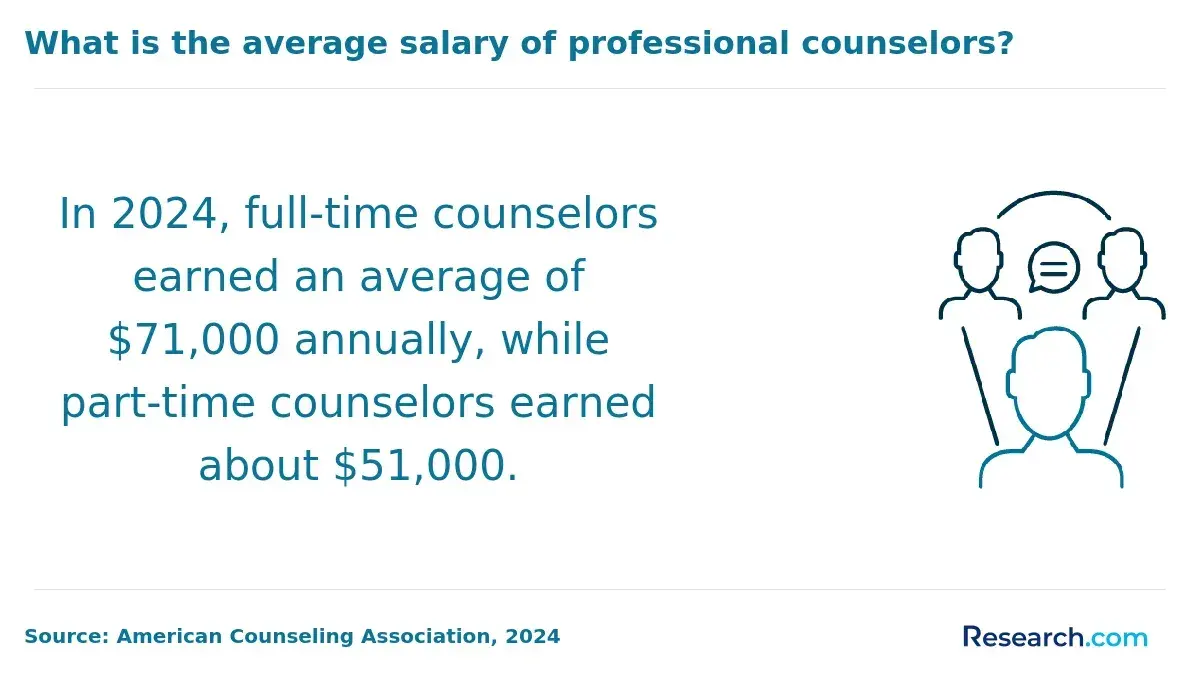
The article’s cited outlook points to more than 25% growth in mental health counseling jobs by 2030, and median pay is reported around $83,590. Actual compensation can vary substantially by setting, specialization, experience, location, employment model, caseload, and whether the counselor works in private practice or an employed role.
- Community mental health agencies: Often hire LACs and LPCs to serve clients with varied clinical needs.
- Hospitals and integrated care settings: May need counselors who can coordinate with medical and behavioral health teams.
- Schools and youth-serving organizations: Commonly need counselors with experience supporting children, adolescents, and families.
- Private practices: Provide opportunities for independent LPCs who want more control over schedule, niche, and client population.
- Telehealth platforms: Expand access to remote counseling services, though counselors must still follow licensing rules.
If cost is a major concern while preparing for this field, compare programs using Research.com’s guide to affordable CACREP-accredited online counseling programs.
How does LPC licensure affect career growth in New Jersey?
The LPC credential can significantly change a counselor’s career options because it signals that the counselor has completed graduate education, examination, supervised practice, and state review. In New Jersey, it can also affect independence, hiring eligibility, supervision opportunities, and income potential.
- Broader employment access: Many counseling roles in healthcare, agencies, schools, and private organizations prefer or require LPC licensure.
- Independent practice: LPC status can allow counselors to build a private practice, choose a clinical focus, manage their schedule, and develop referral networks.
- Higher earning potential: The article’s cited examples include counselors charging $40–$45 per session, leadership roles exceeding $124,000 yearly, and remote LPC roles paying between $95 and $131 an hour. These figures are not guaranteed and depend on role, location, client volume, payer mix, and experience.
- Clinical supervision roles: Experienced LPCs may pursue supervisor responsibilities, helping LACs develop competency while expanding their own leadership profile.
- Specialization: Licensure can support advanced training in areas such as trauma, family counseling, youth mental health, or other focused practice areas.
- Leadership opportunities: LPCs may qualify for roles such as clinical program manager or Director of Clinical Services, especially when they combine licensure with management experience.
- Stronger career mobility: Because New Jersey has ongoing needs for licensed counselors, LPCs may have more room to compare employers, negotiate roles, or pursue hybrid and telehealth work.
Counselors comparing adjacent graduate pathways may also find Research.com’s guide to short online MFT programs useful, especially if they are deciding between professional counseling and marriage and family therapy. Always verify which license a program is designed to support.
What are the renewal and continuing education requirements for maintaining an LPC license in New Jersey?
New Jersey LPCs must keep their license current through periodic renewal and continuing education. Renewal generally occurs every two years and requires documentation of continuing education hours, including required professional topics such as ethics or regulatory updates when applicable. The article’s cited requirement is 40 continuing education units for renewal.
The practical rule is simple: do not wait until the renewal deadline to start tracking education. Keep certificates, course descriptions, provider information, and completion dates in one place. If your employer offers approved continuing education, confirm that the hours satisfy New Jersey’s rules before relying on them for renewal. For readers looking for a streamlined pathway into the field, Research.com also explains the fastest way to become a counselor in New Jersey.
What do LPCs in New Jersey say about their career?
- My LPC preparation at Rutgers University gave me the academic structure and mentorship I needed to serve clients in New Jersey’s diverse communities. Beginning my career in a local school showed me how important early mental health support can be for students. The work is challenging, but it continues to strengthen my commitment to advocacy, prevention, and accessible care. - Lund
- Montclair State University helped me build the counseling foundation I use every day. Working in a New Jersey school introduced me to families from many cultural backgrounds, which pushed me to become more adaptable and culturally aware. The profession has taught me that effective counseling depends on both clinical skill and genuine community understanding. - Lin
- Graduating from Seton Hall University’s counseling program opened the door to a meaningful career in the education sector. New Jersey offers stability and room for growth for counselors who want to deepen their expertise. Supporting students through social and emotional challenges remains the most rewarding part of my work. - Hunta
Common mistakes to avoid when pursuing LPC licensure in New Jersey
| Mistake | Why it can hurt your timeline | Better approach |
| Choosing a program based only on convenience or price | An inexpensive or flexible program may not meet New Jersey LPC coursework rules | Confirm licensure alignment before enrolling |
| Assuming a related master’s degree automatically qualifies | Psychology, social work, or mental health degrees may still miss required counseling content | Request a transcript review and identify gaps early |
| Counting hours without a formal supervision plan | Undocumented or improperly supervised hours may not be accepted | Use signed logs and written supervision agreements for each worksite |
| Waiting too long to schedule supervision | Missed supervision can limit how many hours count toward licensure | Set recurring supervision meetings before your caseload grows |
| Relying only on salary examples | Income varies by setting, experience, payer mix, and workload | Compare local job postings, benefits, supervision support, and advancement options |
| Assuming an out-of-state license transfers automatically | New Jersey reviews reciprocity and endorsement applicants individually | Gather transcripts, exam scores, and supervision records before applying |
Questions to ask before choosing a New Jersey LPC program or supervisor
- Does this graduate program meet New Jersey’s LPC education and 60-credit requirements?
- Is the program CACREP-accredited or otherwise recognized for New Jersey counselor licensure?
- How does the school document practicum and internship hours for licensing purposes?
- Do graduates commonly become LACs and LPCs in New Jersey?
- Will I need extra coursework if my degree is in a closely related field?
- Who will supervise my post-master’s hours, and are they qualified under New Jersey rules?
- How often will supervision occur, and how will hours be recorded?
- Does the employer provide liability insurance, continuing education, or supervision at no cost?
- What happens if I change worksites before completing my required hours?
- How will this path support my long-term goals, such as private practice, school-based work, telehealth, or clinical leadership?
Related Articles for Nearby States
- 2027 LPC Counseling Licensure Requirements in Delaware
- 2027 LPC Counseling Licensure Requirements in Pennsylvania
- 2027 LPC Counseling Licensure Requirements in New York
- 2027 LPC Counseling Licensure Requirements in Maryland
- 2027 LPC Counseling Licensure Requirements in Connecticut
- 2027 LPC Counseling Licensure Requirements in Rhode Island
- 2027 LPC Counseling Licensure Requirements in Virginia
- 2027 LPC Counseling Licensure Requirements in Massachusetts
- 2027 LPC Counseling Licensure Requirements in West Virginia
- 2027 LPC Counseling Licensure Requirements in Ohio
References:
- Mental Health Counselor Licensure by State- LMHC, LPC, LCPC | William James https://www.williamjames.edu/academics/counseling/clinical-mental-health-counseling-ma-online/licensure/LMHC-LPC-by-state.html
- LPC vs LMHC: Your State Determines Your Licensure Type https://onlinemftprograms.com/lpc-vs-lmhc/
- Pages - Frequently Asked Questions https://www.njconsumeraffairs.gov/pc/Pages/FAQ.aspx
- LPC vs. LCSW vs. LMHC: What’s the Difference? - Counseling Degrees Online https://www.counselingdegreesonline.org/lcsw-vs-lpc-vs-lmhc
- New Jersey Mental Health Counselor Licensure | LAC & LPC Requirements in NJ | MentalHealthCounselorLicense.com https://www.mentalhealthcounselorlicense.com/license/mental-health-counselor-new-jersey/
- How to Become a Licensed Counselor (LPC) in New Jersey for 2025 | Research.com https://research.com/careers/how-to-become-a-licensed-counselor-lpc-in-new-jersey
- New Jersey Counselor Licensing, Certification and Education Requirements, Career | CareersinPsychology.org https://careersinpsychology.org/how-to-become-a-licensed-counselor-in-new-jersey/
- Licensed Professional Counselors - Stress Care of New Jersey, LLC https://www.stresscareclinic.com/about/licensed-professional-counselors/
- LPC Licensed Professional Counselor Resources | I am in New Jersey and working towards LPC, how many of the 4,500 hours have to be direct | Facebook https://www.facebook.com/groups/counselorjobs/posts/1334621421141288/
- Counseling Licensure – Counseling - Montclair State University https://www.montclair.edu/counseling/licensure-programs/counseling-licensure/
Key Insights
- New Jersey LPC licensure is not based on degree title alone. Your graduate credits, counseling content areas, accreditation status, supervised hours, exam results, and documentation all matter.
- The most direct route is a qualifying 60-credit graduate counseling program followed by LAC status, the NCE, supervised experience, and final LPC application approval.
- Plan around 4,500 supervised counseling hours, with at least 3,000 hours typically completed after the master’s degree as an LAC.
- Keep detailed supervision records from the beginning. Missing signatures, unclear worksite documentation, or unapproved supervision can delay the LPC application.
- Licensure can expand access to independent practice, supervisory roles, specialized clinical work, leadership positions, and higher earning opportunities, but salaries are never guaranteed.
- Out-of-state counselors should not assume automatic reciprocity. New Jersey reviews education, experience, license status, and exam records individually.
- The best program is not always the cheapest or fastest. Choose the option that fits New Jersey licensure rules, your budget, your timeline, and your intended counseling career setting.
Other Things You Should Know About Being an LPC in New Jersey
New Jersey requires a master’s or doctoral counseling degree from a regionally accredited institution, with the counseling program meeting board-approved standards. The New Jersey Professional Counselor Examiners Committee reviews education against licensure rules, and applicants must also complete the supervised experience and exam requirements before licensure.
To obtain LPC licensure in New Jersey in 2027, applicants must complete 4,500 hours of supervised clinical experience. These hours should be accumulated post-master's degree under the supervision of a qualified supervisor. It is crucial for the hours to cover a range of relevant counseling skills to ensure comprehensive training.
To obtain LPC licensure in New Jersey in 2027, candidates must pass the National Counselor Examination (NCE) or the National Clinical Mental Health Counseling Examination (NCMHCE), both overseen by the National Board for Certified Counselors (NBCC).


