
2027 How to Become a Teacher Online in Missouri: Requirements & Certification

Co-Founder and Chief Data Scientist
If you want to teach online in Missouri, the central question is not whether online instruction is “different enough” to need a separate license. In Missouri, online teachers generally must meet the same state certification expectations as classroom teachers, then add the digital teaching skills needed to manage virtual lessons, online assessments, accessibility, and student engagement.
This guide explains how to become an online teacher in Missouri in 2026, including education requirements, certification steps, exams, field experience, salary expectations, job outlook, costs, renewal rules, and alternative pathways for people who did not major in education. It is designed for future teachers, career changers, paraprofessionals, substitute teachers, and licensed educators who want to move into virtual instruction.
Quick Answer: How do you become an online teacher in Missouri?
To become an online teacher in Missouri, you typically need a bachelor’s degree, completion of a state-approved educator preparation program, required Missouri certification assessments, supervised field experience or student teaching, a fingerprint background check, and an application through the Missouri Department of Elementary and Secondary Education. Missouri does not issue a separate online-teaching license, so your certification must match the grade level and subject you plan to teach.
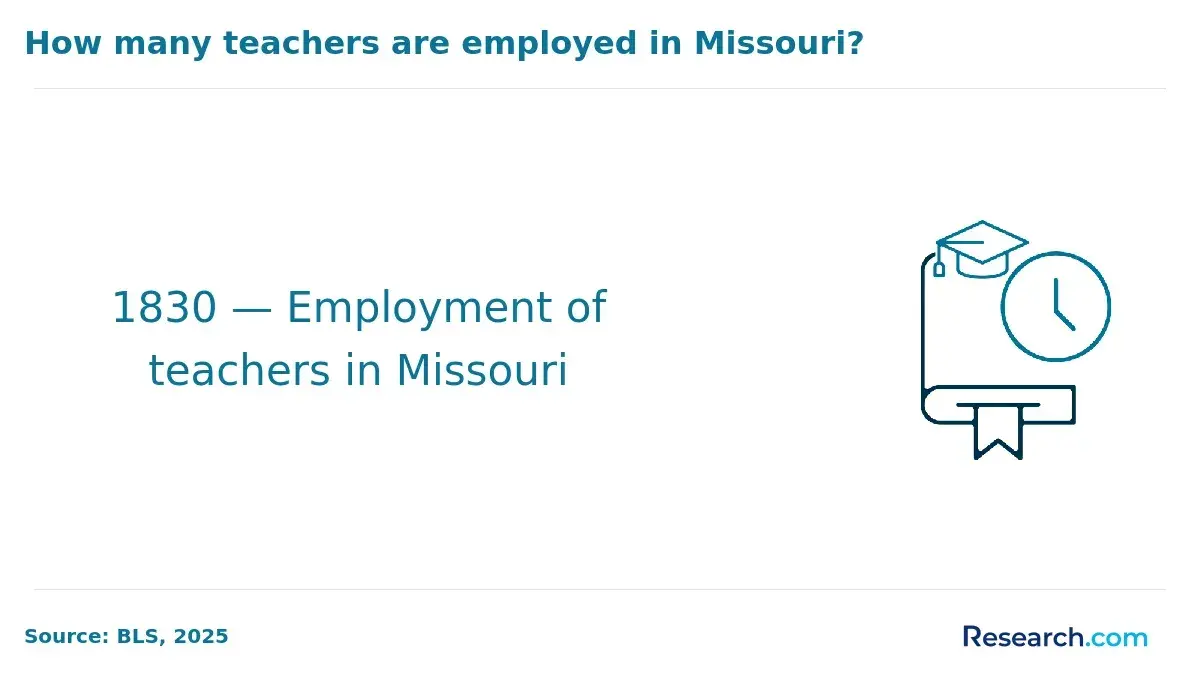
Demand matters, too. Missouri has over 9,000 teaching vacancies statewide, and virtual schools, online course providers, and districts with remote programs need teachers who can combine certified subject expertise with strong digital instruction skills.
Key Things to Know About Becoming a Teacher Online in Missouri
- You must earn a Missouri teaching license by finishing an accredited educator preparation program and passing the required state assessments for your certification area.
- Digital fluency is no longer optional; 75% of Missouri schools use online platforms such as Google Classroom and Canvas.
- A master’s degree or graduate certificate in education technology can strengthen your profile, especially for curriculum, instructional design, or virtual-learning leadership roles.
- Missouri’s virtual-school market is expanding, with a 20% growth in online teaching jobs.
- Online teachers should monitor Missouri Department of Elementary and Secondary Education guidance because expectations for online instruction, accessibility, evaluation, and renewal can change.
- Minimum education requirements for Missouri online teachers
- Skills that matter most in online teaching
- Average salary for online teachers in Missouri
- How online teacher-preparation programs work
- Missouri licensing and certification requirements
- Job outlook for Missouri online teachers
- Common challenges in Missouri online teaching
- Career advancement options
- Ways to control credentialing costs
- Teacher evaluation and support
- Typical certification timeline
- Support networks and professional resources
- Continuing education and license renewal
- Becoming an online teacher without an education degree
- Current Missouri online-education trends
- Steps to start your online teaching career
What are the minimum educational requirements to become an online teacher in Missouri?
Missouri online teachers need the same academic foundation expected of certified in-person teachers. The online format changes how you deliver instruction, but it does not remove the state’s preparation, assessment, and background-check requirements.
The baseline requirements usually include the following:
- A bachelor’s degree from an accredited college or university, preferably connected to the subject or grade level you plan to teach.
- At least 30 semester hours in the subject area when your certification route requires concentrated content preparation.
- Completion of a Missouri-approved educator preparation program, whether traditional, online, alternative, or out-of-state, as long as Missouri recognizes it.
- Passing the required certification assessments, which may include Missouri content exams and performance-based assessments tied to student teaching.
- A supervised student teaching, internship, or approved field placement that demonstrates readiness to teach real students.
- A current Missouri fingerprint background clearance.
- Submission of transcripts, assessment records, background-check documentation, and other required materials through the Missouri Department of Elementary and Secondary Education system.
| Requirement | What it means for online teaching | Decision tip |
| Bachelor’s degree | You need an accredited undergraduate degree before earning standard teacher certification. | If you have no degree yet, compare education majors with subject-area majors that lead to certification. |
| Educator preparation program | Your program must prepare you for Missouri certification standards, not just online course delivery. | Before enrolling, ask whether the program is approved for the exact Missouri certification area you want. |
| Student teaching or internship | Online coursework does not eliminate supervised teaching practice. | Confirm where field placements occur and whether virtual teaching placements are accepted. |
| Certification exams | You must pass required assessments for your grade level or subject. | Ask the program for recent exam-preparation support and pass-rate information. |
| Background clearance | Missouri requires fingerprint-based screening before certification and school placement. | Start early because delays can affect fieldwork or hiring timelines. |
-
: "
One Missouri online teacher described the process this way: the hardest part was not learning the technology, but managing coursework, assessment deadlines, and student teaching at the same time. Passing the required exams helped confirm that they were ready to teach independently in a virtual setting.
"
If you are still choosing an undergraduate route, Research.com’s guide to the best online bachelors in education can help you compare flexible programs that may align with teacher-preparation goals.
What skills are essential for success as a teacher online?
Strong online teachers do more than move classroom lessons onto a screen. They design clear digital learning experiences, communicate consistently, use data to support students, and prevent learners from becoming isolated or disengaged.
Technical Proficiency and Digital Literacy
You should be comfortable using learning management systems, video tools, online gradebooks, digital discussion boards, file-sharing tools, and accessibility features. Platforms such as Canvas and Google Classroom are common in Missouri schools, so job candidates who can show practical experience with these systems may have an advantage.
Instructional Design and Content Organization
Online students need structure. Lessons should include clear objectives, logical modules, readable instructions, accessible materials, and deadlines that are easy to track. Multimedia can help, but only when it supports the learning goal rather than distracting from it.
Communication and Interpersonal Skills
In virtual classrooms, tone and timing matter. Students may rely on written announcements, feedback comments, email, chat, and video conferences to understand expectations. Successful online teachers respond predictably, explain directions clearly, and create a classroom culture where students know how to ask for help.
Creative Problem-Solving and Flexibility
Technology failures, inconsistent attendance, home distractions, and uneven internet access can interrupt instruction. Online teachers need backup plans, flexible participation options, and practical ways to keep students moving forward when the ideal lesson plan does not work.
Assessment and Data-Driven Instruction
Online learning platforms generate useful information about attendance, assignment completion, quiz performance, and participation. Teachers who know how to interpret that information can intervene earlier, adjust instruction, and document student progress more effectively.
Commitment to Professional Growth
Online teaching tools, accessibility expectations, and state policies continue to evolve. Ongoing professional development helps teachers keep their courses compliant, improve student engagement, and remain prepared for renewal requirements.
| Skill area | Why it matters online | How to demonstrate it to employers |
| Learning management systems | Most instruction, grading, communication, and resources flow through a digital platform. | Include sample modules, screenshots, or platform training in your teaching portfolio. |
| Accessibility | Online materials must be usable by students with different learning and access needs. | Show examples of captions, readable documents, alternative text, and clear navigation. |
| Student engagement | Virtual learners can disengage quickly without interaction and accountability. | Share sample discussion prompts, formative assessments, and feedback routines. |
| Data use | Teachers need to identify struggling students before problems become severe. | Explain how you use grades, participation, and completion data to plan interventions. |
What is the average salary of online teachers in Missouri?
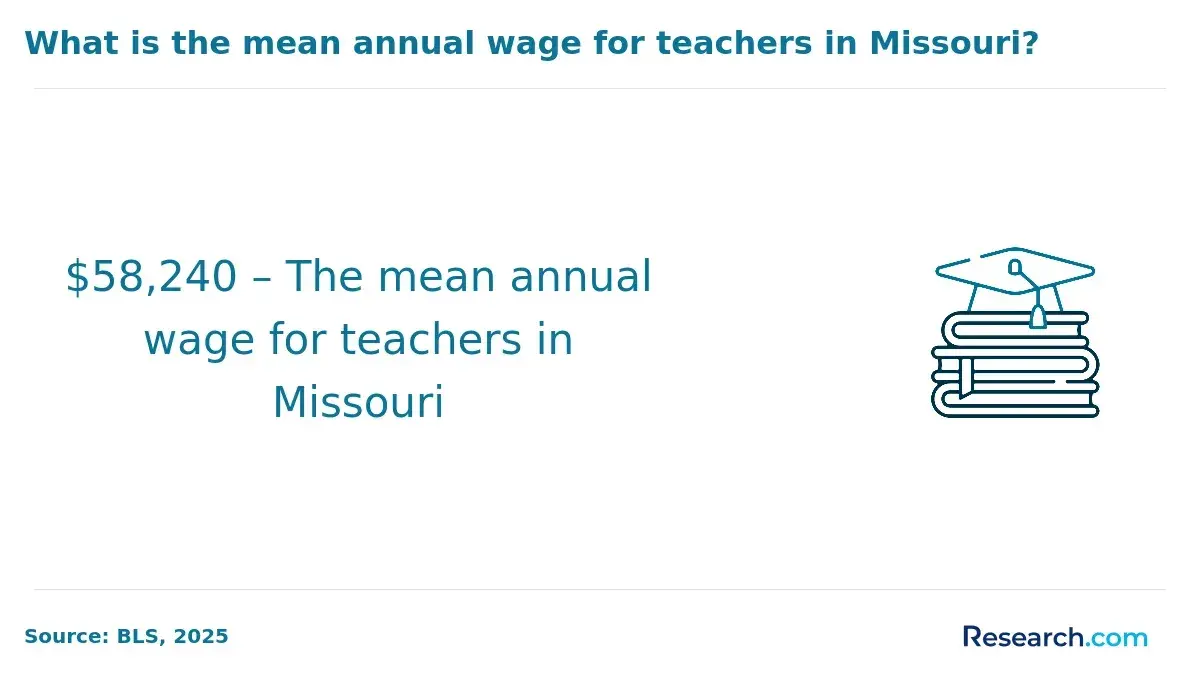
The average salary for online teachers in Missouri is about $43,701 per year, or approximately $21.01 per hour. Reported earnings vary widely, from $19,698 to $65,191 annually. That range can reflect differences in employer type, grade level, subject area, experience, full-time versus part-time status, and whether the role includes curriculum design or other responsibilities.
Missouri’s median online teacher pay is lower than traditional public school teacher compensation in the state, and Missouri ranks 50th nationally for online teacher compensation. This does not mean an online teaching career is automatically a poor choice, but it does mean candidates should compare salary, benefits, workload, contract length, and advancement options before accepting a position.
| Salary factor | How it can affect pay | What to check before accepting a job |
| Subject specialization | High-need areas may offer stronger opportunities than general roles. | Ask whether the district or provider offers stipends or incentives for shortage areas. |
| Experience level | New teachers may start closer to the lower end of the range. | Review the salary schedule or contract language, not only the advertised estimate. |
| Employer type | Public districts, virtual schools, charter schools, and private providers may pay differently. | Compare benefits, retirement eligibility, planning time, and class size. |
| Additional credentials | Graduate study or specialized certification can support advancement in some settings. | Ask whether advanced degrees or endorsements change placement on the pay scale. |
If you want to teach in a high-need area, an online bachelor's degree in special education may be worth comparing with general education pathways because specialized preparation can expand the roles for which you qualify.
How do online teacher preparation programs and student teaching experiences work in Missouri?
Online teacher-preparation programs can make the academic portion of certification more flexible, but they usually do not make the entire process remote. Missouri candidates still need supervised teaching experience that shows they can manage instruction, assessment, and classroom responsibilities with real students.
- Online coursework: Many programs allow candidates to complete education theory, methods courses, assessment training, and classroom-management coursework online.
- Transfer and accelerated options: Some programs accept transfer credits or prior college coursework, which can reduce the time required to finish a degree or certification sequence.
- Required field experience: Even in online programs, candidates often complete observations, practicums, internships, or student teaching in approved schools.
- Prior classroom experience: Paraprofessionals or school employees may be able to apply some experience toward fieldwork expectations when the program and state rules allow it.
- Formal evaluation: Student teaching is assessed through observation, feedback, and performance systems such as the Missouri Educator Evaluation System.
- Theory plus practice: A strong program connects lesson planning, child development, assessment, and instructional technology with supervised teaching practice.
| Program feature | Good fit if... | Be careful if... |
| Fully online coursework | You work full time, live far from campus, or need schedule flexibility. | The program cannot clearly explain how Missouri field placements are arranged. |
| Alternative certification | You already have a bachelor’s degree in another field. | You assume it is faster without checking exam, GPA, and supervised teaching requirements. |
| Traditional education degree | You want a structured undergraduate path into certification. | You choose a program without confirming it leads to your desired Missouri certificate. |
| Graduate certificate in online teaching | You are already licensed and want stronger virtual-teaching credentials. | You mistake it for initial teacher certification when it is not designed for that purpose. |
What are the licensing and certification requirements for online teachers in Missouri?
Missouri does not create a separate certification category just for online teachers. If you teach third-grade math online, high-school English online, or special education online, your certificate still needs to match the grade level, subject, and student population you are serving.
- Assessments: Candidates must pass the Missouri Content Assessment for the relevant subject and grade level. Some certification fields may involve Praxis exams. As of July 2024, the Missouri General Education Assessment is no longer required for admission into teacher education programs, although individual institutions may still use it.
- Background check: Applicants complete fingerprint-based screening through the Missouri Automated Criminal History System. Reviews occur at the state and national level, and clearances are valid for 12 months. Processing usually takes 7 to 10 business days.
- Certification documentation: Transcripts, exam records, program-completion verification, employment evidence when applicable, and other materials are submitted through the Missouri Department of Elementary and Secondary Education.
- Ongoing requirements: Teachers must complete professional development and meet renewal rules to keep certification active.
If cost is a major concern, compare certification-aligned programs carefully. Research.com’s guide to what is the cheapest elementary education online program can help you begin evaluating lower-cost options without ignoring Missouri approval requirements.
What is the job outlook for online teachers in Missouri?
The job outlook for online teachers in Missouri is best described as opportunity-driven but competitive. Teacher vacancies create demand, and virtual schools continue to need certified educators. At the same time, pay for Missouri online teachers is relatively low compared with many other locations, and not every district offers full-time virtual roles.
Candidates with shortage-area credentials, special education preparation, STEM expertise, strong online-teaching portfolios, and experience supporting diverse learners may be better positioned than candidates with only general credentials. Teachers who are open to statewide, national, or platform-based virtual roles may also find more options than those searching only one local district.
| Best opportunity area | Why it may help | How to prepare |
| Special education | Schools need teachers who can support individualized learning needs online. | Earn the correct certification and develop strong documentation and accommodation skills. |
| STEM subjects | Shortage areas often create more hiring urgency. | Build subject mastery and show examples of interactive digital instruction. |
| Instructional technology | Online programs need educators who can design effective digital learning environments. | Add training in course design, accessibility, and learning management systems. |
| Virtual school teaching | Dedicated online schools need teachers who can work independently and communicate clearly. | Create a portfolio with sample modules, video lesson clips, and online assessment examples. |
What are the main challenges that online teachers face in Missouri?
Online teaching can offer flexibility, but it also brings problems that are easy to underestimate. The strongest candidates prepare for these issues before they begin teaching.
- Retention pressure: High turnover can affect staffing stability, particularly in demanding fields such as STEM and special education.
- Student engagement: Chronic absenteeism and digital distractions can reduce participation. Cell phones are a major concern, with 88% of teachers identifying them as a serious problem in virtual classrooms.
- Workload creep: Online teachers often spend substantial time answering messages, redesigning lessons, tracking participation, and supporting students outside scheduled class time.
- Professional isolation: Without hallway conversations or in-person team planning, teachers may feel disconnected unless the school intentionally supports collaboration.
- Technology gaps: Uneven internet access, unreliable devices, and home-learning barriers can make instruction more complicated for Missouri students and teachers.
| Common mistake | Why it causes problems | Better approach |
| Assuming online teaching is easier than classroom teaching | Virtual instruction requires heavy planning, communication, and follow-up. | Ask about class size, planning expectations, office hours, and student-support systems. |
| Choosing a program without checking certification alignment | A degree alone may not qualify you for Missouri licensure. | Confirm state approval and certification area before enrolling. |
| Focusing only on tuition | Exam fees, books, background checks, technology, and unpaid fieldwork can add costs. | Build a full certification budget before committing to a program. |
| Ignoring accessibility | Inaccessible materials can exclude students and create compliance concerns. | Learn captioning, document accessibility, screen-reader-friendly formatting, and clear navigation. |
| Relying only on job postings | Some online teaching opportunities circulate through networks or district contacts. | Build relationships with schools, virtual programs, mentors, and professional associations. |
Preparation in early learning, child development, and digital instruction can be especially helpful for educators serving younger students online. If that describes your goal, review the benefits of online bachelors degree in early childhood education as part of your planning.
What are the career advancement opportunities for online teachers in Missouri?
Online teachers can move beyond daily instruction into roles that influence curriculum, technology adoption, teacher training, and program quality. Advancement often depends on certification, experience, graduate study, leadership ability, and evidence that you can improve student outcomes in digital environments.
- Lead online teacher: Mentors new virtual teachers, models best practices, and supports course consistency.
- Instructional designer: Builds online courses, learning modules, assessments, and multimedia resources.
- Curriculum specialist: Aligns online lessons with standards, assessments, and district goals.
- Virtual program coordinator: Helps manage scheduling, student support, compliance, and teacher communication.
- Technology integration specialist: Trains educators to use learning platforms, accessibility tools, and digital assessment systems.
If you want to broaden your teaching options across age groups, Research.com’s guide on how to become a kindergarten teacher in Missouri can help you understand another certification-focused pathway.
How can you manage the costs of obtaining your teaching credentials in Missouri?
The cheapest path is not always the best path. A low-cost program that does not lead to Missouri certification can waste time and money. Instead, compare the full cost of becoming eligible to teach, including tuition, transfer-credit policies, exam preparation, assessment fees, fingerprinting, technology needs, transportation for fieldwork, and unpaid student-teaching time.
| Cost-control strategy | Why it helps | Question to ask |
| Use transfer credits | Accepted credits can reduce the number of courses you must complete. | How many credits will apply directly to my certification plan? |
| Compare alternative certification | Career changers may not need a second bachelor’s degree. | Does this pathway lead to the same Missouri certificate I need? |
| Look for educator scholarships | Some aid targets aspiring teachers or shortage areas. | Are there scholarships, grants, or payment plans for teacher candidates? |
| Plan exam costs early | Retakes can increase expenses and delay certification. | What exam-prep support is included in the program? |
| Ask about fieldwork flexibility | Placement logistics can affect transportation and work schedules. | Can field experience be completed near where I live or work? |
For a more focused cost comparison, see Research.com’s guide to the cheapest way to get a teaching credential in Missouri.
How are online teacher performances evaluated and supported in Missouri?
Online teacher performance is evaluated through many of the same expectations used for in-person teachers: lesson quality, student engagement, classroom management, assessment use, professionalism, and growth over time. In virtual settings, evaluators may also review course organization, communication practices, online participation, accessibility, and the teacher’s ability to use digital tools effectively.
Support can include administrator observations, coaching, mentoring, professional development, peer collaboration, student-performance data, and feedback tied to the Missouri Educator Evaluation System. For a broader look at credential expectations, see Research.com’s overview of Missouri teacher certification requirements.
How long does it take to become a certified online teacher in Missouri?
The timeline depends on where you start. A first-time college student usually needs longer because they must complete a bachelor’s degree and teacher-preparation sequence. A career changer with a bachelor’s degree may be able to use an alternative certification route, but still must complete required coursework, supervised teaching, exams, and background checks.
| Starting point | Likely path | Main timeline drivers |
| No bachelor’s degree | Earn a degree that leads to certification. | Degree length, transfer credits, field placements, and exam timing. |
| Bachelor’s degree in a non-education field | Complete an approved alternative certification program. | Prerequisite coursework, GPA rules, supervised teaching, and assessments. |
| Already certified in Missouri | Add online-teaching skills or pursue additional endorsements. | Professional development, graduate certificates, or endorsement requirements. |
| Licensed in another state | Apply through Missouri’s out-of-state review process. | Transcript evaluation, testing requirements, and DESE review timelines. |
For a deeper timeline breakdown, read How long do you need to go to school to be a teacher in Missouri?
What additional support networks and resources can boost your online teaching career in Missouri?
Online teachers benefit from professional relationships because virtual instruction can otherwise become isolating. Look for support through district mentoring, Missouri educator associations, subject-area groups, virtual-school communities, instructional-technology workshops, and online professional learning networks.
- Join subject-specific educator groups to exchange lesson ideas and assessment strategies.
- Seek a mentor who has experience teaching online in your grade level or content area.
- Attend training on accessibility, learning management systems, and student engagement.
- Save evidence of professional learning for renewal, evaluation, and portfolio purposes.
- Consider substitute or part-time teaching experience if you need classroom exposure before committing to a full certification route.
If you want to gain school-based experience while exploring certification options, Research.com’s guide on how to become a substitute teacher in Missouri may be a useful next step.
Are there continuing education or license renewal requirements for online teachers in Missouri?
Yes. Missouri teachers, including online teachers, must keep up with professional development and license-renewal expectations. Requirements can vary by certificate type and career stage, so teachers should confirm current rules with the Missouri Department of Elementary and Secondary Education and their employing district.
Missouri’s continuing education expectations include 15 contact hours of professional development annually unless an educator qualifies for exemptions such as ten years of teaching experience or national board certification. Renewal may also involve accumulating 30 contact hours over four years, mentoring, and performance assessment. Temporary certificates require nine college credits yearly, while provisional certificates may be extended as required coursework is completed.
Because online teaching changes quickly, choose professional development that improves both compliance and classroom quality. Useful topics include accessibility, virtual classroom management, online assessment, data-informed intervention, AI-aware instruction, and learning management system design.
If you are still deciding which education pathway is realistic, Research.com’s list of easiest teaching degrees can help you compare options while keeping Missouri requirements in mind.
Can you become an online teacher without a traditional education degree in Missouri?
Yes, but you still need certification. Missouri allows alternative routes for candidates who have a bachelor’s degree in a non-education field. These pathways are designed for career changers and professionals with subject-matter knowledge who need pedagogical preparation, supervised teaching, and state approval.
Common options include:
- Completing a state-approved alternative certification program that combines education coursework with supervised teaching practice.
- Qualifying for a provisional teaching certificate while finishing remaining preparation requirements, when allowed.
- Using the superintendent’s recommendation route available since 2022 for candidates who have completed all but the final assessment exam in a traditional program.
Regardless of route, you must generally hold at least a bachelor’s degree, complete an approved preparation pathway, pass the required certification assessments, clear the Missouri fingerprint background check, and meet academic expectations such as a 3.0 GPA in content and education coursework.
Alternative certification can be a strong fit if you already have content expertise, but it is not a shortcut around professional standards. Before enrolling, ask whether the program leads to your intended Missouri certificate, how field placements are handled, and what happens if you do not pass a required exam on the first attempt.
What are the current trends in online teaching and education in Missouri?
Missouri’s online education environment is being shaped by growth in online programs, stronger accessibility expectations, workforce needs, and changing student preferences. Future online teachers should understand these trends because they affect hiring, course design, and professional development.
Online programs and enrollment continue to expand
Missouri institutions increased distance education offerings from 922 in 2017 to 1,229 in 2021, a 33% increase. Half of these institutions now offer programs that can be completed fully online. During the same period, student enrollment in online courses, including enrollment at out-of-state schools, rose by 36%.
Digital accessibility is becoming more important
New regulations aligned with ADA Title II are scheduled to take effect in April 2026. Public education institutions in Missouri are preparing for stronger accessibility expectations for online course platforms such as Canvas. Teachers who understand accessible documents, captions, readable course layouts, and equitable digital participation will be better prepared.
Online learning is tied to workforce preparation
Missouri’s strategic planning connects online education with future labor-market needs. By 2032, a majority of jobs will require postsecondary education, and nearly a third will require a bachelor’s degree or higher. Flexible online learning can help students and working adults pursue credentials without relocating or leaving employment.
Students continue to value flexibility
National studies report that 94% of students taking online courses are satisfied with the experience, often because of convenience, cost-effectiveness, and scalability. Missouri institutions are responding by expanding flexible programs for a wider range of learners.
AI and educational technology are changing teacher expectations
Online teachers increasingly need to understand how students use digital tools, including AI-supported writing, tutoring, translation, and study aids. The practical goal is not to ban every tool, but to design assignments, assessments, and feedback routines that support learning, academic integrity, and responsible technology use.
What steps should you take to start your online teaching career in Missouri?
Starting an online teaching career in Missouri is easier when you treat it as a sequence of decisions rather than one large task. The right route depends on your current degree, certification status, subject area, budget, and preferred students.
- Choose your teaching target. Decide whether you want to teach elementary, middle school, high school, special education, career and technical education, or another area.
- Check Missouri certification requirements. Match your target role to the correct certificate and confirm the exams, coursework, GPA, and fieldwork expectations.
- Select an approved preparation pathway. Compare traditional degrees, online education programs, alternative certification, or endorsement routes based on your background.
- Plan for field experience. Ask where student teaching or internship placements happen and whether any virtual teaching experience can count.
- Prepare for required assessments. Build exam study time into your schedule and ask programs what support they provide.
- Complete fingerprinting and documentation early. Background checks, transcripts, and application materials can delay certification if handled late.
- Build an online teaching portfolio. Include sample lesson plans, course modules, feedback examples, accessibility practices, and evidence of student engagement strategies.
- Apply strategically. Look at Missouri virtual schools, district-run online programs, charter schools, private providers, and remote teaching platforms that accept Missouri-certified teachers.
- Keep learning after hire. Focus professional development on accessibility, data use, digital tools, online classroom management, and student support.
| Question to ask before enrolling or applying | Why it matters |
| Does this program lead to the Missouri certificate I need? | Not every education-related degree leads to licensure. |
| How are online and in-person field experiences arranged? | Fieldwork logistics can affect your work schedule, transportation, and timeline. |
| What exams will I need, and when should I take them? | Failed or delayed exams can postpone certification and hiring. |
| What is the total cost, not just tuition? | Books, technology, assessments, background checks, and unpaid teaching time can change affordability. |
| Do graduates get hired into Missouri online teaching roles? | Employment support and employer relationships can affect your transition into work. |
| How does the employer support online teachers? | Mentoring, planning time, technical help, and manageable class sizes affect retention. |
What do online teachers in Missouri say about their careers?
- My certification experience at Truman State University helped me enter teaching with confidence, even when my classroom moved online. Working first in a local school gave me a clearer sense of the community my students come from, and I bring that awareness into my virtual lessons. Online teaching in Missouri gives me flexibility and lets me support students with very different needs. The most meaningful part is watching students grow academically while also gaining confidence. Lem
- After completing the education program at the University of Missouri–St. Louis, I started in a local classroom and later shifted into online instruction. That transition taught me to plan for different learning styles and to use Missouri’s cultural resources in more creative ways. Online teaching has also made professional development easier because I can attend workshops and complete certifications without stepping away from students for long periods. Seeing students stay connected and succeed from a distance is what keeps the work rewarding. Lara
- Missouri State University prepared me for the fundamentals of teaching, but beginning my career in a local school showed me the real challenges students face in our region. As an online teacher, I can weave Missouri history and the natural environment into lessons that make students curious about where they live. The work has helped me grow professionally and personally because I know my teaching supports young people in a changing education system. Ray
Related Articles for Nearby States
- 2027 How to Become a Teacher Online in Kansas
- 2027 How to Become a Teacher Online in Iowa
- 2027 How to Become a Teacher Online in Nebraska
- 2027 How to Become a Teacher Online in Arkansas
- 2027 How to Become a Teacher Online in Oklahoma
- 2027 How to Become a Teacher Online in Illinois
- 2027 How to Become a Teacher Online in Kentucky: Requirements & Certification
- 2027 How to Become a Teacher Online in Tennessee
- 2027 How to Become a Teacher Online in Indiana: Requirements & Certification
- 2027 How to Become a Teacher Online in South Dakota
Key Insights
- Missouri online teachers generally need the same state certification as in-person teachers; there is no separate online-teaching license.
- The standard path includes a bachelor’s degree, approved educator preparation, required assessments, supervised teaching experience, fingerprint clearance, and DESE application materials.
- Online teaching jobs can be flexible, but candidates should compare salary, benefits, workload, class size, and support before accepting a role.
- The average online teacher salary in Missouri is $43,701 per year, with reported earnings ranging from $19,698 to $65,191.
- Alternative certification can work for career changers, but it still requires a bachelor’s degree, approved preparation, assessments, background clearance, and academic eligibility.
- Digital accessibility, learning management systems, student engagement, and data-informed instruction are essential skills for virtual classrooms.
- Before enrolling in any program, confirm Missouri approval, certification alignment, field-placement rules, total cost, exam requirements, and renewal expectations.
References:
- All Education Schools. Missouri State Teacher Certification Guide. June 10, 2025. alleducationschools.com.
- Doan, S., Steiner, E. D., Woo, A., & Pandey, R. State of the American Teacher Survey: 2024 Technical Documentation and Survey results. RAND. June 18, 2024. rand.org.
- East Central College. Missouri's Adult Learning Landscape - Adult Education and Literacy. December 17, 2024. eastcentral.edu.
- Missouri Southern State University. Adult degree completion. n.d. mssu.edu.
- Missouri State. Adult Student Services. n.d. adultstudents.missouristate.edu.
- Missouri State. Student teaching as Teacher of Record - Student Teaching Information and Resources - Professional Education Services. n.d. missouristate.edu.
- Moberly Area Community College. Preparing for the high school equivalency Test: The GED Program at MACC. February 21, 2025. macc.edu.
- NWMS Online. Professional development requirements for Missouri teachers. Northwest Missouri State University. July 22, 2024. online.nwmissouri.edu.
- TeachingDegree.org. Online teaching programs in Missouri. n.d. teachingdegree.org.
- Zippia. Teacher Demographics and Statistics [2025]: Number of teachers in the US. January 8, 2025. zippia.com.
Other Things You Should Know About Becoming a Teacher Online in Missouri
Student teaching cannot be completed entirely online in Missouri. Prospective teachers must fulfill their student teaching requirement in a physical classroom setting, supervised by a certified educator, as mandated by Missouri state regulations for teacher certification in 2027.
Most online teacher candidates in Missouri should first apply for initial certification in the subject and grade level they plan to teach. The Missouri Department of Elementary and Secondary Education, or DESE, reviews the application, transcripts, testing, and fingerprints before issuing any certificate.


