
2027 How to Become a History Teacher in Iowa: Requirements & Certification

Co-Founder and Chief Data Scientist
Becoming a history teacher in Iowa means preparing for a licensed classroom role in social studies, usually at the middle school or high school level, where you help students understand historical events, civic institutions, evidence, and competing interpretations of the past. The path is structured: earn the right bachelor’s degree, complete an approved teacher preparation program, finish student teaching, meet licensure requirements, and apply through the Iowa Board of Educational Examiners.
This decision matters because Iowa continues to need qualified teachers even as educator preparation numbers have improved. The state reported an increase in teachers prepared for the classroom from 1,781 in 2020-2021 to 2,237 in 2021-2022, the first time since 2016 that Iowa moved back above the 2,000 range (Iowa Department of Education, 2024). At the same time, shortages remain in several subject areas, with social studies listed ninth among shortage areas.
This guide explains how to become a history teacher in Iowa, what licenses and endorsements may apply, how salaries compare by role, what financial aid options can help reduce your costs, and how to decide whether this career path fits your goals. It also covers professional development, private school options, alternative pathways, classroom challenges, and practical steps for entering the field.
Quick Answer: How do you become a history teacher in Iowa?
To become a history teacher in Iowa, you typically need a bachelor’s degree from an accredited institution, completion of a state-approved teacher preparation program, student teaching experience, required licensing assessments if applicable, and an Iowa teaching license with the appropriate social studies or history endorsement for the grade level you plan to teach. Candidates coming from another state are reviewed individually rather than receiving automatic reciprocity.
| Step | What it involves | Why it matters |
| Earn a bachelor’s degree | Complete an accredited degree in education, history, social studies, political science, or a related field. | Your coursework must support the endorsement area you want to teach. |
| Complete teacher preparation | Finish an Iowa-approved educator preparation program. | This is the formal route to classroom readiness and licensure eligibility. |
| Finish student teaching | Complete a 14-week student teaching placement, usually in a PK-12 school setting. | Student teaching gives you supervised practice before leading your own classroom. |
| Meet licensure requirements | Submit documentation, complete required checks, and pass required assessments when applicable. | Iowa public schools require properly licensed teachers for endorsed roles. |
| Apply for teaching positions | Search district, private school, charter, museum education, and curriculum-related roles. | The endorsement, grade level, and location you choose will shape your job options. |
Key Things You Should Know About Becoming a History Teacher in Iowa
- Iowa has a structured licensure system for teachers, so aspiring history educators should plan early around degree choice, endorsement requirements, student teaching, and application deadlines.
- Social studies remains an important shortage area in the state, ranking ninth among Iowa shortage areas, which can create opportunities for well-prepared candidates.
- The job outlook for history teachers in Iowa is positive, with a projected growth rate of around 10% over the next decade, influenced by retirements and increased student enrollment.
- History teachers in Iowa earn an average salary of approximately $58,196 annually, though pay varies by district, degree level, experience, assignment, and school type.
- The most direct pathway is to complete a bachelor’s degree, finish an approved teacher preparation program, complete school-based internship hours, and obtain the proper teaching license and endorsement.
- What are the requirements to become a history teacher in Iowa?
- Are there grants or scholarships available for aspiring history teachers in Iowa?
- Do history teachers need special certifications in Iowa?
- Is there certification reciprocity for history teachers in Iowa?
- How much do history teachers make in Iowa?
- What career paths are available for history teachers in Iowa?
- What professional development opportunities are available for history teachers in Iowa?
- What are the best resources for history teachers in Iowa?
- What additional career pathways can history teachers explore in Iowa?
- Is Iowa a good state to teach in?
- How can technology and interdisciplinary strategies enrich history teaching in Iowa?
- Can integrating creative writing enhance my history teaching career in Iowa?
- How can collaborating with school librarians enhance history education in Iowa?
- What alternative pathways can I pursue to launch my teaching career in Iowa?
- Is Teaching History in Private Schools a Viable Option in Iowa?
- How can I develop an inclusive and engaging history curriculum in Iowa?
- How can I renew and maintain my teaching certification in Iowa?
- What are the challenges of teaching history to students in Iowa?
- How does Iowa support new history teachers?
- What steps should I take to start my career as a history teacher in Iowa?
- What Advanced Education Options Can Elevate My History Teaching Career in Iowa?
- Can integrating art strategies amplify history teaching in Iowa?
What are the requirements to become a history teacher in Iowa?
Iowa history teachers must meet education, field experience, and licensing requirements before teaching in most public school classrooms. The exact path depends on whether you are completing a traditional teacher preparation program, adding an endorsement, moving from another state, or entering through an alternative pathway.
- Earn a bachelor’s degree: Start with a degree from an accredited college or university. Common majors include history, social studies education, political science, or another closely related field. If your goal is secondary teaching, make sure your coursework aligns with Iowa’s history or social studies endorsement expectations.
- Complete an approved teacher preparation program: Iowa requires candidates to complete a teacher preparation program approved by the state’s Department of Education. These programs combine pedagogy, classroom management, assessment, instructional design, and subject-specific methods.
- Complete student teaching: Candidates must complete a 14-week student teaching internship, commonly in a local PK-12 school. This placement is where you practice lesson planning, classroom leadership, grading, and student engagement under supervision.
- Pass required licensing exams: Candidates must complete state-mandated assessments when required. These exams are used to evaluate professional teaching knowledge and subject-area readiness.
- Consider an alternative route if you already have a degree: Students with a teaching degree must follow the Alternative License Pathway. This route requires an additional 12-18 credits of coursework before an intern license is granted. After that, candidates complete a one-year internship at a high school in Iowa, earn a few more credits, and then work toward a full license.
| Candidate type | Best-fit pathway | Key planning issue |
| Undergraduate student | Choose an approved history, social studies, or education program early. | Confirm that the program leads to the correct Iowa endorsement. |
| Career changer with a bachelor’s degree | Explore alternative licensure or post-baccalaureate teacher preparation. | Ask how many additional credits and field hours you need. |
| Licensed teacher in another subject | Ask about adding a social studies or history endorsement. | Endorsement rules may require specific coursework. |
| Out-of-state teacher | Apply for Iowa review through the Board of Educational Examiners. | Iowa evaluates credentials individually rather than using automatic reciprocity. |
A teacher who began her career in Des Moines after graduating from the University of Iowa described the process as demanding but worthwhile. She said the student teaching placement was the moment when the career became real: the classroom felt intimidating at first, but mentor feedback helped her turn preparation into practice. Her experience reflects a common lesson for new teachers: the licensure process matters, but day-to-day growth happens through supervised teaching, reflection, and support from experienced educators.
Are there grants or scholarships available for aspiring history teachers in Iowa?
Yes. Aspiring history teachers in Iowa can look for a mix of state, federal, association-based, and institution-specific aid. The best approach is to combine several sources: federal grants, scholarships from your college, state educator incentives, and loan forgiveness programs tied to shortage areas or service commitments.
- Loan Forgiveness Program: Eligible teachers may receive loan forgiveness of up to $20,000 if they teach in a designated shortage area for five years. Candidates should verify current eligibility rules before relying on this benefit.
- Iowa State Education Association (ISEA) Scholarships: The ISEA offers scholarships for aspiring educators who are children of members. It also provides a scholarship for BIPOC students to support greater teacher diversity in Iowa.
- Future Teachers of Iowa Scholarship: This award supports students pursuing education degrees, including history education. Award amounts typically range from $500 to $2,000 through educational organizations in the state.
- Teach Iowa Scholar Program: This program offers financial incentives for students who commit to teaching in Iowa after graduation. Scholars can receive up to $4,000 per year for up to four years if they meet program requirements.
- Federal Pell Grant: This federal grant is not specific to Iowa or history education, but it can help low-income students pay for undergraduate study. Students comparing education-related careers may also review options in childhood development careers to understand broader student-support pathways.
| Funding option | Best for | What to verify before applying |
| Loan forgiveness | Teachers willing to serve in designated shortage areas. | Required service years, eligible schools, qualifying loans, and deadline rules. |
| State or educator association scholarships | Iowa students entering teacher preparation programs. | Membership, residency, major, GPA, and application requirements. |
| Institutional scholarships | Students enrolled in a specific college or university. | Whether awards renew and whether they require education major status. |
| Federal Pell Grant | Eligible undergraduate students with financial need. | FAFSA status, enrollment level, and annual federal aid limits. |
Before choosing a program, ask the financial aid office whether student teaching affects your ability to work, whether scholarships apply during internship terms, and whether any awards require you to teach in Iowa after graduation. Focusing only on tuition can be misleading; fees, transportation, exam costs, and unpaid fieldwork can also affect affordability.
Do history teachers need special certifications in Iowa?
Iowa history teachers do not need a separate “history teacher certificate” outside the state teaching license system. Instead, they need an Iowa teaching license that matches the subject and grade level they are approved to teach. For history and social studies roles, the endorsement attached to the license is especially important.
- Initial License: This license is awarded to candidates who complete an approved teacher preparation program and meet endorsement requirements. It permits teaching in the endorsed subject and grade level for two years in public schools or three years in private schools.
- Standard Teaching License: Educators who complete the required two- or three-year experience period under the Initial License may receive an Iowa Standard Teaching License. This credential allows full teaching within the endorsed area and grade level for five years.
- Master Educator Teaching License: Teachers who hold a Standard License, have a master’s degree, and complete five years of teaching experience may convert to the Master Educator Teaching License. This license also carries a five-year term and applies to the endorsements held by the educator.
Certification is especially important for public school employment. In 2020, 89.5% of certified social science teachers worked in public schools. Private schools may have different hiring rules, but holding an Iowa teaching license can still improve credibility, portability, and competitiveness.
One Iowa teacher recalled that the licensing paperwork and subject assessments felt stressful after graduation, but peer study groups and guidance from her preparation program helped her stay organized. Once she received her license, she described teaching history in Des Moines as deeply rewarding because it allowed her to connect civic questions, local history, and national events in ways students could understand.
This chart shows the work designations of certified social sciences teachers in the nation.
Is there certification reciprocity for history teachers in Iowa?
Iowa does not provide automatic certification reciprocity for history teachers licensed in other states. Instead, the Iowa Board of Educational Examiners reviews each out-of-state applicant individually to determine whether their education, preparation, assessments, and experience satisfy Iowa requirements.
The Iowa Board of Educational Examiners may issue a Regional Exchange Teaching License to qualified out-of-state applicants. To be considered, candidates should be prepared to document the following:
- A bachelor’s degree from an accredited college or university.
- Completion of an approved teacher preparation program with relevant history and teaching-methods coursework.
- Assessment results or experience verification, if required or applicable.
- Background check completion and all documentation requested for credential review.
If the Board identifies deficiencies, the educator must complete them within two years while teaching under this credential. After all requirements are satisfied, the Regional Exchange License may be converted to a full Iowa teaching license.
From 2022 to 2023, Iowa issued 742 licenses to out-of-state applicants (Iowa Department of Education, 2024). For teachers moving to Iowa, the key is not to assume that a current license will transfer unchanged. Request an evaluation early, collect syllabi and official transcripts, and confirm whether your social studies or history endorsement aligns with Iowa’s rules before accepting a position.
How much do history teachers make in Iowa?
History teacher pay in Iowa depends on grade level, district salary schedule, education level, years of service, additional duties, and whether the teacher works in a public school, private school, or postsecondary institution. The average salary for history teachers in the state is approximately $58,000 annually, and another commonly cited estimate places the average at approximately $58,196 annually.
According to Iowa Workforce Development (n.d.), entry-level middle school teachers earn $40,501, while entry-level high school teachers earn $44,755. Average annual wages can range between $55,000 and $61,000. At the postsecondary level, history and social sciences teachers earn as much as $81,634 and $91,088, respectively.
| Role | Salary information stated in source material | What can affect pay |
| Middle school teacher | Entry-level earnings of $40,501; average annual wages can fall within the $55,000 to $61,000 range. | District schedule, years of service, advanced degrees, and additional assignments. |
| High school teacher | Entry-level earnings of $44,755; average annual wages can fall within the $55,000 to $61,000 range. | Endorsement area, district location, contract terms, and extracurricular responsibilities. |
| Postsecondary history teacher | History teachers in postsecondary institutions may earn as much as $81,634. | Institution type, degree level, research expectations, and appointment type. |
| Postsecondary social sciences teacher | Social sciences teachers in postsecondary institutions may earn as much as $91,088. | Discipline, tenure status, institution budget, and prior experience. |
Urban districts and some private schools may offer different compensation structures than rural districts, though higher pay is not guaranteed. Teachers may also increase earnings through coaching, clubs, summer school, curriculum work, department leadership, or graduate education. If you are comparing licensure systems across states, this guide to teacher requirements in Virginia can provide a useful point of comparison.
What career paths are available for history teachers in Iowa?
A history teaching license can lead to more than one career path. Many educators begin in middle or high school classrooms, but experienced teachers may later move into curriculum design, museum education, instructional coaching, school leadership, higher education, or education consulting. With 41% of American teachers’ regular assignments being in social sciences, history educators work across a broad social studies landscape.
- High School History Teacher: High school teachers often teach U.S. history, world history, government, civics, Iowa history, or social studies electives.
- Middle School Teacher: Middle school history and social studies teachers introduce students to historical evidence, geography, cultures, civic institutions, and chronological thinking.
- Curriculum Coordinator: Experienced teachers may help districts design standards-aligned curriculum, select materials, develop assessments, and support teachers across grade levels.
- Educational Consultant: History educators can advise schools, districts, nonprofits, or professional organizations on inquiry-based instruction, primary sources, and social studies standards.
- University Lecturer or Professor: Teachers who pursue advanced degrees may move into college teaching, research, teacher preparation, or academic advising.
- Museum Educator: History teachers can develop public programs, school tours, exhibits, and educational materials for museums, including organizations such as the State Historical Society of Iowa.
| Career path | When it may make sense | Additional preparation to consider |
| Middle or high school classroom teaching | You enjoy daily interaction with students and long-term classroom relationships. | Strong endorsement alignment, classroom management skills, and student teaching experience. |
| Curriculum or instructional leadership | You like designing lessons, assessments, and teacher supports. | Graduate coursework in curriculum, assessment, or educational leadership. |
| Museum or public history education | You want to teach outside a traditional school schedule. | Experience with public history, archives, exhibits, and community programming. |
| Postsecondary teaching | You want to teach adults or conduct research. | Advanced graduate study and subject specialization. |
Teachers researching certification across neighboring or comparable states may also find it useful to review Illinois teacher certification rules to see how endorsement and licensure structures differ.
This chart further illustrates teachers' regular designations in U.S. schools.
What professional development opportunities are available for history teachers in Iowa?
Professional development helps Iowa history teachers keep lessons current, improve inquiry-based instruction, and respond to changing expectations in civic education, literacy, assessment, and technology use. The most valuable options are usually those tied to Iowa standards, primary sources, classroom application, and local history.
- Social Studies Webinar Learning Series: These webinars help teachers understand Iowa’s social studies standards, address common instructional challenges, and apply effective practices in the classroom.
- Area Education Agencies of Iowa (AEA) Learning System Training: AEA training can support teachers through self-paced learning focused on new standards, inquiry processes, and classroom implementation.
- PBS Learning Media: Self-paced online resources can help teachers expand historical content knowledge, integrate media, and strengthen writing-focused instruction.
- Library of Congress professional development videos: These videos show educators how to use primary sources effectively, helping students analyze documents, photographs, maps, newspapers, and other historical evidence.
- State Historical Society of Iowa workshops and events: Local history-focused events can help teachers connect Iowa’s past to national and global themes.
One Des Moines history teacher described AEA training as especially useful because it helped her shift from lecture-heavy lessons to inquiry-based units. Instead of asking students to memorize isolated dates, she began asking them to evaluate evidence, compare perspectives, and defend interpretations. That kind of professional development can directly improve classroom engagement.
What are the best resources for history teachers in Iowa?
The strongest classroom resources for Iowa history teachers support standards alignment, primary-source analysis, inclusive historical narratives, and practical lesson planning. New teachers should build a resource library before student teaching and continue adding to it throughout their careers.
- Iowa Department of Cultural Affairs: This source provides updates on history-related educational resources, programs, and professional development opportunities.
- Iowa Inquiry Hub: Developed with support connected to the Library of Congress, this platform focuses on inquiry-based teaching and the use of primary sources.
- Primary Source Sets: These sets help teachers address Iowa history standards with materials covering national and Iowa-specific topics.
- Goldie's History Kits: Designed for K-5 educators, these kits include lessons, read-aloud books, multimedia materials, and hands-on resources available through Iowa AEAs.
- Digital Education Catalog: The State Historical Museum of Iowa organizes digital materials by historical event and topic, making it easier to find standards-aligned materials.
- Educator Videos: Iowa history videos can support classroom discussion, background building, and visual engagement.
- Teacher blogs and social media groups: Professional communities can help teachers share lesson plans, troubleshoot challenges, and evaluate classroom technology. A RAND report found that 27% of social studies teachers in the nation are already using AI tools in their classrooms, so teachers should also learn how to evaluate AI-generated materials carefully before using them with students.
Teachers who want to compare Iowa with other state pathways can review resources on how to become a teacher in Oklahoma, especially if they are considering relocation or multi-state licensure planning.

What additional career pathways can history teachers explore in Iowa?
History teachers can use their communication, research, curriculum, and student-support skills in related education roles. Some move toward curriculum development, instructional coaching, school administration, museum education, public history, or education policy. Others explore specialized student-service careers that require additional graduate training and licensure.
For example, educators who want to work closely with students who have communication challenges may research how to become a speech pathologist in Iowa. That route is not a substitute for history teacher licensure, but it can help teachers understand other school-based professions and long-term career pivots.
Is Iowa a good state to teach in?
Iowa can be a good state for history teachers who value community-based schools, a relatively stable educator labor market, and opportunities in both rural and urban districts. However, prospective teachers should also consider workload, district funding, salary differences, and the realities of teaching in shortage areas.
| Potential advantage | What it means for history teachers |
| Steady educator demand | Iowa anticipates annual openings between 2022 and 2032 of approximately 650 for middle school teachers, 1,005 for secondary school teachers, and 25 for college-level history instructors. |
| Support initiatives | The state has supported educator development and has discussed plans to increase teacher pay as one response to teacher shortages (Ekberg, 2024). |
| Teachers’ unions | Active unions can help educators advocate for working conditions, benefits, and professional concerns. |
| Curriculum flexibility | Teachers may have room to adapt lessons to student needs while still meeting Iowa standards. |
| Potential challenge | What to consider before committing |
| Funding constraints | Some districts may have limited resources for materials, field trips, technology, or expanded history programming. |
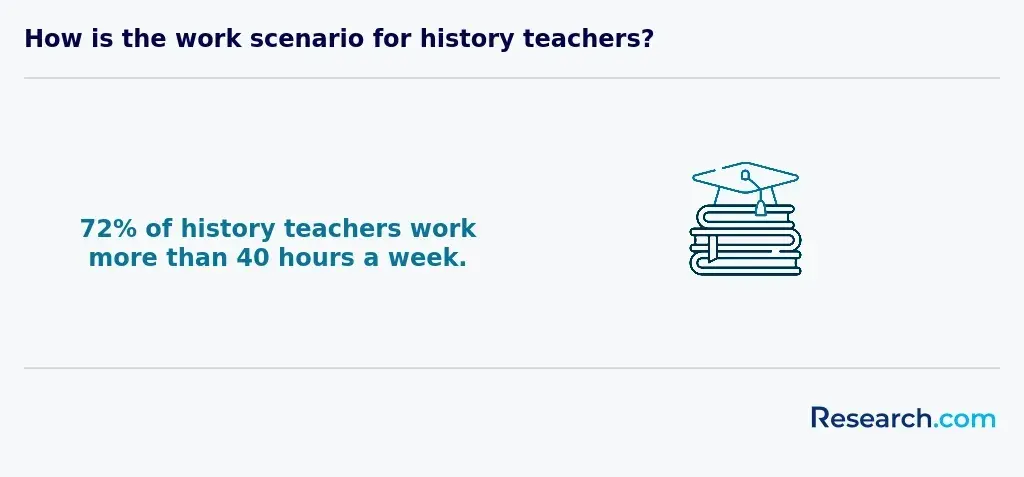
| Heavy workload | Nationally, 72% of history teachers reported working over 40 hours per week (ONET OnLine, 2024), and smaller districts may ask teachers to cover multiple subjects or roles. |
| Regional variation | Salary, class size, course offerings, and support systems can vary widely by district. |
A realistic answer is that Iowa may be a strong fit if you are prepared for a demanding first few years and are willing to seek mentorship, professional development, and district-level support. One Iowa teacher described her first year as a mix of excitement and overload: lesson planning, grading, and student engagement were challenging, but colleagues and union support helped her persist. The reward, she said, came when students began making connections between historical events and the choices citizens face today.
How can technology and interdisciplinary strategies enrich history teaching in Iowa?
Technology can make history instruction more interactive, but it should support historical thinking rather than replace it. Useful tools include digital archives, interactive timelines, map-based activities, virtual museum collections, primary-source annotation platforms, and carefully reviewed AI tools for brainstorming or differentiation.
Interdisciplinary teaching can also strengthen history lessons. Quantitative thinking helps students interpret demographic shifts, election data, economic change, migration patterns, and wartime production. Teachers who want to build stronger cross-subject lessons may find useful comparisons in resources such as how to become a middle school math teacher in Iowa.
| Strategy | How it helps history learning | Risk to avoid |
| Digital primary sources | Students can work directly with documents, images, maps, and newspapers. | Using sources without context or sourcing questions. |
| Interactive timelines | Students can see cause, sequence, overlap, and long-term change. | Turning history into memorization without analysis. |
| Data and maps | Students can connect history with geography, economics, and civics. | Presenting numbers without teaching interpretation. |
| AI-supported planning | Teachers can draft prompts, differentiate examples, or generate discussion starters. | Using AI output without checking accuracy, bias, and source quality. |
Can integrating creative writing enhance my history teaching career in Iowa?
Creative writing can help history students move beyond memorization by asking them to write historically grounded narratives, speeches, letters, journal entries, museum labels, or debate scripts. These assignments can build empathy and communication skills, but they must be anchored in evidence so students do not confuse imagination with historical fact.
For teachers considering broader writing-centered careers or graduate study, this overview of the best careers to pursue with a creative writing master’s degree may offer ideas for expanding communication and curriculum skills beyond the history classroom.
How can collaborating with school librarians enhance history education in Iowa?
School librarians can be valuable partners for history teachers because they support research skills, source evaluation, database use, citation practices, and information literacy. A strong librarian-teacher partnership can improve student research projects, National History Day preparation, inquiry units, and media literacy lessons.
Collaboration works best when the teacher and librarian co-plan the unit rather than treating the library visit as an add-on. If you are interested in the library side of school-based learning, review how to become a school librarian in Iowa to understand that professional pathway.
What alternative pathways can I pursue to launch my teaching career in Iowa?
Iowa’s alternative pathways can serve candidates who already have a degree, are changing careers, or need a more flexible path into teaching. These routes usually combine targeted coursework, an intern license, mentoring, and supervised classroom experience. They are not shortcuts; candidates still need to prove subject knowledge, teaching readiness, and compliance with state requirements.
Some candidates begin by exploring other grade levels or education roles before deciding on secondary history. For example, researching how to become an elementary school teacher in Iowa can help you compare age groups, preparation expectations, and classroom responsibilities.
Is Teaching History in Private Schools a Viable Option in Iowa?
Yes, private schools can be a viable option for history teachers in Iowa, especially for educators who prefer smaller school communities, mission-driven environments, or more flexibility in course design. However, private school hiring standards can differ from public school licensure expectations, and each institution may set its own requirements.
Before applying, ask whether the school requires an Iowa teaching license, what endorsements are preferred, how salary and benefits compare with local public districts, and whether teachers are expected to cover multiple subjects or extracurricular duties. Candidates considering this route should review private school teacher requirements in Iowa before assuming the process is the same as public school employment.
How can I develop an inclusive and engaging history curriculum in Iowa?
An inclusive history curriculum helps students examine the past through multiple perspectives while still grounding every lesson in credible evidence and Iowa standards. In practice, this means including local history, Indigenous perspectives, immigrant experiences, rural and urban communities, civic movements, labor history, and national and global context.
- Use primary sources from different communities and viewpoints.
- Ask students to compare interpretations rather than memorize a single narrative.
- Connect Iowa history to national and world history whenever possible.
- Include structured discussion protocols so difficult topics remain evidence-based and respectful.
- Assess both content knowledge and historical thinking skills, including sourcing, contextualization, corroboration, and argumentation.
History teachers can also strengthen literacy instruction by borrowing strategies from English language arts, such as close reading, argument writing, and discussion-based analysis. For cross-disciplinary teaching ideas, explore how to become an English teacher in Iowa.
How can I renew and maintain my teaching certification in Iowa?
Iowa teachers must keep their licenses current by following renewal rules, completing approved professional development, updating required trainings, and submitting documentation within the proper renewal cycle. Because renewal requirements can vary by license type, teachers should track deadlines from the first year of employment rather than waiting until a license is close to expiration.
Practical steps include saving professional development certificates, confirming that credits are approved for renewal, checking district support for license renewal costs, and reviewing policy changes each year. For a more detailed overview, see Iowa teacher certification types and requirements.
What are the challenges of teaching history to students in Iowa?
Teaching history in Iowa can be rewarding, but it also requires careful planning, strong classroom judgment, and a willingness to teach complex topics in an evidence-based way. Prospective teachers should understand these challenges before entering the profession.
- Curriculum constraints: Recent legislative efforts in Iowa have sought to reshape social studies curriculum priorities, including greater emphasis on American History and Western Civilization over World History. Teachers may need to work carefully within required standards while still helping students understand broader global context.
- Civic education gaps: Concerns about declining civic knowledge remain part of the state and national conversation (Randall & Hendrickson, 2024). History teachers often need to build foundational understanding of government, rights, responsibilities, and civic participation.
- Competition with STEM priorities: As schools emphasize STEM fields, history teachers may need to make a stronger case for why historical thinking, civic literacy, reading, writing, and evidence evaluation are essential skills.
- Diverse historical narratives: Teachers must present complex and sometimes contested histories with accuracy, balance, and sensitivity. This requires strong sourcing, clear discussion norms, and attention to students’ backgrounds.
- Teacher shortages: Shortages can increase workloads, especially when teachers are asked to cover multiple courses, advise activities, or support students beyond their formal assignment.
A practical way to respond to these challenges is to build leadership capacity early: learn how to facilitate difficult conversations, collaborate with colleagues, document curriculum decisions, and communicate clearly with families and administrators. A structured leadership development plan can help teachers prepare for department leadership, mentoring, or curriculum roles later in their careers.
How does Iowa support new history teachers?
Iowa supports new history teachers through district mentoring, Area Education Agency programs, professional development, peer networks, and financial incentives in some high-need contexts. The quality and consistency of support can vary by district, so candidates should ask specific questions during interviews.
- Mentorship: Many districts pair new teachers with experienced educators who can help with lesson planning, classroom management, parent communication, and district expectations.
- AEA professional learning: Iowa’s AEAs offer workshops and training that can help beginning teachers apply standards, design inquiry lessons, and support diverse learners.
- Peer networks: New teachers benefit from department teams, social studies associations, conferences, and online communities where they can exchange materials and advice.
- Financial supports: Some districts and programs may offer signing bonuses, grants, or loan forgiveness options tied to high-need placements.
During job interviews, ask whether new teachers receive release time to observe veteran teachers, how often mentors meet with first-year teachers, whether curriculum materials are provided, and what support exists for classroom management. If cost is your main concern, compare program routes using this guide to the cheapest way to get a teaching credential in Iowa.
What steps should I take to start my career as a history teacher in Iowa?
The best first step is to map your current education level to Iowa’s licensure requirements. A high school student, college freshman, career changer, and out-of-state licensed teacher will each have a different timeline.
- Confirm your target grade level: Decide whether you want to teach middle school, high school, or another setting.
- Choose a qualifying program: Select an accredited college or university with an approved teacher preparation pathway aligned with history or social studies.
- Meet endorsement expectations: Work with an advisor to confirm the courses required for the history or social studies endorsement.
- Plan financially: Complete the FAFSA, ask about scholarships, and budget for student teaching, exams, fees, and transportation.
- Build classroom experience early: Tutor, substitute if eligible, volunteer, work with youth programs, or assist in museum education.
- Prepare for licensure: Track assessment requirements, background checks, application documents, and student teaching evaluations.
- Apply strategically: Consider rural and urban districts, private schools, and roles that include civics, social studies, or interdisciplinary assignments.
For a focused step-by-step resource, review how to become a high school history teacher in Iowa.
What Advanced Education Options Can Elevate My History Teaching Career in Iowa?
Advanced education can help Iowa history teachers improve instruction, qualify for leadership roles, deepen subject expertise, or move into curriculum, administration, policy, or higher education. The right option depends on your career goal.
| Advanced education option | Best for | Possible career benefit |
| Master’s in history or social studies education | Teachers who want deeper content expertise or stronger pedagogy. | May support advanced teaching roles, salary schedule movement, or department leadership. |
| Master’s in curriculum and instruction | Teachers interested in lesson design, assessment, and instructional coaching. | Can support curriculum coordinator or instructional leadership roles. |
| Educational leadership program | Teachers considering administration or school leadership. | Can prepare educators for leadership responsibilities beyond the classroom. |
| Doctoral study in education | Educators interested in research, policy, administration, or higher education. | Can expand opportunities in academic and leadership settings. |
Teachers seeking flexible graduate options may compare affordable online doctoral programs in education, especially if they need to balance full-time teaching with advanced study.
Can integrating art strategies amplify history teaching in Iowa?
Art can make history more visible and memorable. Students can analyze political cartoons, propaganda posters, photographs, architecture, monuments, quilts, murals, and material culture to understand how people represented power, identity, conflict, and memory. Art-based projects can also help students create exhibits, visual timelines, documentary storyboards, and primary-source displays.
The key is to keep art integration analytical. Students should ask who created the image, for what audience, with what purpose, and what evidence supports their interpretation. History teachers interested in stronger collaboration with visual arts educators can review the requirements to be an art teacher in Iowa to better understand how art education aligns with school curriculum.
Common mistakes to avoid when becoming a history teacher in Iowa
| Mistake | Why it can cause problems | Better approach |
| Choosing a degree without checking endorsement alignment | You may graduate with coursework that does not fully support the history or social studies endorsement you need. | Ask an advisor to confirm endorsement requirements before your first year or before transferring. |
| Assuming all online programs qualify for Iowa licensure | Some programs may not meet Iowa teacher preparation or endorsement requirements. | Verify state approval and Iowa licensure eligibility in writing. |
| Looking only at tuition | Student teaching, fees, exams, travel, and lost work hours can affect total cost. | Build a full cost estimate before enrolling. |
| Waiting too long to prepare for student teaching | Placement requirements, background checks, and schedule conflicts can delay completion. | Plan student teaching at least a year in advance with your program advisor. |
| Assuming salaries are guaranteed | Pay varies by district, experience, degree level, and contract. | Review district salary schedules and ask about extra-duty compensation. |
| Relying only on rankings or reputation | A well-known school may not be the most affordable or best-aligned option for your license goal. | Compare approval status, placement support, student teaching network, cost, and outcomes. |
Questions to ask before choosing an Iowa history teacher preparation program
- Is the program approved for Iowa teacher licensure?
- Which history or social studies endorsements does the program prepare students to earn?
- How long is the student teaching placement, and where are candidates typically placed?
- What support is available for licensing assessments and application paperwork?
- Can transfer credits apply to endorsement requirements?
- What scholarships, grants, or loan forgiveness options do education majors commonly use?
- How does the program prepare teachers to use primary sources, civic inquiry, and inclusive curriculum?
- What percentage of graduates find teaching positions in Iowa districts?
- Does the program offer support for alternative licensure, career changers, or out-of-state candidates?
- How are candidates prepared for classroom management and first-year teaching demands?
What History Teachers in Iowa Say About Their Careers
- "Teaching history in Iowa gives me the chance to help students see that the past is not distant or abstract. When they connect national events to their families, towns, and communities, the subject becomes real." - David
- "My favorite part of teaching history is watching students learn how to question evidence and explain their thinking. Iowa schools have given me room to build lessons that feel active instead of scripted." - Clyde
- "Iowa classrooms include students with many different experiences, and that makes history discussions stronger. The work is demanding, but helping students form informed opinions is why I stayed in the profession." - Paula
Related Articles for Nearby States
- 2027 How to Become a History Teacher in Minnesota: Requirements & Certification
- 2027 How to Become a History Teacher in Wisconsin: Requirements & Certification
- 2027 How to Become a History Teacher in Illinois: Requirements & Certification
- 2027 How to Become a History Teacher in Nebraska: Requirements & Certification
- 2027 How to Become a History Teacher in South Dakota: Requirements & Certification
- 2027 How to Become a History Teacher in Missouri: Requirements & Certification
- 2027 How to Become a History Teacher in Kansas: Requirements & Certification
- 2027 How to Become a History Teacher in Indiana: Requirements & Certification
- 2027 How to Become a History Teacher in North Dakota: Requirements & Certification
- 2027 How to Become a History Teacher in Michigan: Requirements & Certification
Key Insights
- Becoming a history teacher in Iowa usually requires an accredited bachelor’s degree, an approved teacher preparation program, a 14-week student teaching placement, required assessments when applicable, and an Iowa teaching license with the correct endorsement.
- Iowa does not offer automatic reciprocity for out-of-state history teachers; credentials are reviewed individually, and some applicants may receive a Regional Exchange Teaching License while completing deficiencies.
- Salary depends heavily on grade level, district, experience, and education. Iowa Workforce Development reports entry-level earnings of $40,501 for middle school teachers and $44,755 for high school teachers, with average annual wages ranging between $55,000 and $61,000.
- Financial aid can include loan forgiveness, ISEA scholarships, the Future Teachers of Iowa Scholarship, the Teach Iowa Scholar Program, federal Pell Grants, and institution-specific awards.
- History teachers can advance into curriculum leadership, museum education, consulting, school leadership, or postsecondary teaching, especially with graduate education and strong instructional experience.
- The best teacher preparation decision is not based on cost alone. Confirm Iowa approval, endorsement fit, student teaching support, renewal requirements, and total program expenses before enrolling.
- Iowa can be a strong teaching environment for candidates who want to contribute to civic education, but new teachers should be prepared for workload pressure, curriculum debates, funding differences, and the need for ongoing professional development.
References:
- Ekberg, R. (2024, February 27). Lawmakers eye teacher wage bump as way to combat growing teacher shortage. The Daily Iowan. https://dailyiowan.com/2024/02/27/lawmakers-eye-teacher-wage-bump-as-way-to-combat-growing-teacher-shortage
- Iowa Department of Education. (2024, February 8). State of Educator Preparation Program 2024. https://educate.iowa.gov/media/9420/download?inline=
- Iowa Workforce Development. (n.d.). Statewide wage information. Occupational Employment and Wage Statistics. Retrieved September 2024, from https://workforce.iowa.gov/labor-market-information/occupations/occupational-employment-and-wage
- ONET OnLine. (2024, August 9). History Teachers, Postsecondary. Iowa Employment Trends. Retrieved September 2024, from https://www.onetonline.org/link/localtrends/25-1125.00?st=IA
- Randall, D., & Hendrickson, J. (2024, February 13). American history is under attack. A bill in Iowa would restore civics education. Des Moines Register. https://www.desmoinesregister.com/story/opinion/columnists/iowa-view/2024/02/13/iowa-civics-education-legislature-history-under-attack/72579781007
- U.S. Bureau of Labor Statistics. (2024, April 3). May 2023 state occupational employment and wage estimates - Iowa. Occupational Employment and Wage Statistics. https://www.bls.gov/oes/current/oes_ia.htm
Other Things You Should Know About Becoming a History Teacher in Iowa
Iowa requires a criminal background check before licensure, usually including fingerprint-based state and FBI checks through the Iowa Board of Educational Examiners. Applicants must also disclose any prior convictions or licensing discipline, and unresolved records can delay or block certification.
In 2027, to become a history teacher in Iowa, you must hold at least a bachelor's degree in history or a related field, complete a state-approved teacher preparation program, and pass the Praxis II content exam for history. Additionally, you must apply for an Iowa teaching license through the Board of Educational Examiners.


