2027 Cheapest and Shortest Online Environmental Science Degree Programs That Pay Well: Cost, Duration, and Salary Outlook

Co-Founder and Chief Data Scientist
Choosing an online environmental science degree is usually a three-way decision: how much you can afford, how quickly you need to graduate, and whether the credential will actually help you qualify for environmental, sustainability, conservation, compliance, or graduate-study opportunities. The cheapest option is not always the best value, and the fastest option can become difficult if it lacks fieldwork, lab support, career services, or recognized accreditation.
Flexible online options have become more common as working adults, career changers, and budget-conscious students look for ways to enter the environmental workforce without spending several years on campus. Online enrollments in environmental science programs have grown by over 15% annually, reflecting strong demand for programs that can fit around employment and family responsibilities.
This guide explains how affordable and accelerated online environmental science degrees typically work, what they may cost, what kinds of financial aid may be available, how to judge legitimacy, and which career paths can offer stronger salary potential. It is designed for students comparing low-cost programs, transfer-friendly degree completion options, and shorter online formats that still provide credible academic and career preparation.
Key Benefits of the Cheapest and Shortest Online Environmental Science Degree Programs That Pay Well
- Cheapest programs significantly reduce tuition costs, with average savings of up to 40% compared to traditional degrees, making education accessible without heavy debt burdens.
- Shortest online environmental science degrees accelerate completion to as little as 18 months, enabling faster entry into the workforce and earlier salary accumulation.
- Strong return on investment reflects in median salaries around $68,000, with projected job growth of 8% through 2030, offering competitive employment outcomes.
How Much Does an Affordable Online Environmental Science Degree Typically Cost?
An affordable online environmental science degree typically costs less than many campus-based options because students can often avoid housing, commuting, relocation, and some campus service expenses. Still, the true price depends on tuition, transfer credits, fees, science course requirements, and whether the school charges different rates for in-state and out-of-state online students. Tuition rates for online education have remained relatively stable, with an average annual increase of just 3%, but students should still compare the full cost of attendance rather than tuition alone.
| Cost factor | What students should check |
| Tuition range | Total costs typically fall between $15,000 and $40,000 for a full bachelor's degree. The lowest-cost programs often come from public institutions, transfer-friendly schools, or programs with flat-rate online tuition. |
| Cost per credit hour | Most programs charge between $200 and $500 per credit hour. Multiply the per-credit rate by the number of remaining credits you need, not by the full degree total if you are transferring prior coursework. |
| Online versus campus costs | Online study can reduce commuting, housing, and relocation expenses, but it may still include technology fees, proctored exam costs, lab materials, or required field experiences near your location. |
| Additional fees | Technology access fees, course materials, and lab kits can add several hundred dollars to the total price. Ask for an itemized estimate before enrolling. |
Students trying to graduate faster should also compare the cost of accelerated enrollment. Some accelerated environmental science programs allow completion in three years or less through year-round classes, shorter terms, or generous transfer-credit policies. A shorter timeline may reduce living expenses and help students enter the workforce sooner, but heavier course loads can make it harder to work full time.
When comparing programs, calculate the net cost after grants, scholarships, employer tuition assistance, and transfer credits. A school with a higher sticker price may become more affordable if it accepts more prior credits or offers stronger aid. Students considering other career-focused online options may also want to compare affordability models in related fields, such as online BCBA programs.
Can You Get Financial Aid in the Cheapest Online Environmental Science Programs?
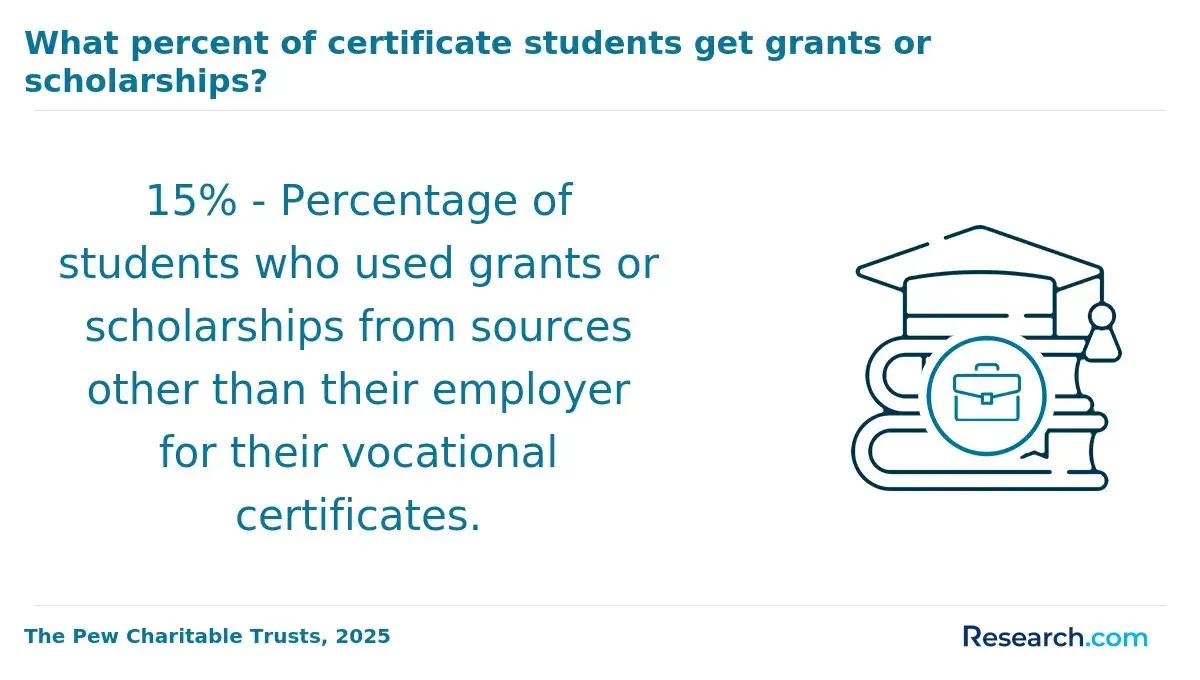
Yes. Students in cheap online environmental science programs can often qualify for financial aid if the school is accredited and participates in eligible aid programs. Approximately 85% of undergraduate online students receive some form of financial assistance, so low tuition does not necessarily mean students must pay entirely out of pocket.
The most important first step is to complete the Free Application for Federal Student Aid (FAFSA) as early as possible. Aid eligibility may depend on enrollment status, financial need, academic progress, citizenship or residency status, and whether the program leads to an eligible credential.
- Federal grants: Programs like the Pell Grant provide up to $7,395 per academic year to eligible students based on financial need. Grants are especially valuable because they generally do not need to be repaid.
- Scholarships: Environmental science students may qualify for scholarships from universities, nonprofits, environmental organizations, local conservation groups, and science-focused foundations. Search both general STEM scholarships and awards specifically tied to sustainability, ecology, conservation, or environmental policy.
- Loans: Federal student loans can help cover remaining costs and generally offer borrower protections and flexible repayment options. Students should borrow only what they need after grants, scholarships, savings, and employer support are applied.
- Employer tuition assistance: Working adults may be able to use tuition reimbursement if the degree supports a current or future role in sustainability, safety, compliance, operations, resource management, or environmental reporting.
Questions to ask before relying on aid
- Is the institution accredited by a recognized accreditor?
- Does the school participate in federal financial aid programs?
- Will part-time enrollment reduce my aid eligibility?
- Are lab kits, technology fees, books, and fieldwork expenses included in the aid estimate?
- Does the program require unpaid internships or travel that could affect my budget?
Students comparing affordable degree paths may find it useful to review how aid works in other low-cost online programs as well. For example, the counseling degree online market also shows how accreditation, enrollment status, and institutional participation can affect financial support.
What Are the Shortest Online Environmental Science Degree Programs?
The shortest online environmental science degree programs are usually accelerated associate degrees, bachelor’s degree-completion programs, graduate certificates, and master’s programs designed for students who can handle condensed coursework. Nearly 30% of online students choose fast-track programs to balance education with work or personal commitments, but speed should be weighed against workload, lab requirements, internship expectations, and transfer-credit rules.
- Term-based accelerated tracks: These programs use shorter terms lasting 5 to 8 weeks. Students usually take fewer courses at once, but each course moves quickly and requires steady weekly work.
- Year-round enrollment: Continuous fall, spring, and summer enrollment can shorten the overall timeline by removing long academic breaks. This format works best for students who can maintain momentum without extended time off.
- Modular learning: Some programs use self-paced or competency-based modules that allow prepared students to move faster. This can be useful for students with related work experience, but it requires strong time management.
- Program length: Accelerated bachelor's degrees typically require about 2.5 to 3 years, versus the standard 4 years. Associate degrees can be completed in 1 to 2 years, while graduate certificates and master's degrees often last 12 to 18 months.
| Program type | Typical accelerated timeline | Best fit |
| Associate degree | 1 to 2 years | Students seeking an entry-level credential, transfer pathway, or lower-cost start. |
| Bachelor's degree | About 2.5 to 3 years | Students who want broader career eligibility or plan to pursue graduate study later. |
| Graduate certificate | 12 to 18 months | Professionals adding targeted skills in areas such as sustainability, compliance, GIS, or policy. |
| Master's degree | 12 to 18 months | Students with a relevant bachelor’s degree who want advanced roles or specialization. |
Tuition generally ranges from $300 to $600 per credit hour for many accelerated options. A faster program can lower total costs if it reduces the number of terms you pay fees or lets you return to full-time work sooner. However, accelerated study is not automatically cheaper if the program charges premium tuition, requires repeated course attempts, or offers limited transfer credit.
Salary outcomes vary by role, employer, experience, location, and graduate credentials. Median salaries for environmental roles range from $50,000 for technicians to over $90,000 for specialists. For broader context on cost-effective online formats in other professional areas, students can review EMBA online options.
The shortest online environmental science programs usually rely on compressed terms, structured weekly deadlines, and a focused sequence of required courses. Around 30% of online degrees, particularly in science and STEM areas, utilize compressed course timelines, which can help students finish faster but also leaves less room for missed assignments or inconsistent study habits.
- Term length: Courses typically last between 5 and 8 weeks instead of the usual 15-week semester. Students may complete the same amount of content in a shorter period.
- Delivery method: Most classes are asynchronous, meaning students can access lectures, readings, quizzes, and assignments on their own schedule. Some programs include scheduled live sessions for discussion, presentations, lab demonstrations, or Q&A.
- Weekly workload: Students can expect to dedicate 15 to 20 hours per week to each accelerated course, depending on reading load, lab assignments, research projects, and writing requirements.
- Student interaction: Discussion boards, peer review, group projects, video meetings, and instructor feedback are commonly used to create academic engagement in an online format.
What the format means for students
Accelerated online learning works best for students who can study consistently several days each week. Environmental science courses often include data interpretation, scientific writing, case analysis, policy review, and applied projects. If a program includes lab kits or local field assignments, students should confirm how those requirements fit into the shorter schedule before enrolling.
Students with full-time jobs should be cautious about taking multiple accelerated science courses at once. A 5 to 8 week class may be manageable by itself, but two lab-heavy or research-heavy courses in the same term can quickly become difficult.
Online classes in accelerated environmental science degrees combine digital coursework with structured deadlines and, in many cases, applied projects that connect scientific concepts to real environmental problems. Nearly 35% of environmental science learners now choose online options, which reflects growing acceptance of online delivery when programs provide adequate academic support and practical learning opportunities.
- Learning formats: Most accelerated courses mix asynchronous and synchronous elements. Asynchronous content may include recorded lectures, readings, simulations, quizzes, and discussion posts. Synchronous sessions may be used for live lectures, office hours, presentations, or group work.
- Weekly commitment: Students typically dedicate 15 to 20 hours each week to coursework. In shorter terms, assignments often begin immediately, and falling behind in the first week can be difficult to recover from.
- Assignment pacing: Exams, projects, lab reports, and discussion requirements are scheduled close together to maintain progress through the condensed term. Students should review the syllabus before the course begins and block time for major deadlines.
- Instructor interaction: Communication usually happens through email, discussion boards, learning management systems, and video calls. Strong programs make faculty availability clear and provide timely feedback.
- Peer collaboration: Group projects, online forums, shared documents, and virtual presentations help students practice teamwork and professional communication, both of which are important in environmental work.
- Time efficiency: The condensed model can shorten the path to graduation, but it requires planning. Students should confirm whether courses are offered every term or only once per year, because limited course rotations can delay completion.
Common online course components
| Component | How it usually works |
| Lectures and readings | Posted in the learning platform for weekly completion, often with quizzes or discussion prompts. |
| Labs or applied assignments | May use virtual labs, home lab kits, local observations, data sets, or instructor-approved field activities. |
| Projects | Often focus on environmental assessment, policy analysis, sustainability planning, or data interpretation. |
| Exams | May be timed online assessments, open-book applications, proctored tests, or project-based evaluations. |
A shortest-track online environmental science degree should build more than general environmental awareness. Strong programs help students develop scientific, technical, regulatory, and communication skills that can transfer to entry-level environmental roles, sustainability teams, consulting firms, government agencies, and nonprofit organizations. A 2023 survey by the National Environmental Education Foundation revealed that 78% of graduates felt well-prepared for entry-level roles due to hands-on learning integrated into short-term curriculums.
- Technical skills: Students may gain experience with geographic information systems (GIS), environmental sampling concepts, data collection, lab analysis, mapping tools, and environmental monitoring methods.
- Critical thinking: Coursework should train students to evaluate ecological datasets, interpret environmental impacts, compare policy options, and understand regulatory standards.
- Communication skills: Environmental professionals must explain scientific findings to nontechnical audiences, including managers, community members, policymakers, clients, and compliance teams.
- Problem-solving: Students learn to approach issues such as pollution control, land use, water quality, waste management, conservation, and sustainable resource planning with evidence-based recommendations.
- Professional and time management skills: Accelerated programs require organization, deadline management, independent learning, and the ability to balance multiple priorities under pressure.
Skills that can improve employability
Students should look for programs that include practical assignments, not only textbook learning. Projects involving GIS, environmental reports, policy memos, data visualization, risk assessment, or sustainability audits can become useful portfolio pieces for internships and job applications. If a program offers internship support or field-based assignments, ask how online students are placed, supervised, and evaluated.
Cheap and fast online environmental science degree programs can be legitimate, but students need to verify quality carefully. Tuition rates around $200 to $400 per credit and completion times as short as 12 to 18 months may be realistic for some degree-completion, certificate, or graduate formats, especially when students transfer credits or study year-round. They can also be warning signs if the school promises a degree with little coursework, no assessment, or vague accreditation claims.
- Accreditation: Valid programs should be offered by institutions accredited by recognized agencies. Some programs may also reference ABET or other discipline-relevant quality markers, depending on the degree type and curriculum.
- Faculty credentials: Instructors should have relevant academic training, research experience, or professional experience in environmental science, ecology, conservation, sustainability, compliance, policy, or related fields.
- Curriculum quality: A credible program should cover core areas such as ecology, conservation, environmental policy, scientific methods, data analysis, and, where appropriate, GIS or environmental assessment.
- Licensing and certification eligibility: Some environmental roles may prefer or require certifications, specialized training, or graduate education. Students should ask whether the program supports eligibility for relevant professional pathways, but should not assume a degree alone guarantees licensure or certification.
- Industry recognition: Employer acceptance, internship partnerships, alumni outcomes, and typical employment rates around 75% can help indicate whether a program has career value.
Red flags to avoid
- Claims that students can earn a full degree with almost no coursework or assessment.
- Accreditation language that is difficult to verify through recognized accreditor directories.
- No clear information about faculty, curriculum, tuition, fees, transfer credits, or student support.
- Pressure to enroll immediately or pay large nonrefundable fees before receiving a written cost estimate.
- Promises of guaranteed jobs, salaries, certifications, or government employment.
A legitimate low-cost accelerated program should still require serious academic work. The goal is not simply to finish quickly; it is to earn a credential that employers, graduate schools, and certification bodies can trust.
Online environmental science graduates can pursue roles in compliance, consulting, engineering-adjacent teams, sustainability, research support, public agencies, and corporate environmental health and safety. The highest-paying paths usually require specialized technical skills, experience, regulatory knowledge, leadership responsibility, or graduate-level preparation. Salary outcomes vary by employer, location, degree level, industry, and credentials.
- Environmental Engineer: These professionals apply engineering principles along with biology, chemistry, and soil science to develop solutions for environmental challenges. Their median annual wage is about $96,000, with the top 10% earning over $140,000. Duties may include pollution control system design, hazardous waste management, environmental remediation support, and sustainability planning. Some engineering roles may require an engineering degree or specific licensure pathway, so students should review job requirements carefully.
- Environmental Scientist: Environmental scientists assess environmental conditions, conduct research, interpret data, and recommend practices or policies to protect ecosystems and public health. Median salaries are around $80,000 but can surpass six figures for professionals with expertise in toxicology, environmental compliance consulting, private industry, or leadership roles.
- Environmental Health and Safety Specialist: These specialists focus on workplace safety, environmental risk, regulatory compliance, inspections, reporting, and prevention programs. With a median salary near $75,000, this path can be attractive for students interested in corporate, industrial, construction, healthcare, or government settings.
| Role | Strong preparation areas | Salary factor to watch |
| Environmental Engineer | Engineering principles, chemistry, soil science, pollution control, remediation | Engineering credentials, licensure expectations, and technical project responsibility can affect eligibility and pay. |
| Environmental Scientist | Ecology, sampling, GIS, research methods, environmental policy, compliance | Specialization, consulting experience, and advanced technical skills can improve earning potential. |
| Environmental Health and Safety Specialist | Risk assessment, workplace safety, regulations, inspections, reporting | Industry, certifications, and compliance responsibility can influence compensation. |
Online environmental science programs typically cost between $300 and $600 per credit and can be completed in two to three years, which may make them a cost-conscious option for working adults and career changers. For students asking what bachelors degree should I get, environmental science can be worth considering if they want a mission-driven field with technical, regulatory, and sustainability-related career paths.
Job placement rates for online environmental science graduates vary by school, degree level, location, student experience, internship access, and the types of jobs being counted. Employment rates in relevant STEM fields often range from 75% to 90% within six months to a year after graduation, but students should verify whether a program reports outcomes for all graduates, only survey respondents, or only graduates employed in related positions.
- Industry demand: The environmental science sector is projected to grow by 8% through 2030 according to the U.S. Bureau of Labor Statistics. Growth areas like renewable energy, conservation, environmental consulting, compliance, and sustainability can create opportunities for qualified graduates.
- Program reputation: Online environmental science graduate employment rate can improve when the credential comes from an accredited school with recognized academic standards, experienced faculty, and relevant employer connections.
- Internships and practicum experience: Programs that include hands-on internships, applied projects, fieldwork, or local partnerships can help students demonstrate practical readiness. This is especially important for entry-level candidates who do not yet have environmental work experience.
- Alumni networks: Alumni connections, faculty referrals, career fairs, employer panels, and environmental science communities can help students find job leads and understand hiring expectations.
How to evaluate placement claims
- Ask whether the placement rate includes full-time, part-time, temporary, contract, or unrelated employment.
- Request outcomes by program, not just by college or department.
- Check whether online students have equal access to internships, career advising, and employer events.
- Look for salary data, job titles, employer examples, and graduate school acceptance information.
Financial returns depend heavily on whether students gain relevant experience while enrolled. Median starting salaries for graduates with relevant experience are typically between $45,000 and $55,000, with earnings growing beyond $80,000 in later years. Students seeking lower-cost pathways can also compare institutional affordability through resources on the cheapest online colleges.
The best cheap online environmental science degree is not simply the one with the lowest tuition. It is the program that offers the right mix of affordability, accreditation, scientific rigor, transfer flexibility, student support, and career relevance. A program that costs less upfront may be a poor investment if credits do not transfer, employers do not recognize the credential, or students receive little help finding internships and jobs.
- Accreditation: Verify that the institution holds accreditation from recognized bodies such as the Higher Learning Commission or other regional agencies. Accreditation affects financial aid eligibility, credit transfer, graduate school options, and employer trust.
- Curriculum quality: Look for required coursework in ecology, environmental policy, scientific methods, data analysis, and geographic information systems (GIS). Strong programs connect science, regulation, field methods, and practical problem-solving.
- Program length: Accelerated online degrees often take 2 to 3 years to complete versus traditional 4-year programs. Confirm whether the timeline assumes transfer credits, full-time enrollment, summer study, or a specific course sequence.
- Student support: Career counseling, internship placement, academic advising, tutoring, library access, technical support, and faculty availability can make a major difference in online student success.
- Career outcomes: Review graduation rates, job placement rates, internship access, employer partnerships, and salary information. Environmental scientists earn a median wage around $73,230 annually, with top professionals exceeding $127,000, but individual outcomes depend on role, experience, location, and specialization.
Decision checklist
| Question | Why it matters |
| What is the total cost after aid and transfer credits? | Net cost is more useful than advertised tuition. |
| Is the school properly accredited? | Accreditation supports aid eligibility, transferability, and credibility. |
| How are labs, fieldwork, and applied projects handled online? | Environmental science requires practical skill development, not only lectures. |
| Can working students realistically manage the course pace? | Accelerated programs can be intense, especially with science-heavy courses. |
| What jobs do recent graduates obtain? | Career outcomes show whether the degree leads to relevant opportunities. |
Before enrolling, request a degree plan, transfer-credit evaluation, financial aid estimate, list of required fees, and sample course schedule. These documents help you compare programs on real completion time and real cost rather than marketing claims.
What Graduates Say About Their Cheapest and Shortest Online Environmental Science Degree
- : "Finding an affordable and fast online environmental science degree was a game-changer for me. The program cost less than $10,000, which was perfect for my budget, and I completed it in under two years. Now, I work full-time as a sustainability coordinator, and I owe my career growth to how accessible and practical this degree was. — Ryan"
- : "I initially hesitated about online degrees, but choosing a short and affordable environmental science program proved to be wise. With tuition around $8,000, it allowed me to balance work and study without financial stress. Reflecting on my journey, this degree opened doors to new projects in ecological consulting and strengthened my expertise significantly. — Editha"
- : "The professional edge I gained from an affordable, accelerated online environmental science course was invaluable. Paying roughly $9,500 for a program that prioritized applied knowledge helped me quickly transition into environmental policy analysis. This degree wasn't just cost-effective; it was a strategic move that elevated my career prospects immediately. — Benjamin"
Other Things You Should Know About Environmental Science Degrees
To enroll in the cheapest online environmental science degree programs in 2027, applicants typically need a high school diploma or GED. Some programs may require foundational courses in biology and chemistry or standardized test scores such as the SAT or ACT.
Online environmental science degree programs often provide career support services such as job placement assistance, resume workshops, and networking opportunities with industry employers. These services are designed to prepare graduates for lucrative positions in environmental science fields, ensuring optimal salary prospects after graduation.
- Help me in the right direction [Environmental Sciences/Biology/Ecology] https://www.degreeforum.net/mybb/Thread-Help-me-in-the-right-direction-Environmental-Sciences-Biology-Ecology
- Environmental Scientists and Specialists https://www.bls.gov/ooh/life-physical-and-social-science/environmental-scientists-and-specialists.htm
- 10 highest paying jobs with an environmental science degree - FutureLearn https://www.futurelearn.com/info/blog/top-jobs-with-environmental-science-degree
- Best of 2025: Environmental Science Online Master’s Programs https://www.onlinemastersdegrees.org/best-programs/environmental-science/
- Tuition & Financial Aid https://unity.edu/distance-education/tuition-and-financial-aid/
- Online Environmental Science Degrees: Compare Schools https://www.publicservicedegrees.org/online-degrees/environmental-science/
- Environmental Science Degree Online https://www.snhu.edu/online-degrees/bachelors/bs-in-environmental-science
- 2025 Most Affordable Online Environmental Science Degrees https://www.onlineu.com/most-affordable-colleges/environmental-science-degrees
- 10 Best Environmental Sustainability Degrees To Consider https://www.affordablecollegesonline.org/college-resource-center/green-degrees/
- Online Environmental Science Degree | BS Environmental Science | University of Phoenix https://www.phoenix.edu/online-liberal-arts-degrees/environmental-science-bachelors-degree.html