2027 Is Demand for Environmental Science Degree Graduates Growing or Declining?

Co-Founder and Chief Data Scientist
Choosing an environmental science degree is a career decision, not just an academic interest. The field attracts students who want to work on climate risk, conservation, water quality, pollution control, sustainability, and environmental compliance—but job outcomes vary by location, degree level, technical skill set, and the industries hiring at the time. The U.S. Bureau of Labor Statistics projects a 5% growth in environmental scientist jobs from 2022 to 2032, which points to steady but not automatic opportunity.
This guide explains where demand is coming from, which roles are growing, how geography affects hiring, what employers expect from graduates, and whether the degree can support a stable long-term career. It is designed for prospective students, recent graduates, and working professionals deciding whether environmental science fits their goals, budget, and tolerance for a competitive but meaningful job market.
Key Things to Know About the Demand for Environmental Science Degree Graduates
- Employment for environmental science degree graduates is expected to grow by 8% from 2022 to 2032, faster than the average for all occupations, driven by increasing environmental regulations.
- Current trends show rising demand in areas like climate change analysis and sustainability consulting, reflecting the expanding role of environmental science in business and policy.
- Specializations in renewable energy or environmental data analytics offer stronger job security, as industries shift focus toward sustainable technologies and data-driven decision-making.
What Factors Are Driving Demand for Environmental Science Degree Professionals?
Demand for environmental science professionals is being driven by a mix of regulation, climate-related risk, resource management needs, corporate sustainability goals, and better environmental technology. The degree is most valuable when students pair broad scientific training with practical tools employers can use immediately.
- Environmental regulation and compliance: Employers need professionals who can interpret environmental rules, prepare reports, support permitting, monitor sites, and reduce legal or operational risk. This is one reason program quality matters; accredited environmental science degree programs in the US are more likely to cover the scientific, regulatory, and field methods students need for compliance-focused work.
- Climate adaptation and resilience planning: Communities, utilities, developers, and public agencies are planning for flooding, drought, heat, wildfire, erosion, and ecosystem stress. Environmental science graduates can support assessments, mapping, mitigation plans, and public-facing reports.
- Renewable energy and infrastructure projects: Wind, solar, transmission, transportation, water, and remediation projects often require environmental review. Graduates may help with impact assessments, habitat surveys, stakeholder documentation, and monitoring.
- Corporate sustainability pressure: Companies are under growing pressure from customers, investors, regulators, and communities to reduce waste, emissions, and environmental harm. This has expanded opportunities in sustainability reporting, environmental health and safety, waste reduction, and supply chain analysis.
- Technology-driven environmental work: Employers increasingly use GIS, remote sensing, sensors, modeling tools, databases, and data visualization. Students comparing technical pathways, including options such as an AI degree online, should understand that environmental roles increasingly reward data literacy alongside scientific judgment.
- Population growth and land-use pressure: Urbanization, housing development, agriculture, and industrial activity create ongoing demand for professionals who understand ecosystems, water resources, environmental impact, and sustainable planning.
The strongest candidates are not only passionate about the environment. They can collect reliable data, explain findings clearly, work with regulations, and help organizations make practical decisions.
Which Environmental Science Occupations Are Seeing the Highest Growth Rates?
Environmental science graduates can move into several related occupations, but growth varies by specialization. The U.S. Bureau of Labor Statistics projects overall employment growth of about 5% from 2021 to 2031, signaling steady opportunities across related fields. Students should treat growth rates as one factor—not a guarantee of employment—because hiring also depends on region, internships, technical skills, and employer budgets.
- Environmental scientists and specialists: Projected to grow around 8%, these roles are central to pollution prevention, environmental assessment, compliance, remediation, and sustainability work. A bachelor’s degree in environmental science or a related field is commonly expected for entry-level roles.
- Hydrologists: Expected to see nearly 11% growth, hydrologists focus on water quantity, quality, movement, and availability. This path can be attractive for students interested in drought, flooding, groundwater, watershed management, or climate effects on water systems. Advanced degrees or specialized training may be important for more technical roles.
- Conservation scientists and foresters: With growth rates near 5-6%, these professionals manage forests, rangelands, wildlife habitat, and other natural resources. A bachelor’s degree in environmental science, forestry, natural resource management, or a related field is generally enough for many entry-level roles.
- Environmental engineers: Showing about 7% growth, environmental engineers design or improve systems related to water treatment, waste control, pollution reduction, and environmental protection. This route usually requires an engineering degree rather than a general environmental science degree.
When comparing occupations, students should look beyond the fastest growing environmental science careers by state and nationwide. They should ask: Does the role require fieldwork? Is graduate school expected? Are jobs concentrated near agencies, energy projects, coastlines, forests, or major cities? Is the work mostly technical, regulatory, research-based, or public-facing?
Cost also matters. Students evaluating any degree should compare tuition, aid, accreditation, and outcome data carefully, just as they would when researching unrelated options such as the cheapest CACREP-accredited programs online.
Which Industries Hire the Most Environmental Science Degree Graduates?
Environmental science graduates are hired across public, private, and nonprofit sectors. The largest source of opportunity for a given graduate often depends on whether they want fieldwork, policy work, consulting, lab analysis, sustainability reporting, conservation, or compliance.
- Environmental consulting: Consulting firms hire graduates to support site assessments, environmental impact studies, permitting, remediation projects, habitat surveys, compliance reviews, and client reports. These jobs can offer broad experience but may involve travel, billable hours, deadlines, and project-based workloads.
- Government agencies: Federal, state, and local agencies employ environmental science graduates in resource management, environmental protection, permitting, inspection, planning, conservation, and enforcement. Government roles may offer stability and mission-driven work, though hiring can depend on funding cycles and civil service processes.
- Energy and utilities: Renewable energy companies, traditional energy employers, water utilities, and electric utilities need environmental professionals to evaluate project impacts, manage permits, monitor compliance, and reduce environmental risk. These roles often require comfort working with engineers, regulators, and operations teams.
- Manufacturing and industrial employers: Industrial facilities hire environmental staff to manage air, water, waste, hazardous materials, reporting, audits, and environmental health and safety programs. These positions can be practical and stable for graduates who understand compliance and documentation.
- Nonprofit and advocacy organizations: Environmental nonprofits employ graduates in conservation projects, community education, research support, policy advocacy, grant-funded programs, and outreach. These roles may be highly mission-aligned but can be competitive and dependent on funding.
- Research and academic organizations: Universities, labs, and research institutes may hire graduates as field technicians, lab assistants, data analysts, or project coordinators. Long-term advancement in research often requires graduate study.
The best industry fit depends on the graduate’s strengths. Students who like technical analysis may prefer consulting, utilities, or research. Those who enjoy policy and public service may fit government roles. Students motivated by advocacy or conservation may gravitate toward nonprofits, though they should evaluate funding stability and salary expectations carefully.
Environmental science opportunities are highly regional. A strong job market in one state does not mean the same role is easy to find everywhere. Local regulations, dominant industries, ecosystems, water issues, land-use patterns, and public funding all influence hiring.
- High-demand states: States like California often offer many opportunities because of strict environmental laws, large infrastructure needs, and a substantial green economy. Texas and New York also present strong job markets supported by sectors such as energy, consulting, government agencies, and urban planning.
- Regional industry focus: The Pacific Northwest is known for forestry, conservation, fisheries, and natural resource work. The Gulf Coast region offers roles connected to energy production, wetlands, coastal resilience, and marine ecosystems. Arid western states may emphasize water resources, drought planning, and land management.
- Urban versus rural markets: Urban areas generally have more jobs in consulting, environmental planning, sustainability, policy, and regulatory work. Rural areas may provide more field-based roles in conservation, forestry, agriculture, wildlife, mining, or public lands.
- Cost of living and salary pressure: Higher salaries in major metropolitan areas may be offset by higher housing, transportation, and tax costs. Graduates should compare real purchasing power, not just posted salary.
- Remote and hybrid work: Some environmental roles now allow remote or hybrid work, especially in data analysis, reporting, GIS, permitting support, sustainability reporting, and policy. However, field sampling, site inspections, conservation work, and lab roles still require physical presence.
Students should research job postings in the states where they are willing to live before choosing electives, internships, or graduate programs. A coastal student may benefit from marine ecology or wetlands experience, while a student targeting western states may gain more from water resources, GIS, wildfire, or land management coursework.
Degree level affects both the kinds of environmental science jobs a graduate can pursue and how competitive they are for advancement. A bachelor’s degree is often the baseline for professional roles, while associate, master’s, and doctoral degrees serve different purposes.
- Associate degree: An associate degree can support entry into technician, field assistant, sampling, or support roles. It may be a lower-cost starting point, especially for students planning to transfer later, but it usually limits access to professional scientist, analyst, or policy roles without additional education.
- Bachelor’s degree: A bachelor’s degree is commonly the minimum credential for environmental scientist, environmental specialist, research assistant, compliance support, sustainability coordinator, or consulting roles. Employability depends heavily on internships, field experience, GIS ability, statistics, writing, and regional differences in environmental science degree job prospects.
- Master’s degree: A master’s degree can improve access to specialized analyst, policy, research, management, and technical roles. It is especially useful for students who want to focus on water resources, climate science, environmental policy, GIS, toxicology, conservation biology, or environmental management. Students exploring interdisciplinary graduate pathways, including an online psychology masters, should weigh whether the credential directly supports their intended environmental career.
- Doctorate: A doctorate is most relevant for academic careers, advanced research, high-level consulting, and specialized scientific leadership. It can provide strong expertise but also requires a significant time commitment and is not necessary for many applied environmental roles.
Employment outlooks suggest an 8% growth in jobs requiring a bachelor's degree from 2022 to 2032, with advanced degrees seeing even greater demand due to growing environmental regulation and sustainability efforts. In practice, how degree level impacts employability in environmental science careers depends on whether the credential is paired with marketable skills and work experience.
For many students, the best strategy is not automatically choosing the highest degree. It is choosing the least expensive, most targeted credential that qualifies them for the role they actually want.
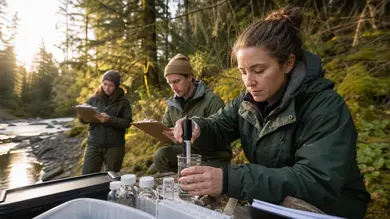
Employers want environmental science graduates who can do more than understand ecosystems. They need candidates who can gather defensible data, work safely in the field, use technical tools, document findings, and communicate results to clients, agencies, managers, or the public.
- Data analysis: Graduates should be able to organize, interpret, and explain environmental datasets. Coursework in statistics, spreadsheets, databases, and basic coding can strengthen employability.
- GIS and mapping: Geographic information systems are widely used in land use, habitat analysis, environmental planning, water resources, and consulting. GIS experience is one of the clearest technical advantages for entry-level candidates.
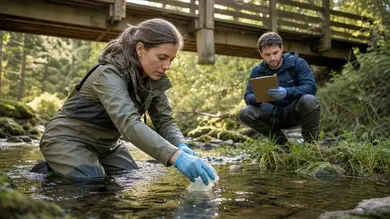
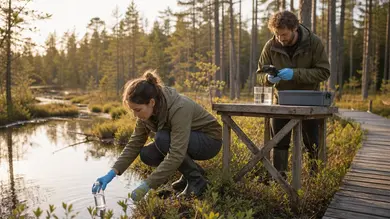
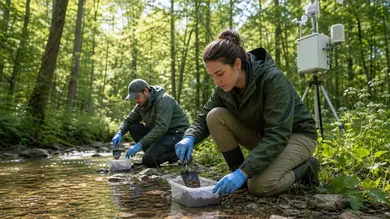
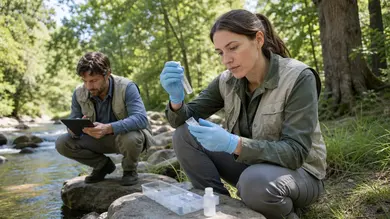
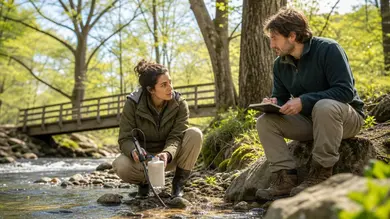
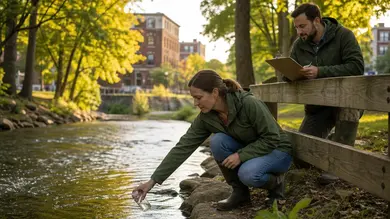
- Field and sampling methods: Employers value graduates who understand soil, water, air, vegetation, wildlife, or site sampling procedures and can follow safety protocols and quality-control requirements.
- Regulatory knowledge: Candidates who understand permitting, compliance, environmental impact review, documentation, and reporting can contribute faster in consulting, government, utilities, and industry roles.
- Scientific writing: Environmental professionals write reports, memos, environmental assessments, grant materials, monitoring summaries, and public-facing explanations. Clear writing is a practical career skill, not a soft extra.
- Communication with nontechnical audiences: Graduates often need to explain risk, uncertainty, trade-offs, and scientific findings to clients, community members, regulators, or executives.
- Project coordination: Environmental work often involves deadlines, permits, field schedules, subcontractors, budgets, and multi-disciplinary teams. Organization and reliability matter.
- Problem solving: Employers value candidates who can move from identifying an environmental issue to recommending practical, legally realistic, and financially feasible solutions.
Students can build these skills through internships, field courses, lab work, undergraduate research, GIS certificates, volunteer conservation projects, and capstone projects with real clients or community partners.
Job demand affects environmental science salaries, but it is only one part of compensation. Industry, region, employer type, degree level, technical specialization, and experience all matter. The U.S. Bureau of Labor Statistics reported a median annual wage of approximately $76,530 for environmental scientists and specialists in 2022.
- Higher demand can improve starting offers: When employers need candidates with specific skills—such as GIS, water quality, permitting, remediation, or environmental health and safety—they may offer stronger starting pay to attract qualified applicants.
- Specialized skills can raise earning potential: Graduates who combine environmental science with data analysis, regulatory expertise, engineering collaboration, or project management may have better leverage than candidates with only general coursework.
- Weak demand can slow salary growth: If local employers have many applicants for few entry-level openings, wages may stay flat and graduates may need internships, certifications, relocation, or adjacent roles to gain experience.
- Employer type influences pay: Consulting, utilities, industry, government, nonprofit, and research roles may have different salary structures, benefits, promotion timelines, and job security.
- Location changes the real value of salary: A higher wage in a major city may not translate into better financial comfort if housing and commuting costs are high.
Students should compare salary expectations with total education cost. A degree can be worthwhile, but the return is stronger when students minimize unnecessary debt and graduate with skills employers are already requesting.
AI is changing environmental science by speeding up data processing, pattern detection, modeling, image analysis, and reporting support. Over 40% of organizations now use AI tools to handle data processing, which means employers increasingly value professionals who can use technology while still applying scientific judgment.
- Routine analysis is becoming more automated: AI can help process sensor data, satellite imagery, monitoring results, and large environmental datasets. This reduces time spent on repetitive tasks but increases the need for professionals who can validate results and identify errors.
- New hybrid roles are emerging: Environmental employers need people who understand both environmental systems and data tools. Graduates with skills in AI modeling, GIS, remote sensing, statistics, or programming may be better positioned for technical roles.
- Scientific judgment remains essential: AI can support analysis, but it cannot replace field context, regulatory interpretation, ethical reasoning, stakeholder communication, or accountability for decisions.
- Hiring expectations are shifting: Employers may prefer candidates who can use AI-assisted tools to improve sustainability reporting, risk assessment, mapping, compliance documentation, or environmental monitoring.
- Students should learn the limits of AI: Environmental decisions often involve uncertainty, public risk, legal standards, and ecological complexity. Graduates should be able to question outputs, document methods, and explain assumptions clearly.
AI is unlikely to eliminate demand for environmental science professionals. It is more likely to change which graduates are most competitive: those who combine environmental expertise, data literacy, and responsible use of technology.
Environmental science can be a stable long-term career, but stability is strongest for professionals who remain adaptable. The field is tied to long-running needs: clean water, pollution control, land management, climate adaptation, public health protection, conservation, and regulatory compliance.
- Long-term environmental pressures are not disappearing: Climate change, pollution, habitat loss, resource use, and infrastructure demands continue to create work for environmental professionals.
- Multiple sectors use environmental expertise: Government agencies, consulting firms, utilities, manufacturers, nonprofits, research organizations, and planning departments all rely on environmental knowledge in different ways.
- Regulation supports consistent demand: Environmental laws and reporting obligations create recurring needs for monitoring, documentation, permitting, compliance, and remediation.
- Technology rewards reskilling: Professionals who learn GIS, remote sensing, data analytics, AI-assisted tools, and modern monitoring methods are more likely to stay relevant as job requirements change.
- Career paths can shift over time: A graduate may begin in field sampling, move into consulting, specialize in water or compliance, and later become a project manager, policy analyst, sustainability lead, or technical expert.
For students asking whether environmental science degree job stability in the United States is strong enough to justify the investment, the honest answer is: it can be, but the degree works best when paired with experience, technical skills, and realistic salary expectations.
Environmental science should not be chosen only because it is meaningful. It should also be evaluated alongside cost, career fit, and alternatives, including broader comparisons such as the easiest college majors with high pay.
An environmental science degree can be worth it for students who want applied science work, are willing to build technical skills, and understand that entry-level roles can be competitive. Demand in the United States is generally stable with moderate growth, reflecting long-term concerns about sustainability, climate risk, resource management, and regulatory compliance.
According to projections by the U.S. Bureau of Labor Statistics, employment for environmental scientists and specialists is expected to grow about 8% from 2022 to 2032, which surpasses the average rate for all occupations. That outlook is encouraging, but students should not assume the degree alone will secure a job.
The best outcomes usually go to graduates who have internships, field experience, GIS skills, data analysis ability, strong writing, and some understanding of environmental law or compliance. Bachelor’s degree holders may find opportunities in consulting, government, nonprofits, utilities, industry, and research support. Master’s and doctoral degrees can improve access to specialized research, policy, technical, and leadership roles, but they should be pursued with a clear career purpose.
The degree is most likely to be worth it if:
- you are comfortable with science, data, fieldwork, writing, and regulations;
- you choose electives that match real job postings in your target region;
- you complete internships, field projects, or research before graduation;
- you learn GIS, statistics, environmental sampling, or another marketable technical skill;
- you keep education costs manageable relative to likely starting salaries.
It may be a weaker fit if you want a guaranteed high-paying job immediately after graduation, dislike field or technical work, or are unwilling to relocate for stronger regional opportunities. Students looking for affordable ways to earn a degree can compare options such as the cheapest online colleges that accept FAFSA while also checking accreditation, transfer policies, internship access, and career support.
What Graduates Say About the Demand for Their Environmental Science Degree
-
: "Choosing to pursue a degree in environmental science was one of the best decisions I've made. The knowledge and skills I gained quickly translated into meaningful job opportunities, and the return on investment has been undeniable. It's rewarding to know that my work contributes directly to sustainable solutions in communities.
— Fen"
-
: "Reflecting on my journey, enrolling in environmental science opened doors I hadn't anticipated. Beyond the financial benefits, the degree deepened my understanding of ecological challenges and shaped my role as a conservation specialist. It truly enhanced my professional growth and commitment to the environment.
— Lyrick"
-
: "From a practical perspective, earning an environmental science degree has been instrumental in advancing my career. The comprehensive curriculum and hands-on experience prepared me to tackle complex environmental issues effectively, leading to robust opportunities in the public sector. The investment definitely paid off.
— North"
Other Things You Should Know About Environmental Science Degrees
In 2027, advancements in technology, such as GIS and remote sensing, drive demand for environmental science graduates. These tools require specialized skills that are increasingly needed for sustainable development, environmental monitoring, and conservation efforts, broadening job opportunities within the sector.
Certifications such as LEED (Leadership in Energy and Environmental Design) and Certified Environmental Professional (CEP) can significantly enhance employability for environmental science graduates in 2027, offering specialized skills that are highly valued in sustainability and consulting sectors.
- Environmental studies: A career changing the world https://www.cmich.edu/blog/all-things-higher-ed/environmental-studies-a-career-changing-the-world
- Is Now a Good Time for a Career in Environmental Science? https://www.nrep.org/blog/is-environmental-science-a-good-career
- Best Cities For Environmental Jobs https://unity.edu/career-corner/best-cities-for-environmental-jobs/
- Top skills employers look for in Ecology job candidates - Jobs in Ecology https://www.jobsinecology.co.uk/resources/blog/2025/04/top-skills-employers-look-for-in-ecology-job-candidates/
- The impact of AI on environmental management jobs and skills - Green Careers Hub https://www.greencareershub.com/insights/blogs-and-articles/the-impact-of-ai-on-environmental-management-jobs-and-skills/
- WaterJobsIntel | 500+ Water Engineering Jobs Daily https://jobs.watertechintel.com/blog/environmental-science-career-outlook
- Your degree in Environmental Sciences https://students.ubc.ca/career/your-degree/science/environmental-sciences/
- Career Prospects After Studying Environmental Science in Europe https://www.acadfly.com/blogs/environmental-science-careers-europe
- What Can I Do with an Environmental Science Degree? https://www.snhu.edu/about-us/newsroom/stem/what-can-i-do-with-an-environmental-science-degree
- What Impact Does AI Have on the Environment? https://www.gonzaga.edu/news-events/stories/2025/8/19/what-impact-does-ai-have-on-the-environment