2027 Best Online Master's in Cybersecurity for Adults Over 40

Co-Founder and Chief Data Scientist
Changing careers after 40 is easier to justify when the labor market is strong and the training path is realistic. Cybersecurity fits that test: the FBI's 2024 Internet Crime Report recorded $16.6 billion in reported cybercrime losses, showing why employers keep investing in security talent. This guide is for working adults comparing online master's programs, career pivots, promotions, and certification paths. You will learn how to evaluate accredited programs, estimate cost and time, match coursework to jobs, and avoid expensive enrollment mistakes.
Key Things You Should Know
- For working adults, the best online cybersecurity master's programs are accredited, flexible, lab-based, and aligned with roles such as security analyst, cloud security engineer, risk manager, digital forensics investigator, or security architect.
- BLS data published in 2024 lists information security analysts at a median annual pay of $120,360, with projected employment growth of 33% from 2023 to 2033; use this as labor-market context, not a salary promise.
- Adults over 40 should compare total program cost, bridge-course requirements, credit for prior learning, certification alignment, and career services before choosing a degree over a shorter certificate or bootcamp.
What is an online master's in cybersecurity and is it suitable for adults over 40?
An online master's in cybersecurity is a graduate degree focused on protecting computer systems, networks, data, software, cloud platforms, and organizations from digital threats. Programs may award an MS in Cybersecurity, MS in Cybersecurity Engineering, MS in Information Assurance, MS in Cyber Operations, or a related computing degree with a security concentration.
For adults over 40, the degree can be suitable when it solves a specific career problem: moving from IT support into security, advancing from technical contributor to security leadership, formalizing years of experience, or pivoting from adjacent fields such as compliance, military service, law enforcement, data analytics, or project management. It is less suitable if the reader wants a very fast entry-level credential, dislikes technical troubleshooting, or cannot commit time to labs, reading, and team projects.
The strongest fit usually depends on the learner's starting point. Someone with networking, systems administration, software, or audit experience may be ready for advanced coursework. Someone without technical experience may still succeed, but should look for bridge courses in programming, Linux, networking, and databases. Adults comparing broader cybersecurity degrees should also distinguish bachelor's completion programs from graduate degrees because admissions expectations, cost, and career outcomes differ.
This table shows how different adult learners can judge whether a cybersecurity master's is the right next step. It is not a ranking; it is a fit guide for matching the degree to your background and goal.
| Adult learner profile | When the online master's makes sense | When another path may be better |
| Experienced IT professional | Useful for moving into security engineering, cloud security, architecture, or management roles. | A certification-first route may be faster if the goal is a narrow technical promotion. |
| Nontechnical manager or project leader | Useful if the program includes foundations and the goal is governance, risk, compliance, or security program management. | A graduate certificate may be safer if the learner is unsure about technical depth. |
| Military, law enforcement, or public-sector professional | Useful for digital forensics, cyber operations, incident response, or federal contractor roles. | A program without hands-on labs or security clearance career support may be a weak fit. |
| Career changer with no IT background | Possible if the school offers prerequisites, tutoring, and a realistic part-time pace. | Starting with networking, Linux, or CompTIA-level training may reduce risk before enrolling. |
How do online and on-campus cybersecurity master's programs compare for mid-career adults?
Online and on-campus cybersecurity master's programs can lead to similar academic credentials, but the learning experience is different. For mid-career adults, the main question is not whether online is easier; it is whether the format gives enough flexibility without sacrificing labs, faculty access, peer interaction, and employer recognition.
The table below compares the formats across decision factors that matter most to adults balancing school with work, family, caregiving, or military obligations.
| Factor | Online master's | On-campus master's | Best fit for adults over 40 |
| Schedule | Often asynchronous or evening-based, with weekly deadlines. | Usually fixed class times and commuting requirements. | Online is usually better for full-time workers and caregivers. |
| Labs | Delivered through virtual ranges, cloud labs, simulations, and remote tools. | May use physical labs, security operations centers, and in-person equipment. | Either can work if the program provides real hands-on practice. |
| Networking | Depends on cohort design, discussion quality, residencies, and alumni support. | Often stronger for local internships and face-to-face faculty relationships. | Campus may help local career changers; online may help national job seekers. |
| Cost | May reduce commuting and relocation costs, but tuition varies widely. | May include campus fees, parking, housing, or reduced work hours. | Online often lowers indirect costs, which matters for adults with existing obligations. |
| Employer perception | Strong when the institution is accredited and the curriculum is rigorous. | Strong when the school has regional employer ties and recognized faculty. | Accreditation, projects, and outcomes matter more than delivery mode alone. |
A common mistake is assuming online automatically means self-paced. Many reputable online programs are flexible but not open-ended; students still complete readings, labs, exams, group work, and capstone milestones on a schedule. Adults who travel for work should ask whether exams require proctoring, whether synchronous sessions are mandatory, and whether course recordings are available.
Choose online if your biggest constraint is time location, not motivation. Choose campus if you learn best in person, want local internships, or need frequent face-to-face support. Hybrid programs can be a useful middle ground, but only if required residencies do not create travel costs that undermine affordability.
How can adults over 40 choose an accredited, reputable online cybersecurity master's program?
Accreditation should be the first filter. In the United States, a reputable university should hold institutional accreditation from an agency recognized by the U.S. Department of Education or the Council for Higher Education Accreditation. Program-level signals can also matter, but they are not all the same: ABET accreditation may apply to some computing or engineering programs, while the NSA Center of Academic Excellence designation is a federal recognition, not an accreditation status.
Adults over 40 should evaluate reputation through evidence, not marketing language. The most useful signals are clear learning outcomes, transparent tuition, qualified faculty, lab infrastructure, employer-aligned coursework, graduation support, and credible student services for online learners.
Use this sequence before applying so you do not waste application fees or enroll in a program that does not match your goal:
- Verify institutional accreditation through official accreditation databases, not only the school's homepage.
- Check whether the degree title and transcript will match your career goal, especially if the program sits in business, engineering, computer science, or professional studies.
- Ask for a sample degree plan showing prerequisites, required courses, electives, capstone options, and expected weekly workload.
- Review faculty profiles for current security research, industry practice, government experience, or technical certifications.
- Confirm that online students receive the same library access, advising, career services, disability accommodations, and technical support as campus students.
- Request job-outcome information, but treat it carefully because schools may define employment, promotion, and salary reporting differently.
Red flags include vague accreditation claims, pressure to enroll immediately, unclear tuition and fee pages, no lab descriptions, no named faculty, and career promises that sound guaranteed. A reputable program should be willing to explain what it can support and what depends on your background, location, experience, and job market.
What admission requirements and prior experience do online cybersecurity master's programs expect?
Admission requirements vary, but most online cybersecurity master's programs expect a bachelor's degree, official transcripts, a resume, a statement of purpose, and sometimes recommendation letters. Many programs no longer require the GRE, especially for working professionals, but selective technical programs may still ask for evidence of quantitative or computing readiness.
Prior experience is helpful but not always mandatory. Programs designed for experienced IT professionals may expect coursework or professional background in networking, programming, databases, operating systems, or systems administration. Programs designed for career changers may admit students from nontechnical fields but require foundation courses before advanced security classes.
Applicants over 40 can strengthen their application by translating professional experience into cybersecurity relevance. Admissions committees often value leadership, compliance experience, risk management, incident documentation, military technical training, project management, or work with sensitive data.
Before applying, prepare these materials carefully because they help schools judge whether you can succeed in graduate-level technical work:
- A resume that highlights systems, data, compliance, audit, operations, leadership, security, or troubleshooting experience instead of listing every past job equally.
- A statement of purpose that names a realistic target role, explains why cybersecurity fits your background, and shows that you understand the program's technical expectations.
- Evidence of readiness such as recent coursework, certifications, employer training, a home lab, GitHub projects, cloud practice, or documented security-related work.
- A plan for time management that accounts for work travel, family responsibilities, labs, group projects, and exam windows.
One mistake older applicants sometimes make is underselling prior experience because it did not have "cybersecurity" in the job title. Risk assessment, access control, privacy work, systems documentation, vendor management, and incident escalation can all be relevant if described clearly.
What core courses and specializations are offered in online cybersecurity master's curricula?
Cybersecurity master's curricula usually combine technical depth, risk management, law and policy, and applied projects. The best online programs do not rely only on lectures; they require hands-on work such as configuring systems, analyzing logs, writing secure code, investigating attacks, building risk plans, or defending cloud environments.
Core courses often build a shared foundation before students specialize. The exact names vary by school, but the categories below are common across reputable programs.
| Curriculum area | What students learn | Why it matters for adults over 40 |
| Network and systems security | Firewalls, protocols, endpoint protection, identity, and secure infrastructure. | Useful for IT professionals moving into security operations or engineering. |
| Cryptography and secure communications | Encryption concepts, key management, authentication, and secure protocols. | Helpful for roles involving architecture, privacy, or regulated data. |
| Risk, governance, and compliance | Security frameworks, policy, audits, controls, and enterprise risk decisions. | Strong fit for managers, auditors, and professionals with business experience. |
| Incident response and digital forensics | Attack investigation, evidence handling, malware analysis, and response planning. | Useful for public-sector, military, legal, and security operations pathways. |
| Cloud and application security | Secure software, DevSecOps, cloud platforms, containers, and identity controls. | Important because many organizations now secure distributed, cloud-based systems. |
| Capstone or practicum | A final applied project, security assessment, research paper, or team simulation. | Can become portfolio evidence for career changers and promotion candidates. |
Specializations are important because "cybersecurity" is not one job. Adults should choose electives that support a specific marketable direction rather than picking courses randomly. Learners who enjoy statistics, detection logic, and business intelligence may also compare security analytics with masters data analytics programs before committing.
Common specializations include these focused tracks:
- Cyber operations for learners targeting security operations centers, threat detection, and incident response.
- Digital forensics for learners interested in investigations, evidence, law enforcement support, or e-discovery.
- Cloud security for learners with infrastructure, DevOps, networking, or platform administration experience.
- Governance, risk, and compliance for learners with audit, legal, privacy, finance, healthcare, or management backgrounds.
- Secure software or application security for learners with programming, software testing, or product experience.
AI is increasingly appearing in coursework through automated threat detection, phishing analysis, adversarial machine learning, and security automation. The key is balance: a program should teach students how to evaluate AI-enabled tools, not just rely on them without understanding logs, controls, and attacker behavior.
How long do online cybersecurity master's programs take, and what do they cost?
Most online cybersecurity master's programs require about 30 to 36 graduate credits. A full-time student may finish in 12 to 24 months, while a part-time working adult often takes 24 to 36 months. Accelerated formats can be attractive, but adults over 40 should be cautious if they are also working full time because cybersecurity labs can take longer than reading-based assignments.
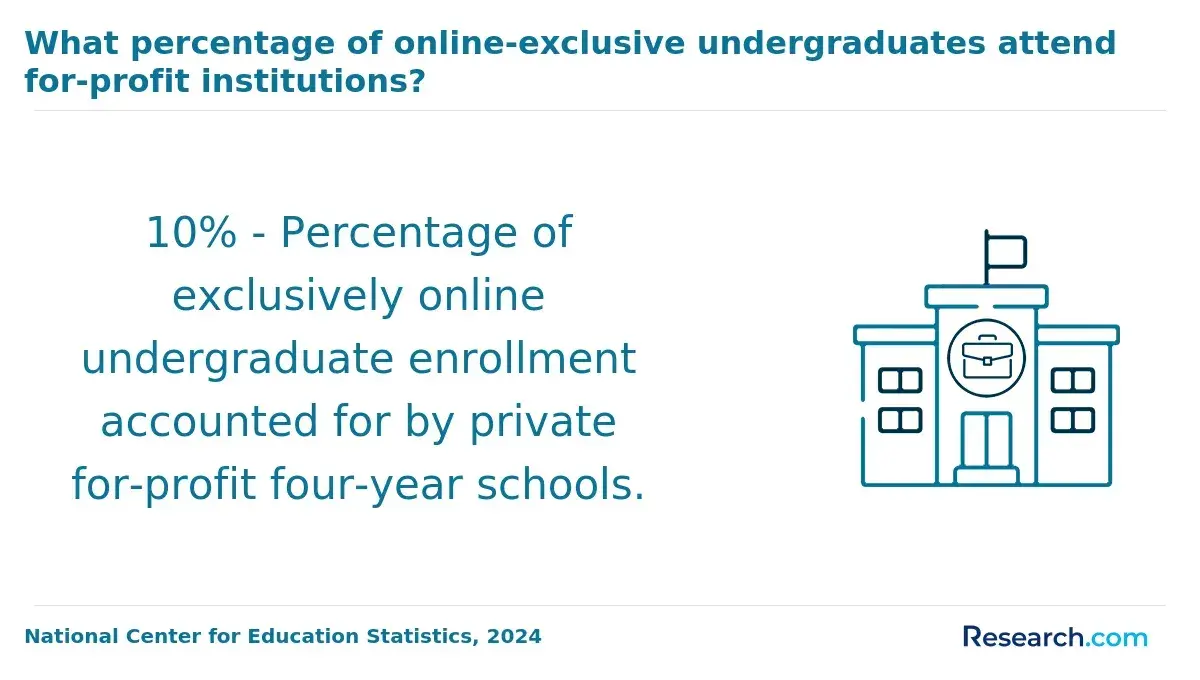
Cost depends on tuition per credit, fees, prerequisites, textbooks, lab platforms, exam proctoring, residency travel, and whether the school charges in-state, out-of-state, or online program rates. NCES data released in 2024 reported these average annual graduate tuition and required-fee benchmarks for 2022-23, which can help you judge whether a program's pricing is above or below the national market:
- Public institutions: $12,596
- Private nonprofit institutions: $29,931
Those figures are annual averages, not cybersecurity-specific prices, so use them as context rather than as a quote for any school. Online master's programs may charge by credit, by term, or by subscription period, and total cost can change if you need bridge courses.
This table summarizes the trade-offs behind common timeline choices. It can help you decide whether speed, workload, or financial risk should drive your enrollment plan.
| Enrollment pace | Typical completion pattern | Main advantage | Main risk |
| Accelerated full-time | Heavy course load across shorter terms. | Fastest route to finishing the credential. | Can be difficult with full-time work, caregiving, or limited technical background. |
| Standard part-time | One or two courses per term over several years. | Often the most realistic option for working adults. | Longer time before the degree appears on a resume. |
| Flexible or competency-based | Progress may depend on demonstrated mastery or subscription terms. | Can reward experienced learners who move quickly. | Requires strong self-direction and careful cost tracking. |
| Certificate-to-master's pathway | Start with graduate certificate credits that may stack into a degree. | Lower initial commitment and useful for testing fit. | Credits may not transfer if you change schools. |
To reduce cost, compare employer tuition assistance, military or veteran benefits, transfer credit, scholarships for adult learners, public university online rates, and whether certifications can substitute for prerequisites. Do not compare tuition alone; compare total cost to finish.
Which cybersecurity certifications align with an online master's and help adults over 40 pivot careers?
Certifications can complement an online master's because they show tool-specific or role-specific readiness. A degree usually signals graduate-level academic preparation, while certifications can signal current practitioner knowledge. For adults over 40, the best combination depends on whether the goal is entry, pivot, promotion, or leadership.
The table below maps common certifications to career goals. Requirements and exam costs can change, so verify details with the certification provider before budgeting.
| Certification | Best aligned goal | How it fits with a master's |
| CompTIA Security+ | Entry-level security knowledge or nontechnical pivot. | Good foundation before or early in graduate study if technical experience is limited. |
| CompTIA CySA+ | Security analysis and detection. | Pairs well with courses in security operations, logs, and threat monitoring. |
| Certified Ethical Hacker | Penetration testing awareness and offensive security concepts. | Useful when paired with legal, ethical, and defensive coursework. |
| CISSP | Security leadership, architecture, and senior practitioner roles. | Strong fit for experienced professionals, but it has experience requirements. |
| CISM | Security management and governance. | Useful for adults moving from operations, audit, risk, or management into security leadership. |
| GIAC certifications | Specialized technical roles such as forensics, incident response, or cloud defense. | Can deepen a concentration, though costs may be significant. |
If you are pivoting from a different career, do not collect certifications randomly. Build a sequence that supports one target role. For example, a career changer might start with Security+, complete foundational master's courses, then add CySA+ for security analyst roles. A manager with compliance experience may prioritize CISM or CISSP after meeting experience requirements.
AI is also changing the credential conversation. Security teams increasingly use automation for triage, log correlation, and phishing analysis, so adults who like human-in-the-loop evaluation may also explore adjacent technology roles such as AI trainer jobs, especially if they have communication, domain review, or quality-assurance experience.
What cybersecurity jobs can graduates pursue and how do career paths differ for older adults?
Graduates of online cybersecurity master's programs can pursue technical, analytical, investigative, and management roles. The right target depends heavily on prior experience. A 45-year-old systems administrator and a 45-year-old accountant may both benefit from the same degree, but they should not market themselves for the same first cybersecurity job.
The table below connects common roles with responsibilities and likely entry points for adults over 40. It is designed to help you avoid applying too broadly and instead build a focused job-search story.
| Role | Typical responsibilities | Best adult-career fit |
| Information security analyst | Monitor threats, review alerts, assess vulnerabilities, document incidents, and recommend controls. | Good pivot role for IT support, network, help desk, or operations professionals. |
| Security engineer | Design, implement, and maintain technical controls across systems, networks, cloud, and identity platforms. | Best for learners with infrastructure, cloud, DevOps, or systems administration experience. |
| Digital forensics analyst | Investigate incidents, preserve evidence, analyze devices or logs, and support legal or compliance processes. | Strong fit for law enforcement, military, legal, audit, or incident documentation backgrounds. |
| Governance, risk, and compliance analyst | Map controls to frameworks, prepare audits, assess vendors, and coordinate policy implementation. | Strong fit for business, healthcare, finance, legal, privacy, or quality-assurance professionals. |
| Security architect | Plan enterprise security designs, evaluate technologies, and align controls with business risk. | Usually better for experienced technical professionals after several years in security engineering. |
| Cybersecurity manager | Lead teams, budgets, incident planning, security programs, and cross-functional communication. | Best for adults who already have leadership experience plus credible security knowledge. |
Older adults often bring advantages that younger career entrants may still be building: judgment, communication, stakeholder management, documentation discipline, industry knowledge, and experience under pressure. These strengths are especially valuable in risk, compliance, incident response coordination, vendor management, and leadership roles.
The main challenge is proving current technical ability. A master's can help, but applicants should also build portfolio evidence through labs, capstones, home projects, internships, contract work, volunteer security assessments, or employer-based projects. If you are comparing cybersecurity with other career-change options, salary research in fields such as health information management salary entry-level can help you judge whether a technical pivot is worth the additional preparation.
What salary ranges and promotion prospects can experienced adults expect after a cybersecurity master's?
Salary outcomes vary by role, region, clearance status, industry, management responsibility, and prior experience. A master's can support advancement, but it does not override the need for relevant skills, demonstrated projects, and employer demand.
BLS data published in 2024 lists the median annual pay for information security analysts at $120,360. For adults over 40, the important takeaway is not that every graduate reaches that number; it is that cybersecurity sits in a relatively high-wage occupational category where prior IT, management, risk, or regulated-industry experience can improve positioning.
Salary potential differs by path. Technical specialists often increase earnings by building scarce skills in cloud security, identity, incident response, application security, or architecture. Managers may increase earnings by combining security knowledge with budgeting, governance, compliance, and leadership. Federal contractors and defense-related employers may value clearances, but requirements differ by role and agency.
Use these questions to evaluate promotion prospects before enrolling:
- Does my current employer have a security team, risk office, cloud program, privacy function, or compliance department where I could move internally?
- Will the program produce portfolio evidence, such as a capstone, lab reports, risk assessment, or incident response plan?
- Do job postings in my target region ask for a master's, a certification, years of experience, or specific tools?
- Can I combine my existing industry knowledge with cybersecurity, such as healthcare security, financial risk, manufacturing systems, education technology, or government compliance?
- Will the degree help me move into a higher-responsibility role, or would a certification plus internal project experience be enough?
A common salary mistake is using national medians as a personal forecast. Instead, compare local job postings, talk with hiring managers, review employer tuition policies, and estimate how many months or years it may take to move from study to role change.
What is the long-term job outlook for cybersecurity and how stable is the field for late-career professionals?
The long-term outlook for cybersecurity is strong, but the field is not immune to competition, budget cycles, automation, and changing employer expectations. BLS data published in 2024 projects 33% employment growth for information security analysts from 2023 to 2033, much faster than the average for all occupations. For adults over 40, this suggests durable demand, but not automatic hiring without role-specific skills.
Several trends affect stability and career strategy. Cloud migration keeps expanding the attack surface, ransomware continues to pressure organizations, privacy and compliance expectations remain high, and AI is changing both attack methods and defense workflows. Employers increasingly want professionals who can explain risk to nontechnical leaders, not just operate tools.
Late-career professionals can improve stability by positioning themselves where experience matters. Governance, risk, compliance, security leadership, architecture, incident coordination, and industry-specific security roles often reward judgment and communication as much as raw technical speed. Highly technical roles can also be stable, but they require continuous practice with current platforms and threats.
To make the degree a durable investment, take these practical steps while enrolled:
- Pick one target role by the end of the first term so elective choices, certifications, and projects reinforce each other.
- Build a portfolio that translates coursework into employer language, such as risk memos, cloud diagrams, detection rules, incident reports, or secure design reviews.
- Network with faculty, classmates, alumni, and local security groups before graduation rather than waiting until the job search starts.
- Track job postings every month and adjust electives if employers repeatedly ask for tools or frameworks you have not studied.
- Keep your resume age-neutral by emphasizing recent skills, measurable impact, and current security projects instead of listing every role from decades ago.
The best online master's in cybersecurity for an adult over 40 is not simply the most famous or fastest program. It is the program that fits your starting skills, protects your finances, gives you hands-on evidence, and moves you toward a realistic role in a market that continues to need security talent.
Other Things You Should Know About Cybersecurity
Age bias can exist in any hiring market, but adults can reduce risk by emphasizing current tools, recent projects, certifications, and business impact. Cybersecurity also includes roles where maturity, documentation, leadership, and regulatory judgment are valued.
Yes, many top online master's programs in cybersecurity partner with virtual lab providers to ensure students access hands-on experiences without needing advanced equipment. These labs simulate real-world scenarios, providing practical skills and bridging the gap between theory and practice.
Usually yes if the employer offers tuition assistance, internal mobility, security projects, or mentorship. If your workplace is unstable, first review reimbursement agreements carefully because some employers require repayment if you leave within a set period.
References
- M.Sc. on Cyber Security: Highest Salary Countries Guide https://edglobalacademy.com/which-country-offers-the-highest-salary-after-m-sc-for-cyber-security/
- Top affordable online cybersecurity master degree programs https://cybersecurityguide.org/rankings/most-affordable-online-masters/
- Cyber Security Salary Guide: What To Expect | Walbrook https://www.walbrook.ac.uk/subjects/cyber-security/cybersecurity-salary-guide/
- Cybersecurity career paths: 2026 job guide https://www.pluralsight.com/resources/blog/cybersecurity/cybersecurity-career-guide-2025
- 6 Engaging & Lucrative Cyber Security Career Paths - Hashed Out by The SSL Store https://www.thesslstore.com/blog/6-engaging-lucrative-cyber-security-career-paths/
- Best Online Master's in Cybersecurity | CyberDegrees.org https://www.cyberdegrees.org/listings/top-online-masters-in-cyber-security-programs/
- Cyber Security Job Outlook - Is It a Good Career https://www.neit.edu/blog/cyber-security-job-outlook
- Cybersecurity Master's Degree | SANS Technology Institute https://www.sans.edu/cyber-security-programs/masters-degree
- Cybersecurity Job Demand: Current Trends and Future Outlook https://destcert.com/resources/cybersecurity-job-demand/