
2027 What is a Health Information Manager: Salary & Career Paths

Co-Founder and Chief Data Scientist
Health information management is one of the most practical career paths for people who want to work in healthcare without providing direct patient care. The role sits between clinical operations, data systems, compliance, billing, privacy, and leadership. In 2026, the field matters even more because healthcare organizations are expanding electronic health records, telehealth, automation, analytics, and cybersecurity programs while facing stricter expectations around patient privacy and data quality.
This guide is for students comparing health information management degrees, healthcare workers considering a move into data or administration, and professionals deciding whether credentials such as RHIT, RHIA, CHDA, CHPS, or CDIP are worth pursuing. You will learn what health information managers do, what education and certifications employers commonly expect, how salaries and job outlook compare, which specializations are available, and how to choose a path that fits your goals.
Quick answer: How do you become a health information manager?
To become a health information manager in the United States, you typically need a postsecondary degree in health information management, health information technology, health informatics, or a closely related field. Many candidates complete a CAHIIM-accredited associate degree to qualify for RHIT certification or a CAHIIM-accredited bachelor’s degree to qualify for RHIA certification through AHIMA. Most management roles prefer or require a bachelor’s degree, relevant healthcare data experience, and strong knowledge of privacy, compliance, coding, EHR systems, and information governance.
What you should know before choosing this career
- Education matters: An associate degree can support entry-level HIM technician roles, while a bachelor’s degree is commonly the stronger route for management and RHIA eligibility.
- Accreditation is important: If you want RHIT or RHIA eligibility, verify that the program is accredited by the Commission on Accreditation for Health Informatics and Information Management Education (CAHIIM).
- Certification is not the same as licensure: Health information managers generally do not need a state license, but AHIMA credentials are widely recognized by employers.
- Experience builds credibility: Internships, coding roles, records analysis, revenue cycle work, and EHR support positions can help you move toward management.
- Specialization can raise your value: HIM professionals can move into clinical documentation improvement, privacy and security, analytics, informatics, compliance, revenue cycle, consulting, and leadership.
- Technology is changing the job: Employers increasingly look for HIM professionals who understand EHR optimization, data quality, interoperability, automation, analytics, and cybersecurity risk.
- Ethics are central to the role: HIM professionals handle sensitive patient information, so integrity, confidentiality, accuracy, and sound judgment are essential.
- How can you become a health information manager in 2026?
- What does a health information manager do?
- What education do health information managers need?
- What skills do health information managers need?
- What certifications do health information managers need?
- What legal and ethical rules apply to health information management?
- How much do health information managers earn?
- What is the job outlook for health information management?
- What trends are shaping health information management?
- Can interdisciplinary credentials help your HIM career?
- Which academic fields pair well with health information management?
- How does public health knowledge support HIM work?
- Can online education help HIM professionals advance?
- What cybersecurity practices should HIM professionals understand?
- What HIM specializations and career paths are available?
- What challenges should you expect in health information management?
- Is health information management worth it?
- Can advanced academic programs expand your HIM career options?
How can you become a health information manager?
The most reliable route into health information management combines accredited education, hands-on healthcare data experience, and professional certification. You do not need to start in a management role. Many HIM professionals begin as health information technicians, coding specialists, medical records analysts, documentation specialists, or revenue cycle staff before moving into supervisory or administrative positions.
- Choose the right degree level. An associate degree can prepare you for technical roles and RHIT eligibility, while a bachelor’s degree is usually the better fit if your goal is HIM management or RHIA certification.
- Check institutional and program accreditation. Confirm that the school is properly accredited and that the HIM or health informatics program meets CAHIIM requirements when certification eligibility matters. Students comparing distance learning options can start by reviewing nationally accredited online universities.
- Build practical experience early. Look for internships, practicum placements, coding support jobs, records quality roles, or EHR-related work that exposes you to real healthcare documentation workflows.
- Earn the appropriate AHIMA credential. RHIT is aligned with associate-level preparation, while RHIA is aligned with bachelor’s or master’s preparation from an eligible CAHIIM-accredited program.
- Develop a specialization. After gaining experience, consider privacy, security, data analytics, clinical documentation improvement, informatics, or revenue cycle management.
- Keep learning. HIM professionals must stay current with regulatory updates, coding changes, privacy rules, data governance practices, and health technology tools.
| Career goal | Typical starting point | Credential to consider | When this path makes sense |
| Entry-level health information technician | Associate degree in health information technology or management | RHIT | Best for students who want to enter the workforce sooner and build experience before pursuing management. |
| Health information manager | Bachelor’s degree in HIM, health informatics, or a related field | RHIA | Best for candidates seeking supervisory, compliance, data governance, or department leadership responsibilities. |
| Specialist or senior role | Bachelor’s degree plus experience; master’s degree may help for advanced roles | CHDA, CHPS, CDIP, CPHI, or other specialty credentials | Best for professionals moving into analytics, privacy, documentation improvement, informatics, or consulting. |
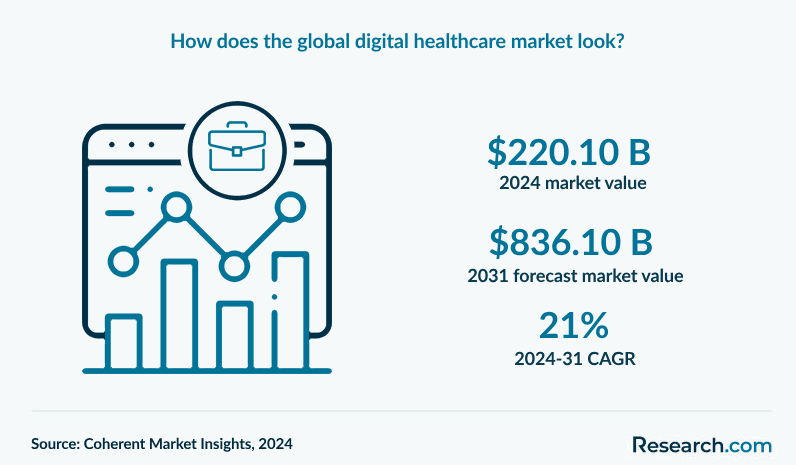
The broader digital health environment is expanding quickly. The global digital healthcare market was estimated at $220.10 billion in 2024 and is expected to reach $836.10 billion by 2031, with a compound annual growth rate of 21%. This growth reflects increased use of virtual care, remote patient monitoring, digital communication, and telehealth platforms.
For HIM professionals, this shift means more digital records, more patient-generated health data, and greater responsibility for accuracy, access controls, documentation standards, and interoperability.
What does a health information manager do?
A health information manager is responsible for making sure patient health information is accurate, usable, secure, and legally managed. The job is not limited to filing records. Modern HIM leaders oversee information governance, EHR workflows, privacy compliance, data quality, coding operations, reporting, and communication between clinical, administrative, finance, and technology teams.
- Information governance: Creating policies for how health data is collected, stored, accessed, corrected, retained, and released.
- Privacy and security oversight: Supporting safeguards that protect patient information and reduce unauthorized access or disclosure.
- EHR management: Helping implement, maintain, improve, and audit electronic health record systems.
- Data quality: Monitoring records for completeness, consistency, accuracy, and timeliness across departments and systems.
- Coding and classification supervision: Overseeing ICD-10, CPT, and related coding processes that affect billing, reporting, reimbursement, and analytics.
- Team leadership: Managing coders, health information technicians, documentation specialists, release-of-information staff, and other HIM personnel.
- Compliance: Supporting adherence to federal rules, state requirements, accreditation standards, and internal policies.
- Analytics and reporting: Using health information to support quality improvement, operational decisions, utilization reporting, research, and population health initiatives.
Some HIM professionals also benefit from broader technology training, especially when their work involves system integration, reporting, automation, or database-heavy tasks. For example, candidates who want deeper technical knowledge may compare affordable online master’s programs in computer science if their long-term goal is to move toward health IT leadership or informatics.
McKinsey & Company’s 2024 report on health system digital investment priorities found high respondent satisfaction in several technology categories. Robotics or physical automation received 82.1% satisfaction, and advanced analytics/AI received 80.8%. Other areas also showed strong satisfaction, including ambulatory care enablement at 75.0%, virtual health for patient experience at 74.7%, digital front door at 73.4%, and revenue cycle management at 72.2%.
Satisfaction was also reported for contracting or value-based care at 71.7%, cross-site capacity management at 71.1%, remote patient monitoring at 70.6%, and acute care workflow at 68.5%. Lower levels were reported for hospital at home at 64.0% and virtual health for labor shortages at 52.3%. For HIM professionals, these findings point to growing demand for people who can connect healthcare data, workflows, compliance, and digital strategy.
What education do health information managers need?
Education requirements vary by employer and role, but HIM is generally a degree-based profession. The best choice depends on whether you want to start quickly in a technical role, qualify for management, or move into advanced analytics, informatics, compliance, or executive leadership.
| Education level | Common HIM outcome | Credential alignment | Best for |
| Associate degree | Health information technician, records analyst, coding-related support role | RHIT eligibility when completed through a qualifying CAHIIM-accredited program | Students seeking a faster entry point into HIM work. |
| Bachelor’s degree | Health information manager, compliance coordinator, revenue cycle supervisor, informatics support role | RHIA eligibility when completed through a qualifying CAHIIM-accredited program | Candidates who want management responsibilities or broader career mobility. |
| Master’s degree | Senior HIM leader, informatics manager, data governance leader, consultant, educator, or specialized analyst | May support RHIA eligibility if the program meets CAHIIM requirements; may also support specialty credentials depending on experience | Professionals targeting leadership, analytics, research, teaching, or complex health systems roles. |
Students should not evaluate programs by tuition alone. Accreditation, practicum access, certification eligibility, transfer policies, faculty expertise, employer reputation, and student support can all affect the value of a degree. If you want to strengthen administrative and business knowledge for leadership roles, online MBA programs may be worth comparing alongside HIM, healthcare administration, or health informatics options.
Questions to ask before enrolling in an HIM program
- Is the HIM or health informatics program CAHIIM-accredited if I want RHIT or RHIA eligibility?
- Does the curriculum include coding, compliance, privacy, EHR systems, data analytics, revenue cycle, and information governance?
- Are internships, practicums, or professional practice experiences included?
- What certification exams do graduates commonly pursue?
- Will transfer credits reduce my time and cost?
- Does the program support working adults through online, hybrid, evening, or part-time formats?
- What career services are available for HIM students and graduates?
What skills do health information managers need?
Health information managers need a mix of healthcare knowledge, data skills, compliance judgment, technical fluency, and leadership ability. The strongest candidates can translate between clinicians, coders, administrators, IT teams, compliance officers, and patients.
| Skill area | What it means in HIM work | Why employers care |
| EHR and health IT knowledge | Understanding how electronic records are created, modified, accessed, audited, and used in workflows. | Poor system use can create documentation errors, compliance problems, and operational delays. |
| Medical coding literacy | Knowing how ICD-10-CM/PCS, CPT, and HCPCS support billing, quality reporting, reimbursement, and analysis. | Accurate coding affects revenue, compliance, and data reliability. |
| Regulatory knowledge | Applying privacy, security, retention, disclosure, and documentation requirements, including HIPAA guidance and HITECH-related expectations. | Healthcare organizations face legal, financial, and reputational risk when health information is mishandled. |
| Data analysis | Reviewing trends, identifying documentation gaps, preparing reports, and supporting quality or operational decisions. | Health systems increasingly rely on data to improve care and control costs. |
| Leadership | Supervising staff, managing projects, training teams, resolving workflow issues, and communicating across departments. | HIM managers often lead teams that directly affect compliance, billing, documentation, and patient access to information. |
| Attention to detail | Finding inconsistencies, missing documentation, incorrect codes, access issues, or incomplete records. | Small errors can create large downstream problems in billing, care coordination, reporting, and privacy. |
| Ethical judgment | Protecting confidentiality, avoiding inappropriate access, and making decisions that respect patient rights. | Patient trust depends on responsible information stewardship. |
What certifications do health information managers need?
Health information managers are generally not licensed by state boards in the way nurses, physicians, or some allied health professionals are. Instead, professional certification is the main credentialing signal in the field. Employers often use AHIMA credentials to evaluate whether candidates have met recognized standards for HIM knowledge and practice.
If you are still choosing a degree pathway, compare programs carefully. Some students begin by reviewing healthcare administration or HIM-related options, including affordable online healthcare management degree programs, but certification eligibility depends on the specific program and accreditor, not just the degree title.
- RHIT: The Registered Health Information Technician credential is generally associated with completion of a CAHIIM-accredited associate degree program and passing the RHIT exam.
- RHIA: The Registered Health Information Administrator credential is generally associated with completion of a CAHIIM-accredited bachelor’s or master’s program and passing the RHIA exam. CAHIIM stands for the Commission on Accreditation for Health Informatics and Information Management Education.
- CHDA: The Certified Health Data Analyst credential can support professionals pursuing health data analytics responsibilities.
- CHPS: The Certified in Healthcare Privacy and Security credential is relevant for privacy, security, compliance, and risk-focused roles.
- CDIP: The Certified Documentation Improvement Practitioner credential supports clinical documentation improvement work.
- CPHI: The Certified Professional in Health Informatics credential can be useful for professionals working at the intersection of health information and technology.
Certification maintenance matters. AHIMA credential holders must complete and report continuing education units to keep credentials active. This requirement helps professionals stay aligned with changes in health law, coding, technology, compliance expectations, and data governance practices.
What legal and ethical rules apply to health information management?
Health information managers are responsible for some of the most sensitive data in healthcare. Their work affects patient rights, organizational compliance, reimbursement, research, quality improvement, and trust. Ethical practice is not optional; it is the foundation of the profession.
- Protect confidentiality: Patient information should only be accessed, used, or disclosed for appropriate, authorized, and legally permitted purposes.
- Maintain data integrity: Records must be complete, accurate, timely, and reliable from creation through retention or destruction.
- Control access: HIM leaders help design and monitor role-based access so users can see the information they need without unnecessary exposure.
- Document disclosures: Release-of-information processes must be carefully tracked and supported by valid authorization or legal authority.
- Follow privacy and security rules: HIM professionals must understand federal requirements, state laws, institutional policies, and professional standards.
- Apply the AHIMA Code of Ethics: Professional conduct includes patient advocacy, responsible stewardship of information, competence, transparency, and avoidance of conflicts of interest.
- Respond to risk quickly: Suspected breaches, improper access, or documentation problems require timely escalation and corrective action.
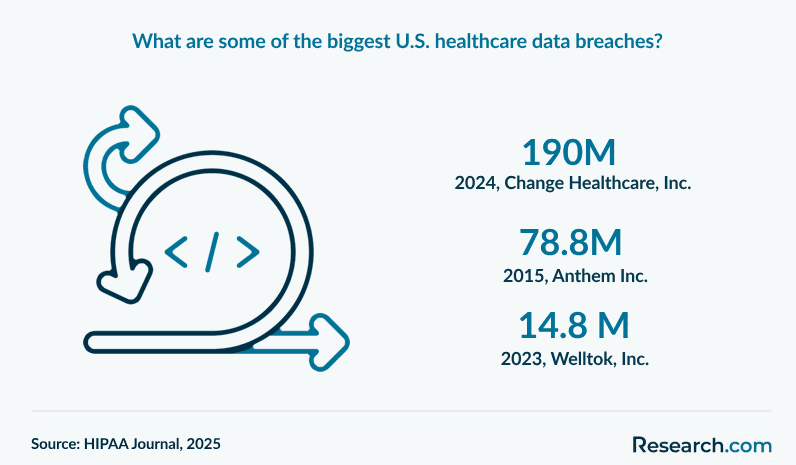
Healthcare data breaches show why this responsibility is so serious. The largest healthcare data breach in U.S. history occurred in 2024, when Change Healthcare, Inc. experienced a hacking incident affecting 190 million individuals. Anthem Inc. experienced a 2015 hacking incident affecting 78.8 million people. Welltok, Inc. reported a 2023 hacking incident affecting nearly 14.8 million individuals. Kaiser Foundation Health Plan, Inc. experienced a 2024 incident involving 13.4 million records, and Optum360, LLC reported a 2019 hacking incident affecting 11.5 million individuals.
These incidents show that hacking and IT-related events remain major drivers of large healthcare breaches, with health plans and business associates frequently exposed. HIM professionals are not always cybersecurity engineers, but they play an important role in governance, access oversight, privacy controls, breach response coordination, documentation, training, and policy enforcement.
How much do health information managers earn?
Health information management salaries vary by role, credential, education level, experience, employer type, and location. A professional managing a large hospital HIM department will not have the same pay profile as an entry-level technician, a coding auditor, a privacy analyst, or a specialist working in a high-cost metropolitan market.
- Education and certification: A bachelor’s degree plus RHIA certification often supports stronger management prospects than an associate degree alone, while specialized credentials may help in advanced roles.
- Experience: Salaries typically increase as professionals move from records, coding, or analyst roles into supervision, compliance, consulting, analytics, or leadership.
- Location: Compensation is commonly higher in major metropolitan areas and regions with higher labor costs.
- Employer: Hospitals, insurers, consulting firms, government agencies, clinics, long-term care providers, and health technology vendors may pay differently.
- Scope of responsibility: Roles involving budgets, staff leadership, compliance authority, analytics strategy, or enterprise governance generally carry higher expectations and stronger compensation potential.
Salary.com data from 2025 reported an average salary of $107,717 for Health Information Management Managers nationally. The reported average was $105,455 in Texas and $118,812 in California. For Health Information Management Specialists, Salary.com reported a national average of $168,404, with $185,750 in California, $196,696 in New York, NY, $210,505 in San Francisco, CA, and $166,720 in Austin, TX.
These figures should be treated as salary reference points, not guarantees. Your actual offer will depend on your market, credentials, job responsibilities, employer, remote or onsite expectations, and competition for the role.
What is the job outlook for health information management?
The employment outlook for HIM-related management work is supported by several long-term forces: electronic records, telehealth, regulatory complexity, value-based care, cybersecurity risk, health analytics, and the ongoing need to organize patient information across systems. Employers need people who can make healthcare data accurate, secure, usable, and compliant.
- Electronic records require ongoing management: EHR systems need optimization, auditing, training, workflow improvement, and governance long after implementation.
- Analytics is becoming more important: Healthcare organizations use data for quality improvement, population health, revenue cycle, operations, and strategic planning. Professionals who want to deepen this skill area may compare affordable online master’s programs in data science.
- Privacy risk is increasing: Breaches, ransomware, and unauthorized access concerns make information governance and security awareness more valuable.
- Regulations keep changing: HIM professionals help organizations comply with privacy, coding, reporting, retention, and documentation requirements.
- Healthcare utilization creates data volume: More encounters, digital communication, remote monitoring, and claims activity mean more information to manage.
- Employers are diverse: HIM professionals work in hospitals, physician practices, insurers, long-term care organizations, government agencies, consulting firms, academic institutions, and health IT companies.
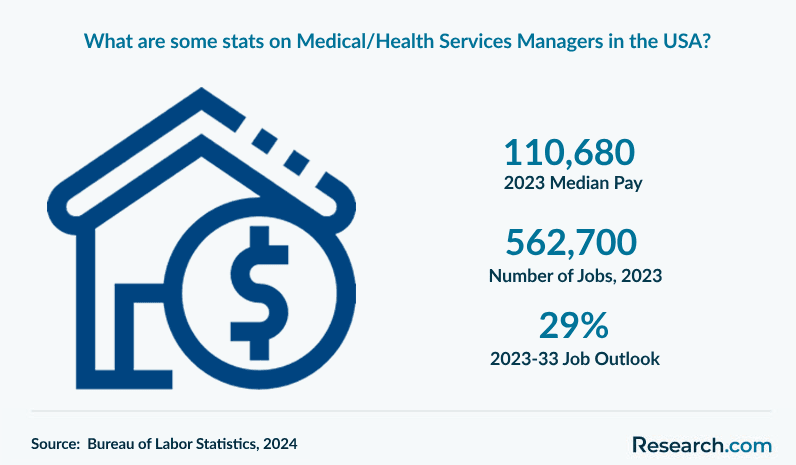
In 2023, medical and health services managers earned a median annual salary of $110,680, or about $53.21 per hour. The typical entry-level education for this role is a bachelor’s degree, and less than five years of related work experience is typically needed. There were 562,700 jobs in 2023, and employment is projected to grow 29% from 2023 to 2033, adding 160,600 jobs over the decade.
HIM professionals with strong certification, technical fluency, regulatory knowledge, and analytics skills are likely to be better positioned than candidates who only understand paper records or basic administrative tasks.
What trends are shaping health information management?
Health information management is changing because healthcare data is no longer confined to a single record system. Data now comes from EHRs, portals, telehealth visits, remote monitoring tools, claims systems, quality platforms, patient communication tools, and third-party vendors. HIM professionals should prepare for a more connected, automated, and risk-sensitive environment.
- AI and automation: Health systems are investing in advanced analytics, automation, documentation support, workflow tools, and decision-support technologies. HIM professionals must understand how to validate data quality and monitor responsible use.
- Interoperability: Organizations need records to move securely across providers, payers, patients, and public health systems while maintaining accuracy and privacy.
- Telehealth data growth: Virtual visits, remote monitoring, and digital communication generate information that must be documented, coded, stored, and protected.
- Cybersecurity pressure: Breach risk increases the need for access audits, staff training, release controls, vendor oversight, and privacy response processes.
- Analytics-driven healthcare: HIM departments are increasingly tied to quality reporting, population health, revenue cycle improvement, and operational decision-making.
- Cross-functional work: HIM professionals must collaborate more closely with IT, compliance, legal, finance, nursing, physicians, administrators, and patient experience teams.
Some professionals choose to understand clinical workflows more directly through allied health coursework. Programs such as online medical assistant programs can provide context about front-office and patient care documentation processes, although they are not a substitute for HIM-specific education or certification.
Can interdisciplinary credentials help your HIM career?
Interdisciplinary credentials can help when they add relevant context rather than distract from your main HIM goals. For example, a professional working with ambulatory documentation, clinic workflows, or patient intake processes may benefit from understanding how clinical support staff document and route information. Reviewing options such as online medical assistant certification can be useful for professionals who want a clearer view of clinical operations, but HIM credentials remain the stronger signal for HIM-specific roles.
The best add-on credential depends on your target role. Choose privacy and security training for compliance work, analytics training for reporting roles, revenue cycle education for billing leadership, and informatics coursework for EHR or system optimization work.
Which academic fields pair well with health information management?
Health information management pairs well with several academic areas because HIM work touches clinical care, business operations, technology, compliance, and population health. The right complementary field should match your intended specialization.
| Complementary field | How it supports HIM | Best fit |
| Healthcare administration | Builds leadership, finance, operations, policy, and organizational management knowledge. | HIM managers, directors, and revenue cycle leaders. |
| Computer science or information technology | Strengthens understanding of systems, databases, cybersecurity, interoperability, and automation. | Health informatics, EHR optimization, analytics, and IT-facing HIM roles. |
| Data science or analytics | Improves reporting, visualization, statistical reasoning, and data-driven decision support. | Health data analysts, quality reporting specialists, and population health analysts. |
| Clinical or health science fields | Provides context about patient care, terminology, documentation patterns, and clinical workflows. | CDI specialists, coding leaders, and HIM professionals working closely with clinicians. |
For example, students interested in movement science, wellness, rehabilitation, or clinical documentation context may review an online bachelor’s in kinesiology. This type of program is not an HIM substitute, but it may support professionals who want a broader understanding of patient care and health outcomes.
How does public health knowledge support HIM work?
Public health knowledge can make HIM professionals more effective when they work with population health reporting, preventive care data, quality measures, disease registries, community health analytics, or government reporting. HIM data is often used beyond individual patient care, so understanding how health information supports communities can strengthen decision-making.
Nutrition, prevention, and wellness knowledge can also help professionals interpret broader health trends. For example, learning what it takes to become a nutritionist may be useful for HIM professionals who collaborate with population health, chronic disease management, or preventive care teams.
Can online education help HIM professionals advance?
Online education can be a practical option for HIM professionals who need to keep working while earning a degree, preparing for certification, or adding a specialization. The main advantage is flexibility, but quality varies. Students should compare accreditation, certification alignment, faculty experience, practicum requirements, technology support, and career services before enrolling.
Online program research can also help students understand pricing differences across fields. For comparison, some learners review pages such as affordable online biology bachelor’s degree programs to evaluate how online education costs and formats vary, even if biology is not their intended HIM pathway.
Online vs. campus HIM programs
| Format | Advantages | Potential drawbacks | Best for |
| Online | Flexible scheduling, easier access for working adults, and fewer relocation barriers. | Requires strong self-discipline; practicum placement support can vary. | Working professionals, career changers, and students without a nearby HIM program. |
| Campus-based | In-person networking, structured schedule, and direct access to campus resources. | Less flexible and may require commuting or relocation. | Students who prefer face-to-face learning and local healthcare partnerships. |
| Hybrid | Combines online coursework with selected in-person experiences. | May still require travel or scheduled attendance. | Students who want flexibility but still value in-person support. |
What cybersecurity practices should HIM professionals understand?
HIM professionals do not need to replace cybersecurity specialists, but they do need to understand how privacy, access, documentation, and governance affect security risk. Because healthcare data breaches can involve millions of individuals, HIM leaders should know how to support prevention, detection, response, and training.
- Role-based access: Users should only have access to information needed for their job duties.
- Audit monitoring: Access logs should be reviewed to detect inappropriate viewing, unusual activity, or policy violations.
- Staff training: Employees need regular education on phishing, privacy, release rules, password practices, and reporting suspicious events.
- Vendor oversight: Business associates and third-party platforms should be included in risk management and contractual safeguards.
- Incident response coordination: HIM professionals may assist with breach investigation, documentation, disclosure review, and patient notification processes.
- Data minimization: Organizations should avoid collecting, sharing, or retaining more information than necessary.
- Policy enforcement: Written privacy and security policies must be practical, updated, and consistently applied.
Professionals who want structured training in this area may compare online healthcare certificates that cover privacy, compliance, cybersecurity, informatics, or healthcare administration topics.
What HIM specializations and career paths are available?
Health information management offers several paths beyond general department management. Your best specialization depends on whether you prefer analytics, compliance, technology, finance, documentation quality, or leadership.
| Career path | Primary focus | Useful strengths |
| Clinical documentation improvement specialist | Improving provider documentation so records accurately reflect diagnoses, procedures, severity, and care delivered. | Clinical terminology, coding knowledge, communication, physician collaboration. |
| Health data analyst | Turning healthcare data into reports, dashboards, insights, and quality improvement information. | Analytics, statistics, visualization, database skills, critical thinking. |
| Privacy officer | Managing privacy policies, investigations, access concerns, training, and compliance with privacy rules. | Regulatory knowledge, ethics, communication, risk management. |
| Security or information governance specialist | Supporting safeguards, access rules, retention, audit processes, and secure information workflows. | Security awareness, policy design, systems knowledge, compliance. |
| Compliance auditor | Reviewing coding, billing, documentation, and operational practices for regulatory or policy adherence. | Auditing, coding, documentation review, attention to detail. |
| Health informatics specialist | Improving EHR systems, workflows, interoperability, and data use across clinical and administrative teams. | Technology fluency, workflow analysis, project management, communication. |
| Revenue cycle manager | Overseeing the flow from patient encounter to coding, billing, claims, denial management, and reimbursement. | Coding, finance, operations, payer rules, leadership. |
| HIM consultant | Advising organizations on compliance, workflow redesign, audits, system selection, or staff training. | Expertise, communication, project management, adaptability. |
| Educator | Teaching HIM, coding, informatics, compliance, or health data topics. | Subject expertise, curriculum design, mentoring, communication. |
If analytics is your target, advanced study in data science may be helpful. Some professionals compare affordable MS in data science programs in the U.S. to build stronger quantitative and technical skills for health data roles.
What challenges should you expect in health information management?
Health information management can be stable and meaningful, but it is not a low-pressure clerical field. HIM professionals are often responsible for issues that affect compliance, reimbursement, patient rights, clinical documentation, and organizational risk.
- Technology changes quickly: EHR updates, analytics tools, automation, interoperability standards, and AI applications require ongoing learning.
- Regulations are complex: Privacy, coding, quality reporting, retention, release-of-information, and billing rules can change and must be applied carefully.
- Cybersecurity risk is constant: HIM teams help reduce exposure through access controls, training, audits, and breach response support.
- Data quality is difficult to maintain: Records can become fragmented or inconsistent when multiple systems, users, and workflows are involved.
- Cross-department communication can be challenging: Clinicians, IT teams, finance staff, compliance officers, and executives may have different priorities.
- Staffing and training require attention: HIM leaders must hire, train, and retain professionals with the right mix of coding, compliance, data, and technology skills.
- Remote work adds complexity: Remote HIM roles can increase flexibility, but they also require secure access, strong supervision, clear productivity measures, and privacy discipline.
Common mistakes to avoid
| Mistake | Why it can hurt you | Better approach |
| Choosing a program without checking CAHIIM accreditation | You may not qualify for the RHIT or RHIA exam pathway you expected. | Verify program-level accreditation before applying. |
| Looking only at tuition | A cheaper program may cost more if credits do not transfer, certification support is weak, or practicum help is limited. | Compare total cost, time to completion, transfer policies, practicum support, and certification outcomes. |
| Assuming all healthcare degrees lead to HIM jobs | Healthcare administration, medical assisting, biology, and related degrees may not provide HIM-specific certification preparation. | Match the curriculum to your target role and credential. |
| Ignoring data and technology skills | Modern HIM roles increasingly involve EHRs, reporting, analytics, and security awareness. | Build skills in EHR systems, spreadsheets, databases, analytics, and information governance. |
| Waiting too long to gain experience | Certification alone may not be enough for management roles. | Use internships, coding roles, records review, revenue cycle work, or compliance projects to build a track record. |
| Assuming salary averages are guaranteed | Pay depends on location, employer, credentials, responsibilities, and market competition. | Research local postings and compare required skills against your qualifications. |
Is health information management worth it?
Health information management can be worth it for students and working adults who want a healthcare career with strong administrative, technical, compliance, and data responsibilities. The ROI depends on how much you pay for school, whether the program supports certification eligibility, how quickly you complete the degree, and whether you build experience in a marketable specialization.
The field may be a strong fit if you like healthcare but do not want direct patient care, enjoy detail-oriented work, value privacy and ethics, and are willing to keep learning as technology and regulations change. It may not be ideal if you dislike documentation, compliance, data systems, or cross-functional communication.
How to improve the ROI of an HIM career path
- Choose the lowest-cost accredited program that still meets your credential and career goals.
- Maximize transfer credits and employer tuition assistance where available.
- Prioritize CAHIIM accreditation if RHIT or RHIA eligibility is part of your plan.
- Use internships and entry-level HIM roles to gain experience before graduation.
- Add specialized skills in analytics, privacy, security, informatics, or revenue cycle management.
- Compare local job postings before choosing electives or certifications.
- Do not overpay for a credential that is unrelated to your target role.
Students entering through billing, coding, or records pathways may also compare the average cost of medical billing and coding programs to understand lower-cost entry points into healthcare information work before committing to a longer degree.
Can advanced academic programs expand your HIM career options?
Advanced education can help HIM professionals move into leadership, informatics, analytics, consulting, compliance, or specialized healthcare operations. The key is choosing a program that adds useful expertise rather than simply collecting unrelated credentials.
Healthcare administration can support executive roles. Data science can support analytics. Computer science can support informatics and system-focused work. Pharmacy, clinical science, and other healthcare disciplines may be useful when your role requires collaboration with specialized care teams. For example, professionals interested in medication management, pharmaceutical operations, or clinical data connected to pharmacy workflows may review options such as the most affordable online doctorate in pharmacy programs, while recognizing that pharmacy training serves a different professional purpose than HIM certification.
Key Insights
- The standard HIM pathway is education plus certification. Associate degrees often align with RHIT, while bachelor’s or master’s programs from qualifying CAHIIM-accredited programs align with RHIA.
- HIM is no longer just medical records management. The role now includes EHR governance, privacy, security, data quality, analytics, coding oversight, compliance, and leadership.
- Accreditation should be checked before enrollment. If RHIT or RHIA eligibility matters, program-level CAHIIM accreditation is a critical decision factor.
- Digital health growth is creating more data responsibilities. The digital healthcare market was estimated at $220.10 billion in 2024 and is projected to reach $836.10 billion by 2031, with a 21% CAGR.
- Technology investment is reshaping the field. McKinsey reported high satisfaction for robotics or physical automation at 82.1% and advanced analytics/AI at 80.8%, showing why HIM professionals need data and technology fluency.
- Privacy and security skills are essential. Major breaches, including the 2024 Change Healthcare incident affecting 190 million individuals, show why information governance and cybersecurity awareness matter.
- Salary potential varies widely. Salary.com reported a 2025 national average of $107,717 for Health Information Management Managers and $168,404 for Health Information Management Specialists, with higher reported averages in locations such as California, New York, NY, and San Francisco, CA.
- The broader management outlook is strong. Medical and health services managers had 562,700 jobs in 2023, a median annual salary of $110,680, and projected employment growth of 29% from 2023 to 2033.
- The best ROI comes from a focused plan. Choose an accredited program, reduce unnecessary costs, gain experience early, pursue the right AHIMA credential, and specialize in a high-value area such as analytics, privacy, security, informatics, or revenue cycle management.
References
- Coherent Market Insights. (2024). Digital Healthcare Market Report. Coherent Market Insights.
- HIPAA Journal. (2025). Healthcare data breach statistics. HIPAA Journal.
- Salary.com. (2025, January 1). Health Information Management Manager Salary. Salary.com.
- Salary.com. (2025, January 1). Health Information Management Manager Salary in California. Salary.com.
- Salary.com. (2025, January 1). Health Information Management Manager Salary in Texas. Salary.com.
- Salary.com. (2025, January 1). Health Information Management Specialist Salary. Salary.com.
- Salary.com. (2025, January 1). Health Information Management Specialist Salary in Austin, Texas. Salary.com.
- Salary.com. (2025, January 1). Health Information Management Specialist Salary in California. Salary.com.
- Salary.com. (2025, January 1). Health Information Management Specialist Salary in New York, NY. Salary.com.
- Salary.com. (2025, January 1). Health Information Management Specialist Salary in San Francisco, CA. Salary.com.
- Sewell, J., Kumar, S., Bazdaricka, A., & Van der Meulen, M. (2024, May 9). Digital transformation: Health systems’ investment priorities. McKinsey & Company.
- U.S. Bureau of Labor Statistics. (2024, April 17). Medical records and health information technicians. Occupational Outlook Handbook. U.S. Bureau of Labor Statistics.
Other Things You Should Know About Becoming a Health Information Manager
The RHIA credential from AHIMA is the most recognized certification for Health Information Managers, especially for leadership and salary growth. Employers also value RHIT for entry-level roles, but RHIA is usually preferred for management posts that require broader knowledge of coding, compliance, and data governance.
To become a Health Information Manager in 2027, a bachelor's degree in health information management or a related field is typically required. Certification from the American Health Information Management Association (AHIMA), such as Registered Health Information Administrator (RHIA), is often preferred by employers.


