
2027 How To Become a Community Health Worker: Salary & Career Paths

Co-Founder and Chief Data Scientist
Becoming a community health worker is a practical path for people who want to improve health outcomes without necessarily becoming a clinician. Community health workers, often called CHWs, help people understand health information, find services, keep appointments, manage barriers to care, and communicate with healthcare and social service providers. Their work matters especially in communities where transportation, language, cost, trust, or insurance gaps make healthcare difficult to access.
The need for this role remains significant. With 25.3 million individuals in the United States lacking medical insurance, many people still need help finding affordable care, preventive services, public benefits, and community-based support. This guide explains what community health workers do, how to become one, how long the path can take, what skills and certifications help, where CHWs work, what they earn, and how to decide whether this career fits your goals.
Quick Answer: How to Become a Community Health Worker in 2027
Most people enter community health work by earning a high school diploma or equivalent, gaining experience in outreach or social services, completing a CHW training program, and meeting any state certification requirements. A college degree is not always required, but an associate or bachelor's degree in public health, human services, social work, or a related field can improve competitiveness for specialized, supervisory, or higher-paying roles.
Key Things You Should Know About Becoming a Community Health Worker for 2027
- A community health worker is a frontline public health professional who builds trust within a community, connects people to care, explains health information, and helps reduce barriers to services.
- According to Zippia, 60% of CHWs in the United States have a bachelor's degree, 16% have an associate degree, 12% have a master's degree, and 6% earned a high school diploma.
- The employment of community health workers in the United States is projected to increase by 13% from 2023 to 2033.
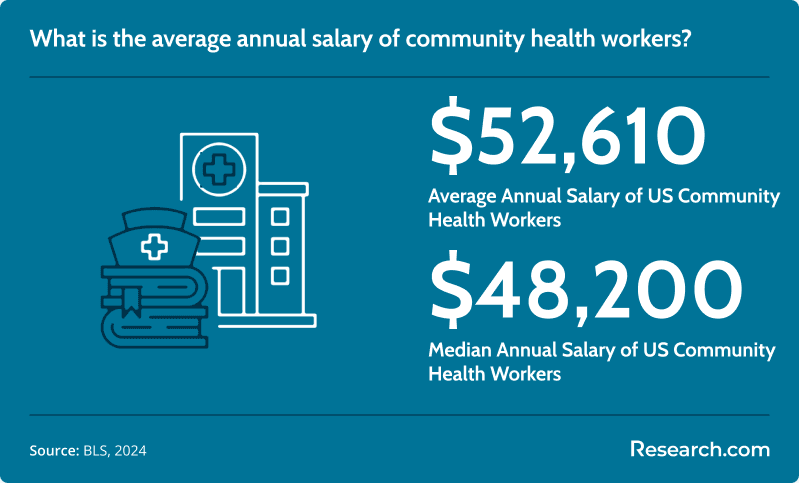
- The average annual salary of community health workers in the United States is $52,610, while the median annual salary is $48,200.
- The states with the highest employment levels for community health workers are California (8,730), New York (6,380), Texas (4,760), Maryland (2,440), and Massachusetts (2,170).
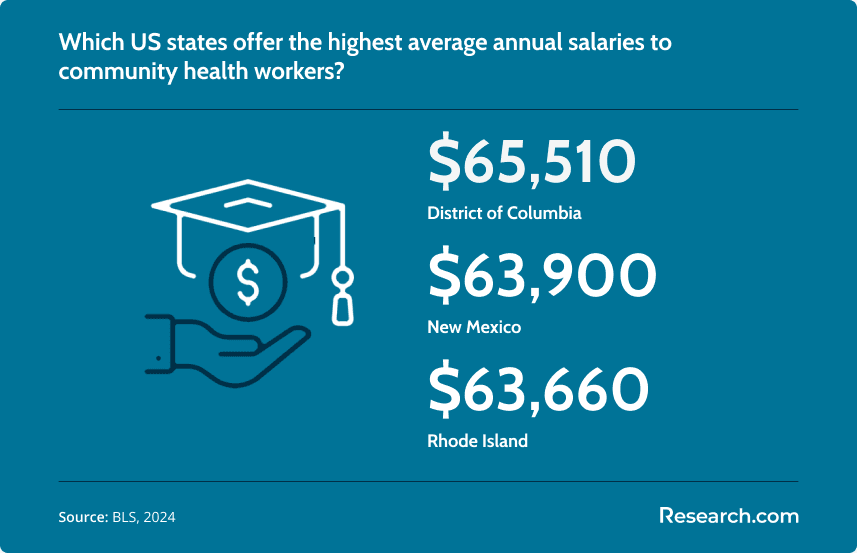
- The highest average annual salaries for community health workers are reported in the District of Columbia ($65,510), New Mexico ($63,900), Rhode Island ($63,660), Nevada ($63,320), and Connecticut ($60,990).
- What does a community health worker do?
- How does one become a community health worker for 2027?
- How long does it take to become a community health worker?
- What are the different roles within the community health worker profession?
- What skills are required to be a successful community health worker?
- How does one write a compelling community health worker resume?
- What are the best certifications for community health workers?
- What are the alternative jobs for community health workers?
- How can community health workers pursue further professional development?
- What are the career advancement opportunities for community health workers?
- Can community health workers accelerate their administrative skills through targeted online education?
- What additional academic resources can propel community health workers' professional growth?
- What is the job outlook for community health workers?
- How can community health workers leverage advanced education for diversified career growth?
- What is the average salary of community health workers?
- What are the biggest challenges community health workers face?
- How do community health workers measure their impact on community health?
What does a community health worker do?
A community health worker is a trusted public health worker who operates close to the population being served. CHWs may work in neighborhoods, clinics, hospitals, schools, nonprofit organizations, public agencies, shelters, tribal communities, or home-based programs. Their value comes from combining health knowledge with cultural understanding, local relationships, and practical problem-solving.
CHWs are not usually licensed clinicians. Instead, they help people use the healthcare system more effectively. They may explain care instructions, connect clients to food or housing assistance, coordinate appointments, conduct outreach, provide basic screenings, support chronic disease education, and help healthcare teams understand community needs.
Common responsibilities include:
- Client advocacy: CHWs speak up for individuals and families who may have difficulty getting services, understanding eligibility rules, or communicating with providers.
- Health education: They explain prevention, nutrition, medication routines, chronic disease management, maternal health, mental health resources, and other topics in language the community can understand.
- Care coordination: CHWs help clients schedule visits, complete forms, follow care plans, and stay connected to clinics, social services, or community programs.
- Basic screening and informal support: Depending on training and employer policy, CHWs may conduct blood pressure checks, provide informal counseling, or help identify urgent needs.
- Cultural mediation: They help bridge gaps between healthcare organizations and communities by explaining cultural concerns, language needs, health beliefs, and trust issues.
- Resource navigation: CHWs identify practical supports such as transportation, food banks, insurance enrollment help, public benefits, housing assistance, and local service providers.
Although a high school diploma is often the minimum entry point, many CHWs pursue postsecondary education to improve their readiness and mobility. Zippia reports that 60% of CHWs in the United States have a bachelor's degree, 16% have an associate degree, 12% have a master's degree, and 6% earned a high school diploma.
CHWs who support older adults may benefit from understanding the difference between gerontology and geriatrics. Gerontology looks broadly at aging across social, psychological, and biological dimensions, while geriatrics focuses on medical care for older adults. This distinction helps CHWs refer clients to the right resources and communicate more effectively with aging-services and healthcare teams.
| CHW responsibility | What it looks like in practice | Why it matters |
| Health education | Explaining prevention, chronic disease basics, nutrition, or medication instructions | Improves health literacy and supports better day-to-day decisions |
| Navigation | Helping clients find clinics, benefits, transportation, or social services | Reduces practical barriers that keep people from receiving care |
| Advocacy | Helping a client communicate needs or understand options | Promotes fairer access to services and more informed choices |
| Outreach | Meeting people in community settings, homes, events, or local organizations | Reaches people who may not seek care on their own |
| Documentation | Recording contacts, referrals, follow-ups, and outcomes | Helps programs track impact and coordinate services |
How does one become a community health worker for 2027?
The path to becoming a community health worker is flexible, but employers usually look for a mix of education, community experience, communication ability, cultural competence, and job-specific training. State rules vary, so aspiring CHWs should check local requirements before choosing a training program.
- Complete a high school diploma or equivalent: Many entry-level CHW roles require at least a high school diploma or GED. This is the baseline credential for most outreach, navigator, and community support positions.
- Build relevant community or service experience: Volunteer work, peer support, public health outreach, social service work, translation, caregiving, clinic support, or nonprofit experience can strengthen an application. Employers often value candidates who already understand the community being served.
- Enroll in a CHW training program: Community colleges, public health departments, workforce agencies, and nonprofit organizations may offer CHW training. Programs commonly cover health promotion, ethics, confidentiality, cultural responsiveness, communication, chronic disease education, motivational interviewing, and referral systems.
- Check whether your state requires certification: Some states require formal CHW certification, while others make it voluntary or employer-specific. Certification may require an approved training program, supervised experience, an exam, continuing education, or documentation of competencies.
- Apply for entry-level CHW jobs: Common employers include hospitals, clinics, local government agencies, health plans, community-based nonprofits, outreach programs, and social service organizations. Tailor each resume to the population, setting, and duties listed in the posting.
- Continue developing specialized skills: CHWs can strengthen their careers by adding training in maternal health, chronic disease support, behavioral health, case management, health education, language access, data reporting, or program coordination.
- Consider a degree if it supports your goals: A degree is not mandatory for every CHW job, but an associate or bachelor's degree in public health, social work, human services, healthcare administration, psychology, or a related field can help with advancement.
| Path | Best for | Typical advantage | Potential limitation |
| High school diploma plus employer training | People seeking the fastest entry into outreach or support work | Lower upfront education cost | May limit advancement in competitive markets |
| CHW certificate or state-approved training | Candidates who need structured preparation or state certification | Directly aligned with CHW duties | Requirements vary by state and employer |
| Associate degree | Students who want broader healthcare, human services, or public health preparation | Can improve job competitiveness | Takes more time than short training |
| Bachelor's degree | People aiming for leadership, health education, research, or program roles | Supports long-term mobility | Higher cost and longer completion time |
| Graduate degree | CHWs moving into public health management, policy, research, or administration | Useful for advanced roles | Not needed for most entry-level CHW jobs |
How long does it take to become a community health worker?
The timeline can range from a few weeks to two years, depending on the role, employer, state requirements, and education route. A short CHW training program may be enough for some entry-level positions, while an associate degree can take longer. A bachelor's degree or graduate study is usually pursued for advancement rather than basic entry.
The quickest route is usually a high school diploma or GED plus a CHW certificate, employer training, or approved state training. However, some employers, grant-funded programs, healthcare systems, or specialized roles may prefer candidates with an associate degree or bachelor's degree. Those who want long-term public health leadership may later consider options such as 1 year online MPH programs, especially if they already hold the required undergraduate background.
| Goal | Possible preparation timeline | When this route makes sense |
| Entry-level CHW role | A few weeks to several months | You want to begin quickly and your state or employer accepts short training |
| Certified CHW role | Varies by state and certification process | Your state, employer, or target job requires documented CHW competencies |
| Associate-level preparation | Up to two years | You want stronger academic preparation in health, social services, or public health |
| Leadership or advanced public health path | Longer than entry-level preparation | You plan to move into supervision, program design, policy, or research |
What are the different roles within the community health worker profession?
Community health work is not a single job description. CHWs may focus on outreach, navigation, education, chronic disease support, maternal health, behavioral health, environmental health, or program operations. The right role depends on your strengths, lived experience, language skills, education, and preferred work setting.
- Health educator or health promoter: This CHW teaches individuals and groups about prevention, healthy behaviors, chronic disease management, nutrition, and wellness. Just as patients may need help understanding the difference between a dental assistant and a dental hygienist, CHWs often clarify healthcare roles so people know where to seek appropriate care.
- Outreach worker: Outreach workers meet people in neighborhoods, shelters, schools, events, faith communities, or homes to share information, identify needs, and connect individuals to services.
- Peer support specialist or peer counselor: Peer specialists draw on lived experience with mental health, substance use, chronic illness, recovery, or other challenges to provide support and encouragement.
- Patient navigator or care coordinator: Patient navigators help clients schedule visits, understand instructions, complete paperwork, follow treatment plans, and communicate with healthcare teams. A strong navigator also knows when a client needs a specific type of provider, much like understanding the scope of different healthcare support roles.
- Community health representative: Community health representatives often work in Indigenous or tribal communities, providing culturally responsive education, referrals, outreach, and advocacy.
- Maternal and child health worker: These CHWs support pregnant people, new parents, infants, and young children through prenatal education, parenting resources, WIC referrals, pediatric care coordination, and early childhood support.
- Chronic disease outreach specialist: This role supports people with conditions such as diabetes or hypertension through lifestyle education, follow-up, medication routine support, and connections to clinical care.
- Environmental health promoter: Environmental health CHWs educate communities about risks such as pollution, unsafe housing, contaminated water, pests, heat exposure, or other environmental hazards.
- Youth outreach worker: Youth-focused CHWs support adolescents and young adults through education and referrals related to mental health, reproductive health, substance use, violence prevention, and school-based resources.
- Program coordinator or CHW supervisor: Supervisors manage CHW teams, monitor program goals, review data, train staff, coordinate partners, and report outcomes to funders or healthcare organizations.
| Role | Best fit for people who enjoy | Common work settings |
| Outreach worker | Community engagement and relationship building | Nonprofits, public agencies, mobile programs |
| Patient navigator | Problem-solving and healthcare coordination | Hospitals, clinics, cancer centers, health plans |
| Health educator | Teaching, prevention, and group presentations | Schools, community programs, public health departments |
| Peer support specialist | Using lived experience to support others | Behavioral health, recovery, and social service programs |
| CHW supervisor | Team leadership, reporting, and program improvement | Healthcare systems, government agencies, nonprofits |
What skills are required to be a successful community health worker?
Successful CHWs combine people skills, health knowledge, local awareness, organization, and persistence. The job often involves helping people through stressful situations, so technical knowledge alone is not enough. CHWs must earn trust, explain information clearly, document services accurately, and follow through on referrals.
- Clear communication: CHWs must explain health information in plain language and listen carefully to clients, families, providers, and community partners.
- Relationship building: Trust is central to the role. CHWs often work with people who have had negative experiences with institutions or who face sensitive health and social challenges.
- Cultural competence: Effective CHWs respect community beliefs, languages, traditions, identities, and lived experiences, then adapt communication accordingly.
- Problem-solving: Clients may face transportation gaps, cost barriers, paperwork issues, fear, language barriers, or unstable housing. CHWs must find realistic solutions.
- Organization: Managing caseloads, referrals, appointments, follow-ups, and documentation requires strong time management.
- Empathy: CHWs need compassion without losing boundaries. The work requires patience, respect, and emotional steadiness.
- Advocacy: Many clients need help asking questions, understanding rights, or accessing resources. CHWs help make systems more navigable.
- Basic health knowledge: CHWs are not clinicians, but they need practical understanding of prevention, chronic disease, mental health, nutrition, maternal health, and local health resources.
- Resource research: CHWs must know how to locate accurate information about community programs, public benefits, clinics, insurance, and social services.
- Documentation and reporting: Many CHW programs require careful tracking of contacts, referrals, screenings, outcomes, and follow-up activities.
Digital skill is becoming more important as CHWs use electronic referral platforms, telehealth tools, case management systems, dashboards, and mobile data collection. For readers asking is health informatics a good career, CHW experience can provide useful exposure to patient communication, data workflows, and community-level health information.
Zippia reports that the skills most often appearing on community health worker CVs in the United States are patients (12.7%), community health (12.4%), social work (7.5%), community resources (6.7%), CHW (4.9%), social services (4.3%), and patient care (3.5%).
The chart below shows the U.S. industries with the highest employment of community health workers.
How does one write a compelling community health worker resume?
A strong CHW resume should show more than compassion. It should prove that the candidate can communicate with diverse clients, navigate services, document work, collaborate with providers, and produce measurable results. Resumes for CHW roles should be specific to the population served, such as older adults, pregnant people, youth, immigrants, people with chronic conditions, or people experiencing homelessness. Similar to resumes for careers in gerontology, the best CHW resumes highlight trust-building, practical impact, and service coordination.
- Open with a targeted summary: Use two or three sentences to identify your CHW experience, population focus, language skills, certifications, and strongest abilities. Avoid vague statements such as “hardworking team player.”
- Match your skills to the job posting: Include relevant keywords such as outreach, case management, cultural competence, health education, resource navigation, chronic disease support, documentation, motivational interviewing, or bilingual communication.
- Show impact in the experience section: Describe what you did and what changed because of your work. If accurate, include numbers related to caseloads, referrals, outreach events, appointment follow-ups, screenings, or client contacts.
- List certifications and training clearly: Add state CHW certification, CPR, BLS, mental health first aid, interpreter training, chronic disease training, or other credentials in a separate section so employers can find them quickly.
- Include education appropriately: List your highest completed education, relevant coursework, CHW training, certificates, associate degree, bachelor's degree, or continuing education that supports the role.
- Add language ability and community involvement: If you speak another language, have lived experience relevant to the population, or volunteer in the community, include it when it strengthens your fit for the job.
| Resume section | What to include | What to avoid |
| Summary | Population served, CHW experience, language skills, key training | Generic personality claims with no evidence |
| Skills | Outreach, navigation, documentation, education, cultural competence | Long lists unrelated to the job posting |
| Experience | Client support, referrals, follow-ups, community events, measurable outcomes | Only listing duties without impact |
| Certifications | State CHW credential, CPR, BLS, CHES, interpreter training, specialized courses | Expired or irrelevant credentials without context |
| Education | Diploma, GED, certificate, associate degree, bachelor's degree, coursework | Unclear dates or incomplete program details |
What are the best certifications for community health workers?
The best certification depends on your state, employer, target population, and career direction. Some CHWs need state certification to qualify for specific jobs or reimbursement-related roles. Others add specialized credentials to work in health education, emergency response, interpretation, or program leadership.
- Certified in Public Health (CPH): The National Board of Public Health Examiners offers the CPH certification, which demonstrates broader public health knowledge. It is more relevant for CHWs pursuing advanced public health, leadership, or program roles.
- First Aid, CPR, and AED Instructor Certification: This credential can help CHWs who lead community safety training, support outreach events, or work in settings where emergency readiness is useful.
- Basic Life Support (BLS): BLS, commonly associated with healthcare settings, can strengthen a CHW's preparedness for emergencies and may be preferred by some clinical employers.
- Certified Health Education Specialist (CHES): CHES is useful for CHWs who focus heavily on health promotion, preventive education, curriculum development, or community wellness programs.
- Certified Medical Interpreter (CMI): Bilingual CHWs who interpret in healthcare environments may benefit from interpreter training and certification because accuracy, ethics, and boundaries are critical in medical communication.
- Master Certified Health Education Specialist (MCHES): MCHES is designed for experienced health education professionals who are moving into leadership, planning, evaluation, or advanced program responsibilities.
- State-specific CHW certification: Many states use their own CHW certification models, often aligned with Core Consensus Project competencies. Always verify whether a program is recognized in the state where you plan to work.
CHWs who later want a more clinical patient-care path should compare requirements carefully. For example, someone interested in rehabilitation support may research online PTA programs, but PTA roles have different education, supervision, and practice expectations than CHW roles.
| Certification or training | Best for | Decision tip |
| State CHW certification | Entry-level or required CHW employment in specific states | Check state approval before enrolling |
| CPH | Public health advancement | Most useful when paired with broader public health education or experience |
| CHES | Health education and prevention roles | Good fit for CHWs who teach, design materials, or lead wellness programs |
| BLS or CPR | Clinical, outreach, or emergency-adjacent settings | Often helpful but not a substitute for CHW certification |
| CMI | Bilingual healthcare communication | Important when interpretation is part of the job description |
What are alternative jobs for community health workers?
CHW experience can transfer into public health, healthcare support, case management, behavioral health, health education, social services, and nonprofit program work. The best next step depends on whether you want to stay community-facing, move into clinical support, specialize in a population, or take on administrative leadership.
- Health educator: Health educators create and deliver programs that promote wellness and disease prevention. CHWs who enjoy teaching may move naturally into this role. Some may pursue community-relevant study, including online kinesiology degree programs if their interests include movement, wellness, and physical activity.
- Behavioral health technician: CHWs with experience supporting mental health, substance use recovery, or crisis-prone populations may transition into behavioral health support roles with additional training.
- Case manager: Case managers coordinate services across healthcare, housing, benefits, and social support systems. CHWs often already perform related navigation duties.
- Patient navigator: Patient navigators work more directly within healthcare systems to help patients understand treatment steps, appointments, referrals, and paperwork.
- Medical assistant: CHWs who want more hands-on clinical responsibilities may consider medical assisting, but this path usually requires additional training in clinical and administrative procedures.
- Public health outreach coordinator: Coordinators plan outreach events, manage partnerships, track program goals, and support broader community health initiatives.
- Social work assistant: This role supports social workers with client intake, service coordination, referrals, and follow-up, especially in community-based settings.
- Peer support specialist: Individuals with lived experience in recovery, mental health, disability, or chronic illness may pursue peer support positions that emphasize mentoring, trust, and shared experience.
Some CHWs eventually leave direct service for operations, finance, or nonprofit administration. Those interested in the financial side of healthcare or community organizations may compare options such as an accelerated accounting degree, especially if their goal is budgeting, grants, billing, or organizational sustainability.
| Career direction | Good next role | Additional preparation to consider |
| More education-focused work | Health educator | Health education coursework or CHES preparation |
| More clinical environment | Medical assistant or patient navigator | Clinical training, BLS, medical terminology |
| More social service coordination | Case manager or social work assistant | Case management training or human services education |
| More behavioral health work | Peer support specialist or behavioral health technician | Peer certification, mental health first aid, behavioral health training |
| More leadership | Program coordinator or CHW supervisor | Supervisory experience, data skills, healthcare administration coursework |
How can community health workers pursue further professional development?
Professional development should be chosen based on the work you want to do next, not simply because a credential looks impressive. CHWs can strengthen their careers through continuing education in chronic disease management, maternal and child health, behavioral health, health literacy, motivational interviewing, community-based research, trauma-informed care, language access, and data reporting.
For CHWs who want both clinical and administrative familiarity, online medical assisting training may help build knowledge of patient flow, medical office procedures, documentation, and basic clinical support. This can be useful for CHWs working closely with clinics, although medical assisting and community health work remain distinct roles.
What are the career advancement opportunities for community health workers?
Career growth for CHWs usually comes through specialization, supervision, education, or program management. A CHW may advance into a lead CHW position, patient navigation supervisor, outreach coordinator, health educator, case management role, public health program assistant, program manager, or community engagement specialist.
Workers aiming for leadership should build evidence of impact: documented referrals, outreach results, training completed, client follow-up outcomes, partnership work, and experience with reporting systems. Those interested in operations or management may compare healthcare administration degree online programs, especially if they want to understand staffing, compliance, quality improvement, budgets, and organizational strategy.
Can community health workers accelerate their administrative skills through targeted online education?
Yes. CHWs who want to move into coordination, supervision, or program operations can benefit from targeted education in healthcare administration, data systems, project management, grant reporting, privacy rules, and digital communication. These skills matter as community health programs increasingly rely on referral platforms, electronic health records, telehealth, population health dashboards, and outcome tracking.
A fast track healthcare administration degree online program may be worth considering for CHWs who already know they want administrative advancement. Before enrolling, compare accreditation, transfer credit policies, total cost, course length, employer tuition support, and whether the curriculum includes healthcare quality, finance, leadership, and information systems.
What additional academic resources can propel community health workers' professional growth?
Academic study can help CHWs deepen their understanding of health science, public health systems, human behavior, policy, and evidence-based practice. However, the best academic choice depends on the population served and the intended career move. A CHW working in diabetes outreach may benefit from nutrition and chronic disease education, while someone working in environmental health may benefit from science and public health coursework.
Some CHWs may explore science-heavy options such as the most affordable biochemistry degree online if their long-term goals involve laboratory science, healthcare professions, pharmaceuticals, research, or graduate study. For most CHW roles, though, practical public health, social service, communication, and data skills are usually more immediately useful.
What is the job outlook for community health workers?
The job outlook is favorable compared with the overall labor market. According to the United States Bureau of Labor Statistics, employment of community health workers is projected to grow by 13% from 2023 to 2033, which is more than three times the national average of 4%. The occupation is projected to rise from 63,400 in 2023 to about 71,700 by 2033.
The BLS also estimates about 7,500 openings each year from 2023 to 2033. Job posting volume changes frequently, but Indeed currently lists over 138,000 jobs for community health workers in the country.
The sectors with the highest employment of community health workers are local government units (10,320), individual and family services (10,140), general medical and surgical hospitals (5,660), outpatient care centers (5,230), and physicians' offices (4,510).
The states with the highest employment levels are California (8,730), New York (6,380), Texas (4,760), Maryland (2,440), and Massachusetts (2,170). A large employment level does not always mean the highest pay, so applicants should compare job duties, cost of living, benefits, funding stability, travel requirements, and advancement opportunities.
How can community health workers leverage advanced education for diversified career growth?
Advanced education can help CHWs move into broader healthcare, public health, pharmacy, administration, education, or research roles. The right credential should match a clear career objective. A degree can be valuable when it qualifies you for a role you could not otherwise access, increases your eligibility for leadership, or builds specialized knowledge that your community needs.
In some cases, a CHW may choose a clinical or professional healthcare path. For example, someone interested in medication access, pharmacotherapy education, or interprofessional clinical work might research an affordable online Pharm.D. program. This is a major commitment and should be evaluated carefully against prerequisites, accreditation, experiential requirements, licensure expectations, cost, and career goals.
What is the average salary of community health workers?
The BLS reports that community health workers in the United States earn an average annual salary of $52,610 and a median annual salary of $48,200. The median is close to the collective median annual pay for all U.S. professions, which is $48,060. Actual pay varies by location, employer type, grant funding, education, certification, language skills, travel requirements, and specialization.
Industries with the highest average annual salaries include scientific research and development services ($76,140), home healthcare services ($66,100), grantmaking and giving services ($65,040), insurance carriers ($64,790), and specialty hospitals ($63,760). These figures are notably above the national median and overlap with the salary range discussed in relation to nurse nutritionist salary, although the roles require different preparation and scopes of work.
The highest average annual salaries by state or jurisdiction are in the District of Columbia ($65,510), New Mexico ($63,900), Rhode Island ($63,660), Nevada ($63,320), and Connecticut ($60,990).
| Salary factor | How it can affect pay | What applicants should check |
| Location | Pay differs by state, city, and cost of living | Compare wages with local housing, transportation, and benefits |
| Employer type | Hospitals, government, nonprofits, insurers, and grant-funded programs may pay differently | Ask whether the position is permanent or tied to temporary funding |
| Certification | State or specialty certification may improve eligibility for certain roles | Verify whether certification is required, preferred, or reimbursed |
| Specialization | Behavioral health, chronic disease, maternal health, or navigation roles may differ in compensation | Review duties, caseload, travel, and supervision expectations |
| Advancement | Lead CHW, supervisor, coordinator, or program roles may offer higher compensation | Look for promotion pathways and professional development support |
What are the biggest challenges community health workers face?
Community health work can be highly meaningful, but it also comes with structural and day-to-day challenges. Applicants should understand these realities before entering the field, especially if they will be working in high-need communities with limited resources.
- Limited recognition and reimbursement: CHWs are essential to access and prevention, yet some healthcare systems still lack stable funding models for their work. This can lead to grant-dependent jobs or unclear career ladders.
- Difficulty integrating into healthcare teams: CHWs may have to navigate provider approval rules, documentation systems, referral workflows, and organizational hierarchies that were not designed around community-based workers.
- Uneven training and support: Some CHWs receive strong onboarding and supervision, while others are expected to handle complex community needs without enough preparation or continuing education.
- Compensation and retention concerns: Low wages, unpaid work, unstable funding, or performance-based incentives can contribute to turnover and burnout.
- Community mistrust: Clients may be hesitant to accept help because of previous negative experiences, immigration concerns, stigma, privacy fears, or distrust of institutions.
- Technology and paperwork burdens: CHWs may spend significant time entering data, documenting referrals, meeting reporting requirements, or using outdated systems that make work less efficient.
Common mistakes to avoid when entering the CHW field
- Assuming certification rules are the same everywhere: State requirements vary. Check the rules where you plan to work before paying for training.
- Choosing a program based only on cost: A low-cost program is not useful if employers or state agencies do not recognize it.
- Ignoring the work setting: A hospital navigator job may feel very different from home visiting, street outreach, school-based work, or nonprofit case coordination.
- Underestimating documentation: CHW work is relational, but reporting and data entry are often part of the job.
- Expecting salary outcomes to be guaranteed: Salary depends on location, employer, funding, credentials, and responsibilities.
- Overlooking emotional demands: CHWs may support people facing poverty, trauma, illness, discrimination, or crisis. Supervision and boundaries matter.
How do community health workers measure their impact on community health?
CHWs measure impact through both numbers and stories. Programs may track referrals completed, appointments kept, screenings delivered, follow-up contacts, enrollment support, education sessions, treatment adherence, preventive care use, client satisfaction, and changes in community health indicators. Qualitative feedback also matters because trust, confidence, and reduced fear can be difficult to capture with numbers alone.
Good measurement helps CHWs and supervisors identify what is working, where clients still face barriers, and which partnerships need improvement. CHWs who want stronger evaluation and reporting skills may benefit from health care online certificate programs that include data collection, quality improvement, healthcare communication, or population health content.
| Impact area | Possible measure | Why it is useful |
| Access to care | Completed referrals, appointments scheduled, insurance or benefits assistance | Shows whether clients are reaching services |
| Prevention | Screenings, vaccinations, wellness visits, education sessions | Indicates whether outreach supports preventive care |
| Chronic disease support | Follow-ups, self-management education, medication routine support | Helps track ongoing engagement with care plans |
| Client experience | Surveys, interviews, testimonials, complaint patterns | Captures trust, clarity, and perceived usefulness |
| Program performance | Caseloads, response times, referral completion rates, partner feedback | Supports funding reports and program improvement |
Is becoming a community health worker worth it?
Becoming a community health worker can be worth it if you want mission-driven work, enjoy direct community engagement, and are comfortable helping people navigate complex systems. It is especially suitable for people who communicate well, understand the community they serve, and can balance empathy with organization and follow-through.
This career may be less suitable if you want a clearly clinical role, high earning potential immediately, minimal paperwork, or work that does not involve emotional stress. CHW roles can be deeply rewarding, but they may also involve travel, difficult client situations, grant-funded positions, and administrative reporting.
| Choose this path if... | Consider another path if... |
| You want to work directly with communities and reduce barriers to care | You primarily want to diagnose, treat, or perform clinical procedures |
| You are comfortable with outreach, education, referrals, and follow-up | You prefer work with little client contact or emotional complexity |
| You value public health, prevention, and social support | You need a career with high starting pay in most locations |
| You can manage documentation and service coordination | You dislike paperwork, reporting, or system navigation |
| You are willing to keep learning as state rules and employer expectations change | You want a role with identical requirements in every state |
Current trends affecting community health workers
- Greater focus on social drivers of health: Healthcare organizations increasingly recognize that housing, food, transportation, language, and income affect health outcomes. CHWs are positioned to address these nonclinical barriers.
- More digital documentation: CHWs are using electronic referral tools, mobile apps, telehealth support, and data systems more often. Digital literacy is becoming a practical job skill.
- Growing interest in reimbursement and integration: As healthcare systems look for ways to support prevention and reduce avoidable utilization, CHW roles may become more formalized in some settings.
- Demand for bilingual and culturally responsive workers: Communities with language access needs continue to rely on CHWs who can communicate effectively and respectfully.
- More specialization: Employers may seek CHWs with focused experience in maternal health, chronic disease, behavioral health, aging, environmental health, or care transitions.
Questions to ask before choosing a CHW training program
- Is this program recognized by my state or by employers in my area?
- Does the curriculum cover CHW core competencies, ethics, confidentiality, communication, documentation, and resource navigation?
- Are there supervised field experiences, practicum hours, or employer partnerships?
- What is the full cost, including books, exam fees, background checks, technology, and transportation?
- Does the program help with certification paperwork or job placement?
- Will credits transfer into an associate or bachelor's degree if I continue studying?
- Does the program prepare me for the population I want to serve?
- Are classes offered online, in person, or hybrid, and does the format match my schedule?
Here's What Community Health Workers Have to Say About Their Jobs
"Working as a community health worker has shown me how much difference practical support can make. When a family finally gets connected to care or understands the next step, you can see the stress lift. That impact keeps me committed to the work." - Dante
"People open up because I know their neighborhood, their language, and some of the barriers they face. That trust makes it possible to share health information in a way that feels respectful instead of intimidating." - Trish
"One of the best parts of this job is watching neighbors use what they learn. Preventive care becomes less abstract when people feel supported, and the whole community benefits from that confidence." - Lady
References:
- BLS (2024, April 3). 21-1094 Community Health Workers. BLS
- BLS (2024, August 29). Community Health Workers. BLS
- CDC (2024, September 24). About Healthcare Workers. CDC
- Exemplars in Global Health. CHWs 101. Exemplars in Global Health
- Tolbert, J., Cervantes, S., Bell, C., & Damico, A. (2024, December 18). Key Facts about the Uninsured Population. KFF
- Zippia (2025, January 8). Community Health Worker Education Requirements. Zippia
- Zippia (2025, January 8). Community Health Worker skills for your resume and career. Zippia
Key Insights
- Community health work is a strong fit for people who want direct community impact, practical problem-solving, and public health work without immediately pursuing a clinical license.
- The fastest entry route is usually a high school diploma or equivalent plus CHW training, but some states and employers require certification or prefer college coursework.
- Education level varies widely among CHWs: 60% have a bachelor's degree, 16% have an associate degree, 12% have a master's degree, and 6% earned a high school diploma.
- The labor market outlook is positive, with employment projected to grow 13% from 2023 to 2033 and about 7,500 openings expected each year during that period.
- Pay depends heavily on setting and location. The national average annual salary is $52,610, while the median annual salary is $48,200.
- Before enrolling in training, verify state certification rules, employer recognition, total cost, transfer options, and whether the program includes practical CHW competencies.
- Long-term advancement usually requires specialization, documentation skills, leadership experience, data literacy, and sometimes additional education in public health, healthcare administration, social services, or a related field.
Other Things You Should Know About Becoming a Community Health Worker
Yes. In many states, CHW certifications must be renewed every 2 years through the state health department or another approved certifying body. Renewal usually requires 10 to 20 continuing education hours and proof of recent CHW work or supervised practice.
To become a community health worker in 2027, typically a high school diploma or equivalent is required, along with on-the-job training. Some employers may prefer candidates with postsecondary education, such as certifications in community health or related fields.
In 2027, community health workers often need to complete continuing education to maintain certifications. Requirements can vary, but typically involve attending workshops or online courses approved by health boards, accumulating specific credit hours annually, ensuring up-to-date knowledge in health practices.


