2027 How to Become a Health Unit Coordinator: Salary & Career Paths

Co-Founder and Chief Data Scientist
If you want to work in healthcare without becoming a nurse, physician, or hands-on clinical provider, the health unit coordinator role is one of the most practical entry points. Health Unit Coordinators, often called HUCs, keep hospital units, clinics, and care teams organized by managing communication, patient records, orders, scheduling, and unit workflow.
This guide explains what HUCs do, how to become one for 2027, what training and certification may help, how much the path can cost, what salaries look like, and when this career is worth pursuing. It is designed for students, career changers, medical office workers, and healthcare employees who want a realistic look at the role before investing time or money in training.
Quick answer: Is becoming a health unit coordinator a good career move?
Becoming a health unit coordinator can be a good choice if you want a low-barrier healthcare career that emphasizes organization, communication, and administrative accuracy rather than direct clinical care. Reported median or average salaries range from $41,170 to $46,386 depending on the source, with Glassdoor reporting the highest average. The role can also serve as a stepping stone into medical office management, healthcare administration, nursing, or other patient-care support careers.
- Best for: detail-oriented people who can stay calm in busy healthcare settings and communicate clearly with nurses, physicians, patients, and departments.
- Main advantage: you can often enter the field with a high school diploma plus focused training or certification, instead of a full degree.
- Career growth: experienced HUCs may move into roles such as Medical Office Manager, Practice Manager, Business Office Manager, or Health Services Administrator after additional education or experience.
- What does a health unit coordinator do?
- How can I become a health unit coordinator for 2027?
- Which skills matter most for health unit coordinators?
- Do health unit coordinators need a license or certification?
- What education do health unit coordinators usually need?
- How long does it take to become a health unit coordinator?
- How much does health unit coordinator training cost?
- Which continuing education options can improve career prospects?
- What trends are changing health unit coordinator jobs?
- What additional training can strengthen this career path?
- Can interdisciplinary programs help health unit coordinators advance?
- What challenges should health unit coordinators expect?
- Can biology coursework help a health unit coordinator?
- Which certifications can support advancement?
- Can advanced degrees improve long-term career options?
- How much do health unit coordinators make?
- What career paths can health unit coordinators pursue?
- Is becoming a health unit coordinator worth it?
What does a health unit coordinator do?
A health unit coordinator is a healthcare administrative professional who helps a hospital unit, clinic, or care department run smoothly. HUCs do not usually provide direct medical treatment. Instead, they support nurses, physicians, patients, families, and other departments by handling communication, documentation, scheduling, and unit coordination.
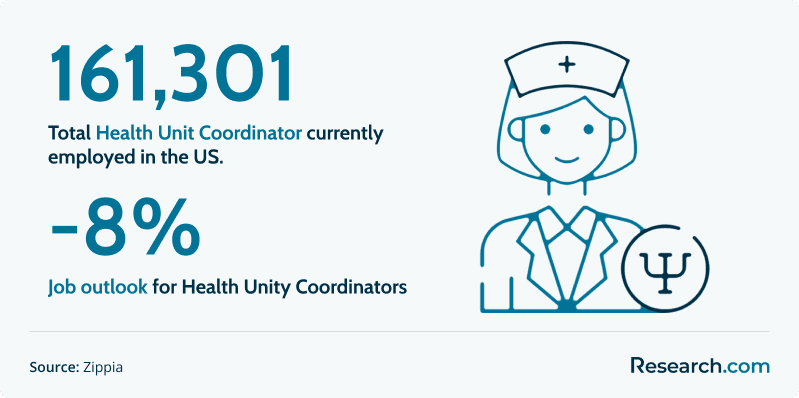
According to Zippia, more than 161,301 health unit coordinators are employed in the United States. Their work is often less visible than clinical care, but it directly affects how quickly information moves, how accurately records are updated, and how efficiently patients move through admissions, transfers, procedures, and discharge.
For people comparing non-clinical healthcare careers, the HUC role can be a practical starting point. Those who want to move later into supervision, operations, or management may also consider a degree in healthcare administration to build broader knowledge in healthcare systems, staffing, compliance, and organizational leadership.
Common health unit coordinator responsibilities
Daily duties vary by employer, but most HUCs serve as the communication hub for a care unit. In a hospital, that can mean tracking physician orders, contacting departments, updating records, and helping nurses manage patient flow. In outpatient or long-term care settings, the work may focus more heavily on scheduling, documentation, and front-office coordination.
- Scheduling tests, treatments, appointments, procedures, and follow-up visits
- Answering calls, routing requests, and relaying time-sensitive information to clinical staff
- Updating electronic health records and maintaining accurate patient documentation
- Processing admissions, transfers, discharges, and related paperwork
- Coordinating with lab, radiology, pharmacy, transport, and other departments
- Managing charts, forms, unit records, and physician orders
- Ordering supplies and monitoring basic inventory for the unit
- Following HIPAA requirements, facility procedures, and documentation standards
| Part of the role | What it means in practice | Why it matters |
| Communication | Connecting nurses, physicians, departments, patients, and families | Reduces delays and helps the care team act on accurate information |
| Documentation | Entering, organizing, and checking patient records and orders | Supports compliance, billing, continuity of care, and patient safety |
| Scheduling and coordination | Arranging tests, procedures, transfers, and appointments | Keeps the unit moving and helps patients receive timely services |
| Administrative support | Handling phones, forms, supplies, messages, and unit clerical tasks | Allows clinical staff to focus more time on patient care |
The image below summarizes employment and job outlook information for HUCs. While demand for HUC-specific roles may be declining, the broader healthcare workforce continues to need administrative and clinical support professionals, especially as care teams manage complex patient volumes and digital records.
How can I become a health unit coordinator for 2027?
The most direct route to becoming a health unit coordinator is to complete high school or a GED, build healthcare office skills, complete targeted HUC training, and consider certification. A college degree is not always required for entry-level HUC jobs, but additional education can improve competitiveness and open doors to supervisory roles later.
- Finish high school or earn a GED. Courses in English, biology, keyboarding, computer applications, and health sciences can help prepare you for medical terminology and documentation work.
- Learn the basics of healthcare administration. Start with medical terminology, HIPAA, electronic health records, patient scheduling, unit communication, and physician order processing.
- Complete a health unit coordinator training program. Community colleges, technical schools, hospitals, and online providers may offer focused HUC training. Many programs can be completed in less than a year.
- Gain exposure to healthcare settings. Volunteering, working as a receptionist, serving as a medical office assistant, or taking a patient access role can help you become comfortable with healthcare pace, language, and workflow.
- Consider the Certified Health Unit Coordinator credential. The CHUC credential from the National Association of Health Unit Coordinators can show employers that you have formal knowledge of the field.
- Plan your next move early. If your goal is healthcare leadership, you may later explore options such as an online MBA in healthcare administration. That level of education is not needed to start as an HUC, but it may support longer-term management goals.
| Path | Best fit | Main trade-off |
| Short HUC training program | Students who want the quickest entry into the field | May limit advancement unless paired with experience or later education |
| Associate degree | People who want stronger healthcare administration or nursing-related preparation | Takes longer and costs more than a certificate program |
| Bachelor’s degree | Those aiming for leadership, operations, or broader healthcare careers | Often unnecessary for entry-level HUC roles |
| On-the-job experience plus certification | Current healthcare support workers moving into unit coordination | Requires an employer willing to train or promote from within |
Which skills matter most for health unit coordinators?
Health unit coordinators need more than clerical ability. The job requires fast, accurate work in an environment where poor communication can create delays for patients and stress for clinical staff. According to Zippia, the skills most often found on unit coordinator resumes include patient interaction, customer service, medical terminology, CPR certification, patient flow management, physician orders, and data entry.
- Patient interaction: communicating respectfully with patients and families while gathering or relaying information.
- Customer service: helping people navigate a stressful healthcare setting with patience and professionalism.
- Medical terminology: understanding common abbreviations, procedures, departments, and clinical language.
- CPR certification: having basic emergency-response training, when required or preferred by an employer.
- Patient flow management: coordinating admissions, discharges, transfers, and procedures so the unit remains organized.
- Physician order processing: handling provider instructions accurately and routing them to the right team or system.
- Data entry: updating records carefully, correcting errors, and maintaining complete documentation.
Soft skills are equally important. Strong HUCs are calm under pressure, comfortable with interruptions, precise with details, and able to communicate with people who have different priorities. Familiarity with electronic health records, hospital phone systems, scheduling tools, and privacy rules can also make a candidate more job-ready.
| Skill area | Why employers value it | How to build it |
| Medical terminology | Helps you understand orders, charts, and department requests | Take a medical terminology course before applying |
| Electronic health records | Most documentation and coordination now happen digitally | Practice with EHR training modules or healthcare office coursework |
| Communication | HUCs often relay information between busy clinical teams | Develop phone etiquette, active listening, and message-taking habits |
| Accuracy | Documentation mistakes can create workflow and compliance problems | Use checklists and proofread entries before submission |
| Stress management | Hospital units can be fast-paced and unpredictable | Build prioritization routines and ask how units escalate urgent issues |
The chart below shows common skills listed on health unit coordinator resumes and the share of resumes that include each one. Use it as a guide for strengthening your resume, not as a guarantee that every employer will require the same mix of skills.
Do health unit coordinators need a license or certification?
Health unit coordinators generally do not need a state license in the way nurses or other regulated clinical professionals do. However, certification can improve your credibility, especially if you are new to healthcare or competing for hospital-based roles.
The main credential for this occupation is the Certified Health Unit Coordinator, or CHUC, offered by the National Association of Health Unit Coordinators.
- Credential: Certified Health Unit Coordinator
- Issuing organization: National Association of Health Unit Coordinators
- Eligibility: candidates should have a high school diploma or equivalent and health unit coordinator training or experience
- Exam format: 120 multiple-choice questions
- Exam time: 2.5 hours
- Fee: $205 for non-members, with NAHUC members eligible for a $55 refund after taking the exam
- Renewal: certification is valid for three years
- Recertification: candidates must either pass the current exam or complete 36 hours of continuing education
Certification is most useful when it matches employer expectations in your area. Before paying for an exam or course, search local job postings and ask hospitals or clinics whether CHUC is preferred, required, or simply helpful.
What education do health unit coordinators usually need?
The minimum education for many HUC jobs is a high school diploma or equivalent. Still, many workers in related unit coordinator roles have completed college coursework or degrees. Zippia reports that 45.6% of Unit Coordinators hold a bachelor's degree and 24.8% hold an associate degree.
Common areas of study include nursing at 25% and business at 7%. Students sometimes ask whether business administration is a good major for this path. It can be useful if your goal is office management, operations, scheduling, or healthcare supervision. However, a healthcare administration program may be more directly aligned with medical systems, compliance, patient records, and healthcare finance.
| Education option | When it makes sense | What to watch for |
| High school diploma or GED plus training | You want the fastest and lowest-cost entry point | Some hospital employers may prefer prior healthcare experience |
| Certificate or diploma program | You need focused preparation in medical terminology, EHRs, and unit procedures | Confirm that the curriculum prepares you for the kind of jobs posted locally |
| Associate degree | You want broader preparation and may later move into nursing, medical office, or administrative roles | Costs more and takes longer than short-term training |
| Bachelor’s degree | You are aiming beyond entry-level HUC work into leadership or administration | May not improve entry-level pay enough to justify the cost by itself |
The chart below shows degree patterns among Unit Coordinators. Use the data to understand common backgrounds, but remember that employer requirements vary by facility, department, and region.
How long does it take to become a health unit coordinator?
Many people can prepare for entry-level HUC roles in 6 months to 1 year if they choose a focused training program. These programs commonly cover medical terminology, administrative procedures, electronic health records, hospital communication, patient flow, and documentation practices.
Some programs include internships, practicums, or simulated unit desk experience. That kind of hands-on exposure can be valuable because the job involves constant interruptions, fast prioritization, and accurate communication with multiple departments.
An associate degree in healthcare administration or a related field typically takes about two years to complete. A bachelor’s degree takes longer and is not usually required for HUC entry, but it may help later if you plan to move into management, healthcare operations, or nursing-related career paths.
| Goal | Typical time frame stated | Best use case |
| Basic job readiness | 6 months to 1 year | Preparing for entry-level HUC openings through a focused program |
| Associate degree preparation | About two years | Building a stronger foundation for healthcare office, nursing, or administrative progression |
| Certification preparation | Varies by training and experience | Demonstrating professional knowledge through CHUC after meeting eligibility expectations |
How much does health unit coordinator training cost?
The cost to prepare for a health unit coordinator career depends heavily on whether you choose a short training course, an associate degree, or a bachelor’s degree. The original cost estimates for becoming an HUC range from $21,686 to $41,918 when tuition, fees, books, and accommodation are included.
For an associate degree in Hospital and Health Care Facilities Administration/Management, average annual tuition is approximately $8,686 for in-state students and $23,563 for out-of-state students. For an associate degree in Registered Nursing, average annual tuition is $9,235 for in-state students and $26,401 for out-of-state students. For a bachelor’s degree in Business Administration and Management, average annual tuition is $9,432 for in-state students and $26,918 for out-of-state students.
Books, supplies, housing, and other living costs can add approximately $13,000 to $15,000 per year. As a result, annual costs may range from around $21,686 for an in-state associate-level option to more than $41,918 for an out-of-state bachelor’s-level option.
| Program area | Average annual in-state tuition stated | Average annual out-of-state tuition stated | How it may relate to HUC work |
| Hospital and Health Care Facilities Administration/Management | $8,686 | $23,563 | Most directly connected to healthcare operations and administration |
| Registered Nursing | $9,235 | $26,401 | Useful if you plan to move from HUC work into clinical nursing |
| Business Administration and Management | $9,432 | $26,918 | Helpful for office management, supervision, and administrative advancement |
Before enrolling, compare the full cost of attendance, not only tuition. Also ask whether the program includes certification preparation, EHR training, job placement support, transfer credits, and clinical or administrative practicum opportunities.
The chart below compares average undergraduate tuition for degree areas that may connect to health unit coordinator work: Hospital and Health Care Facilities Administration/Management, Registered Nursing/Registered Nurse, and Business Administration and Management.
Which continuing education options can improve career prospects?
Continuing education is useful when it fills a specific skills gap. For HUCs, the most relevant options usually involve electronic health records, medical billing, coding basics, HIPAA, patient access, healthcare customer service, and supervisory skills. Short courses can be especially valuable if they help you qualify for broader administrative roles without requiring a full degree.
For example, affordable online options such as the most affordable online medical billing and coding courses may help HUCs understand claims, codes, documentation requirements, and revenue-cycle language. This can be useful if you want to move from a unit desk into billing, coding support, patient accounts, or business office roles.
What trends are changing health unit coordinator jobs?
Health unit coordinator work is becoming more digital, more integrated, and more dependent on accurate data. HUCs increasingly use electronic health records, online scheduling systems, secure messaging platforms, patient portals, and remote communication tools. Telemedicine and digital intake processes can also change how appointments, test results, and follow-up instructions are coordinated.
Cross-training may help HUCs stay adaptable. For example, students comparing administrative and clinical support roles may look at the most affordable online medical assistant programs to understand how clinical support training differs from unit coordination. This does not mean every HUC needs medical assistant training, but it can help if your target employer values flexible staff who understand both front-office and basic clinical workflows.
| Trend | How it affects HUCs | How to prepare |
| Electronic health records | More documentation, order routing, and communication happen in digital systems | Build comfort with EHR navigation and data accuracy |
| Telemedicine | Scheduling, follow-ups, and communication may include virtual care workflows | Learn remote communication etiquette and digital scheduling processes |
| Patient-centered service | Patients and families expect clearer communication and faster responses | Strengthen customer service and conflict-resolution skills |
| Cross-functional staffing | Employers may prefer workers who understand several administrative functions | Add billing, coding, patient access, or medical office training when relevant |
What additional training can strengthen this career path?
Additional training should be chosen strategically. The best options are those that connect directly to your next job goal, such as patient access, EHR coordination, medical office management, billing and coding, digital health workflows, or leadership.
Some HUCs also compare medical assistant training because it adds more clinical support knowledge. An accelerated medical assistant program may be worth researching if you want a broader role that blends administrative and basic clinical tasks. However, it is not required for most health unit coordinator jobs, so check local job postings before enrolling.
Can interdisciplinary programs help health unit coordinators advance?
Interdisciplinary education can be helpful when it supports a realistic advancement plan. HUCs who understand both healthcare operations and patient wellness may communicate more effectively with multidisciplinary teams. Still, not every degree will produce a direct pay increase or promotion, so the program should match your target role.
For example, a bachelor’s degree in kinesiology online may strengthen knowledge of movement, wellness, rehabilitation, and human performance. That background can be useful in certain healthcare environments, but it is more relevant for careers connected to wellness, therapy support, exercise science, or clinical pathways than for a standard HUC position.
What challenges should health unit coordinators expect?
Health unit coordinators often work in busy environments where priorities change quickly. A normal shift may include phone calls, patient transfers, new orders, family questions, supply needs, documentation updates, and urgent messages from several departments at once. The role rewards people who can organize chaos without losing accuracy.
- Interruptions: HUCs may need to restart tasks repeatedly while still avoiding documentation mistakes.
- High-pressure communication: messages must be routed quickly and clearly, especially in hospital units.
- Emotional situations: patients and families may be anxious, frustrated, or confused.
- Technology changes: new EHR workflows, scheduling tools, and communication systems require ongoing learning.
- Role boundaries: HUCs must know what they can handle administratively and what must be escalated to licensed clinical staff.
Building broader healthcare knowledge can make the work easier. For instance, reviewing resources such as nutritionist degree requirements can help you understand how different healthcare careers are trained and regulated, even if nutrition is not your intended path.
| Common mistake | Why it can hurt you | Better approach |
| Choosing the cheapest program without checking content | Low cost does not help if the course skips EHR, medical terminology, or certification preparation | Compare curriculum, employer recognition, and student support |
| Assuming certification is always required | You may spend money unnecessarily if employers in your area do not ask for it | Review local job ads and ask hiring departments what they prefer |
| Ignoring full program cost | Books, supplies, fees, and living expenses can change the total investment | Ask for a full cost-of-attendance estimate before enrolling |
| Overlooking transfer policies | Credits may not apply later if you move into an associate or bachelor’s program | Confirm transferability in writing when possible |
| Expecting salary guarantees | Pay varies by employer, location, experience, and role scope | Compare multiple salary sources and local job postings |
Can biology coursework help a health unit coordinator?
Biology is not usually required for HUC jobs, but it can help you better understand the language and logic of patient care. A stronger science foundation may make it easier to follow clinical conversations, interpret basic terminology, and communicate with care teams.
If you are considering a future move into nursing, allied health, public health, or laboratory-related work, a low-cost accredited online biology degree may be worth exploring. If your goal is strictly health unit coordination, however, medical terminology, EHR training, and healthcare administration coursework will usually be more directly relevant.
Which certifications can support advancement?
The CHUC credential is the most targeted certification for health unit coordinators, but other credentials may help depending on your next career step. For example, billing and coding credentials may support a move into revenue cycle work, while medical office or healthcare administration certificates may support supervisory roles.
Students who want to compare shorter credentials across the healthcare field can review medical and healthcare certificate programs. The key is to choose a credential that employers actually value for the role you want next, rather than collecting certificates without a plan.
Can advanced degrees improve long-term career options?
Advanced academic credentials are not needed to work as a health unit coordinator. In fact, a graduate or doctoral degree would usually be excessive for entry-level HUC duties. Advanced education is most relevant if you want to move into healthcare administration, policy, education, clinical leadership, pharmacy, or another specialized field.
For example, affordable online PharmD degree programs may be relevant to people interested in pharmacy careers, but they are not a standard advancement requirement for HUCs. Before pursuing any advanced credential, compare cost, licensure implications, job requirements, and the actual career outcome you want.
How much do health unit coordinators make?
Reported health unit coordinator salaries vary by source, location, employer type, experience, and job duties. Zippia lists the average annual salary for a Health Unit Coordinator in the United States at approximately $43,688.
Other salary sources report different figures:
- ZipRecruiter: $41,170 per year
- Glassdoor: $46,386 per year
- Salary.com: $35,661 per year
ZipRecruiter identifies Two Rivers, WI as the top-paying city at $55,280 yearly, with Nome, AK and Cupertino, CA close behind in second and third place. These city-level figures can change as job postings and local labor markets change, so they should be used as a comparison point rather than a guaranteed outcome.
Education can affect long-term earning potential if it moves you into management. For example, Research.com’s guide to MBA healthcare administration salary notes that professionals in management positions earn around $101,000 annually, with senior-level roles exceeding $200,000. That comparison does not mean HUCs will earn MBA-level salaries; it shows how compensation can change if you later transition into healthcare management.
| Source | Reported annual pay stated | How to interpret it |
| Zippia | Approximately $43,688 | Useful as a broad national average estimate |
| ZipRecruiter | $41,170 | Based on salary information reported through the platform |
| Glassdoor | $46,386 | The highest average among the listed sources |
| Salary.com | $35,661 | A lower estimate that shows why comparing sources matters |
What career paths can health unit coordinators pursue?
Health unit coordinator work can lead in several directions. Some HUCs remain in unit coordination and build seniority. Others move toward medical office management, patient access, business office operations, nursing, or healthcare administration. The right path depends on whether you prefer administrative leadership, direct patient care, finance and billing, or department operations.
- Office Manager: manages day-to-day administrative operations in a healthcare office or facility.
- Registered Nurse: provides direct patient care, educates patients, and supports families, but requires nursing education and licensure.
- Team Leader: coordinates staff tasks and helps maintain quality and workflow.
- Staff Nurse: delivers bedside or clinical patient care in healthcare settings.
- Registered Nurse Supervisor: supervises nurses and coordinates unit-level patient care operations.
- Nursing Director: leads nursing departments, develops policies, and oversees care standards.
- Practice Manager: runs the business and administrative side of a medical practice.
- Nurse Manager: oversees nursing staff and administrative functions within a unit or department.
- Assistant Director of Nursing: supports nursing leadership, compliance, staffing, and patient-care operations.
- Business Office Manager: manages billing, finance, patient accounts, and administrative office processes.
If your goal is healthcare administration rather than nursing, graduate education may eventually be useful. Researching the most affordable master’s in healthcare administration programs can help you compare lower-cost routes into management after you have gained healthcare experience.
| Career direction | Possible next role | Likely additional preparation |
| Healthcare office operations | Office Manager, Practice Manager | Supervisory experience, scheduling systems, billing knowledge, healthcare administration coursework |
| Nursing pathway | Staff Nurse, Registered Nurse, Nurse Manager | Nursing degree, licensure, clinical training, and state-specific requirements |
| Business office pathway | Business Office Manager | Billing, coding, revenue cycle, finance, and patient accounts experience |
| Healthcare leadership | Health Services Administrator or department leader | Bachelor’s or master’s-level healthcare administration education plus experience |
Is becoming a health unit coordinator worth it?
Yes, becoming a health unit coordinator can be worth it if you want an accessible healthcare role, are comfortable with administrative work, and value a career path that can grow into office management, healthcare operations, or clinical-adjacent roles. It is especially attractive for people who want to enter healthcare without the time and cost of a clinical degree.
The financial case depends on your training route. The CHUC certification fee is about $205, and training programs may range from $3,000 to $5,000. That can be far less expensive than pursuing a full degree immediately. However, degree-based routes can cost much more once tuition, fees, books, and living expenses are included.
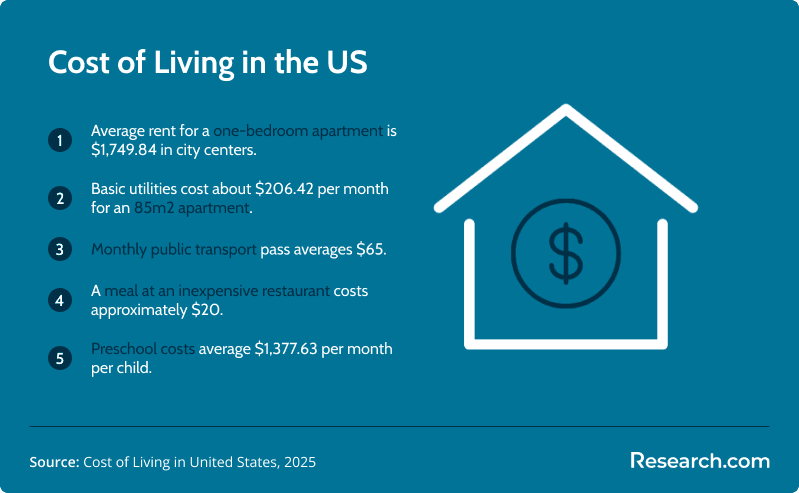
HUCs earn an average salary in the $43,000–$46,000 range based on the stated sources, while the average monthly cost of living listed is $2,730. Because cost of living varies widely by location, the role may feel financially comfortable in some areas and more limited in high-cost regions.
A PhD is not a normal requirement for this occupation. If you are curious about advanced academic pathways, Research.com’s explanation of what a PhD degree is can help clarify when doctoral study makes sense. For most HUCs, targeted training, certification, experience, and possibly a healthcare administration degree are more practical than doctoral education.
| Choose the HUC path if... | Consider another path if... |
| You want a healthcare job focused on coordination, records, communication, and scheduling | You want to provide direct clinical care as your primary responsibility |
| You need a faster and lower-cost entry point than a degree-based clinical program | You are already certain you want nursing, pharmacy, therapy, or another licensed profession |
| You are detail-oriented and can manage interruptions calmly | You dislike phones, documentation, multitasking, or high-pressure environments |
| You want experience that may lead to healthcare office or administrative roles | You expect high earnings immediately without additional education or advancement |
The image below provides cost-of-living context for the United States. Use it alongside local salary postings, housing costs, commute costs, and benefits when deciding whether this career makes sense financially.
What HUC graduates say about the career
- Working as a Health Unit Coordinator changed how I understood healthcare. I learned to stay organized in a busy unit, communicate with different teams, and see how administrative work supports patient care every day. Elena
- The HUC role helped me move into healthcare without starting in a clinical position. The constant communication with patients, families, and staff improved my confidence and gave me a clear view of how care teams operate. Marcus
- Completing my Health Unit Coordinator training online gave me the flexibility I needed. The coursework helped me understand medical terminology, records, and unit procedures before I started working in a healthcare setting. Samantha
Questions to ask before choosing a health unit coordinator program
- Does the program teach medical terminology, electronic health records, HIPAA, patient flow, and physician order processing?
- Does it prepare students for the CHUC exam or another recognized credential?
- Are there internships, practicums, simulations, or employer partnerships?
- What is the total cost, including fees, books, technology, transportation, and exam fees?
- Do local hospitals and clinics recognize or prefer this program?
- Can credits transfer into an associate or bachelor’s degree later?
- What job placement support, resume help, or interview preparation is included?
- Are online students given enough practice with realistic healthcare documentation and communication scenarios?
Key Insights
- Health unit coordinator is a practical non-clinical healthcare role for people who are organized, accurate, and comfortable coordinating communication in busy medical settings.
- The usual entry point is a high school diploma or GED plus focused training, though many Unit Coordinators have associate or bachelor’s degrees.
- Certification is not usually a state licensing requirement, but the CHUC credential can help demonstrate professional readiness; the exam has 120 multiple-choice questions, lasts 2.5 hours, and costs $205 for non-members.
- Reported pay varies by source: ZipRecruiter lists $41,170, Glassdoor lists $46,386, Salary.com lists $35,661, and Zippia reports approximately $43,688.
- The role can be worth it when training costs are kept reasonable, but students should avoid expensive degree paths unless they support a broader goal such as healthcare administration, nursing, or management.
- Career growth is possible, but it usually requires additional experience, leadership responsibility, certification, or education in areas such as healthcare administration, billing, coding, nursing, or practice management.
- Common mistakes include choosing a program without checking employer recognition, ignoring total cost, assuming salaries are guaranteed, and pursuing advanced degrees before confirming they match the intended career path.
References:
- College Tuition Compare. Business Administration and Management tuition data.
- College Tuition Compare. Hospital and Health Care Facilities Administration/Management tuition data.
- College Tuition Compare. Registered Nursing/Registered Nurse tuition data.
- EducationData.org. Average cost of college.
- EducationData.org. Private and public college tuition comparison.
- Glassdoor. Health Unit Coordinator salary information.
- Indeed. Health Unit Coordinator salaries.
- MedCerts. CHUC exam preparation overview.
- NAHUC. Health Unit Coordinator certification details.
- Numbeo. Cost of living in the United States.
- Salary.com. Health Unit Coordinator salary estimate.
- ZipRecruiter. Health Unit Coordinator salary data.
- Zippia. Assistant Director of Nursing career information.
- Zippia. Business Office Manager career information.
- Zippia. Unit Coordinator demographics.
- Zippia. Nurse Manager career information.
- Zippia. Nursing Director career information.
- Zippia. Office Manager career information.
- Zippia. Practice Manager career information.
- Zippia. Registered Nurse career information.
- Zippia. Registered Nurse Supervisor career information.
- Zippia. Staff Nurse career information.
- Zippia. Team Leader career information.
- Zippia. Unit Coordinator salary information.
Other Things You Should Know About Health Unit Coordinator
A health unit coordinator needs strong typing, electronic health record, and medical terminology skills to manage charts, orders, and unit communication accurately. Many employers expect familiarity with Microsoft Office, basic transcription, and HIPAA-compliant record handling before hiring, even when no state license is required.
To start a career as a health unit coordinator in 2027, obtain a high school diploma or GED. Enroll in a certification program, typically offered by community colleges. These programs include courses in medical terminology, healthcare systems, and basic administrative skills, providing the foundational knowledge needed for the role.
Certifications such as the National Association of Health Unit Coordinators (NAHUC) certification can enhance a health unit coordinator's career prospects in 2027. This credential demonstrates proficiency and can lead to better job opportunities and potential salary increases.
To become a health unit coordinator in 2027, you need a high school diploma or GED. Some employers may prefer candidates with a postsecondary certificate in health unit coordination, which can typically be completed in six months to a year.