2027 Chemistry Careers: Guide to Career Paths, Options & Salary

Co-Founder and Chief Data Scientist
If you are wondering whether chemistry is a smart major or career move, the real question is not just “Can I get a chemistry job?” It is “Which chemistry path gives me the best return for my budget, time, and goals?” Chemistry can lead to laboratory work, pharmaceuticals, materials, environmental testing, manufacturing, teaching, healthcare innovation, and more — but the best path depends on how much schooling you want, whether you enjoy hands-on lab work, and what kind of role you want after graduation.
This 2026 guide breaks down chemistry careers in practical terms: what jobs are realistic at each degree level, what skills employers look for, how salary and demand vary by role, how to choose the right program, and when certifications or graduate study are worth the investment. It also explains online learning, sustainability, healthcare overlap, alternative careers, and the most common mistakes students make before committing to a chemistry degree.
Chemistry is also a foundation field for the wider economy. The American Chemistry Council reports that 96% of most manufactured goods directly involving chemical processes, which helps explain why chemistry graduates can work far beyond traditional research labs. Employers hire chemistry-trained professionals for quality control, process improvement, compliance, product development, technical sales, regulatory work, and scientific support across many industries.
Quick answer: Is chemistry a good career path?
Yes, chemistry can be a strong career path if you like solving problems through experiments, data, and careful observation. It is especially useful for students who want options in pharmaceuticals, environmental science, manufacturing, materials, biotechnology, or research. A bachelor’s degree often opens the door to technician, lab, quality control, and entry-level chemist roles, while advanced research, faculty positions, and some specialized jobs usually require a master’s degree or Ph.D.
It is a weaker fit if you want a short training path, dislike math-heavy coursework, or want a job with very little documentation, compliance, or lab precision. Chemistry can be rewarding, but it is not a “quick credential” field.
| Good fit for chemistry | Better to consider a different path if you... |
| Enjoy lab work, structured problem-solving, and scientific analysis | Want little math, very little experimentation, or a short nontechnical program |
| Are interested in pharmaceuticals, energy, materials, food, environmental work, or biotechnology | Expect a chemistry degree alone to guarantee a specific salary or title |
| Are willing to gain experience through internships, research, or graduate education | Prefer work with minimal reporting, regulation, or procedural detail |
What chemistry careers really involve
Chemists study matter, reactions, and the behavior of substances at the molecular and atomic level. In practice, that can mean testing samples, identifying unknown materials, improving formulas, checking product safety, supporting manufacturing, or helping create new technologies. Chemistry is used in drug development, food and beverage testing, cosmetics, coatings, batteries, polymers, environmental monitoring, and industrial processing.
The work is rarely isolated. Even when chemists spend time in the lab, they usually collaborate with engineers, biologists, physicians, regulatory staff, data analysts, manufacturing teams, and business leaders. Communication matters as much as technical accuracy because chemistry decisions often affect safety, product quality, and compliance.
The occupational outlook for chemists and materials scientists is projected to grow 6% through 2033, faster than the average for all occupations. That outlook reflects continued demand in research and development, pharmaceuticals, biotechnology, energy, environmental compliance, and materials innovation. Still, the field is not uniform: some roles are more competitive, and some manufacturing functions may shift as companies outsource research or automate routine tasks.
Research on chemistry major choice also suggests that confidence in handling the actual work matters. The study “Trends and perceptions of choosing chemistry as a major and a career,” published in Chemistry Education Research and Practice, found that “task-oriented self-efficacy was the factor which contributed the most to chemistry career choice…” In plain language, students who believe they can handle lab work, problem sets, and scientific writing are more likely to persist in the field.
Access and representation also remain important. The National Center for Science and Engineering Statistics reported in 2025 that women continue to outpace men in chemistry degree completion, while underrepresented minorities remain interested at the secondary level but still face a gap in doctoral participation.
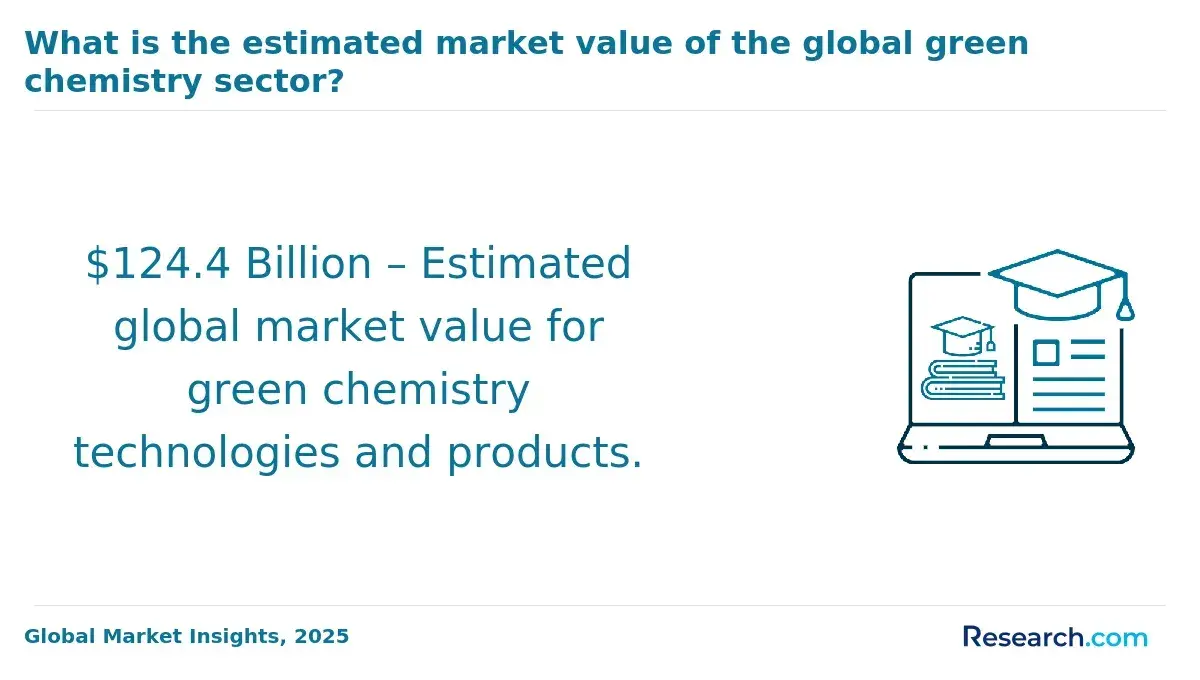
Chemistry career outlook and salary expectations
Chemistry offers stable long-term potential, but the numbers vary widely by role, education, industry, and region. A chemistry degree does not produce one fixed salary range. It can lead to entry-level technical work, mid-career scientific roles, or advanced research positions, each with different pay and requirements.
According to ZipRecruiter in 2026, chemists earned about $112,019 per year on average, while materials scientists earned an average of $124,196. Those figures are market snapshots, not promises, and they should not be confused with starting pay.
| Role | Salary | Demand |
| Chemist | $80,680 | 5% |
| Material Scientist | $99,460 | 5% |
| Pharmacist | $81,250 | 4.98% |
| Researcher in Chemistry | $99,720 | 1.58% |
| Chemists in Engineering, Architecture, and Related Services | $67,050 | 0.66% |
| Chemists in Manufacturing | $91,480 | 2.32% |
| Chemists in Government and Federal Institutes | $120,510 | 0.27% |
What affects chemistry pay the most?
- Education level. A bachelor’s degree can get you started, but graduate education often opens higher-responsibility roles.
- Industry. Pharmaceutical, government, energy, and research-heavy employers often compensate differently from education or routine testing environments.
- Location. Pay can change sharply by metro area, state, and local cost of living.
- Experience. Average salaries usually include mid-career workers, so entry-level offers are often lower.
- Skill set. Instrumentation, data analysis, regulatory documentation, and quality systems can make a candidate more competitive.
Skills employers expect from chemists
Employers rarely hire based on chemistry coursework alone. They want people who can follow procedures, document results, troubleshoot problems, and explain findings clearly. Strong chemistry candidates combine scientific knowledge with precision, safety awareness, and teamwork.
Technical skills that matter most
- Chemistry fundamentals. You need to understand composition, reactions, substance behavior, hazards, production methods, and safe disposal.
- Mathematics. Algebra, calculus, statistics, and basic quantitative reasoning support measurement and analysis.
- Physics. Physical science helps with thermodynamics, energy transfer, spectroscopy, and materials behavior.
- Biology. Biology is especially useful in biochemistry, toxicology, environmental work, and healthcare-related research.
- Production and process knowledge. Many jobs require understanding quality control, efficiency, cost, and manufacturing constraints.
Professional skills that improve hiring odds
- Critical thinking. Chemists must judge whether data is reliable or needs another test.
- Communication. Lab findings often influence safety, compliance, product design, and business decisions.
- Scientific writing. Reports, lab notebooks, standard procedures, and research documents must be precise. If you need help with structured research writing, see guidance on writing research methodologies.
- Adaptability. New instruments, software, regulations, and testing methods appear often.
- Systems thinking. Chemistry work usually sits inside larger processes, whether in manufacturing, clinical testing, or environmental monitoring.
Teaching approaches are also evolving. A Journal of Chemical Education study, “Teaching through Research: Alignment of Core Chemistry Competencies and Skills within a Multidisciplinary Research Framework,” argues that open-ended research experiences help connect formal chemistry training with real scientific discovery. The researchers noted that this model lets undergraduates contribute to new knowledge earlier in their education.
How to start a career in chemistry
For most students, the most direct entry point is a bachelor’s degree in chemistry. Some support roles can start with an associate degree, while research scientist, faculty, and advanced technical leadership positions usually require graduate study.
You do not have to major in chemistry alone. Related majors such as biological science, physical science, materials science, or engineering can also lead to chemistry-adjacent careers. Common coursework includes organic, inorganic, analytical, and physical chemistry, along with biology, physics, mathematics, and sometimes computer science. Students interested in environmental careers should look for coursework in toxicology, water quality, sustainability, and environmental studies.
Typical chemistry career timeline
| Stage | Typical education or experience | Goal at this stage |
| Exploration | High school chemistry, biology, physics, algebra, calculus preparation, science clubs, job shadowing | See whether lab work and scientific problem-solving actually fit your interests |
| Entry credential | Associate degree or bachelor’s degree with lab training | Qualify for technician, assistant, quality control, or junior chemistry roles |
| Career launch | Internships, undergraduate research, lab assistant work, instrumentation exposure | Show practical ability beyond grades alone |
| Specialization | Master’s degree, graduate certificate, employer training, or focused industry experience | Move toward advanced technical, supervisory, or applied research work |
| Leadership | Ph.D., postdoctoral work, publications, patents, management experience, or specialized credentials | Lead research, teach, manage teams, or direct innovation strategy |
What can you do with an associate degree in chemistry?
An associate degree can help you enter the lab workforce, but it usually leads to support roles rather than fully independent chemist positions. It is also a practical transfer route if you want to save money before moving into a bachelor’s program.
| Role | What you may do | Median Salary |
| Laboratory Assistant | Prepare samples, maintain records, organize supplies, clean equipment, and support scientists during testing. | $35,649 |
| Research Associate | Assist with qualitative and quantitative analysis, compliance records, quality control, and lab maintenance. | $57,456 |
| Laboratory Technician | Support experiments, monitor procedures, collect data, and help prepare reports. | $47,503 |
What can you do with a bachelor’s degree in chemistry?
A bachelor’s degree gives you broader access to chemistry jobs, especially if you graduate with internship experience, research exposure, and solid documentation habits. It is usually the minimum degree for independent entry-level chemistry work.
| Role | What you may do | Median Salary |
| Chemist | Run experiments, test substances, analyze samples, improve products, and specialize in areas such as organic, inorganic, analytical, or biochemistry. | $60,604 |
| Materials Scientist | Study natural and synthetic materials to improve performance or create new products. | $90,431 |
| Pharmacologist | Study how medicines and compounds affect people or animals, including safety and regulatory considerations. | $82,434 |
Can you get a chemistry job with a certificate?
A short certificate below the associate level is usually not enough for most chemistry positions because employers expect formal science and lab training. However, graduate certificate programs can be useful for professionals who already hold a bachelor’s degree and want focused training in analytical methods, environmental chemistry, pharmaceutical science, or regulatory affairs.
How to advance in chemistry
Advancement usually comes from combining experience with additional education, stronger technical skills, leadership growth, and a track record of meaningful work. Many chemistry careers begin with a bachelor’s degree, but higher-level research, management, and academic positions often call for a master’s degree, a Ph.D., or substantial industry experience.
What can you do with a master’s in chemistry?
A master’s degree can make sense if you want deeper specialization without committing to the length of a doctorate. It can support roles in industrial research, quality systems, production, teaching, and applied lab leadership.
| Role | What you may do | Median Salary |
| Production Chemist | Improve manufacturing processes, support quality control, and work with engineers in factories or chemical plants. | $46,000 |
| Research Chemist | Study chemical compounds and apply findings to products, treatments, electronics, cosmetics, food, or industrial processes. | $70,587 |
| Chemistry Instructor | Teach courses, lead labs, assess students, and maintain academic records. | $49,905 |
What can you do with a Ph.D. in chemistry?
A Ph.D. is often the preferred credential for independent research, university teaching, and highly specialized scientific leadership. It can be a powerful path, but it is also a major time and financial commitment, so students should weigh funding, opportunity cost, and career goals carefully.
| Role | What you may do | Median Salary |
| Chemistry Professor | Teach advanced courses, lead research, publish findings, supervise students, and contribute to service work. | $96,915 |
| Chemical Engineers | Design and optimize systems used in industrial, environmental, biological, and chemical processes. | $78,951 |
| Environment Scientists and Specialists | Collect air, water, food, and soil data, identify environmental risks, and develop ways to reduce harm. This path can connect closely with sustainability careers. | $62,563 |
Which certification is best for chemistry?
The right certification depends on the role you want. A clinical laboratory professional, chemical engineer, pharmaceutical sales representative, and regulatory specialist will not need the same credential. Certifications can strengthen your profile, but they do not replace the degree requirements for most chemistry jobs.
- Specialist in Chemistry, SC (ASCP). This American Society for Clinical Pathology credential is for professionals who want to demonstrate advanced clinical laboratory chemistry knowledge.
- Certified Chemical Engineer (CCE). This credential recognizes chemical engineering professionals who meet education or experience expectations and maintain professional development.
- Pharmaceutical Sales. This exam focuses on territory planning, product knowledge, pre-call preparation, and post-call review.
How chemistry supports sustainability and environmental protection
Chemistry is central to sustainability because many environmental problems are really problems of materials, waste, toxicity, energy use, and pollution. Chemists help design safer substances, measure contaminants, improve batteries, support renewable energy, and reduce the environmental impact of industrial processes.
- Green chemistry. This approach aims to reduce hazardous substances, waste, and energy use in product and process design.
- Pollution monitoring and control. Chemists develop tests and treatment methods that detect contaminants, manage emissions, and support cleanup work.
- Renewable energy materials. Chemistry contributes to batteries, fuel cells, solar materials, and catalysts.
- Safer, more durable materials. Chemists work on coatings, packaging, and plastics that can reduce long-term waste.
How to choose the right chemistry degree program
Your program choice should match your career goal, not just your admission chances. The right chemistry program depends on whether you want lab-heavy training, graduate school preparation, flexibility for work or family, or a direct route into industry. If flexibility matters, compare campus options with an accredited online bachelors degree, but always confirm how laboratory work is completed.
| What to check | Why it matters | Question to ask |
| Accreditation | It affects transferability, graduate school acceptance, financial aid, and employer confidence. | Is the institution accredited, and does the chemistry program match the expectations of my target employers or graduate schools? |
| Laboratory access | Chemistry is hands-on, so limited lab training can weaken job readiness. | How many lab courses are required, and what equipment or methods will I use? |
| Curriculum depth | Course structure shapes which specialties you can pursue later. | Does this program support my interest in pharmaceuticals, materials, environmental science, teaching, or research? |
| Internships and research | Practical experience often matters as much as coursework. | Do students complete internships, research projects, co-ops, or capstones? |
| Total cost | Tuition is only part of the real expense. | What will I pay after grants, scholarships, transfer credit, fees, supplies, and lost work time? |
| Career outcomes | Graduate outcomes show how well the program connects students to real opportunities. | Where do recent graduates work or continue their education? |
Can additional certifications help a chemist grow?
Yes, if the credential lines up with a specific career target. Helpful areas may include data analysis, quality systems, regulatory affairs, environmental health and safety, project management, clinical research, or technical sales. The most valuable certification is the one employers in your target field actually recognize.
It helps to think strategically. For example, someone interested in healthcare administration, records, or billing may compare the cheapest medical coding certification, but that kind of credential is more relevant to healthcare operations than to chemistry itself. Choose credentials that support the job you want next.
Is advanced online education worth it for chemists?
Advanced online study can be worthwhile for chemists who already have lab experience and want flexibility without stepping away from work. It is most useful when the school is credible, the curriculum is career-relevant, faculty support is strong, and the program provides a realistic plan for labs, projects, or supervised practice.
Online chemistry programs are not interchangeable. Some are built for working professionals who need deeper knowledge in leadership, regulation, or pharmaceutical topics. Others may not provide enough hands-on training for students who still need a strong lab foundation. Chemists interested in drug development or pharmacy-related work may also explore options such as doctor of pharmacy online programs, but they should verify admission requirements, professional outcomes, and licensure implications first.
Can non-chemistry credentials expand your options?
They can, especially when they help you move from bench science into a related function such as healthcare support, regulatory work, operations, project coordination, technical writing, or sales. The best non-chemistry credential is one that builds on your science background instead of distracting from it.
For example, a fast medical assistant certification may help someone pivot into healthcare support, but it is a separate career decision rather than a direct chemistry upgrade. Before enrolling in any add-on credential, ask whether employers in your target field request it and whether it leads to the role you actually want.
How chemistry contributes to healthcare innovation
Chemistry plays a major role in healthcare through drug discovery, diagnostics, biomaterials, toxicology, formulation science, imaging agents, and laboratory testing. Chemists help identify compounds that may become treatments, improve how medicines are delivered, test safety, and create materials that interact with the body in useful ways.
This work is highly interdisciplinary. Chemists may collaborate with pharmacists, physicians, biomedical engineers, clinical researchers, regulatory teams, and data scientists. If you want to move closer to patient-facing or clinical work, you may want to compare whether a medical degree online or another healthcare pathway is a better fit, while carefully checking licensure rules, clinical requirements, and accreditation.
What advanced education paths can strengthen a chemistry career?
Advanced education can help you move into research leadership, teaching, specialized lab roles, regulatory strategy, pharmaceutical development, or management. The best option depends on whether you want deeper chemistry knowledge, a bridge into healthcare, a role in science business operations, or a higher-level technical specialty.
| Pathway | Best for | Main trade-off |
| Master’s in chemistry | People who want deeper technical training and better advancement options | Shorter than a Ph.D. but usually not enough for independent academic research |
| Ph.D. in chemistry | Students aiming for research leadership, faculty roles, or highly specialized scientific work | Longer and more expensive in time, so it should match a clear career plan |
| Graduate certificate | Professionals who want targeted skills such as regulatory affairs or environmental chemistry | More focused than a degree and most useful when paired with experience |
| Healthcare pathway | Chemists interested in pharmacy, clinical research, or translational science | May involve separate admissions, clinical training, and licensure rules |
For chemistry graduates interested in pharmacy or drug development, flexible doctoral options such as the best PharmD programs may be worth reviewing. Just make sure the program supports your intended job and satisfies the appropriate professional requirements.
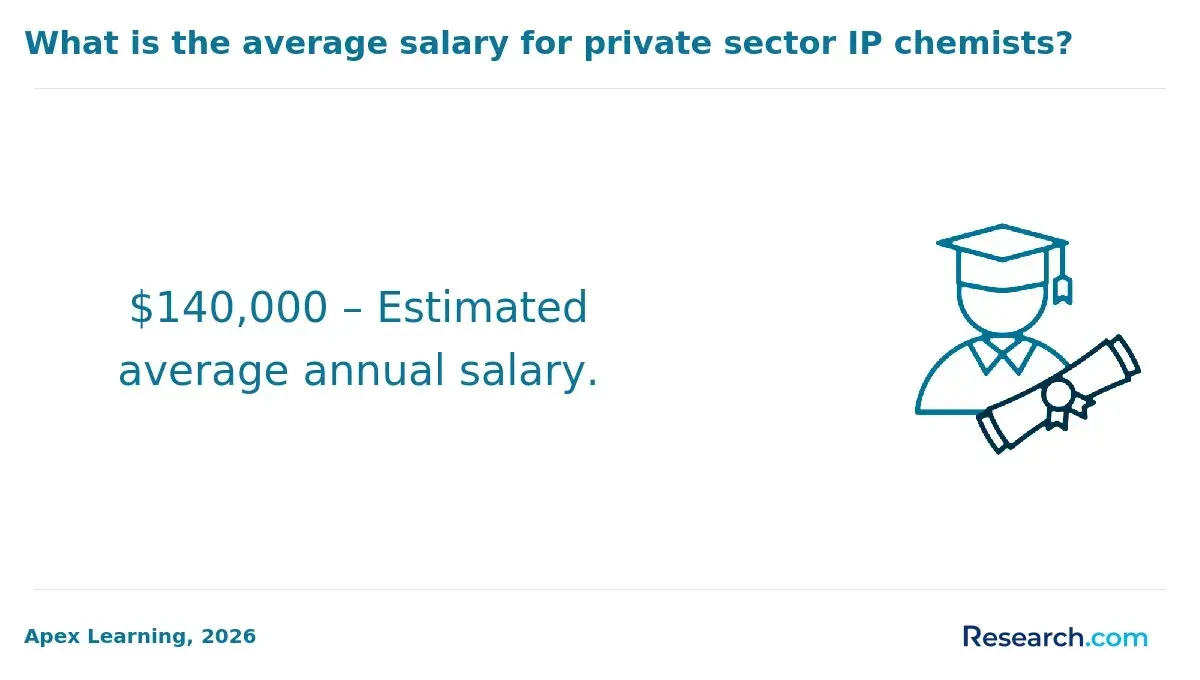
Alternative career options for chemistry graduates
Chemistry does not lock you into one job title. Many graduates move into food science, agriculture, quality assurance, technical writing, sales, environmental consulting, intellectual property, science communication, product development, or management. The best alternative is one that uses your scientific training while fitting your preferred work style.
What else can a chemist do?
- Agricultural and food science. Chemistry knowledge can support soil testing, food safety, nutrient analysis, preservation, and packaging work.
- Wholesale and manufacturing sales. Technical sales roles often need people who can explain complex products to business buyers.
- Natural sciences management. Managers oversee teams, budgets, lab operations, and research or testing workflows.
- Technical writing. Chemists with strong writing skills can prepare procedures, manuals, safety materials, and scientific documentation.
Diverse career options in chemistry
Chemistry is flexible, but that flexibility only helps if you plan for it. Some graduates enter industry right away; others continue into different degree types, certifications, healthcare tracks, or specialized research. The right direction depends on whether you want bench science, fieldwork, manufacturing support, teaching, management, consulting, or business-facing technical work.
Treat chemistry as a foundation, not a single destination. As your interests change, you can move toward project management, regulatory work, product development, technical sales, policy, or entrepreneurship. Strong career exploration can help you decide which version of chemistry work fits before you spend heavily on graduate school or another credential.
Current trends shaping chemistry careers
- Automation and AI are reshaping laboratory routines. Instruments, digital notebooks, and machine learning tools can speed up analysis, but chemists still need to design experiments and judge results.
- Employers increasingly want interdisciplinary skills. Chemistry now overlaps more often with data science, engineering, biology, environmental work, and healthcare.
- Sustainability affects product and process design. Companies are under pressure to reduce waste, lower emissions, and document environmental impact.
- Graduate school needs to justify the cost. Advanced degrees can help, but students should compare tuition, funding, time, and career outcomes.
- Documentation remains essential. Quality systems, compliance records, reproducibility, and safety standards are central in many roles.
Common mistakes to avoid
| Mistake | Why it causes problems | Better move |
| Skipping accreditation checks | It can affect aid, transfer credit, graduate admission, and employer trust. | Confirm institutional accreditation and program fit before enrolling. |
| Comparing only tuition | Supplies, fees, housing, commuting, and lost income can change the true cost. | Calculate the total cost of attendance and compare aid options. |
| Assuming online chemistry is always equivalent | Some online formats may not provide enough lab exposure for certain careers. | Ask how laboratory requirements are handled and whether the format is accepted by employers or graduate schools. |
| Ignoring internships and research | Grades alone may not show job readiness. | Seek research, co-ops, internships, or lab jobs early. |
| Using salary averages as a promise | Averages may reflect experienced workers or higher-paying regions. | Research entry-level salaries in your target location and industry. |
| Collecting unrelated certificates | Credentials that do not support your target role can waste time and money. | Choose only certifications that employers ask for or clearly value. |
How can working adults balance chemistry education with family responsibilities?
Working adults and parents can pursue chemistry-related education, but they need a realistic plan. The biggest factors are schedule flexibility, lab requirements, childcare, commuting, employer support, and time to completion. Online coursework can help, but chemistry programs often still require in-person labs, residencies, or supervised practical work.
If you are balancing school and family life, ask about part-time study, predictable course sequences, tutoring, advising, leave policies, lab weekends, and whether online or hybrid labs are available. Students comparing flexible options may also find it helpful to review college programs for moms as a starting point for understanding return-to-school choices.
Key insights
- Chemistry is a broad foundation, not a single job. It can lead to work in labs, pharmaceuticals, environmental science, materials, manufacturing, food science, healthcare innovation, and technical sales.
- A bachelor’s degree is the usual entry point. Associate degrees often lead to support roles, while graduate study is more common for research leadership and academic work.
- Job growth is positive, but outcomes differ by niche. The projected 6% growth for chemists and materials scientists through 2033 does not mean every role is equally open or equally paid.
- Salary numbers are useful, but they are not guarantees. Pay depends on industry, location, degree level, and experience, and entry-level offers may be well below published averages.
- Practical experience matters a lot. Internships, undergraduate research, instrument training, and strong documentation habits can set you apart.
- Advanced education should have a clear purpose. A master’s, Ph.D., or certificate is best when it aligns with a specific role such as research, regulation, teaching, or healthcare.
- Accreditation and lab access should be checked early. A chemistry program is only as useful as its ability to prepare you for the next step you want.
References:
- American Chemical Society. Government chemistry careers. https://www.acs.org/careers/chemical-sciences/job-sectors/government.html
- BLS. Chemists and Materials Scientists: Occupational Outlook Handbook. https://www.bls.gov/ooh/life-physical-and-social-science/chemists-and-materials-scientists.htm
- BLS. Occupational employment and wage statistics for chemists. https://www.bls.gov/oes/current/oes192031.htm
- Chemistry Education Research and Practice. Trends and perceptions of choosing chemistry as a major and a career. https://doi.org/10.1039/c9rp00158a
- Journal of Chemical Education. Teaching through research and chemistry competencies. https://doi.org/10.1021/acs.jchemed.7b00294
- EnvironmentalScience.org. How to become a chemist — career guide. https://www.environmentalscience.org/career/chemist
- Miller, J., & Thompson, L. (2025). Integrating research into early-stage undergraduate curricula: New empirical findings. Journal of Higher Education Research. https://doi.org/10.1016/j.jher.2025.04.012
- National Center for Science and Engineering Statistics. Women, Minorities, and Persons with Disabilities in Science and Engineering. https://ncses.nsf.gov/wmpd/
- National Institutes of Health. Research careers in chemistry related sciences. https://www.nih.gov/careers
- National Institute of Standards and Technology. Physical science and chemistry postings. https://www.nist.gov/careers
- U.S. Bureau of Labor Statistics. Healthcare, science, and engineering careers that don’t require a 4-year degree. https://www.bls.gov/careeroutlook/2026/article/healthcare-science-and-engineering-careers.htm
- ZipRecruiter. Chemist salary. https://www.ziprecruiter.com/Salaries/Chemist-Salary
Other Things You Should Know About Chemistry Careers
In 2027, chemists should focus on developing skills in data analysis, environmental science, and biochemistry. Proficiency in laboratory techniques and familiarity with software used for chemical modeling and analysis are also crucial for staying competitive in the job market.
In 2027, certifications in fields like analytical chemistry, chemical engineering, or laboratory safety can enhance your chemistry career. These credentials demonstrate specialized knowledge and skills, potentially leading to job advancements and higher salaries by highlighting expertise to employers.
High-paying jobs in chemistry include roles such as materials scientists, pharmacologists, chemical engineers, and environmental scientists. These positions often require advanced degrees and offer competitive salaries.
To become a licensed chemist in 2027, you need a bachelor's degree in chemistry, pass the national licensure exam, and fulfill any state-specific requirements. Some states might require practical experience under a licensed chemist before granting a license.
Alternative career options for chemistry graduates include roles in agricultural and food science, technical writing, sales for scientific products, and natural sciences management. These positions utilize a chemist’s analytical and technical skills in different industries.
The job outlook for chemists is positive, with an expected growth rate of 6% through 2033. This growth is driven by demand in biotechnology, pharmaceuticals, and environmental research.
Chemists working in defense laboratories, federal research centers, and certain forensic or nuclear roles may need a background investigation, fingerprinting, and sometimes a security clearance such as Secret or Top Secret. Employers usually sponsor the clearance after a conditional job offer, and the process can take several months.