
2027 How to Become a Home Health Aide (HHA)

Co-Founder and Chief Data Scientist
Becoming a home health aide is one of the fastest ways to enter direct patient care without completing a college degree. The role matters more in 2027 because more older adults, people with disabilities, and patients recovering from illness want care at home instead of in hospitals or long-term care facilities. This guide explains what HHAs do, how training and certification work, what you can realistically earn, how the job differs from CNA work, and how to decide whether this is the right healthcare career path for you.
Key Things You Should Know About Becoming a Home Health Aide
- Most HHA jobs require completion of a state-approved training program and a competency evaluation before you can provide care independently.
- Certification, licensing, background checks, and continuing education rules are set by states and employers, so requirements are not identical nationwide.
- HHAs can use the role as an entry point into healthcare, then move toward CNA, LPN, RN, care coordination, healthcare administration, or specialized home care roles.
- The work can be physically tiring and emotionally intense, so patience, safe transfer techniques, communication, and personal boundaries are essential.
- Annual earnings commonly range from $30,000 to $35,000 for many HHAs, while entry-level salaries in 2024 range from $25,000 to $35,000 depending on location, employer, schedule, and experience.
- What does a home health aide do?
- How can you qualify for HHA jobs?
- What HHA licensing and certification rules apply in 2027?
- How much does a home health aide make in 2027?
- What are the hardest parts of HHA work?
- Which skills matter most for home health aides?
- When is specialized training worth it?
- How do salaries change in advanced healthcare roles?
- Can HHAs move into higher healthcare positions?
- How is an HHA different from a CNA?
- How can HHAs protect work-life balance and job satisfaction?
- Which trends are changing home health care careers?
- Can pharmacy education help an HHA advance?
- Can an accelerated online MHA support career growth?
- How is technology changing home health care?
- Which healthcare education pathways can expand HHA options?
- How does continuing professional development support advancement?
- How can affordable education help HHAs move up?
- Can billing and coding credentials help an HHA career?
- Can nutrition training improve HHA care?
- How should you choose an HHA training program?
- How do mentorship and networking help HHAs advance?
- Can clinical certifications, including diagnostic imaging, expand options?
- Can online programs create more career paths for HHAs?
- Can interdisciplinary education strengthen an HHA career?
- Is an advanced healthcare degree worth considering?
- Do employers respect online certifications and degrees?
- Can combined clinical and administrative training improve career potential?
Quick Answer: How Do You Become a Home Health Aide?
To become a home health aide, you usually complete a state-approved HHA training program, pass a competency exam, clear a background check, and meet any employer requirements such as CPR or first aid certification. Some employers may accept candidates without a high school diploma, but many prefer applicants who have one or an equivalent credential. If you want to work for agencies that receive Medicare or Medicaid reimbursement, formal training and competency standards are especially important.
What does a home health aide do?
A home health aide helps clients remain safe, clean, fed, mobile, and connected while living at home. HHAs are not nurses, but they are often the daily eyes and ears of a care team because they notice changes in a client’s condition before anyone else does.
- Personal care: HHAs help with bathing, dressing, grooming, toileting, oral care, and other activities of daily living. These tasks require privacy, patience, and respect because clients may feel vulnerable when receiving intimate care.
- Light household support: Many aides prepare simple meals, do laundry, change linens, clean high-use areas, and reduce hazards in the home. The goal is not general housekeeping; it is keeping the client’s environment safe and livable.
- Basic health observation: Depending on training, care plans, and state rules, HHAs may check vital signs, remind clients about medications, observe appetite or behavior changes, and report concerns to supervisors, family members, nurses, or physicians.
- Companionship and emotional support: Some clients have limited social contact. Conversation, reassurance, help with routines, and support during appointments can reduce isolation and improve quality of life.
- Mobility and safety assistance: HHAs may help clients transfer from bed to chair, use walkers or wheelchairs, prevent falls, and move around the home or to appointments safely.
| HHA task area | What it looks like in practice | Why it matters |
| Daily living support | Bathing, dressing, toileting, grooming, and meal assistance | Helps clients remain at home with dignity and routine |
| Home safety | Removing clutter, watching for fall risks, keeping supplies accessible | Reduces accidents in an environment that may not be designed for care |
| Observation | Reporting changes in mood, skin condition, mobility, appetite, or pain | Allows the care team to respond before problems worsen |
| Communication | Updating supervisors, documenting care, speaking with families | Keeps care consistent and reduces misunderstandings |
How can you qualify for HHA jobs?
HHA qualification requirements depend on the state, employer, and funding source for the care. A college degree is not usually required, although understanding different education levels and credentials can help if you plan to keep advancing in healthcare.
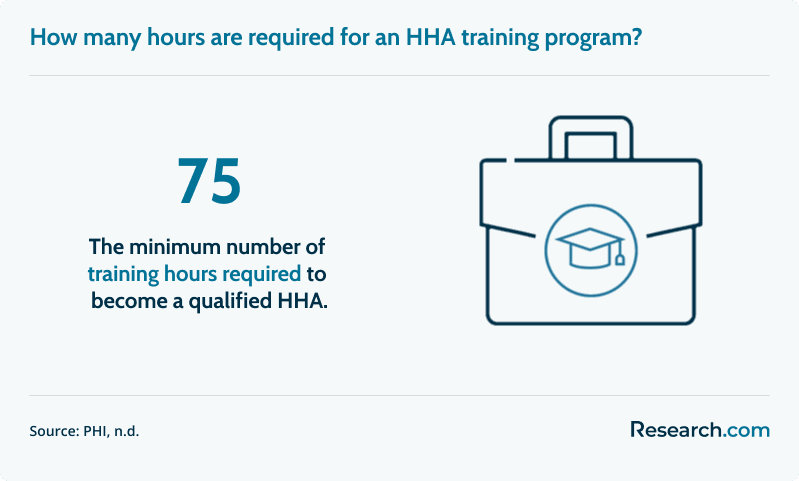
- State-approved training: Most candidates complete a formal program covering personal care, infection control, safety, nutrition basics, patient rights, ethics, communication, and emergency procedures. Training programs range from 75 to 120 hours, and some states require additional classroom or supervised clinical experience.
- Competency assessment: Many states and employers require a written and skills-based evaluation. You may need to demonstrate proper bathing assistance, transfers, hand hygiene, vital sign checks, documentation, and emergency response.
- Certification: Certification rules vary. The National Association for Home Care and Hospice is one organization associated with home care professional standards and certification resources, but candidates should always confirm what their own state and employer accept.
- CPR and first aid: These credentials may not be universal legal requirements, but many employers expect them because HHAs often work alone in private homes where quick response matters.
- Background screening: Because HHAs work with older adults, people with disabilities, and medically vulnerable clients, background checks and sometimes fingerprinting are common hiring requirements.
What HHA licensing and certification rules apply in 2027?
You do not have to complete a nursing degree to become an HHA. However, you do need to follow the training, testing, and employment rules that apply where you plan to work. State health departments, Medicaid programs, home care agencies, and Medicare-certified employers may all influence the requirements.
- Finish an approved program: Choose training that is accepted by your state or by the agency where you want to work. The curriculum should cover personal care, safety, patient rights, infection control, documentation, and emergency response.
- Pass the required exam: Most competency evaluations include knowledge questions and hands-on skill demonstrations. The skills portion matters because HHA work is practical, not just classroom-based.
- Submit required documentation: You may need proof of training completion, identification, background check results, immunization records, CPR or first aid credentials, and application fees.
- Maintain eligibility: Some states require continuing education or recertification every two to three years. Employers may also require annual in-service training, especially for safety, infection prevention, and client rights.
Use the following checklist to avoid delays when applying for HHA jobs or certification.
| Step | Purpose |
| Complete a State-Approved Training Program | Builds the foundation in personal care, client rights, basic medical language, safety, infection control, and emergency procedures. |
| Pass the Competency Exam | Confirms that you can apply HHA knowledge and perform core caregiving tasks safely. |
| Obtain CPR and First Aid Certification | Prepares you to respond to falls, choking, breathing problems, and other urgent situations when immediate help may not be nearby. |
| Undergo a Background Check | Helps protect vulnerable clients and confirms you meet employer and state screening standards. |
| Apply for Certification | Completes the formal process, which may include proof of training, exam results, identification, and an application fee. |
How much does a home health aide make in 2027?
HHA pay varies by state, city, employer type, shift, benefits, and experience. Nationally, average salaries for HHAs range from $30,000 to $35,000 per year. If you are comparing HHA work with adjacent entry-level healthcare roles, it may help to review medical assistant salary and training information, since the roles can overlap in pay but differ in setting and responsibilities.
Location can make a large difference. Areas with higher living costs, more older adults, or stronger demand for home care may pay more. State-level healthcare labor markets also vary, and resources on the best states to work as a nurse can provide useful context when comparing healthcare opportunities across regions.
HHAs may increase earnings by gaining experience, working overtime, taking weekend or overnight shifts, accepting higher-acuity cases, or completing specialty training in areas such as dementia, rehabilitation support, or hospice care. None of these options guarantees a specific wage, so candidates should compare actual local job postings before enrolling in a program.
The following chart highlights the average salaries for HHAs for 2027 based on different states:
What are the hardest parts of HHA work?
HHA work is meaningful, but it is not easy. Before entering the field, be honest about the demands of working in private homes, often with limited supervision and clients who may have complex needs.
- Emotional pressure: HHAs may care for clients who are declining, grieving, isolated, confused, or nearing end of life. Compassion fatigue can develop if aides do not have support and boundaries.
- Physical strain: Transfers, repositioning, bending, standing, and helping with mobility can lead to fatigue or injury when aides are not trained in safe body mechanics.
- Modest wages: Demand for home care is strong, but pay can still be lower than in many licensed healthcare occupations. Some aides seek additional shifts, specializations, or education to improve income.
- Irregular schedules: Home care may involve evenings, weekends, holidays, split shifts, or travel between clients. This can make childcare, school, and personal routines harder to manage.
- Boundary challenges: Clients and families may rely heavily on aides for emotional support or extra tasks outside the care plan. Training in communication and professional boundaries is important, and people with interest in casework may later explore pathways related to a social work degree.
The best employers prepare aides for these realities with supervision, clear care plans, safe lifting guidance, reporting protocols, and access to help when a home situation becomes unsafe or emotionally difficult.
What are the potential health risks and safety concerns for HHAs?
Because HHAs provide care inside private homes rather than controlled clinical facilities, they need to recognize hazards quickly and know when to ask for help. Safety is part of professional care, not an optional add-on.
- Musculoskeletal injuries: Repeated lifting, awkward transfers, and working in cramped rooms can contribute to back pain, strains, and fatigue.
- Infection exposure: Close personal care can involve contact with respiratory illnesses, wounds, bodily fluids, or contaminated surfaces.
- Stress and burnout: Caring for clients with serious illness, dementia, disability, or limited family support can become emotionally draining.
- Unsafe home conditions: Clutter, pets, poor lighting, slippery floors, smoke, broken equipment, or inaccessible bathrooms can increase the risk of injury.
- Lone-worker risk: HHAs often work without another healthcare worker present, so agencies should have check-in procedures, emergency contacts, and clear escalation rules.
Good HHA programs teach infection control, fall prevention, body mechanics, emergency response, documentation, and how to report unsafe conditions without blaming the client or family.
Which skills matter most for home health aides?
Successful HHAs combine practical caregiving skills with judgment, reliability, and emotional maturity. Employers can train many tasks, but they also look for aides who can stay calm, communicate clearly, and follow a care plan.
- Compassion with boundaries: Clients need kindness, but aides also need to stay professional, avoid overpromising, and follow the approved scope of care.
- Patience: Tasks may take longer when a client has pain, dementia, fear, limited mobility, or fatigue. Rushing can create safety and dignity problems.
- Time management: HHAs often balance care tasks, documentation, travel, and family communication. Being late or disorganized can disrupt medication routines, meals, appointments, and client trust.
- Clear communication: Aides must report changes accurately, listen to clients and families, and document what happened during each visit.
- Physical stamina and safety awareness: The role requires movement, standing, bending, and assisting clients without putting the aide or client at unnecessary risk.
When is specialized training worth it for HHAs?
Specialized training is most valuable when it matches the clients you serve or the jobs you want next. For example, dementia care training can help aides handle confusion, agitation, wandering, and communication changes more safely. Hospice or palliative care training can prepare aides for comfort-focused care and family communication at the end of life.
Additional credentials may also help HHAs move into better-paying or more specialized healthcare positions. Short healthcare programs in areas such as phlebotomy, medical assisting, or other direct-care support roles can be useful for aides who want to expand beyond home care. Research.com’s guide to quick healthcare certifications can help you compare options before committing time and money.
| Training option | Best for HHAs who want to... | Decision note |
| Dementia care | Work with older adults experiencing memory loss or behavioral changes | Look for training that includes communication, safety, wandering prevention, and family support. |
| Hospice or palliative care | Support clients with serious illness or end-of-life needs | Emotional readiness and supervision are especially important in this specialty. |
| Medical assisting | Move toward clinic-based work with administrative and clinical tasks | Compare local job postings to see whether certification is preferred or required. |
| CPR and first aid | Improve emergency readiness and employability | Often a practical first credential even when not legally required. |
How do salaries change in advanced healthcare roles?
Pay usually increases as healthcare workers gain licensure, clinical responsibility, or leadership duties, but salary varies by state, specialty, employer, and experience. For example, researching a labor and delivery nurse practitioner salary can show how advanced clinical roles differ from entry-level home care positions. HHAs considering further education should compare required schooling, licensing exams, tuition, and local demand before choosing a pathway.
Can HHAs move into higher healthcare positions?
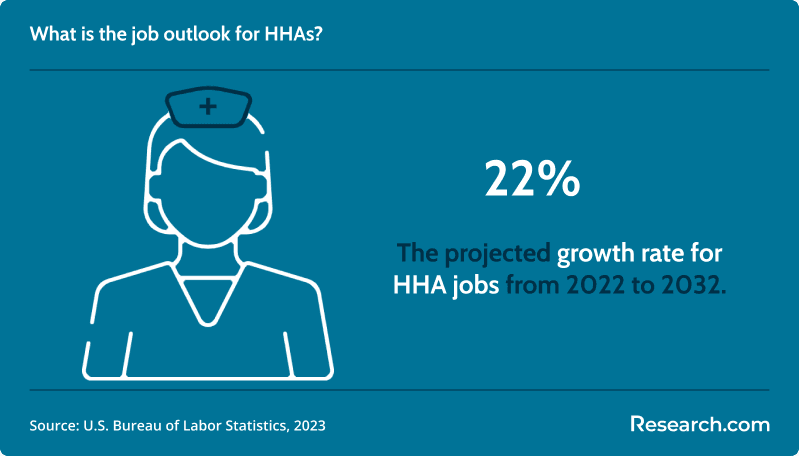
Yes. HHA work can be a practical first step into healthcare because it builds patient-care experience, communication skills, and familiarity with care plans. The number of HHA job positions is projected to grow by 21% from 2023 to 2033, according to the U.S. Bureau of Labor Statistics. That growth reflects the demand for home-based support, but advancement still requires deliberate planning.
- Certified Nursing Assistant: Becoming a CNA is a common next move for HHAs who want more clinical responsibility and access to hospitals, nursing homes, and long-term care facilities.
- Licensed Practical Nurse: HHAs who want licensed nursing responsibilities may consider LPN programs. Many LPN training programs take about one year and require passing a national licensing exam.
- Registered Nurse: RNs have broader clinical authority and typically complete an associate or bachelor’s degree in nursing before passing the NCLEX-RN. Some healthcare workers also explore transition models such as MA to RN programs.
- Specialized home care: Additional training in dementia, hospice, rehabilitation, or chronic disease support may help aides qualify for more focused assignments.
- Healthcare administration: HHAs who prefer operations, scheduling, supervision, compliance, or care coordination may eventually pursue a healthcare administration degree.
How is an HHA different from a CNA?
HHAs and CNAs both help people with daily care, but they are trained for different work settings and scopes of responsibility. HHAs usually provide support in private homes, while CNAs more often work in facilities under nursing supervision.
- Scope of duties: HHAs focus on personal care, safety, basic observation, companionship, and light household support. CNAs generally perform more clinical support tasks, including vital signs and nurse-directed care activities.
- Work settings: HHAs typically travel to clients’ homes. CNAs are commonly employed in hospitals, skilled nursing facilities, assisted living settings, and long-term care facilities.
- Training emphasis: Both roles require state-approved preparation, but CNA training usually places stronger emphasis on clinical procedures and facility-based care. CNA training may also appeal to students comparing 6-month certificate programs that pay well.
- Certification rules: CNAs must meet state nursing board certification requirements and pass a state exam with a skills demonstration. HHA requirements vary more widely by state and employer. For broader credential comparisons, review certification programs that pay well.
- Advancement: CNAs may have clearer routes into LPN or RN programs because their work is more closely tied to clinical nursing environments, but HHAs can still advance with the right training and experience.
The table below summarizes the main differences.
| HHA | CNA | |
| Scope of Duties | Personal care, bathing, dressing, light housekeeping, safety support, companionship, and basic observation | More clinical support tasks, such as taking vital signs, assisting with procedures, and working under nurses and doctors |
| Work Settings | Clients' residences | Healthcare facilities |
| Training Requirements | Completion of state-approved training programs | Completion of state-approved training programs with additional emphasis on medical knowledge and clinical skills |
| Certification and Licensing | Certification requirements vary by state | Certification through the state nursing board is required; candidates must pass a more rigorous exam that includes a clinical skills demonstration |
| Salary and Advancement | Generally lower salaries, though advancement is possible through specialization and further education | Generally higher salaries and more direct advancement routes into nursing roles |
How can HHAs protect work-life balance and job satisfaction?
Work-life balance for HHAs depends heavily on schedule design, travel time, client assignments, and employer support. Aide burnout often comes from unpredictable hours, emotional attachment, insufficient recovery time, and pressure to perform duties outside the care plan.
Practical strategies include setting availability limits before accepting shifts, documenting concerns promptly, asking for reassignment when a case becomes unsafe, using safe lifting practices, and taking breaks between emotionally difficult assignments when possible. Job satisfaction often improves when aides receive supervision, respect, training, and a clear path toward advancement.
Some HHAs eventually move toward public health, care coordination, or leadership. If cost is a major concern, comparing options such as the cheapest online MPH can help workers evaluate whether graduate education fits their goals and budget.
Which trends are changing home health care careers?
Home care is being shaped by aging demographics, demand for care outside institutions, digital documentation, remote monitoring, and closer coordination among aides, nurses, therapists, families, and agencies. These trends do not eliminate the need for hands-on aides; they make communication, documentation, and technology comfort more important.
HHAs who want to move into cross-disciplinary roles may explore education in medication safety, healthcare operations, informatics, or public health. Pharmacy-related pathways, including pharmacy school online accredited options, are far beyond basic HHA training but may interest workers planning a long-term academic route into medication-focused healthcare careers.
Can pharmacy education help an HHA advance?
Pharmacy education is not required for HHA work, and it is not the most direct next step for most aides. However, HHAs who become interested in medication management, therapeutic protocols, or interdisciplinary healthcare may eventually compare advanced pharmacy pathways. Programs such as online PharmD programs require a much larger academic investment than HHA certification, so they should be evaluated carefully against career goals, prerequisites, cost, and licensure requirements.
Can an accelerated online MHA support career growth?
HHAs who want to leave direct care for healthcare leadership may eventually consider an online master’s in healthcare administration. This path is usually better suited to people who already have undergraduate preparation or healthcare management experience, not someone looking for a first HHA job.
When an accelerated online MHA may make sense
- You want a faster leadership credential: Traditional MHA programs may take two to three years, while some accelerated formats are designed for quicker completion. A one year online masters in healthcare administration may appeal to working professionals who already meet admissions requirements.
- You are targeting administrative roles: An MHA can support movement toward healthcare operations, consulting, policy, compliance, or management, depending on background and employer needs.
- You need flexibility: Online formats can help working adults study while employed, but students should still confirm accreditation, workload, tuition, and employer recognition.
How is technology changing home health care?
Technology is changing how HHAs document visits, communicate with supervisors, receive schedules, and report changes in client condition. Electronic health records, mobile care-plan apps, telehealth coordination, and remote monitoring tools can reduce paperwork but also require aides to be accurate and comfortable with digital systems.
Technology does not replace the aide’s judgment. It supports timely reporting, better coordination, and more complete documentation. HHAs interested in the data and systems side of care may explore nursing informatics online programs as a longer-term option, especially if they later pursue nursing or healthcare technology roles.
Which healthcare education pathways can expand HHA options?
Not every HHA needs a degree, but additional education can open new routes. The best choice depends on whether you want more clinical responsibility, administrative work, public health, or a different healthcare specialty altogether.
Students comparing long academic pathways should look at prerequisites, licensing, clinical hours, and time to completion. For example, learning how long is schooling to be a pharmacist can help an HHA understand the scale of commitment required for a pharmacy career compared with shorter healthcare certificates.
How does continuing professional development support advancement?
Continuing education helps HHAs stay current, reduce safety risks, and prepare for roles beyond direct care. Useful topics include dementia support, infection control, fall prevention, documentation, communication with families, cultural competence, and care-plan compliance.
For aides interested in leadership, training in scheduling, supervision, quality assurance, and healthcare operations can be valuable. Researching pathways such as how long it takes to become a healthcare administrator can help clarify the education and experience needed for management roles.
How can affordable education help HHAs move up?
Affordable education can help HHAs expand options without taking on unnecessary financial risk. Short online programs may be useful if they teach marketable skills, are accepted by employers, and fit a realistic career plan.
For aides who want to move toward healthcare office work, documentation, or revenue cycle support, a low cost medical coding and billing online program may be worth comparing. Before enrolling, ask whether the program prepares students for recognized certification exams and whether local employers request that credential.
Can billing and coding credentials help an HHA career?
Medical billing and coding credentials can help HHAs pivot from home visits to administrative healthcare work. This path may suit aides who understand patient care but prefer documentation, insurance, claims, coding systems, scheduling, or office coordination.
The credential is not required for HHA work, so it should be pursued only if it supports a planned career shift. Compare curriculum, certification preparation, externship or practice opportunities, and employer recognition when evaluating the best school for medical billing and coding.
Can nutrition training improve HHA care?
Nutrition training can make HHAs more observant and effective, especially when supporting clients with appetite changes, mobility limitations, chronic conditions, or meal-preparation needs. HHAs should not provide medical nutrition therapy unless properly credentialed, but they can follow care plans, prepare appropriate meals, notice changes, and report concerns.
Workers who become strongly interested in diet, wellness, and preventive care may explore what it takes to become a nutritionist. Requirements vary, so confirm education, credentialing, and state rules before assuming a nutrition program will lead to a specific role.
How should you choose an HHA training program?
A good HHA training program should prepare you for the exact requirements in your state and for the realities of working in a client’s home. Do not choose based on speed or price alone.
| What to check | Questions to ask before enrolling |
| State approval | Is this program accepted for HHA employment or certification in the state where I plan to work? |
| Curriculum | Does it cover personal care, infection control, safety, documentation, patient rights, emergency response, and communication? |
| Hands-on practice | Will I practice transfers, bathing assistance, vital signs, and other skills before the competency exam? |
| Clinical or supervised experience | Does the program include supervised practice, and where does it take place? |
| Cost | What is included in tuition, and are books, uniforms, exam fees, background checks, or CPR training extra? |
| Job support | Does the provider connect graduates with agencies, interviews, or local employers? |
If you are comparing HHA training with other fast healthcare options, accelerated programs such as a medical assistant degree online 6 weeks may appear attractive. Always verify state rules, employer acceptance, clinical requirements, and whether the timeline is realistic for genuine skill development.
Common mistakes to avoid when becoming an HHA
| Mistake | Why it can hurt you | Better approach |
| Choosing the cheapest program without checking approval | You may finish training that does not qualify you for local jobs or certification. | Confirm state approval and employer recognition before paying. |
| Assuming all online training is enough | HHA work requires hands-on skills that may need in-person practice or evaluation. | Ask how practical skills are taught and tested. |
| Ignoring background check requirements | Screening issues can delay or prevent employment. | Ask employers or training providers what checks are required before enrolling. |
| Focusing only on hourly pay | Travel time, benefits, mileage reimbursement, schedule stability, and case difficulty affect real earnings. | Compare total compensation and working conditions. |
| Accepting unsafe assignments without reporting concerns | Unaddressed hazards can lead to injury or poor care. | Document issues and escalate through agency procedures. |
How do mentorship and networking help HHAs advance?
Mentors can help HHAs understand which employers treat aides well, which certifications are useful locally, and which career steps are worth the investment. A supervisor, experienced aide, nurse, CNA, LPN, RN, or care coordinator can all provide practical guidance.
Networking also helps aides learn about openings in hospitals, clinics, agencies, and administrative departments. If your long-term goal is management, reviewing benchmarks such as healthcare administration salary information can help you compare leadership roles with direct-care pathways.
Can clinical certifications, including diagnostic imaging, expand options?
Additional clinical education can broaden an HHA’s understanding of healthcare, but it should match a realistic career goal. Diagnostic imaging, for example, is not part of normal HHA duties. However, an aide interested in imaging careers may research sonography programs to understand prerequisites, clinical training, and credential expectations.
The key question is whether a credential leads to a role you actually want. Do not collect unrelated certificates unless they build toward a clear clinical, administrative, or technical pathway.
Can online programs create more career paths for HHAs?
Online programs can help HHAs study while working, especially in fields that do not require all training to be completed in person. They may support movement into healthcare administration, public health, billing and coding, informatics, or degree-based clinical pathways.
However, healthcare programs vary widely in recognition and requirements. When reviewing medical degrees accredited online programs, confirm accreditation, required clinical placements, state authorization, licensure outcomes, and whether employers in your area accept the credential.
Can interdisciplinary education strengthen an HHA career?
Interdisciplinary study can help HHAs connect daily care with broader health concepts. Courses in biology, psychology, gerontology, healthcare management, communication, or public health may improve understanding of client needs and open new academic pathways.
For example, an affordable biology online degree may appeal to aides planning future study in clinical or health science fields. Still, a biology degree is not required for HHA work, so it should be evaluated as part of a longer-term plan rather than a short-term job requirement.
Is an advanced healthcare degree worth considering?
An advanced healthcare degree can be worthwhile for HHAs who have a clear target role, the academic prerequisites, and a realistic plan for financing school. It is not necessary for entry-level home care, and it may not produce a strong return if chosen without a specific career objective.
Programs such as best PharmD programs online represent a major educational commitment. Before pursuing any advanced degree, compare total cost, admissions requirements, licensure rules, clinical obligations, salary expectations, and the likelihood that the credential will lead to your intended role.
Do employers respect online certifications and degrees?
Employers usually care less about whether coursework was online and more about whether the program is accredited, reputable, skill-based, and aligned with job requirements. For clinical roles, they also care about supervised practice, licensure eligibility, and exam preparation.
Online credentials can be respected when they come from recognized institutions and prepare students for relevant competencies. HHAs comparing healthcare certificates online should ask employers which credentials they prefer before enrolling.
Can combined clinical and administrative training improve career potential?
Yes, combined clinical and administrative training can help HHAs move into roles that require both patient-care knowledge and office or operations skills. This can include scheduling, intake coordination, documentation review, billing support, compliance assistance, and supervisory support.
For aides interested in the business side of healthcare, medical billing and coding online schools may provide a practical bridge. The strongest choices are programs that are accredited or otherwise recognized, prepare students for relevant certification, and offer clear information about costs and outcomes.
Key Insights
- Becoming an HHA usually requires state-approved training, a competency exam, a background check, and employer-specific requirements such as CPR or first aid certification.
- Training programs range from 75 to 120 hours, but exact rules depend on the state and the type of home care agency.
- HHAs provide personal care, household safety support, companionship, mobility assistance, and basic observation in clients’ homes.
- The role is growing: one cited projection shows HHA job positions growing by 21% from 2023 to 2033, while another cited finding reports 22% growth from 2022 to 2032.
- Salary expectations should be checked locally. Nationally, many HHAs earn $30,000 to $35,000 per year, while entry-level salaries in 2024 range from $25,000 to $35,000.
- The job can be emotionally and physically demanding, so safe transfer skills, boundaries, communication, and self-care are essential for long-term success.
- HHA work can lead to CNA, LPN, RN, specialized care, billing and coding, public health, informatics, or healthcare administration pathways, but each step should be evaluated for cost, accreditation, licensure, and employer recognition.
- The best HHA training program is not always the fastest or cheapest; it is the one approved for your state, strong in hands-on skills, transparent about costs, and connected to real employment opportunities.
References:
- U.S. Bureau of Labor Statistics. (2023). Home Health Aides and Personal Care Aides: Occupational Outlook Handbook. U.S. Department of Labor. https://www.bls.gov/ooh/healthcare/home-health-aides-and-personal-care-aides.htm
- PHI. (2022). Direct Care Workers in the United States. https://phinational.org/policy-research/workforce-data-center
- PHI. (n.d.). Home Health Aide Training Requirements by State. https://www.phinational.org/advocacy/home-health-aide-training-requirements-state-2016
- ZipRecruiter. (2024). What Is Home Health Aides Salary by State? https://www.ziprecruiter.com/Salaries/What-Is-the-Average-Home-Health-Aides-Salary-by-State
Other Things You Should Know About Becoming a Home Health Aide
As of November 2023, Home Health Aides must renew their certification every two years. This typically involves completing a set amount of continuing education credits, which vary by state. It's important to check local regulations to ensure compliance and stay updated in the field.
To become a certified Home Health Aide in November 2023, complete a state-approved training program, which typically involves 75 hours of training including classroom and practical experience. Next, pass the competency evaluation to obtain certification. Finally, seek employment with a licensed agency to gain practical experience and additional on-the-job training.


