2027 Most Affordable Online MPH Degree Programs?

Co-Founder and Chief Data Scientist
In the past few years, the United States has realized that it needs to rebuild its public health system so the nation can achieve its vision of health equity. The government is working with the academe, industry professionals, and politicians to strengthen and improve the public health workforce. This can be a great opportunity for those who wish to pursue an online Master of Public Health (MPH) degree and join a field that specializes in innovations in the prevention and treatment of diseases and other health issues.
This guide focuses on online MPH degree programs and career opportunities for graduates. It also contains a list of affordable online master's degree programs in public health and additional helpful information to help you determine the best path to begin your journey toward an interesting and important profession as a public health expert.
Why consider affordable online Master of Public Health degrees?
- An MPH degree can lead to a variety of roles that specialize in addressing various public health challenges across different industries in the public and private sectors and even for global organizations.
- Based on data from ZipRecruiter, the average pay for someone with a Master of Public Health degree is $58.02 per hour.
- An online MPH degree online can be a more affordable option for out-of-state and international students.
What can I expect from an online Master of Public Health degree?
- An online Master of Public Health degree can provide you with the knowledge and skills to improve community health.
- An interdisciplinary curriculum that gives you a well-rounded understanding of public health challenges and solutions.
- Opportunities to develop critical analysis, research, and communication skills.
- Some synchronous events like seminars or networking sessions may be required.
- The student body is typically from diverse backgrounds, including recent undergrads, those looking to advance their careers, and traditional distance learners.
- Practical experience through a capstone project or fieldwork is often required, allowing you to apply theoretical knowledge in real-world settings.
Where can I work with an online Master of Public Health degree?
- Many graduates with an online MPH degree find employment in government agencies such as the Centers for Disease Control and Prevention (CDC), state and local health departments, and the World Health Organization (WHO), where they contribute to policy development, disease prevention, and health promotion initiatives.
- Nonprofit organizations focused on community health, global health, and disease-specific advocacy also offer numerous opportunities for MPH graduates to implement and manage public health programs.
- MPH graduates are also increasingly in demand in the private sector. They can work in healthcare organizations, hospitals, and insurance companies, focusing on health management, epidemiology, and healthcare administration.
- Pharmaceutical companies and research institutions often seek public health professionals for roles in clinical research, data analysis, and health education.
- Universities and academic institutions hire public health graduates for teaching, research, and administrative positions.
This wide range of employment opportunities highlights the versatility of an MPH degree in addressing various public health challenges across different industries.
How much can I make with an online Master of Public Health degree?
Graduates with an online Master of Public Health degree can expect a wide range of salaries depending on their role and years of experience.
ZipRecruiter provides 2024 data on the average hourly pay for MPH jobs in the U.S. The figures show wages as low as $12.26 and as high as $81.49. However, the majority of MPH graduates report hourly earnings within the range of $49.52 and $66.11.
Geographic location also significantly impacts salary levels for MPH degree holders. For instance, public health professionals in major metropolitan areas or regions with a high demand for healthcare services often earn higher salaries compared to those in rural or less populated areas.
Let us compare the average salary for public health administrators in the U.S. for the two highest-paying and lowest-paying states and two in the mid-range using 2024 data reported by Zippia:
- Massachusetts - $83,398
- New Hampshire - $82,362
- Idaho - $60,424
- Michigan - $59,937
- Montana - $47,809
- Nebraska - $47,510
Additionally, salaries can vary by sector. For example, public health professionals working in the private sector, particularly in pharmaceutical companies or healthcare consulting firms, may earn more than their counterparts in nonprofit or governmental organizations.
- List of Affordable Online Master of Public Health Programs for 2027 List of Programs
- How long does it take to complete an online Master of Public Health program? Program Length
- How does an online Master of Public Health compare to an on-campus program? How does an online Master of Public Health compare to an on-campus program?
- What is the average cost of an online Master of Public Health program? Program Cost
- What are the financial aid options for students enrolling in an online Master of Public Health program? What are the financial aid options for students enrolling in an online Master of Public Health program?
- What are the prerequisites for enrolling in an online Master of Public Health program? Admission Requirements
- What courses are typically in an online Master of Public Health program? What courses are typically in an online Master of Public Health program?
- What types of specializations are available in online Master of Public Health programs? What types of specializations are available in online Master of Public Health programs?
- How to choose the best online Master of Public Health program? How to choose the best online Master of Public Health program?
- What is the return on investment for an online MPH degree? What is the return on investment for an online MPH degree?
- How can online MPH programs enhance professional networking opportunities? How can online MPH programs enhance professional networking opportunities?
- What career paths are available for graduates of online Master of Public Health programs? Career Paths
- What is the job market for graduates with an online Master of Public Health degree? What is the job market for graduates with an online Master of Public Health degree?
- What Career Support Services Do Online MPH Programs Offer? What Career Support Services Do Online MPH Programs Offer?
- Emerging Challenges in Public Health Emerging Challenges in Public Health
- What skills can you gain from an online Master of Public Health program? What skills can you gain from an online Master of Public Health program?
- What accreditation and quality standards should you consider for an online MPH program? What accreditation and quality standards should you consider for an online MPH program?
- How can online MPH programs foster interdisciplinary collaboration? How can online MPH programs foster interdisciplinary collaboration?
- Tips for Succeeding in an Online Master of Public Health Program Tips for Succeeding in an Online Master of Public Health Program
- How do online MPH programs ensure practical, hands-on experience in a virtual setting? How do online MPH programs ensure practical, hands-on experience in a virtual setting?
- Can an Online MPH Enhance Dual-Degree and Interdisciplinary Opportunities? Can an Online MPH Enhance Dual-Degree and Interdisciplinary Opportunities?
Most Affordable Online Master of Public Health Programs for 2027
Choosing an online Master of Public Health (MPH) program is a cost, time, and career decision. The right program can help you move into epidemiology, health policy, public health administration, environmental health, community health, or global health roles. The wrong choice can leave you with unnecessary debt, limited support, or a concentration that does not match your goals.
This guide is for working professionals, recent graduates, healthcare workers, and career changers comparing affordable online MPH programs. It explains program costs, timelines, accreditation, admissions requirements, common courses, specializations, career outcomes, and practical questions to ask before enrolling. It also highlights affordable accredited programs and shows how to compare online and campus-based options without focusing on tuition alone.
Quick answer: What should you look for in an affordable online MPH?
The best affordable online MPH program is not simply the one with the lowest tuition. Look for Council on Education for Public Health (CEPH) accreditation, a concentration aligned with your career goal, transparent fees, strong practicum placement support, faculty advising, and career services for online students. Based on the programs reviewed for this guide, affordable online MPH tuition can fall around $300 to $600 per credit unit, although total cost depends on required credits, fees, practicum expenses, and transfer policies.
How we reviewed and ranked schools
An online MPH requires a serious financial and academic commitment, so affordability has to be evaluated alongside quality. For this guide, we reviewed affordable accredited MPH options using institutional program information and data from sources such as the College Scorecard database, the IPEDS database, the National Center for Education Statistics, and Peterson’s database, including its Distance Learning Licensed Data Set. You can also review the full Research.com methodology for more detail on how rankings are built.
| School | Program length | Online MPH concentrations or tracks | Cost per credit | Credits required | Accreditation |
| University of Illinois at Springfield | 17 to 24 months | Environmental Health, General Degree, MPH/HMS Joint Degree, MPH/MPA Joint Degree | $365.75 per credit hour | 48 credit hours for the MPH General and Environmental Health degrees; 71-74 credit hours for the joint degrees | Council on Education for Public Health (CEPH), National Environmental Health Science & Protection Accreditation Council (EHAC) |
| University of Alabama at Birmingham | Approximately two years for full-time students; six to eight semesters for part-time learners | Environmental Health, Epidemiology, Health Behavior, Health Policy and Organization, Maternal & Child Health Policy & Leadership, Population Health | $588 per semester hour for in-state and out-of-state online students; $671 for international online learners | 42 to 44 credits, depending on concentration | Council on Education for Public Health (CEPH) |
| New Mexico State University | Two to three years | Health Behavior and Health Promotion; Health Management, Policy, and Administration | $444.40 per credit hour | 42 credits | Council on Education for Public Health (CEPH) |
| University of Southern Mississippi | One to three years; 15 months for full-time students taking four to five courses per semester | Health Policy and Administration, Health Promotion and Health Behavior, MPH/MBA Dual Degree | $556.12 per credit hour | 45 credits | Council on Education for Public Health (CEPH) |
| University of Missouri - Columbia | Three years when taking two classes per semester | Health Promotion and Policy; Veterinary Public Health | $603.80 per credit hour | 45 credits | Council on Education for Public Health (CEPH) |
1. University of Illinois at Springfield
The University of Illinois at Springfield is a public institution with research resources such as the Center for State Policy and Leadership. Its online MPH is designed for students who want flexibility without giving up applied training. Applications are accepted at any time, the Graduate Record Examination (GRE) is not required, and students can choose from four tracks. Two tracks lead to joint master’s degrees in human services or public administration, which may be useful for students interested in public-sector leadership or program management. All four options are available online or on campus and include four credits, equal to 400 contact hours, of internship experience.
- Program length: 17 to 24 months
- Tracks: MPH Environmental Health; MPH General Degree; MPH/HMS Joint Degree; MPH/MPA Joint Degree
- Cost per credit: $365.75 per credit hour
- Credits required: 48 credit hours for the MPH General and Environmental Health degrees; 71-74 credit hours for the joint degrees
- Accreditation: Council on Education for Public Health (CEPH), National Environmental Health Science & Protection Accreditation Council (EHAC)
2. University of Alabama at Birmingham
The University of Alabama at Birmingham is a public doctoral research university and academic health center. Its online MPH is a strong fit for students who want a broad menu of concentrations and coordinated degree options. The program offers six online concentrations and 11 coordinated degrees. Some online MPH options are also available on campus and may include accelerated bachelor’s-to-master’s or fast-track pathways. Online courses are asynchronous, and students are assigned both faculty and academic advisers. The same instructors who teach campus-based courses also teach online students.
- Program length: Approximately two years for full-time students and six to eight semesters for part-time learners
- Tracks: MPH in Environmental Health; MPH in Epidemiology; MPH in Health Behavior; MPH in Health Policy and Organization; MPH in Maternal & Child Health Policy & Leadership; MPH in Population Health
- Cost per credit: $588 per semester hour for in-state and out-of-state online students; $671 for international online learners
- Credits required: 42 to 44 credits, depending on the concentration
- Accreditation: Council on Education for Public Health (CEPH)
3. New Mexico State University
New Mexico State University, founded in 1888, emphasizes public service and research. Its MPH is offered through NMSU Global Campus and is a practical option for students who want a fully online format with a choice between thesis and non-thesis completion routes. Students can specialize in either Health Behavior and Health Promotion or Health Management, Policy, and Administration. Thesis students complete an oral defense as the final exam, while non-thesis students complete oral and written final examinations.
- Program length: Two to three years
- Tracks: Health Behavior and Health Promotion (HBHP); Health Management, Policy, and Administration (HMAP)
- Cost per credit: $444.40 per credit hour
- Credits required: 42 credits
- Accreditation: Council on Education for Public Health (CEPH)
4. University of Southern Mississippi
The University of Southern Mississippi, also known as Southern Miss, is a Carnegie R1 research institution. Its MPH program offers two main concentrations and does not require a thesis. Students complete a comprehensive examination and finish a culminating practicum during the final semester at an off-campus public health agency. Southern Miss also offers an MPH/MBA dual degree for students targeting leadership, consulting, or healthcare administration roles. Applicants interested in the dual degree must apply separately to each program.
- Program length: One to three years; 15 months for full-time students taking four to five courses per semester
- Tracks: MPH in Health Policy and Administration; MPH in Health Promotion and Health Behavior; MPH/MBA Dual Degree
- Cost per credit: $556.12 per credit hour
- Credits required: 45 credits
- Accreditation: Council on Education for Public Health (CEPH)
5. University of Missouri - Columbia
The University of Missouri-Columbia, often called Mizzou or MU, is a public research university with the highest enrollment in the state. Its MPH can be completed online, on campus, or in a hybrid format. Students choose between Health Promotion and Policy or Veterinary Public Health and complete a 150-hour internship, including the option to pursue it in an international setting. Mizzou also gives MPH students study-abroad opportunities while they complete the degree.
- Program length: Three years when taking two classes per semester
- Tracks: MPH Health Promotion and Policy; MPH Veterinary Public Health
- Cost per credit: $603.80 per credit hour
- Credits required: 45 credits
- Accreditation: Council on Education for Public Health (CEPH)
How long does it take to complete an online Master of Public Health program?
Most online MPH programs take about 18 months to two years for full-time students. Part-time students commonly need around three years, especially if they are working while enrolled. Some accelerated formats can be completed in as little as one year, but those programs usually require a heavier course load and may be difficult to manage with full-time employment.
Flexible timelines are one reason many students compare MPH programs at accredited online colleges and universities. However, speed should not be the only priority. A shorter program is useful only if it still includes the core MPH curriculum, practicum support, faculty access, and a concentration that matches your career plan.
National Center for Education Statistics data show that master’s degrees conferred in public administration and social services and in health professions and related programs, fields that include public health majors, have continued increasing in recent years. The chart below shows the change in degrees conferred from 2019-2020 to 2021-2022.
How does an online Master of Public Health compare with an on-campus program?
An online MPH and an on-campus MPH can lead to similar academic outcomes when both are properly accredited and well supported. The main differences are not usually the curriculum but the learning format, networking experience, schedule structure, and how fieldwork is arranged.
| Factor | Online MPH | On-campus MPH | Best fit |
| Schedule | Often asynchronous, sometimes with live sessions | Usually follows set class times on campus | Online is better for working adults; campus is better for students who want a fixed routine |
| Classroom experience | Discussion boards, recorded lectures, virtual group projects, live webinars | Face-to-face seminars, campus events, in-person collaboration | Choose based on your learning style and need for in-person interaction |
| Networking | Requires more intentional outreach through faculty, alumni, virtual events, and practicum sites | More informal networking through campus activities and local partnerships | Campus may be easier for students who want daily in-person contact |
| Practicum | Often completed in the student’s local community or through approved partner sites | Often arranged through nearby agencies or university partners | Online works well if the school has clear practicum coordination for remote students |
| Admissions | Usually similar to the campus program | Usually similar to the online program | Format rarely changes baseline admission expectations |
Curriculum and classroom experience
- Online and campus MPH programs generally cover the same core areas: epidemiology, biostatistics, environmental health, health policy, and social and behavioral sciences.
- Many online programs use asynchronous lectures and readings combined with weekly live sessions or collaborative assignments.
- Campus programs may offer more spontaneous discussion, in-person faculty access, and peer interaction, which can help students who learn best through face-to-face engagement.
Career preparation
- Both formats can be academically rigorous, and many schools provide tutoring, advising, library access, and career services to online and campus students.
- Online students should be proactive about networking, practicum planning, and building relationships with faculty and classmates.
- Many MPH programs now allow online students to complete internships in their own communities or at approved partner sites.
Admissions and student profiles
- Online and campus MPH programs usually use comparable admissions standards.
- Online cohorts often include working professionals who need scheduling flexibility.
- Campus cohorts may include more recent graduates or students able to relocate for a full-time academic experience.
If convenience is your top concern, it can be tempting to search for the most manageable online master’s programs. For an MPH, though, the better question is whether the format gives you enough support to complete statistics-heavy coursework, applied projects, and fieldwork while still meeting your personal obligations.
The strongest option is the program that delivers comparable academic quality, advising, career preparation, and practicum support to students regardless of whether they study online or on campus.
What is the average cost of an online Master of Public Health program?
Online MPH costs vary widely by school, credit requirement, residency status, fees, and whether the program charges online students a different rate. In the research completed for this guide, online MPH tuition ranged from $20,000 to $80,000 for the entire program. That range can be useful when comparing MPH costs with other graduate options, including the most affordable online master’s degrees in taxation.
The Education Data Initiative reports that the average cost of a master’s degree is $59,684. It also reports that programs such as public health cost an average of $74,840, although many MPH programs cost less than that figure.
Among the more affordable programs reviewed here, tuition is roughly $300 to $600 per credit unit. Since many MPH programs require 42 to 48 credits, tuition alone can fall between $12,600 and $28,800 for students choosing lower-cost options. This does not include required fees, course materials, practicum-related costs, travel, technology expenses, or any campus residencies.
For example, the University of Illinois at Springfield lists an online academic support fee of $45 per hour. The University of Alabama at Birmingham lists additional institutional fees for MPH students, including $53 for laboratory fees and a $30 software fee per Biostatistics course.
| Cost item | Why it matters | Question to ask before enrolling |
| Tuition per credit | This is the easiest cost to compare but not the full price of attendance. | Is the listed tuition the same for online, out-of-state, and international students? |
| Required credits | A low per-credit price can become expensive if the program requires more credits. | How many credits are required for my exact concentration or dual degree? |
| Online and institutional fees | Technology, academic support, lab, and software fees can add up. | Can the school provide a full cost-of-attendance estimate in writing? |
| Practicum expenses | Fieldwork may require background checks, transportation, immunizations, or time away from work. | What practicum costs are students typically responsible for? |
| Time to completion | Longer enrollment can increase fees and opportunity costs. | How much will the program cost if I attend part time? |
Tuition and fees can change from year to year, so request the latest cost breakdown directly from each school before applying or accepting admission.
What financial aid options are available for online MPH students?
Online MPH students may be able to use federal aid, institutional scholarships, assistantships, employer tuition benefits, state aid, military benefits, private scholarships, fellowships, and private loans. The best funding strategy is to combine grants, scholarships, assistantships, and employer benefits before borrowing.
Graduate students can begin by completing the Free Application for Federal Student Aid (FAFSA). Many online colleges that accept FAFSA can help eligible students access federal loans, grants, and work-study opportunities.
Students should also ask whether the public health school, graduate college, employer, state agency, or professional association offers public-health-specific aid. Examples include:
- American College of Medical Practice Executives (ACMPE) Scholarship Fund Inc.: The Medical Group Management Association offers this scholarship for individuals with potential to transform healthcare, including graduate students in public health.
- The University of Southern Mississippi School of Health Professions Assistantships: USM offers graduate assistantships for students who work 20 hours per week with faculty in exchange for a tuition waiver and stipend. The school also lists scholarships for public health majors.
- Coverdell Fellows Program at the University of Missouri - Columbia: Returned Peace Corps volunteers enrolled in Mizzou’s MPH program may qualify for a departmental assistantship with a competitive annual stipend, full-tuition waiver, and subsidized health insurance.
- HCA Corris Boyd Scholars Program: This $40,000 scholarship supports people of color who are healthcare leaders and enrolled in a graduate program at an institution that belongs to the Association of University Programs in Health Administration.
- David A. Winston Health Policy Scholarship: This program awards twenty scholarships of $10,000 to selected first-year graduate students committed to health policy, health management, or health administration.
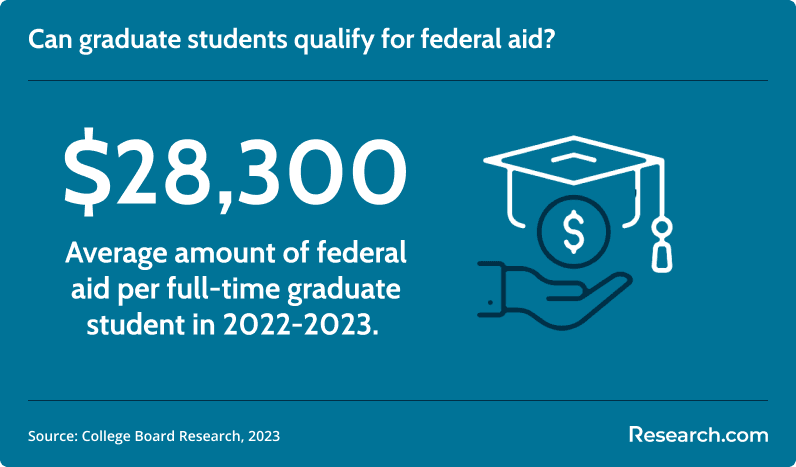
According to the Trends in Student Aid 2023 report from College Board Research, the average amount of federal aid was $28,300 per full-time graduate student in 2022-2023. The same report states that grant aid from colleges and universities increased from $57.7 billion, in 2022 dollars, in 2012-2013 to $76.9 billion in 2022-2023.
Borrowing should be approached carefully. The Education Data Initiative’s 2024 student loan debt statistics report states that 60% of master’s degree holders have some form of federal student loan debt and that 52.6% borrowed money for graduate school.
What are the prerequisites for an online Master of Public Health program?
Admission requirements vary, but most online MPH programs expect applicants to show academic readiness, professional purpose, and the ability to succeed in a quantitative and writing-intensive graduate curriculum.
Common academic requirements
- Bachelor’s degree from an accredited institution: A health-related background can help, including biology, nursing, or completion of an affordable RN to BSN program, but many MPH programs accept applicants from a wide range of undergraduate majors.
- Minimum GPA: Many programs prefer a GPA of 3.0 or higher, although some review applicants with lower GPAs individually.
- Prerequisite coursework: Some schools expect prior coursework in statistics, biology, anatomy and physiology, social sciences, chemistry, or related subjects.
Professional background
- Public health, healthcare, nonprofit, community service, research, or policy experience can strengthen an application.
- Some programs require relevant work experience, while others admit applicants directly after a bachelor’s degree.
Standardized tests
- Some programs still request GRE scores, but GRE waivers and GRE-optional admissions have become more common.
- Some schools may accept MCAT, LSAT, or GMAT scores instead of the GRE.
Typical application materials
- Online application
- Official transcripts
- Statement of purpose explaining your goals, interest in public health, and fit with the program
- Two to three recommendation letters from academic or professional references
- Resume or curriculum vitae showing education, work history, service, research, and relevant skills
Review each school’s requirements early so you have time to request transcripts, prepare recommenders, draft your statement, and address possible interviews or other graduate school application challenges.
Preparation matters because graduate admissions can be competitive. Council of Graduate Schools data show that 49.8% of graduate school applicants were accepted into programs classified as master’s or other in Fall 2022. For similar programs at private nonprofit institutions, the acceptance rate was 41.9%.
What courses are typically included in an online MPH program?
Online MPH curricula usually combine core public health foundations, concentration courses, electives, applied fieldwork, and a culminating project. The exact course names vary, but most CEPH-accredited programs cover similar competencies.
| Course area | What you learn | Why it matters professionally |
| Epidemiology | How diseases and health outcomes are distributed across populations and how to investigate public health problems | Supports careers in surveillance, outbreak response, research, and program evaluation |
| Biostatistics | Statistical methods used to analyze public health data | Builds skills for data-driven decision-making and health research |
| Health Policy and Management | Health systems, policy development, organizational leadership, and management principles | Useful for public health administration, healthcare management, and policy roles |
| Environmental Health | How environmental exposures affect human health | Relevant to occupational health, environmental safety, and regulatory work |
| Social and Behavioral Sciences | How culture, behavior, psychology, and social conditions shape health outcomes | Important for health promotion, community health, and equity-focused work |
| Applied Practice Experience | Hands-on work with an agency, organization, or project | Connects coursework to real public health practice |
| Integrative Learning Experience | A culminating project, paper, presentation, or defense that synthesizes program competencies | Demonstrates readiness to apply MPH skills in professional settings |
Electives allow students to focus on areas such as global health, health education, health promotion, policy, data analysis, or environmental health. Students should choose electives based on the job descriptions they want to qualify for, not just on course titles that sound interesting.
Strong MPH programs also develop workplace skills. A 2023 study on U.S. employer expectations for entry-level public health jobs found that 92.3% of public health jobs require oral and written communication skills. Many programs are also revising curricula and instructional methods to build a more capable public health workforce, as discussed in research on MPH curriculum and workforce preparation.
The chart below presents top employer-requested skills based on the job postings analyzed by Kedia et al.
What specializations are available in online MPH programs?
MPH concentrations shape the types of roles you will be best prepared to pursue. Before choosing a program, compare the concentration list with your target job titles, required skills, and preferred work setting.
| Specialization | Focus | Often fits students interested in |
| Health Policy and Management | Health systems, policy analysis, health economics, and organization management | Administration, policy, consulting, healthcare leadership, and future study such as a doctorate in organizational leadership |
| Epidemiology | Disease patterns, health data, risk factors, and population-level analysis | Outbreak response, surveillance, research, and government health departments |
| Global Health | International health issues, infectious disease, health disparities, and global policy | NGOs, international agencies, cross-border health programs, and humanitarian work |
| Health Education and Promotion | Community engagement, health education, disease prevention, and behavior change | Community health programs, wellness initiatives, and public health education |
| Community Mental Health | Prevention, treatment access, stigma reduction, and mental health program planning | Community mental health agencies, prevention programs, and advocacy roles |
| Indigenous Health | Public health issues affecting Indigenous populations and culturally relevant practice | Tribal health organizations, community partnerships, and equity-centered work |
| Environmental Health | Environmental risks, exposure prevention, and human health protection | Environmental agencies, occupational safety, regulatory work, and sustainability |
| Biostatistics | Statistical analysis, research design, and interpretation of health data | Research, analytics, clinical studies, and health data roles |
| Maternal and Child Health | Health needs of women, infants, children, and families | Public agencies, family health programs, reproductive health, and child development initiatives |
| Nutrition and Public Health | Nutrition-related health issues and strategies to promote healthy eating | Community nutrition, prevention programs, and health promotion |
| Occupational Health and Safety | Workplace hazards, injury prevention, safety systems, and wellness programs | Workplace safety, compliance, industrial health, and occupational risk reduction |
How to choose the best online Master of Public Health program
Cost should be part of the decision, but it should not be the whole decision. A low-cost MPH may not be a good value if it lacks accreditation, field placement help, career support, or the concentration you need. Use the following criteria to compare programs systematically.
1. Confirm accreditation first
Prioritize programs accredited by the Council on Education for Public Health. CEPH accreditation signals that the program has been reviewed against public health education standards. If you are considering environmental health, also check whether specialized accreditation, such as EHAC, matters for your goals.
2. Match the concentration to your career target
Do not choose a concentration only because it seems broad. If you want surveillance or outbreak response, epidemiology may fit better. If you want leadership, health policy and management may be more useful. If you want community-based prevention, health promotion may be the stronger choice.
3. Review practicum support for online students
Ask whether the school helps online students identify approved practicum sites or expects students to find placements independently. Also ask how supervision, evaluation, and site approval work for students outside the university’s home state.
4. Compare total cost, not just tuition
Request a complete written estimate that includes tuition, required fees, online support fees, software, materials, residencies, and practicum costs. A school with a higher tuition rate but fewer fees may sometimes be comparable to a school with a lower advertised rate.
5. Evaluate support services
Online students should have access to academic advising, technical support, digital library resources, faculty office hours, writing help, career counseling, and alumni networks. Ask whether these services are available to online students in the evenings or asynchronously.
6. Look at outcomes carefully
Ask programs for graduate employment information, practicum partners, employer relationships, alumni roles, and career services data. Treat salary claims cautiously because outcomes depend on location, experience, specialization, employer type, and prior credentials.
Student attitudes toward online education have improved. Statista reports that in 2022, 47% of students in higher education in the U.S. believed online education offered the same quality as in-person instruction, while 8% said it was better. Still, quality varies by institution, so compare program design rather than assuming every online MPH is equivalent.
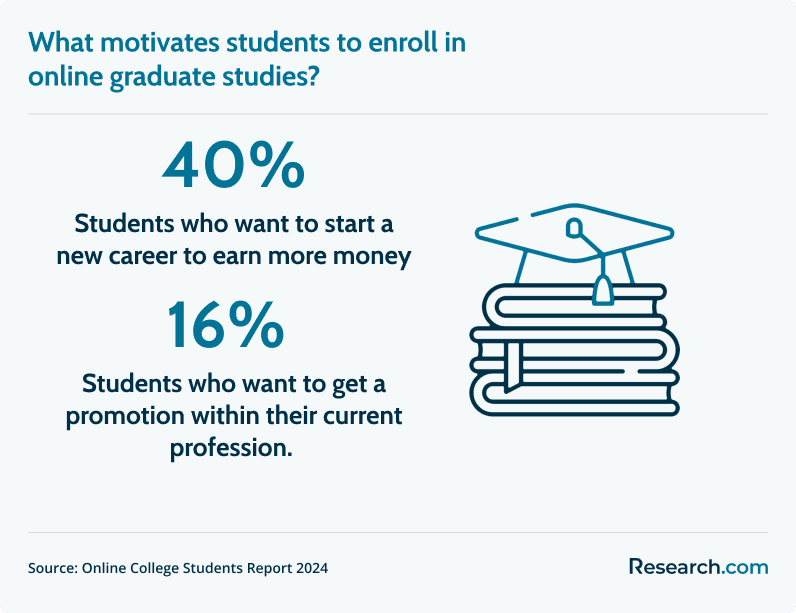
EducationDynamics’ 2024 Online College Students Report found that 40% of online graduate students said their primary career objective was to start a new career to earn more money. Another 21% said their objective was to start a career more aligned with their interests, and 16% said it was to earn a promotion in their current field. Before choosing an MPH, identify which of those goals best describes you.
What is the return on investment for an online MPH degree?
The ROI of an online MPH depends on program cost, debt, scholarships, time to completion, previous experience, location, specialization, and the kinds of jobs you pursue after graduation. A program has stronger value when it helps you gain relevant skills, complete meaningful fieldwork, expand your network, and qualify for roles that fit your salary and advancement goals.
To estimate ROI, compare the total cost of attendance with realistic career outcomes. Do not rely on a single salary number. Instead, review multiple job titles, employer types, and geographic markets. You can also explore broader MPH career options in Research.com’s guide to what you can do with a master’s in public health.
| ROI factor | Why it changes value | How to evaluate it |
| Debt after graduation | High borrowing can reduce the financial benefit of the degree. | Estimate loan payments before enrolling and compare them with expected income. |
| Concentration | Different public health tracks lead to different labor markets. | Search job postings for your target roles and note required skills. |
| Field experience | Practicum quality can affect employability. | Ask where recent online students completed practicums. |
| Employer support | Tuition assistance can greatly reduce net cost. | Ask your employer about tuition reimbursement and service commitments. |
| Career goal | The degree may be more valuable for some roles than others. | Confirm whether your target role requires, prefers, or merely accepts an MPH. |
How can online MPH programs support professional networking?
Online MPH networking is more intentional than campus networking, but it can still be effective. Strong programs use virtual events, alumni panels, mentorship programs, faculty advising, group projects, discussion forums, professional association connections, and practicum placements to help students build relationships.
Students should not wait until graduation to network. Join public health associations, attend virtual employer events, request informational interviews, connect with classmates in your concentration, and use practicum work to build professional references. If you are still exploring different levels of education before graduate study, Research.com also offers information on options such as the most accessible associate degree programs.
What career paths are available for online MPH graduates?
An online MPH can prepare graduates for work in government agencies, healthcare organizations, nonprofits, research settings, universities, consulting firms, and international organizations. The strongest path depends on your concentration, prior experience, practicum, location, and technical skills.
| Career area | Example roles | Best-matching MPH focus |
| Public health administration and management | Medical and health services managers, hospital administrators, public health program directors, health policy analysts, health systems analysts | Health Policy and Management, Population Health, MPH/MBA Dual Degree |
| Epidemiology and biostatistics | Epidemiologists, biostatisticians, data analysts, clinical research coordinators, surveillance specialists | Epidemiology, Biostatistics, Population Health |
| Health education and promotion | Community health educators, health promotion specialists, wellness coordinators, behavioral health program coordinators, public health educators | Health Promotion, Health Behavior, Community Health |
| Environmental health | Environmental health scientists, occupational health and safety specialists, environmental policy advisors, sustainability coordinators | Environmental Health, Occupational Health and Safety |
| Global and community health | Global health program managers, international health consultants, community health workers, health equity advocates, social services directors | Global Health, Health Equity, Community Health |
| Research and academia | Public health researchers, university faculty, grant writers, policy advisors | Epidemiology, Biostatistics, Health Policy, Research-oriented MPH tracks |
Public health workers help prevent disease, respond to outbreaks, reduce environmental and social risks, promote healthier behaviors, and design policies that improve population health. The field is broad, so students should identify the specific function they want to perform before choosing a concentration.
Using annual mean wage data from the U.S. Bureau of Labor Statistics, selected higher-paying public-health-related roles report the following wages:
- Occupational Health and Safety Specialists - $85,570
- Statisticians - $109,190
- Epidemiologists - $90,430
- Medical and Health Services Manager - $134,440
- Postsecondary Teachers - $101,750
Salary outcomes are not guaranteed. They depend on your employer, region, role, previous experience, and whether the job requires additional credentials. Some students may also consider complementary graduate or professional pathways, including a public health doctorate, certifications, or related options such as business degree programs.
If you are comparing related graduate paths within a budget, you may also want to review Research.com guides to the most affordable online environmental science degrees, affordable online master’s programs in forensic science, or affordable online master’s programs in higher education.
What is the job market for online MPH graduates?
The job market for MPH graduates is shaped by workforce shortages, public health emergencies, healthcare system complexity, data needs, and demand for prevention-focused programs. Opportunities can vary significantly by specialization and location, but several indicators point to continued need for trained public health professionals.
Public health workforce demand
The 2021 Public Health Workforce Interests and Needs Survey by the de Beaumont Foundation and the Association of State and Territorial Health Officials reported that one in three public health employees considered leaving their jobs within the next year.
A separate de Beaumont Foundation study on public health workforce levels found that, as of 2021, the United States needed over 80,000 new workers to provide basic public health services at local, tribal, territorial, and governmental levels.
The U.S. Bureau of Labor Statistics projects 27% employment growth for epidemiologists from 2022-2032. It also projects 28% growth for medical and health services managers over the same period. The chart below shows outlook information for several public health occupations.
Recruitment and retention efforts
In a May 2023 report, the President’s Council of Advisors on Science and Technology stated that the public health system “has been failing for decades” and called for stronger workforce initiatives. Recommendations included clearer career paths, incentives, expanded loan repayment and forgiveness options, and greater trust between the public health workforce and the communities it serves.
Global and cross-border opportunities
Public health challenges increasingly cross borders. Pandemics, climate change, HIV/AIDS, rural health issues, mental health needs, substance use, and health equity all require trained professionals who can work across systems and populations. Students interested in international roles should consider global health coursework, language skills, field experience, and organizations that operate internationally.
Job stability and resilience
Public health work supports disease prevention, emergency response, health education, environmental safety, and population health planning. These functions are essential, but job availability still depends on public funding, policy priorities, employer budgets, and local needs.
The chart below illustrates the outlook for different public health jobs.
What career support services do online MPH programs offer?
Strong online MPH programs offer more than course access. They help students translate coursework into employment through career counseling, resume reviews, mock interviews, job boards, alumni mentoring, practicum guidance, employer panels, webinars, and professional development workshops.
Ask whether career services are tailored to public health or only offered through a general graduate career office. Also ask whether online students can access job fairs, recruitment events, and alumni networks. Students with healthcare experience may also explore complementary credentials, such as a fast medical assistant certification pathway, but should confirm whether an additional credential is actually relevant to their target public health role.
Current challenges shaping public health careers
Public health professionals are increasingly expected to work across data, policy, communication, equity, emergency response, and community engagement. An MPH can help students prepare for these challenges, especially when the program includes applied practice and up-to-date curriculum design.
Global pandemics and infectious disease
COVID-19 reinforced the importance of epidemiology, disease surveillance, risk communication, and emergency response. MPH students in epidemiology or population health tracks often study how to detect, monitor, and respond to outbreaks.
Health equity and disparities
Public health work increasingly focuses on social determinants of health, access barriers, and inequities affecting marginalized communities. Courses in policy, community health, and health behavior can help students evaluate disparities and design more equitable interventions.
Climate change and environmental health
Extreme weather, poor air quality, water contamination, and heat-related risks have public health consequences. Environmental health training can prepare students to assess exposures, communicate risks, and support mitigation strategies.
Mental health needs
Mental health is a growing concern for communities and health systems. Students focused on community mental health can learn how to design prevention programs, reduce stigma, and improve access to services.
Chronic disease prevention
Diabetes, cardiovascular disease, and other chronic conditions require prevention strategies, education, policy work, and community engagement. MPH training can support campaign design, program evaluation, and behavior-change strategies.
Data-driven decision-making
Public health agencies and employers increasingly rely on data analysis to guide interventions and evaluate outcomes. Biostatistics, epidemiology, and informatics-related coursework can help students interpret data responsibly.
How to future-proof your public health career
Choose an MPH program that combines core public health theory with applied practice, communication training, and data skills. If affordability and speed are central to your decision, compare MPH options with broader guides to the quickest and most affordable master’s degree programs, but do not sacrifice accreditation or field experience.
What skills can you gain from an online Master of Public Health program?
An online MPH can help students develop both technical and people-centered skills. Employers often need public health professionals who can interpret evidence, communicate with communities, manage programs, and make ethical decisions under pressure.
Data analysis and interpretation
Courses in epidemiology and biostatistics teach students to analyze trends, evaluate interventions, interpret health data, and support evidence-based decisions.
Health communication and advocacy
MPH students learn to translate complex health information for different audiences, design campaigns, support policy advocacy, and communicate during public health crises.
Leadership and management
Health policy, program planning, and management coursework can prepare students to lead teams, manage budgets, coordinate initiatives, and work across agencies.
Global and population health perspective
Public health training helps students understand how social, environmental, political, and economic conditions influence health across regions and populations.
Problem-solving and critical thinking
MPH coursework and fieldwork require students to evaluate evidence, identify root causes, propose interventions, and adapt when conditions change.
Is an MPH aligned with your goals?
An MPH is best suited for students who want to improve health at the population level rather than focus only on individual patient care. If you are still weighing whether the field fits your interests, you can review Research.com’s guide on whether public health is a good major.
What accreditation and quality standards matter for an online MPH?
Accreditation is one of the most important quality checks for an MPH program. CEPH accreditation is the key public health programmatic accreditation to look for because it indicates that the curriculum, faculty, assessment, and applied practice requirements have been reviewed against recognized public health standards.
Also verify institutional accreditation, faculty expertise, student support, practicum structure, online learning quality, and whether graduates qualify for the types of roles you want. If you are comparing healthcare-adjacent credentials rather than MPH programs, Research.com also covers options such as online medical billing and coding programs, but those programs serve different career goals than an MPH.
How can online MPH programs foster interdisciplinary collaboration?
Public health problems rarely fit inside one discipline. Effective MPH programs expose students to healthcare, policy, data science, environmental science, social services, communications, and community organizations. Online programs can support collaboration through group projects, case studies, virtual simulations, interprofessional webinars, and practicum partnerships.
Students working in clinical or allied health environments may benefit from understanding how public health connects with medication safety, patient care, risk management, and health systems. Those exploring clinical doctorate pathways can compare public health study with related options such as an online pharmacy doctorate program.
Tips for succeeding in an online Master of Public Health program
Online MPH students need structure, communication, and initiative. The format is flexible, but the workload can be demanding, especially in statistics, epidemiology, research, and applied projects.
- Create a consistent study routine: Block weekly time for readings, lectures, assignments, discussion posts, and group work.
- Use one planning system: Track deadlines, exams, practicum requirements, advising appointments, and financial aid dates in a digital or paper calendar.
- Participate early and often: Ask questions, attend virtual office hours, and contribute meaningfully to class discussions.
- Build relationships before you need them: Connect with faculty, classmates, alumni, and practicum supervisors throughout the program.
- Strengthen writing and data skills: Public health roles often require reports, briefs, presentations, statistical interpretation, and policy communication.
- Plan the practicum in advance: Do not wait until the final semester to identify possible sites or clarify approval requirements.
- Choose electives strategically: Use job postings to identify which skills employers request, then choose courses that build those skills.
- Use career services: Resume reviews, mock interviews, and alumni connections can help you translate MPH coursework into job opportunities.
- Protect your motivation: Set short-term goals for each term and connect assignments to the public health problem you care about most.
If admission accessibility is a major concern, compare options in Research.com’s guide to online MPH programs that may be easier to get into, while still checking accreditation, cost, and outcomes.
How do online MPH programs provide practical experience?
Online MPH programs usually meet applied practice requirements through local practicums, agency-based projects, simulations, case studies, community partnerships, and supervised fieldwork. The best programs have a clear process for approving practicum sites, matching students with opportunities, and evaluating work completed outside the university’s physical location.
Some health professional programs use highly structured virtual and experiential learning models, including those discussed in Research.com’s guide to top online PharmD programs. MPH applicants can use a similar lens when evaluating whether hands-on activities are well designed, monitored, and connected to real professional competencies.
What graduates say about online MPH study
- : "Completing my MPH online made it possible to keep working full time while building public health knowledge I could apply immediately. The schedule flexibility helped me stay employed, manage my personal responsibilities, and prepare for more meaningful work in my community. — Jacklyne"
- : "My online MPH gave me a broad public health education without requiring me to relocate. The virtual classes, faculty support, and interactive assignments helped me feel prepared to contribute to public health policy work. — Marleigh"
- : "The online format gave me control over my schedule while still connecting me with resources, classmates, and practical assignments. The real-world projects were especially useful because they helped me see how public health concepts affect communities. — Brian"
Can an online MPH support dual-degree and interdisciplinary options?
Some universities offer dual-degree or coordinated pathways that combine public health with business, public administration, social work, medicine, pharmacy, or other fields. These options can be valuable for students who want leadership roles that require both public health knowledge and another professional skill set.
Dual degrees can also require more credits, higher tuition, separate applications, and a longer time commitment. Before choosing one, ask whether the second degree is necessary for your target role. Students interested in combining clinical and public health training may also compare related professional pathways such as accelerated PharmD programs.
Common mistakes to avoid when choosing an online MPH
| Mistake | Why it can hurt you | Better approach |
| Choosing based only on tuition | Low tuition may hide fees, weak practicum support, or limited career services. | Compare total cost, accreditation, support, and outcomes together. |
| Ignoring CEPH accreditation | Some employers and career paths may prefer or expect graduates from CEPH-accredited programs. | Verify programmatic accreditation before applying. |
| Selecting the wrong concentration | A mismatch can limit preparation for your target roles. | Search job postings and match required skills to the concentration curriculum. |
| Assuming online means easier | Online MPH programs can be demanding and self-directed. | Plan your weekly workload before the term begins. |
| Waiting too long to arrange fieldwork | Practicum delays can slow graduation. | Ask about placement procedures during admissions advising. |
| Believing salary outcomes are guaranteed | Wages vary by role, region, employer, experience, and credentials. | Use salary data as a planning tool, not a promise. |
| Relying only on rankings | A highly ranked program may not fit your schedule, budget, or specialization needs. | Use rankings as one input in a broader decision process. |
Questions to ask before applying to an online MPH program
- Is the MPH program accredited by the Council on Education for Public Health?
- What is the full cost of attendance for my concentration, including tuition and fees?
- Are online students charged the same tuition regardless of state residency?
- How many credits are required for the standard MPH, joint degree, or dual degree?
- Does the school help online students find practicum sites?
- Can I complete fieldwork in my local community?
- What career services are available specifically to online MPH students?
- What public health organizations have recently hosted student practicums?
- What jobs do recent graduates hold?
- Does the program offer the concentration, electives, and data training needed for my target role?
- Are classes asynchronous, synchronous, or a mix of both?
- How much faculty interaction can online students expect?
- Are GRE scores required, optional, or waived?
- What scholarships, assistantships, employer partnerships, or fellowship options are available?
References
- de Beaumont Foundation. Workforce Levels Needed to Provide Basic Public Health Services for All Americans. https://debeaumont.org/wp-content/uploads/2021/10/Staffing-Up-FINAL.pdf
- de Beaumont Foundation. Public Health Workforce Interests and Needs Survey. https://debeaumont.org/wp-content/uploads/dlm_uploads/2022/03/Stress-and-Burnout-Brief_final.pdf
- Kedia, S. et al. Expectations of employers in the United States for entry-level public health job skills with a bachelor’s degree: an analysis of the positions advertised in an online job portal. Frontiers. https://doi.org/10.3389/fpubh.2023.1218509
- Korhonene, V. Opinions of online college students on quality of online education U.S. 2022. Statista. https://www.statista.com/statistics/956123/opinions-online-college-students-quality-online-education/
- Hanson, M. Average Cost of a Master’s Degree. Education Data Initiative. https://educationdata.org/average-cost-of-a-masters-degree
- Ma, J. and Pender, M. Trends in College Pricing and Student Aid 2023. College Board Research. https://research.collegeboard.org/media/pdf/Trends%20Report%202023%20Updated.pdf
- McKenzie, B. D., Zhou, E., & Regio, A. Graduate Enrollment and Degrees: 2012 to 2022. Council of Graduate Schools. https://cgsnet.org/wp-content/uploads/2023/10/2022-Graduate-Enrollment-and-Degrees-Final-Report.pdf
- National Center for Education Statistics. Graduate Degree Fields. https://nces.ed.gov/programs/coe/indicator/ctb/graduate-degree-fields
- The President’s Council of Advisors on Science and Technology. Supporting the U.S. Public Health Workforce. https://nces.ed.gov/programs/coe/indicator/ctb/graduate-degree-fields
- University of Illinois at Springfield. Tuition, Fees and Assessments for Fall 2024. https://www.uis.edu/registrar/tuition-fees/fall-2024-tuition
- U.S. Bureau of Labor Statistics. Community Health Workers. https://www.bls.gov/ooh/community-and-social-service/community-health-workers.htm
- U.S. Bureau of Labor Statistics. Epidemiologists. https://www.bls.gov/ooh/life-physical-and-social-science/epidemiologists.htm
- U.S. Bureau of Labor Statistics. Health Education Specialists. https://www.bls.gov/ooh/community-and-social-service/health-educators.htm
- U.S. Bureau of Labor Statistics. May 2023 National Occupational Employment and Wage Estimates, United States. https://www.bls.gov/oes/current/oes_nat.htm
- U.S. Bureau of Labor Statistics. Medical and Health Services Managers. https://www.bls.gov/ooh/management/medical-and-health-services-managers.htm
- U.S. Bureau of Labor Statistics. Occupational Health and Safety Specialists and Technicians. https://www.bls.gov/ooh/healthcare/occupational-health-and-safety-specialists-and-technicians.htm
- Zippia. Public Health Administrator Salary. https://www.zippia.com/salaries/public-health-administrator
- ZipRecruiter. Master Of Public Health Salary. https://www.ziprecruiter.com/Salaries/Master-Of-Public-Health-Salary
Key Insights
- An affordable online MPH should be evaluated by total cost, CEPH accreditation, concentration fit, practicum support, and career services—not tuition alone.
- Most online MPH programs take about 18 months to two years full time, while part-time students often need around three years.
- Among affordable programs reviewed, tuition commonly falls around $300 to $600 per credit unit, but fees and practicum costs can change the final price.
- CEPH accreditation is the key quality signal for MPH programs and should be verified before applying.
- Concentration choice matters. Epidemiology, health policy, environmental health, health promotion, and global health can lead to different roles and skill requirements.
- Online MPH students should be proactive about networking and fieldwork because those opportunities may not happen as naturally as they do on campus.
- Public health demand is supported by workforce shortages and projected growth in roles such as epidemiologists and medical and health services managers, but salaries and job outcomes are never guaranteed.
- The best next step is to request total cost estimates, confirm practicum placement processes, compare concentrations against job postings, and speak with admissions or program advisers before applying.
Other Things You Should Know About Online Master of Public Health Degrees
Yes. Many CEPH-accredited online MPH programs require a supervised practicum, often 120 to 240 hours, completed with a public health site or employer-approved placement. Some programs waive or modify it only for students with prior public health field experience or a qualifying work-based project.
Admissions requirements for affordable online MPH programs in 2027 usually include a bachelor's degree, a minimum GPA (often around 3.0), official transcripts, a resume, letters of recommendation, and a statement of purpose. Some may require GRE scores or relevant work experience.