
2027 Cheapest PhD in Public Health Programs Online

Co-Founder and Chief Data Scientist
A doctorate in public health is a major decision: it can open doors to research, policy, faculty, and executive leadership roles, but it also requires years of advanced study, a dissertation or doctoral project, and careful financial planning. For working public health professionals, the central question is usually not whether public health matters—it is whether a PhD or practice-focused doctorate is worth the time, cost, and opportunity trade-off.
This guide is designed for prospective doctoral students comparing affordable online and hybrid public health doctorates. It explains what these programs include, how online study compares with campus-based study, what admissions committees typically expect, how to evaluate cost and accreditation, and which career paths may justify the investment. It also highlights low-cost programs listed by Research.com so you can begin your search with price, credibility, and career fit in mind.
Quick Answer: What Is the Cheapest Online PhD in Public Health?
Based on the programs listed in this guide, the University of Montana has the lowest listed tuition at $4,716 for its PhD in Public Health, followed by East Carolina University at $7,700 and the University of Alabama at Birmingham at $11,040 in-state. However, “cheapest” does not always mean “best fit.” Applicants should compare accreditation, delivery format, specialization, faculty research alignment, funding availability, residency requirements, and whether the program is a PhD or a Doctor of Public Health (DrPH).
Why Consider a PhD in Public Health?
A PhD in Public Health is a research-focused doctorate for professionals who want to investigate population health problems, publish original scholarship, teach at the university level, lead research teams, or influence health policy through evidence. It differs from many applied public health degrees because the centerpiece is original research, usually completed through a dissertation.
Public health challenges in the U.S. include chronic disease, health inequities, environmental risks, emergency preparedness, access gaps, and population-level prevention. Doctoral training can help professionals move beyond program implementation into evidence generation, systems leadership, and policy design.
Key advantages of earning a public health doctorate
- Stronger research authority: Doctoral students learn advanced epidemiology, biostatistics, qualitative methods, program evaluation, and research design, which can prepare them to lead complex studies.
- More leadership options: A doctorate can support advancement into senior roles in universities, public agencies, healthcare organizations, nonprofits, consulting firms, and global health organizations.
- Policy and systems influence: Graduates may contribute evidence used in public health laws, community interventions, emergency response planning, and health equity initiatives.
- Eligibility for academic careers: Many tenure-track faculty, principal investigator, and doctoral-level research positions prefer or require a PhD or comparable doctorate.
- Broader professional network: Doctoral programs connect students with faculty mentors, research partners, public health agencies, and peer scholars.
What Should You Expect in a PhD in Public Health Program?
A PhD in Public Health is intensive, research-heavy, and usually interdisciplinary. Students study population health problems through scientific, policy, social, environmental, and data-driven lenses. Most programs combine doctoral coursework, comprehensive exams, research apprenticeships, and a dissertation based on original inquiry.
| Program component | What it usually involves | Why it matters |
| Advanced methods training | Coursework in epidemiology, biostatistics, qualitative research, quantitative analysis, and study design | Builds the technical foundation for independent research and publication |
| Specialized public health study | Focused work in areas such as health policy, global health, environmental health, community health, or social determinants of health | Helps students align doctoral work with a specific research agenda or career field |
| Faculty mentorship | Close work with professors whose research interests match the student’s goals | Strong advising can affect dissertation progress, publications, funding, and career placement |
| Teaching or leadership development | Opportunities to teach, mentor, lead projects, or support academic programs | Useful for students targeting faculty, training, or organizational leadership roles |
| Dissertation or doctoral research | An original project that contributes new evidence or insight to public health | The dissertation is often the defining requirement of a PhD |
| Time commitment | Many programs require 4–6 years of full-time study, including coursework, exams, and dissertation completion | Students should plan for a long, sustained academic commitment |
Where Can You Work With a PhD in Public Health?
Doctoral graduates in public health work in research, education, policy, administration, consulting, and applied public health leadership. The right workplace depends on whether your strengths are academic research, data analysis, organizational leadership, program evaluation, policy advocacy, or community-based intervention.
- Colleges and universities: Faculty members teach public health courses, mentor students, publish research, and compete for grants.
- Government agencies: Graduates may work with federal, state, or local public health organizations, including agencies such as the Centers for Disease Control and Prevention (CDC), World Health Organization (WHO), and health departments.
- Nonprofit organizations: Public health doctorates can lead disease prevention, health equity, disaster response, community health, and environmental health programs.
- Healthcare systems and hospitals: Roles may focus on population health strategy, quality improvement, community benefit programs, epidemiology, and health services research.
- Research institutes: Doctoral professionals can lead studies, manage research teams, analyze data, and publish findings. Research scientist roles are also discussed in Research.com’s guide to career options with a nutrition master’s degree, and a public health PhD may strengthen preparation for population health research.
- Consulting firms and private companies: Public health consultants advise clients on evaluation, health strategy, workplace wellness, analytics, regulatory issues, and community impact.
- International organizations: Graduates may work with groups such as UNICEF, the United Nations, Doctors Without Borders, and global health agencies.
How Much Can You Earn With a PhD in Public Health?
Salary outcomes vary by role, sector, location, experience, funding environment, and whether the position is academic, public-sector, nonprofit, or private-sector. The figures below are broad ranges from the original program discussion and should be treated as planning estimates, not guarantees.
| Career area | Potential salary range | What affects earnings |
| Academic roles | $80,000 to $150,000 annually | Tenure status, institution type, grant activity, discipline, and seniority |
| Government positions | $90,000 to $140,000 | Agency level, leadership responsibility, pay scale, and years of experience |
| Healthcare organizations and hospitals | $100,000 to $160,000 or more | System size, urban or rural location, administrative scope, and specialization |
| Private sector and consulting | $120,000 to $200,000 | Client portfolio, technical expertise, leadership duties, and industry demand |
| International organizations and NGOs | $80,000 to $120,000 | Organization funding, seniority, location, travel requirements, and benefits |
- Most Affordable Online PhD and Doctoral Public Health Programs for 2027
- Online vs. Campus Public Health Doctorates: Which Format Fits?
- Typical Completion Time for an Online Public Health PhD
- Admissions Requirements for Public Health Doctoral Programs
- Common Courses in Public Health PhD Programs
- Expected Cost of a Public Health Doctorate
- Financial Aid Options for Affordable Public Health PhD Students
- How to Choose a Low-Cost, High-Value Public Health Doctorate
- Emerging Research Trends in Public Health Doctorates
- How to Improve ROI From an Online Public Health PhD
- How to Build a Strong Public Health PhD Application
- PhD vs. Master’s in Public Health: Which Is Better?
- How Undergraduate Preparation Supports Doctoral Success
- Career Paths for Public Health Doctoral Graduates
- Support Services That Matter in Online Public Health Doctorates
- Popular Public Health PhD Specializations
- Challenges of Online Public Health Doctoral Study
- Job Market for Public Health PhD Graduates
- Accelerated Online Programs vs. Traditional Public Health Doctorates
- Return on Investment of an Online Public Health PhD
- Why Accreditation and Reputation Matter
- Certifications That Can Strengthen a Public Health Doctorate
Most Affordable Online PhD and Doctoral Public Health Programs for 2027
How Research.com evaluates schools
Choosing a doctoral program requires more than scanning tuition prices. Research.com’s ranking process uses established education data sources, including the IPEDS database, Peterson’s database, the College Scorecard database, and The National Center for Education Statistics. These sources help support a consistent review of affordability and institutional information. Readers who want more detail can review Research.com’s methodology page.
The list below includes PhD and doctoral-level public health programs. Some are research-focused PhD programs, while others are Doctor of Public Health programs. Because a DrPH and a PhD can lead to different career outcomes, applicants should confirm degree type before applying.
| School | Degree or focus | Program length | Total tuition | Credits | Accreditation listed |
| Indiana University Bloomington | PhD in public health, Environmental Health | 3 years | $12,500 | 90 | The Higher Learning Commission; Council on Education for Public Health |
| Pennsylvania State University | Doctor of Public Health | 3-4 years | $18,194 | 60 | Council on Education for Public Health |
| University of North Carolina at Chapel Hill | Public Health Executive Leadership | 3 years | $11,110 | 45 | Council on Education for Public Health |
| University of South Florida | Doctor of Public Health | 2-3 years | $11,766 | 43 | Southern Association of Colleges and Schools Commission on Colleges |
| University of Illinois Chicago | PhD in Public Health Leadership | 4-6 years | $11,884 | 96 | Council on Education for Public Health |
| University of Alabama at Birmingham | Doctorate in public health | up to 7 years, depending on concentration | $11,040 in-state | $26,520 out-of-state | 42 | Council on Education for Public Health |
| Kent State University | PhD in Public Health, Health Policy and Management | Within 10 years | $18,156 | 91 | Council on Education for Public Health |
| East Carolina University | Doctor of Public Health | 3-4 years | $7,700 | 75 | Council on Education for Public Health |
| Walden University | PhD in Public Health | Up to 8 years | $11,700 | 83 | The Higher Learning Commission |
| University of Montana | PhD in Public Health | 4-5 years | $4,716 | 60 | Council on Education for Public Health |
1. Indiana University Bloomington
Indiana University Bloomington offers an online public health PhD through the School of Public Health-Bloomington with a concentration in environmental health. The program is designed for students interested in how environmental exposures, occupational conditions, toxicology, and rural health issues affect disease and population well-being.
Students develop the ability to conduct original laboratory-based or field-based research, prepare scholarly work for publication, and present findings at professional conferences. The curriculum emphasizes scientific, technical, policy, and management skills for addressing environmental and occupational health concerns.
- Program Length: 3 years
- Tracks/concentrations: Environmental Health
- Total tuition: $12,500
- Required credits to graduate: 90
- Accreditation: The Higher Learning Commission; Council on Education for Public Health
2. Pennsylvania State University
Pennsylvania State University offers an online Doctor of Public Health through its World Campus. Although this is a DrPH rather than a PhD, it may be a strong fit for experienced practitioners who want doctoral-level training in evidence-based practice, translational science, and public health leadership.
The program requires at least 45 credits of coursework plus 15 credits of doctoral research and advanced field experience beyond the master’s degree. Students may pursue focused study in areas such as public health preparedness, evidence-based public health intervention, or social marketing and behavior.
- Program Length: 3-4 years
- Tracks/concentrations: public health preparedness, evidence-based public health intervention, social marketing and behavior
- Total tuition: $18,194
- Required credits to graduate: 60
- Accreditation: Council on Education for Public Health
3. University of North Carolina at Chapel Hill
University of North Carolina at Chapel Hill provides a doctoral program in Public Health Executive Leadership for mid- to senior-level professionals preparing for top public health practice roles. The program emphasizes policy influence, practice-based research, organizational leadership, and change management.
This DrPH is delivered through distance learning over three years and includes six five-day campus sessions during the first two years.
- Program Length: 3 years
- Tracks/concentrations: Public Health Executive Leadership
- Total tuition: $11,110
- Required credits to graduate: 45
- Accreditation: Council on Education for Public Health
4. University of South Florida
University of South Florida offers a Doctor of Public Health for professionals pursuing leadership in health departments, health services organizations, nonprofits, community organizations, and international agencies. Graduates are expected to build experience in research, teaching, and service.
The program offers two concentrations:
- DrPH - Advanced Practice Leadership in Public Health. This concentration prepares experienced practitioners for leadership in evidence-based public health practice, including development, implementation, and evaluation of interventions.
- DrPH - Public Health and Clinical Laboratory Science and Practice. This concentration prepares professionals for leadership in public health and clinical laboratory settings and responds to workforce needs in public health laboratories.
- Program Length: 2-3 years
- Tracks/concentrations: Advanced Practice Leadership in Public Health, Public Health and Clinical Laboratory Science and Practice
- Total tuition: $11,766
- Required credits to graduate: 43
- Accreditation: Southern Association of Colleges and Schools Commission on Colleges
5. University of Illinois Chicago
University of Illinois Chicago offers an online PhD in Public Health Leadership for mid-career public health professionals. The program focuses on leadership approaches for addressing root causes of health inequity and disparities through cohort-based learning, action learning, whole-person development, and anti-racist pedagogy.
Students examine self-reflection, deep listening, inclusive engagement, community collaboration, coalition building, organizing, shared problem definition, and strategies for shifting power and resources toward more equitable systems.
- Program Length: 4-6 years
- Tracks/concentrations: Public Health Leadership
- Total tuition: $11,884
- Required credits to graduate: 96
- Accreditation: Council on Education for Public Health
6. University of Alabama at Birmingham
University of Alabama at Birmingham offers a broad doctorate in public health with multiple concentrations and prerequisite expectations. Depending on the chosen track, the program can take up to seven years.
Students may choose from five concentrations. Biostatistics focuses on research design and analytic techniques. Health Policy and Organization examines law, management, and policy development. Maternal and Child Health Policy centers on policy advocacy for women and children. Outcomes Research studies clinical decision-making, cost, and utility analysis. Preparedness Leadership develops advanced skills for professionals leading before, during, and after disasters and public health emergencies.
Applicants should note that although the program includes an online component, much of the instruction is delivered through in-person campus sessions.
- Program Length: up to 7 years, depending on concentration
- Tracks/concentrations: Biostatistics, Health Policy and Organization, Maternal and Child Health Policy, Outcomes Research, Preparedness Leadership
- Total tuition: $11,040 in-state | $26,520 out-of-state
- Required credits to graduate: 42
- Accreditation: Council on Education for Public Health
7. Kent State University
Kent State University offers a PhD in Public Health with a Health Policy and Management specialization. Students learn to design studies, apply advanced quantitative methods, and investigate emerging public health issues.
Faculty research areas include health systems, occupational health and safety, HIV/AIDS, reproductive health, health literacy, healthcare access, substance abuse, and community-based interventions.
- Program Length: Within 10 years
- Tracks/concentrations: Health Policy and Management
- Total tuition: $18,156
- Required credits to graduate: 91
- Accreditation: Council on Education for Public Health
8. East Carolina University
East Carolina University offers an online Doctor of Public Health with two concentration options:
- Environmental and Occupational Health
- Health Policy, Administration, and Leadership
The program prepares students to contribute to policy development, disaster readiness, equitable service delivery, environmental health planning, and population health leadership. It places particular emphasis on rural, underserved, and multicultural communities.
- Program Length: 3-4 years
- Tracks/concentrations: Environmental and Occupational Health | Health Policy, Administration, and Leadership
- Total tuition: $7,700
- Required credits to graduate: 75
- Accreditation: Council on Education for Public Health
9. Walden University
Walden University offers an online PhD in Public Health with a streamlined admissions process and no application fee. The program emphasizes ethical public health research, evidence-based study design, scholarly evaluation, leadership for public health solutions, and professional communication for complex research findings.
Walden also offers a Doctor of Public Health program accredited by the Council on Education for Public Health.
- Program Length: Up to 8 years
- Tracks/concentrations: Community Health | Environmental and Occupational Health | Epidemiology
- Total tuition: $11,700
- Required credits to graduate: 83
- Accreditation: The Higher Learning Commission
10. University of Montana
The University of Montana offers the lowest listed tuition in this guide and may interest students comparing the most affordable online public health degrees. Its PhD in Public Health is designed for future research team scientists who want to collaborate across disciplines on local, regional, and global health problems.
This research-focused doctoral degree prepares students for public health research roles and tenure-track academic pathways.
- Program Length: 4-5 years
- Tuition: $4,716
- Required credits to graduate: 60
- Accreditation: Council on Education for Public Health
Online vs. On-Campus PhD in Public Health: Which Format Is Better?
Online and campus-based public health doctorates can both be credible when properly accredited. The better choice depends on your work schedule, research goals, funding needs, preferred learning style, and access to faculty mentorship.
| Factor | Online doctorate | On-campus doctorate | Best fit |
| Schedule flexibility | Often designed for working adults and may include asynchronous coursework | Usually follows fixed in-person class and research schedules | Online may suit professionals balancing employment and family responsibilities; Research.com also covers online degrees for working adults |
| Total cost | Can reduce commuting, housing, and relocation expenses | May cost more to attend in person but may offer more assistantships | Compare tuition and funding, not tuition alone |
| Research access | May require students to arrange local data access, fieldwork, or organizational partnerships | Often provides closer access to labs, faculty projects, and campus research infrastructure | Campus study may be stronger for lab-heavy or faculty-led research |
| Networking | Depends on virtual cohorts, residencies, conferences, and proactive outreach | Provides more frequent face-to-face faculty and peer contact | Campus study may help students targeting academic roles |
| Recognition | Credibility depends heavily on accreditation and institutional reputation | May benefit from long-standing program visibility | Both can be respected if accredited; see Research.com’s guide to accredited online degree programs |
If you are still building your academic pathway before doctoral study, Research.com also provides guidance on bachelor’s in public health programs.
How Long Does an Online PhD in Public Health Take?
Completion time depends on enrollment status, transfer credits, dissertation progress, research complexity, and whether the program follows a cohort, self-paced, or hybrid model. Many full-time programs take 4 to 6 years, while part-time students often need 6 to 8 years.
Before doctoral study, most students complete a bachelor’s degree and then a master’s degree. Students who want to shorten the pre-doctoral pathway may compare options such as the best one-year online MPH degree programs.
| Path | Typical timeline | Who it may suit |
| Full-time doctoral study | 4 to 6 years | Students able to prioritize coursework, exams, research, and dissertation writing |
| Part-time doctoral study | 6 to 8 years | Working professionals who need more flexibility |
| Accelerated route | 3 to 4 years | Highly prepared students in programs structured for faster progress; students may also compare fields such as an accelerated healthcare leadership program |
What can extend your timeline?
- Dissertation delays: Topic changes, data access problems, institutional review requirements, and writing delays can add time.
- Limited transfer credit: Some schools accept fewer master’s-level credits than students expect.
- Research scope: Complex, niche, or multi-site research projects often take longer to complete.
- Workload conflicts: Full-time employment can slow progress unless the program is designed around working professionals.
What Are the Prerequisites for a PhD in Public Health?
Admissions standards vary by institution, degree type, and concentration. Research-focused PhD programs often look closely at research preparation and faculty fit, while DrPH programs may place more weight on professional leadership experience.
| Requirement | What schools commonly review | How to strengthen it |
| Educational background | Bachelor’s and often master’s-level preparation in public health, health sciences, statistics, social sciences, policy, or a related field | Complete prerequisite coursework in epidemiology, biostatistics, and research methods if needed |
| Professional experience | Public health, healthcare, policy, research, nonprofit, or community health experience | Show measurable impact, leadership, publications, presentations, or evaluation work |
| Academic performance | Prior grades, graduate-level readiness, and performance in quantitative or research courses | Explain academic weaknesses and highlight later improvement or advanced coursework |
| Standardized test scores | Some programs may review GRE or other test scores, while others may waive them | Confirm current requirements before paying for exams |
| Recommendation letters | Faculty, supervisors, or research mentors who can discuss your readiness for doctoral work | Choose recommenders who know your analytical ability, writing skill, and leadership potential |
| Statement of purpose | Your research interests, career goals, faculty fit, and reason for choosing the program | Be specific; vague passion for public health is not enough |
| Research proposal | Some programs ask for a proposed research direction or writing sample | Connect your topic to faculty expertise and feasible data sources |
Students comparing undergraduate pathways may also review Research.com’s broader discussion of easy college degrees, though doctoral-level public health study requires substantial writing, statistics, and research discipline.
What Courses Are Common in Public Health PhD Programs?
Course requirements vary by school, specialization, and whether the program is a PhD or DrPH. In general, doctoral curricula combine public health foundations, advanced research methods, specialization courses, professional development, and dissertation preparation. Students comparing institutions may also review Research.com’s list of top online universities.
| Course area | Examples of topics | Purpose |
| Core public health | Advanced epidemiology, biostatistics, environmental health sciences | Builds a shared foundation for population health analysis |
| Research methodology | Qualitative and quantitative methods, survey design and analysis, advanced statistical modeling | Prepares students to design and evaluate rigorous studies |
| Policy and management | Health policy analysis, public health leadership, healthcare economics | Connects research evidence with organizational and policy decisions |
| Specialization electives | Global health, infectious disease control, health equity, mental health, maternal and child health, chronic disease prevention | Allows students to develop field-specific expertise |
| Ethics and professional development | Public health ethics, grant writing, scientific communication | Supports responsible research, funding applications, and dissemination |
| Dissertation preparation | Research question development, proposal writing, independent study | Moves students from coursework into original doctoral research |
The chart below provides public health context using U.S. death rate data. In 2022, the average death rate in the country is 833.6 deaths per 100,000 people.
What Does a PhD in Public Health Cost?
Costs vary widely by institution, residency status, delivery format, program length, and funding. The original cost guidance for public health doctoral programs estimates tuition at $10,000 to $45,000 per year at public universities, while private institutions may charge upwards of $50,000 annually. Additional costs such as books, research materials, technology fees, and living expenses can add another $15,000 to $30,000 per year.
Cost factors to compare before applying
- Public vs. private institution: Public universities often charge lower in-state tuition, while private universities may have the same tuition regardless of residency.
- Funding package: A higher-tuition program with full funding may cost less out of pocket than a low-tuition program with no assistantship.
- Program length: A program that takes longer can increase fees, living costs, and lost earning time.
- Online vs. campus delivery: Online study may reduce relocation and commuting expenses, but funding and research access may differ.
- Residency requirements: Hybrid programs may require travel, lodging, and time away from work.
How Can Students Pay for the Cheapest Public Health PhD Programs?
Even low-tuition doctoral programs can become expensive once fees, travel, books, software, research costs, and lost work hours are included. Applicants should compare financial aid before enrolling, not after receiving the bill.
| Funding option | How it works | What to check |
| Scholarships and fellowships | Awards may come from universities, public health organizations, or government-related sources and usually do not require repayment | Eligibility rules, renewal requirements, deadlines, and whether awards cover living costs |
| Teaching assistantships | Students support instruction in exchange for tuition remission, a stipend, or benefits | Workload, online student eligibility, teaching expectations, and renewal limits |
| Research assistantships | Students work on faculty or grant-funded projects while gaining research experience | Faculty funding, required skills, publication opportunities, and alignment with dissertation goals |
| Federal student loans | Eligible students can apply through the Free Application for Federal Student Aid (FAFSA) | Total debt, interest, repayment options, and public service eligibility |
| Employer sponsorship | Some employers provide tuition reimbursement or sponsorship for job-related doctoral study | Service commitments, grade requirements, annual caps, and repayment clauses if you leave |
| Research grants | Students may seek funding from sources such as the National Institutes of Health (NIH), the Robert Wood Johnson Foundation, and public health agencies | Application competitiveness, allowable expenses, and faculty support |
| State-specific aid | Some states offer aid for residents enrolled in public institutions | Residency rules, service obligations, and whether doctoral students qualify |
| Online tuition discounts | Some schools reduce tuition for distance learners, in-state students, or professionals in certain fields | Whether discounts apply to doctoral credits and whether they continue every term |
How to Choose the Best Affordable PhD in Public Health
The best low-cost doctorate is not simply the program with the smallest tuition number. It is the program that gives you the right degree type, credible accreditation, faculty expertise, research support, flexibility, and career outcomes at a cost you can manage.
Step-by-step decision process
- Define the role you want after graduation. A future professor, epidemiologist, policy researcher, public health director, and global health consultant may need different doctoral training.
- Confirm whether you need a PhD or DrPH. Choose a PhD if your goal is original research and academic scholarship. Consider a DrPH if your goal is senior applied leadership and practice-based impact.
- Match specializations to faculty expertise. A low-cost program is not a bargain if no faculty member can support your research area.
- Verify accreditation. Look for institutional accreditation and, when relevant, Council on Education for Public Health accreditation.
- Compare total cost, not just tuition. Include fees, travel, residencies, software, research expenses, health insurance, and lost work time.
- Ask about funding for online students. Some assistantships are limited to campus-based students.
- Evaluate dissertation support. Ask about advising structure, milestone timelines, data access, and completion support.
- Review flexibility honestly. Asynchronous courses help, but doctoral research still requires sustained weekly effort.
- Check alumni outcomes. Look for graduates in the types of roles you want.
- Speak with current students. They can give candid insight into workload, advising quality, and responsiveness.
Questions to ask before enrolling
- Is the degree a PhD, DrPH, or another doctoral credential?
- Is the program accredited by a recognized institutional accreditor and, if applicable, CEPH?
- How many campus visits or residencies are required?
- Are online students eligible for assistantships, tuition waivers, fellowships, or research funding?
- Which faculty members are accepting doctoral advisees in my research area?
- What is the expected timeline for comprehensive exams and dissertation defense?
- What happens if my dissertation chair leaves the university?
- Are there required internships, field experiences, or practicum components?
- What software, statistics, or research skills should I have before starting?
- How does the program support publication, conference participation, and job placement?
Common mistakes to avoid
| Mistake | Why it can hurt you | Better approach |
| Choosing only by lowest tuition | You may miss hidden fees, weak advising, or poor research alignment | Compare total cost, funding, faculty fit, and outcomes together |
| Ignoring accreditation | Unrecognized credentials can limit employment, transfer, and credibility | Verify accreditation before applying |
| Assuming online means easy | Doctoral work requires advanced reading, writing, statistics, and self-management | Plan weekly research time and build a support system |
| Applying without faculty fit | Admissions committees may reject applicants whose research goals do not match available mentors | Name specific faculty and explain alignment in your statement |
| Underestimating dissertation time | Many students complete coursework faster than the dissertation | Start refining research questions early |
| Overlooking residency costs | Travel, lodging, and missed work can change affordability | Ask for the full residency calendar and estimated costs |
What Emerging Trends Are Shaping Public Health PhD Research?
Public health doctoral research increasingly relies on digital health tools, large datasets, interdisciplinary collaboration, and community-centered methods. Areas such as real-time disease surveillance, machine learning-supported predictive modeling, environmental health analytics, and implementation science are influencing how researchers identify risks and evaluate interventions.
At the same time, community-based participatory research remains important because public health interventions often fail when they are designed without local context. Strong doctoral programs help students connect advanced methods with community needs, policy translation, and ethical data use. Students comparing curricula can review top online public health programs for broader context on how schools present modern public health training.
How Can You Improve the ROI of an Online PhD in Public Health?
The return on investment of a public health doctorate improves when the degree directly supports your target role, reduces out-of-pocket cost, and produces marketable evidence of expertise. That evidence may include publications, grant experience, technical skills, leadership projects, teaching experience, or policy work.
- Prioritize funded or partially funded programs: Assistantships, fellowships, tuition waivers, and employer sponsorship can significantly reduce the financial burden.
- Choose a research area with career relevance: Align your dissertation with problems that agencies, universities, healthcare systems, or nonprofits are actively trying to solve.
- Build a publication record: Peer-reviewed articles, conference presentations, and technical reports can strengthen academic and research job prospects.
- Use professional organizations: Conferences and public health associations can help online students build visibility outside the virtual classroom.
- Compare alternatives: Some students may reach their goals through an MPH or applied graduate credential. Research.com’s guide to easy MPH programs to get into may help those who are not ready for doctoral study.
How Can You Create a Competitive Public Health PhD Application?
A strong application shows more than general interest in improving health. It demonstrates that you understand doctoral research, have a feasible scholarly direction, and can succeed in a demanding academic environment.
- Research each program deeply. Identify faculty, labs, centers, datasets, and community partnerships that match your interests.
- Write a focused statement of purpose. Explain your research question, why it matters, how your experience prepared you, and why the program is the right home for the work.
- Show evidence of research readiness. Highlight publications, evaluation projects, data analysis, theses, conference presentations, or professional reports.
- Secure specific recommendations. Ask recommenders who can discuss your writing, analysis, independence, leadership, and persistence.
- Address skill gaps honestly. If you need more statistics, methods, or public health foundation work, explain how you are preparing.
- Consider preparatory graduate study if needed. Some applicants strengthen their credentials through options such as 1 year master’s programs online.
Is a PhD in Public Health Better Than a Master’s Degree?
A PhD is not automatically better than a master’s degree; it is better for different goals. A master’s degree, especially an MPH, is usually the more direct route for applied public health practice, program management, and many health department roles. A PhD is better suited for people who want to conduct original research, teach at the university level, lead research programs, or compete for roles where doctoral-level scholarship is expected.
| Choose this path | Best for | Trade-off |
| Master’s in public health | Applied practice, program coordination, public health management, health education, and faster career entry | May not qualify for some faculty or principal investigator roles |
| PhD in Public Health | Research, academia, advanced analytics, policy scholarship, and doctoral-level leadership | Requires more time, deeper research training, and dissertation completion |
| DrPH | Senior practice leadership, executive public health roles, and applied systems change | May be less research-theory focused than a PhD |
Students weighing graduate options beyond public health can also review Research.com’s guide to the highest paying master’s degrees.
How Does Undergraduate Preparation Affect Public Health PhD Success?
Undergraduate preparation matters because doctoral public health study requires strong reading, writing, quantitative reasoning, and research habits. Helpful majors may include public health, biology, statistics, psychology, sociology, environmental science, health sciences, economics, political science, or related fields.
Students who complete undergraduate research projects, statistics courses, community health internships, policy writing, or data analysis work often enter doctoral study with a clearer sense of research fit. Those still completing a bachelor’s degree may compare flexible pathways such as online accelerated bachelor degree programs.
What Career Paths Are Available After a PhD in Public Health?
Public health doctoral graduates can work across academia, research, policy, healthcare, government, nonprofits, global health, data analytics, and consulting. The best path depends on your specialization, dissertation topic, technical skills, professional network, and work experience.
| Career path | Typical responsibilities | Useful preparation |
| University professor | Teach, mentor students, publish research, supervise dissertations, and pursue grants | Publications, teaching experience, research agenda, and faculty mentorship |
| Public health researcher | Design studies, collect and analyze data, publish findings, and evaluate interventions | Methods training, statistical software, grant writing, and research assistantships |
| Epidemiologist | Study disease patterns, investigate outbreaks, and support prevention strategies | Epidemiology, biostatistics, surveillance, and data interpretation |
| Biostatistician | Apply statistical methods to public health and clinical research data | Advanced statistics, coding, study design, and modeling |
| Health policy advisor | Analyze evidence, develop policy recommendations, and brief decision-makers | Policy analysis, economics, communication, and legislative or agency experience |
| Public health administrator | Oversee programs, staff, budgets, and organizational strategy | Leadership, finance, evaluation, and management; related roles are covered in Research.com’s guide to healthcare management jobs |
| Global health specialist | Support international programs, health systems strengthening, and disease prevention | Global health, cross-cultural collaboration, field experience, and language skills |
| Health informatics or data specialist | Use health data systems, analytics, and digital tools to inform decisions | Data science, informatics, statistics, and visualization |
| Environmental or occupational health scientist | Study environmental exposures, workplace hazards, pollution, climate risks, and prevention strategies | Environmental health, toxicology, exposure assessment, and regulatory knowledge |
| Independent consultant | Advise organizations on evaluation, strategy, policy, grants, and program improvement | Specialized expertise, portfolio of results, contracts, and professional network |
What Support Services Matter Most in an Online Public Health PhD?
Online doctoral students need more than a learning platform. Because doctoral progress depends heavily on advising, research milestones, and independent work, support quality can determine whether students stay on track.
- Dedicated doctoral advising: Students should know who monitors academic progress and dissertation milestones.
- Faculty mentorship: Strong mentors help refine research questions, publish, seek funding, and prepare for careers.
- Virtual library and research databases: Public health research requires reliable access to journals, datasets, citation tools, and librarians.
- Statistics and methods support: Tutoring, workshops, and software assistance can help students handle advanced analysis.
- Technology help desk: Online students need fast support for learning systems, video tools, and research software.
- Career services: Look for help with academic CVs, public health resumes, interviews, networking, and job searches.
- Peer community: Cohorts, writing groups, and virtual seminars reduce isolation and support accountability.
Students comparing affordability and aid access may also find Research.com’s guide to cheap online schools that accept financial aid useful.
What Public Health PhD Specializations Are Available?
Specialization choice affects your coursework, dissertation, faculty mentor, research methods, and job options. Applicants should choose a concentration that matches both intellectual interest and realistic career demand.
| Specialization | Focus | Possible career directions |
| Epidemiology | Disease patterns, outbreak investigation, surveillance, prevention, and epidemiological modeling | Epidemiologist, infectious disease specialist, global health researcher |
| Biostatistics | Statistical modeling, research design, data analysis, and tools such as R or SAS | Biostatistician, health data analyst, clinical trial designer |
| Health Policy and Management | Policy development, health systems, financing, leadership, and health economics | Health policy advisor, public health administrator, program director |
| Global Health | International health disparities, infectious disease control, low-resource systems, and global governance | Global health consultant, NGO director, international program coordinator |
| Environmental and Occupational Health | Air and water quality, climate change, toxicology, workplace safety, and environmental exposures | Environmental health scientist, occupational health and safety officer, sustainability advisor |
| Community Health and Health Promotion | Behavior change, community engagement, program planning, and social determinants of health | Community health director, public health educator, nonprofit program manager |
Other possible focus areas include maternal and child health, nutrition and public health, health informatics, infectious diseases, and chronic disease prevention and control.
What Challenges Should Online Public Health PhD Students Expect?
Online doctoral programs can be flexible, but they are not low-effort. Students must manage independent research, long-term writing, statistics-heavy coursework, and limited face-to-face interaction.
- Isolation: Without campus routines, students must intentionally build peer and faculty relationships.
- Time management pressure: Work, family, and doctoral deadlines can compete every week.
- Research access barriers: Online students may need to identify local partners, datasets, or field sites.
- Technology demands: Students must be comfortable with virtual meetings, data tools, library systems, and online collaboration.
- Dissertation persistence: The dissertation requires sustained self-direction after coursework ends.
Students still planning earlier stages of their education may review Research.com’s resource on affordable online bachelor’s degrees.
What Is the Job Market for Public Health PhD Graduates?
The job market for public health doctoral graduates spans universities, government agencies, healthcare systems, research organizations, nonprofits, consulting, and private industry. Demand is influenced by public health emergencies, chronic disease prevention, environmental risks, health inequities, population aging, healthcare costs, and data-driven decision-making.
Common employment sectors
- Academia: Faculty, research fellow, and university-based scientist roles.
- Government: Positions with organizations such as the Centers for Disease Control and Prevention (CDC), National Institutes of Health (NIH), state agencies, and local health departments.
- Nonprofits and NGOs: Leadership and research roles focused on global health, emergency response, community health, and equity.
- Private sector: Consulting, health informatics, pharmaceutical research, healthcare analytics, and population health strategy.
Salary examples discussed in this guide
- Epidemiologist: $80,000–$120,000 annually.
- Health Policy Advisor: $90,000–$140,000 annually.
- University Professor: $70,000–$150,000 annually, depending on experience and institution.
- Public Health Researcher: $80,000–$130,000 annually.
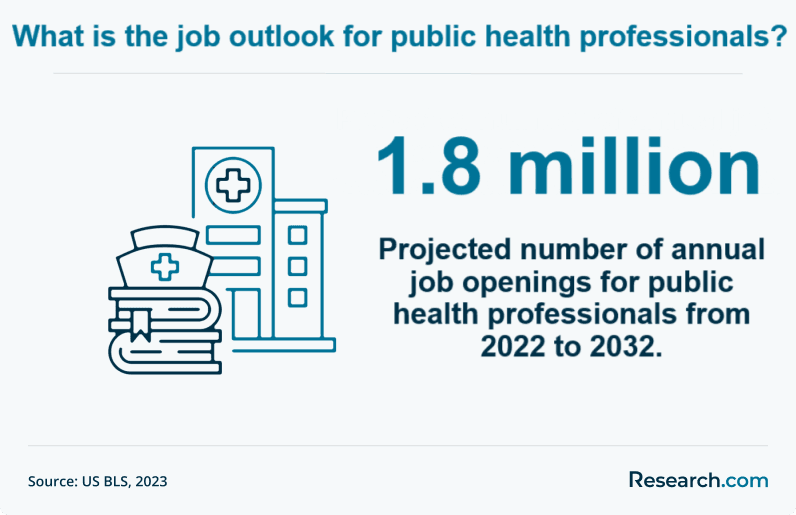
According to the U.S. Bureau of Labor Statistics (BLS), demand for public health professionals, including roles requiring advanced degrees, is projected to grow by 13% through 2032, faster than the average for other occupations. Actual job prospects vary by specialization, geography, funding, publications, technical skills, and professional network.
Where opportunities may differ
- Urban areas: Often have more universities, hospitals, research centers, consulting firms, and policy organizations.
- Rural areas: May offer opportunities focused on access, community health, public health infrastructure, and health disparities.
- Global organizations: WHO, UN-related organizations, NGOs, and international agencies may value candidates with global health, languages, field experience, and cross-cultural skills.
What Graduates Often Value About Online Public Health Doctorates
- An online format can make doctoral study possible for professionals who need to remain employed while completing advanced coursework and research. Evening and weekend study options may help students manage family and career responsibilities.
- Virtual cohorts can expose students to classmates working in different regions, organizations, and public health systems, which can broaden discussion and strengthen professional perspective.
- For students in rural or underserved areas, online delivery may provide access to doctoral education without relocation, provided the program offers strong advising, research support, and faculty availability.
Are Accelerated Online Programs a Good Alternative to a Traditional Public Health PhD?
Accelerated online programs can be useful for professionals who need a faster credential, but they are not the same as a traditional public health PhD. A PhD is designed around original research and usually requires a dissertation. Shorter programs may build applied skills more quickly, but they may not qualify graduates for research faculty roles or doctoral-level investigator positions.
Professionals focused mainly on faster career movement may compare other fast degrees online. Those aiming for academic research, principal investigator roles, or tenure-track faculty positions should be cautious about substituting a non-doctoral accelerated credential for a PhD.
What Is the Return on Investment of an Online PhD in Public Health?
ROI depends on how much you pay, how much funding you receive, whether you keep earning while enrolled, and whether the degree qualifies you for roles you could not otherwise access. A doctorate may offer the strongest return for students who need it for university teaching, senior research, advanced policy work, or executive public health leadership.
It may offer weaker financial return if your desired role only requires an MPH, if you pay high tuition without funding, or if the program lacks strong advising and career support. Comparing doctoral study with other career pathways, including non-degree options such as the best trade schools, can clarify whether the cost and timeline match your goals.
How Do Accreditation and Reputation Affect Online Public Health PhD Success?
Accreditation helps confirm that a school or program meets recognized academic standards. For public health, Council on Education for Public Health accreditation can be especially important because it signals that the program aligns with field-specific expectations. Institutional reputation can also influence access to faculty networks, research partnerships, conferences, employer recognition, and alumni connections.
Applicants should verify accreditation directly through official accreditor or university sources before enrolling. A strong institutional name cannot compensate for poor faculty fit, and low tuition cannot compensate for a credential that employers or academic institutions do not respect. Students interested in additional credentials can also review Research.com’s guide to online certifications that pay well.
How Can Certifications Strengthen a Public Health PhD?
Certifications can complement a public health doctorate by adding practical, employer-recognized skills in analytics, project management, informatics, emergency preparedness, health education, or program evaluation. They are most useful when they fill a specific skill gap rather than simply adding more letters to a resume.
For example, a doctoral student focused on health data may benefit from analytics or informatics training, while a student interested in implementation leadership may benefit from project management or evaluation credentials. Research.com’s guide to short certificate programs that pay well can help students compare options outside the doctoral curriculum.
Key Insights
- The lowest listed tuition is not the only measure of value. The University of Montana lists tuition at $4,716, but applicants should also compare accreditation, faculty fit, funding, research support, and delivery requirements.
- Know the difference between a PhD and a DrPH. A PhD is typically best for research and academic careers, while a DrPH is often better aligned with senior applied public health leadership.
- Online public health doctorates can be credible when accredited. The strongest programs provide rigorous methods training, accessible faculty, dissertation support, and meaningful research opportunities.
- Funding can matter more than sticker price. Assistantships, fellowships, tuition waivers, employer support, and grants can change the true cost of a doctoral degree.
- Dissertation fit is critical. Before applying, identify faculty who can support your research interests and ask how online students access data, field sites, and mentoring.
- Career outcomes vary by specialization. Epidemiology, biostatistics, policy, global health, environmental health, and community health can lead to different employers and salary ranges.
- Public health doctoral study is a long-term commitment. Online PhD programs in public health typically take 3–7 years to complete, depending on full-time or part-time enrollment and dissertation progress.
- Labor market indicators are positive but not guaranteed. BLS data cited in this guide projects 13% growth from 2022 to 2032 for public health roles such as epidemiologists and health educators, and epidemiologists have a median annual wage of $83,240 (BLS, 2022).
- Ask practical questions before enrolling. Confirm accreditation, total cost, residency requirements, advisor availability, funding eligibility, student support, and alumni outcomes.
References
- USA Facts. (2023, January 12). Health Data Trends. usafacts.org.
- World Health Organization. (n.d.). Public health and environment. who.int.
Other Things You Should Know About Online PhD in Public Health Programs
Most online PhD programs in Public Health require 12 to 18 dissertation credits, and some charge a flat tuition rate for those credits. A few programs also add mandatory dissertation continuation or registration fees each term until the final defense is completed.
The prerequisites typically include a master’s degree in a related field, a minimum GPA (often 3.0 or higher), and submission of GRE scores. Some programs may also require professional experience in public health. It's essential to review specific program requirements before applying.
Financial aid options for the cheapest online PhD in Public Health programs in 2027 may include federal student loans, scholarships specific to public health, tuition reimbursement programs, and assistantships, which can reduce the overall cost. Check each program’s financial aid office for specific eligibility and application deadlines.


