
2027 Easiest Bachelor’s in Public Health Programs to Get Into

Co-Founder and Chief Data Scientist
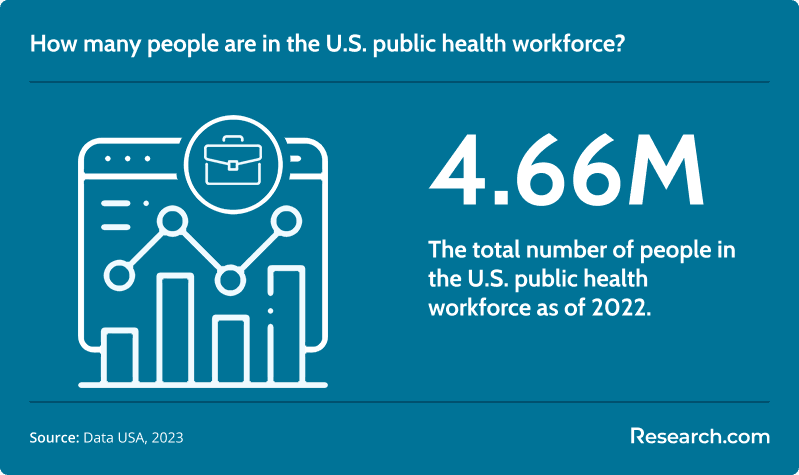
Choosing a bachelor’s in public health is often a practical decision: you want a degree that can lead to meaningful healthcare, community, policy, or data-focused work without creating unnecessary admissions barriers. Public health also matters more as communities respond to chronic disease, environmental risks, health inequities, workforce shortages, and the need for stronger prevention systems. The 2023 Report to the President on Supporting the U.S. Public Health Workforce emphasized that public health is central to addressing social and structural factors that affect health outcomes.
This guide is for prospective undergraduate students, transfer students, working adults, and career changers comparing accessible bachelor’s in public health programs. You will learn what these programs teach, how online and campus formats differ, what they may cost, what careers they can support, how to compare accreditation and outcomes, and which mistakes to avoid before enrolling.
Quick answer: What is the easiest bachelor’s in public health program to get into?
The easiest bachelor’s in public health program to get into is usually one with clear admissions requirements, transfer-friendly policies, flexible online or hybrid formats, regional or CEPH accreditation, and multiple start options. The programs listed below were selected using Research.com’s ranking process and public data sources, with attention to accessibility, affordability, academic quality, and student decision factors. “Easy to get into” should not mean low quality; it should mean the admissions path is transparent and realistic for qualified applicants.
Why earn a bachelor’s in public health?
- Career flexibility: Graduates may pursue roles such as health educator, community health coordinator, biostatistician, health services manager, or epidemiologist, depending on preparation, experience, and whether graduate study is required for the role.
- Salary range: Public health-related roles for bachelor’s-prepared professionals are associated with median salaries ranging from $48,200 to $110,680 annually, with higher earnings often tied to management, analytics, graduate education, or specialized experience.
- Accessible formats: Many programs are available online or in hybrid formats, which can help students continue working, manage family responsibilities, or avoid relocation.
- Community impact: Public health training prepares students to work on prevention, health education, policy, equity, environmental health, and data-informed decision-making.
What can I expect from a bachelor’s in public health program?
A bachelor’s in public health introduces students to how health problems are measured, prevented, communicated, and managed at the population level. Unlike clinical degrees that focus mainly on treating individual patients, public health programs examine communities, systems, policies, environments, and behaviors that shape health outcomes.
Most programs include a mix of general education courses, public health core courses, electives, and applied learning. Students commonly study epidemiology, biostatistics, environmental health, health promotion, research methods, health policy, and community assessment. Many programs also require an internship, practicum, senior project, or capstone so students can apply classroom concepts to real public health settings.
| Program component | What it usually includes | Why it matters |
| Public health core | Epidemiology, biostatistics, health behavior, environmental health, and health systems | Builds the foundation for entry-level public health jobs and graduate study |
| Applied experience | Internship, practicum, fieldwork, research assistantship, or capstone project | Helps students gain work samples, references, and practical exposure |
| Electives or concentration | Options such as global health, community health, epidemiology, healthcare administration, or environmental health | Lets students align coursework with career goals |
| General education | Writing, math, science, social science, and humanities requirements | Supports communication, analysis, and broad problem-solving skills |
Where can I work with a bachelor’s in public health?
Graduates can work in public, nonprofit, healthcare, corporate, and research-adjacent settings. Common employers include local and state health departments, public health agencies, community clinics, nonprofit health organizations, social service agencies, hospitals, wellness programs, and international organizations such as the World Health Organization.
In private-sector settings, bachelor’s-prepared public health graduates may support wellness programs, healthcare consulting, pharmaceutical outreach, patient education, quality improvement, data reporting, or community engagement initiatives. Some roles may require graduate education, certifications, or additional technical training, especially in epidemiology, biostatistics, healthcare leadership, or research.
How much can I make with a bachelor’s in public health?
Public health earnings vary by job title, location, employer, experience, and level of education. Entry-level community health roles commonly pay around $48,000 annually, while more specialized or leadership-oriented roles such as health services manager can exceed $100,000. Across the public health-related roles discussed in this guide, median annual salaries range from $48,200 to $110,680.
Students should treat salary figures as planning benchmarks rather than guarantees. A bachelor’s degree can open the door to public health employment, but salary growth often depends on experience, graduate education, data skills, management responsibility, certifications, and the type of organization hiring.
- Most Accessible Bachelor’s in Public Health Programs for 2027
- How Long Does a Bachelor’s in Public Health Take?
- Online vs. On-Campus Bachelor’s in Public Health: Which Is Better?
- How Much Does a Bachelor’s in Public Health Cost?
- Financial Aid Options for Public Health Majors
- Admissions Requirements and Prerequisites
- Common Courses in a Public Health Bachelor’s Program
- Public Health Specializations to Consider
- Current Trends in Public Health Education
- How to Strengthen Your Public Health Application
- When an Accelerated Healthcare Administration Degree Makes Sense
- How Interdisciplinary Study Can Support Public Health Goals
- Accreditation and Quality Checks
- Certifications That Can Add Career Value
- Common Challenges in Public Health Programs
- How to Choose the Best Bachelor’s in Public Health Program
- Short-Term Certifications and Practical Skills
- Digital Skills and Public Health Careers
- Advanced Interdisciplinary Options After a Public Health Degree
- Career Paths for Public Health Graduates
- Job Market Outlook for Bachelor’s in Public Health Graduates
- Health Information Management Training for Public Health Careers
- References and Sources
Most Accessible Bachelor’s in Public Health Programs to Get Into for 2027
How Research.com ranks schools
Because a degree is a major investment, Research.com uses a transparent ranking approach built on public and licensed education data. Our ranking methodology draws from sources that help evaluate institutions, program availability, affordability, and student-relevant outcomes.
- IPEDS database
- Peterson’s database, including the Distance Learning Licensed Data Set
- College Scorecard database
- National Center for Education Statistics
Use this list as a starting point, not the final answer. Before applying, confirm admissions standards, transfer credit rules, online availability, tuition, accreditation, internship requirements, and whether the program supports your intended career path.
| School | Program length | Credits | Cost per credit | Accreditation |
| Western Kentucky University | Four years | 120 | $495 | Council on Education for Public Health (CEPH) |
| University of Kentucky | Four years full-time | 120 | $499 | CEPH |
| University of Montana | Four years full-time | 120 | $366 (in-state), $1,024 (out-of-state) | CEPH |
| Kansas State University | Four years full-time | 120 | $425 | CEPH |
| East Stroudsburg University | Four years full-time | 120 | $458 (in-state), $1,116 (out-of-state) | CEPH |
| Georgia Southern University | Four years full-time | 118 | $204 (in-state), $658 (out-of-state) | CEPH |
| East Carolina University | Four years full-time | 120 | $166 (in-state), $716 (out-of-state) | CEPH |
| University of Southern Maine | Four years full-time | 120 | $295 (in-state), $712 (out-of-state) | CEPH |
| Ball State University | Four years full-time | 120 | $326 (in-state), $543 (out-of-state) | CEPH |
| University of Nevada-Reno | Four years full-time | 120 | $260 (in-state), $834 (out-of-state) | CEPH |
1. Western Kentucky University
Western Kentucky University offers a bachelor’s in public health designed for students who want broad preparation with room to connect public health to related healthcare fields. Minor options such as occupational safety, healthcare administration, and health information management can help students shape the degree toward workplace safety, operations, or data-focused roles. The program emphasizes applied learning, which is especially useful for students who want career-ready experience before graduation.
- Program Length: Four years
- Tracks/Concentrations: Healthcare Administration, Health Information Management
- Cost per Credit: $495
- Required Credits to Graduate: 120
- Accreditation: Council on Education for Public Health (CEPH)
2. University of Kentucky
The University of Kentucky provides a bachelor’s in public health with a general public health focus and an emphasis on access, equity, and inclusive preparation. The program may appeal to students interested in health disparities, healthcare access, or preparation for future professional study in fields such as medicine or pharmacy. Electives allow students to tailor their academic plan while benefiting from a large university environment.
- Program Length: Four years full-time
- Tracks/Concentrations: General Public Health
- Cost per Credit: $499
- Required Credits to Graduate: 120
- Accreditation: CEPH
3. University of Montana
The University of Montana offers a public health bachelor’s program with concentration options in community health, prevention sciences, and global health. As the only program of its kind in Montana, it can be a strong fit for students who want to study public health in a setting connected to both local and broader health challenges. Coursework and internship experiences help students connect theory with practice.
- Program Length: Four years full-time
- Tracks/Concentrations: General Public Health, Community Health and Prevention Sciences, Global Health
- Cost per Credit: $366 (in-state), $1,024 (out-of-state)
- Required Credits to Graduate: 120
- Accreditation: CEPH
4. Kansas State University
Kansas State University offers a bachelor’s in public health that combines required foundational courses with electives that let students explore specific interests. This structure works well for students who want a broad public health base but are still deciding whether to move toward direct community work, graduate school, health policy, or another related area. The program can support both immediate employment goals and preparation for advanced study.
- Program Length: Four years full-time
- Tracks/Concentrations: General Public Health
- Cost per Credit: $425
- Required Credits to Graduate: 120
- Accreditation: CEPH
5. East Stroudsburg University
East Stroudsburg University offers a bachelor’s in public health with concentration choices in community health and health services administration. Students who want smaller classes, focused advising, and a combination of theory and practical skill development may find the format appealing. The program also includes certification-related opportunities such as drug abuse prevention, which can support targeted career interests.
- Program Length: Four years full-time
- Tracks/Concentrations: Community Health, Health Services Administration
- Cost per Credit: $458 (in-state), $1,116 (out-of-state)
- Required Credits to Graduate: 120
- Accreditation: CEPH
6. Georgia Southern University
Georgia Southern University offers a bachelor’s in public health with four concentration areas, including environmental health sciences and epidemiology. Students complete internship experiences, and online options may help learners who need a more flexible schedule. The program is especially relevant for students who want to specialize earlier in their undergraduate path while still building a broad public health foundation.
- Program Length: Four years full-time
- Tracks/Concentrations: Environmental Health Sciences, Epidemiology, Global Health, Community Health Promotion and Education
- Cost per Credit: $204 (in-state), $658 (out-of-state)
- Required Credits to Graduate: 118
- Accreditation: CEPH
7. East Carolina University
East Carolina University offers a public health bachelor’s program with pathways in community health, pre-health, and worksite health promotion. Students can wait until the third year to choose a concentration, which is helpful for applicants who know they want public health but are still comparing career directions. Internship opportunities support applied learning in community and workplace settings.
- Program Length: Four years full-time
- Tracks/Concentrations: Community Health, Pre-Health, Worksite Health Promotion
- Cost per Credit: $166 (in-state), $716 (out-of-state)
- Required Credits to Graduate: 120
- Accreditation: CEPH
8. University of Southern Maine
The University of Southern Maine provides a general public health bachelor’s program supported by faculty expertise and partnerships with social service organizations. Students may benefit from practicums and research assistantships that turn coursework into concrete experience. The program can be a good match for students who value mentorship, community engagement, and practical exposure.
- Program Length: Four years full-time
- Tracks/Concentrations: General Public Health
- Cost per Credit: $295 (in-state), $712 (out-of-state)
- Required Credits to Graduate: 120
- Accreditation: CEPH
9. Ball State University
Ball State University offers a bachelor’s in public health that includes learning opportunities in areas such as environmental health and peer education. Students can also take part in public health activities and organizations such as Eta Sigma Gamma. This option may fit students who want a campus experience with opportunities for engagement beyond the classroom.
- Program Length: Four years full-time
- Tracks/Concentrations: General Public Health
- Cost per Credit: $326 (in-state), $543 (out-of-state)
- Required Credits to Graduate: 120
- Accreditation: CEPH
10. University of Nevada-Reno
The University of Nevada-Reno offers a public health bachelor’s program that connects classroom learning with internship experiences through public health centers. Students may gain exposure to applied work related to issues such as substance abuse through initiatives including the Center for the Application of Substance Use Technologies. The program is a strong option for students who want community-focused training and experiential learning.
- Program Length: Four years full-time
- Tracks/Concentrations: General Public Health
- Cost per Credit: $260 (in-state), $834 (out-of-state)
- Required Credits to Graduate: 120
- Accreditation: CEPH
How long does it take to complete a bachelor’s in public health program?
Most full-time students complete a bachelor’s in public health in four years. A typical program requires 120 credit hours, which usually includes general education, major courses, electives, and an internship or capstone. If you are still deciding whether this field fits your goals, Research.com’s guide on whether public health is a good major can help you weigh career flexibility, graduate school options, and job expectations.
Students attending part time or choosing an online format may take five or six years, depending on how many credits they complete each term. Some accelerated pathways can shorten the timeline to three years, but they may require summer enrollment, heavier course loads, careful advising, and fewer breaks between terms.
Students planning to move into leadership, epidemiology, research, or advanced public health practice may later pursue a master’s degree. Some accelerated online MPH programs can be completed in 12 to 18 months. Those interested in senior leadership or advanced public health practice may also compare the cheapest online DRPH programs when evaluating long-term education costs.
| Study pace | Typical completion time | Best for | Trade-off |
| Full-time | Four years | Students who can carry a standard course load | Requires consistent enrollment and time availability |
| Part-time | Five or six years | Working adults, parents, and students balancing multiple commitments | Longer time to graduation may increase total costs |
| Accelerated | As little as three years | Highly organized students who can manage heavier course loads | Less scheduling flexibility and a more demanding pace |
How does an online bachelor’s in public health compare to an on-campus program?
An online bachelor’s in public health is often best for students who need flexibility. Many online courses are asynchronous, allowing students to review lectures, complete assignments, and participate in discussions around work or family responsibilities. Online programs may also reduce commuting or relocation costs. Students comparing public health with clinical nursing pathways may also find it useful to understand RN, ADN, and BSN degree differences before committing to a healthcare route.
Campus programs may provide stronger face-to-face networking, easier access to research opportunities, in-person student organizations, campus events, libraries, labs, and spontaneous faculty interaction. They can be especially valuable for students who learn best through structured schedules and in-person accountability.
Neither format is automatically better. The right choice depends on your schedule, learning style, cost tolerance, location, access to internships, and career goals. Students who plan to continue into graduate public health study can also compare the best one-year online MPH programs as part of a long-term education plan.
| Factor | Online public health bachelor’s | On-campus public health bachelor’s |
| Schedule flexibility | Usually stronger, especially with asynchronous courses | More fixed class times and campus-based requirements |
| Networking | Depends on virtual events, discussion boards, and remote advising | Often easier through in-person classes, student groups, and campus activities |
| Applied learning | May use local internships, virtual projects, or arranged fieldwork | May provide easier access to campus-connected placements |
| Cost considerations | May reduce housing, commuting, and relocation expenses | May include more campus-related costs but also more in-person resources |
| Best fit | Self-directed students with work or family obligations | Students who want structure, campus life, and face-to-face support |
What is the average cost of a bachelor’s in public health program?
The cost of a bachelor’s in public health varies by institution type, residency status, delivery format, and transfer credit. In-state tuition at public universities generally costs $8,175 for the entire program, while private universities can exceed $70,000. The median out-of-state tuition for private institutions is $39,100. Public universities often charge higher rates to out-of-state students than to in-state students.
Some online programs cost as little as $300 per credit hour. Online students may also save on housing, transportation, and some campus-based expenses, although they should still budget for technology, books, fees, and any in-person internship requirements. If you expect to pursue healthcare leadership later, comparing the most affordable online MHA programs can help you plan beyond the bachelor’s degree.
| Cost item | What to check before enrolling | Why it can affect total price |
| Tuition | In-state, out-of-state, online, and per-credit rates | The advertised rate may not be the rate you pay |
| Fees | Technology, distance learning, health, lab, graduation, and student service fees | Fees can add substantially to the published tuition figure |
| Transfer credits | Maximum transferable credits and course equivalencies | Accepted credits can shorten completion time and reduce cost |
| Books and materials | Textbooks, software, statistics tools, and online platforms | Public health courses may require specialized materials |
| Internship expenses | Travel, background checks, immunizations, or unpaid field hours | Applied learning can create indirect costs |
What are the financial aid options for students enrolling in a bachelor’s in public health program?
Public health majors may qualify for federal aid, state aid, institutional scholarships, private scholarships, work-study, employer tuition benefits, and military education benefits. Federal options can include the Pell Grant and subsidized student loans for eligible students. State grants and scholarships may help residents reduce the cost of attending public institutions.
Many universities offer merit-based and need-based scholarships, and some awards are reserved for health science or public health students. Professional organizations, nonprofits, community foundations, and local health agencies may also fund scholarships related to community health, prevention, health equity, or service. Military-affiliated students can compare flexible options through Research.com’s guide to the most affordable online colleges for military students.
Practical ways to reduce your degree cost
- Submit the FAFSA as early as possible and confirm each school’s priority deadline.
- Ask whether public health majors qualify for department-specific scholarships.
- Compare transfer credit policies before choosing a school.
- Look for online programs that charge the same tuition regardless of residency, if available.
- Ask employers about tuition reimbursement for healthcare, wellness, or community health roles.
- Compare total cost, not just tuition, including fees, books, technology, and internship expenses.
What are the prerequisites for enrolling in a bachelor’s in public health program?
Most bachelor’s in public health programs require a high school diploma or equivalent. Recommended or required high school preparation often includes biology, chemistry, mathematics, and strong writing courses because public health relies on scientific literacy, quantitative reasoning, and clear communication.
Admissions policies vary by school. Some institutions have test-optional policies, while others may still request standardized test scores. Applicants can strengthen their file with healthcare exposure, community service, volunteer work, public health-related clubs, leadership roles, or experience supporting local organizations.
| Admissions item | Common expectation | How to strengthen it |
| Academic record | High school diploma or equivalent | Take science, math, writing, and social science courses when available |
| Test scores | Varies by institution | Confirm whether the program is test-optional or test-required |
| Personal statement | May be required by selective programs | Explain your interest in prevention, equity, community service, or health systems |
| Experience | Not always required | Use volunteer work, internships, caregiving, or community involvement as evidence of commitment |
| Transfer credits | Important for transfer students | Request a formal transfer evaluation before enrolling |
What courses are typically in a bachelor’s in public health program?
Public health programs combine science, social science, data analysis, communication, and policy. The goal is to help students understand health problems at the population level and design evidence-informed responses. Common courses include:
- Epidemiology: Studies how diseases and health conditions occur across populations and what factors influence their spread or prevention.
- Biostatistics: Teaches students how to use statistical methods to interpret public health data and research findings.
- Health Policy and Management: Examines how health policies are created, implemented, evaluated, and managed within organizations and systems.
- Community Health Promotion: Focuses on education, outreach, and behavior-change strategies that support healthier communities.
- Environmental Health Sciences: Explores how air, water, workplaces, housing, climate, and other environmental factors affect human health.
Students interested in clinical leadership later may also compare the types of master’s degrees in nursing, especially if they are deciding between public health, nursing, and healthcare administration pathways.
What types of specializations are available in bachelor’s in public health programs?
The primary purpose of public health education is to prepare future professionals to protect and improve community health. Specializations help students connect that broad mission to a more specific career direction. Common undergraduate options include:
- Global Health: Focuses on health challenges, access barriers, and disparities across countries and regions.
- Epidemiology: Emphasizes disease patterns, outbreak investigation, surveillance, and prevention.
- Health Education: Prepares students to design and deliver programs that promote healthier behaviors.
- Environmental Health: Examines environmental risks and their effects on communities.
- Health Policy and Management: Supports students interested in policy analysis, program administration, and organizational leadership.
| Specialization | Best for students interested in | Possible next step |
| Global Health | International health, migration, health access, and cross-cultural work | Graduate study, nonprofit work, or global health program support |
| Epidemiology | Disease trends, outbreaks, research, and data interpretation | MPH, research assistant roles, or analytics-focused training |
| Health Education | Community outreach, behavior change, wellness, and communication | Health education specialist or community program roles |
| Environmental Health | Air, water, occupational risks, climate-related health, and safety | Environmental health roles or specialized certification |
| Health Policy and Management | Healthcare systems, program operations, policy, and administration | Healthcare management roles or graduate study |
What are the emerging trends in public health education?
Public health education is changing as employers and communities need graduates who can work with data, communicate risk clearly, understand health equity, and collaborate across disciplines. Programs increasingly emphasize digital tools, analytics, outbreak response, social determinants of health, community resilience, and applied fieldwork. Flexible delivery is also becoming more important, and students who need remote study options can compare an online public health degree pathway.
Trends students should pay attention to
- Data literacy: Public health decisions increasingly rely on dashboards, surveillance systems, statistics, and evidence interpretation.
- Health equity: Programs are placing more emphasis on social and structural factors that influence health outcomes.
- Interdisciplinary collaboration: Public health work often involves healthcare, education, housing, emergency management, environmental science, and technology.
- Flexible learning: Online and hybrid options can expand access, but students must confirm internship and practicum expectations.
- Workforce readiness: Employers often value graduates who can communicate clearly, manage projects, interpret data, and work with communities.
What tips can enhance your admissions application for public health programs?
A strong public health application connects your academic preparation to a clear interest in population health. Admissions committees may look for evidence that you understand the field, care about service, and can succeed in science, writing, and data-oriented coursework. If graduate study is part of your plan, reviewing the easiest online MPH programs to get into can also help you understand how undergraduate choices may support future admissions.
Application checklist
- Match your coursework to prerequisites, especially biology, chemistry, mathematics, and writing.
- Use your personal statement to explain why public health fits your goals, not just why healthcare interests you generally.
- Highlight volunteer work, internships, community service, caregiving, health education, or leadership experience.
- Ask recommenders who can speak to your reliability, communication skills, service mindset, or academic growth.
- Confirm test score policies, deadlines, transfer credit rules, and program-specific admission steps.
Can an accelerated healthcare administration degree boost your public health career?
An accelerated healthcare administration pathway can be useful if your public health goals lean toward management, operations, finance, program administration, or healthcare leadership. Public health students who add administrative training may be better prepared to coordinate programs, manage teams, work with budgets, and understand healthcare systems. Research.com’s guide to an accelerated online healthcare administration degree can help students compare this adjacent path.
This option makes the most sense for students who want to move beyond outreach or entry-level program roles and eventually supervise services, manage departments, or contribute to healthcare strategy. It may be less necessary for students primarily interested in epidemiology, environmental health, or research unless they also want management responsibility.
How can interdisciplinary studies enhance your public health degree?
Public health problems rarely fit neatly into one academic field. Combining public health with pharmacy, data analytics, health management, environmental science, social work, nutrition, or informatics can help graduates understand complex problems from multiple angles. For example, students interested in medication safety, therapeutic access, or community pharmacy initiatives may explore an affordable online doctorate in pharmacy program as a separate advanced pathway.
Interdisciplinary study can strengthen problem-solving, but it should be intentional. Choose additional coursework or credentials because they support a defined goal, not because they simply add more credits. Ask whether the extra training improves employability, prepares you for graduate school, or helps you qualify for a specific role.
What accreditation and quality standards should I look for in a bachelor's in public health program?
Accreditation is one of the most important quality checks when comparing public health programs. Institutional accreditation helps confirm that the college or university meets recognized academic standards. Programmatic accreditation from the Council on Education for Public Health can also indicate that a public health curriculum aligns with field-specific expectations.
Students should verify accreditation directly with the accrediting body or the school, not just marketing materials. Also review faculty qualifications, internship support, graduation requirements, advising availability, student outcomes, and whether the curriculum covers the core areas of public health. Students exploring health science from a broader clinical perspective can also review online doctorate in pharmacy programs, but they should keep the core public health goal clear when comparing options.
Questions to ask about accreditation and quality
- Is the institution regionally accredited?
- Is the public health program accredited by CEPH?
- Does the program require an internship, practicum, or capstone?
- Who helps students secure applied learning placements?
- What are the graduation and retention expectations?
- Do graduates move into public health jobs, graduate school, or related healthcare roles?
Can additional certifications elevate your public health career?
Certifications can help public health graduates demonstrate targeted skills, especially in areas such as data analysis, health policy, project coordination, health education, informatics, billing, coding, or compliance. They are most valuable when they match a specific job goal. For example, students interested in healthcare data, reimbursement, or administrative systems may compare the best accredited online medical billing and coding schools.
A certification should not replace an accredited degree when a degree is required, but it can add practical skills and make a resume more focused. Before paying for a credential, check whether employers in your target roles recognize it and whether it requires renewal, exams, experience, or continuing education.
What challenges do students encounter in a bachelor’s in public health program?
Public health is broad, which can be both an advantage and a challenge. Students may struggle to choose a specialization, connect coursework to specific jobs, manage statistics or research methods, balance fieldwork with classes, or stay organized in online courses. Some learners also discover that public health is not the same as clinical healthcare and may need to reassess whether they want community-focused, policy-focused, or patient-facing work.
Students who want quick exposure to patient-facing skills may consider complementary options such as a low-cost online medical assistant program. However, alternative credentials should be evaluated carefully so they do not distract from degree progress or add unnecessary debt.
| Common challenge | Why it happens | Better strategy |
| Choosing a program based only on low tuition | Students may overlook fees, transfer rules, or weak internship support | Compare total cost, accreditation, applied learning, and student services |
| Ignoring accreditation | Marketing pages may not make quality differences obvious | Verify institutional and CEPH accreditation before applying |
| Assuming online means easier | Online courses still require discipline, writing, data work, and deadlines | Assess your schedule and ability to work independently |
| Waiting too long to plan internships | Field placements may require approvals, schedules, or background checks | Meet with advisors early and ask about placement timelines |
| Not connecting the major to a career target | Public health covers many fields and job titles | Choose electives, projects, and experience around a specific goal |
How do you choose the best bachelor’s in public health program?
The best public health program is the one that fits your career target, budget, schedule, learning style, and academic background while meeting recognized quality standards. Accreditation should be your first filter. After that, compare tuition, transfer policies, online availability, concentrations, internship support, faculty expertise, advising, and outcomes.
Students who are leaning toward leadership or administration should also compare an accredited online healthcare management degree, since healthcare management and public health overlap but lead to different types of roles. Public health focuses more on populations and prevention, while healthcare management focuses more on running organizations and services.
Step-by-step program selection process
- Define your career direction. Decide whether you are most interested in community health, epidemiology, environmental health, global health, policy, wellness, or healthcare administration.
- Verify accreditation. Check institutional accreditation and whether the public health program has CEPH accreditation.
- Calculate total cost. Include tuition, fees, books, technology, transfer credits, travel, and fieldwork expenses.
- Compare flexibility. Decide whether online, hybrid, campus, full-time, part-time, or accelerated study fits your life.
- Review applied learning. Ask how internships are arranged and whether students receive placement support.
- Ask about outcomes. Look for job placement information, graduate school pathways, alumni examples, and advising services.
- Speak with people. Contact admissions, program advisors, current students, or alumni before committing.
Can accelerated short-term certification programs improve my practical skills?
Short-term certifications can be useful when they add a specific skill that your bachelor’s program does not fully cover. For example, students who want basic patient workflow exposure, administrative familiarity, or healthcare office experience may explore 6-week online medical assistant programs. These options may help some students understand healthcare delivery more concretely.
Still, short-term training should be used strategically. It may not carry the same value as an accredited degree, and it may not be necessary for all public health roles. Before enrolling, ask whether the credential is recognized by employers, whether it leads to licensure or certification, and whether it will delay your bachelor’s completion.
How can digital innovations boost public health careers?
Digital tools are increasingly important in public health because agencies and organizations rely on data systems, dashboards, surveillance tools, electronic records, geographic information, and digital outreach. Graduates who can interpret data, communicate findings, and understand privacy or information systems may be more competitive for roles that connect public health with healthcare operations.
Students who want deeper preparation in health data systems may compare the fastest online health information management degree programs. This type of training can complement public health by strengthening skills in data quality, information governance, coding systems, and healthcare technology.
How can advanced interdisciplinary programs enhance my public health career?
Advanced interdisciplinary programs can help public health graduates move into specialized areas that require stronger technical, analytical, or scientific preparation. Bioinformatics, for example, connects biology, computing, and data analysis, which can support work related to disease research, surveillance, and large-scale health data interpretation. Students interested in this route may review a master’s in bioinformatics online.
This path is best for students who enjoy data, research, and technical problem-solving. It may be less suitable for students who prefer direct community engagement, health education, or program coordination unless they want to add an analytics specialization later.
What career paths are available for graduates of bachelor’s in public health programs?
A bachelor’s in public health can lead to roles that support community wellness, disease prevention, health education, program coordination, data-informed decision-making, and healthcare operations. Common paths include community health worker, health education specialist, program coordinator, wellness coordinator, research assistant, public health associate, and health services support roles. Some positions, such as epidemiologist or biostatistician, may require graduate education or advanced quantitative preparation, depending on the employer.
Health services managers plan and coordinate healthcare services, while community health workers connect people to care and resources. Epidemiologists study disease patterns, and biostatisticians analyze data that informs health decisions. Students who want to combine public health with nutrition may eventually explore roles such as nutritional epidemiologist, noted among the best careers to pursue with a nutrition master’s degree.
| Career path | Typical focus | Preparation that may help |
| Community health worker | Connects communities with healthcare services, education, and resources | Community health, communication, cultural competence, field experience |
| Health education specialist | Designs and delivers programs that promote healthier behaviors | Health promotion, program planning, evaluation, communication |
| Epidemiology-related roles | Supports disease tracking, surveillance, and population health analysis | Epidemiology, biostatistics, research methods, graduate study when required |
| Biostatistics-related roles | Analyzes public health and healthcare data | Statistics, data tools, research methods, advanced quantitative training |
| Health services management | Coordinates healthcare services, operations, teams, or programs | Healthcare management, policy, finance, leadership experience |
What is the job market for graduates with a bachelor’s in public health?
The job market for public health graduates is supported by demand for prevention, health education, healthcare coordination, and data-driven solutions. For the occupations discussed in this guide, the average projected growth rate from 2023 to 2033 is 16%. Demand is especially relevant in health services management, while community health workers, epidemiologists, biostatisticians, and health education specialists also remain important parts of the broader public health workforce.
Graduates can pursue opportunities in government agencies, nonprofits, healthcare organizations, private companies, public health departments, and community-based organizations. However, job titles and requirements vary widely. Students should read job postings early, identify common qualifications, and use electives, internships, certifications, and graduate planning to close any skill gaps.
Can integrating affordable health information management training enhance my public health career?
Health information management can strengthen a public health career when your goals involve healthcare data, reporting, compliance, digital records, privacy, or system efficiency. Public health professionals increasingly need to understand how information moves through healthcare and community systems, especially when measuring outcomes or improving programs. Students seeking an affordable data-oriented complement can compare the cheapest health information management degree options.
This route is most useful for students aiming at informatics, quality improvement, healthcare analytics support, or administrative data roles. It may be less essential for students focused on direct outreach, health education, or environmental health unless those roles require data system responsibilities.
Common mistakes to avoid when choosing a bachelor’s in public health
- Choosing only by ranking: Rankings can help you build a shortlist, but they cannot replace checking fit, cost, accreditation, and outcomes.
- Ignoring accreditation: Always verify institutional accreditation and whether public health accreditation applies to the program.
- Assuming every public health degree leads to the same jobs: Concentrations, internships, electives, and graduate education plans can shape your options significantly.
- Underestimating statistics and research: Public health requires comfort with data, evidence, and evaluation, even in community-facing roles.
- Looking only at tuition: Fees, transfer credit limits, books, technology, and internship expenses can change the real cost.
- Assuming online programs have no in-person requirements: Some online programs still require fieldwork, practicums, or local placements.
- Waiting until senior year to think about careers: Start reviewing job descriptions early so you can choose relevant electives and experience.
Questions to ask before applying
- Is the program accredited by CEPH or supported by a CEPH-accredited school or public health structure?
- How many transfer credits will the school accept toward the 120 credit requirement?
- Are courses fully online, hybrid, or campus-based?
- Does the program require an internship, practicum, or capstone?
- Who helps students find field placements?
- Which concentrations are available, and do they match your intended career path?
- What is the total cost after tuition, fees, books, technology, and living expenses?
- What financial aid, scholarships, or work-study options are available to public health majors?
- What kinds of jobs or graduate programs do recent graduates enter?
- Will the degree prepare you for immediate employment, graduate study, or both?
Key Insights
- A bachelor’s in public health usually takes four years and about 120 credit hours for full-time students, while part-time and online learners may need five or six years. Some accelerated options can shorten completion to as little as three years.
- Program cost varies widely. In-state public university tuition generally costs $8,175 for the full program, while private universities can exceed $70,000. The median out-of-state tuition for private institutions is $39,100.
- The most accessible program is not simply the one with the lowest admissions barrier. Look for accreditation, transparent requirements, transfer-friendly policies, flexible formats, affordable total cost, and strong applied learning.
- Online programs can be ideal for working adults and self-directed learners, while campus programs may offer stronger in-person networking, structured support, and easier access to campus resources.
- Public health careers are broad. Graduates may work in community health, health education, program coordination, health services management, research support, epidemiology-related roles, or data-focused positions, depending on education and experience.
- The average projected growth rate for the occupations discussed is 16% from 2023 to 2033, but individual outcomes depend on role, location, employer, credentials, and graduate education.
- Before enrolling, ask detailed questions about accreditation, internships, total cost, transfer credits, online requirements, career support, and how the curriculum aligns with your target job.
References
- BLS. (2024). Occupational Outlook Handbook: Community Health Workers. BLS community health workers profile.
- BLS. (2024). Occupational Outlook Handbook: Epidemiologists. BLS epidemiologists profile.
- BLS. (2024). Occupational Outlook Handbook: Health Education Specialists. BLS health education specialists profile.
- BLS. (2024). Occupational Outlook Handbook: Mathematicians and Statisticians. BLS mathematicians and statisticians profile.
- BLS. (2024). Occupational Outlook Handbook: Medical and Health Services Managers. BLS medical and health services managers profile.
- Data USA. (2023). Public Health. Data USA public health profile.
- President’s Council of Advisors on Science and Technology. (2023). Report to the President: Supporting the U.S. Public Health Workforce. White House public health workforce report.
Other Things You Should Know About Bachelor’s in Public Health Programs
In 2027, universities like Western Governors University and Southern New Hampshire University offer relatively easier admission processes for their Bachelor’s in Public Health programs. These institutions typically have more flexible admission requirements and accept a higher percentage of applicants compared to other schools.
Many programs have a minimum GPA requirement of 2.5 to 3.0 for easy entry in 2027. Meeting the GPA criteria can enhance admission chances, especially for programs considered easier to access. Always verify specifics with each program's admissions office.
Most bachelor’s in public health programs require four years of high school English, three years of math, and at least two years of lab science, often including biology or chemistry. Some schools will admit students with general admission standing, but science courses strengthen eligibility and preparedness.


