
2027 Best One-Year Online MPH Degree Programs

Co-Founder and Chief Data Scientist
Choosing a one-year online Master of Public Health program is mainly a trade-off between speed, cost, accreditation, workload, and career fit. Accelerated MPH programs can help working adults move into public health roles faster, but they are not automatically the best option for every student. The shorter timeline usually means a heavier weekly workload, fewer breaks, and a need to plan practicum requirements early.
This guide is designed for prospective MPH students comparing fast online programs for 2027. It explains what a one-year online MPH includes, how much programs may cost, which schools are commonly considered, what careers may follow, and how to avoid expensive mistakes when choosing a program.
Quick answer: Is a one-year online MPH worth it?
A one-year online MPH can be worth it if you already have a clear public health career goal, can handle an intensive graduate schedule, and choose an accredited program that offers the specialization, practicum support, and career services you need. It is especially practical for healthcare workers, public health employees, military personnel, and career changers who want a graduate credential without relocating.
- A one-year online MPH can prepare graduates for roles such as epidemiologist, health policy analyst, public health program manager, healthcare consultant, community health educator, environmental health specialist, and related positions.
- The U.S. Bureau of Labor Statistics projects a 28% increase in epidemiologist roles by 2031, making public health training relevant for students interested in disease prevention, population health, data analysis, and emergency preparedness.
- The median salary for professionals with an MPH degree is around $77,000 per year, though actual pay depends on role, location, employer, experience, and specialization.
- Online delivery can reduce relocation and commuting barriers, but accelerated programs require strong time management and realistic expectations about workload.
What can I expect from a one-year online MPH degree program?
A one-year online MPH is a condensed graduate program focused on the core disciplines of public health. Most programs combine foundational coursework, applied projects, and a practicum or capstone that connects classroom learning to real public health problems.
- Core subjects: Students usually study epidemiology, biostatistics, health policy, environmental health, public health ethics, program planning, and social and behavioral sciences.
- Applied learning: Many programs require a capstone, practicum, field placement, or applied practice experience focused on a community, organization, policy issue, or health data problem.
- Cost range: Tuition for a one-year online MPH program generally ranges from $15,000 to $35,000, though some programs cost less or much more depending on institution, credit requirements, residency status, and fees.
- Schedule: These programs are designed for completion in 12 months, but the pace can be demanding. Some courses are asynchronous, while others include live sessions, group work, or fixed assignment deadlines.
- Career preparation: The strongest programs help students build skills in data analysis, program evaluation, policy development, communication, leadership, and public health practice.
| Program feature | What it means for students | Why it matters |
| Accelerated 12-month timeline | Students complete graduate coursework faster than in a traditional two-year format. | Good for faster career movement, but it requires more weekly study time. |
| Online delivery | Courses are completed remotely, often through a learning platform. | Helpful for working adults, military students, caregivers, and students outside campus regions. |
| Practicum or capstone | Students apply public health skills to a real or simulated public health issue. | Employers often value evidence of applied experience, not just coursework. |
| Specialization options | Programs may offer tracks such as epidemiology, global health, health policy, or environmental health. | The right concentration can strengthen alignment with a target career path. |
Where can I work with a one-year online MPH degree?
MPH graduates can work in healthcare systems, public agencies, nonprofits, research organizations, consulting firms, universities, community health organizations, and international health groups. Common job titles include epidemiologist, health policy analyst, public health program manager, community health educator, environmental health specialist, public health analyst, and healthcare consultant.
Graduates may pursue opportunities with federal agencies such as the Centers for Disease Control and Prevention (CDC), international organizations such as the World Health Organization (WHO), local and state health departments, hospitals, universities, and research institutes. The best fit depends on the student’s specialization, prior work experience, analytical skills, and fieldwork background.
How much can I make with a one-year online MPH degree program?
According to the U.S. Bureau of Labor Statistics, epidemiologists earn a median annual salary of $78,830. Public health consultants and managers can earn between $75,000 and $100,000, depending on experience and location. High-paying roles, such as health services managers, can offer salaries exceeding $120,000 annually.
Salary outcomes are not guaranteed by the degree alone. Employers also consider experience, technical ability, leadership background, geographic location, industry, and whether the job involves data, management, policy, research, or direct community practice.
- Best One-Year Online MPH Degree Programs for 2027
- How long does it take to complete an online MPH degree program?
- How does a one-year online MPH degree program compare to an on-campus program?
- What is the average cost of a one-year online MPH degree program?
- What are the financial aid options for students enrolling in a one-year online MPH degree program?
- What are the prerequisites for enrolling in a one-year online MPH degree program?
- Are one-year online MPH degree programs a good fit for military personnel?
- What accreditation and quality standards should I consider?
- What are the opportunities for further academic advancement after a one-year online MPH degree?
- What courses are typically in a one-year online MPH degree program?
- What types of specializations are available in a one-year online MPH degree program?
- Are there potential challenges with a one-year online MPH degree program?
- How to choose the best one-year online MPH degree program?
- What competencies will I gain from a one-year online MPH degree program?
- What career paths are available for graduates of a one-year online MPH degree program?
- How do emerging technologies impact career trajectories in public health?
- What support services empower success in one-year online MPH programs?
- Is a one-year online MPH degree program a cost-effective investment?
- Can combining an MPH with an affordable health information management degree enhance career prospects?
- How are experiential learning opportunities integrated into one-year online MPH programs?
- What is the job market for graduates of a one-year online MPH degree program?
- References and data sources
Best One-Year Online MPH Degree Programs for 2027
How do we rank schools?
Research.com rankings are built from established education data sources, including the IPEDS database, the Peterson's database and its Distance Learning Licensed Data Set, the College Scorecard database, and the National Center for Education Statistics (NCES). These sources help evaluate factors such as program cost, graduation rates, distance learning availability, and student outcomes. For additional details, review our methodology.
| School | Program length | Credits | Cost information | Accreditation |
| Johns Hopkins University | Full-time (11 months) or part-time (2–3 years) | 80 | Approximately $78,000 | Council on Education for Public Health (CEPH) |
| Boston University | 1–2 years | 48 | $60,864 | Council on Education for Public Health (CEPH) |
| George Washington University | 12 months (accelerated) | 45 | Approximately $51,650 | Council on Education for Public Health (CEPH) |
| Drexel University | 12 months (accelerated) or 2 years (traditional) | 56 (accelerated track) | $1,242 per credit hour (approximately $44,712 total for the accelerated program) | Council on Education for Public Health (CEPH) |
| University of Florida | 12 months (accelerated) or 2 years (traditional) | 42 (accelerated track) | $12,740 (in-state), $30,134 (out-of-state) | Council on Education for Public Health (CEPH) |
1. Johns Hopkins University - Master of Public Health
Johns Hopkins University offers a highly rigorous Master of Public Health program with options for students interested in domestic and global public health work. The program gives students flexibility through online and on-campus formats and allows them to select from 12 concentrations, including Epidemiology, Health Systems, and Health Policy and Management. It is a strong fit for students seeking a broad, research-intensive program with many concentration choices.
- Program Length: Full-time (11 months) or part-time (2–3 years)
- Tracks/Concentrations: Epidemiology, Global Health, Health Policy, Biostatistics
- Cost per Year: Approximately $78,000
- Required Credits to Graduate: 80
- Accreditation: Council on Education for Public Health (CEPH)
2. Boston University - Master of Public Health
Boston University offers an MPH program centered on practical public health challenges, health equity, and professional preparation. Students can complete coursework through on-campus, online, and hybrid formats, and may shape their studies through certificates such as Community Assessment, Health Communications, and Global Health Program Design. This option is especially relevant for students who want applied learning and a public health curriculum connected to social justice issues.
- Program Length: 1–2 years
- Tracks/Concentrations: Community Assessment, Global Health, Health Communication
- Cost per Year: $60,864
- Required Credits to Graduate: 48
- Accreditation: Council on Education for Public Health (CEPH)
3. George Washington University - Master of Public Health
George Washington University provides an accelerated online MPH designed for professionals who want to complete graduate study quickly while staying employed. The program includes coursework connected to public health leadership, policy, and practice, along with a virtual practicum. It may appeal to students seeking a program with strong policy relevance and a structured 12-month format.
- Program Length: 12 months (accelerated)
- Tracks/Concentrations: Health Policy, Global Health, Leadership in Public Health
- Cost per Year: Approximately $51,650
- Required Credits to Graduate: 45
- Accreditation: Council on Education for Public Health (CEPH)
4. Drexel University - Master of Public Health
Drexel University offers an accelerated MPH with a practice-oriented curriculum. Students can study topics such as Epidemiology, Global Health, and Health Management while engaging with applied projects connected to community and population health needs. This program may be a good match for students who want a hands-on public health education in a compressed format.
- Program Length: 12 months (accelerated) or 2 years (traditional)
- Tracks/Concentrations: Epidemiology, Global Health, Health Management
- Cost per Year: $1,242 per credit hour (approximately $44,712 total for the accelerated program)
- Required Credits to Graduate: 56 (accelerated track)
- Accreditation: Council on Education for Public Health (CEPH)
5. University of Florida - Master of Public Health
The University of Florida offers an accelerated MPH for students who want to shorten their time to graduation. The curriculum includes public health fundamentals such as Biostatistics, Epidemiology, and Environmental Health, with concentration options including Public Health Practice and Social and Behavioral Sciences. Students comparing affordability should pay close attention to the difference between in-state and out-of-state pricing.
- Program Length: 12 months (accelerated) or 2 years (traditional)
- Tracks/Concentrations: Public Health Practice, Epidemiology, Social and Behavioral Sciences
- Cost per Year: $12,740 (in-state), $30,134 (out-of-state)
- Required Credits to Graduate: 42 (accelerated track)
- Accreditation: Council on Education for Public Health (CEPH)
6. University of Southern California - Master of Public Health
The University of Southern California offers an online MPH that combines public health theory with applied problem-solving. Students may pursue areas such as Global Health, Biostatistics and Epidemiology, and Health Education and Promotion. This program is best suited for students who want a comprehensive online MPH with options to develop both analytical and community-facing skills.
- Program Length: 2 years (full-time) or accelerated options available
- Tracks/Concentrations: Global Health, Biostatistics and Epidemiology, Health Education and Promotion
- Cost per Year: $61,200
- Required Credits to Graduate: 42
- Accreditation: Council on Education for Public Health (CEPH)
7. University of Memphis - Master of Public Health
The University of Memphis offers an MPH with online and on-campus options and a focus on public health challenges affecting urban and underserved communities. Concentrations include Epidemiology, Urban Health, and Social and Behavioral Sciences. The program may be appealing to students who want a lower listed cost and a curriculum connected to community health practice.
- Program Length: 1–2 years (depending on full-time or part-time status)
- Tracks/Concentrations: Epidemiology, Urban Health, Social and Behavioral Sciences
- Cost per Year: $10,794 (in-state), $13,977 (out-of-state)
- Required Credits to Graduate: 42
- Accreditation: Council on Education for Public Health (CEPH)
8. Tufts University - Master of Public Health
Tufts University offers an MPH that blends core public health training with policy, communication, management, and applied learning opportunities. Students can focus on areas such as Health Services Management, Nutrition, or Health Communication. It may be a strong choice for students who value collaborative learning and access to fieldwork or internships in Boston and beyond.
- Program Length: 1–2 years
- Tracks/Concentrations: Health Services Management, Nutrition, Health Communication
- Cost per Year: $58,448
- Required Credits to Graduate: 42–48
- Accreditation: Council on Education for Public Health (CEPH)
9. Chamberlain University - Master of Public Health
Chamberlain University delivers its MPH fully online, which may fit working professionals who need a remote format. The program emphasizes usable skills in policy analysis, public health planning, and leadership. Students who prefer a generalist MPH rather than a highly specialized track may find this structure appropriate.
- Program Length: 1–2 years
- Tracks/Concentrations: General Public Health
- Cost per Year: $21,480
- Required Credits to Graduate: 42
- Accreditation: Council on Education for Public Health (CEPH)
10. Baylor University - Public Health Program - Master of Public Health
Baylor University offers an online MPH with a Community Health focus and a curriculum that includes public health principles, practicum experience, and a capstone project. The program also incorporates a faith-based perspective. It may be appropriate for students who want to work in community health, health promotion, or population-focused service roles.
- Program Length: 18 months (online)
- Tracks/Concentrations: Community Health
- Cost per Year: $49,584
- Required Credits to Graduate: 42
- Accreditation: Council on Education for Public Health (CEPH)
How long does it take to complete an online MPH degree program?
Most full-time online MPH programs take 1.5 to 2 years to finish. The fastest online MPH programs shorten that timeline to as little as 12 to 18 months by using compressed terms, heavier course loads, and limited downtime between classes.
Part-time students usually take 2.5 to 4 years, depending on how many courses they complete each term. Part-time study is often better for students who are working full time, raising children, serving in the military, or managing other major commitments.
Students who plan to pursue advanced research, university teaching, executive leadership, or senior policy roles may later consider doctoral study. A doctorate in public health can require several more years of training, so students comparing long-term academic options may also review the cheapest online PhD in public health programs.
| Study pace | Typical timeline | Best for | Main caution |
| Accelerated full-time | 12 to 18 months | Students who can prioritize school heavily and want a faster completion path | Workload can be intense and may conflict with full-time employment |
| Traditional full-time | 1.5 to 2 years | Students who want a steadier pace with more time for networking and fieldwork | Graduation takes longer than accelerated formats |
| Part-time | 2.5 to 4 years | Working professionals and students with significant outside responsibilities | Longer timeline may delay career changes or promotions |
How does a one-year online MPH degree program compare to an on-campus program?
A one-year online MPH is built for speed and flexibility. Students can often complete coursework from home, avoid relocation, and continue working while earning the degree. This format is useful for self-directed learners who are comfortable with online platforms, virtual collaboration, and independent time management.
An on-campus MPH usually provides more face-to-face interaction, easier access to campus events, in-person networking, and local fieldwork opportunities. These programs are often two years long, giving students more time to build relationships with faculty, peers, and public health organizations.
Neither format is automatically better. The best choice depends on your schedule, learning style, budget, career goals, and need for in-person experiences. A reputable online program can lead to successful careers in public health when it is accredited and aligned with the student’s professional objectives.
| Factor | One-year online MPH | On-campus MPH |
| Flexibility | Usually stronger for working adults and students who cannot relocate | Less flexible because of location and class schedules |
| Speed | Often designed for accelerated completion | Commonly follows a longer, more traditional timeline |
| Networking | Requires intentional effort through virtual events, alumni groups, and practicum sites | Often easier through in-person classes, seminars, and campus partnerships |
| Learning style | Best for independent learners who can stay organized | Best for students who prefer face-to-face instruction and campus structure |
| Cost considerations | May reduce commuting, housing, and relocation costs | May involve additional living, travel, and campus-related expenses |
What is the average cost of a one-year online MPH degree program?
Tuition can range from approximately $13,000 to over $73,000. For example, the University of Florida lists an online MPH program at $550 per credit hour, totaling around $26,400 for the required 48 credits. Johns Hopkins University's online MPH program requires 80 credits, amounting to approximately $73,960 in tuition.
On average, online MPH students paid a net price of under $9,300 during the 2019-2020 academic year after financial aid. However, tuition alone does not show the full price. Students should also ask about technology fees, distance learning fees, books, software, background checks, practicum-related travel, and any required campus visits.
Students comparing public health and healthcare leadership pathways may also want to review cost structures for the most affordable online MHA programs, especially if their primary career goal is healthcare operations rather than population health.
What are the financial aid options for students enrolling in a one-year online MPH degree program?
Graduate students in online MPH programs may be able to use federal loans, institutional scholarships, public health scholarships, employer tuition assistance, military benefits, and loan repayment programs. Eligibility depends on the school, enrollment status, citizenship status, employer policies, and whether the program meets federal aid requirements.
Federal financial aid
- FAFSA: U.S. students should complete the Free Application for Federal Student Aid to determine eligibility for federal graduate aid.
- Direct Unsubsidized Loans: Graduate students may qualify for federal loans that are not based on financial need.
- PLUS Loans: These loans can help cover remaining education costs after other aid is applied, but they require a credit check.
Scholarships and grants
- Institution-specific scholarships: Universities may offer merit-based, need-based, or program-specific awards for MPH students.
- Public health scholarships: Organizations such as the Association of Schools and Programs of Public Health (ASPPH) and the National Public Health Scholarship Program may offer funding for students pursuing public health degrees.
- Grants: Grants typically do not need to be repaid, but eligibility rules vary widely by program and funding source.
Employer sponsorship and tuition reimbursement
- Employer sponsorship: Healthcare systems, government agencies, and public health employers may help pay for graduate education if it supports the employee’s role.
- Tuition reimbursement: Students should ask HR departments whether graduate tuition support is available and whether repayment obligations apply if they leave the employer.
Loan forgiveness and repayment programs
- Public Service Loan Forgiveness (PSLF): Graduates employed by qualifying public service or nonprofit employers may qualify after making 120 qualifying payments.
- State-specific repayment programs: Some states support public health professionals who work in underserved areas or high-need roles.
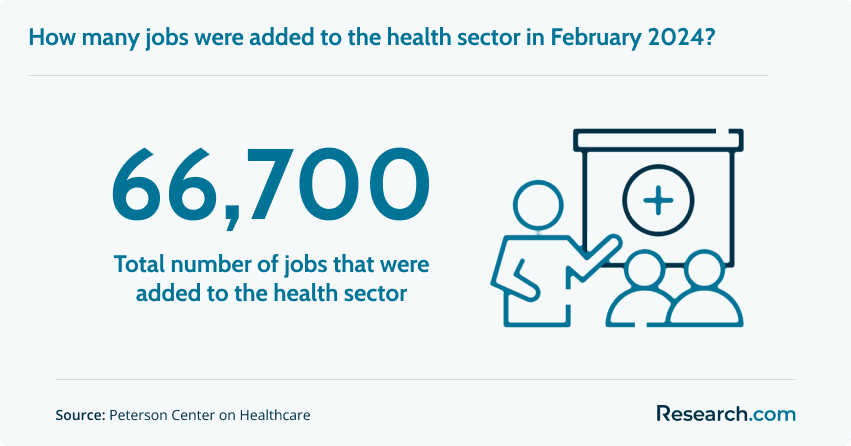
The chart below highlights the growth of healthcare employment as a share of the total U.S. workforce, showing trends from 1990 to 2023.
What are the prerequisites for enrolling in a one-year online MPH degree program?
Admission requirements vary, but accelerated online MPH programs usually expect applicants to show academic readiness, professional focus, and the ability to manage a demanding pace. Students should verify requirements directly with each school before applying.
Educational background
- Bachelor’s degree: Applicants generally need a bachelor’s degree from an accredited institution. Students coming from healthcare completion programs, including the fastest RN to BSN program online., may be eligible if they meet graduate admission standards.
- Minimum GPA: Many programs look for a competitive GPA, often around 3.0 on a 4.0 scale. Applicants below the preferred GPA may need stronger recommendations, relevant work experience, or a persuasive statement of purpose.
Professional experience
Some one-year online MPH programs prefer applicants with 1–2 years of experience in healthcare, public health, community work, research, nonprofit service, or a related field. Experience can be especially important in executive, accelerated, or leadership-focused programs.
Prerequisite courses
Programs may require or recommend prior coursework in subjects such as:
- Biology or Human Anatomy
- Statistics or Biostatistics
- Epidemiology
- Social or Behavioral Sciences
- Chemistry or Environmental Health
If you do not meet a prerequisite, ask whether the school allows conditional admission or completion of bridge courses before the MPH begins.
Standardized test scores
- GRE/GMAT: Many programs have removed GRE requirements, particularly for experienced applicants, but some schools may still request GRE or GMAT scores.
- English proficiency tests: International applicants may need TOEFL or IELTS scores unless they qualify for a waiver.
Letters of recommendation
Most MPH programs ask for 2–3 recommendation letters from professors, supervisors, or public health professionals who can speak to the applicant’s preparation, leadership potential, and ability to succeed in graduate study.
Statement of purpose
A strong statement should explain why you want an MPH, which public health problems you hope to address, how the program fits your goals, and why you are ready for an accelerated online format.
Are one-year online MPH degree programs a good fit for military personnel?
One-year online MPH programs can work well for military personnel, veterans, and military spouses because they offer location flexibility and may accommodate schedule changes better than campus-only programs. Service members often bring leadership, logistics, emergency response, communication, and operations experience that can transfer well into public health roles.
Before enrolling, military-affiliated students should ask about military tuition benefits, transfer credit evaluation, deployment policies, leave of absence rules, veteran advising, and career support. Students can compare institutions with established support systems through Research.com’s guide to online colleges for military.
What accreditation and quality standards should I consider?
Accreditation should be one of the first filters when comparing online MPH programs. Students should confirm that the university is institutionally accredited and that the public health program is accredited by the Council on Education for Public Health (CEPH) when possible. CEPH accreditation signals that the program has been reviewed against public health education standards.
Quality also depends on faculty expertise, practicum support, student outcomes, alumni networks, career services, course design, and whether the online format offers meaningful interaction with instructors and peers. Students comparing accelerated health-related credentials can also use fast track healthcare programs as a reference point for evaluating pace, support, and quality in compressed formats.
What are the opportunities for further academic advancement after a one-year online MPH degree?
An MPH can be a terminal professional degree or a foundation for doctoral study. Graduates who want senior research, academic, policy, or executive roles may consider a DrPH, PhD in public health, PhD in epidemiology, or another health-focused doctorate. The right next step depends on whether the student wants to lead public health practice, conduct original research, teach, or combine public health with clinical expertise.
Some professionals broaden their qualifications by combining public health with another healthcare discipline. For example, those interested in clinical systems, medication policy, or population-level pharmaceutical issues may compare options such as pharmacy school online accredited programs.
What courses are typically in a one-year online MPH degree program?
A one-year online MPH compresses the standard public health curriculum into a shorter timeline. Students should expect both quantitative and communication-heavy coursework, along with applied assignments that require analysis, writing, and collaboration.
- Epidemiology: Study of disease patterns, risk factors, outbreak investigation, surveillance, and population-level prevention.
- Biostatistics: Statistical methods used to interpret health data, evaluate interventions, and support public health research.
- Environmental Health: Examination of how air, water, pollution, workplace hazards, and environmental exposures affect human health.
- Health Policy and Management: Analysis of healthcare systems, public health leadership, policy design, financing, and organizational decision-making.
- Social and Behavioral Sciences: Exploration of health behavior, community interventions, health communication, and social determinants of health.
What types of specializations are available in a one-year online MPH degree program?
Specializations help students connect the MPH to a specific career direction. Not every accelerated program offers every concentration, so applicants should confirm that the program’s track matches their goals before enrolling.
Epidemiology
Epidemiology focuses on how diseases and health conditions spread through populations. Students learn surveillance methods, outbreak investigation, research design, and statistical analysis. This concentration is often appropriate for future epidemiologists, research analysts, public health analysts, and disease prevention specialists.
Global Health
Global health examines health systems, infectious disease, emergency response, equity, and population health challenges across countries and regions. Graduates may pursue roles with international NGOs, government programs, humanitarian organizations, and global health initiatives.
Health Policy and Management
This concentration prepares students to analyze policy, manage public health programs, evaluate healthcare systems, and lead organizations. It can fit students interested in policy advising, consulting, healthcare administration, public health leadership, or advocacy.
Environmental Health
Environmental health focuses on the relationship between human health and environmental conditions such as pollution, toxins, occupational risks, and climate-related hazards. Graduates may work in public agencies, environmental organizations, occupational health, or risk assessment roles.
Biostatistics
Biostatistics emphasizes statistical modeling, data interpretation, study design, and quantitative research. This track is best for students with strong math and analytical skills who want to work with public health data in academia, government, healthcare, or industry.
| Specialization | Best for students interested in | Common career direction |
| Epidemiology | Disease tracking, outbreak response, surveillance, research | Epidemiologist, public health analyst, research scientist |
| Global Health | International health systems, infectious disease, health equity | Global health specialist, NGO program manager, global health consultant |
| Health Policy and Management | Leadership, policy, healthcare systems, program operations | Health policy analyst, healthcare administrator, public health manager |
| Environmental Health | Pollution, workplace hazards, environmental risk, climate-related health issues | Environmental health specialist, industrial hygienist, sustainability consultant |
| Biostatistics | Health data, statistical analysis, research methods | Biostatistician, data analyst, public health researcher |
Students coming from administrative healthcare roles sometimes compare public health with medical billing and coding pathways. If you are weighing that type of transition, Research.com also explains whether Is becoming a medical billing and coding hard.
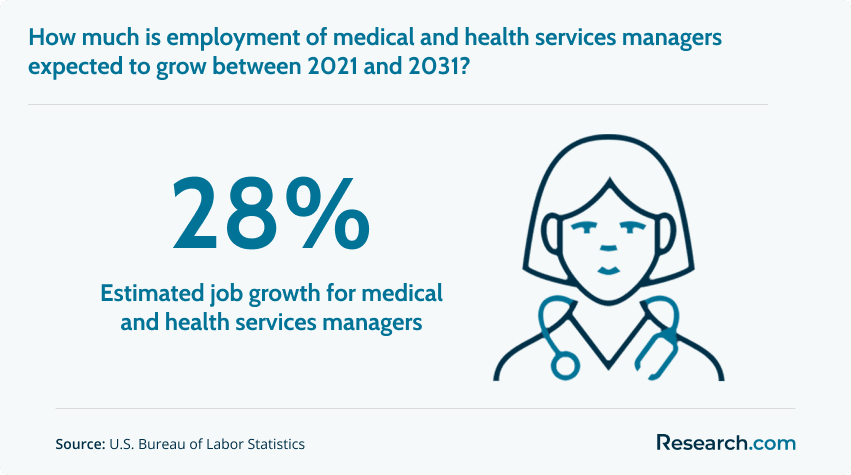
Here's a look at the primary employment settings for medical and health services managers, highlighting the largest sectors within the healthcare industry:
Are there potential challenges with a one-year online MPH degree program?
Yes. The biggest challenge is pace. A one-year MPH compresses graduate-level reading, statistical work, writing, group projects, and practicum planning into a short period. Students who underestimate the workload may struggle, especially if they are also working full time.
- Heavy weekly workload: Accelerated courses move quickly and may leave little room to fall behind.
- Limited in-person networking: Online students must be proactive about connecting with faculty, classmates, alumni, and practicum supervisors.
- Practicum logistics: Students may need to secure approved field experiences in their own area or complete remote practice projects.
- Less time for exploration: A one-year format may not be ideal for students who are unsure which public health specialty they want.
- Technology dependence: Reliable internet, software access, and comfort with online collaboration are essential.
Students who want added clinical exposure before or alongside public health training may consider adjacent entry-level healthcare options, including medical assistant online classes.
How to choose the best one-year online MPH degree program?
The best one-year online MPH is the program that fits your target career, budget, learning style, and available weekly study time. Rankings can help you build a shortlist, but they should not replace a careful review of accreditation, curriculum, costs, and support services.
- Start with your career goal. Decide whether you are aiming for epidemiology, policy, health education, management, global health, environmental health, data analytics, or another focus.
- Check accreditation. Confirm institutional accreditation and, when available, CEPH accreditation for the public health program.
- Compare total cost, not only tuition. Include fees, books, software, travel, lost income, and loan interest. If cost is the main concern, compare options listed among the cheapest online MPH programs.
- Review practicum requirements. Ask how field placements are approved, whether remote practicums are allowed, and what support the school provides.
- Evaluate the online format. Find out whether classes are asynchronous, synchronous, or mixed, and whether live sessions are required.
- Ask about faculty access. Strong online programs make it easy to contact instructors, advisors, and career staff.
- Review transfer credit policies. Prior graduate credits may reduce time or cost, but policies vary by school.
- Check student support. Look for tutoring, writing help, statistics support, library access, career coaching, disability services, and technical support.
| Common mistake | Why it can hurt you | Better approach |
| Choosing only by tuition | Low tuition may not include fees, practicum costs, or limited support. | Compare total cost of attendance and student services. |
| Ignoring accreditation | Employers and doctoral programs may prefer or require recognized accreditation. | Verify institutional and CEPH accreditation before applying. |
| Assuming online means self-paced | Many online MPH programs still have fixed deadlines and live requirements. | Ask for a sample course schedule before enrolling. |
| Overlooking practicum requirements | Fieldwork can delay graduation if not planned early. | Ask how placements are arranged and approved. |
| Picking a program without a specialization match | A general program may not support your preferred career path. | Choose a curriculum aligned with your target role. |
What competencies will I gain from a one-year online MPH degree program?
A one-year online MPH should help students develop both technical and leadership skills. Graduates are expected to understand how to interpret public health evidence, evaluate community needs, communicate risk, design interventions, and use data to guide decisions.
- Analyze population health data using epidemiological and statistical methods.
- Evaluate public health programs, policies, and interventions.
- Communicate health information to professional, community, and policy audiences.
- Assess how social, behavioral, environmental, and economic factors affect health.
- Apply ethical reasoning to public health decisions.
- Plan and manage public health projects in government, nonprofit, healthcare, or private-sector settings.
Students seeking a shorter, hands-on healthcare credential before committing to graduate public health study may also compare options to become medical assistant in 6 weeks.
What career paths are available for graduates of a one-year online MPH degree program?
MPH graduates can pursue roles in public health practice, research, healthcare administration, health policy, data analysis, environmental health, and global health. Career options depend heavily on specialization and prior experience.
Epidemiologist
Epidemiologists study patterns and causes of disease, injuries, and health conditions in populations. They may investigate outbreaks, analyze surveillance data, design studies, and recommend prevention strategies.
Public Health Analyst
Public health analysts use data, policy research, and program evaluation to improve health initiatives. They may work for government agencies, nonprofits, consulting firms, or healthcare organizations.
Health Policy Advisor
Health policy advisors review legislation, evaluate policy options, and recommend strategies to improve healthcare access, quality, cost, or population health outcomes.
Healthcare Administrator
Healthcare administrators oversee operations in hospitals, clinics, public health organizations, or healthcare programs. Students interested in management should compare MPH pathways with healthcare administration options, especially because Healthcare administration salary can vary widely by role and setting.
Environmental Health Specialist
Environmental health specialists evaluate public health risks connected to pollution, workplace conditions, water quality, toxins, food safety, and environmental exposures.
Biostatistician
Biostatisticians apply statistical methods to health data. They may support clinical trials, public health research, disease surveillance, program evaluation, or pharmaceutical research.
Global Health Specialist
Global health specialists work on health challenges affecting populations across countries and regions. Their work may involve infectious disease control, health equity, program management, or international health systems.
For some healthcare administrative workers, an MPH can be a pathway into broader population health, policy, or program roles. Students deciding whether to move from coding or billing into public health may want to ask: is studying medical billing and coding hard, and does an MPH better match long-term goals?
The chart below provides an overview of the average salaries earned by professionals with health-related majors, showcasing potential income across various roles in the healthcare field.
How do emerging technologies impact career trajectories in public health?
Technology is changing what public health employers expect from MPH graduates. Data analytics, health informatics, electronic health records, disease surveillance platforms, telehealth, geospatial tools, and AI-assisted analysis are increasingly relevant in public health work.
Students interested in data-heavy careers should look for programs that include biostatistics, informatics, programming exposure, data visualization, and applied analytics projects. Those who want deeper training in biological data and computational methods may also explore a bioinformatics online master pathway.
What support services empower success in one-year online MPH programs?
Support services matter more in an accelerated program because students have less time to recover from confusion, technical issues, or poor advising. Strong programs provide fast access to faculty, academic advisors, library staff, writing support, statistical tutoring, technology help, career coaching, and practicum coordination.
Prospective students should ask whether online learners receive the same career resources as campus students, whether internships are supported in the student’s local area, and whether the school has employer connections in public health. Students comparing short healthcare career pathways can also review how support and financial aid are discussed in guides to accredited medical billing and coding schools online with financial aid.
Is a one-year online MPH degree program a cost-effective investment?
A one-year online MPH can be cost-effective when it leads to a realistic career outcome, avoids unnecessary debt, and fits the student’s schedule well enough to complete on time. The shorter timeline can reduce opportunity cost, but high tuition or a poor specialization match can weaken the return on investment.
Before enrolling, compare the total program cost with expected roles, likely salary range, employer tuition benefits, and your ability to keep working while enrolled. Students considering less expensive or shorter healthcare credentials may also compare the MPH with top medical billing and coding programs to decide which credential fits their career stage.
Can combining an MPH with an affordable health information management degree enhance career prospects?
Combining public health training with health information management can be useful for students interested in informatics, population health data, quality improvement, compliance, healthcare analytics, or public health reporting. An MPH builds population health and policy expertise, while health information management develops technical knowledge of health data systems and records.
This combination may be strongest for professionals who want to bridge public health, healthcare operations, and data governance. Students exploring that direction can compare options for an affordable health information management degree.
How are experiential learning opportunities integrated into one-year online MPH programs?
Experiential learning in online MPH programs usually happens through practicums, applied projects, simulations, case studies, capstones, and partnerships with health organizations. Some programs allow students to complete fieldwork with a local agency, employer, nonprofit, hospital, or public health department, while others use remote or virtual practicum models.
Students should ask how early they can begin planning the practicum, whether the school helps identify placements, and whether employer-based projects are allowed. Those who want to strengthen data and systems expertise alongside public health practice may also review fast track health information management online programs.
What is the job market for graduates of a one-year online MPH degree program?
The job market for MPH graduates includes government, healthcare, nonprofit, consulting, research, academic, and private-sector roles. Demand is influenced by public health emergencies, chronic disease prevention, environmental risks, health equity work, healthcare system needs, and the growing importance of health data.
Growing demand for public health professionals
Public health has gained visibility because of pandemics, chronic disease, emergency preparedness, environmental health, and health disparities. Graduates of the easiest NP specialties and MPH graduates may both work in health-focused settings, but the MPH is more directly tied to population health, prevention, policy, epidemiology, and program design.
Diverse career opportunities
- Government agencies: Local and state health departments, the Centers for Disease Control and Prevention (CDC), and the World Health Organization (WHO).
- Nonprofits and NGOs: Organizations focused on community health, global health, disease prevention, maternal and child health, and health equity.
- Healthcare systems: Hospitals, clinics, integrated delivery systems, and quality improvement departments.
- Private sector: Consulting, pharmaceuticals, biotechnology, and health data analytics, including pathways related to online doctor of pharmacy programs.
- Academia and research: Universities, research centers, and policy institutes conducting public health studies and evaluations.
Salary expectations
Salary depends on occupation, region, employer, experience, and specialization. Common ranges cited for MPH-related roles include:
- Epidemiologist: $70,000–$100,000+
- Healthcare Administrator: $80,000–$120,000+
- Biostatistician: $75,000–$110,000+
- Health Policy Analyst: $60,000–$90,000+
- Environmental Health Specialist: $60,000–$85,000+
These figures often increase with experience and advanced certifications, but students should treat them as role-dependent estimates rather than guaranteed outcomes.
Impact of online degrees on employability
An online MPH can be competitive when it comes from an accredited institution and includes strong applied learning. Employers usually care most about skills, experience, communication ability, data literacy, and whether the candidate can solve public health problems. Online students should build a portfolio of projects, practicum work, data analyses, policy briefs, or program evaluations to show practical ability.
Emerging trends in the job market
- Public health informatics: More roles require data analysis, dashboards, surveillance systems, and digital reporting tools.
- Global health and pandemic preparedness: Public health organizations continue to need workers trained in infectious disease management and emergency response.
- Behavioral health and mental health: Prevention, substance abuse response, and community-based mental health initiatives remain important public health priorities.
- Climate and environmental health: Public health professionals are increasingly involved in addressing environmental risk and climate-related health effects.
References
- Data USA. (2024). Public health. Data USA.
- Peterson-KFF Health System Tracker. (2024). What are the recent trends in health sector employment? Peterson-KFF Health System Tracker.
- U.S. Bureau of Labor Statistics. (2024). Medical and health services managers. U.S. Department of Labor.
Key Insights
- A one-year online MPH is best for students who know their public health direction and can handle a fast graduate workload.
- Accreditation matters. Confirm institutional accreditation and look for CEPH accreditation when comparing MPH programs.
- Total cost can vary widely, from approximately $13,000 to over $73,000, so compare tuition, fees, aid, practicum costs, and loan impact.
- Online programs offer flexibility, but they require proactive networking, disciplined scheduling, and early practicum planning.
- Specialization choice affects career fit. Epidemiology, biostatistics, health policy, global health, and environmental health lead to different job markets.
- The degree alone does not guarantee salary growth. Practical experience, technical skills, fieldwork, and employer connections strongly influence outcomes.
Other Things You Should Know About One-Year Online MPH Degree Programs
Admission requirements for one-year online MPH programs in 2027 typically include a bachelor's degree, a minimum GPA of 3.0, letters of recommendation, a personal statement, and relevant work or volunteer experience in public health. Some programs may also require GRE scores, though many are moving towards a test-optional policy.
A one-year online MPH program in 2027 typically requires about 42 to 48 credit hours, covering core public health topics, electives, and a capstone project. These courses are usually completed across three to four terms within the year.
Yes. Most one-year online MPH programs require a bachelor’s degree from a regionally accredited institution before admission. Many programs also ask for a minimum GPA, often 3.0, plus official transcripts, a résumé, and a statement of purpose. Some schools waive the GRE.


