2027 Is Medical Billing and Coding Hard?

Co-Founder and Chief Data Scientist
Medical billing and coding can be a practical way to enter healthcare without direct patient care, but it is not a shortcut career. The work requires accuracy, knowledge of medical terminology, comfort with coding systems, and an understanding of insurance rules. If you are comparing training programs, wondering whether the field is too technical, or deciding if certification is worth the time and cost, the real question is not simply “Is medical billing and coding hard?” It is whether the challenge matches your strengths and career goals.
This guide explains what makes medical billing and coding difficult, what beginners should expect, how billing differs from coding, which skills and certifications matter, and how to evaluate training options. It also covers salary, job outlook, remote-work considerations, technology trends, and common mistakes to avoid before you invest in a program.
Quick answer: Is medical billing and coding hard?
Medical billing and coding is challenging at first because beginners must learn medical terminology, ICD-10, CPT, HCPCS, insurance claim workflows, compliance rules, and documentation standards. However, it is a learnable career for people who are detail-oriented, organized, comfortable using software, and willing to keep up with rule changes. The work becomes more manageable with structured training, practice using real coding scenarios, and certification preparation.
Key things you should know before choosing this path:
- Success depends on accurately applying medical terminology, coding systems such as ICD-10 and CPT, and insurance claim procedures.
- The salary for medical records specialists ranges from $35,080 to $77,810, with earnings influenced by certification, experience, employer type, location, and specialization.
- Medical billing and coding can support remote or hybrid work in some settings, but beginners should expect a learning curve and may need experience before qualifying for more flexible roles.
- Is medical billing and coding hard?
- What are medical billing and coding, and how are they different?
- Why do billing and coding matter in healthcare?
- What does a medical billing and coding specialist do?
- Is medical billing and coding difficult for beginners?
- What skills help medical billers and coders succeed?
- How much do medical billing and coding specialists earn?
- Which additional certifications can broaden your options?
- How should you compare affordable online programs?
- Which certifications are common in medical billing and coding?
- What is the best training route?
- Is medical billing and coding a good career choice for 2027?
- How are new technologies changing billing and coding?
- Can advanced academic credentials help your healthcare career?
- Why should compliance and data security influence your plan?
- Can artificial intelligence improve billing and coding accuracy?
- Can health informatics strengthen your career path?
- Can nursing informatics improve clinical documentation and billing accuracy?
- Can data analytics improve revenue cycle performance?
- Can interdisciplinary collaboration expand career opportunities?
- Should cybersecurity training be part of your professional development?
Is medical billing and coding hard?
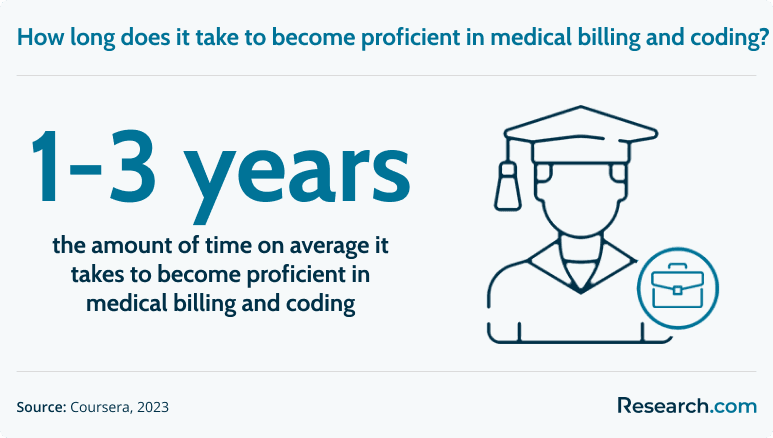
Medical billing and coding is hard in the beginning because it combines healthcare language, administrative rules, insurance processes, and code selection. Coders must review clinical documentation and convert diagnoses, procedures, services, and supplies into standardized codes. Billers use those codes to prepare claims, resolve payment issues, and follow up with payers. Both parts of the job require precision because small errors can lead to denied claims, payment delays, compliance concerns, or extra review.
The difficulty depends on your background. Someone with experience in healthcare, anatomy, insurance, or administrative work may adjust faster. Someone entering from a non-healthcare field may need more time to learn medical vocabulary, body systems, documentation patterns, and payer requirements. Neither path is impossible, but beginners should expect regular practice rather than passive memorization.
The work can also feel different depending on the employer. A small physician office may involve a narrower set of services but more patient and insurance communication. A hospital may involve greater code complexity, higher claim volume, and more specialized documentation. Coding updates, payer policy changes, and privacy rules such as HIPAA also require continuous learning.
| What makes it hard | Why it matters | How to make it manageable |
| Medical terminology | You must understand diagnoses, procedures, anatomy, and clinical notes. | Study body systems first, then connect terms to real documentation examples. |
| ICD-10, CPT, and HCPCS coding | Each system has different rules and uses. | Practice code lookup daily and learn why one code is more accurate than another. |
| Claim denials and appeals | Incorrect or incomplete claims can delay reimbursement. | Learn common denial reasons and how to document corrections. |
| Compliance requirements | Billing and coding must support accurate, lawful claims and protect patient information. | Build HIPAA, documentation, and audit-awareness into your training plan. |
| Changing rules | Codes, payer policies, and documentation standards are updated over time. | Use current coding manuals, professional resources, and continuing education. |
What are medical billing and coding, and how do they differ?
Medical billing and medical coding are closely connected parts of the healthcare revenue cycle, but they are not the same job. If you are just starting out, it is smart to compare program formats, timelines, and medical billing and coding online courses cost before choosing training.
Medical billing
Medical billing focuses on claims, payments, insurance communication, and account follow-up. A medical biller helps turn documented care into a claim and tracks whether the provider is paid correctly.
- Checking patient insurance information and coverage details.
- Preparing and submitting claims to insurers or other payers.
- Reviewing payments, correcting rejected claims, and managing denials.
- Communicating with patients, providers, and insurance representatives when billing questions arise.
Medical coding
Medical coding focuses on translating healthcare documentation into standardized codes used for billing, records, reporting, and reimbursement. Coders must understand clinical language and choose codes that match the documented service.
- ICD-10, or International Classification of Diseases, is used for diagnoses.
- CPT, or Current Procedural Terminology, is used for procedures and services.
- HCPCS, or Healthcare Common Procedure Coding System, is used for additional services, supplies, and equipment.
Medical billing vs. medical coding: key differences
| Area | Medical billing | Medical coding |
| Main focus | Claims, reimbursement, payment posting, denial follow-up, and payer communication. | Reviewing documentation and assigning accurate diagnosis, procedure, and service codes. |
| Core knowledge | Insurance processes, claim forms, payer rules, patient accounts, and reimbursement workflows. | Medical terminology, anatomy, ICD-10, CPT, HCPCS, and coding guidelines. |
| Best fit for | People who are organized, service-oriented, comfortable communicating, and persistent with follow-up. | People who enjoy detail-heavy work, documentation review, research, and rule-based decision-making. |
| How they work together | Billers use the codes and documentation to submit clean claims. | Coders produce the code sets that support accurate claims. |
Why do billing and coding matter in healthcare?
Billing and coding are essential because they connect patient care, clinical documentation, insurance reimbursement, and legal compliance. When the work is accurate, healthcare organizations are paid for services, patient records are clearer, and insurers receive standardized information.
- They support correct reimbursement: Billing converts documented healthcare services into claims. Accurate claims help providers receive payment without unnecessary delays.
- They create a shared language: Standard code sets such as ICD-10 and CPT allow providers, payers, and public agencies to understand diagnoses, procedures, and services in a consistent way.
- They help preserve care continuity: Coding contributes to the patient record by documenting conditions, treatments, and outcomes in a structured format that other healthcare professionals can review.
- They reduce compliance risk: Proper billing and coding help organizations follow healthcare laws, including HIPAA, and avoid problems caused by inaccurate or unsupported claims.
- They keep the revenue cycle moving: Clean claims, fewer denials, and timely follow-up help healthcare facilities maintain financial stability. Professionals who later want leadership responsibilities may compare options such as a healthcare management degree online.
Medical billing and coding specialists serve as the link between clinical documentation and payment processes. Most medical records specialists work full-time, and earnings differ by industry.
For those working in the management of companies and enterprises, the average salary is $53,320, while those working in hospitals can earn about $52,350. Additionally, professionals working in administrative and support services earn about $50,120, those in scientific and technical services earn around $47,500, and those working in the offices of physicians earn around $43,710. The chart below shows how much medical records specialists can earn in some of the top industries:
What does a medical billing and coding specialist do?
A medical billing and coding specialist helps healthcare organizations document services, submit claims, and resolve reimbursement issues. Some jobs combine billing and coding, while others separate the duties into different positions.
| Responsibility | What it involves | Why it matters |
| Reviewing medical records | Reading provider notes, diagnoses, procedures, lab information, and other documentation. | Codes must be supported by the record, not assumptions. |
| Assigning codes | Using ICD-10, CPT, and HCPCS to represent diagnoses, services, procedures, and supplies. | Accurate codes support correct reimbursement and reporting. |
| Preparing claims | Entering claim details, checking required fields, and submitting to payers. | Clean claims reduce rejections and delays. |
| Handling denials | Researching why a claim was rejected, correcting errors, and supporting appeals when appropriate. | Denial management protects revenue and improves future claim accuracy. |
| Maintaining compliance | Following payer rules, documentation standards, and privacy requirements. | Compliance protects patients and reduces organizational risk. |
| Using health information systems | Working with electronic health records, billing software, clearinghouses, and reporting tools. | Modern billing and coding is highly technology-dependent. |
Is medical billing and coding difficult for beginners?
Medical billing and coding can feel difficult for beginners because the field has its own language, rules, and workflow. New learners often struggle most with medical terminology, ICD-10 diagnosis codes, CPT procedure codes, HCPCS codes, payer requirements, and the difference between what was performed and what was properly documented.
The biggest adjustment is learning to be exact. A beginner may understand the general service but still choose the wrong code, miss a modifier, overlook documentation, or submit a claim that does not meet payer requirements. These mistakes are common during training, which is why hands-on coding exercises and claim scenarios matter.
The good news is that beginners do not need to master everything at once. A better path is to learn in stages: medical terminology, anatomy basics, coding systems, reimbursement concepts, compliance, software, and certification exam practice. Learners who want to use billing and coding as a launch point into broader healthcare leadership can also explore the highest paying healthcare administration jobs.
| Beginner challenge | Common mistake | Better approach |
| Trying to memorize every code | Studying code lists without understanding guidelines. | Learn how to use coding manuals and apply rules to documentation. |
| Skipping medical terminology | Jumping into coding before understanding anatomy and clinical terms. | Build a foundation in body systems, disease terms, procedures, and abbreviations. |
| Choosing the cheapest program only | Ignoring curriculum depth, support, and certification preparation. | Compare total value, not just tuition. |
| Assuming remote work is immediate | Expecting a work-from-home job without experience or certification. | Look for entry-level roles, externships, and employer requirements before enrolling. |
| Underestimating compliance | Focusing only on coding and ignoring HIPAA and documentation rules. | Treat compliance as a core skill, not an optional topic. |
What skills do you need to excel in medical billing and coding?
The best medical billing and coding specialists combine technical accuracy with persistence and clear communication. The job is not only about finding codes; it is about supporting complete, compliant, and timely claims.
- Attention to detail: A single incorrect code, missing modifier, or incomplete claim field can cause a denial or delay. Careful review is one of the most important habits in the field.
- Medical terminology knowledge: Coders and billers need to understand anatomy, diseases, procedures, medications, and clinical abbreviations well enough to interpret documentation correctly.
- Coding system proficiency: Professionals must know how to use ICD-10 for diagnoses, CPT for procedures, and HCPCS for supplies and additional services. These systems are detailed and require ongoing updates.
- Analytical thinking: Specialists must review records, identify what is supported, resolve conflicting information, and determine why claims were denied or rejected.
- Communication skills: Billers and coders often need clarification from providers, information from insurers, or explanations for patients. Clear communication helps prevent repeated errors.
- Software comfort: Electronic health records, billing platforms, claim scrubbers, and payer portals are part of daily work in many settings.
- Ethical judgment: Accurate coding must reflect the medical record. Upcoding, unsupported billing, or careless documentation can create serious compliance problems.
How much do medical billing and coding specialists earn?
The average salary of a medical records specialist in the U.S. is approximately $48,780 per year or about $23.45 per hour, according to data from the U.S. Bureau of Labor Statistics (BLS). Pay varies by experience, certification, location, employer type, and job responsibilities. If you are comparing this path with related healthcare roles, this guide to much does a medical coder make explains the earning picture in more detail.
For similar occupations, the average salary for medical transcriptionists is $37,060, while information clerks earn about $40,540. Meanwhile, the average medical administrative assistant salary is $43,350. For advanced job roles, medical and health services managers earn around $110,680, while health information technologists and medical registrars earn around $62,990. The chart below shows how much the average salary is for medical records specialists and similar occupations:
| Role or occupational group | Average salary stated | What to consider |
| Medical records specialists | $48,780 per year or about $23.45 per hour | A common salary reference point for billing and coding-related work. |
| Medical transcriptionists | $37,060 | Related documentation-focused role, but different from coding. |
| Information clerks | $40,540 | Administrative comparison point, not healthcare-specific coding work. |
| Medical administrative assistants | $43,350 | Often includes front-office, scheduling, records, and administrative duties. |
| Health information technologists and medical registrars | $62,990 | May require stronger health information systems or data skills. |
| Medical and health services managers | $110,680 | Advanced leadership role that usually requires broader management preparation. |
Which additional certifications can broaden your options?
Core billing and coding credentials matter most for entry into the field, but additional training can help you move toward specialized healthcare environments. For example, compliance, revenue cycle management, electronic health record systems, or practice management training may support advancement. Some professionals also add adjacent knowledge, such as nutrition courses online, when they want to work in wellness-focused clinics, specialty practices, or interdisciplinary care settings.
Additional credentials should be chosen carefully. A certificate only helps if it connects to the role you want, the employer you are targeting, or the healthcare setting where you plan to work.
How should you compare affordable online programs for medical billing and coding?
A low tuition price is helpful, but the cheapest option is not always the best value. A strong program should teach medical terminology, anatomy, ICD-10, CPT, HCPCS, billing workflows, claim denials, compliance, and certification exam preparation. It should also offer enough practice to help you code from actual documentation examples, not just read definitions.
When comparing affordable online medical billing and coding schools, look beyond the advertised price. Ask whether textbooks, coding manuals, exam prep, technology fees, and certification exam costs are included. Also confirm whether the program prepares you for a specific certification such as CPC, CCS, or CBCS.
| Question to ask | Why it matters |
| What certification does the program prepare students for? | Employers may prefer specific credentials, and exam preparation should match your goal. |
| Does the curriculum include ICD-10, CPT, and HCPCS? | These systems are central to billing and coding work. |
| Are coding manuals, software access, or exam fees included? | Total cost may be higher than the tuition advertised. |
| Does the program include hands-on claim or coding practice? | Practice builds confidence and reduces the beginner learning curve. |
| Is career support available? | Resume help, externship guidance, and job search support can matter for entry-level candidates. |
| What is the refund or transfer policy? | You should understand your options if the program does not fit your needs. |
Which certifications are common in medical billing and coding?
Certification is not always a legal requirement for billing and coding jobs, but it can improve credibility and may help candidates compete for entry-level positions. The right credential depends on whether you want outpatient coding, inpatient coding, physician-practice coding, billing, reimbursement, or a combined billing-and-coding role.
| Certification | Organization | Best aligned with |
| Certified Professional Coder (CPC) | AAPC | Outpatient coding for physician services, with exam coverage including ICD-10, CPT, HCPCS, anatomy, and medical terminology. |
| Certified Coding Specialist (CCS) | AHIMA | Hospital and inpatient coding, including coding guidelines, anatomy, and disease processes. |
| Certified Coding Specialist – Physician-Based (CCS-P) | AHIMA | Physician practices and outpatient services that require procedural coding knowledge. |
| Certified Inpatient Coder (CIC) | AAPC | Inpatient hospital coding with emphasis on ICD-10-CM and ICD-10-PCS systems. |
| Certified Billing and Coding Specialist (CBCS) | NHA | Roles that combine billing, coding, claims management, and medical office workflows. |
| Certified Medical Reimbursement Specialist (CMRS) | AMBA | Medical reimbursement, insurance claims, billing processes, and compliance. |
What is the best way to get training in medical billing and coding?
The best training path depends on your budget, timeline, learning style, and target credential. Most learners benefit from a structured program that combines terminology, coding systems, billing workflows, compliance, software exposure, and exam preparation.
- Start with the role you want: Decide whether you are aiming for billing, coding, or a combined billing-and-coding job.
- Choose a program aligned with certification: Look for training that prepares you for credentials such as CPC, CCS, or CBCS. As with programs in other healthcare fields, including the easiest radiology programs to get into, admissions accessibility should not be the only factor you consider.
- Confirm curriculum depth: A useful program should cover medical terminology, anatomy, ICD-10, CPT, HCPCS, claims, denials, payer rules, and compliance.
- Use online learning strategically: Online courses can be flexible, but you still need enough practice, instructor support, and exam-focused preparation.
- Seek practical exposure: Internships, externships, simulations, or supervised coding scenarios can make the transition to work easier.
- Use professional resources: Organizations such as AAPC and AHIMA offer study tools, webinars, practice materials, and continuing education.
Is medical billing and coding a good career choice for 2027?
Medical billing and coding can be a good career choice for people who want administrative healthcare work, value accuracy, and prefer a role that may offer remote or hybrid possibilities after gaining experience. If you are still asking, is medical billing and coding a good career, the answer depends on your tolerance for detail-heavy work, ongoing learning, and payer-related problem-solving.
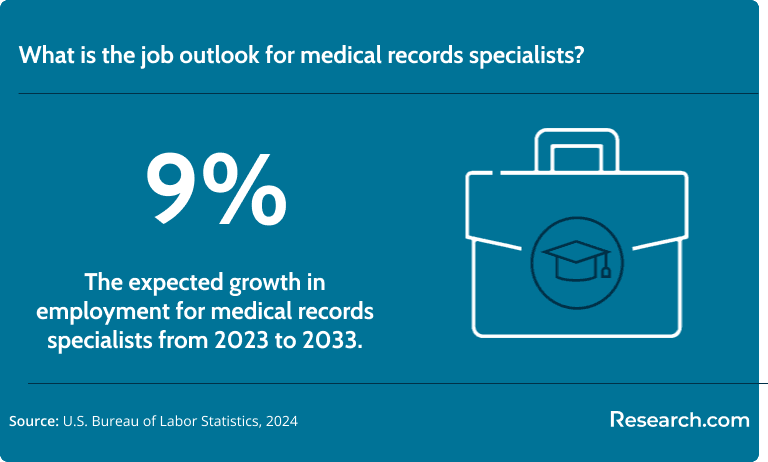
Pursuing a career in medical billing and coding in 2025 is a promising choice due to the increasing demand for healthcare services and the growing need for accurate health information management. According to the U.S. Bureau of Labor Statistics, employment of medical records specialists is projected to grow nine percent from 2023 to 2033, which is much faster than the average for all occupations. That projection is one reason many people ask whether Is medical billing and coding in demand.
The demand is connected to the continued use of electronic health information, the need for accurate claims, and the importance of organized patient data. Still, job outcomes are not guaranteed. Certification, experience, employer requirements, location, and the quality of your training all influence your prospects.
If you eventually want a more clinical technical role, you may compare billing and coding with radiology technology. One option to research is the fastest way to become a radiology tech, a path associated here with a median annual salary of $75,250.
Can health informatics strengthen your medical billing and coding career?
Health informatics can be useful for billing and coding professionals who want to work more deeply with electronic health records, reporting systems, data quality, and workflow improvement. A strong informatics foundation can help specialists understand how documentation, coding, claims, and organizational data connect. If this direction interests you, a health informatics career may offer a broader path beyond entry-level coding or billing.
Can nursing informatics improve clinical documentation and billing accuracy?
Nursing informatics connects clinical practice, patient data, and information systems. For billing and coding professionals, this field can improve understanding of how clinical documentation is created, interpreted, and translated into administrative workflows. Those interested in clinical-data roles may compare options such as the most affordable nursing informatics online program.
What should you believe about graduate experiences?
Individual experiences with medical billing and coding vary widely. Some graduates value the flexibility and behind-the-scenes healthcare contribution. Others find the work repetitive, rule-heavy, or stressful when claim volumes and denials increase. Treat personal stories as examples, not guarantees.
-
: "
Medical billing and coding appealed to me because it offered healthcare work without direct patient care. The flexibility was helpful, but the biggest surprise was how much accuracy and rule-following the job required. – Amber
"
-
: "
Certification helped me enter the field faster than a degree program would have, but the job still required steady practice. Understanding documentation was just as important as learning code sets. – Kim
"
-
: "
This career fits my strengths because I like detailed work and problem-solving. It is rewarding, but it is not easy work if you dislike audits, corrections, or payer rules. – Shelly
"
How are new technologies changing billing and coding?
Automation, artificial intelligence, electronic health records, claim-scrubbing tools, and analytics platforms are changing how billing and coding teams work. These tools can flag missing information, identify inconsistent documentation, and streamline repetitive tasks, but they do not remove the need for trained professionals who can interpret records, verify accuracy, and understand compliance.
Technology is likely to reward workers who can combine coding knowledge with software fluency, data awareness, and communication skills. Some learners also explore related healthcare roles through programs such as the best online medical assistant programs, especially if they want a role that blends administrative and clinical knowledge.
Can advanced academic credentials help your healthcare career?
Advanced education can help if it connects directly to your long-term goal, such as health information management, healthcare administration, compliance, informatics, or data analytics. It may not be necessary for entry-level billing and coding, so weigh the cost, time commitment, and relevance before enrolling.
Some professionals broaden their healthcare knowledge through specialized study in related areas, including online pharmacy schools. This type of academic step should be evaluated based on career fit rather than the assumption that more credentials automatically lead to better outcomes.
Why should compliance and data security influence your plan?
Billing and coding professionals work with sensitive patient information, so data security and compliance should be part of your training from the beginning. HIPAA awareness, secure handling of records, accurate documentation, and payer policy compliance are central to responsible practice.
Some people build broader administrative or clinical support skills through options such as an accelerated medical assistant program. Whatever path you choose, make sure compliance is treated as a core workplace responsibility rather than a brief add-on lesson.
Can artificial intelligence improve billing and coding accuracy?
Artificial intelligence can support billing and coding by identifying missing information, flagging potential inconsistencies, assisting with documentation review, and reducing some repetitive tasks. However, AI output still requires human review because billing and coding decisions must be supported by the medical record and current rules.
Professionals who want to understand how these systems work may explore technical education such as affordable online artificial intelligence programs. For most billing and coding workers, the practical priority is not becoming an AI engineer; it is learning how to use automated tools responsibly and verify their results.
Can data analytics improve revenue cycle performance?
Data analytics can help healthcare organizations monitor denials, spot workflow problems, track claim patterns, and improve revenue cycle performance. Billing and coding professionals with analytics skills may be better prepared for quality improvement, reporting, auditing, or supervisory roles.
Those who want a more technical pathway may compare programs such as a masters in data science online cheapest. This is usually a better fit for professionals targeting analytics-heavy healthcare roles rather than entry-level billing and coding positions.
Can interdisciplinary collaboration expand career opportunities?
Billing and coding does not happen in isolation. Specialists often interact with providers, nurses, front-office staff, compliance teams, payers, auditors, and administrators. Strong collaboration can improve documentation quality, reduce repeated claim issues, and make workflows more efficient.
Some professionals also explore healthcare fields outside the revenue cycle to understand where administrative, scientific, and clinical work intersect. For example, researching what can you do with a biotechnology masters degree may help learners compare broader healthcare and life science career directions.
Should cybersecurity training be part of your professional development?
Cybersecurity knowledge is increasingly relevant because billing and coding professionals handle protected health information through digital systems. You do not need to become a cybersecurity specialist to work in billing and coding, but you should understand secure passwords, phishing risks, access controls, privacy rules, and safe handling of patient records.
If you want to move toward healthcare security, privacy, or compliance roles, you may compare options such as the cheapest online cyber security degree. For most billing and coding professionals, targeted compliance and data-security training may be the more immediate need.
Common mistakes to avoid before entering medical billing and coding
| Mistake | Why it can hurt you | What to do instead |
| Choosing a program only because it is fast | Short programs may not provide enough practice or certification preparation. | Check curriculum depth, practice opportunities, and exam alignment. |
| Ignoring accreditation or institutional credibility | Poor-quality training can make certification and employment harder. | Research the school, training provider, and certification outcomes. |
| Assuming certification guarantees a job | Employers may also consider experience, software skills, location, and interview performance. | Build a resume with projects, externships, practice cases, and relevant administrative skills. |
| Expecting remote work immediately | Some employers prefer experienced coders for remote roles. | Search job postings early to see what remote employers require. |
| Overlooking total program cost | Books, coding manuals, fees, and certification exams can add expenses. | Ask for a full cost breakdown before enrolling. |
| Underestimating ongoing learning | Coding systems and payer rules change over time. | Plan for continuing education and professional updates. |
Key Insights
- Medical billing and coding is difficult at first because it requires medical terminology, coding systems, claim workflows, compliance knowledge, and careful documentation review.
- The work is manageable for detail-oriented learners who practice consistently and choose training that includes ICD-10, CPT, HCPCS, billing processes, and certification preparation.
- The employment demand for medical records specialists like billers and coders is expected to increase by 9% over the next decade.
- Medical records specialists earn an average salary of $48,780 per year, while the stated salary range for the occupation is $35,080 to $77,810.
- Remote work is possible in the field, but it should not be assumed for every entry-level role; certification, experience, and employer policies matter.
- Certification is not always legally required, but credentials such as CPC, CCS, CCS-P, CIC, CBCS, and CMRS can strengthen credibility and help align your training with specific job goals.
- Before enrolling, compare total cost, curriculum quality, certification alignment, hands-on practice, career support, and whether the program fits your target role.
- AI, automation, health informatics, analytics, and cybersecurity are changing the field, but they increase the value of skilled professionals who can verify accuracy and protect patient data.
References:
- AAPC. (n.d.). Medical Coding and Billing Free Tools. AAPC resources.
- Centers for Medicare & Medicaid Services. (n.d.). Coding and Billing Information. CMS coding and billing information.
- Coursera. (2023). What Is a Medical Coder? Coursera medical coder overview.
- U.S. Bureau of Labor Statistics. (2024). Occupational Outlook Handbook: Medical Records Specialists. BLS medical records specialists profile.
Other things you should know about being a medical billing and coding specialist
In 2027, medical billing and coding can be challenging due to the constantly evolving healthcare regulations and technologies. Professionals need to be updated regularly with coding changes, making it essential to invest time in continuous education to stay on top of industry standards.
Most employers expect a postsecondary certificate or an associate degree in medical billing and coding. Certificate programs often take 4 to 12 months, while associate degrees usually take about 2 years. Training should cover medical terminology, ICD-10-CM, CPT, HCPCS, and healthcare reimbursement rules.