2027 Best 4-Week Online Course for Medical Coding and Billing

Co-Founder and Chief Data Scientist
With many 4-week online medical coding and billing courses available, choosing one that aligns with your career goals can be difficult. Getting the right education is crucial, especially since, according to 2023 data, about 80% of medical bills in the United States contain errors.
Drawing on my 10+ years of experience in career planning, I put together this guide on the best online courses for medical coding and billing. It also supplies information regarding these programs, from the costs involved to the career paths, to help aspiring students make informed decisions.
What are the benefits of taking an online course in medical coding and billing?
- Finishing an online course for medical coding and billing enables graduates to become medical coding specialists, medical billing specialists, and medical records technicians, among many others.
- After completing an online course in medical coding and billing, a graduate can become a medical records specialist, earning a median annual salary of $48,780 as of 2023.
- Online courses in medical coding and billing allows students to take their subjects at any conducive location that has a stable internet connection.
What can I expect from an online course for medical coding and billing?
- Online medical coding and billing courses provide a curriculum that delves into foundational topics such as medical terminology, in-depth exploration of coding systems, and the intricacies of the healthcare reimbursement process.
- Many of these courses use a blend of engaging video lectures, interactive modules, and practical exercises to help students acquire a solid understanding of key concepts and procedures.
- Students in such courses typically learn about medical terminology, healthcare classification systems, and healthcare insurance.
- There are online courses for medical billing and coding that can be completed in 4 weeks, but more comprehensive courses last for 6 months to 1 year.
- Costs of online courses for medical coding and billing may vary depending on the duration, with shorter 4-week courses costing anywhere from $200 to $800 and longer courses charging tuition from $1,000 to $3,000.
Where can I work with an online course for medical coding and billing?
Hospitals, clinics, and other healthcare facilities need medical coders and billers to organize medical records and handle financial transactions, respectively. This is why these professionals can seek employment in many places, including the following:
- Hospitals and Clinics. These are major employers of medical coders and billers. Your online course knowledge can be a stepping stone, but some employers might prefer candidates with certifications like CPC (Certified Professional Coder).
- Physicians' Offices. Smaller practices often require staff to wear multiple hats. Your coding and billing skills, coupled with your eagerness to learn, could be valuable.
- Insurance Companies. They employ coders and billers to process claims. An online course can provide a basic understanding, but certifications might be preferred.
- Outsourcing Firms. Many specialize in medical coding and billing services for healthcare providers, offering work-from-home opportunities in some cases. An online course can be a good starting point here.
How much can I make with an online course for medical coding and billing?
According to the United States Bureau of Labor Statistics, the median annual salary of medical records specialists clocks in at around $48,780. Many jobs available to graduates of online courses for medical coding and billing are within the national average of $48,060.
Graduates of online courses for medical coding and billing can also become information clerks who take home $40,540 or medical registrars and health information technologists who receive $62,990.
These figures can increase if graduates enter industries with high demand for their competencies. Likewise, they can earn more if they expand their skill sets and pursue more prestigious roles.
- Are there 4-week online courses for medical coding and billing for 2027? Are there 4-week online courses for medical coding and billing for 2027?
- Best Accelerated Online Courses for Medical Coding and Billing for 2027 Best Programs
- How long does it take to complete an online medical coding and billing course? How long does it take to complete an online medical coding and billing course?
- How does an online medical coding and billing course compare to an on-campus program? Online vs. On-Campus
- What is the average cost of an online medical coding and billing course? Cost
- What are the financial aid options for students enrolling in an online medical coding and billing course? Financial Aid
- What are the prerequisites for enrolling in an online medical coding and billing course? Requirements
- What courses are typically in an online medical coding and billing course? Courses
- What are the best certifications for medical coders and billers? What are the best certifications for medical coders and billers?
- How does one choose the best online medical coding and billing course? How does one choose the best online medical coding and billing course?
- What other educational options can help me achieve my career goals in healthcare? What other educational options can help me achieve my career goals in healthcare?
- What are the challenges and rewards of pursuing a career in medical coding and billing? What are the challenges and rewards of pursuing a career in medical coding and billing?
- Should I pursue an advanced healthcare degree to broaden my career prospects? Should I pursue an advanced healthcare degree to broaden my career prospects?
- Can online medical coding and billing courses serve as a springboard for other healthcare careers? Can online medical coding and billing courses serve as a springboard for other healthcare careers?
- How Can Practical Training and Accelerated Programs Enhance My Online Education? How Can Practical Training and Accelerated Programs Enhance My Online Education?
- What career paths are available for graduates of online medical coding and billing courses? What career paths are available for graduates of online medical coding and billing courses?
- What is the job market for graduates of online medical coding and billing courses? Job Outlook
- What are the alternatives to medical coding and billing courses? What are the alternatives to medical coding and billing courses?
- How to Choose the Right Online Medical Coding and Billing Course for Your Career Goals How to Choose the Right Online Medical Coding and Billing Course for Your Career Goals
- Why is accreditation important when choosing a medical billing and coding school? Why is accreditation important when choosing a medical billing and coding school?
- How are emerging healthcare innovations and regulatory updates integrated into online medical coding and billing courses? How are emerging healthcare innovations and regulatory updates integrated into online medical coding and billing courses?
- What are the job placement and career support outcomes of online medical coding and billing courses? What are the job placement and career support outcomes of online medical coding and billing courses?
Are there 4-week online courses for medical coding and billing for 2027?
If you are trying to enter healthcare administration quickly, a 4-week online medical coding and billing course can look attractive. The key question is whether a course that short can give you enough training to understand medical terminology, coding systems, insurance claims, HIPAA rules, and reimbursement workflows. This guide explains which 4-week options are currently available, how they compare with longer accelerated programs, what they cost, what certifications they may prepare you for, and how to decide whether a short course is enough for your career goal.
Quick answer: are 4-week medical billing and coding courses available online?
Yes, but they are rare. Our review found only two online medical billing and coding options that are positioned as 4-week courses. A 4-week course may be useful for a fast introduction or for learners who already have healthcare office experience, but many beginners will need a longer certificate, diploma, or associate-level program to prepare confidently for certification exams and entry-level roles.
- Phlebotomy Career Training Online Medical Billing and Coding Certification - This online program from Phlebotomy Career Training introduces students to how healthcare documentation connects to reimbursement. The curriculum includes 300 hours of course content and covers topics such as healthcare ethics, medical terminology, anatomy, medical billing processes, medical coding procedures, and common software used in the field.
- MedicalBillingCourse.com P1 Medical Billing Course with CMBP & HIPAA Certification - The P1 Medical Billing Course from MedicalBillingCourse.com is an 8-chapter program focused on medical billing, coding basics, insurance, office forms, privacy rules, and billing and coding software. It is designed for learners who want a compact overview of the revenue cycle and medical billing responsibilities.
If your goal is to pass a major certification exam or compete for coding-focused jobs, compare these short options with longer accelerated programs. A longer course may take more time, but it can provide broader practice with ICD-10, CPT, HCPCS, claims, compliance, and real-world coding scenarios.
| Best fit | 4-week course | Longer accelerated program |
| Learners with prior healthcare experience | Can be a fast refresher or career pivot tool | Useful if you need certification preparation or deeper coding practice |
| Complete beginners | May feel rushed because coding systems and billing rules take time to practice | Usually a stronger option for building job-ready skills |
| Certification preparation | Depends heavily on the course and your study time outside class | More likely to include structured exam preparation and practice cases |
| Budget | Often lower cost because the course is shorter | Can cost more but may include more instruction, support, and exam preparation |
Best accelerated online courses for medical coding and billing for 2027
The programs below are not all 4-week courses. They are accelerated online medical billing and coding options for students who want a faster path than a traditional multi-year degree while still receiving more complete training than a very short introductory course.
How we evaluated these programs
Because online healthcare training can affect your budget, certification readiness, and employment options, we reviewed programs using publicly available education data and institutional information. Sources considered include the IPEDS database, Peterson's database and its Distance Learning Licensed Data Set, the College Scorecard Database, and the National Center for Education Statistics.
For more detail about how Research.com evaluates education options, visit our research methodology page.
| Program | Length | Cost | Credits or hours | Accreditation listed |
| Thomas Jefferson University Medical Coding & Data Quality | 8 weeks | $650 per credit | 34 credits | Middle States Commission on Higher Education |
| MedCerts Medical Billing Specialist | 14 weeks | $2,000 | 3 required courses | Accrediting Commission of Career Schools and Colleges |
| Meditec Medical Coding and Billing | 3 to 6 months | $3500 | 50 credit hours | None |
| Ashworth College Online Medical Billing and Coding Course | 4 months | $999 to $1,199 | 11 lesson groups | Distance Education Accrediting Commission |
| Rasmussen College Medical Billing and Coding Certificate | 9 months | $12,770 | 36 credits | Higher Learning Commission |
| DeVry University Undergraduate Certificates in Medical Billing and Coding | 10 months to 1 year and 2 months | $514 per credit | 10 to 13 courses | Higher Learning Commission |
| Oklahoma State University Medical Billing and Coding Course | 12 months or less | $2,995 | 370 course hours | Not listed |
| Dakota State University Health Care Coding Certificate | 1 year | $354.75 per credit | 31 credits | Higher Learning Commission |
| Borough of Manhattan Community College Online Medical Billing and Coding Course | 1 year | $2,200 | 120 hours | Not listed |
| Miller-Motte College Medical Billing & Coding Program | 15 months | $25,240 estimated tuition | 72 credits | Accrediting Commission of Career Schools and Colleges |
1. Thomas Jefferson University Medical Coding & Data Quality
The Medical Coding & Data Quality program at Thomas Jefferson University blends coding instruction, technology-supported learning, and supervised fieldwork. Students study medical terminology, reimbursement methods, health information, diseases, treatments, and coding concepts. The program is designed to help graduates prepare for certification exams such as CPC, CCA, CCS, CIP, and COP.
- Program length: 8 weeks
- Cost per credit: $650
- Required credits to graduate: 34
- Accreditation: Middle States Commission on Higher Education
2. MedCerts Medical Billing Specialist
The Medical Billing Specialist online certification training from MedCerts covers medical billing principles, coding fundamentals, anatomy, terminology, and allied health professionalism. The program uses interactive simulations, game-based lessons, and multiple learning formats to support online learners. It also prepares students for the MCBC exam and certification.
- Program length: 14 weeks
- Total cost: $2,000
- Required courses to graduate: 3 required courses
- Accreditation: Accrediting Commission of Career Schools and Colleges
3. Meditec Medical Coding and Billing
The Medical Coding and Billing program from Meditec, offered in cooperation with Texas A&M University, teaches medical coding, billing, and terminology. Students use different learning methods and may access student-and-peer support. The program may include a free laptop and is structured to prepare learners for the CBCS exam. It is worth 50 credit hours and may be completed in three to six months of full-time study.
- Program length: 3 to 6 months
- Total cost: $3500
- Required credits to graduate: 50
- Accreditation: None
4. Ashworth College Online Medical Billing and Coding Course
The Online Medical Billing and Coding Course at Ashworth College focuses on essential billing and coding knowledge. Coursework includes CPT coding, ICD-10 coding, medical terminology, and electronic medical records. The program also supports preparation for the NHA and CBCS exams. Students can finish in four months, although the timeline may extend up to 12 months.
- Program length: 4 months
- Total cost: $999 to $1,199
- Required work to graduate: 11 lesson groups
- Accreditation: Distance Education Accrediting Commission
5. Rasmussen College Medical Billing and Coding Certificate
The Medical Billing and Coding Certificate at Rasmussen College develops skills in coding systems, billing technology, information security, and medical terminology. Students complete hands-on exercises, coding scenarios, case studies, online interactive coursework, and AHIMA virtual lab activities. The program requires 10 courses and can be completed in as fast as 9 months.
- Program length: 9 months
- Total cost: $12,770
- Required credits to graduate: 36
- Accreditation: Higher Learning Commission
6. DeVry University Undergraduate Certificates in Medical Billing and Coding
The Undergraduate Certificates in Medical Billing and Coding at DeVry University are built around preparation for certification exams such as CPC, CCS, and CCA. Students may choose either Medical Billing and Coding or Medical Billing and Coding – Health Information Coding. Topics include ICD-10, CPT coding, health insurance billing, and medical terminology. The Medical Billing and Coding program can be completed in 10 months, while the Medical Billing and Coding – Health Information Coding option can be completed in 1 year and 2 months.
- Program length: 10 months to 1 year and 2 months
- Cost per credit: $514
- Required courses to graduate: 10 to 13 courses
- Accreditation: Higher Learning Commission
7. Oklahoma State University Medical Billing and Coding Course
The online course from Oklahoma State University covers the revenue cycle from patient intake through reimbursement. Students study HIPAA, billing regulations, legal and ethical responsibilities, medical terminology, anatomy, and coding-related documentation. The program is designed to prepare learners for certification exams such as Certified Professional Coder (CPC), Certified Coding Associate (CCA), or CBCS.
- Program length: 12 months or less
- Total cost: $2,995
- Required hours to graduate: 370 course hours
8. Dakota State University Health Care Coding Certificate
The Health Care Coding Certificate at Dakota State University teaches students how to use CPT and ICD code sets, review health records, code medical conditions, and understand billing processes. The program is structured for students preparing for credentials such as CCA, CCS, CPC, and CIC. Students complete 31 credits and can finish in 1 year.
- Program length: 1 year
- Cost per credit: $354.75
- Required credits to graduate: 31
- Accreditation: Higher Learning Commission
9. Borough of Manhattan Community College Online Medical Billing and Coding Course
The online medical billing and coding course from the Borough of Manhattan Community College teaches major coding systems, including HCPCS, CPT, and ICD-10. Students also practice with medical billing software. The course lets learners choose the certification path most relevant to their goals, with CPC, CCA, or CBCS voucher options included.
- Program length: 1 year
- Total cost: $2,200
- Required credits to graduate: 120 hours
10. Miller-Motte College Medical Billing & Coding Program
The Medical Billing & Coding Program at Miller-Motte College develops skills in medical office systems, insurance billing, medical coding, pathology, pharmacology, and electronic health records. The program also includes preparation for coding certification.
- Program length: 15 months
- Estimated tuition: $25,240
- Required credits to graduate: 72
- Accreditation: Accrediting Commission of Career Schools and Colleges
What online medical coding and billing students say about short programs
- Priya: "I was working full time and managing family responsibilities, so attending a campus program was not realistic. The online 4-week format let me study at night and on weekends. The downloadable materials were especially useful, and I still use them as references. I now feel ready to look for a medical coding assistant opportunity."
- Marcus: "The 4-week medical coding and billing course gave me more structure than I expected. The online format was convenient, the curriculum covered important basics, and the hands-on exercises helped me understand how the work is done. Instructor support made the course easier to complete."
- Paul: "I was skeptical that a 4-week course could cover enough material, but it gave me a useful starting point. The medical terminology and coding exercises helped me understand the field, and the feedback made the learning process more practical. I plan to use it as a foundation for more training or an entry-level role."
Key findings about accelerated online medical coding and billing courses
- Only two 4-week online options were identified, so students who want very fast training have limited choices.
- Most accelerated medical billing and coding programs take longer than 4 weeks because students need time to practice coding systems, billing workflows, compliance rules, and documentation review.
- Costs in the reviewed list range from around $2,000 to $25,000, although some programs fall below or above that range depending on format and credential type.
- Accreditation, certification preparation, career services, and hands-on practice matter more than speed alone.
- A short course can be useful, but it should be judged against your career target: entry-level billing support, coding assistant, certified coder, or a longer-term health information role.
How long does it take to complete an online medical coding and billing course?
Online medical coding and billing training can take around four weeks to three years, depending on the credential. Short certificate courses may take around four to six weeks, while more complete options, including associate degrees, may take around one to three years.
Short programs usually focus on core vocabulary, basic billing workflows, and practical coding concepts. Longer programs typically add general education, broader health information coursework, more coding practice, and deeper preparation for certification exams.
The chart below summarizes educational attainment among medical coders and billers in the US and shows why many learners choose either a certificate program or an associate degree as a practical entry point.
How does an online medical coding and billing course compare with an on-campus program?
Online certification programs for medical billing and coding are usually chosen for flexibility, convenience, and access from any location. Campus programs may be a better fit for students who prefer scheduled classes, in-person support, and face-to-face peer interaction.
| Factor | Online program | On-campus program |
| Schedule | Often better for working adults, parents, and students who need flexible study hours | Better for learners who want fixed class times and in-person accountability |
| Access | Available to students who live far from a campus or have mobility or transportation limits | Requires commuting or relocating, depending on the school |
| Interaction | May use discussion boards, video meetings, simulations, and virtual labs | Offers direct classroom discussions, in-person group work, and campus support |
| Cost considerations | May reduce commuting, housing, and campus-related expenses | May involve transportation, parking, housing, and campus fees |
| Best for | Self-directed students who can manage deadlines independently | Students who learn best with face-to-face instruction and structured routines |
Traditional programs
Campus-based medical coding and billing programs provide a structured environment with regular in-person contact with instructors and classmates. The fixed schedule may be less convenient, but it can help students stay organized and engaged through classroom discussion, group activities, and direct instructor feedback.
Students may also use campus resources such as libraries, labs, study spaces, and student support offices. Some in-person programs include practical exercises that help learners apply coding and billing concepts in a supervised setting.
Online programs
Online programs are built for students who need to balance training with work, caregiving, or other responsibilities. Many programs allow learners to complete coursework from home, which can make training more accessible for students outside major campus areas.
The trade-off is that online learners must be disciplined. Before enrolling, ask whether the program includes instructor access, coding practice, software exposure, virtual labs, exam preparation, and career support.
What is the average cost of an online medical coding and billing course?
Based on the programs reviewed here, online medical coding and billing courses commonly cost around $2,000 to $25,000, with shorter programs generally appearing at the lower end. Some options charge a total program price, while others use a per-credit model.
These programs may require around 20 to 75 credits and may be offered as certificates, diplomas, or associate-level options. Certificate programs are often selected by students who want to enter the workforce quickly. Associate degrees may appeal to learners who want broader academic preparation or plan to continue into health information management, healthcare administration, or related fields. To compare the earning side of the decision, review this guide to medical coder salary expectations and career preparation.
What financial aid options are available for online medical coding and billing students?
Students may be able to use federal aid, school-based aid, scholarships, employer benefits, military education benefits, or private loans. Availability depends on the school, credential type, accreditation status, enrollment level, and student eligibility. Even lower-cost programs can be difficult to pay for upfront, so financial planning matters just as much for a short certificate as it does for broader healthcare programs such as affordable online masters in healthcare administration options.
- Federal financial aid: Students at eligible institutions can complete the Free Application for Federal Student Aid (FAFSA) to be considered for grants, loans, and work-study programs. Always confirm whether the specific program qualifies for federal aid.
- Scholarships: Professional associations, community organizations, foundations, and private groups may offer awards based on financial need, academic performance, career goals, or background.
- School aid: Some colleges provide institutional scholarships, grants, payment plans, or tuition discounts for eligible students.
- Employer assistance: If you already work in healthcare, ask your employer about tuition reimbursement or professional development support.
- Military benefits: Active-duty service members, veterans, and eligible dependents may be able to use tuition assistance, GI Bill benefits, or military-related scholarships.
- Private loans: Private student loans may fill funding gaps, but they often have less favorable repayment terms than federal loans. Compare interest rates, fees, and repayment rules before borrowing.
What are the prerequisites for enrolling in an online medical coding and billing course?
Admission requirements vary by school and credential level. A short noncredit course may have fewer requirements than a college certificate or associate program. Similar to other online programs, including an affordable online criminal justice degree, schools use admission requirements to confirm that applicants are prepared for the coursework.
- High school diploma or equivalent: Many programs require proof of high school completion or a recognized equivalent.
- Application form and fee: Applicants usually complete an online application and may pay an application fee.
- Transcripts: Some schools request high school or previous college transcripts to evaluate academic history.
- Resume: A resume can help document healthcare experience, office skills, prior training, or relevant certifications.
- Recommendation letters: Some programs may ask for references from teachers, supervisors, or professional contacts.
- Statement of purpose: A short written statement may be required to explain your career goals and interest in medical billing and coding.
What courses are usually included in an online medical coding and billing program?
Medical coding and billing programs teach students how clinical documentation becomes coded data, insurance claims, and reimbursement records. The training can also build transferable skills in data accuracy, compliance, documentation review, and office technology. These skills can support later study in broader healthcare business programs such as healthcare MBA online programs.
| Course area | What students learn |
| Medical terminology | Common healthcare terms, abbreviations, anatomy basics, and physiology language used in records |
| Healthcare delivery systems | How hospitals, clinics, managed care organizations, and other providers operate |
| Introduction to medical coding | Basic coding concepts and the role of ICD-10, CPT, and other code sets |
| ICD-10 coding | How to classify diagnoses using ICD-10 guidelines and patient documentation |
| CPT coding | How to assign procedure and service codes for provider reimbursement |
| HCPCS coding | How to code supplies, equipment, and services not captured in CPT |
| Medical billing fundamentals | Insurance plans, claims submission, reimbursement processes, and payer rules |
| Advanced medical billing | Modifiers, denials, appeals, claim corrections, and complex reimbursement scenarios |
| Compliance | Ethical billing, fraud and abuse prevention, privacy rules, and payer-specific requirements |
What are the best certifications for medical coders and billers?
The most useful certification depends on the role you want. Coding-focused jobs may value credentials that test diagnosis and procedure coding, while billing-focused jobs may prioritize claims, reimbursement, and payer processes. Certification is not a guarantee of employment, but it can help demonstrate that you understand widely used coding and billing standards.
- Certified Professional Coder (CPC): Offered by the American Academy of Professional Coders, the CPC certification is widely recognized for physician-based and outpatient coding.
- Certified Coding Specialist (CCS): Offered by the American Health Information Management Association, the CCS certification is a respected credential for coders working with complex medical records and coding systems.
- Certified Billing and Coding Specialist (CBCS): Offered by the National Healthcareer Association, the CBCS credential can be useful for students who want a combined billing and coding credential.
How should you choose the best online medical coding and billing course?
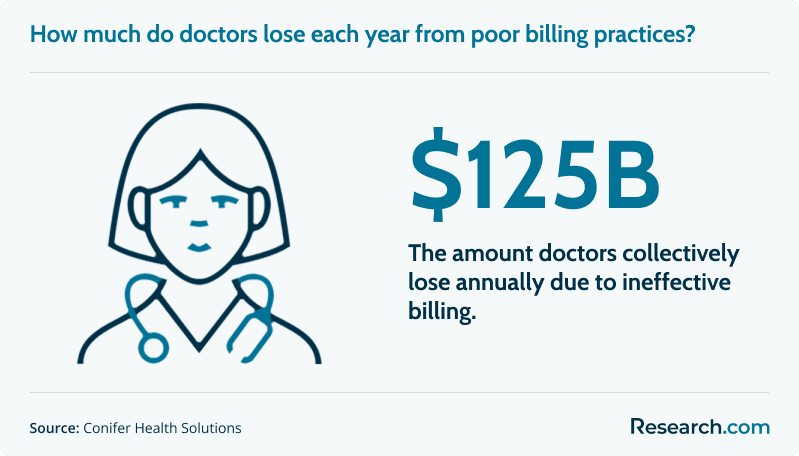
Physicians in the country lose an estimated $125 billion each year because of ineffective billing, according to a recent report. That figure highlights why accurate coding, clean claims, and compliance matter. For students, the best program is not simply the fastest one; it is the one that prepares you for the work you actually want to do.
- Match the curriculum to your goal: If you want to become a coder, look for substantial ICD-10, CPT, HCPCS, anatomy, and documentation review. If you want a billing role, make sure the program covers claims, insurance, denials, appeals, and reimbursement.
- Check accreditation and eligibility: Confirm the institution’s accreditation and ask whether the program meets requirements for financial aid, transfer credit, or certification preparation. Some students may want programs aligned with standards used by organizations such as the Commission on Accreditation for Health Informatics and Information Management Education (CAHIIM).
- Review certification preparation: A strong program should clearly state which exams it prepares students for, such as CPC, CCA, CCS, CBCS, or related credentials.
- Compare total cost, not just tuition: Ask about books, software, exam vouchers, technology fees, graduation fees, and extension fees. If affordability is a priority, compare medical billing and coding online courses with financial aid.
- Look for practical training: Prioritize programs with coding practice, case studies, billing software exposure, electronic health record practice, virtual labs, or simulations.
- Evaluate student support: Ask whether you will have instructor access, tutoring, academic advising, career coaching, resume help, and certification exam guidance.
What other education options can support healthcare career goals?
Medical billing and coding is only one path into healthcare. If you want broader administrative, analytics, or management opportunities, you may eventually consider healthcare administration, health informatics, medical office administration, or health information management programs. Students who already hold a degree and want a faster graduate route can also compare the fastest masters degree options in healthcare-related fields.
Choose the education path based on your target role. A short coding and billing course may be enough for introductory knowledge. A certificate may support entry-level administrative or coding roles. A degree may be more appropriate if you want to move into supervisory, informatics, compliance, or healthcare operations positions.
What are the challenges and rewards of medical coding and billing careers?
Medical coding and billing careers require accuracy, patience, and ongoing learning. Coding rules, payer policies, documentation expectations, and privacy requirements can change, so professionals must keep their skills current. The work can also be detail-heavy because small coding or billing errors can delay reimbursement or trigger compliance issues.
The rewards include a clear role in healthcare operations, opportunities in hospitals, clinics, physician practices, insurers, and remote work settings, and advancement paths into auditing, compliance, education, or health information roles. For a fuller comparison, review the pros and cons of medical billing and coding.
Should you pursue an advanced healthcare degree after coding and billing training?
An advanced healthcare degree may make sense if you want to move beyond billing or coding into leadership, research, informatics, administration, or specialized clinical work. Coding and billing training can give you useful knowledge of documentation, compliance, and reimbursement, but it does not replace the education required for licensed clinical roles or advanced healthcare professions.
If you are exploring long-term healthcare pathways, compare your current goal with the education required for advanced fields. For example, reviewing a pharmacy school online accredited program can help you understand how different healthcare credentials lead to very different career outcomes.
Can online medical coding and billing courses lead to other healthcare careers?
Yes, but usually as a starting point rather than a complete pathway. Coding and billing programs build skills in documentation review, compliance, data accuracy, reimbursement, and healthcare operations. Those skills can support later movement into healthcare analytics, clinical informatics, medical office management, revenue cycle management, or health information roles.
If you are considering a clinical healthcare career, research the full education and licensure requirements before assuming a coding background will transfer directly. For example, this guide on how much does it take to become a pharmacist? shows how different the training path can be for a licensed clinical profession.
How can practical training and accelerated programs improve online learning?
Online coursework can teach terminology, coding rules, billing workflows, and compliance principles, but practical exercises help students understand how those concepts appear in real records and claims. Look for programs that include coding cases, claim simulations, denials and appeals practice, software exposure, or virtual labs.
Accelerated training can be valuable when it is structured and hands-on. A fast program that only provides reading assignments may not be enough for beginners. A short program with guided practice, instructor feedback, and realistic scenarios is more useful. Students who want a fast but practical healthcare pathway may also compare options such as a 6-week medical assistant program online.
What career paths are available after an online medical coding and billing course?
Graduates may qualify for different roles depending on the program completed, prior experience, certification status, and employer requirements. Common paths include:
- Medical coder: Reviews clinical records and assigns codes for diagnoses, procedures, and services.
- Medical biller: Prepares and submits claims to insurance companies and follows up on reimbursement.
- Medical coding specialist: Handles coding tasks and may support billing, reimbursement, and revenue cycle functions.
- Medical records coordinator: Organizes patient records and helps maintain accurate documentation.
- Coding auditor or compliance specialist: Reviews coding and billing practices for accuracy, consistency, and compliance with standards.
- Coding educator: Trains students or employees on coding systems, documentation standards, and billing procedures.
With additional education in records management or health information systems, some graduates may move toward healthcare informatics jobs.
If you are still comparing healthcare fields, you may also research more specialized clinical paths, including learning how to become an IVF nurse.
You can also compare nursing career paths and compensation questions, such as how much does a critical care nurse make, before deciding whether administrative healthcare or clinical healthcare is the better fit.
What is the job market for graduates of online medical coding and billing courses?
Medical billing and coding skills are used across many healthcare settings, including hospitals, clinics, physician offices, insurers, and administrative service providers. According to 2024 data from the BLS, employment of health information technologists and medical registrars is projected to grow by 16% from 2022 to 2032. Jobs for medical records specialists are projected to increase by 8% during the same period, while jobs for information clerks are projected to decline by 4%.
Even with the projected decline in information clerk roles, that occupation is expected to have 154,100 openings each year during the period. Medical records specialists are expected to have about 15,000 annual openings, and health information technologists and medical registrars are expected to have around 3,100 annual openings.
These figures suggest that opportunities exist, but graduates should not assume that a course alone guarantees employment. Certification, accuracy, software skills, professionalism, and prior healthcare or office experience can influence hiring outcomes.
What are the alternatives to medical coding and billing courses?
If medical coding and billing feels too narrow, consider related education routes. Students who want broader training may explore the fastest degree to get online, such as a healthcare-related associate degree or a bachelor's program in health information management. These options can combine healthcare systems, records, compliance, technology, and administration.
Shorter alternatives include certificates in medical office administration, health informatics, medical records, or revenue cycle support. These programs can lead to related administrative roles while still building knowledge of healthcare documentation and compliance.
The best alternative depends on whether you want to work with codes, claims, patient records, office operations, data systems, or healthcare management.
How to choose the right online medical coding and billing course for your career goals
Start with your intended outcome. If you need a quick introduction, a 4-week course may be enough. If you want to sit for a certification exam or apply for coding roles, a longer certificate or diploma may be a better match. If you want long-term advancement into health information management or administration, consider a degree pathway.
Cost should be part of the decision, but it should not be the only factor. Compare curriculum depth, accreditation, certification preparation, software practice, instructor support, exam vouchers, completion time, and career services. If budget is the main concern, review options for the cheapest medical coding certification online and confirm what is included in the listed price.
| Ask before enrolling | Why it matters |
| Which certification exam does the program prepare students for? | Certification alignment helps you avoid paying for training that does not match your career goal. |
| Is the school accredited? | Accreditation can affect financial aid, transfer options, and employer confidence. |
| Are coding books, software, and exam vouchers included? | Extra costs can change the real price of the program. |
| How much hands-on coding and billing practice is included? | Practice is essential for applying ICD-10, CPT, HCPCS, modifiers, and claims rules. |
| What career support is available? | Resume help, interview preparation, and employer connections can help with the transition to work. |
| Can credits transfer into a degree later? | This matters if you may continue into health information or healthcare administration. |
Why is accreditation important when choosing a medical billing and coding school?
Accreditation helps students confirm that a school has been reviewed by a recognized agency for educational quality, administrative practices, faculty, and student support. It can also affect financial aid eligibility, credit transfer, and employer perception.
- Quality assurance: Accredited medical billing and coding schools are evaluated against established standards, which can give students more confidence in the curriculum and institutional support.
- Certification and employment considerations: Some certification bodies and employers may prefer or require education from recognized institutions. Always check the specific certification requirements before enrolling.
- Financial aid access: Federal financial aid generally requires attendance at an eligible accredited institution. Noncredit or short-term courses may not qualify, even if they are offered online.
How are healthcare innovations and regulatory updates reflected in online medical coding and billing courses?
Strong online programs update coursework when coding standards, payer rules, privacy expectations, and healthcare technologies change. Relevant programs may use instructor updates, revised course materials, simulations, case studies, and software-based exercises to help students practice current workflows.
AI and automation are also affecting revenue cycle work. Employers may use software to flag coding issues, check claims, identify denials, or support documentation review. This does not eliminate the need for trained professionals, but it does increase the importance of accuracy, compliance judgment, data literacy, and the ability to review automated outputs critically. Students interested in broader healthcare innovation may also compare advanced pathways such as the fastest PharmD program.
What job placement and career support should online medical coding and billing courses provide?
Before enrolling, ask for clear information about career services and outcomes. Useful support may include resume reviews, interview coaching, certification exam guidance, job search workshops, employer partnerships, externship information, and access to healthcare job boards.
Be cautious with vague claims about job placement. Ask whether placement rates are available, how they are calculated, which employers hire graduates, and whether support continues after graduation. Students comparing accelerated healthcare options can also review accelerated online healthcare administration degrees to see how career support may vary across program types.
What skills do successful medical coders and billers need?
Successful medical coders and billers need knowledge of coding systems, medical terminology, healthcare documentation, insurance processes, and privacy rules. They also need attention to detail, analytical thinking, problem-solving skills, comfort with software, communication skills, and the ability to work with clinicians, administrators, payers, and patients.
What certifications can you pursue after completing medical coding and billing training?
After completing a medical coding and billing program, graduates may pursue credentials such as Certified Professional Coder (CPC) from AAPC or Certified Coding Specialist (CCS) from AHIMA. Other options may include Certified Inpatient Coder (CIC), Certified Outpatient Coder (COC), or billing-and-coding credentials such as CBCS. The right certification depends on whether you want to work in physician office coding, outpatient coding, inpatient coding, billing, or a combined revenue cycle role.
Common mistakes to avoid when choosing a fast medical coding and billing course
- Choosing speed over preparation: A 4-week course may be convenient, but it may not provide enough practice for every beginner.
- Ignoring accreditation: Always verify the school’s accreditation and whether the specific program qualifies for aid, transfer, or certification preparation.
- Looking only at tuition: Books, software, exam vouchers, technology fees, and extension fees can change the total cost.
- Assuming certification is automatic: Completing a program and passing a certification exam are separate steps.
- Skipping employer research: Review job postings in your area to see which credentials employers request.
- Overlooking support services: Online learners need access to instructors, practice materials, technical help, and career guidance.
- Assuming online means easy: Medical coding requires memorization, interpretation, accuracy, and repeated practice.
References
- BLS (2024, April 17). Health Information Technologists and Medical Registrars. BLS
- BLS (2024, April 17). Information Clerks. BLS
- BLS (2024, April 17). Medical Records Specialists. BLS
- Borough of Manhattan Community College. Online Medical Billing and Coding Course. BMCC
- Johnsmith, D. (2023, February 13). How Can Medical Billing Outsourcing Impact Your Revenue In 2023? 247medicalbillingservices
- MedicalBillingCourse.com. How Long Does a Medical Billing Course Take to Complete? MedicalBillingCourse.com
- Zippia (2024, April 5). Medical Biller Coder Education Requirements. Zippia
Can online medical coding and billing courses lead to advanced healthcare degrees?
Online medical coding and billing training can be a useful first step toward broader healthcare education. It introduces students to clinical documentation, reimbursement, compliance, data accuracy, and healthcare operations, all of which can support later study in health information, healthcare administration, informatics, or revenue cycle management.
However, students should confirm whether credits transfer before assuming a certificate will shorten a future degree. If you are exploring advanced or clinical healthcare education, compare program requirements carefully. For example, the fastest PharmD program may help you understand how accelerated healthcare degrees differ from administrative certificate programs.
Key Insights
- There are online 4-week medical billing and coding courses, but they are limited; our review found only two options positioned in that timeframe.
- A 4-week course is best for a fast introduction, a refresher, or learners with prior healthcare office exposure. Beginners who want certification readiness may benefit from a longer program.
- Accelerated programs vary widely in length, cost, accreditation, and certification preparation, so compare total value instead of choosing only by speed.
- Accreditation, hands-on coding practice, exam preparation, instructor access, and career support are the most important quality signals.
- Medical coding and billing can lead to entry-level administrative healthcare roles and, with more education, pathways in auditing, compliance, revenue cycle management, health information, or healthcare administration.
- Before enrolling, ask what certification the course prepares you for, whether exam vouchers are included, what software or coding practice you will complete, and whether credits can transfer later.
Other Things You Should Know About Online Medical Coding and Billing Courses
Instructors of the best 2027 4-week online medical coding and billing courses are typically certified professionals with CPC or CCS credentials. They often possess several years of industry experience and, in many cases, have advanced degrees in health information management or related fields.
Yes, if the course includes at least 80 contact hours and covers ICD-10-CM, CPT, and HCPCS Level II coding, it can support AAPC exam preparation. AAPC certification itself still requires passing the CPC exam and meeting any exam-specific eligibility rules.