
2027 Fastest Online Dental Assistant Associate Degree Programs

Co-Founder and Chief Data Scientist
Across the U.S., approximately 375,430 dental assistants support dentists in delivering quality oral care to patients of all ages. Their contributions range from chairside assistance to sterilization and front-office coordination, making them indispensable in both private practices and public health clinics. For individuals considering a new career or a step into healthcare, dental assisting offers a relatively quick and rewarding path forward.
An online dental assistant degree provides students with the academic foundation and practical training required to succeed in this role. Programs typically include instruction in radiography, dental materials, infection control, and clinical procedures. Many also incorporate externships or clinical placements to ensure hands-on experience.
In this guide, I'll explore the fastest online dental assistant associate degree programs for students who want to enter the workforce as soon as possible.
What are the benefits of getting into the fastest online dental assistant associate degree programs?
- Through an online dental assistant degree program, you can access flexible lectures, assignments, and support and complete your studies despite a busy schedule.
- Graduates of dental assistant associate programs are equipped to work in a variety of environments, including private dental offices, public health clinics, and specialty practices.
- Dental assistants earn around $48,000 annually, with variations based on experience level, certifications, or location.
What can I expect from accelerated online dental assistant associate degree programs?
Accelerated online dental assistant degree programs are designed for students who want to complete their training quickly without sacrificing quality. American Dental Association (ADA, 2025) reported that there were 4,428 students enrolled in dental assisting programs during the 2024-25 academic year, and the job outlook continues to grow.
You can expect the following from these programs:
- Flexible Course Delivery: Some classes are asynchronous, allowing students to complete coursework on their own schedule while meeting weekly deadlines. Other programs also offer live sessions for real-time interaction.
- Clinical Experience Arrangements: Even though the coursework is online, programs typically require in-person clinical hours. These are often completed at local dental offices or partner facilities.
- Exam and Certification Preparation: Courses are aligned with national certification standards, such as those set by the Dental Assisting National Board (DANB). Programs often include exam prep resources and practice tests.
Where can I work with an online dental assistant associate degree?
Graduates of online dental assistant degree programs can pursue roles in a wide range of healthcare settings. According to the U.S. Bureau of Labor Statistics, offices of dentists employ the highest number of dental assistants, with 343,660 professionals working in private practices across the country. Additional opportunities are available in public health, education, and staffing services.
- Private and Public Dental Offices: Assistants in this setting support patient care, prepare treatment rooms, and manage sterilization procedures.
- Health Clinics: These settings serve diverse communities and often involve preventive care and government-sponsored services.
- Educational Institutions and Training Centers: Dental assistants may support clinical training programs, supervise labs, or provide administrative help.
- Specialty Practices: Pediatric, orthodontic, or oral surgery offices often require knowledge of advanced procedures and patient-specific needs.
- Employment Services: Staffing agencies may place dental assistants in temporary or travel roles.
How much can I make with an online dental assistant associate degree?
According to the BLS, the average annual salary for dental assistants is $48,860, with national wages ranging from $36,190 to $61,780. These figures reflect a wide pay range influenced by experience level, location, industry, and additional certifications.
Entry-level dental assistants tend to earn hourly wages between $16 and $20, depending on their location and employer. Meanwhile, those with more experience typically earn between $26 and $28 per hour. As dental assistants gain more clinical knowledge and develop stronger skills, their compensation often increases.
Graduates of an online dental assistant degree can also further improve their earnings by pursuing advanced education or certifications. According to a salary survey from the Dental Assisting National Board (DANB, 2024a), Certified Dental Assistants (CDAs) earn between $25 and $29 per hour, outpacing their non-certified peers.
The type of employer also makes a difference. While most dental assistants work in private practices, those employed by state government agencies earn the highest average annual salary at $58,320, according to BLS data. Other high-paying sectors include outpatient care centers and specialty dental practices, where assistants may be involved in more advanced procedures and patient care.
Lastly, location remains one of the most influential factors in dental assistant salaries. Minnesota offers the highest average salary for the profession at $63,680, followed closely by Oregon, Washington, D.C., Massachusetts, and Washington state. These regional differences reflect variations in demand, cost of living, and state-specific licensing requirements.
Overall, these are the major factors affecting one’s wages, and aspiring dental assistants must consider local wage trends as a valuable tool in planning a successful career.
- Fastest Online Dental Assistant Associate Degree Programs Programs List
- How long does it take to complete an accelerated online dental assistant associate degree program? Completion Time
- What is the average cost of an accelerated online dental assistant associate degree program? Average Cost
- What are the admission requirements for online dental assistant associate degrees? Admission Requirements
- What courses are included in an accelerated online dental assistant associate degree program? What courses are included in an accelerated online dental assistant associate degree program?
- What certifications can I earn during a dental assistant associate program? Certifications
- What advancement opportunities are available to graduates of online dental assistant associate degree programs? What advancement opportunities are available to graduates of online dental assistant associate degree programs?
- How does an associate degree in dental assisting compare to a bachelor’s in dental hygiene? How does an associate degree in dental assisting compare to a bachelor’s in dental hygiene?
- How can I finish a dental assistant associate degree program faster? How can I finish a dental assistant associate degree program faster?
- What career paths are available to graduates of accelerated online dental assistant associate degree programs? Career Paths
- What is the job market for graduates with an accelerated online dental assistant associate? Job Market
- How are emerging technologies reshaping the role of dental assistants? How are emerging technologies reshaping the role of dental assistants?
- How can I maximize financial aid opportunities for an accelerated online dental assistant associate degree program? How can I maximize financial aid opportunities for an accelerated online dental assistant associate degree program?
- Is Accreditation a Critical Factor in Choosing an Accelerated Online Dental Assistant Associate Degree Program? Is Accreditation a Critical Factor in Choosing an Accelerated Online Dental Assistant Associate Degree Program?
- What Job Placement Support Do Accelerated Online Dental Assistant Programs Offer? What Job Placement Support Do Accelerated Online Dental Assistant Programs Offer?
Fastest Online Dental Assistant Associate Degree Programs
Choosing a fast online dental assistant associate degree is usually a speed-versus-quality decision. You may want to enter the workforce quickly, but dental assisting is a hands-on healthcare role, so the shortest option is not always the best option if it lacks clinical training, recognized accreditation, certification preparation, or state-specific licensure alignment.
This guide is designed for students comparing accelerated dental assistant associate programs, degree-completion pathways, hybrid programs, and online training options with clinical requirements. You will learn which programs can be completed quickly, what they cost, how admissions work, which certifications matter, and how to judge whether an online or hybrid dental assisting program is worth your time and money.
Quick answer: What is the fastest online dental assistant associate degree?
The fastest listed pathway is Miller-Motte College’s 4-month dental assisting degree-completion track, but it is designed for students who have already completed Miller-Motte’s Dental Assisting diploma program. For students starting from the beginning, accelerated dental assistant associate options commonly take 12 to 24 months, depending on transfer credits, clinical scheduling, full-time enrollment, and whether the program runs year-round.
Because dental assisting requires clinical skills, many “online” associate programs are actually hybrid. Students may complete lectures online but still need campus labs, externships, practicum hours, or approved clinical placements in dental offices.
| Program | Best for | Stated completion time | Key caution |
| Lake Area Technical College | Students who want CODA-accredited hybrid training with scheduled campus labs | 1 year | Requires on-campus labs and 300 hours of clinical work |
| Miller-Motte College | Graduates of its Dental Assisting diploma program seeking an associate degree | 4 months | Not a full start-from-zero associate pathway |
| Delta College | Michigan students preparing for DANB certification and Michigan RDA licensure exams | 20–24 months | Costs vary by residency status |
| University of North Dakota | Learners seeking a fully online dental assistant training option with multiple credential choices | 9 to 11 months | Students should confirm how the associate option, clinical expectations, and state requirements apply |
| Compu-Med Vocational Careers | Students seeking an Associate of Science with clinical and administrative training | 20 months | Compare total tuition carefully using the cost per credit hour |
How we rank schools
Dental assisting programs can differ sharply in format, clinical expectations, costs, and credential outcomes. To make this ranking more useful for prospective students, Research.com evaluated programs using our own ranking methodology, with attention to completion speed, program structure, cost information, accreditation, and career preparation.
Data and program context were reviewed using reports and databases from the Integrated Postsecondary Education Data System, Peterson’s database, including its Distance Learning Licensed Data Set, College Scorecard, and the National Center for Education Statistics (NCES). Students should still verify all requirements directly with each school because tuition, clinical placement rules, and state eligibility can change.
1. Lake Area Technical College
Lake Area Technical College offers a hybrid dental assisting e-degree that combines remote coursework with required in-person labs and supervised clinical experience. Students complete much of the academic work online, then attend campus-based labs about 12 days each semester and complete 300 hours of clinical work in approved dental offices.
The curriculum prepares students for chairside assisting, dental radiography, instrument management, office support, and patient care duties. The program is designed to meet licensure requirements in South Dakota and several other states, but students outside South Dakota should confirm eligibility with their state dental board before enrolling.
- Program Length: 1 year
- Tracks/Concentrations: Dental Assisting
- Estimated Tuition and Fees: $1,554–$4,003
- Required Credits to Graduate: 69.5
- Accreditation: Commission on Dental Accreditation (CODA)
2. Miller-Motte College
Miller-Motte College provides a dental assisting associate degree-completion option for students who have already graduated from its Dental Assisting diploma program. Rather than repeating introductory training, students apply diploma credits toward the associate degree and continue into more advanced dental assisting coursework.
Courses address topics such as dental pharmacology, chairside procedures, infection control, emergencies, and radiography-related skills. Lab and practicum components help students continue developing practical abilities in sterilization, patient communication, x-ray procedures, and clinical support.
- Program Length: 4 months
- Tracks/Concentrations: Dental Assisting
- Estimated Cost: $10,000–$20,000
- Required Credits to Graduate: 47.5 quarter credit hours
- Accreditation: Accrediting Commission of Career Schools and Colleges (ACCSC)
3. Delta College
Delta College offers a blended dental assisting pathway that begins with an advanced certificate and can lead to an associate degree. The program is particularly relevant for Michigan students because it prepares learners for DANB certification and Michigan RDA licensure exams.
Students train for clinical and administrative responsibilities, including assisting during dental procedures and performing expanded functions allowed for credentialed dental assistants. Graduates may pursue roles in private dental offices, public clinics, military settings, sales, research, education, and other dental-related environments in Michigan.
- Program Length: 20–24 months
- Tracks/Concentrations: Dental Assisting
- Estimated Cost: $15,133 (in-district), $23,689 (out-of-district), $24,701 (out-of-state)
- Required Credits to Graduate: 71
- Accreditation: CODA
4. University of North Dakota
The University of North Dakota offers a fully online dental assistant training program intended to prepare students for work in dental office settings. Coursework covers dental radiography, infection control, oral anatomy, patient care, and other foundational areas used in daily dental assisting practice.
The program also helps students prepare for the Radiation Health and Safety and Infection Control sections of the CDA exam. Students can choose among a certificate, diploma, or associate degree, so applicants should confirm which credential they are pursuing and how it aligns with their state’s dental assisting rules.
- Program Length: 9 to 11 months
- Tracks/Concentrations: Dental Assisting
- Cost: $2,995
- Required Credits to Graduate: NA
- Accreditation: Higher Learning Commission (HLC)
5. Compu-Med Vocational Careers (CMVC)
Compu-Med Vocational Careers offers an Associate of Science in Dental Assisting that combines technical dental training with general education. The curriculum emphasizes clinical procedures, radiology, infection control, patient care, office administration, and professional communication.
This program may appeal to students who want both hands-on dental preparation and a broader academic credential. Before enrolling, students should calculate the total program cost using the listed credit requirement and cost per credit hour.
- Program Length: 20 months
- Tracks/Concentrations: Dental Assisting
- Cost per Credit Hour: $395
- Required Credits to Graduate: 60.5
- Accreditation: ACCSC
How Long Does It Take to Complete an Accelerated Online Dental Assistant Associate Degree?
An accelerated online dental assistant associate degree is usually designed to shorten the path into entry-level dental assisting work while still covering core academic, laboratory, and clinical competencies. Many accelerated associate programs can be completed in 12 to 18 months, while traditional associate programs often follow a two-year timeline.
Your actual completion time depends on several factors: whether you transfer general education credits, whether the program offers year-round terms, how many credits you take at once, and how quickly you can complete labs, externships, or clinical placements.
Some online healthcare programs use short course blocks, often five- to eight-week modules, so students can concentrate on fewer subjects at a time. This scheduling model is similar to the structure used in some short medical billing and coding course options, although dental assisting generally requires more direct clinical skill development.
Certificate programs accounted for 61% of all dental assisting credentials awarded in the 2023–24 school year, while associate degrees represented only 4% (ADA, 2024). That difference shows why associate-level dental assisting programs are less common and often more academically comprehensive than shorter certificates.
For students who want broader preparation, possible advancement routes, or a stronger foundation for later education, the associate degree may offer more long-term value than the fastest certificate alone.
This chart shows how dental assisting graduates were distributed by credential type.
What Is the Average Cost of an Accelerated Online Dental Assistant Associate Degree?
The price of a dental assistant associate degree depends on the school, residency status, credential length, fees, supplies, and clinical travel requirements. According to 2023–24 ADA data, in-district students in dental assisting programs paid an average of $9,326 in tuition and fees.
Out-of-district students paid an average of $10,615, while out-of-state students paid an average of $15,692. These figures do not necessarily include books, uniforms, background checks, immunizations, dental instruments, exam fees, or transportation to labs and externships.
Online and hybrid programs may reduce commuting or relocation costs, but they are not automatically cheaper. Students comparing the most affordable online dental assistant associate degree programs should look beyond tuition and check whether CODA accreditation, clinical placements, certification preparation, and student support are included.
Financial aid can change the final out-of-pocket cost. In the same year, 3,401 dental assisting students applied for financial aid, and 2,993 of them, or about 88%, received assistance.
Students should also ask about payment plans, scholarships, employer tuition support, and institutional discounts. A program with a slightly higher tuition rate may be a better value if it has stronger clinical placement support, better certification preparation, or lower hidden fees.
| Cost factor | Why it matters | Question to ask before enrolling |
| Tuition and required fees | This is the base cost, but it may not reflect the full price of attendance. | Is the published cost for the full program or only one term? |
| Clinical supplies and uniforms | Dental assisting students may need protective equipment, instruments, scrubs, or lab materials. | Which required supplies are included, and which must I buy separately? |
| Travel for labs or externships | Hybrid programs may require in-person attendance even when lectures are online. | How often must I travel, and where are clinical sites located? |
| Certification and exam fees | Some credentials require separate application or testing costs. | Does tuition include DANB, radiology, or state exam preparation or fees? |
| Transfer credit policy | Accepted credits can reduce both time and cost. | How many prior credits can I apply toward the associate degree? |
What Are the Admission Requirements for Online Dental Assistant Associate Degrees?
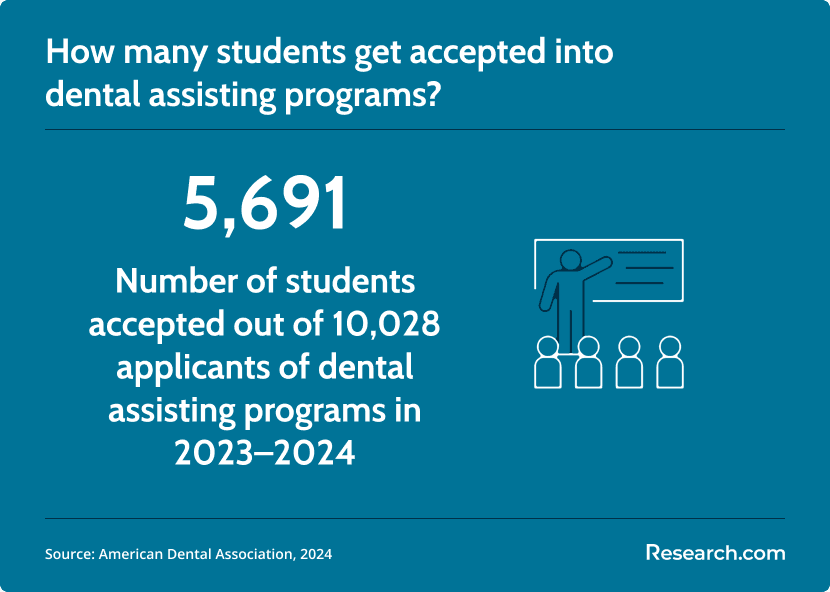
Admission requirements vary by school, but dental assisting programs may be selective because laboratory seats, faculty availability, and clinical placements are limited. In the 2023–24 academic year, 10,028 people applied to dental assisting education programs, and 5,691 were accepted (ADA, 2024).
Most online or hybrid associate programs use admissions requirements to confirm that applicants are academically prepared and eligible for clinical participation.
- Completed application form: Applicants usually submit an official application and pay a non-refundable fee.
- High school diploma or GED: Schools commonly require proof of graduation or an equivalent credential, along with official transcripts.
- Minimum GPA: Some programs ask for a minimum GPA of 2.75 or 2.5 on 4.0 scale to show readiness for college-level work.
- Placement test scores: A school may request SAT, ACT, or placement exam results to determine whether a student needs developmental coursework.
- Letters of recommendation: Programs may ask for references from teachers, supervisors, or mentors who can speak to reliability, communication, and work habits.
- Proof of immunizations: Clinical settings often require students to document current vaccinations before they can work with patients.
- Background check or drug screening: Externship sites and schools may require screening before students enter labs or clinical placements.
Apply early, especially if the program has fixed start dates or limited clinical capacity. If you are comparing dental assisting with other long-term education plans, Research.com also covers options such as a fast online master’s in data science, but that is a separate career direction rather than a direct dental assisting advancement route.
What Courses Are Included in an Accelerated Online Dental Assistant Associate Degree Program?
An accelerated dental assisting associate curriculum should prepare students for chairside, administrative, laboratory, safety, and patient-care responsibilities. Although course titles differ by school, most programs combine general education with technical dental courses and supervised hands-on experience.
Students in an online dental assistant degree should expect that lectures may be remote, while labs, radiography practice, and externships may require in-person participation.
- Dental Radiography: Students learn how to capture dental images safely, position patients, follow radiation protection rules, and understand basic imaging quality standards.
- Chairside Assisting: This course focuses on supporting dentists during exams and procedures, including instrument transfer, patient preparation, infection control, and four-handed dentistry techniques.
- Dental Materials: Learners study materials used in restorative and preventive care, including composites, cements, amalgams, and impression materials, with attention to safe handling and proper use.
- Oral Anatomy and Physiology: Students build knowledge of teeth, oral structures, surrounding tissues, and basic function so they can understand dental procedures and communicate accurately in clinical settings.
- Infection Control: Coursework covers sterilization, personal protective equipment, disease transmission, disinfection protocols, and compliance expectations in dental offices.
- Dental Office Management: Students learn appointment scheduling, dental records, billing basics, insurance workflows, patient communication, and privacy expectations. Students comparing healthcare support roles can also review Research.com’s guide on how to become a pharmacy technician, although pharmacy technology follows a different training and workplace model.
A strong program should connect these courses to real dental office tasks, not just textbook concepts. Ask how the school evaluates practical skills, what software or equipment students use, and whether graduates are prepared for relevant certification exams.
What Certifications Can I Earn During a Dental Assistant Associate Program?
Certification requirements for dental assistants vary by state, but credentials can improve employability and help demonstrate readiness for specific clinical duties. Many associate programs include coursework aligned with DANB exams, radiology requirements, infection control standards, or state registration pathways.
Students interested in healthcare leadership or business education can explore separate options such as accelerated online sustainability MBA programs, but those degrees are not substitutes for dental assisting certification or licensure preparation.
- National Entry Level Dental Assistant: The NELDA credential from the Dental Assisting National Board covers foundational areas such as infection control, radiation health and safety, and basic dental assisting tasks. It is often relevant for newer assistants or recent program graduates.
- Certified Dental Assistant: The DANB CDA credential requires successful completion of exams in General Chairside Assisting (GC), Radiation Health and Safety (RHS), and Infection Control (ICE). It is one of the field’s most widely recognized credentials.
- Registered Dental Assistant: The RDA credential from the American Medical Technologists (AMT) verifies that a dental assistant meets national standards across clinical and administrative areas. Applicants generally need to complete an approved dental assisting program and pass an exam.
- Radiology Certification: Radiology credentials focus on radiation safety, image exposure techniques, and compliance with state rules. Some dental assisting programs include radiography preparation that supports eligibility for state or DANB exams.
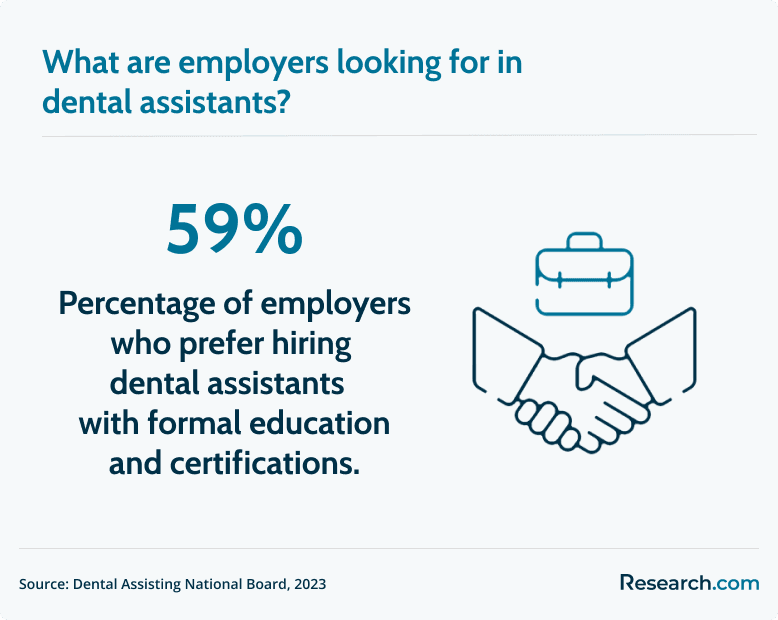
According to the DANB (2023), 59% of employers prefer to hire dental assistants who are both educated and credentialed. That does not mean certification guarantees a job, but it can make a graduate more competitive in hiring markets where dentists want assistants who can contribute quickly and safely.
Before enrolling, ask the school which exams the curriculum prepares students for, whether exam fees are included, and whether graduates meet credentialing rules in the state where they plan to work.
What Advancement Opportunities Are Available to Graduates of Online Dental Assistant Associate Degree Programs?
An online dental assistant associate degree can lead directly to entry-level employment, but it can also serve as a foundation for expanded clinical duties, office leadership, or additional healthcare education. Advancement usually depends on state rules, certifications, employer needs, and further schooling.
- Registered Dental Assistant with Expanded Functions (RDA-EF): This path may allow dental assistants to perform more advanced procedures under dentist supervision. Requirements differ by state and often include extra coursework, state exams, and an active RDA license.
- Dental Hygiene Associate or Bachelor’s Degree: Dental hygiene is a common next step for assistants who want more independent patient-care responsibilities. Programs focus on preventive services, periodontal care, patient education, and licensure preparation.
- Medical Assisting or Allied Health Diplomas: Some graduates move into related healthcare support roles. If you are comparing job titles, Research.com explains whether medical assistant and medical administrative assistant mean the same thing and how clinical and administrative duties differ.
- Public Health Certificate or Degree Programs: Dental assistants interested in community oral health may study population health, school-based programs, health education, or outreach planning.
- Doctor of Dental Surgery (DDS) or Doctor of Dental Medicine (DMD): A small number of dental assistants use the role as early exposure before pursuing dentistry. This route requires a bachelor’s degree followed by four years of dental school. The need for dental care remains significant: the CDC reports that one in five adults aged 20–64 has at least one untreated cavity (CDC, 2024).
The best advancement path depends on your goal. If you want more clinical independence, dental hygiene may be a stronger fit. If you prefer operations, billing, and staff coordination, dental office management may be more practical. If you want to become a dentist, dental assisting can provide exposure, but it is only the beginning of a much longer academic path.
How Does an Associate Degree in Dental Assisting Compare to a Bachelor’s in Dental Hygiene?
Dental assistants and dental hygienists both support oral healthcare, but the roles are not interchangeable. Dental assistants help dentists during procedures, prepare rooms, manage instruments, take records, support radiography duties where allowed, and often assist with office tasks. Dental hygienists typically provide preventive clinical services and must meet licensure requirements.
An online dental assistant associate degree typically takes 12 to 24 months. A bachelor’s degree in dental hygiene usually takes about four years and leads to licensure and a broader scope of patient-care responsibility.
| Comparison point | Dental assisting associate degree | Bachelor’s in dental hygiene |
| Typical timeline | 12 to 24 months | About four years |
| Primary role | Supports dentists with clinical and administrative tasks | Provides preventive oral healthcare services |
| Licensing | Varies by state; certification may be optional or required for specific duties | Licensure is required |
| Cost | Tuition typically ranging from $9,000 to $20,000 | Can cost upwards of $30,000 to $60,000 at four-year colleges and universities |
| Best fit | Students who want faster entry into dental offices | Students seeking more independent clinical responsibility and higher long-term earning potential |
Students comparing allied health costs may also look at the cost of affordable online medical assistant programs, but medical assisting, dental assisting, and dental hygiene each lead to different workplace duties and credential requirements.
According to Delta Dental, 74% of adults brush twice daily, 71% floss each day, and 66% use mouthwash, with these figures dipping slightly compared to 2024. These habits reinforce why dental teams need professionals who can educate patients, support preventive care, and help practices deliver efficient treatment.
If your priority is speed and lower cost, dental assisting may be the better starting point. If your priority is clinical autonomy and long-term earning potential, dental hygiene may be worth the longer timeline and higher investment.
How Can I Finish a Dental Assistant Associate Degree Program Faster?
Finishing faster requires more than choosing the shortest advertised program. You need a plan for transfer credits, clinical availability, course sequencing, and weekly workload. The fastest path is usually the one with the fewest scheduling delays.
- Enroll full time when realistic: Taking a heavier credit load can shorten the timeline, but only if you can keep up with labs, exams, and clinical preparation.
- Submit transcripts for transfer review: Prior general education credits may reduce the number of classes you need to complete.
- Choose a year-round or accelerated format: Programs with summer, intersession, or compressed terms reduce downtime between courses. This is similar in concept to workforce-focused options such as affordable online CNA programs, although dental assisting has its own clinical and regulatory requirements.
- Ask about prior learning assessments: Some schools may award credit for approved work experience, military training, or certifications.
- Build a fixed weekly study schedule: Accelerated online courses move quickly. Set aside regular time for lectures, assignments, exam review, and clinical paperwork.
Do not overload credits without considering clinical obligations. A student who fails or withdraws from a course may lose more time than a student who follows a slightly slower but more manageable plan.
What Career Paths Are Available to Graduates of Accelerated Online Dental Assistant Associate Degree Programs?
A dental assistant associate degree prepares graduates for dental office support roles and can also help them move into related healthcare, administrative, sales, or technical positions. Salary outcomes vary by state, employer, experience, certification, and job duties.
- Dental Sales Representatives ($40,695): Graduates with strong communication skills may work with dental supply companies or device manufacturers, explaining products, supporting client relationships, and demonstrating dental tools or technology.
- Medical Assistants ($44,720): Some dental assisting skills transfer to clinical and administrative roles in physicians’ offices or outpatient centers.
- Expanded Functions Dental Assistants ($53,212): EFDAs perform advanced duties under dentist supervision, which may include placing and finishing restorations, applying sealants, taking impressions, or coronal polishing, depending on state rules.
- Dental Lab Technicians ($54,060): This role focuses on creating dental prosthetics such as crowns, bridges, and dentures. It can suit graduates who enjoy detailed, hands-on technical work.
- Dental Office Managers ($57,668): Assistants with administrative strengths may move into practice operations, scheduling, billing, staff coordination, and compliance support.
- Orthodontic Assistants ($57,759): These assistants work in orthodontic offices and help with braces, adjustments, patient education, and appliance-related procedures. Extra training may be required.
- Radiologic Technologists ($79,760): Dental radiography exposure can introduce students to imaging, but this career requires additional education and credentialing beyond dental assisting.
- Dental Hygienists ($93,890): With further education and licensure, dental assistants may transition into dental hygiene and take on preventive services such as cleanings, fluoride treatment, and oral health assessments.
Dental assisting is not the only route into stable work, and some students use Research.com to compare unrelated academic paths such as an online bachelor’s degree in history. For dental-focused students, however, the most direct next steps are certification, expanded functions training, dental hygiene, or dental office management.
This chart compares annual salaries for dental assistants and related careers.
What Is the Job Market for Graduates With an Accelerated Online Dental Assistant Associate Degree?
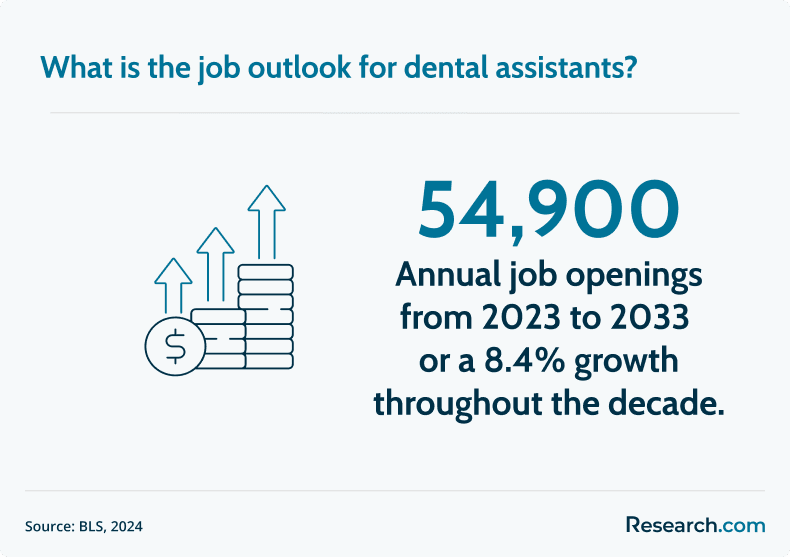
The job market for dental assistants is supported by steady demand in dental offices, public clinics, specialty practices, and community health settings. According to the BLS, dental assistants are projected to have 8.4% job growth from 2023 to 2033, with around 54,900 annual job openings.
DANB (2024b) also reported that nearly 70% of dentists said there was a shortage of qualified dental assistant applicants. This suggests that employers are not only hiring for growth, but also trying to replace workers who leave positions or retire.
Compared with other dental occupations, dental assisting remains a relatively accessible entry point. Dental hygienists are projected to grow by 9.2%, with about 16,400 annual openings, while dental laboratory technicians are projected to decline by -4.2%, with just 2,600 annual openings each year.
Dentists and specialists are projected to see slower growth between 2% and 4%, with 100 to 4,300 annual openings, most of them for general dentists. These comparisons show that dental assisting can be a practical way to enter oral healthcare without the long training timeline required for dentistry or dental hygiene.
Demand is influenced by several factors: an aging population, ongoing need for preventive care, dental insurance coverage, and practice efficiency. Dental assistants help dentists see patients more effectively by preparing rooms, managing instruments, taking records, assisting during procedures, and supporting patient flow.
Regional conditions still matter. State funding for public clinics, dental practice ownership models, local wage levels, and scope-of-practice laws can all affect hiring. Technology may also shift the tasks assistants perform, especially as practices adopt digital records, digital imaging, and chairside scanning.
Students interested in combining healthcare operations with technology may compare separate programs such as the best online cloud computing degree programs, but dental assisting itself remains a clinical support field rather than an IT career.
Overall, dental assisting offers a stable and accessible entry into oral healthcare, especially for students who complete accredited training, earn relevant certifications, and understand their state’s rules.
How Are Emerging Technologies Reshaping Dental Assisting?
Technology is changing the daily workflow in dental offices. Dental assistants increasingly encounter digital radiography, electronic health records, intraoral cameras, simulation tools, chairside scanning, appointment platforms, and digital patient communication systems.
These tools do not remove the need for clinical judgment, patient communication, infection control, or chairside support. Instead, they raise employer expectations. A strong dental assisting program should help students become comfortable with both patient-facing clinical tasks and the software used to document care, manage records, and support billing workflows.
Students who want a broader understanding of healthcare administration technology may also review low-cost online medical billing and coding courses, but dental assistants should prioritize dental-specific software, radiography systems, and clinical technology first.
How Can I Maximize Financial Aid for an Accelerated Online Dental Assistant Associate Degree?
Start with the FAFSA, then compare school-based aid, state grants, scholarships, payment plans, employer reimbursement, and workforce training funds. Submit documents early because some aid is limited and awarded on a first-come basis.
Ask the financial aid office to explain total program cost, not just tuition. You need to know whether aid can cover books, uniforms, required instruments, exam fees, background checks, immunizations, and travel for clinical assignments.
It can also help to compare how healthcare programs structure aid. For example, Research.com’s guide to accredited online medical billing and coding schools with financial aid explains similar questions students should ask about eligibility, school accreditation, and program costs.
| Financial aid step | Why it helps |
| Complete the FAFSA early | It determines eligibility for many federal, state, and institutional aid options. |
| Ask for a full cost breakdown | It helps prevent surprises from supplies, clinical costs, or exam fees. |
| Check scholarship deadlines | Healthcare and community college scholarships may have separate applications. |
| Review employer benefits | Some dental offices or healthcare employers may help pay for training. |
| Compare payment plans | A payment plan may reduce the need for borrowing if the schedule is manageable. |
What Graduates Say About Fast Online Dental Assistant Associate Programs
- Sophia: "I completed my online dental assistant associate program in 16 months because I stayed enrolled year-round. The pace was demanding, but the schedule helped me keep momentum instead of waiting for the next semester. I am now working in a dental office, and finishing quickly made the transition feel worth it."
- Jess: "I thought online learning would feel isolated, but my program included live question sessions, group discussions, and peer support. Instructors were reachable by email and video, which made a big difference when I needed help. The experience felt more connected than I expected."
- Emett: "The flexibility helped me learn in a way that matched my schedule. I could replay lectures, spend extra time on difficult topics, and move quickly through material I already understood. That control helped me become more confident before entering the workplace."
Is Accreditation Critical When Choosing an Accelerated Online Dental Assistant Associate Degree?
Yes. Accreditation is one of the most important factors to check before enrolling. It helps confirm that a school or program meets recognized standards, and it may affect financial aid eligibility, employer recognition, certification preparation, and state licensure or registration options.
For dental assisting, students should understand the difference between institutional accreditation and programmatic accreditation. Institutional accreditation applies to the school. Programmatic accreditation, such as CODA for dental assisting programs, applies to the specific dental assisting curriculum. Not every state or employer treats these credentials the same way.
Students comparing healthcare fields may also review affordable online healthcare administration degree options, but dental assisting programs require closer attention to clinical training, lab requirements, radiography rules, and state dental board regulations.
| Accreditation question | Why it matters |
| Is the school institutionally accredited? | This can affect financial aid eligibility and transfer credit acceptance. |
| Is the dental assisting program CODA-accredited? | CODA accreditation may matter for certification, licensure, and employer confidence. |
| Does the program meet my state’s requirements? | Dental assisting duties and credential rules vary by state. |
| Are clinical sites approved and supervised? | Hands-on training quality affects readiness for patient care. |
| Will the program prepare me for relevant exams? | Certification and radiology requirements can influence hiring options. |
What Job Placement Support Do Accelerated Online Dental Assistant Programs Offer?
Career support can make a major difference in a short dental assisting program. Because accelerated formats move quickly, students should know before enrollment whether the school helps with externships, resumes, interviews, employer introductions, and certification planning.
Common services include career advising, resume workshops, mock interviews, job boards, local clinic partnerships, externship coordination, and employer networking events. Programs with strong dental office relationships may help students gain practical exposure before graduation.
If you are considering broader healthcare information roles, Research.com also covers affordable online health information management degrees, but HIM programs prepare students for records, data, and compliance roles rather than chairside dental assisting.
Common Mistakes to Avoid When Choosing a Fast Online Dental Assistant Associate Program
- Choosing only by speed: A 4-month or 9-month option may sound appealing, but make sure it fits your starting point, credential goal, and state requirements.
- Ignoring accreditation: Always confirm institutional accreditation and whether the dental assisting program has CODA accreditation if that matters for your state or employer goals.
- Assuming “online” means no campus visits: Many dental assisting programs require labs, externships, or clinical hours in person.
- Looking only at tuition: Supplies, uniforms, travel, exam fees, background checks, and immunizations can raise the real cost.
- Not checking state rules: Radiography, expanded functions, registration, and certification requirements vary by state.
- Overloading credits without a plan: Accelerated coursework can backfire if it causes failed courses or delayed clinical completion.
- Skipping certification planning: Ask which DANB, radiology, or state exams the program prepares you to take.
Questions to Ask Before Enrolling
- Is this a true associate degree, a certificate, a diploma, or a degree-completion pathway?
- How much of the program is online, and how much must be completed in person?
- Where will I complete labs, practicums, or externships?
- Does the program meet dental assisting requirements in the state where I plan to work?
- Is the program CODA-accredited, institutionally accredited, or both?
- Which certification exams does the curriculum prepare me for?
- Are exam fees, supplies, uniforms, and background checks included in the published cost?
- Can I transfer previous college credits?
- What percentage of students complete the program on time?
- What job placement services are available before and after graduation?
Key Insights
- The fastest listed option is a 4-month degree-completion track, but it is intended for students who already completed a qualifying diploma program.
- Most accelerated dental assistant associate programs take 12 to 24 months, and many require in-person labs or clinical placements even when lectures are online.
- Associate degrees are less common than certificates in dental assisting, representing only 4% of credentials awarded in the 2023–24 school year, while certificates accounted for 61%.
- Cost varies by residency and school type. ADA data reported average tuition and fees of $9,326 for in-district students, $10,615 for out-of-district students, and $15,692 for out-of-state students.
- Accreditation, state eligibility, clinical training, and certification preparation should carry more weight than speed alone.
- Dental assisting offers a practical entry into oral healthcare, with BLS-projected 8.4% job growth from 2023 to 2033 and around 54,900 annual job openings.
- The best program is the one that helps you finish quickly without sacrificing clinical readiness, credential eligibility, affordability, or state compliance.
References:
- American Dental Association. (2024). CODA Survey of Dental Education Series. Retrieved July 11, 2025, from https://www.ada.org/resources/research/health-policy-institute/dental-education
- Dental Assisting National Board. (2023). Perspectives on Dental Assisting Professional Requirements. https://danbsfprodassets.azureedge.net/assets/docs/default-source/email-assets-to-share/dental-assisting-requirements-survey-report.pdf
- Dental Assisting National Board. (2024a, May). 2024 Dental Assistants Salary and Satisfaction Survey. https://www.danb.org/career-center/dental-assistant-salary
- Dental Assisting National Board. (2024b, May). https://www.danb.org/news-blog/detail/news/new-report-reveals-vital-role-of-dental-assistants
- PayScale. (2025, June 10). Average Dental Assistant, Registered Expanded Function (RDAEF) Hourly Pay. Retrieved July 4, 2025, from https://www.payscale.com/research/US/Job=Dental_Assistant%2C_Registered_Expanded_Function_(RDAEF)/Hourly_Rate
- U.S. Bureau of Labor Statistics. (2024). Dental Assistants [Interactive data]. May 2024 OEWS Profiles, Occupational Employment and Wage Statistics (OEWS) Profiles. Retrieved July 11, 2025, from https://data.bls.gov/oesprofile
- U.S. Bureau of Labor Statistics. (2025b, April 18). Occupational projections, 2023–33, and worker characteristics, 2023 (Numbers in thousands). Employment Projections. https://www.bls.gov/emp/tables/occupational-projections-and-characteristics.htm
- ZipRecruiter. (2025, July 3). Orthodontist Assistant Salary. Retrieved July 11, 2025, from https://www.ziprecruiter.com/Salaries/Orthodontist-Assistant-Salary#Yearly
Other Things You Should Know About the Fastest Online Dental Assistant Associate Degree Programs
Admission requirements for the fastest online dental assistant associate degree programs in 2027 typically include a high school diploma or GED, completion of prerequisite courses, and occasionally, a minimum GPA. Some programs may also require standardized test scores or a personal statement. Be sure to check specific program requirements.
The fastest online dental assistant associate degree programs in 2027 typically take about 12 to 18 months to complete. Accelerated courses and year-round enrollment options contribute to shorter completion times, allowing students to quickly enter the workforce.


