
2027 Best Online Associate in Medical Office Administration Programs

Co-Founder and Chief Data Scientist
Choosing an online associate’s in medical office administration is a practical way to enter healthcare without becoming a nurse, physician, or clinical provider. The decision matters because medical practices, hospitals, dental offices, clinics, and insurance-related healthcare organizations depend on trained administrative staff to manage appointments, records, billing workflows, patient communication, compliance, and office operations.
This guide is for students, working adults, career changers, and current healthcare support workers comparing online medical office administration associate degree programs. It explains what the degree covers, how online programs compare with campus programs, what they cost, which schools offer relevant options, what employers may look for, and how to decide whether this path fits your career goals.
Medical office administration is not the same as clinical patient care. It is a front-office and operations-focused field. However, it directly affects patient experience, reimbursement accuracy, scheduling efficiency, and the overall performance of healthcare organizations. As of 2024, the field employed 616,200 medical and health services managers, showing the scale of administrative work across healthcare settings (US BLS, 2026).
Quick Answer: Is an Online Associate’s in Medical Office Administration Worth Considering?
An online associate’s in medical office administration can be worth considering if you want a healthcare career focused on office operations, patient records, billing support, scheduling, insurance documentation, and administrative coordination. The strongest programs are offered by accredited institutions, include training in medical terminology and health information systems, and prepare students for entry-level roles or future certifications in areas such as medical billing, coding, electronic health records, or healthcare administration.
The degree is usually a better fit for students who want flexible online study and a nonclinical healthcare role. It may not be the right choice if your long-term goal is direct patient diagnosis, nursing, pharmacy, or another licensed clinical profession unless you plan to use the associate degree as a stepping stone.
Online Associate’s in Medical Office Administration Degree Programs Table of Contents
- Can an associate degree be completed fully online?
- Do employers respect online medical office administration degrees?
- Are online degrees accepted internationally?
- Online vs. campus medical office administration programs
- Best Online Associate’s in Medical Office Administration Degree Programs for 2027
- How much does an online associate in medical office administration cost?
- What are the admission and student requirements?
- Common courses in medical office administration associate programs
- How to choose an online medical office administration program
- Career advancement after an associate’s in medical office administration
- Salary and career outlook for graduates
- Specialized medical certifications that can strengthen your resume
- When public policy graduate study may make sense
- Online student support and career services
- Could a 1 year MPH online degree help your career?
- Technology trends changing medical office administration
- Should you move from administration into a clinical role?
- Fast medical certifications to pair with this degree
- Is a master’s in healthcare administration a good next step?
- How to improve your career options after graduation
- Advanced degrees that may accelerate a healthcare career
Can You Get a Degree Completely Online?
Yes. Many associate degree programs can be completed fully online, especially programs focused on administrative, business, information management, and healthcare office skills. Online medical office administration programs typically deliver lectures, assignments, discussion boards, quizzes, and projects through a learning management system.
Online learning is now a mainstream part of higher education. In previous academic years, 10,750,071 students were enrolled in at least one distance education course at degree-granting postsecondary institutions (National Center for Education Statistics, 2024). For students balancing work, family responsibilities, transportation limitations, or rural access issues, online education can make an associate degree more realistic.
Will Employers Take My Online Degree Seriously?
Employers are more likely to take an online associate degree seriously when it comes from an accredited college, teaches job-relevant skills, and is supported by a clear transcript and credential. Many employers now evaluate online degrees similarly to campus-based degrees; 70% of hiring managers and HR professionals view online degrees as equally credible as traditional ones.
That said, the word “online” is usually less important than the quality of the school and the relevance of your training. Employers may look for experience with electronic health records, scheduling systems, medical terminology, insurance processes, privacy rules, customer service, and office software. If two applicants have the same degree, certifications, internships, healthcare experience, and technical skills can make one candidate more competitive.
Are Online Degrees Recognized All Over the World?
Online degrees are increasingly recognized across countries, but recognition is not automatic everywhere. The institution’s accreditation, the country where the school is based, employer policies, professional licensing rules, and credential evaluation processes can all affect how a degree is viewed outside the United States.
The global growth of online education is clear. Massive Open Online Courses have attracted 550 million students across more than 45,000 courses and 110 degrees offered by over 1,200 universities worldwide (Class Central, 2024). This does not mean every online degree has identical value in every country, but it shows that digital education is now widely used by universities and learners around the world.
If you plan to work internationally, ask employers, government credential evaluators, or professional associations whether your degree and school will be accepted in the country where you want to work.
Traditional vs. Online Associate’s in Medical Office Administration Degree Programs
An associate’s in medical office administration is designed for students who want healthcare employment without preparing for direct clinical practice. Like many health-related programs, including the best public health degrees, nursing pathways, and health science degrees, it may be available in online, hybrid, or campus-based formats.
The best format depends on your schedule, learning style, budget, and need for in-person services. Online programs work well for independent learners who need flexibility. Campus programs may be better for students who want face-to-face interaction, structured schedules, and direct access to on-campus labs, offices, and classmates.
| Decision factor | Online associate program | Traditional campus program | Best fit |
| Schedule | May offer asynchronous coursework and flexible weekly deadlines | Usually follows fixed class meeting times | Online is often better for working adults or caregivers |
| Location | Can be completed from home if technology requirements are met | Requires travel to campus | Online helps students outside commuting range |
| Cost factors | May reduce commuting, housing, and campus-related expenses | May include transportation, parking, housing, and campus fees | Compare total cost, not tuition alone |
| Learning style | Requires self-direction, time management, and comfort with technology | Provides more in-person structure and immediate classroom interaction | Choose based on how you learn best |
| Program access | Can expand school options beyond your local area | Limits practical choices to schools you can attend physically | Online may provide more choices |
- Accessibility and flexibility: Online programs remove the need to be physically present on campus, which can help students who work irregular hours, live far from a college, or need to complete coursework around family obligations. Campus programs provide more structure but less scheduling freedom.
- Cost and time: Online students may avoid commuting, relocation, and some campus-based expenses. Some online formats also let students move through coursework more quickly, similar to accelerated options found in some registered nurse to MSN online pathways. However, online programs can still charge technology, platform, or distance learning fees.
- Learning experience: Campus study offers face-to-face interaction with instructors and classmates. Online study provides more independence and may connect students with peers from different regions. Recent data shows that 75% of college students said their online learning experiences were the same quality or higher quality than in-person classes, and 70% now prefer a hybrid or fully online instructional model over traditional face-to-face formats.
Is an Online Degree Cheaper?
An online degree can be cheaper, but it is not always the lowest-cost option. Students may save on housing, transportation, parking, and relocation. However, online learners may still pay tuition, books, proctoring fees, technology fees, software costs, and graduation fees.
The smartest comparison is total program cost. Ask each school for a full cost estimate that includes tuition, required credits, mandatory fees, books, supplies, and any certification exam preparation costs.
Is an Online Degree as Good as a Regular Degree?
An online associate degree can carry the same academic value as a campus degree when it is awarded by an accredited institution and follows the same academic standards. The delivery format is different, but the credential can still be legitimate.
Before enrolling, confirm the college’s accreditation status and review the curriculum. A strong medical office administration program should teach medical terminology, office software, billing and insurance basics, health information management, communication, privacy practices, and administrative workflows used in healthcare settings.
Best Online Associate’s in Medical Office Administration Degree Programs for 2027
The programs below represent online associate-level options in medical office administration or closely related medical administration fields. Use this list as a starting point, not as the only factor in your decision. Program length, credit requirements, tuition, transfer policies, state authorization, and student support can all affect whether a school is right for you.
| School | Program details | Length | Credits | Cost information | Accreditation |
| Wayne Community College | Online Associate in Applied Science in Medical Office Administration with coursework in terminology, coding, office applications, legal and ethical topics, insurance, billing, and communication | Two years | 69 to 73 | $268 per credit | Southern Association of Colleges and Schools Commission on Colleges (SACSCOC) |
| Craven Community College | Online associate program covering medical office skills, records, reports, patient interaction, insurance, billing, phone communication, and confidentiality | Five semesters | 67 to 68 | $76 to $268 per credit | SACSCOC |
| Vance-Granville Community College | Online general medical office administration program with training in scheduling, customer service, EHR use, check-in/check-out, coding, billing, and appointment triage | Two years | 64 to 67 | $4,864 $5,092 tuition | SACSCOC |
| Herzing University | Online associate program covering terminology, pathophysiology, patient privacy, insurance claims, pharmacology, and administrative skills | 20 months | 60 | $490 per credit | Higher Learning Commission (HLC) |
| Monroe College | Online Associate Degree in Medical Administration focused on healthcare office management, technology, communication, presentations, terminology, accounting basics, anatomy, and office procedures | Two years | 61 | $624 per credit | Middle States Commission on Higher Education |
How to Use This Program List
- Start with accreditation: Accreditation affects financial aid eligibility, credit transfer, and employer confidence.
- Compare total cost: A lower per-credit rate may not mean a lower total price if the program requires more credits or charges higher fees.
- Check online format: Confirm whether classes are live, self-paced, hybrid, or fully asynchronous.
- Ask about career preparation: Look for resume support, healthcare-focused advising, internship guidance, and certification preparation.
- Verify transfer options: If you may later earn a bachelor’s degree, ask which credits transfer and to which programs.
How Much Do Online Associate in Medical Office Administration Degree Programs Cost?
The cost of an online medical office administration associate degree depends on the institution, residency rules, credit requirements, fees, and whether the school is public or private. Similar to comparing the best genetic counseling programs, students should look beyond the headline tuition rate and calculate the full cost of attendance.
At a two-year public institution, in-state students can expect to pay around $3,900 for tuition and fees, while out-of-state students may pay $9,400 (National Center for Education Statistics, 2024). For the programs discussed in this guide, cost per credit can range from $80 to $650 depending on the institution. Some schools also charge online learners a flat tuition rate regardless of residency, while others add technology or distance education fees.
| Cost item | Why it matters | Question to ask |
| Tuition per credit | This is the base academic cost and varies widely by school | What is the exact per-credit rate for online students? |
| Required credits | More credits can increase the total price even if tuition is lower | How many credits are required to graduate? |
| Online fees | Technology and platform fees can add to the bill | Are there distance learning, proctoring, or technology fees? |
| Books and software | Healthcare programs may require textbooks, coding references, or software access | What materials are required each term? |
| Transfer credits | Accepted credits can shorten the program and reduce cost | How many previous credits can I transfer? |
| Financial aid | Aid can reduce out-of-pocket costs if the school is eligible | Can I use federal financial aid, grants, scholarships, or employer tuition benefits? |
Is an Online Associate in Medical Office Administration Degree Worth It?
The degree can be worth it for students who want an affordable entry point into healthcare administration and are comfortable working in patient-facing office, records, scheduling, or billing support roles. It may also help students explore broader careers with a public health degree later if they decide to continue their education.
Healthcare remains a large employment sector. Overall employment in healthcare occupations is projected to grow much faster than average, creating around 1.9 million openings each year through 2034 (US BLS, 2025). For a role closely tied to this associate degree, Medical Secretaries and Administrative Assistants report an average salary of $52,720 annually (US BLS, 2025).
However, students should be realistic. An associate degree does not guarantee a specific salary, title, or promotion. Pay depends on location, employer type, experience, certifications, and job duties. The degree is most valuable when paired with practical software skills, strong communication, healthcare terminology knowledge, and possibly additional credentials in billing, coding, EHR, or office management. Students comparing this route with clinical healthcare options may also want to review related career pathways such as the happiest nurse practitioner specialties.
What Are the Requirements for Online Associate in Medical Office Administration Degree Programs?
Admission requirements are usually accessible because associate degree programs are designed for early college students and working adults. Still, requirements vary by school, so applicants should review each college’s admissions page before applying.
Typical Admission Requirements
- High school diploma or GED: Most programs require proof of high school completion or an equivalent credential, along with official transcripts from high school or any previous colleges.
- Application form: Students generally submit an online application. Some schools may also request a short essay or personal statement explaining academic goals.
- Resume or work history: Certain programs may ask applicants to share employment experience, especially if the applicant has prior healthcare, customer service, office, or administrative work.
- Recommendation letters: Some colleges request two to three letters from teachers, supervisors, or professional contacts who can describe the applicant’s readiness for college-level study.
Skills That Help Students Succeed
- Technical comfort: Medical office administrators use computers, office equipment, electronic records, spreadsheets, email, and scheduling platforms. Medical secretaries and administrative assistants rely heavily on Microsoft Office, Microsoft Excel, and Microsoft Outlook, with usage rates of 75%, 68%, and 55%, respectively (Burning Glass Technologies, 2024).
- Attention to detail: Small errors in patient records, insurance information, appointment times, and data entry can create delays or compliance issues.
- Problem-solving: Medical office staff often handle scheduling conflicts, insurance questions, missing forms, patient concerns, and communication gaps between departments.
- Professional communication: Students should be prepared to communicate clearly with patients, providers, insurers, supervisors, and coworkers.
- Privacy awareness: Healthcare administrators must understand confidentiality expectations and patient information protections.
What Technology Do Online Students Need?
Online students need reliable technology before classes begin. Waiting until the first week to test equipment can cause missed assignments, login problems, and unnecessary stress.
- Device and accessories: A PC, Mac, Chromebook, or tablet may work depending on the school’s requirements. Students should also have speakers, a microphone, and a webcam for virtual meetings or proctored exams.
- Software and hardware: Many schools recommend Windows 10 or newer for PC users and Mac OS 10.14 or newer for Mac users. Some courses may require additional software or hardware.
- Browser: Students should use current browser versions. Many schools use Blackboard or similar learning platforms that work with Chrome and Firefox.
- Internet connection: A stable broadband connection is essential. Recommended speed is at least 25 Mbps download, at least 3 Mbps upload, and a ping response below 100ms.
Courses to Expect in Online Associate in Medical Office Administration Degree Programs
Online medical office administration programs typically combine healthcare vocabulary, administrative procedures, technology, law and ethics, billing basics, and patient service. The curriculum is different from clinical training, but it can support students who later explore adjacent paths such as a medical social work career path.
Administrative healthcare workers are employed across several major settings. Offices of Physicians, General Medical and Surgical Hospitals, and Offices of Dentists employ roughly 216,420, 155,750, and 85,340 medical secretaries and administrative employees, respectively (US BLS, 2024).
| Course area | What students learn | Why it matters at work |
| Healthcare systems and operations | How administrative, financial, legal, and clinical workflows connect inside healthcare organizations | Helps graduates understand how front-office work affects the entire practice |
| Medical law and ethics | Privacy, confidentiality, ethical conduct, collaboration, timeliness, and healthcare-specific legal issues | Supports compliant handling of patient information and workplace decisions |
| Medical terminology | Healthcare vocabulary, abbreviations, conditions, procedures, injuries, treatments, and related codes | Improves communication with clinicians, insurers, and patients; also supports medical coding training programs online |
| Scheduling and office operations | Appointment management, resource coordination, workflow planning, and patient demand management | Reduces scheduling problems and supports better patient flow |
| Health information management | Collection, analysis, storage, and protection of healthcare data | Prepares students to work with records while following privacy and security expectations from organizations such as the American Health Information Management Association |
Things to Look for in Online Associate in Medical Office Administration Degree Programs
The best program is not always the cheapest, fastest, or highest-ranked. A good choice is the program that is accredited, affordable for your situation, compatible with your schedule, strong in healthcare administration training, and useful for your next career step.
- Accreditation: Choose a college accredited by a recognized agency. Accreditation can affect federal financial aid, transfer credit, employer trust, and eligibility for future education. Students can verify recognition through agencies approved by the United States Department of Education.
- Financial aid options: Ask about federal aid, state grants, scholarships, payment plans, employer tuition assistance, and transfer scholarships. This matters because an associate’s degree holder’s average federal student loan debt is $27,000 (Education Data Initiative, 2024).
- Total cost: Compare tuition, required credits, fees, materials, software, and certification exam preparation. A program with a low tuition rate may still be expensive if fees are high or credits do not transfer.
- Program format: Synchronous programs require students to attend live online sessions. Asynchronous programs allow more flexible weekly work. Full-time, part-time, and accelerated options may also be available.
- Student support: Look for tutoring, academic advising, technology help, career coaching, internship guidance, resume review, alumni networking, and job search support.
- Certification alignment: If you want to pursue medical billing, coding, EHR, or administrative certification, ask whether the curriculum helps prepare for those exams.
- Transfer pathway: If a bachelor’s degree is a possibility, ask whether credits transfer into healthcare administration, health information management, public health, or business programs.
Common Mistakes to Avoid
| Mistake | Why it can hurt you | Better approach |
| Choosing a school without checking accreditation | Credits may not transfer, and financial aid eligibility may be limited | Verify institutional accreditation before applying |
| Comparing tuition only | Fees, books, software, and credit requirements can change the real cost | Request a full program cost estimate |
| Assuming online means self-paced | Some online classes require live attendance or fixed deadlines | Ask whether courses are synchronous, asynchronous, or hybrid |
| Ignoring career services | Students may graduate without resume support, interview preparation, or employer connections | Ask about healthcare-specific career support |
| Expecting salary guarantees | Pay varies by employer, location, experience, and certifications | Use salary data as a planning tool, not a promise |
| Skipping certification planning | Some jobs prefer or require specialized credentials | Ask which certifications the program supports |
What Career Advancement Opportunities Exist After Earning an Associate’s in Medical Office Administration?
An associate’s in medical office administration can lead to entry-level administrative healthcare roles, but it can also serve as a foundation for specialization, management, or further education. The best advancement path depends on whether you want to stay in office operations, move into billing and coding, work with health information systems, supervise staff, or continue into a bachelor’s or graduate program.
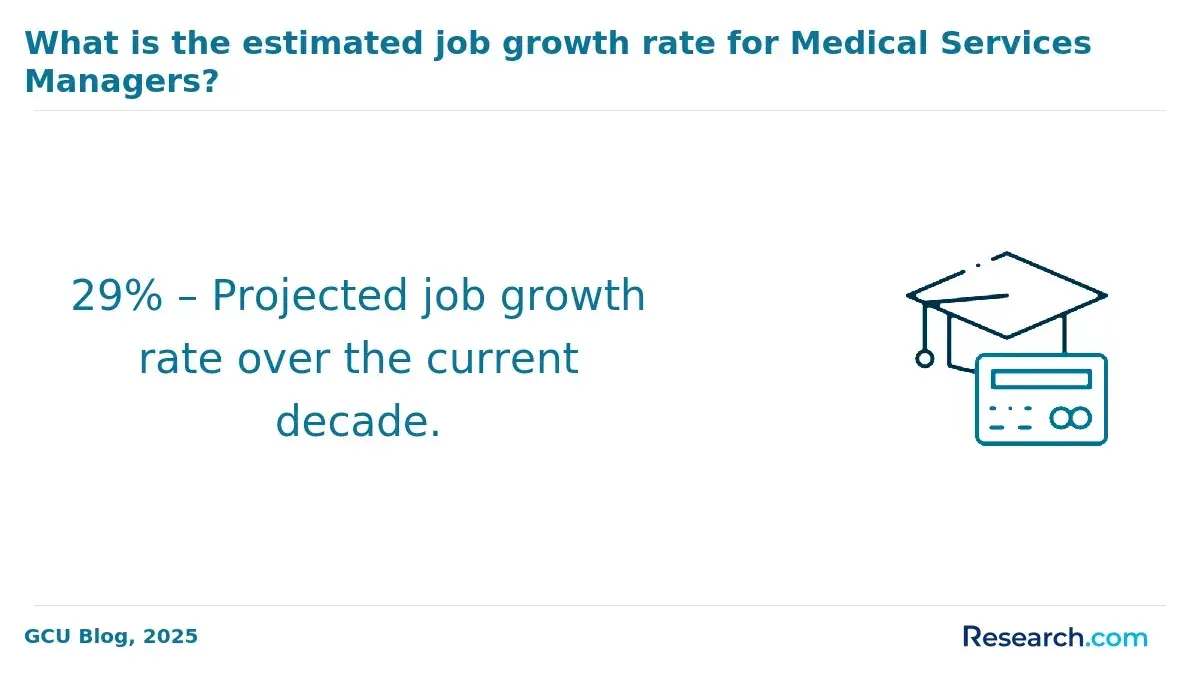
- Specialized certifications: Credentials such as Certified Medical Administrative Assistant (CMAA), Certified Coding Specialist (CCS), Certified Professional Coder (CPC), medical billing certification, or EHR certification can help demonstrate focused skills in billing, coding, records, or office administration.
- Supervisory roles: With experience, graduates may pursue positions such as office manager, lead scheduler, billing supervisor, or practice manager. These roles typically require stronger leadership, compliance awareness, and workflow management skills.
- Healthcare IT and EHR support: Students who enjoy technology may move toward electronic health record support, data quality, workflow improvement, or health information management roles.
- Further education: A bachelor’s degree in healthcare administration, public health, business, or health information management may open broader administrative and leadership options.
- Independent services: Some experienced professionals use billing, coding, or consulting knowledge to support small practices, though entrepreneurship requires business, compliance, and client management skills beyond the associate degree.
Career Outlook and Salary Information for Medical Office Administration Graduates
Graduates may pursue roles in physician offices, hospitals, clinics, dental offices, specialty practices, outpatient centers, long-term care organizations, insurance-related settings, and healthcare support companies. Common job titles can include medical secretary, medical administrative assistant, patient services representative, medical office assistant, scheduling coordinator, billing assistant, records clerk, or front-office coordinator.
Career outcomes depend on local hiring demand, employer size, healthcare experience, certifications, and software skills. Students interested in compensation by role or region can review additional guidance on medical billing and coding salary.
| Career direction | Typical focus | Helpful next step |
| Medical office administration | Scheduling, patient communication, records, insurance forms, front-desk workflow | Build EHR, customer service, and office software skills |
| Medical billing and coding | Claims, codes, documentation review, reimbursement support | Consider billing or coding certification |
| Health information management support | Record accuracy, data protection, documentation systems | Develop EHR and privacy compliance knowledge |
| Practice operations | Staff coordination, workflow improvement, office policies | Gain experience and pursue supervisory training |
| Healthcare administration education | Broader leadership, finance, policy, and operations | Consider a bachelor’s or graduate degree later |
What Other Specialized Medical Certifications Can I Pursue to Enhance My Career?
Certifications can help graduates show employers that they have skills beyond a general associate degree. They are especially useful if you want to specialize in billing, coding, electronic records, transcription, or healthcare office management. Students interested in billing and coding should compare accredited medical billing and coding schools before choosing a program.
- Certified Medical Administrative Assistant: Supports front-office and patient services roles.
- Certified Coding Specialist: May help students move toward coding-focused positions.
- Certified Professional Coder: Useful for students interested in medical procedure coding and insurance documentation.
- Electronic health records certification: Helpful for roles involving digital patient records and healthcare information systems.
- Medical billing certification: Supports roles focused on claims, insurance forms, payments, and reimbursement processes.
Should I Consider an Advanced Degree in Public Policy After My Associate’s Degree?
A public policy degree is not the most direct next step for every medical office administration graduate. It may make sense if your long-term goal is healthcare policy, compliance, nonprofit health leadership, public-sector administration, or regulatory analysis rather than daily office operations.
Students who want to connect healthcare administration with policy, budgeting, organizational leadership, and regulatory work may eventually compare MPP online programs. For most associate degree students, however, the more immediate next step is usually employment, certification, or a bachelor’s degree in healthcare administration, public health, business, or health information management.
What Support and Career Resources Do Online Programs Offer?
Good online programs provide more than video lectures. They help students stay enrolled, complete assignments, solve technology problems, and prepare for employment. Before enrolling, ask whether support is available during evenings or weekends if you work full time.
- Academic advising: Helps students plan courses, transfer credits, and graduation timelines.
- Technical support: Assists with learning platforms, login problems, software access, and online exams.
- Tutoring: Supports students in writing, terminology, office applications, and healthcare-related coursework.
- Career services: May include resume reviews, interview coaching, job boards, employer connections, and healthcare-specific career advising.
- Certification guidance: Some programs help students choose add-on credentials or pathways such as a low-cost medical coding and billing online program.
Could a 1 Year MPH Online Degree Accelerate My Career?
A 1 year MPH online program is usually not an immediate next step for someone who has just completed an associate degree. However, it may become relevant later for students who continue into a bachelor’s degree and want to move toward public health leadership, population health, epidemiology, program management, or health policy.
For professionals who already meet graduate admission requirements, a 1 year MPH online may add public health, data analysis, policy, and community health management skills to an administrative background.
How Are Emerging Technologies Influencing Medical Office Administration Roles?
Medical office administration is becoming more technology-driven. Electronic health records, patient portals, automated scheduling systems, telehealth platforms, online billing tools, and digital intake forms are changing daily responsibilities. Administrators increasingly need to troubleshoot workflows, protect patient information, reduce duplicate data entry, and communicate across digital systems.
Automation can handle some repetitive tasks, but it does not remove the need for skilled staff. Patients still need help navigating appointments, insurance questions, records requests, and communication with providers. Students who want a broader mix of administrative and clinical exposure may also compare medical assistant programs fast track.
Can Advancing to a Clinical Role Enhance My Healthcare Career?
Moving from administration into a clinical role can expand career options, but it usually requires additional education, training, and possibly licensure or certification. A medical office administration degree does not by itself qualify graduates for licensed clinical practice.
This path may make sense if you discover that you want more direct patient care or a specialized healthcare profession. Some students eventually explore clinical or pharmacy-related pathways, including the quickest doctor of pharmacy programs. Before making that shift, compare prerequisites, admissions requirements, clinical training expectations, cost, and time commitment.
Quick Medical Certifications to Complement Your Medical Office Administration Degree
Shorter certification programs can help associate degree graduates target specific administrative healthcare roles. The right certification depends on the job you want, not just on which credential is fastest.
- CMAA: This credential focuses on medical office duties such as patient information, scheduling, terminology, and administrative workflow.
- Certified Professional Coder (CPC): This can support students who want to work with medical procedure coding and insurance documentation.
- EHR certification: This credential can help show that you understand electronic patient record systems and digital documentation processes.
- Medical billing certification: This option is useful for students who want to specialize in insurance claims, billing processes, and payment documentation.
Students comparing add-on credentials can review quick medical certifications to understand how short-term training may support employment goals.
Is a Master’s in Healthcare Administration a Smart Career Move?
A master’s in healthcare administration is usually a later-career option, not the next step immediately after an associate degree. It may be valuable for professionals who already have a bachelor’s degree and want leadership roles in healthcare operations, finance, policy, quality improvement, or organizational strategy.
If your long-term plan is healthcare management, you may eventually research whether is a MHA degree worth it. For now, associate degree students should focus on finishing an accredited program, gaining healthcare office experience, and choosing a bachelor’s pathway if leadership is the goal.
Enter the Healthcare Workforce with an Associate’s in Medical Office Administration Degree
An associate’s in medical office administration can help you enter healthcare through the operational side of patient care. You will not diagnose, prescribe, or provide clinical treatment, but your work can influence how smoothly patients move through the healthcare system.
If you later decide to continue your education, you can compare broader options such as the best online healthcare degrees or accredited online healthcare degrees. The best next step depends on whether you want to remain in office support, specialize in billing or coding, move into health information, supervise staff, or pursue healthcare leadership.
Maximizing Career Opportunities Post-Graduation
Graduating is only one part of the career plan. To compete for stronger roles, students should build a resume that shows job-ready skills, not just completed coursework. Employers may value EHR familiarity, scheduling experience, insurance knowledge, communication skills, Microsoft Office ability, and customer service experience.
- Complete a practicum or internship if available: Real healthcare office exposure can make your resume stronger.
- Earn a targeted certification: Choose CMAA, CPC, EHR, billing, or coding credentials based on your preferred role.
- Document software skills: List scheduling systems, spreadsheet tools, EHR exposure, and office platforms you can use.
- Network locally: Physician offices, dental practices, clinics, and outpatient centers may hire entry-level administrative staff.
- Plan for future education: If you want management, ask whether your credits transfer into a bachelor’s program. Students exploring other accessible credentials can also review the easiest associate degree to get.
What Advanced Degree Can Accelerate My Healthcare Career?
The most useful advanced degree depends on the career you want. A bachelor’s in healthcare administration, health information management, public health, or business may support supervisory and administrative roles. A master’s degree may support leadership, policy, analytics, or executive-track positions after additional experience.
Some students consider advanced clinical or pharmacy-related education to combine administrative knowledge with clinical expertise. For example, those comparing pharmacy pathways may review the cheapest online doctorate in pharmacy programs. Because advanced clinical programs can require prerequisites, licensing steps, and substantial time commitments, students should compare requirements carefully before changing direction.
Key Insights
- An online associate’s in medical office administration is best for nonclinical healthcare careers: It prepares students for office, records, scheduling, billing support, and patient service responsibilities rather than direct clinical care.
- Accreditation should be your first filter: It affects financial aid, transfer credit, employer confidence, and future education options.
- Online programs can be legitimate and flexible: Many employers accept online degrees, especially when they come from accredited colleges and include practical healthcare office skills.
- Cost comparisons must include more than tuition: Required credits, fees, software, books, residency rules, and transfer policies can change the total price.
- Certifications can improve career focus: CMAA, CPC, billing, coding, and EHR credentials may help graduates qualify for more specialized administrative healthcare roles.
- Technology skills are no longer optional: Medical office administrators increasingly work with EHR systems, patient portals, automated scheduling, telehealth tools, and digital billing workflows.
- The degree can be a stepping stone: Graduates may later pursue bachelor’s programs, healthcare administration, public health, health information management, or selected clinical pathways depending on long-term goals.
- Salary and job outcomes are not guaranteed: Pay depends on location, employer, experience, certifications, and role responsibilities, so students should use labor market data as guidance rather than a promise.
References:
- AMBCI. (2025). How Much Do Medical Coder and Billers Make? https://ambci.org/medical-billing-and-coding-certification-blog/how-much-do-medical-coder-and-billers-make
- Burning Glass Technologies. (2024). The most in-demand skills in healthcare administration. Burning Glass Technologies. https://www.burning-glass.com/research/healthcare-skills/
- Clinical Skills Institute. (2025). How Much Do Medical Assistants Earn in 2025? https://www.clinicalskillsinstitute.com/post/how-much-do-medical-assistants-earn-in-2025-salary-guide-by-state
- Education Data Initiative. (2024, June 3). Average student loan debt. https://educationdata.org/average-student-loan-debt
- GCU. (2025). Careers in Health Information Management. https://www.gcu.edu/blog/nursing-healthcare/health-information-management-careers
- National Center for Education Statistics. (2024). Distance Learning. https://nces.ed.gov/fastfacts/display.asp?id=80
- National Center for Education Statistics. (2024). Tuition and fees for in-state and out-of-state students in public two-year institutions: 2023–24. U.S. Department of Education. https://nces.ed.gov/fastfacts/display.asp?id=76
- Shah, D. (2024, May 15). Massive List of MOOC Statistics and Trends (2024). Class Central. https://www.classcentral.com/report/mooc-stats-2023/
- U.S. Bureau of Labor Statistics. (2025). Employment Projections 2024-2034. https://www.bls.gov/emp/
- U.S. Bureau of Labor Statistics. (2025). Medical Records Specialists. Occupational Outlook Handbook. https://www.bls.gov/ooh/healthcare/medical-records-and-health-information-technicians.htm
- U.S. Bureau of Labor Statistics. (2025). Nursing Assistants and Orderlies. Occupational Outlook Handbook. https://www.bls.gov/ooh/healthcare/nursing-assistants.htm
- U.S. Bureau of Labor Statistics. (2025). Occupations with the Most Job Growth. https://www.bls.gov/emp/tables/occupations-most-job-growth.htm
- U.S. Bureau of Labor Statistics. (2026). Medical and Health Services Managers. Occupational Outlook Handbook. https://www.bls.gov/ooh/management/medical-and-health-services-managers.htm
Other Things You Should Know About Online Associate in Medical Office Administration Programs
Yes, it is possible to obtain an associate’s degree in medical office administration entirely through online education. The growing acceptance and accessibility of online learning make it a viable option for many individuals.
Yes, many employers recognize the legitimacy and quality of online degrees, especially when they are from accredited institutions. The specific skills and knowledge gained through the program are crucial factors employers consider.
In 2027, the cost of online associate in medical office administration programs can vary significantly depending on the institution. On average, tuition can range from $5,000 to $15,000 annually. Some programs might offer financial aid or scholarships, potentially reducing the overall expense.
Yes, financial aid is available for online associate programs in medical office administration. Students can apply for federal aid by completing the FAFSA, and many schools offer scholarships and grants specifically for online learners to reduce tuition costs and other fees.
Students need a reliable internet connection, a compatible device (PC, Mac, Chromebook, or tablet) with necessary accessories (speakers, microphone, webcam), and appropriate software (Windows 10 or newer for PC, Mac OS 10.14 or newer for Mac). Using up-to-date web browsers is also recommended.
In an online associate in medical office administration degree program, students typically encounter courses such as medical terminology, healthcare management, medical coding and billing, healthcare ethics, and business communications. These courses are designed to prepare students for administrative roles in healthcare settings.
Look for accreditation, cost and financial aid options, program format (synchronous or asynchronous), student support services, and the overall reputation of the institution. These factors will ensure you make an informed decision and receive a quality education.
In 2027, online associate programs in medical office administration typically require a high school diploma or GED for admission. Students may also need to submit standardized test scores or previous transcripts. Some programs might have prerequisite courses like basic math or English. Ensure reliable internet and a capable computer for online coursework.


