2027 Cheapest Accredited Online Radiology Technician Degree Programs: Tuition, Fees, and Financial Aid

Co-Founder and Chief Data Scientist
Choosing an online radiology technician degree is really a cost-and-accreditation decision, not just a tuition search. The U. S. Bureau of Labor Statistics reports a May 2024 median pay of $78,980 for radiologic and MRI technologists, while projecting 5% job growth from 2023 to 2033. That makes accredited imaging education attractive, but hidden fees, clinical requirements, and aid rules can change the real price.
This guide helps future and current imaging professionals compare affordable online options by tuition, mandatory fees, total program cost, FAFSA eligibility, transfer credits, and net price.
Key Things You Should Know
- The lowest published online undergraduate rate among the programs compared is Fort Hays State University at about $257.33 per credit, but the cheapest total cost depends on transfer credits, clinical placement costs, and whether fees are included.
- Most fully online radiology-related bachelor's options are degree-completion programs for licensed or registry-eligible imaging professionals; entry-level radiography usually requires in-person labs and clinical rotations even when coursework is online.
- Advertised tuition is not the same as net price: students should subtract grants, scholarships, employer tuition benefits, and transfer-credit savings from tuition plus mandatory fees, books, exams, background checks, uniforms, and travel.
What Are the Cheapest Accredited Online Radiology Technician Degree Programs?
The cheapest accredited online radiology technician degree programs are usually public university degree-completion programs in radiologic science, medical imaging, imaging sciences, or advanced radiologic sciences. These programs are often designed for students who already hold, or are working toward, ARRT certification or another imaging credential. Students seeking initial licensure as radiologic technologists should confirm that the program pathway includes required clinical education and meets state and ARRT requirements.
The table below compares affordable U.S. online or primarily online radiologic science-related degree options using published online undergraduate tuition or tuition-and-fee rates available from institutional cost pages. Estimated full-degree cost is shown for comparison only; many students in these programs enter with transfer credit, an associate degree, or professional registry credit, which can reduce the amount they actually pay.
| Rank | School and online program | Credential type | Published online tuition or tuition-and-fee basis | Estimated cost for 120 credits before aid | Best-fit student |
| 1 | Fort Hays State University, online medical diagnostic imaging or related imaging bachelor's pathway | Bachelor's degree or completion pathway | About $257.33 per credit for online undergraduate tuition | About $30,880 | Cost-focused students comparing a public online rate with no large out-of-state premium |
| 2 | Weber State University, online radiologic sciences bachelor's options | Bachelor's degree completion or advanced imaging pathway | About $299 per credit for online undergraduate e-tuition | About $35,880 | Credentialed imaging professionals seeking advanced radiologic science coursework |
| 3 | Oregon Institute of Technology, online radiologic science or medical imaging completion option | Bachelor's degree completion | Online undergraduate tuition-and-fee rates commonly fall in the low-to-mid $300s per credit, depending on residency and fee schedule | Varies by transfer credit and residency-based online rate | Students with prior imaging education who want a public polytechnic health sciences option |
| 4 | Northwestern State University of Louisiana, online radiologic sciences bachelor's completion option | Bachelor's degree completion | About $375 per credit for eNSU undergraduate online coursework | About $45,000 | ARRT-certified or registry-eligible students seeking a structured completion route |
| 5 | Boise State University, online imaging sciences bachelor's completion option | Bachelor's degree completion | About $375 per credit for many online undergraduate programs | About $45,000 | Working imaging professionals who want flexible upper-division coursework |
| 6 | University of Louisiana Monroe, online radiologic technology or radiologic science-related bachelor's pathway | Bachelor's degree or completion pathway | About $400 per credit for undergraduate online coursework | About $48,000 | Students comparing public online programs with transparent per-credit pricing |
These rankings should be read as a starting point, not a final enrollment decision. A student who transfers 60 to 90 credits into a $375-per-credit program may pay less overall than a student who starts from scratch at a $257.33-per-credit program. The best value is the accredited program that minimizes remaining credits, mandatory fees, unpaid clinical costs, and loan borrowing while still meeting certification and career goals.
Students who are open to other healthcare entry points may also compare imaging programs with shorter allied-health routes, such as the fastest way to become a medical assistant, before committing to a longer radiologic science degree pathway.
How Were the Cheapest Online Radiology Technician Degree Programs Ranked?
The ranking prioritizes affordability, but it does not assume the lowest advertised tuition is automatically the best deal. Online radiology technician degree costs are affected by accreditation, clinical requirements, transfer-credit policy, fees, and whether the program is entry-level or degree-completion.
The comparison used the following decision rules to separate genuinely affordable options from programs that only look inexpensive at first glance:
- Included U.S. institutions offering online or primarily online radiologic science, radiologic technology, medical imaging, or imaging sciences degree pathways.
- Prioritized schools with recognized institutional accreditation and published online tuition or tuition-and-fee information.
- Compared the lowest clearly published online undergraduate rate available to most distance learners, rather than promotional rates limited to narrow groups.
- Considered whether the program is likely to require transfer credits, prior ARRT certification, registry eligibility, or in-person clinical education.
- Flagged that total cost can change when schools charge technology fees, course fees, background checks, clinical tracking fees, exam fees, or out-of-state tuition.
This approach favors transparent, affordable programs but also protects students from a common mistake: ranking schools by tuition alone. For radiology technician education, accreditation and certification eligibility can be more important than saving a few hundred dollars per term because an ineligible program may not lead to the credential or employment outcome the student needs.
The table below explains the cost terms used throughout the article. Understanding these terms is essential because schools may use them differently on tuition pages.
| Cost term | What it means | Why it matters |
| Tuition | The base instructional charge, usually per credit or per term | It is the easiest number to compare, but it rarely captures the full cost |
| Mandatory fees | Required charges such as technology, online learning, student service, clinical, or course fees | Two programs with the same tuition can have very different real prices |
| Total program cost | Tuition plus required fees, books, supplies, exams, clinical expenses, and other direct education costs | This is closer to what the student must budget before financial aid |
| Financial aid | Grants, scholarships, loans, work-study, employer benefits, military benefits, or state aid | Aid can reduce upfront cost, but loans must usually be repaid |
| Net price | The amount paid after grants, scholarships, and other non-repayable aid are applied | This is often the most useful affordability number for comparing schools |
How Can You Verify the Accreditation of an Online Radiology Technician Degree Program?
Accreditation confirms that a school or program has been reviewed against recognized quality standards. For online radiology technician degrees, students need to check two levels: institutional accreditation and, when relevant, programmatic accreditation or certification eligibility.
Institutional accreditation matters because it is usually tied to federal financial aid eligibility and credit transfer. Programmatic accreditation matters because radiologic technology is a regulated healthcare field, and students may need a recognized educational pathway to qualify for certification exams, state licensure, or employer requirements.
Before enrolling, use this sequence to verify accreditation and credential eligibility:
- Confirm institutional accreditation in the U.S. Department of Education Database of Accredited Postsecondary Institutions and Programs or the Council for Higher Education Accreditation directory.
- Look for radiography-specific programmatic accreditation through the Joint Review Committee on Education in Radiologic Technology when the program is designed for entry-level radiography certification.
- Ask whether the online degree is an initial radiography program, a bachelor's completion program for certified technologists, or an advanced imaging pathway.
- Confirm whether graduates are eligible for ARRT certification or postprimary certification, if that is your goal.
- Check your state licensing board because radiologic technologist licensure rules vary by state and may require specific clinical or examination documentation.
- Request written confirmation from the program director or admissions office if the website uses broad language such as "accredited" without naming the accreditor.
A major red flag is a program that advertises itself as fully online and "accredited" but does not clearly explain clinical education, certification eligibility, state authorization, or the specific accrediting agency. In radiologic technology, online coursework can be legitimate, but hands-on clinical competency is still central to entry-level practice.
How Much Does an Accredited Online Radiology Technician Degree Really Cost?
An accredited online radiology technician degree can cost far less than a residential program, but the true price depends on the student's starting point. A first-time student completing an associate-to-bachelor path may pay for many more credits than a registered technologist who transfers an associate degree and completes only upper-division online coursework.
For a simple estimate, multiply the school's per-credit tuition by the number of credits you still need, then add mandatory fees and out-of-pocket professional costs. In a 120-credit bachelor's scenario, a $257.33-per-credit program is about $30,880 before aid, while a $400-per-credit program is about $48,000 before aid. That gap is meaningful, but transfer credits can change the comparison quickly.
The table below shows how remaining credits affect total tuition before aid. It uses sample per-credit prices to demonstrate why degree-completion students should focus on remaining credits, not only the school's published full-degree rate.
| Remaining credits | At $257.33 per credit | At $299 per credit | At $375 per credit | At $400 per credit |
| 30 credits | About $7,720 | About $8,970 | About $11,250 | About $12,000 |
| 60 credits | About $15,440 | About $17,940 | About $22,500 | About $24,000 |
| 90 credits | About $23,160 | About $26,910 | About $33,750 | About $36,000 |
| 120 credits | About $30,880 | About $35,880 | About $45,000 | About $48,000 |
Students should also budget for non-tuition expenses. These can include textbooks, online course materials, uniforms, immunizations, drug screening, background checks, clinical site onboarding, liability insurance, transportation to clinical sites, ARRT exam fees, state licensure fees, and graduation fees. These costs vary by school and state, so the most reliable estimate is a written program cost sheet from the department, not only the university tuition page.
When comparing options, separate direct costs billed by the school from indirect costs you must pay on your own. A school with slightly higher tuition but fewer clinical travel requirements or better transfer-credit acceptance may end up cheaper in real life.
Which Tuition Models Make Online Radiology Technician Degree Programs More Affordable?
Online radiology technician degree programs use several tuition models, and the cheapest model depends on how quickly the student can progress and how many credits remain. The most affordable structure for a full-time student may not be the best option for a working technologist taking one course per term.
The table below compares common tuition models and the affordability trade-offs students should watch before enrolling.
| Tuition model | How it works | When it may lower cost | Potential drawback |
| Per-credit tuition | Students pay a set amount for each credit attempted | Best for part-time students and students transferring many credits | Total cost rises if many prerequisites or repeated courses are required |
| Flat-rate full-time tuition | Students pay one term rate within a credit range | Can lower cost for students who safely take heavier course loads | Not ideal if clinical schedules or work hours prevent full-time study |
| Online rate with no out-of-state surcharge | Distance learners pay the same rate regardless of residency | Helpful for out-of-state students comparing public universities | Program fees may still vary by course or department |
| Degree-completion pricing | Students enter with prior college credit, an associate degree, or professional registry credit | Often the lowest total-cost route for certified technologists | Not useful for students who still need entry-level clinical radiography education |
| Competency-based or subscription pricing | Students pay for a term and complete as much eligible coursework as allowed | Can help experienced, self-directed students finish faster | Less common in radiologic science and may not apply to clinical requirements |
Students should ask whether the program charges the same tuition for online learners in every state, whether summer courses cost more, and whether clinical or lab courses carry separate fees. For career changers comparing healthcare routes by time and cost, an LPN 6 month program may look faster, but nursing and radiologic technology have different licensure rules, clinical expectations, and long-term career pathways.
What Fees and Hidden Costs Should Online Radiology Technician Degree Students Expect?
Hidden costs are common in healthcare programs because students must meet safety, clinical, technology, and professional credentialing requirements. These costs are not always included in the advertised tuition rate, but they can affect whether a program is truly affordable.
When requesting a cost estimate from a school, ask for a line-item breakdown that includes both university charges and student-paid expenses. The most common cost categories include:
- Online learning or technology fees charged per course, per credit, or per term.
- Radiology-specific course fees for labs, simulation, image analysis software, or clinical coordination.
- Books, digital access codes, anatomy software, and professional reference materials.
- Background checks, drug screening, immunization documentation, CPR certification, and health clearance fees.
- Uniforms, lead markers, dosimeters, shoes, and other clinical supplies if required by the program or clinical site.
- Transportation, parking, lodging, or missed work time related to clinical rotations or campus intensives.
- ARRT exam preparation, certification exam fees, state licensing application fees, and continuing education costs after graduation.
- Graduation, transcript, portfolio, proctoring, or prior-learning assessment fees.
A practical way to avoid surprises is to request a "total cost of attendance by term" from financial aid and a "program-required expense list" from the radiologic science department. These two documents may not match perfectly, but together they reveal costs that a general tuition calculator may miss.
Students should also watch for programs that advertise low tuition but require expensive travel for labs or clinical placements. A lower tuition rate can become less competitive if the student must repeatedly travel, reduce work hours, or pay for short-term housing near a clinical site.
How Does FAFSA and Federal Financial Aid Work for Online Radiology Technician Degree Programs?
FAFSA-based aid can apply to online radiology technician degree programs when the school is eligible for federal student aid and the student meets federal aid rules. Online delivery alone does not disqualify a program, but not every certificate, non-degree, continuing education, or postprimary training option qualifies.
Recent FAFSA changes have made it especially important to apply early and verify school-specific requirements. The simplified FAFSA uses the Student Aid Index instead of the former Expected Family Contribution, and aid eligibility can differ from one student to another even within the same program.
Students should follow these steps before relying on federal aid to pay for an online radiology technician degree:
- Confirm that the institution participates in Title IV federal student aid programs.
- Make sure the specific radiologic science or imaging program is aid-eligible, not only the university as a whole.
- Submit the FAFSA using the correct school code and monitor the school portal for missing documents.
- Review the financial aid offer by separating grants and scholarships from loans.
- Ask whether aid covers summer terms, part-time enrollment, clinical fees, and online course fees.
- Borrow only what is needed after grants, scholarships, employer benefits, savings, and payment plans are considered.
Federal grants and subsidized loans can make an accredited program more affordable, but loans are still debt. The better comparison is not "Which school offers the biggest aid package?" but "Which school leaves me with the lowest net price and manageable borrowing for the credential I need?"
Which Scholarships, Grants, and Tuition Benefits Can Help Pay for an Online Radiology Technician Degree?
Scholarships and grants are valuable because they usually do not need to be repaid. For online radiology technician students, the strongest funding mix often combines federal or state grants, institutional aid, professional association scholarships, employer tuition assistance, and transfer-credit savings.
The table below summarizes common funding sources and how they can affect net price.
| Funding source | What to check | How it can reduce net price |
| Federal Pell Grant | FAFSA eligibility, enrollment intensity, and degree status | Reduces tuition and fee burden for eligible undergraduate students |
| State grants | Residency, school location, program eligibility, and filing deadlines | Can make in-state public online programs more affordable |
| Institutional scholarships | Renewability, GPA rules, full-time requirements, and application deadlines | May lower tuition for transfer students, adult learners, or health sciences majors |
| Professional association scholarships | Membership, essay requirements, imaging specialty, and credential status | Can help with books, fees, certification expenses, or remaining tuition |
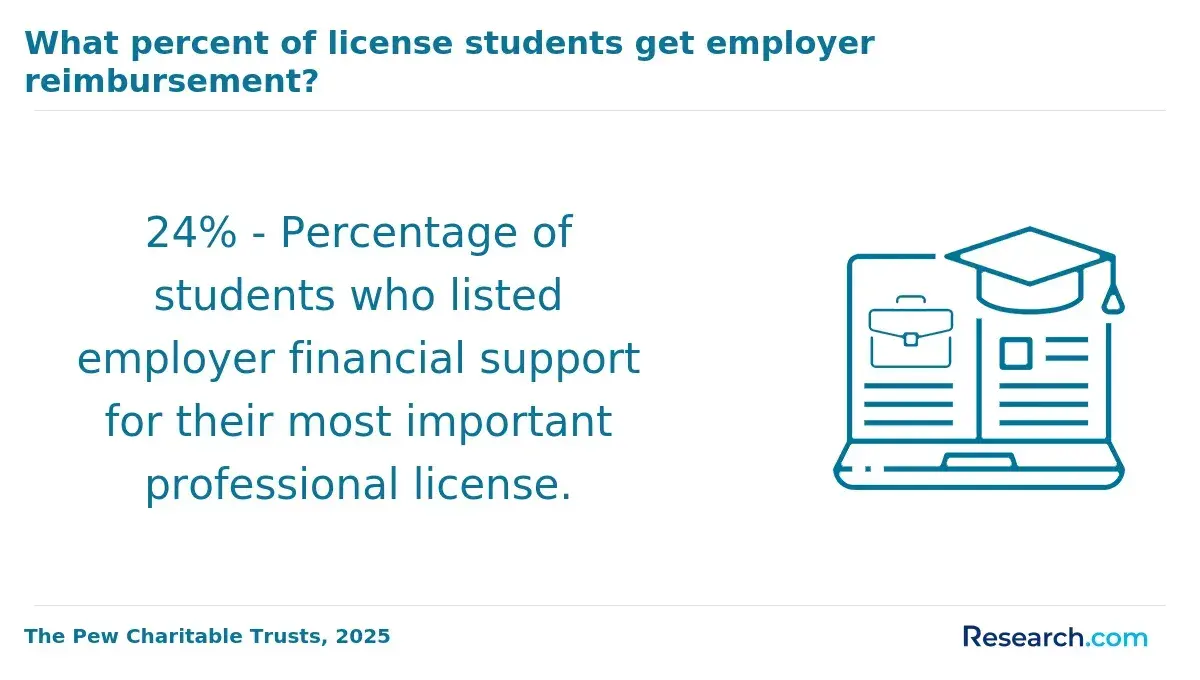
| Employer tuition assistance | Annual cap, grade requirement, repayment obligation, and approved-school list | Especially useful for working radiologic technologists completing a bachelor's degree |
| Military and veteran education benefits | Benefit type, remaining entitlement, housing allowance rules, and school approval | Can cover a significant share of tuition and required fees for eligible students |
Before accepting an offer, students should ask whether scholarships are renewable and whether they apply to online programs, summer courses, or part-time enrollment. A one-term scholarship may help with enrollment but should not be treated as a full-degree discount unless the school confirms renewal terms in writing.
Students comparing healthcare leadership pathways may also consider whether an employer would fund a clinical bachelor's completion program, management coursework, or a healthcare administration degree online accredited by a recognized institution.
Can Transfer Credits, Prior Learning, and Competency-Based Study Lower the Cost of an Online Radiology Technician Degree?
Transfer credits are often the biggest cost-saving tool in online radiologic science education. Many affordable bachelor's programs are built for students who already completed an associate degree in radiography, hold professional certification, or have general education credits from another college.
Students should not assume every prior course will transfer. Schools may impose minimum grades, residency requirements, upper-division credit requirements, science course age limits, or caps on credit awarded for professional credentials.
Use this checklist to estimate transfer-credit savings before applying:
- Request an unofficial transcript review before paying enrollment deposits when possible.
- Ask how many credits the school grants for ARRT certification, associate-degree completion, military training, or prior imaging coursework.
- Confirm the minimum number of credits that must be completed at the school to earn the degree.
- Identify missing prerequisites early, especially anatomy, physiology, physics, math, writing, and statistics.
- Compare the cost of completing prerequisites at a community college versus the four-year institution.
- Ask whether competency-based, portfolio, CLEP, DSST, or prior-learning assessment credits can satisfy electives or general education requirements.
A student who transfers 75 credits into a $375-per-credit program and needs only 45 credits would face about $16,875 in tuition before fees and aid. That may be more affordable than starting with fewer accepted credits at a school with a lower per-credit rate. For students still exploring science-heavy healthcare options, online biology degrees can also offer transfer-friendly pathways, though they do not replace radiography-specific clinical training.
How Should Students Compare the Net Price, Quality, and Return on Investment of Online Radiology Technician Degree Programs?
The best online radiology technician degree is not always the one with the lowest tuition. The better question is whether the program is accredited, affordable after aid, compatible with certification or licensure goals, and realistic for the student's work schedule and clinical access.
To compare return on investment, students should look at cost, time, credential value, and risk. The BLS reports a May 2024 median pay of $78,980 for radiologic and MRI technologists, but individual earnings vary by state, modality, employer, shift, certification, experience, and local demand. Students should use salary data as context, not as a promise.
The table below summarizes value indicators that should be reviewed alongside tuition.
| Value factor | What to compare | Why it matters |
| Accreditation and credential eligibility | Institutional accreditation, JRCERT status when relevant, ARRT eligibility, and state authorization | An inexpensive program may have poor value if it does not support the required credential |
| Net price | Tuition, mandatory fees, grants, scholarships, employer benefits, and transfer credits | Net price is usually more useful than advertised tuition |
| Completion time | Remaining credits, course availability, clinical schedule, and part-time options | Longer timelines can increase fees, living costs, and opportunity cost |
| Student outcomes | Completion rates, certification pass rates where available, job placement data, and graduate support | Outcomes help show whether students finish and move toward their intended career path |
| Clinical feasibility | Local placement support, travel requirements, site availability, and shift flexibility | Clinical barriers can delay graduation or raise costs |
| Career alignment | Radiography, CT, MRI, mammography, management, education, or advanced imaging goals | A slightly higher-cost program may be better if it supports the student's target specialty |
Common mistakes include choosing the lowest tuition without checking accreditation, ignoring mandatory fees, assuming all online programs qualify for FAFSA, overlooking scholarship renewal rules, and failing to calculate the cost of repeated courses or delayed clinical placement. Students can avoid these mistakes by requesting a written degree plan, written cost estimate, transfer evaluation, and financial aid offer before enrolling.
Working technologists planning long-term advancement should also compare whether a radiologic science bachelor's degree, management pathway, or graduate clinical route fits their goals. For example, nurses considering behavioral health advancement may look at online MSN PMHNP programs, but that route requires nursing credentials and serves a different career path than radiologic technology.
A practical final decision process is to shortlist three accredited programs, calculate the net price for each, verify certification or licensure alignment, compare the remaining credits needed, and ask current advisors how clinical placement works. The cheapest accredited online radiology technician degree is the one that helps you finish the right credential with the least unnecessary debt and the fewest avoidable delays.
Other Things You Should Know About Radiology Technician
In 2027, affordable accredited online radiology technician degree programs often offer financial aid options, such as federal Pell Grants, scholarships, and student loans. Students should fill out the FAFSA to determine eligibility for federal aid and explore scholarships from both schools and external organizations.
Typical prerequisites for 2027's cheapest accredited online radiology technician programs include a high school diploma or GED, completion of prerequisite courses like biology and math, and a minimum GPA of 2.5. Some programs may also require prior healthcare experience or CPR certification.
The credit hour requirements for the cheapest accredited online radiology technician degree programs in 2027 typically range from 60 to 75 credit hours. These programs cover essential topics such as anatomy, imaging principles, and patient care, ensuring comprehensive training for aspiring radiology technicians.
References
- Radiology Tech School: Programs, Costs, and How to Choose (2026 Guide) | Tesla MR Institute https://teslamr.com/guides/radiology-tech-school/
- How To Become A Radiologic Technologist | Become With Lantern https://www.learnhowtobecome.org/radiologic-technologist/
- Most Popular Online Radiology Degrees 2025 https://www.onlineu.com/degrees/radiology
- Student Loans for Radiology Tech School in 2026 - Credible https://www.credible.com/student-loans/student-loans-for-radiology-technician-school
- Radiologic Technology, AAS | Truckee Meadows Community College Catalog https://catalog.tmcc.edu/degrees-certificates/radiologic-technology-aas/
- Find a Program - JRCERT https://www.jrcert.org/find-a-program/
- Accrediting Organizations (AOs) https://www.cms.gov/medicare/health-safety-standards/quality-safety-oversight-general-information/accrediting-organizations-aos
- Tuition & Fees https://www.emoryhealthcare.org/careers/career-areas/residencies-fellowships/radiologic-technology-certificate-program/tuition-fees
- Online Radiologic Technology AAS Degree | CHCP https://www.chcp.edu/degrees-certificates/radiologic-technology-aas-degree/online/
- Academic Scholarships https://www.asrt.org/foundation/programs/academic-scholarships