
2027 Best BSN to DNP Programs in Maryland: Online & Campus

Co-Founder and Chief Data Scientist
Choosing a BSN to DNP program in Maryland is not just a question of which school has the strongest name recognition. Nurses need to compare accreditation, specialty tracks, clinical placement support, cost, schedule flexibility, and whether the program prepares them for the certification or leadership role they actually want. The decision matters because a Doctor of Nursing Practice can lead to advanced practice, executive, policy, education, and systems-level roles, but the time and financial commitment are significant.
This guide is for registered nurses with a BSN who are considering a DNP pathway in Maryland, including working nurses comparing online, hybrid, and campus-based options. It explains how BSN to DNP programs work, what admission committees typically expect, which Maryland universities offer notable pathways, how long programs take, what they cost, and how to evaluate whether the degree fits your career goals.
Quick answer: What should Maryland nurses know about BSN to DNP programs?
A BSN to DNP program lets a BSN-prepared registered nurse move directly into doctoral-level nursing education without first completing a separate MSN. In Maryland, these programs usually combine advanced clinical coursework, leadership preparation, specialty training, and extensive practicum requirements. Many programs are designed for working nurses, but students should still expect a demanding schedule, especially once clinical hours begin.
| Decision point | What Maryland applicants should check |
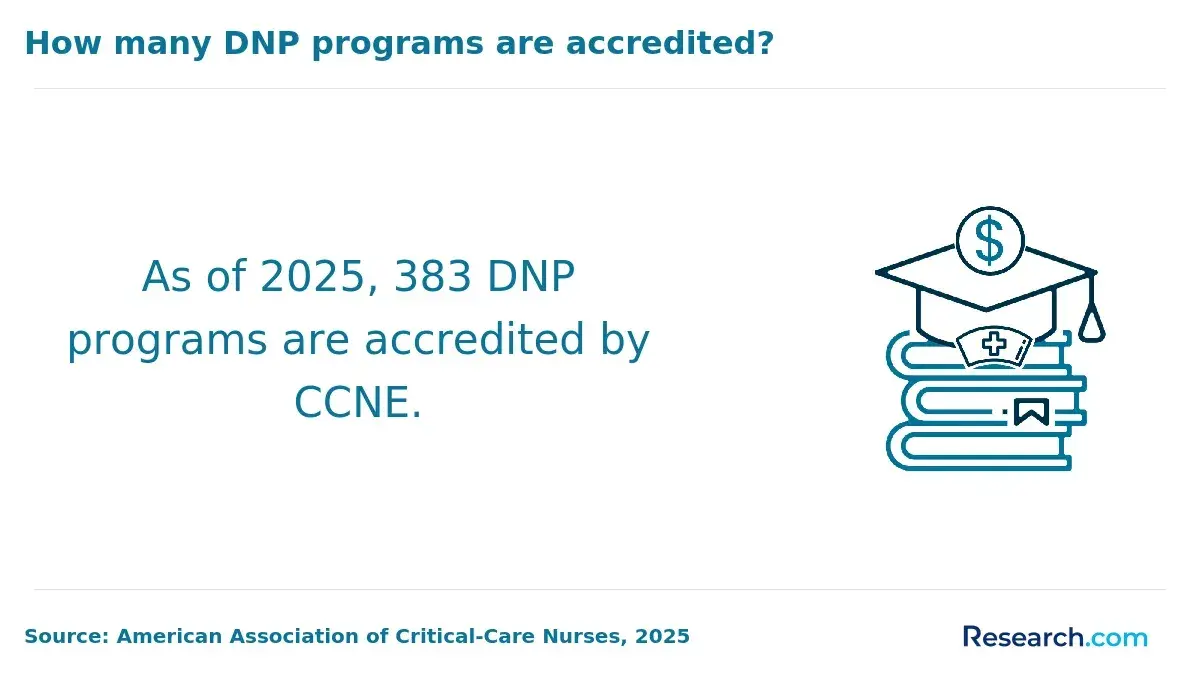
| Accreditation | Confirm the nursing program is accredited by the appropriate nursing accreditor, such as CCNE or ACEN, before applying. |
| Specialty fit | Choose a track that matches the certification, scope of practice, and patient population you want to serve. |
| Clinical placement | Ask whether the school arranges placements, helps students secure preceptors, or expects students to find sites independently. |
| Program format | Compare online, hybrid, and on-campus schedules based on your work hours, commute, learning style, and practicum obligations. |
| Total cost | Look beyond tuition and include fees, travel, clinical expenses, certification exam costs, and possible lost work hours. |
Why a BSN to DNP Program in Maryland May Be Worth Considering
- Multiple formats for working nurses: Maryland students can find online, hybrid, and campus-based BSN to DNP options, which may make it easier to continue working while completing coursework and clinical training.
- Preparation for advanced responsibility: DNP coursework strengthens skills in clinical judgment, evidence-based practice, healthcare policy, leadership, and care delivery improvement. This is relevant as Maryland faces a 15% projected increase in advanced practice nursing roles by 2030.
- Access to regional clinical environments: Campus and hybrid students may train through Maryland healthcare systems, while online students often complete approved practicum experiences closer to home. Both models can help students build professional networks if placements are well supported.
- What is a BSN to DNP program, and how does it work in Maryland?
- What are the admission requirements for BSN to DNP programs in Maryland?
- Which universities offer the best BSN to DNP programs in Maryland?
- What specializations can you pursue in BSN to DNP programs in Maryland?
- How long does it take to complete a BSN to DNP program in Maryland?
- What courses are included in a BSN to DNP curriculum in Maryland?
- How much does a BSN to DNP program cost in Maryland?
- What financial aid options are available for BSN to DNP students in Maryland?
- Is there demand for DNP-prepared nurses in Maryland?
- What is the average salary for DNP-prepared nurses in Maryland?
What is a BSN to DNP program, and how does it work in Maryland?
A BSN to DNP program is a doctoral pathway for registered nurses who already hold a Bachelor of Science in Nursing. Instead of completing an MSN first, students enter a longer graduate program that combines master’s-level advanced practice preparation with doctoral-level work in quality improvement, leadership, systems thinking, population health, and evidence-based practice.
In Maryland, the structure depends on the school and specialty. Some tracks prepare students for direct patient care as nurse practitioners or nurse anesthetists. Others focus on executive leadership, informatics, education, or health systems improvement. The right choice depends on whether you want to diagnose and treat patients, manage teams and programs, influence policy, or lead clinical improvement projects.
- Program design: Students usually complete advanced nursing science, advanced pathophysiology, pharmacology, health assessment, evidence-based practice, leadership, and specialty courses tied to tracks such as Family Nurse Practitioner or Nurse Executive leadership.
- Credit expectations: Many Maryland BSN to DNP pathways require 70 to 85 credit hours, giving students broad preparation across clinical practice, leadership, research translation, and systems improvement.
- Clinical and practicum training: DNP students complete a minimum of 1,000 clinical hours, which may include direct patient care, leadership practicums, quality improvement work, or specialty-focused practice depending on the track.
- Common track options: Maryland students may find pathways in Family Nurse Practitioner, Adult-Gerontology Acute Care, Psychiatric-Mental Health, Nurse Anesthesia, and Nursing Leadership.
- Learning format: Programs may be online, hybrid, or on campus. Online programs often use asynchronous coursework, scheduled live sessions, and approved clinical placements; hybrid programs add required in-person intensives; campus programs provide more face-to-face faculty and peer interaction.
| Format | Best for | Trade-offs to consider |
| Online BSN to DNP | Working nurses who need schedule flexibility and can manage independent learning | Students may need to be proactive about clinical placement planning and technology requirements. |
| Hybrid BSN to DNP | Nurses who want flexibility but still value in-person labs, intensives, or campus networking | Travel to campus may be required, sometimes during specific weeks or weekends. |
| On-campus BSN to DNP | Students who prefer structured schedules, in-person faculty access, and campus-based learning resources | Commuting and fixed class times may be harder for nurses working rotating shifts. |
Before choosing a pathway, nurses should understand the difference between the degree and the role it may support. For example, an FNP is a clinical role, while the DNP is the doctoral degree that may prepare or advance a nurse for that role. Research.com’s guide to how FNP and DNP pathways differ can help clarify that distinction.
What are the admission requirements for BSN to DNP programs in Maryland?
Admission standards vary by university and specialty, but Maryland BSN to DNP programs generally look for applicants who can handle doctoral coursework, meet clinical placement requirements, and show readiness for advanced nursing responsibilities. Competitive applicants usually demonstrate strong academic performance, active RN licensure, relevant clinical experience, and a clear reason for pursuing a specific DNP track.
- BSN and GPA: Applicants typically need a Bachelor of Science in Nursing from an accredited school and at least a 3. 0 GPA on a 4. 0 scale. A stronger GPA can help, especially for selective clinical specialties.
- RN license: Programs usually require a current, unrestricted Registered Nurse license in Maryland or in the state where clinical practice will occur. Compact licenses may be accepted by some schools, but students should verify this before applying.
- Clinical background: Many programs expect 1 to 2 years of full-time nursing experience related to the intended specialty. Acute care, primary care, psychiatric, neonatal, or critical care experience may matter more for certain tracks.
- Prerequisite preparation: Applicants may need previous or early-program coursework in advanced pathophysiology, pharmacology, and health assessment, depending on the institution’s curriculum model.
- Recommendations: Most schools ask for two to three references from supervisors, faculty members, or advanced practice nurses who can speak to clinical competence, professionalism, leadership potential, and academic readiness.
- Application materials: A resume, personal statement, and interview may be required. Some schools may ask for GRE scores, although this requirement is becoming less common in doctoral nursing admissions.
| Application component | How to strengthen it |
| Personal statement | Explain why the DNP, why the specialty, why Maryland, and how your experience supports your goals. |
| Resume | Highlight RN roles, leadership duties, precepting, committees, quality improvement work, certifications, and community service. |
| References | Choose people who can give specific examples of your judgment, reliability, patient care, and leadership ability. |
| Interview | Be ready to discuss your clinical experience, time-management plan, career goals, and understanding of the specialty. |
Applicants comparing Maryland online BSN to DNP admissions should also confirm whether their preferred specialty can be completed in their location. Clinical placement rules, state authorization, and licensure requirements can affect eligibility. Nurses considering less traditional nursing roles may also want to explore specialized paths such as forensic nursing careers.
Which universities offer the best BSN to DNP programs in Maryland?
The best BSN to DNP program is the one that fits your specialty goal, schedule, budget, and clinical training needs. Brand reputation can matter, but it should not replace practical checks such as accreditation, certification preparation, faculty expertise, practicum support, and student outcomes.
The Maryland universities below are frequently considered by nurses researching BSN to DNP pathways. Applicants should verify current program availability, specialty options, admissions requirements, tuition, and accreditation directly with each school before applying.
| University | Accreditation and format | Notable strengths to review |
| Johns Hopkins University School of Nursing | CCNE-accredited; online and hybrid formats | Specializations include Family Nurse Practitioner (FNP), Adult-Gerontology Primary Care Nurse Practitioner (AGPCNP), and Psychiatric-Mental Health Nurse Practitioner (PMHNP). Clinical partnerships within the Johns Hopkins Health System can strengthen practicum exposure, and graduates have consistently high national certification pass rates. |
| University of Maryland School of Nursing | CCNE-accredited; campus-based and online options | Tracks include Nurse Anesthesia, Pediatric Nurse Practitioner, and Leadership in Health Systems. Clinical connections with institutions such as the University of Maryland Medical Center support strong NCLEX-RN and certification exam outcomes for graduates. |
| University of Maryland Baltimore County (UMBC) Nursing Program | CCNE-accredited; hybrid BSN to DNP pathway | The program emphasizes informatics, systems leadership, and advanced practice specialties such as FNP. Students complete clinical experiences through affiliated healthcare facilities across Baltimore. |
| Towson University Department of Nursing | ACEN-accredited | Towson emphasizes leadership and advanced practice preparation, with options such as Family Nurse Practitioner and Nurse Executive. Practicums in Maryland and the mid-Atlantic region help prepare students for certification exams that meet or exceed national averages. |
| Notre Dame of Maryland University Department of Nursing | CCNE-accredited; online coursework with on-campus intensives | Specializations include Nurse Midwifery and Adult-Gerontology Primary Care. Regional clinical affiliations support applied training, and graduates demonstrate NCLEX pass rates above the state average along with solid certification exam success. |
How to compare Maryland BSN to DNP programs
- Start with accreditation: Do not apply until you confirm that the nursing program is appropriately accredited and that the track supports your certification goal.
- Ask about clinical placement support: A strong curriculum is not enough if students struggle to secure required practicum sites or preceptors.
- Review certification alignment: For nurse practitioner, nurse anesthesia, and nurse midwifery tracks, confirm the program prepares graduates for the relevant national certification exam.
- Compare total cost, not advertised tuition: Fees, travel, campus intensives, books, equipment, and reduced work hours can change the real price.
- Look at schedule realism: Full-time doctoral nursing study may not be compatible with every work schedule, especially during clinical semesters.
What specializations can you pursue in BSN to DNP programs in Maryland?
Your DNP specialization determines much of your graduate experience: required clinical hours, certification exam, patient population, scope of practice, and job options after graduation. Maryland students should choose a track based on the role they want, not only on salary potential or program convenience.
Common BSN to DNP specializations in Maryland include the following:
| Specialization | Typical focus | Good fit for nurses who want to... |
| Family Nurse Practitioner (FNP) | Primary care for patients across the lifespan in clinics, community health settings, and private practices | Provide broad outpatient care, manage chronic conditions, and serve families and communities. Certification through the American Association of Nurse Practitioners (AANP) supports this pathway. |
| Adult-Gerontology Nurse Practitioner (AGNP) | Care for adult and older adult patients in primary care, acute care, specialty clinics, hospitals, or long-term care settings | Work with adults who have complex health needs. The ANCC Adult-Gerontology credential aligns with this population focus. |
| Psychiatric-Mental Health Nurse Practitioner (PMHNP) | Assessment, diagnosis, and treatment of mental health conditions in outpatient clinics, hospitals, and substance use treatment settings | Focus on behavioral health, psychiatric care, therapy-informed practice, and medication management. The ANCC PMHNP certification supports this role. |
| Neonatal Nurse Practitioner (NNP) | Care of newborns, including premature and critically ill infants, mainly in neonatal intensive care units | Specialize in high-acuity newborn care. Certification by the National Certification Corporation (NCC) supports neonatal practice. |
| Doctor of Nursing Practice - Executive Leadership | Healthcare administration, quality improvement, policy, nursing leadership, and organizational change | Move into non-clinical leadership, management, academia, or systems-level improvement roles. |
Clinical vs. leadership DNP tracks: which should you choose?
- Choose a clinical APRN track if you want to diagnose, treat, prescribe where allowed, and provide direct care to a defined patient population.
- Choose an executive or systems leadership track if your goal is administration, quality improvement, policy implementation, education leadership, or healthcare operations.
- Avoid choosing based only on convenience because the easiest schedule may not lead to the certification or scope of practice you want.
Nurses who want a faster route into advanced practice often compare program length and delivery models. Research.com’s overview of the best accelerated online nurse practitioner programs can help students understand how accelerated NP pathways differ from traditional pacing.
How long does it take to complete a BSN to DNP program in Maryland?
Maryland BSN to DNP programs commonly take three to four years for full-time students and four to six years for part-time students. The exact timeline depends on the specialty, course sequencing, clinical availability, transfer credit rules, and whether the student continues working while enrolled.
| Enrollment pace | Typical completion time | Best for | Main challenge |
| Full-time | Three to four years | Nurses who can reduce work hours or commit heavily to school | More intense semesters and less scheduling flexibility |
| Part-time | Four to six years | Working nurses balancing employment, caregiving, or other obligations | Longer time to graduation and extended tuition planning |
| Accelerated pathway | Varies by institution | Students with strong preparation who can handle a compressed pace | Less margin for schedule disruptions during clinical requirements |
Several factors can shorten or lengthen the timeline:
- Credit load: Taking more credits per term may reduce time to graduation, but it can increase stress and make work-life balance harder.
- Course sequencing: Some curricula require students to complete courses in a strict order, which can delay progress if a course is missed or failed.
- Accelerated options: Some Maryland institutions offer faster pathways that remove overlapping content or compress the schedule, but these routes require strong time management.
- Transfer credits: Prior graduate coursework or approved clinical experience may reduce requirements at some schools, but transfer rules differ by institution and should be confirmed early.
- Clinical placement timing: Even academically strong students can be delayed if they cannot secure appropriate sites or preceptors on time.
One Maryland nurse who completed a BSN to DNP part time described the experience as demanding but manageable with careful planning. Working shifts, caring for family, and meeting academic deadlines required a disciplined calendar and early communication with faculty. The most difficult period came when clinical rotations overlapped with a full nursing schedule.
The same graduate noted that completing practicum milestones while still practicing as an RN built confidence and resilience. The lesson was clear: part-time study can work, but students need realistic expectations, a support system, and a plan for clinical-heavy semesters.
What courses are included in a BSN to DNP curriculum in Maryland?
BSN to DNP curricula in Maryland usually combine advanced nursing science, doctoral leadership, specialty practice, clinical decision-making, and a final DNP project. While course titles differ by school, most programs are designed to help students translate evidence into practice and improve outcomes for patients, organizations, or communities.
| Course area | What students learn | Why it matters |
| Advanced Health Assessment | Comprehensive patient assessment, physical examination, diagnostic reasoning, and interpretation of clinical findings | Builds the assessment foundation needed for advanced practice roles and specialty clinical training. |
| Evidence-Based Practice and Quality Improvement | How to evaluate research, apply best practices, measure outcomes, and improve care delivery | Prepares DNP students to lead projects that address safety, quality, cost, and patient outcomes. |
| Healthcare Policy and Leadership | Policy analysis, advocacy, healthcare economics, organizational leadership, and interprofessional collaboration | Helps nurses influence healthcare systems, not just individual patient encounters. |
| Advanced Pharmacology and Pathophysiology | Drug therapy, disease processes, clinical management, and specialty-specific decision-making | Supports safe and effective advanced clinical practice, especially for NP-focused tracks. |
| Specialty Practicum Courses | Supervised experience in the student’s chosen population or leadership setting | Connects classroom learning with the competencies required for certification, leadership, or advanced practice. |
| DNP Project | A practice-focused project that uses evidence to address a real clinical, organizational, or population health problem | Demonstrates the student’s ability to lead measurable improvement in a healthcare setting. |
What to ask about the curriculum before enrolling
- Does the specialty curriculum align with the certification exam I plan to take?
- How are clinical hours distributed across the program?
- Are simulation labs, campus intensives, or in-person assessments required?
- What support is available for the DNP project?
- Can I complete practicum requirements near where I live or work?
How much does a BSN to DNP program cost in Maryland?
BSN to DNP programs in Maryland typically cost $30,000 to over $70,000 in total tuition. The final amount can be higher once fees, travel, books, equipment, certification exams, campus intensives, and reduced work hours are included. Students should request a full cost breakdown from each school rather than relying only on the posted per-credit tuition rate.
- Tuition per credit: Published tuition often ranges from $650 to $1,200 per credit hour. In-state students at public institutions may pay closer to the lower end, while private or out-of-state rates can be higher.
- Credit requirements: Some cost estimates are based on 30 to 45 credit hours, while BSN to DNP pathways may require more depending on the track and whether the student enters with only a BSN.
- Required fees: Technology, student services, simulation, lab, and program fees can add $1,000 to $3,000 over the program.
- Residency classification: In-state and out-of-state tuition differences can be substantial, and out-of-state tuition can be almost double per credit.
- Online versus campus expenses: Online students may save on commuting but may pay distance-learning fees or travel for required intensives, labs, or clinical placements.
- Clinical costs: Specialty rotations may require travel, lodging, background checks, immunizations, drug screening, uniforms, or site-specific onboarding expenses.
| Cost category | Why students often underestimate it |
| Tuition | Students may multiply by the wrong number of credits or overlook tuition increases during a multi-year program. |
| Fees | Mandatory charges are sometimes listed separately from tuition and can change by semester. |
| Clinical travel | Placements may not be close to home, especially for highly specialized tracks. |
| Lost income | Students may need to reduce shifts during clinical-heavy terms or campus intensives. |
| Certification and licensure | Exam fees, license applications, and credentialing expenses often occur near graduation. |
Ways to reduce BSN to DNP costs
- Compare public, private, online, and hybrid programs using total program cost.
- Ask whether your employer offers tuition assistance or paid professional development time.
- Apply early for scholarships and state nursing incentives.
- Confirm transfer credit policies before enrolling.
- Choose a program with clinical placement support to reduce travel and delay risks.
What financial aid options are available for BSN to DNP students in Maryland?
Maryland BSN to DNP students may use federal aid, scholarships, employer support, loan repayment programs, and state-specific nursing incentives. Because doctoral nursing programs can last several years, students should create a funding plan before enrolling and revisit it each academic year.
- Federal student loans: Graduate nursing students can complete the FAFSA to be considered for federal loan options such as Federal Direct Unsubsidized Loans and graduate PLUS loans. Borrowers should review interest, repayment, and debt limits before accepting the full amount offered.
- Scholarships and grants: Maryland residents may qualify for options such as the Nursing Scholarship Program through the Maryland Higher Education Commission (MHEC). Schools and professional nursing organizations may also offer awards based on need, merit, specialty, or service commitments.
- Employer tuition assistance: Hospitals and healthcare organizations may offer tuition reimbursement for nurses pursuing advanced credentials. These benefits can reduce out-of-pocket costs but may include employment commitments or grade requirements.
- Loan repayment and forgiveness: Maryland's Nurse Support Program II (NSP II) and federal Public Service Loan Forgiveness (PSLF) may help eligible nurses who meet service, employer, and repayment requirements.
- State nursing incentives: Maryland's Department of Health and organizations such as the Maryland Primary Care Office may provide incentives tied to service in high-need areas or priority practice settings.
| Funding source | Best next step |
| FAFSA-based aid | Submit the FAFSA early and ask the school’s financial aid office how graduate nursing aid is packaged. |
| School scholarships | Ask the nursing department about DNP-specific awards, deadlines, and separate applications. |
| Employer reimbursement | Request the written policy before enrolling and confirm service obligations. |
| Loan repayment programs | Check eligibility rules before counting on forgiveness or repayment support. |
| State programs | Review Maryland-specific nursing workforce incentives and application cycles. |
One Maryland nurse said the financial side of the BSN to DNP journey was one of the hardest parts to manage. She initially did not realize how many state, school, and employer resources were available and almost missed a hospital tuition assistance deadline. After contacting her employer, financial aid office, and state program administrators, she built a layered funding plan.
She later described NSP II as a major source of relief because it helped reduce her loan burden while she committed to serving in a rural clinic. Her advice to future students was simple: do not wait until tuition is due to look for aid. Start early, keep records, and ask every school and employer benefits office specific questions.
Is there demand for DNP-prepared nurses in Maryland?
Yes. Maryland continues to need advanced practice and doctoral-prepared nurses in clinical care, leadership, education, quality improvement, and health systems roles. Demand is influenced by workforce shortages, an aging population, chronic disease management needs, behavioral health needs, and the expansion of care models that rely on advanced practice nurses.
Maryland health authorities have reported significant shortages of advanced practice registered nurses (APRNs) projected through 2030. Nationally, nurse practitioner employment is expected to increase 40% from 2021 to 2031. These figures suggest that nurses who choose the right specialty and complete the required certification steps may find strong opportunities, although no degree can guarantee a specific job or salary.
Employers may value DNP-prepared nurses because the degree emphasizes evidence-based practice, quality improvement, care coordination, policy application, and measurable outcomes. Maryland’s All-Payer Model and broader value-based care efforts also increase the importance of nurses who can improve care quality while understanding cost, population health, and systems performance.
Where DNP-prepared nurses may work in Maryland
- Hospitals and academic medical centers
- Primary care and specialty clinics
- Behavioral health and substance use treatment programs
- Neonatal and acute care units
- Long-term care and gerontology services
- Public health agencies and community health organizations
- Nursing schools and healthcare education programs
- Healthcare administration, quality, informatics, and policy roles
Students interested in neonatal practice may compare access-focused options such as the easiest neonatal nurse practitioner online programs while still checking accreditation, clinical placement rules, and certification alignment.
What is the average salary for DNP-prepared nurses in Maryland?
DNP-prepared nurses in Maryland earn between $105,000 and $140,000 annually, with pay varying by specialty, certification, employer, experience, and region. Salaries should be viewed as ranges rather than promises, because compensation depends heavily on the role a graduate actually enters after the DNP.
| Salary factor | How it affects earnings |
| Specialization | Family Nurse Practitioners (FNPs) typically earn $110,000 to $130,000, while Acute Care Nurse Practitioners (AGACNP) can earn up to $140,000. Nurse Executives may exceed this upper limit because of broader leadership responsibilities. |
| Location | Baltimore and the Washington D.C. metro region may offer higher pay than rural areas because of demand, employer size, and cost-of-living differences. |
| Experience | Nurses with five or more years of advanced practice experience may reach higher salary ranges, especially when paired with leadership responsibility. |
| Certification | National certification in a high-demand specialty can improve competitiveness and may influence compensation. |
| Employer type | Academic medical centers, specialty practices, hospitals, public health agencies, and executive roles may use different pay structures. |
Students should compare projected earnings with total program cost, expected debt, timeline to graduation, and the specialty’s local job market. Those evaluating psychiatric-mental health pathways may also want to review Research.com’s guide to the most affordable online psychiatric nurse practitioner programs.
Common mistakes to avoid when choosing a Maryland BSN to DNP program
| Mistake | Why it can hurt you | Better approach |
| Choosing a school before checking accreditation | Accreditation can affect certification eligibility, licensure, transferability, and employer acceptance. | Verify accreditation directly through the school and accreditor before applying. |
| Focusing only on tuition | Fees, travel, clinical expenses, and lost income can significantly change total cost. | Build a full budget for the entire program. |
| Assuming online means fully remote | Some online programs require campus visits, labs, simulations, or intensives. | Ask for all in-person requirements in writing. |
| Ignoring clinical placement rules | Delayed placements can delay graduation or create unexpected travel costs. | Ask who finds preceptors and what happens if a placement falls through. |
| Choosing a specialty based only on salary | A high-paying specialty may not match your preferred patient population, work setting, or stress tolerance. | Choose based on scope of practice, daily work, certification, and long-term fit. |
| Assuming salary outcomes are guaranteed | Pay depends on location, employer, experience, specialty, and credentialing. | Research local job postings and speak with nurses already working in your target role. |
Questions to ask before applying
- Is the BSN to DNP track accredited and aligned with my intended certification?
- What percentage of students complete the program on time?
- Does the school arrange clinical placements, or must students find their own preceptors?
- Are there required campus visits, simulations, intensives, or synchronous class sessions?
- What is the total program cost, including fees and clinical expenses?
- Can I complete practicum hours in Maryland or near my home community?
- What support is available for the DNP project?
- How does the program support working nurses during clinical-heavy semesters?
- What are recent certification pass rates for my chosen specialty?
- What financial aid, scholarships, or employer partnership options are available?
What BSN to DNP Graduates in Maryland Say About Their Degree
- Completing an online BSN to DNP pathway through the University of Maryland School of Nursing helped me keep working while staying connected to the healthcare issues affecting my local community. The flexible format mattered, but the bigger value was learning how to use evidence and leadership skills in real settings. After graduation, I moved into a leadership role with a Maryland-based educational institution and now help prepare future nurses with a stronger understanding of local health disparities. Jackson
- My experience in the traditional BSN to DNP program at Johns Hopkins School of Nursing changed how I saw both clinical practice and health equity. Being on campus and working with diverse patient populations across Maryland made the training feel immediate and relevant. Earning the DNP helped me advance within a local educational institution, where I now mentor nurses who are preparing for the same level of responsibility. Natalie
- Towson University’s BSN to DNP program gave me opportunities to connect classroom learning with Maryland’s communities and healthcare needs. The mix of campus collaboration and community-based projects helped me understand regional barriers to care. Professionally, the degree helped me move into educational leadership, where I now work to improve nursing practice standards and student preparation. Irene
Related Articles for Nearby States
- 2027 Best BSN to DNP Programs in Virginia: Online & Campus
- 2027 Best BSN to DNP Programs in West Virginia: Online & Campus
- Best BSN to DNP Programs in Pennsylvania: Online & Campus for 2027
- 2027 Best BSN to DNP Programs in Delaware: Online & Campus
- 2027 Best BSN to DNP Programs in New Jersey: Online & Campus
- 2027 Best BSN to DNP Programs in New York: Online & Campus
- 2027 Best BSN to DNP Programs in Ohio: Online & Campus
- 2027 Best BSN to DNP Programs in North Carolina: Online & Campus
- 2027 Best BSN to DNP Programs in Kentucky: Online & Campus
- 2027 Best BSN to DNP Programs in Connecticut: Online & Campus
References:
- Elite Learning discussion of doctoral-prepared nursing workforce needs https://www.elitelearning.com/resource-center/nursing/why-phd-prepared-nurses-are-needed/
- RegisteredNursing.org comparison of the DNP, Ph.D. in Nursing, and MD https://www.registerednursing.org/articles/dnp-vs-md/
- Coppin State University Doctor of Nursing Practice program information https://www.coppin.edu/academics/doctor-nursing-practice
- National Library of Medicine article on the Doctor of Nursing Practice https://pmc.ncbi.nlm.nih.gov/articles/PMC7281346/
- Salisbury University Doctor of Nursing Practice program information https://www.salisbury.edu/academic-offices/health-and-human-services/nursing/dnp.aspx
- American Association of Nurse Practitioners Maryland advocacy overview https://www.aanp.org/advocacy/maryland
- DoctorofNursingPracticeDNP.org salary discussion for Maryland DNP nurses https://www.doctorofnursingpracticednp.org/maryland/maryland-salary/
- American Association of Colleges of Nursing scholarships and financial aid resources https://www.aacnnursing.org/students/scholarships-financial-aid
- NPSchools scholarship guide for nurse practitioner students https://www.npschools.com/blog/scholarships-for-np-students
- Nurse.org overview of Doctor of Nursing Practice salary information https://nurse.org/education/DNP-salary/
Key Insights
- A BSN to DNP program in Maryland is best suited for nurses who want advanced clinical practice, executive leadership, quality improvement, policy, education, or systems-level roles.
- Program fit matters more than name recognition. Check accreditation, specialty alignment, clinical placement support, certification preparation, and total cost before applying.
- Full-time students often finish in three to four years, while part-time students commonly need four to six years. Clinical placement timing can affect graduation more than students expect.
- Maryland BSN to DNP tuition commonly ranges from $30,000 to over $70,000, but the true cost includes fees, travel, clinical expenses, certification costs, and possible reduced work hours.
- DNP-prepared nurses in Maryland earn between $105,000 and $140,000 annually, but salary depends on specialty, employer, location, certification, and experience.
- The smartest next step is to shortlist accredited Maryland programs, compare their specialty tracks, ask detailed clinical placement questions, and build a funding plan before submitting applications.
Other Things You Should Know About BSN to DNP Programs in Maryland
Yes, Maryland's BSN to DNP programs in 2027 accept international students. Applicants must secure an F-1 or J-1 visa and demonstrate English proficiency through exams like TOEFL. School-specific requirements may include credential evaluations and proof of financial resources.
Most Maryland BSN to DNP programs require an active, unencumbered Maryland RN license before clinical coursework begins. Students who enter with an out-of-state license usually must obtain Maryland licensure before local placements, and the Maryland Board of Nursing regulates RN practice and licensure requirements.


