
2027 Fastest Doctor of Nursing Practice (DNP) Degree Programs

Co-Founder and Chief Data Scientist
Choosing one of the fastest Doctor of Nursing Practice programs can shorten the time between advanced nursing preparation and higher-level practice, leadership, education, or policy roles. The trade-off is intensity: accelerated DNP programs compress advanced coursework, clinical/practice hours, and a scholarly project into a demanding schedule that is not right for every nurse.
This guide is for licensed nurses comparing fast online, hybrid, and post-master’s DNP options. It explains how accelerated DNP programs work, how long they take, what they cost, what prerequisites to expect, how online programs compare with campus-based formats, and how to avoid common mistakes when choosing a program.
Quick Answer: What Is the Fastest Way to Earn a DNP?
The fastest DNP programs are usually post-master’s or MSN-to-DNP programs for nurses who already hold a graduate nursing degree. Some can be completed in 12 to 18 months, while others take up to three years for full-time students. BSN-to-DNP pathways generally take longer because they include both advanced practice preparation and doctoral-level coursework.
Speed should not be the only factor. Before enrolling, confirm accreditation, state licensure alignment, clinical placement expectations, total cost, workload, and whether the program prepares you for the role you actually want.
What can I expect from the fastest Doctor of Nursing Practice (DNP) programs?
Accelerated Doctor of Nursing Practice programs are designed for nurses who want to complete doctoral-level practice training in less time than a traditional pathway. The quickest options often serve MSN-prepared nurses and may take 12 to 18 months, depending on transfer credits, prior clinical hours, specialization, enrollment pace, and project requirements.
Students should expect a concentrated curriculum in evidence-based practice, healthcare systems leadership, quality improvement, informatics, policy, finance, population health, and advanced clinical or administrative decision-making. Most programs also require a DNP project that applies research evidence to a real healthcare problem.
Many fast DNP programs use online or hybrid delivery so working nurses can continue employment. However, “online” rarely means completely self-paced. Students may still need synchronous sessions, practicum hours, campus residencies, project meetings, preceptor coordination, and strict assignment deadlines.
Who benefits most from an accelerated DNP?
- MSN-prepared nurses who already meet many advanced practice or leadership requirements and want a terminal practice degree.
- Working nurses with strong time-management skills who can handle condensed coursework while maintaining professional responsibilities.
- Nurses pursuing leadership, education, policy, informatics, or advanced practice roles where doctoral preparation may improve credibility or advancement options.
- Students with employer support, flexible scheduling, tuition assistance, or access to appropriate clinical/project sites.
Who should be cautious about the fastest DNP programs?
- Students who need a slower pace to balance family, work, and clinical demands.
- Nurses changing specialties who need extensive clinical preparation, not only a fast credential.
- Applicants who have not verified whether the program meets licensure or certification requirements in their state.
- Students choosing a program only because it is short, without reviewing accreditation, outcomes, clinical support, and total cost.
Where can I work with a degree from the fastest Doctor of Nursing Practice (DNP) programs?
DNP graduates work across clinical, administrative, academic, policy, and systems-level roles. Depending on specialization and licensure, graduates may become nurse practitioners, clinical nurse specialists, nurse executives, nurse educators, health policy leaders, informatics specialists, or quality improvement directors.
Common work settings include hospitals, physician offices, private practices, academic institutions, community health centers, healthcare systems, public health organizations, and administrative offices. The exact options depend heavily on the student’s prior degree, certification pathway, state practice authority, and DNP concentration.
How much can I make with a degree from the fastest Doctor of Nursing Practice (DNP) programs?
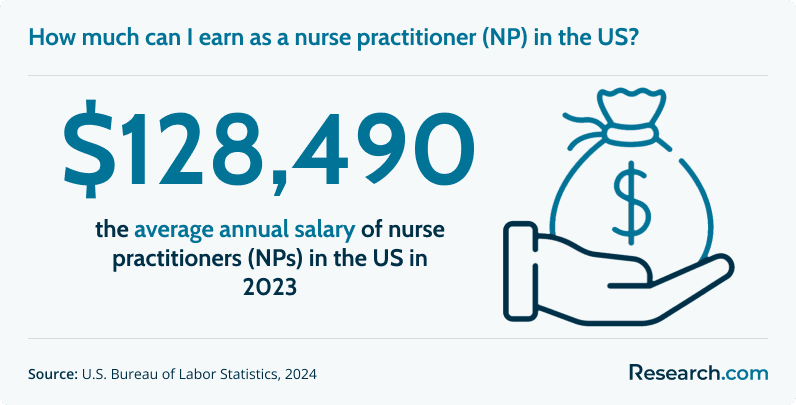
The average annual salary for nurse practitioners in the US was $128,490 in 2023. Pay varies by role, industry, location, experience, specialization, employer type, and scope of practice. In 2023, salaries by industry could reach up to $180,570.
A DNP can strengthen advancement potential, especially for nurses moving into advanced practice, leadership, education, informatics, or policy roles. It does not guarantee a specific salary. Students should compare program cost against realistic salary outcomes in their state and specialty before enrolling.
- 2027 fastest Doctor of Nursing Practice programs
- DNP vs. PhD in Nursing: which doctorate fits your goal?
- How long do the fastest DNP programs take?
- Online vs. on-campus accelerated DNP programs
- Average cost of fast DNP programs
- Financial aid for accelerated DNP students
- Admission requirements for fast DNP programs
- Common courses in accelerated DNP programs
- DNP specializations and career fit
- How to choose the best fast DNP program
- Accreditation standards for accelerated DNP programs
- How state factors affect DNP salary
- ADN-to-advanced-practice pathways
- LPN-to-RN bridges and the DNP pathway
- Career paths for fast DNP graduates
- Challenges of accelerated DNP programs
- Clinical training quality in fast DNP programs
- Interdisciplinary advancement after a DNP
- Job market for DNP graduates
- Affordable online DNP programs
- Study strategies for accelerated DNP students
- Student support services in fast DNP programs
- Can you earn a DNP while working full-time?
2027 Fastest Doctor of Nursing Practice (DNP) Degree Programs
This list was developed using Research.com’s methodology and information from sources including the IPEDS database, Peterson's database, and the College Scorecard. When reviewing any program, confirm current tuition, curriculum, clinical requirements, accreditation, and state authorization directly with the school.
| Program | Length | Credits | Published cost information | Accreditation |
| Arkansas State University DNP - Education | 12 months | 36-39 | $19,800 | ACEN |
| Chatham University MSN to DNP | 16 months | 27 | $1,160 per credit ($31,320) | CCNE |
| Keiser University MSN to DNP | 18 month | 36 | $35,304 | CCNE |
| Purdue University Global DNP | 1.5 years | 48-57 | $700 per credit | CCNE |
| Delta State University Post-Master’s (FNP) DNP | 1.5 years | 31 | $469 per credit | CCNE |
| Francis Marion University MSN to DNP | 12 months | 30 | $8,118 | CCNE |
| University of Phoenix MSN to DNP | ~1.5 years | 31 | $810 per credit | CCNE |
| West Coast University DNP | 20 months | 30 | $35,120 | CCNE |
| Rasmussen University Post-Master's DNP | 21 months | 48–63 | $710 per credit | CCNE |
| Emory University MSN to DNP | 2.5 years | 33 | $1,721.00 per credit | CCNE |
| University of Minnesota Post-Master's DNP | 1 year | 37-38 | $1,053 per credit | CCNE |
| Anderson University DNP Advanced Practice | 18 months | 39 | $855 per credit | CCNE |
1. Arkansas State University DNP - Education
Arkansas State University offers an online DNP in Nursing Education for nurses who want to move into academic, professional development, or instructional leadership roles. The curriculum includes healthcare informatics, policy, leadership, finance, translational research, teaching methods, curriculum design, and evaluation. Students also complete research-focused work and internship experiences that connect educational theory with nursing practice.
- Program length: 12 months
- Concentrations: Measurement and Evaluation in Health Sciences; Curriculum Development in Health Professions; Teaching in Advanced Nursing Roles
- Required credits to graduate: 36-39
- Tuition: $19,800
- Accreditation: Accreditation Commission for Education in Nursing (ACEN)
2. Chatham University - MSN to DNP
Chatham University provides an online MSN-to-DNP pathway for master’s-prepared nurses who want to strengthen clinical leadership and evidence-based practice skills. Students complete a practice change project in their specialty area, often connected to their current workplace. The program includes one short campus residency near the end of study.
- Program length: 16 months
- Required credits to graduate: 27
- Cost per credit: $1,160 ($31,320)
- Accreditation: Commission on Collegiate Nursing Education (CCNE)
3. Keiser University - MSN to DNP
Keiser University offers an MSN-to-DNP program for registered nurses who already hold a master’s degree. The curriculum emphasizes evidence-based practice, quality and safety, interdisciplinary collaboration, leadership, and the application of research to patient care and healthcare systems improvement.
- Program length: 18 month
- Required credits to graduate: 36
- Tuition: $35,304
- Accreditation: Commission on Collegiate Nursing Education (CCNE)
4. Purdue University Global - DNP
Purdue University Global offers a DNP program built around advanced nursing practice, systems improvement, population health, and evidence-based leadership. Students complete practice experiences and a multi-term DNP project that demonstrates their ability to apply scientific evidence to a healthcare issue or system-level challenge.
- Program length: 1.5 years
- Required credits to graduate: 48-57
- Cost per credit: $700
- Accreditation: Commission on Collegiate Nursing Education (CCNE)
5. Delta State University - Post-Master’s (FNP) DNP
Delta State University offers an online post-master’s DNP option connected to family nurse practitioner preparation. The program is designed for registered nurses at the baccalaureate and master’s levels and may support eligibility for national certification through the American Academy of Nurse Practitioners (AANP) or the American Nurses Credentialing Center (ANCC), as well as state APRN licensure in primary care across the lifespan.
- Program length: 1.5 years
- Required credits to graduate: 31
- Cost per credit: $469
- Accreditation: Commission on Collegiate Nursing Education (CCNE)
6. Francis Marion University - MSN to DNP
Francis Marion University offers an MSN-to-DNP pathway that can be completed full time in one calendar year, with part-time plans available through faculty adviser guidance. The program focuses on evidence-based clinical practice and improving outcomes, with attention to rural and underserved communities.
- Program length: 12 months
- Other tracks: MSN to DNP; BSN to FNP/DNP; BSN to PMHNP/DNP
- Required credits to graduate: 30
- Cost: $8,118
- Accreditation: Commission on Collegiate Nursing Education (CCNE)
7. University of Phoenix - MSN to DNP
The University of Phoenix offers an MSN-to-DNP program for nurses seeking doctoral-level leadership and scholarly practice preparation. Students should note that this program does not prepare graduates for professional certification or state licensure as a nurse or advanced practice nurse.
- Program length: ~1.5 years
- Required credits to graduate: 31
- Cost per credit: $810
- Accreditation: Commission on Collegiate Nursing Education (CCNE)
8. West Coast University - DNP
West Coast University offers a DNP program focused on leadership, project management, safety, quality, ethics, policy, and change management in healthcare organizations. Students complete a DNP project and one thousand post-baccalaureate practice hours under the direction of a site mentor or healthcare leader.
- Program length: 20 months
- Required credits to graduate: 30
- Tuition: $35,120
- Accreditation: Commission on Collegiate Nursing Education (CCNE)
9. Rasmussen University - Post-Master's DNP
Rasmussen University offers an online post-master's DNP for nurses preparing for advanced leadership in practice, systems improvement, and healthcare transformation. The program includes faculty support, flexible clinical hour options based on previous experience, and 24/7 technical support.
- Program length: 21 months
- Required credits to graduate: 48–63
- Cost per credit: $710
- Accreditation: Commission on Collegiate Nursing Education (CCNE)
10. Emory University - MSN to DNP
Emory University offers a post-master’s DNP designed for nurses who want to lead healthcare improvement in clinical systems, public-private initiatives, nonprofit organizations, and policy settings. Students learn from faculty and professional leaders while engaging with clinical and community partnerships.
- Program length: 2.5 years
- Required credits to graduate: 33
- Cost per credit: $1,721.00
- Accreditation: Commission on Collegiate Nursing Education (CCNE)
11. University of Minnesota - Post-Master's DNP
The University of Minnesota offers a post-master's DNP for nurses with a master’s degree in a nursing specialty from an accredited institution. The program prepares students to evaluate healthcare systems, apply research, lead practice change, and improve care delivery models across local, national, and global settings.
- Program length: 1 year
- Select concentrations: Adult Gerontological Primary Care Nurse Practitioner; Adult/Gerontological Clinical Nurse Specialist; Family Nurse Practitioner; Health Innovation and Leadership; Nursing Informatics; Pediatric Clinical Nurse Specialist; Psychiatric/Mental Health Nurse Practitioner Women's Health/Gender-Related Nurse Practitioner
- Required credits to graduate: 37-38
- Cost per credit: $1,053
- Accreditation: Commission on Collegiate Nursing Education (CCNE)
12. Anderson University - DNP Advanced Practice
Anderson University offers a DNP advanced practice program for practicing advanced practice nurses, including nurse practitioners, clinical nurse specialists, nurse anesthetists, and nurse midwives. The program includes thirty-nine credit hours over five semesters, an additional five hundred clinical hours, a scholarly project, and two on-campus residency courses.
- Program length: 18 months
- Required credits to graduate: 39
- Cost per credit: $855
- Accreditation: Commission on Collegiate Nursing Education (CCNE)
Key Findings
- The fastest DNP programs are commonly online or hybrid, making them more accessible for working nurses than many campus-only options.
- The average cost per credit for the fastest doctor of nursing practice (DNP) programs is $892, with listed rates ranging from $469 to $1,721.
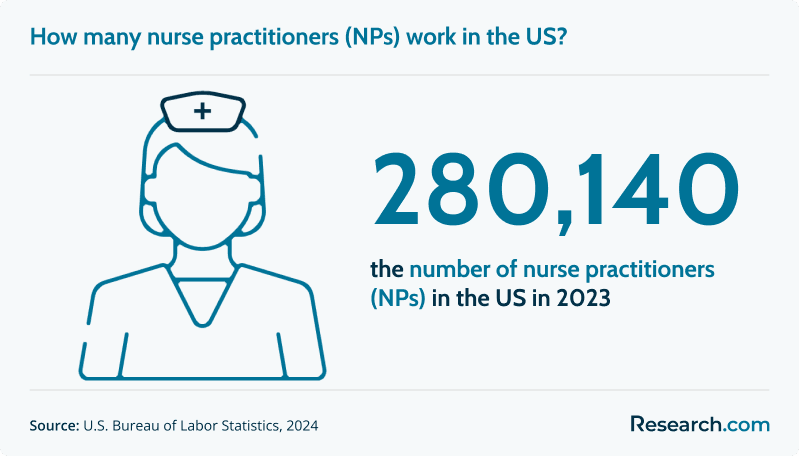
- In 2023, there were 280,140 nurse practitioners (NPs) working in the US.
- The average annual salary for nurse practitioners (NPs) in the US is $128,490.
- Physician offices had the highest NP employment level in 2023, with 137,030 NPs and an average salary of $122,780.
- Business support services was the top-paying NP industry in 2023, with an average annual salary of $180,570.
What are the key differences between a DNP and PhD in nursing?
A DNP and a PhD in Nursing are both terminal degrees, but they are built for different professional goals. The DNP is practice-oriented. The PhD is research-oriented.
| Decision factor | DNP | PhD in Nursing |
| Main purpose | Apply evidence to improve care, systems, leadership, and outcomes | Generate original research and advance nursing science |
| Best fit for | Advanced practice nurses, nurse leaders, educators, informatics specialists, and policy-focused clinicians | Future researchers, scholars, tenure-track faculty, and nurse scientists |
| Typical work | Clinical leadership, quality improvement, practice change, administration, education, policy implementation | Research design, data analysis, theory development, grant work, academic scholarship |
| Program emphasis | Practice application and a DNP project | Original dissertation research |
| Time to completion | Typically about 3 to 4 years, with some accelerated post-master’s options shorter | Often 4 to 6 years, depending on the research process |
How long does it take to complete the fastest Doctor of Nursing Practice (DNP) programs?
The fastest DNP programs may take as little as 12 to 18 months, especially for MSN-prepared nurses who already have advanced coursework and clinical experience. Other full-time options can take up to three years. Part-time enrollment may extend the timeline to around three to five years.
Completion time depends on the entry point, required credits, specialization, clinical/practice hour requirements, transfer credit rules, project timeline, and whether courses are offered year-round. Students should ask whether the advertised timeline assumes full-time enrollment, continuous study, and no delays in clinical placement or DNP project approval.
In 2023, around 280,140 NPs were working in the US.
How do the fastest online DNP degree programs compare to an on-campus program?
Fast online DNP programs can be a strong choice for nurses who need scheduling flexibility, especially those working full time or living far from a university campus. Online formats often deliver lectures, discussions, assignments, and project supervision through learning platforms while allowing students to complete clinical or practice requirements in approved local settings.
On-campus programs may offer more in-person networking, direct faculty access, simulation resources, and structured peer interaction. They may also be easier for students who prefer set class times and face-to-face learning. Academic rigor should be similar when both programs are properly accredited, but the student experience can differ substantially.
| Format | Best for | Potential advantages | Potential drawbacks |
| Online DNP | Working nurses, rural students, and those needing flexibility | Flexible access, fewer relocation issues, easier work-school integration | Requires self-discipline, technology comfort, and proactive clinical planning |
| Hybrid DNP | Students who want online coursework with occasional in-person learning | Balances flexibility with residencies, labs, or campus intensives | Travel costs and scheduling conflicts may still occur |
| On-campus DNP | Students who learn best in person or want local clinical networks | More face-to-face support, campus resources, and direct interaction | Less flexible for full-time workers and students outside commuting range |
In 2022, there were 8,862 nursing practice degrees awarded in the US. Students comparing online options should be careful with unrelated search results; for example, a page on affordable online DBA programs may discuss online doctoral study generally, but it is not a substitute for nursing-specific DNP research.
What is the average cost of the fastest DNP programs?
The average cost per credit for the fastest DNP programs is approximately $892. Listed per-credit rates range from $469 to $1,721. Some affordable online nurse practitioner programs may have costs as low as $400, but DNP pricing varies by school, residency requirements, fees, and total credits.
To estimate true cost, students should calculate tuition, university fees, technology fees, books, travel for residencies, background checks, clinical compliance costs, certification preparation, and lost income if work hours must be reduced. ROI may be favorable for some nurses because DNP-educated nurses can move into higher-level roles, and nurse practitioners earn around $128,490 per year on average. Still, salary outcomes are not guaranteed.
| Cost item | Why it matters |
| Per-credit tuition | Useful for comparing programs, but total credits determine the final tuition bill |
| Program fees | Technology, clinical, graduation, and student fees can raise the total price |
| Residency travel | Hybrid or online programs may still require campus visits |
| Clinical/project costs | Students may need compliance documentation, background checks, immunizations, or site-related expenses |
| Work reduction | Accelerated schedules may require fewer shifts or temporary schedule changes |
What are the financial aid options for students enrolling in the fastest DNP programs?
Accelerated DNP students may use several types of funding, but eligibility depends on the school, enrollment status, program structure, and individual financial profile. Always confirm aid availability with the institution’s financial aid office before enrolling.
- Federal student loans: Graduate students may qualify for Direct Unsubsidized Loans or Grad PLUS Loans, subject to federal rules and borrowing limits.
- Scholarships: Nursing scholarships may be based on merit, financial need, specialty, employer affiliation, service commitment, or demographic criteria. Scholarship opportunities also exist at earlier nursing stages, including some affordable RN to BSN online programs.
- Grants: Some federal, state, institutional, or private grants may help eligible students reduce out-of-pocket costs.
- Employer tuition assistance: Hospitals, health systems, clinics, and public agencies may offer tuition reimbursement or education benefits for nurses pursuing advanced credentials.
- Payment plans: Some universities allow students to spread tuition payments over a term rather than pay the full amount upfront.
- Work-study opportunities: Eligible students may access federal work-study, though availability can vary for graduate and online learners.
What are the prerequisites for enrolling in the fastest DNP programs?
Admission requirements vary by pathway. Post-master’s DNP programs usually expect applicants to enter with stronger academic and clinical preparation than BSN-to-DNP programs, which include more graduate nursing coursework.
- Master’s degree in nursing or a related field from an accredited institution for many accelerated post-master’s options.
- Active registered nurse (RN) license.
- Required clinical hours as a registered nurse or advanced practice nurse, depending on the program.
- Standardized test scores, such as the GRE, if required by the school.
- Letters of recommendation from supervisors, faculty, or professional colleagues.
- Personal statement explaining career goals, leadership interests, clinical background, and fit with the program.
- Resume or curriculum vitae documenting nursing experience, certifications, leadership roles, and practice area.
- Interview, writing sample, or project proposal if requested.
What courses are typically in the fastest Doctor of Nursing Practice (DNP) programs?
Accelerated DNP programs concentrate on advanced nursing practice, systems thinking, and the translation of research into measurable improvements. These quick degree pathways are demanding because they cover doctoral-level content in a compressed schedule.
- Advanced nursing practice: Students build higher-level clinical reasoning and decision-making skills. A foundation in advanced practice nursing helps connect assessment, diagnosis, intervention, and outcomes.
- Healthcare policy and advocacy: Coursework examines how law, regulation, reimbursement, and institutional policy affect care delivery.
- Evidence-based practice: Students learn to evaluate research quality and apply evidence to clinical or organizational problems.
- Leadership and management in healthcare: Topics often include strategic planning, change management, conflict resolution, team leadership, and quality improvement.
- Population health and community health nursing: Students assess health needs across groups and design interventions for communities and populations.
- Healthcare informatics: Coursework covers data, technology, electronic health records, decision support, communication tools, and information systems.
- DNP project courses: Students plan, implement, evaluate, and present a practice-focused project.
What types of specializations are available in the fastest DNP programs?
DNP specializations shape clinical scope, certification options, employer fit, and daily work. Some programs also allow students to add related online certifications, but certificates should be evaluated separately from DNP licensure or certification preparation.
- Family Nurse Practitioner (FNP): Prepares nurses to provide primary care across the lifespan, including health promotion, prevention, acute care, and chronic disease management.
- Nurse Executive: Focuses on leadership, budgeting, staffing, strategy, operations, and organizational performance.
- Pediatric Nurse Practitioner (PNP): Prepares nurses to care for infants, children, and adolescents in primary or specialty settings.
- Adult-Gerontology Nurse Practitioner (AGNP): Centers on adult and older adult care, including chronic illness management and healthy aging.
- Psychiatric-Mental Health Nurse Practitioner (PMHNP): Trains nurses to assess, diagnose, and treat mental health conditions across the lifespan.
- Nursing Education: Prepares nurses for academic teaching, clinical education, curriculum design, and learner assessment.
- Informatics or health innovation: Emphasizes data, technology, workflow improvement, and digital transformation in healthcare.
Specialization can influence both workplace options and earnings. In 2023, the top-paying industry for nurse practitioners was business support services, with an average annual salary of $180,570.
How do you choose the best fastest DNP programs?
The best fast DNP program is not always the shortest one. It is the program that matches your entry level, specialty goal, state requirements, budget, clinical needs, and learning style while maintaining recognized academic quality.
| What to check | Questions to ask | Why it matters |
| Accreditation | Is the program accredited by CCNE or ACEN? | Accreditation can affect employment, certification, transfer credit, and financial aid eligibility |
| State authorization and licensure fit | Does the program meet requirements where I plan to practice? | Online programs may not satisfy every state’s APRN rules |
| Specialization | Does the track lead to my intended role? | A leadership DNP is not the same as an NP-preparation DNP |
| Clinical placement support | Does the school arrange sites or expect students to find preceptors? | Clinical delays can slow graduation |
| Total cost | What is the full program cost after fees, travel, and supplies? | Low tuition can be offset by high fees or residency expenses |
| Schedule | Are courses synchronous, asynchronous, full time, part time, or year-round? | The delivery model must fit your work and family obligations |
| Faculty and project support | Who supervises the DNP project, and how often do students meet faculty? | Strong mentorship helps students finish on time |
Start by confirming accreditation through the Commission on Collegiate Nursing Education (CCNE) or ACEN. Then compare curriculum, specialty fit, clinical requirements, and cost. Students still exploring NP pathways may also want to review online nurse practitioner degree programs before committing to a DNP.
Common mistakes to avoid when choosing a fast DNP
- Choosing only by program length: A 12-month program may be too intense if you are working full time or arranging clinical hours independently.
- Ignoring accreditation: A non-accredited program can limit certification, licensure, financial aid, or employer recognition.
- Assuming online means easy: Online DNP coursework can be as demanding as campus-based study.
- Overlooking state rules: APRN licensure and certification requirements differ by state and specialty.
- Comparing tuition only: Fees, travel, residency costs, and reduced work hours can change affordability.
- Not asking about clinical placement: If you must locate your own preceptors, the program may take longer than advertised.
What Accreditation Standards Should I Seek in Accelerated DNP Programs?
Look for DNP programs accredited by nationally recognized nursing accreditors, most commonly CCNE or ACEN. Accreditation signals that the curriculum, faculty qualifications, student outcomes, and clinical/practice expectations have been reviewed against professional standards.
Accreditation should be verified directly through the accreditor and the school. Students comparing cost-sensitive options, including the cheapest BSN to DNP programs, should not sacrifice accreditation for a lower price or shorter timeline.
How do state-specific factors impact the doctor of nursing practice salary?
DNP salary outcomes can differ by state because of employer demand, regional cost of living, scope-of-practice laws, payer mix, rural versus urban access needs, and local healthcare systems. A role that pays well in one state may have a different compensation pattern elsewhere. For detailed location-based comparisons, review this guide to doctor of nursing practice salary.
Can ADN-Educated Nurses Fast-Track Their Transition to Advanced Practice Roles?
ADN-prepared nurses can pursue advanced practice, but the route is usually longer than a post-master’s DNP because they must first complete additional undergraduate and graduate nursing preparation. Bridge programs can reduce duplication and help nurses move from ADN-level preparation toward MSN-level study and eventually a DNP. Students exploring this route can compare ADN to nurse practitioner online programs to understand bridge options.
Can an LPN to RN bridge accelerate your pathway to a DNP?
An LPN-to-RN bridge can be an early step toward a future DNP, but it is not a direct shortcut to doctoral practice. LPNs must become RNs, complete additional degree requirements, gain nursing experience, and meet graduate admission standards before entering an advanced practice or DNP pathway. A structured LPN to RN bridge can help maintain momentum while building the clinical foundation required for later nursing education.
What career paths are available for graduates of the fastest DNP programs?
DNP graduates can move into several advanced roles, depending on specialization, certification, licensure, and previous experience.
| Career path | Typical focus | Best-fit DNP preparation |
| Nurse Practitioner | Diagnosing conditions, treating patients, prescribing medications where permitted, and managing primary or specialty care | FNP, PMHNP, AGNP, PNP, or another APRN-focused pathway |
| Clinical Nurse Leader | Coordinating care, improving quality, and supporting evidence-based nursing practice | Clinical leadership or systems-focused DNP |
| Nursing Educator | Teaching nursing students or practicing nurses, designing curricula, and evaluating learning | Nursing education DNP |
| Healthcare Administrator | Managing departments, operations, quality initiatives, and organizational strategy | Nurse executive or leadership DNP |
| Health Policy Analyst | Researching healthcare issues and shaping policy recommendations | Policy, population health, or systems leadership DNP |
| Clinical Researcher | Supporting or leading practice-based studies and quality improvement research | Evidence-based practice or clinical systems DNP |
In 2023, most NPs worked in physician offices, with 137,030 employed in that setting and an average salary of $122,780.
A DNP is not the only path to career growth in healthcare or skilled professional work. If the timeline, cost, licensure requirements, or intensity do not fit your situation, compare alternatives such as high paying quick trade jobs, fastest medical certifications with high pay, fast RN to MSN programs online, or fastest executive MHA programs.
What are the potential challenges of the fastest DNP programs?
Accelerated DNP programs can save time, but the compressed format creates pressure. Students may face heavy reading loads, rapid assignment cycles, practicum scheduling issues, DNP project deadlines, and limited recovery time between terms.
- Workload intensity: Courses move quickly, and falling behind can be difficult to recover from.
- Clinical placement pressure: Students may need to secure preceptors early to avoid delays.
- Reduced flexibility during peak terms: Even online students may need to adjust work schedules.
- Financial strain: Fast programs may require continuous enrollment, leaving little time to pause and save money.
- Burnout risk: Balancing leadership roles, patient care, family obligations, and doctoral study can be exhausting.
Nurses who need a more gradual academic transition may benefit from comparing earlier-stage options, such as resources on what is the easiest RN to BSN program, before choosing a doctoral route.
How is clinical training quality maintained in accelerated DNP programs?
High-quality accelerated DNP programs maintain clinical and practice standards through structured practicum planning, faculty oversight, approved preceptors, healthcare organization partnerships, simulation activities, case-based learning, and frequent feedback. A shorter timeline should not reduce competency expectations.
Students should ask how clinical sites are approved, whether the school helps locate placements, how preceptors are evaluated, how practice hours are documented, and how the DNP project is supervised. Nurses who want a stronger science background before advanced practice may also explore related education such as online biology degree programs.
How do accelerated DNP programs foster interdisciplinary career advancement?
DNP programs often prepare nurses to work beyond direct patient care. Coursework in informatics, policy, ethics, finance, quality improvement, population health, and systems leadership can support collaboration with physicians, administrators, public health teams, technology vendors, policymakers, researchers, and community organizations.
This interdisciplinary preparation can be valuable for nurses who want to influence healthcare delivery at the system level. Nurses considering broader population health roles may also benefit from understanding what can you do with a public health MSN degree.
What is the job market for graduates of the best fastest DNP programs?
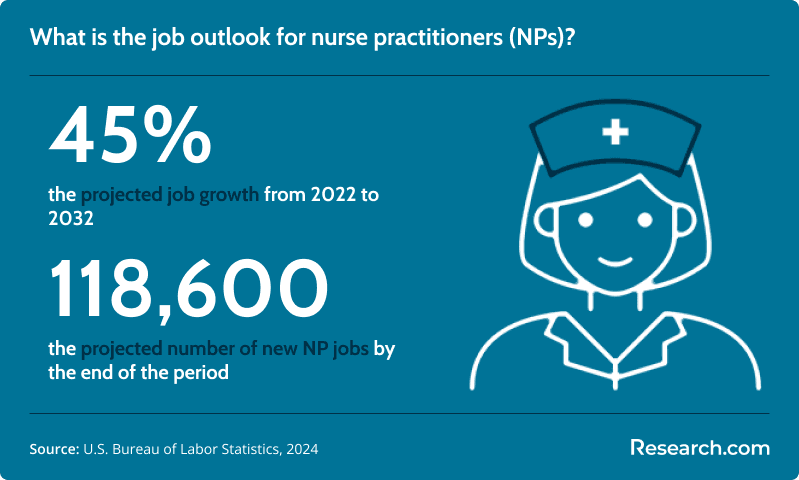
The job market for DNP graduates is tied closely to demand for advanced practice nurses, leadership needs in healthcare systems, and ongoing pressure to improve access, quality, safety, and outcomes. Nurse practitioner employment is especially strong: projected job growth is 45% from 2022 to 2032, with an estimated 118,600 new nurse practitioner jobs expected by the end of that period.
Graduates should still evaluate demand by specialty and state. For example, primary care, psychiatric-mental health, adult-gerontology, and rural health needs may differ by region. Employers may also weigh certification, experience, clinical background, leadership record, and project outcomes alongside the DNP credential.
Affordable Online DNP Programs for Budget-Conscious Students
An affordable online DNP can make doctoral nursing education more realistic for working nurses, but affordability should be judged by total cost rather than tuition alone. Programs may range from a few thousand dollars to over $30,000, depending on credits, fees, and school pricing.
Budget-conscious students should prioritize accredited programs, transparent tuition, clear clinical requirements, and strong student support. A lower-cost program is not a good value if it lacks the specialization you need, does not support clinical placement, or fails to meet state requirements.
How to reduce DNP costs
- Ask whether employer tuition reimbursement can be used for doctoral nursing study.
- Compare total program tuition, not only per-credit price.
- Choose a program that accepts eligible transfer credits or recognizes prior clinical hours when appropriate.
- Apply for nursing scholarships before each academic year.
- Clarify residency travel costs before enrolling in an online or hybrid program.
- Consider whether a slightly longer part-time plan would allow you to keep more income while studying.
What study techniques can students use to cope with the pace of the fastest DNP programs?
Fast DNP programs reward preparation and consistency. Students who wait until deadlines approach often struggle because clinical work, leadership responsibilities, and project requirements overlap.
- Use time blocking: Reserve fixed weekly hours for reading, writing, practicum documentation, discussion posts, and project work.
- Start the DNP project early: Identify a feasible practice problem, site, mentor, and data plan as soon as the program allows.
- Read strategically: Focus on evidence quality, clinical relevance, and application rather than passive highlighting.
- Connect assignments to your workplace: When allowed, align papers and projects with real improvement needs in your practice setting.
- Build a peer group: Study partners can help with accountability, discussion, and problem-solving.
- Protect recovery time: Sleep, exercise, nutrition, and boundaries are academic performance tools in an accelerated program.
- Ask for help early: Contact faculty, advisors, librarians, writing centers, or clinical coordinators before a small problem delays progress.
Professionals who are not yet nurses but want to enter the field should first compare foundational pathways, including the best online nursing programs for non nurses.
What student support services are available in accelerated DNP programs?
Support services matter more in fast programs because students have less time to recover from academic, technical, or clinical delays. Strong accelerated DNP programs may provide academic advising, writing support, library research help, technical assistance, clinical coordination, faculty mentorship, career services, wellness resources, and peer communities.
Ask whether support is available outside standard business hours, especially if you work shifts. Students who have completed streamlined nursing pathways, such as an RN to BSN 9 month program, may already understand the importance of responsive advising and structured pacing.
Can you pursue a DNP while working full-time?
Yes, many nurses pursue a DNP while working full time, especially in online or hybrid programs. The more important question is whether you can do it successfully in an accelerated format. A fast DNP may require evenings, weekends, practicum time, project meetings, and occasional schedule adjustments.
Before enrolling, talk with your employer about flexibility, tuition support, clinical/project site access, and schedule accommodations. Also ask the school how many hours students typically spend on coursework and practice activities each week. If the fastest timeline is unrealistic, a part-time option may be the better route.
Students specifically looking for a compressed post-master’s pathway can compare the shortest MSN to DNP program options while still checking accreditation, clinical support, and state requirements.
Questions to Ask Before Enrolling in a Fast DNP Program
- Is the program accredited by CCNE or ACEN?
- Does it meet APRN licensure or certification requirements in my state, if applicable?
- Is the program designed for MSN-prepared nurses, BSN-prepared nurses, or both?
- How many clinical or practice hours will I personally need to complete?
- Will the school help secure clinical placements or preceptors?
- How is the DNP project approved, supervised, and evaluated?
- What is the total cost after tuition, fees, travel, books, and compliance expenses?
- Can I complete the program while working my current schedule?
- Are courses synchronous, asynchronous, or hybrid?
- What happens if my clinical site falls through or my project is delayed?
References
- Data USA. (2024). Nursing practice. Retrieved July 14, 2024, from Data USA.
- U.S. Bureau of Labor Statistics. (2024). Occupational employment and wages, May 2023 - 29-1171 Nurse practitioners. Retrieved July 14, 2024, from BLS occupational wage data.
- U.S. Bureau of Labor Statistics. (2024). Nurse anesthetists, nurse midwives, and nurse practitioners. Retrieved July 14, 2024, from BLS Occupational Outlook Handbook.
Key Insights
- The fastest DNP route is usually an MSN-to-DNP or post-master’s pathway; BSN-to-DNP programs typically require more time because they include advanced practice preparation.
- A short timeline is valuable only if the program is accredited, clinically sound, affordable, and aligned with your state’s licensure or certification rules.
- The listed fastest DNP programs range from 12 months to 2.5 years, with the average cost per credit at $892 and listed rates from $469 to $1,721.
- Nurse practitioners earned an average annual salary of $128,490 in 2023, but DNP ROI depends on specialty, location, employer, experience, debt, and career goals.
- Online DNP programs can work well for employed nurses, but students must plan for clinical hours, project work, technology requirements, and possible residencies.
- Before enrolling, ask direct questions about accreditation, clinical placement support, state authorization, total cost, workload, and the DNP project timeline.
Other Things You Should Know About the Fastest DNP Degree Programs
Most accelerated DNP programs require a doctoral scholarly project or capstone, not a traditional dissertation. The project is usually completed in the final year and often includes about 500 supervised practice hours, plus a written paper and presentation approved by faculty.
In 2027, some accelerated Doctor of Nursing Practice (DNP) programs can be completed in as little as 18 months. These programs often include intensive coursework and clinical hours, and may require a full-time commitment for the duration.


