2027 Best Online Women’s Health Nurse Practitioner DNP Programs

Co-Founder and Chief Data Scientist
More than 15% of American women are in poor health, a quiet crisis that requires expert clinical leaders on the front lines. For experienced nurses looking to advance, the answer is becoming a Doctor of Nursing Practice (DNP)-prepared Women's Health Nurse Practitioner (WHNP). You have the drive; what you need is a clear, strategic plan.
This guide provides exactly that. Created by career planning experts with more than 10 years of experience, it goes beyond a simple ranking. It's a comprehensive roadmap designed to help you understand the investment, the career outcomes, and how to choose from the top online women's health nurse practitioner programs to match your ambition.
What are the benefits of getting an online women's health nurse practitioner DNP degree?
- You gain the clinical autonomy to lead in outpatient settings, providing vital primary care to women across their lifespan.
- You can expect a significant salary increase, with WHNPs in outpatient clinics typically earning between $133,000 and $145,000.
- The flexibility of online programs allows you to advance your education without having to step away from your current professional and personal commitments.
What can I expect from an online women's health nurse practitioner DNP program?
You should expect a highly demanding program. It’s designed to build on your nursing experience to develop you into both a clinical expert and a healthcare leader.
The program structure combines flexibility with rigorous hands-on training. While your coursework is completed online, the clinical portion is extensive and takes place in person. All accredited online women's health nurse practitioner programs require you to complete at least 1,000 hours of supervised practice in an actual healthcare setting. This is a core component that ensures you are fully prepared for advanced practice.
The DNP-level curriculum also pushes you beyond advanced clinical tasks. You will learn to analyze healthcare systems, use evidence to drive better patient outcomes, and lead quality improvement initiatives. This is about preparing you to be a true change agent in the field of women's health.
Where can I work with an online women's health nurse practitioner DNP degree?
The majority of WHNPs work in outpatient primary care settings where they can build long-term relationships with patients. You will most often find them in private OB/GYN practices, community health centers, family planning clinics, and college or university health services.
This focus on primary care is what defines the role. It's centered on providing comprehensive health services to women from adolescence through their senior years, including wellness, contraception, and management of common health issues. This is distinct from roles that are based in hospitals and focused on acute care or labor and delivery.
The field is also expanding into new and exciting areas. The growth of telehealth is creating opportunities for remote patient care. Additionally, many WHNPs are finding rewarding careers in specialized boutique clinics focused on areas like fertility, menopause management, or sexual health, offering a path for more entrepreneurial practice.
How much can I make with an online women's health nurse practitioner DNP degree?
As a DNP-prepared WHNP, you can expect a strong return on your educational investment. In the most common outpatient clinic settings, the typical salary range is between $133,000 and $145,000 annually.
This earning potential reflects two key factors. The first is the DNP itself, which prepares you for leadership and complex clinical roles that command higher pay. The second is the high demand for your specialized skills in women's health.
Your actual salary will, of course, depend on factors like your geographic location, years of experience, and the specific type of practice you join. However, this degree firmly positions you in the upper tier of nursing professionals.
- List of the Best Online Women's Health Nurse Practitioner DNP Programs for 2027 List of Programs
- How long does it take to complete an online women's health nurse practitioner DNP program? Completion Time
- How does an online women's health nurse practitioner DNP program compare to an on-campus program? How does an online women's health nurse practitioner DNP program compare to an on-campus program?
- What is the average cost of an online women's health nurse practitioner DNP program? Program Cost
- What are the financial aid options for students enrolling in an online women's health nurse practitioner DNP program? Financial Aid
- What are the prerequisites for enrolling in an online women's health nurse practitioner DNP program? What are the prerequisites for enrolling in an online women's health nurse practitioner DNP program?
- What courses are typically in an online women's health nurse practitioner DNP program? What courses are typically in an online women's health nurse practitioner DNP program?
- What types of specializations are available in an online women's health nurse practitioner DNP program? What types of specializations are available in an online women's health nurse practitioner DNP program?
- How to Choose the Best Online Women's Health Nurse Practitioner DNP Program How to Choose the Best Online Women's Health Nurse Practitioner DNP Program
- What career paths are available for graduates of an online women's health nurse practitioner DNP program? Career Paths
- What is the job market for graduates of an online women's health nurse practitioner DNP program? Job Market
- Can an Accelerated Online BSN Program Fast-Track Your Path to a DNP in Women's Health? Can an Accelerated Online BSN Program Fast-Track Your Path to a DNP in Women's Health?
- What Student Support Services Enhance Success in Online WHNP DNP Programs? What Student Support Services Enhance Success in Online WHNP DNP Programs?
Best Online Women’s Health Nurse Practitioner DNP Programs for 2027
Choosing an online Women’s Health Nurse Practitioner Doctor of Nursing Practice program is a high-stakes decision. You are not just comparing tuition or course delivery; you are deciding whether a program can prepare you for advanced practice, certification, clinical leadership, and long-term work in women’s and gender-related healthcare.
This guide is for registered nurses comparing online WHNP-DNP programs, including BSN-prepared nurses planning a full doctoral pathway and MSN-prepared nurses looking for a shorter route to a practice doctorate. You will find program options, cost and time comparisons, admissions expectations, clinical placement questions, career paths, and practical steps for choosing a program that fits your license, budget, schedule, and professional goals.
Quick answer: What should you look for first?
The best online WHNP-DNP program for you should be accredited by CCNE or ACEN, lead to eligibility for the Women’s Health Nurse Practitioner role, provide clear clinical placement support, fit your timeline, and offer a total cost you can justify against your expected career outcomes. Online delivery can be a strong option for working nurses, but clinical hours still require in-person practice at approved sites.
How we evaluate schools
Because a DNP is a major financial and professional commitment, our ranking process emphasizes transparency, data quality, and factors students can actually use when comparing programs. We review information from established education data sources, including the IPEDS database, Peterson's database, the College Scorecard database, and The National Center for Education Statistics.
These sources help support comparisons of online women’s health nurse practitioner DNP programs by using consistent institutional and program-level data where available. To understand the full ranking process, review Research.com’s methodology page.
| Rank | School and Program | Program Length | Credits | Cost per Credit | Accreditation |
| 1 | University of South Alabama - DNP Women’s Health Nurse Practitioner | 3-4 years | 60 | $594 | Commission on Collegiate Nursing Education (CCNE) |
| 2 | Georgetown University - DNP Women’s Health Nurse Practitioner (WHNP) | 2-3 years | 69 | $2,652 | Commission on Collegiate Nursing Education (CCNE) |
| 3 | University of Alabama at Birmingham - DNP Women’s Health Care Nurse Practitioner (WHNP) | 3 years | 79 | $723 | Commission on Collegiate Nursing Education (CCNE) |
| 4 | Regis College - Online BSN to Doctor of Nursing Practice - Women's Health | 3-4 years | 73 | $1,108 | Accreditation Commission for Education in Nursing (ACEN) |
| 5 | University of Missouri - DNP: Women's Health Nurse Practitioner | 4-5 years | 74 | $922.75 | Commission on Collegiate Nursing Education (CCNE) |
| 6 | University of Minnesota - Women's Health/Gender-Related Nurse Practitioner DNP | 3-4 years | 79 | $1,100 | Commission on Collegiate Nursing Education (CCNE) |
| 7 | University of Illinois Chicago - Doctor of Nursing Practice - Women’s Health Nurse Practitioner | 2-6 years | 87 | $1,075 | Commission on Collegiate Nursing Education (CCNE) |
1. University of South Alabama - DNP Women’s Health Nurse Practitioner
The University of South Alabama offers a DNP pathway for nurses preparing to provide women’s health services across the lifespan. The program covers primary care, gynecologic care, obstetrical care, prevention, wellness promotion, and selected reproductive health concerns affecting male patients, including infertility and sexually transmitted infections.
- Program length: 3-4 years
- Required credits to graduate: 60
- Cost per credit: $594
- Accreditation: Commission on Collegiate Nursing Education (CCNE)
2. Georgetown University - DNP Women’s Health Nurse Practitioner (WHNP)
Georgetown University prepares BSN-qualified nurses for advanced practice in women’s healthcare, with coursework and clinical preparation spanning preventive care, primary care, reproductive health, and leadership in complex care systems. The program is designed for nurses who want both clinical specialization and doctoral-level practice leadership.
- Program length: 2-3 years
- Required credits to graduate: 69
- Cost per credit: $2,652
- Accreditation: Commission on Collegiate Nursing Education (CCNE)
3. University of Alabama at Birmingham - DNP Women’s Health Care Nurse Practitioner (WHNP)
The University of Alabama at Birmingham offers a WHNP-focused DNP track that prepares nurses for advanced primary care responsibilities. Students study assessment, diagnosis, and management of common and chronic health conditions affecting women, while developing the clinical judgment needed to support wellness throughout the female lifespan.
- Program length: 3 years
- Required credits to graduate: 79
- Cost per credit: $723
- Accreditation: Commission on Collegiate Nursing Education (CCNE)
4. Regis College - Online BSN to Doctor of Nursing Practice - Women's Health
Regis College provides an online BSN-to-DNP option for nurses who want doctoral preparation in women’s health. The curriculum addresses primary care, gynecologic needs, obstetrical care, and lifespan health concerns, making it a fit for students who want a direct path from a BSN into advanced practice preparation.
- Program length: 3-4 years
- Required credits to graduate: 73
- Cost per credit: $1,108
- Accreditation: Accreditation Commission for Education in Nursing (ACEN)
5. University of Missouri - DNP: Women's Health Nurse Practitioner
The University of Missouri BSN-DNP WHNP option emphasizes advanced clinical accountability, including diagnosis, treatment planning, management, and prescriptive authority. Its practice-focused doctorate helps nurses apply nursing science and evidence-based findings directly to patient care.
- Program length: 4-5 years
- Required credits to graduate: 74
- Cost per credit: $922.75
- Accreditation: Commission on Collegiate Nursing Education (CCNE)
6. University of Minnesota - Women's Health/Gender-Related Nurse Practitioner DNP
The University of Minnesota offers a DNP program focused on women’s health and gender-related care. Students build expertise in reproductive health, prenatal care, complex patient education, and the diagnosis and management of health issues that arise across major life transitions.
- Program length: 3-4 years
- Required credits to graduate: 79
- Cost per credit: $1,100
- Accreditation: Commission on Collegiate Nursing Education (CCNE)
7. University of Illinois Chicago - Doctor of Nursing Practice - Women’s Health Nurse Practitioner
The University of Illinois Chicago DNP-WHNP program prepares graduates for comprehensive women’s healthcare, including well-woman visits, reproductive care, perinatal care, prevention, and health education. The program may appeal to nurses who want a flexible timeline and a broad clinical foundation in women’s health practice.
- Program length: 2-6 years
- Required credits to graduate: 87
- Cost per credit: $1,075
- Accreditation: Commission on Collegiate Nursing Education (CCNE)
How long does an online women’s health nurse practitioner DNP take?
Your completion time depends mainly on your current nursing degree. A BSN-to-DNP pathway is longer because it combines graduate-level advanced practice preparation with doctoral coursework. An MSN-to-DNP pathway is shorter because the student has already completed graduate nursing education.
| Starting Point | Typical Full-Time Timeline | Best For | What to Confirm Before Applying |
| BSN-prepared RN | 3 to 4 years | Nurses who want to move directly from bachelor’s-level practice into WHNP doctoral preparation | Whether the program includes all advanced practice, WHNP specialty, clinical, and DNP requirements |
| MSN-prepared nurse | 1 to 2 years | Nurses who already hold graduate nursing preparation and want the DNP credential | Whether the program leads to WHNP eligibility or only awards the DNP |
| Working nurse studying part time | Longer than the full-time plan | Students balancing employment, family, clinical hours, and coursework | Maximum time-to-completion rules and clinical sequencing requirements |
Many nurses choose part-time enrollment because DNP coursework, clinical hours, and employment can be difficult to manage at the same time. If speed is a priority, compare your options carefully with the fastest online women's health nurse practitioner DNP programs, but do not choose an accelerated format unless you can realistically handle the clinical and academic workload.
DNP education is also part of a broader shift in advanced nursing preparation. There are currently 42,767 students enrolled in DNP programs across the country.
Online vs. on-campus WHNP-DNP programs: Which format is better?
An accredited online WHNP-DNP is not automatically weaker than an accredited campus program. The more important question is whether the program is accredited, meets advanced practice preparation standards, supports clinical placement, and aligns with your state licensure and certification goals.
Online programs are often the better fit for working registered nurses who need more control over when they complete coursework. Campus programs may work better for students who prefer scheduled classes, in-person faculty access, and university-arranged clinical networks. Registered nurses still comparing long-term pathways may also want to review the best online RN to BSN to MSN bridge programs if they are not yet ready for a DNP route.
Accreditation remains the non-negotiable factor. Programs accredited by the Commission on Collegiate Nursing Education (CCNE) or the Accreditation Commission for Education in Nursing (ACEN) are evaluated against recognized standards for nursing curriculum, faculty preparation, clinical learning, and program quality. Accredited online programs must meet the same expectations as accredited on-campus programs.
Clinical training is still completed face to face. Even if lectures and assignments are online, WHNP students must complete approved clinical experiences in healthcare settings. Before enrolling, ask whether the school secures placements, helps identify preceptors, or expects you to arrange your own sites.
| Feature | Online WHNP-DNP Program | On-Campus WHNP-DNP Program |
| Accreditation and academic quality | Must meet the same CCNE/ACEN standards when accredited | Must meet the same CCNE/ACEN standards when accredited |
| Course content | Designed around the same advanced practice and DNP learning outcomes | Designed around the same advanced practice and DNP learning outcomes |
| Clinical requirements | Completed in person at approved clinical sites, often near the student when allowed | Completed in person, commonly through university-connected clinical partners |
| Schedule | Often more flexible, with asynchronous or hybrid coursework | Usually more structured, with set class meetings and campus expectations |
| Faculty and peer interaction | Delivered through video meetings, online discussions, advising, and virtual office hours | Built around direct classroom, lab, and campus-based interaction |
| Diploma value | The degree is typically awarded the same way as the institution’s comparable program | The degree reflects the institution and accredited program |
What does an online women’s health nurse practitioner DNP cost?
Program cost varies widely by school type, credit requirements, residency rules, fees, and whether you attend full time or part time. Public university programs may have total tuition costs ranging from approximately $35,000 to $95,000. Private universities can cost much more, with some programs exceeding $180,000 for the entire program.
Do not compare programs by tuition alone. A lower per-credit price can still become expensive if the program requires more credits, charges high clinical or technology fees, or delays graduation because of clinical placement problems. A higher-cost program may be more defensible if it offers strong placement support, better scheduling, or a clearer path to certification.
How to think about return on investment
The ROI of a WHNP-DNP depends on your current salary, debt level, state practice environment, specialty certification, employer policies, and whether the credential leads to higher-responsibility roles. Some nurses also compare alternative graduate routes, including RN to MSN online programs, before committing to a doctoral pathway.
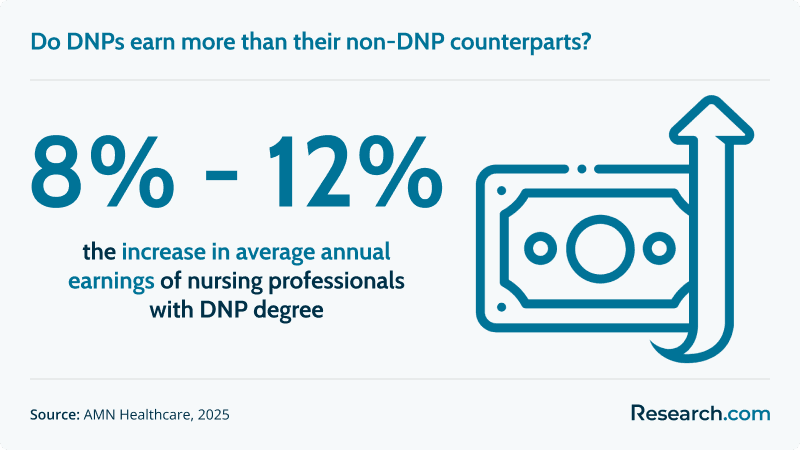
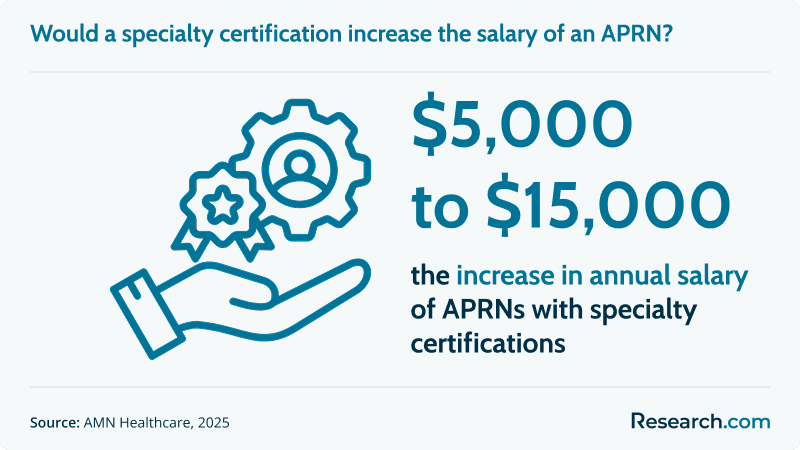
Two financial factors often matter most. First, earning a DNP can increase your salary by 8% to 12% compared to non-doctoral nurses. Second, specialty certification as a WHNP can add another $5,000 to $15,000 to annual salary. These figures are not guarantees for every graduate, but they are useful for estimating how long it may take to recover tuition costs.
| Cost Factor | Why It Matters | Question to Ask |
| Tuition per credit | Determines the base cost of the program | How many total credits are required, and does tuition differ by residency? |
| Program fees | Technology, clinical, graduation, and distance-learning fees can raise the real price | Can the school provide a full estimated cost of attendance? |
| Clinical placement support | Weak support can delay graduation or force students to travel | Who is responsible for finding approved preceptors? |
| Time in school | Longer enrollment can increase total expenses and reduce work flexibility | What is the realistic completion timeline for working nurses? |
| Employer support | Tuition reimbursement can reduce borrowing | Does my employer pay for doctoral nursing coursework or certification preparation? |
Financial aid options for online WHNP-DNP students
Graduate nursing students often combine multiple funding sources instead of relying on one option. Before borrowing, calculate the full program cost, your expected monthly loan payment, and whether your employer or professional organizations can reduce your out-of-pocket expense.
- Start with federal aid. Graduate students commonly begin by submitting the Free Application for Federal Student Aid (FAFSA) to determine eligibility for federal loan programs.
- Apply for nursing scholarships. Search for awards connected to graduate nursing, primary care, doctoral study, community health, women’s health, and advanced practice nursing.
- Ask about employer tuition benefits. Hospitals, clinics, and health systems may offer tuition reimbursement or tuition assistance for nurses pursuing advanced credentials.
- Compare repayment expectations. A program may be worthwhile, but only if your debt level remains manageable relative to your likely earnings and employment plans.
The potential earnings benefit can be meaningful, especially when a WHNP specialty certification may increase annual salary by $5,000 to $15,000. Still, students should treat loans as a calculated obligation, not as automatic proof that the degree will pay for itself quickly.
Prerequisites for online women’s health nurse practitioner DNP programs
Admissions requirements vary by institution, but most WHNP-DNP programs look for evidence that you are academically prepared, clinically experienced, licensed, and ready for doctoral-level practice training.
- Nursing degree: Applicants typically need a BSN or MSN from an accredited nursing program. Georgetown states that applicants must have either a Bachelor of Science in Nursing (BSN) or a Master of Science in Nursing (MSN) from an accredited institution.
- RN licensure: Programs generally require a current, unencumbered registered nurse license in the state where clinical experiences will occur.
- Clinical experience: Many programs prefer or require at least one to two years of full-time experience as a registered nurse.
- Application materials: Expect transcripts, recommendations, a resume or CV, a professional statement, and sometimes an interview.
Labor and delivery or women’s health experience can strengthen an application, but it is not always mandatory. Nurses from med-surg, critical care, community health, or other specialties can use the personal statement to explain how their clinical background connects to women’s health practice. BSN-prepared nurses comparing graduate-level entry points may also consider an accelerated online MSN women's health nurse practitioner program if they want advanced practice preparation without immediately entering a DNP track.
Typical courses in an online WHNP-DNP curriculum
A WHNP-DNP curriculum usually combines three layers of preparation: advanced practice nursing science, women’s health specialty coursework, and doctoral-level leadership. Together, these courses prepare students to deliver patient care while also improving systems, outcomes, and care processes.
| Curriculum Area | Common Courses | Purpose |
| Advanced practice core | Advanced Pathophysiology, Advanced Pharmacology, Advanced Health Assessment | Builds the scientific and diagnostic foundation for advanced clinical decisions |
| WHNP specialty core | Primary Care of Women, Management of Gynecologic Conditions, Antepartum and Postpartum Care, Contraception and Family Planning | Prepares students for women’s health assessment, prevention, treatment, and counseling |
| DNP core | Healthcare Policy and Advocacy, Evidence-Based Practice and Quality Improvement, Health Informatics, Organizational and Systems Leadership | Develops doctoral-level skills in care improvement, policy, leadership, and data-informed practice |
What makes the DNP different from an MSN?
The clinical and WHNP courses build the foundation for advanced practice. The DNP core adds a broader leadership dimension. Students learn how to evaluate practice outcomes, improve care delivery, use informatics, lead quality projects, and translate evidence into practice.
This distinction matters if your long-term goal includes leadership, quality improvement, policy, administration, or system-level practice change. Nurses interested in coordination and systems-based care may also compare related options such as the shortest MSN care coordination online programs before choosing the DNP route.
WHNP-DNP specializations and related paths
In most cases, Women’s Health Nurse Practitioner is the specialization. Unlike some nursing degrees that offer separate tracks in informatics, education, or administration, a WHNP-DNP is designed around one advanced practice role. After graduation and certification, many WHNPs develop a professional focus through clinical experience, continuing education, and employer-based specialization.
Possible career focus areas include reproductive endocrinology and infertility, contraception and family planning, high-risk obstetrics, menopause care, adolescent health, community women’s health, and gynecologic care. These are usually practice niches rather than separate DNP concentrations.
Students who are still exploring healthcare careers should understand that shorter credentials can introduce them to patient care, but they do not replace nursing education or WHNP preparation. For example, online phlebotomy technician certification can support entry into a clinical support role, but it is not a substitute for RN licensure, graduate nursing education, or advanced practice certification.
WHNP vs. Certified Nurse-Midwife: Do not confuse these roles
One of the most important decisions is whether you want to become a WHNP or a Certified Nurse-Midwife. The roles overlap in some areas of women’s health, but they are not interchangeable.
| Role | Primary Focus | Best Fit If You Want To... |
| Women’s Health Nurse Practitioner | Women’s health and primary care across adolescence, adulthood, pregnancy-related periods, and later life | Provide long-term gynecologic, reproductive, preventive, and primary care services |
| Certified Nurse-Midwife | Pregnancy, labor, birth, and postpartum care, with some well-woman care | Center your practice on childbirth, pregnancy management, and midwifery care |
If you already hold advanced practice preparation and need only to add a WHNP credential, a fast track women's health nurse practitioner post graduate certificate online may be more efficient than completing another full degree.
How to choose the best online WHNP-DNP program
The right program is the one that meets professional standards and fits your career target, state requirements, finances, clinical placement needs, and learning style. Rankings can help you start a shortlist, but they should not be the only basis for your decision.
Use this decision checklist before applying
- Confirm CCNE or ACEN accreditation. Accreditation is essential for program quality, certification readiness, employer recognition, and often financial aid eligibility.
- Ask exactly how clinical placements work. Find out whether the school assigns sites, helps secure preceptors, or requires students to locate their own placements.
- Check state authorization and licensure alignment. Online programs may not be able to enroll students in every state or support clinical placements in every location.
- Review faculty credentials. Look for instructors with current WHNP practice experience and expertise in the areas that interest you.
- Compare total cost, not just tuition. Include fees, travel, books, clinical expenses, lost work hours, and certification preparation.
- Match the schedule to your life. Ask whether courses are asynchronous, synchronous, hybrid, full time, part time, or cohort-based.
- Evaluate student support. Strong advising, writing support, technology help, simulation resources, and career services can make online study more manageable.
Common mistakes to avoid
| Mistake | Why It Can Hurt You | Better Approach |
| Choosing a program before checking accreditation | It can affect certification eligibility, employer acceptance, and academic credibility | Verify CCNE or ACEN accreditation before you apply |
| Assuming “online” means no campus or clinical obligations | Some programs require intensives, travel, or specific clinical arrangements | Ask for all in-person requirements in writing |
| Comparing only cost per credit | Total credits and fees can change the real cost substantially | Request the full estimated cost of attendance |
| Ignoring clinical placement support | Preceptor shortages can delay graduation | Ask who secures sites and what happens if a placement falls through |
| Relying only on rankings | A highly ranked program may not fit your state, schedule, or career plan | Use rankings as one input, then compare fit factors |
| Choosing a related healthcare certificate as if it were a nursing pathway | Support roles do not replace RN, MSN, DNP, or APRN requirements | Use credentials like a sterile processing technician certificate online for exposure to healthcare settings, not as a substitute for nursing education |
For students building toward nursing from an earlier stage, healthcare support roles can offer useful exposure to clinical environments. However, they should be viewed as experience-building steps, not replacements for nursing licensure, graduate education, or WHNP certification.
Career paths after an online women’s health nurse practitioner DNP
Most WHNP-DNP graduates enter or continue in advanced clinical practice, but the degree can also support leadership, quality improvement, education, and administrative roles. The strongest career path depends on your clinical interests, state scope-of-practice rules, employer needs, and willingness to build specialized expertise over time.
| Career Direction | Common Work Settings | Typical Responsibilities |
| Clinical WHNP practice | OB/GYN practices, women’s health clinics, community health centers, family planning clinics | Assess patients, order tests, diagnose conditions, prescribe when authorized, counsel patients, and manage ongoing care |
| Specialized women’s health practice | Fertility clinics, menopause centers, adolescent health programs, high-risk obstetric practices | Develop deeper expertise in a focused area of women’s health |
| Clinical leadership | Hospitals, ambulatory care systems, women’s health service lines | Lead teams, improve workflows, evaluate outcomes, and support evidence-based practice |
| Quality improvement and systems roles | Health systems, accountable care organizations, academic medical centers | Use data and evidence to improve patient care processes and population health outcomes |
| Education and academia | Nursing schools, clinical training programs, professional education settings | Teach students, mentor clinicians, and contribute to practice-focused nursing education |
Long-term advancement
The DNP is designed to prepare nurses for more than individual patient encounters. Graduates learn to evaluate care models, lead evidence-based changes, and work across clinical systems. That broader preparation can support movement into leadership roles as experience grows.
Salary outcomes vary by location, setting, scope of practice, experience, and employer. However, advanced experience can be financially significant; for instance, a nurse with 11-20 years in the profession can earn over $150,000.
Nurses interested in executive work may eventually need to understand workforce planning, budgeting, compliance, and organizational strategy. That is why some healthcare leaders study management topics outside nursing, including questions such as What can you do with an MBA in HR when they want a broader view of personnel and organizational leadership.
Job market outlook for WHNP-DNP graduates
The employment outlook for DNP-prepared WHNPs is strong because women’s health services intersect with primary care, prevention, reproductive care, chronic condition management, and access to care. Demand is also shaped by provider shortages, aging populations, changing state practice laws, and the healthcare system’s continued emphasis on prevention and outpatient care.
Graduates should still evaluate local market conditions. Scope of practice, prescriptive authority, payer policies, physician collaboration rules, and employer preferences vary by state and setting. A strong national outlook does not guarantee the same opportunities in every city or employer network.
Current trends affecting WHNP practice
- Greater use of team-based care: WHNPs often work with physicians, nurse-midwives, family nurse practitioners, nurses, social workers, and behavioral health providers.
- More emphasis on prevention: Women’s health roles increasingly involve screening, education, risk reduction, and long-term health management.
- Expanding technology in care delivery: Telehealth, electronic health records, data dashboards, and remote patient communication are now important parts of advanced practice.
- State-by-state practice variation: Autonomy and prescriptive authority depend heavily on state law, so students should research the rules where they plan to work.
- Higher expectations for evidence-based leadership: DNP-prepared nurses are often expected to contribute to quality improvement, policy implementation, and measurable care outcomes.
Can an accelerated online BSN help you reach a WHNP-DNP faster?
An accelerated BSN can be a useful first step for students who already hold a non-nursing bachelor’s degree and want to enter registered nursing more quickly. It does not make someone a WHNP by itself, but it can provide the nursing foundation required before applying to graduate-level advanced practice programs.
Students considering this route should make sure the BSN program leads to RN licensure eligibility and is accepted by future graduate nursing programs. To compare options, review accelerated online BSN programs and ask each school how graduates typically progress into advanced nursing education.
Student support services that matter in online WHNP-DNP programs
Online DNP students need more than recorded lectures. Strong programs provide support systems that help students move through advanced coursework, clinical requirements, doctoral projects, and certification preparation without unnecessary delays.
- Clinical placement advising: Helps students identify approved sites and understand preceptor requirements.
- Faculty mentoring: Connects students with experienced clinicians and doctoral project advisors.
- Academic advising: Keeps students on track with sequencing, registration, and graduation requirements.
- Technology support: Reduces disruptions in online coursework, exams, simulation tools, and communication platforms.
- Career services: Supports resume development, interview preparation, and job search planning for advanced practice roles.
- Simulation and skills support: Builds confidence before and during clinical experiences.
Students entering nursing from a non-nursing background may also compare the easiest online accelerated BSN programs, but they should still prioritize accreditation, licensure alignment, clinical quality, and graduate-school readiness.
What graduates say about online Women’s Health Nurse Practitioner DNP programs
- Nori: "After 15 years in med-surg, I questioned whether a DNP would be worth the price. I needed the financial side to make sense. For me, it did. The raise I received after graduating more than offset my loan payments, and leadership opportunities appeared much sooner than I expected. Online study made it possible to keep working, and it turned out to be the strongest career investment I have made."
- Cora: "I wanted more clinical responsibility and the ability to guide care from assessment through treatment planning. The program gave me that preparation. The advanced science courses were demanding, but they strengthened my diagnostic confidence. I now manage my own patient panel, create treatment plans, and practice with a level of autonomy I had been working toward for years."
- Elyse: "I was unsure whether an online doctorate would feel rigorous enough or prepare me well for clinical practice. The experience changed my mind. The coursework was challenging, expectations were high, and my classmates built strong virtual study groups. By the time I entered clinical rotations, I felt ready."
Key Insights
- Accreditation comes first. Only consider WHNP-DNP programs with appropriate nursing accreditation, such as CCNE or ACEN, and confirm that the program supports your certification and licensure goals.
- Online does not mean fully remote. Coursework may be online, but clinical hours are completed in person at approved healthcare sites.
- BSN-to-DNP and MSN-to-DNP timelines are very different. BSN-prepared nurses usually need 3 to 4 years full time, while MSN-prepared nurses may complete an MSN-to-DNP path in 1 to 2 years full time.
- Total cost matters more than tuition per credit. Compare credits, fees, clinical expenses, travel, time away from work, and placement support before judging affordability.
- WHNP and CNM are not the same career. Choose WHNP if you want broad women’s health and primary care across the lifespan; choose nurse-midwifery if birth care is your central professional goal.
- Clinical placement support can make or break the online experience. Ask schools directly whether they find preceptors, assist with placement, or leave the responsibility to students.
- The DNP can support long-term leadership. Beyond clinical practice, the degree can prepare nurses for quality improvement, administration, education, and system-level roles.
References:
- American Association of Colleges of Nursing. (2025, June). DNP fact sheet. AACN.
- American Association of Critical-Care Nurses. (2024, December 30). Why would I need more than one nursing certification? AACN Blog.
- Baylor University. (2025). The demand for pediatric nurses and how a DNP/PNP can help. Baylor University Online Nursing Programs.
- Centers for Disease Control and Prevention. (2025, June 5). Data and statistics on children's mental health. CDC.
- Centers for Disease Control and Prevention. (2025, July 15). FastStats - Child health. National Center for Health Statistics.
- Centers for Disease Control and Prevention. (2025, July 15). FastStats - Older adult health. National Center for Health Statistics.
- Centers for Disease Control and Prevention. (2023). FastStats - Women’s health. National Center for Health Statistics.
- Kaplow, R., & Reed, K. D. (2021). Specialty certification: A path to improving outcomes. American Journal of Critical Care, 30(2), 156.
- KFF. (2024). U.S. women's health status data. KFF.
- National Council on Aging. (2024, June 1). Get the facts on older Americans. NCOA.
- American Association of Colleges of Nursing. DNP fact sheet resource. AACN.
Other Things You Should Know About the Best Online Women's Health Nurse Practitioner DNP Programs
When selecting a program, consider accreditation, curriculum quality, faculty expertise, clinical placement options, and online support services. Check program rankings, costs, and student reviews to ensure it meets career objectives and offers comprehensive training in women's health.
Upon completing a DNP program, aspiring Women's Health Nurse Practitioners must pass the WHNP certification exam provided by the National Certification Corporation (NCC). This certification is essential for becoming a credentialed practitioner in women’s health.