2027 Best Online RN to BSN to MSN Bridge Programs

Co-Founder and Chief Data Scientist
Advancing from a registered nurse with an associate degree to a Bachelor of Science in Nursing (BSN) and then to a Master of Science in Nursing (MSN) degree-holder through an online bridge program is a smart pathway to elevate your career.
With the growing demand for highly skilled nurse practitioners amid a national nursing shortage, pursuing a bridge MSN equips RNs with advanced clinical knowledge, leadership skills, and broader career opportunities.
This article, prepared by career planning experts, explores the best online RN to BSN to MSN bridge programs available today, helping you find flexible and affordable options that align with your professional goals.
What are the benefits of pursuing an online RN to BSN to MSN program?
- Career Advancement and Leadership Opportunities: Earning an MSN opens doors to advanced nursing roles such as nurse practitioner, nurse educator, or nurse manager, giving you greater responsibility and influence in patient care and healthcare decision-making.
- Higher Salary Potential: According to the U.S. Bureau of Labor Statistics, nurse practitioners earn a median annual salary of over $129,000, significantly higher than the average salary of registered nurses, making an MSN a strong investment in your financial future.
- Flexibility for Working Nurses: Online bridge programs are designed to accommodate the busy schedules of working RNs, allowing you to continue gaining professional experience while completing your studies at your own pace.
What can I expect from online RN to BSN to MSN programs?
Online RN to BSN to MSN programs are designed to streamline the educational pathway for registered nurses with an associate degree, allowing them to progress directly to advanced practice and leadership roles. Most programs start with BSN-level coursework in areas like evidence-based practice, community health, and nursing research before moving into MSN-level subjects such as advanced pathophysiology, health policy, and leadership in nursing.
Students can expect flexible learning formats, often with asynchronous classes, making it easier to balance work and family commitments. Clinical practicum hours and sometimes a capstone or final project are typically required, ensuring you gain both theoretical knowledge and hands-on experience.
Where can I work with an online MSN degree?
Graduates of online MSN programs have access to a wide range of career opportunities across healthcare settings. Many become nurse practitioners, working in primary care clinics, hospitals, or specialty practices to help fill the growing need for advanced providers. Others pursue careers as nurse educators, teaching the next generation of nurses in universities or training programs.
With leadership-focused MSN tracks, you can also work as a nurse manager or administrator, overseeing teams in hospitals, community health centers, or long-term care facilities. This flexibility allows MSN-prepared nurses to shape patient care, influence healthcare policy, and mentor future nursing professionals.
How much can I make with an online MSN degree?
Earning an MSN, whether from a bridge program or other types of programs, significantly boosts your earning potential compared to holding only an RN or BSN. According to the U.S. Bureau of Labor Statistics, nurse practitioners earn a median annual salary of $129,210. This is significantly more than the median annual salary for RNs, which is $93,600. The mean annual wage for NPs, meanwhile, is $132,000.
Salaries can be even higher for those working in specialized fields such as psychiatric-mental health, anesthesia, or leadership roles, with some MSN-prepared nurses earning well over $160,000 annually. Your exact income will depend on your chosen specialty, years of experience, and location, but overall, an MSN offers both financial and professional rewards.
- List of the Best Online RN to BSN to MSN Programs for 2027 List of Programs
- What is the difference between RN-to-MSN programs and RN-to-BSN-to-MSN programs? What is the difference between RN-to-MSN programs and RN-to-BSN-to-MSN programs?
- How long do online RN to BSN to MSN programs typically take to complete? Completion Time
- What are the prerequisites for enrolling in an online RN to BSN to MSN program? Requirements
- What is the average cost of online RN to BSN to MSN programs? Program Cost
- What are the financial aid options for nurses enrolling in online RN to BSN to MSN programs? Financial Aid
- What courses are typically included in online RN to BSN to MSN programs? What courses are typically included in online RN to BSN to MSN programs?
- How can I choose the best online RN to BSN to MSN programs? How can I choose the best online RN to BSN to MSN programs?
- What are the differences between on-campus and online RN to BSN to MSN programs? What are the differences between on-campus and online RN to BSN to MSN programs?
- What is the job outlook for graduates of online RN to BSN to MSN programs? Job Outlook
- Is an Accelerated BSN Program Right for You? Is an Accelerated BSN Program Right for You?
- What student support services are offered in online RN to BSN to MSN programs? What student support services are offered in online RN to BSN to MSN programs?
Best Online RN to BSN to MSN Programs for 2027
Registered nurses who already hold an associate degree or nursing diploma often face a practical decision: earn a BSN first, move straight into an MSN, or choose a bridge program that combines both. Online RN to BSN to MSN programs are built for nurses who want graduate-level preparation without stopping their careers, but the right program depends on your license status, transfer credits, preferred specialty, clinical placement needs, budget, and long-term role.
This guide compares online RN to BSN to MSN programs, explains how these bridge pathways work, and helps you evaluate whether this route makes more sense than a traditional RN-to-BSN, direct RN-to-MSN, BSN-to-MSN, or doctoral nursing pathway. You will also find decision points on accreditation, cost, prerequisites, clinical requirements, online versus campus formats, job outlook, and common mistakes to avoid before enrolling.
Quick Answer: What Is the Best Online RN to BSN to MSN Program?
The best online RN to BSN to MSN program is the one that is accredited, accepts the maximum number of your prior credits, offers the MSN specialization required for your target role, supports clinical placement, and fits your work schedule and budget. For many working RNs, the strongest programs combine flexible online coursework with required in-person practicum experiences and a clear path to both BSN and MSN completion.
If you want the security of earning a BSN before completing graduate study, an RN to BSN to MSN program may be a better fit than a direct RN-to-MSN track. If your employer does not require a BSN and you are ready for a faster graduate pathway, compare these options with RN to MSN programs before deciding.
How Research.com Evaluates Schools
Our rankings are informed by structured research and data review from trusted education sources, including the IPEDS database, Peterson's database and its Distance Learning Licensed Data Set, the College Scorecard database, and the National Center for Education Statistics.
Because an online RN to BSN to MSN bridge program can be a major financial and professional commitment, this ranking focuses on programs that provide online coursework while still requiring appropriate face-to-face clinical or practicum experiences. The programs below are bridge options that may award both a BSN and an MSN or provide a defined pathway from RN preparation into graduate nursing study. For more information about how Research.com reviews programs, visit our methodology page.
| School | Location | Program Length | Cost Information | Accreditation Listed |
| Jacksonville University | Jacksonville, FL | 1.5 years | $340 per undergraduate credit hour; $750 per graduate credit hour | Commission on Collegiate Nursing Education (CCNE) |
| Herzing University | Multiple Locations | 28-32 months | $770 per credit | CCNE; Higher Learning Commission |
| University of Rochester | Rochester, NY | Not stated | $1,200 per credit hour for RN to BSN; $1,740 per credit hour for MSN | CCNE; Middle States Commission on Higher Education |
| Drexel University | Philadelphia, PA | Varies by MSN concentration | $1,169 per credit | CCNE; Middle States Commission on Higher Education |
| The University of Texas at Arlington | Arlington, TX | 36 months | $19,500 total tuition | CCNE |
| Sacred Heart University | Fairfield, CT | 3.5 years | $390 per BSN credit hour; $695 per MSN credit hour for CNL, NE, and NMEL; $955 per MSN credit hour for FNP and PMHNP | CCNE |
1. Jacksonville University
Jacksonville University offers an RN-MSN pathway designed for registered nurses who want to complete BSN and MSN requirements through one coordinated plan. The format is especially relevant for working nurses who already hold an associate degree and need an online schedule that can accommodate employment.
Courses are delivered 100% online in 7-week formats, with year-round start opportunities and the option to pause terms when needed. Students may receive 30 credits toward the BSN based on an active RN license. MSN specialization options include Clinical Nurse Educator, Leadership in Healthcare Systems, and Nursing Informatics, with each specialization requiring 12 credit hours.
- Location: Jacksonville, FL
- Program Length: 1.5 years
- Cost Per Credit Hour: $340 for undergraduate coursework; $750 for graduate coursework
- Accreditation: Commission on Collegiate Nursing Education (CCNE)
2. Herzing University
Herzing University provides an online RN to BSN to MSN option for ADN-prepared nurses who want to progress from registered nurse preparation into bachelor’s and master’s-level study. The program may appeal to nurses who want a wide range of specialization choices rather than a single leadership or education track.
Students can choose from nine specializations: Family Nurse Practitioner, Nurse Educator, Acute Care Nurse Practitioner, Primary Care Nurse Practitioner, Pediatric Nurse Practitioner, Public Health, Nursing Leadership and Administration, Women's Health Nurse Practitioner, and Psychiatric Mental Health Nurse Practitioner. Herzing also offers an RN to MSN track for nurses who want to move directly from ADN to MSN and do not need a BSN as a separate employer requirement. Coursework is 100% online, but the program includes a required hands-on clinical component.
- Location: Multiple Locations
- Program Length: 28-32 months
- Credits Required: 64
- Cost Per Credit: $770
- Accreditation: CCNE; Higher Learning Commission
3. University of Rochester
University of Rochester offers an RN to BS to MS pathway for experienced RNs with strong academic preparation who want a flexible but rigorous route to both bachelor’s and master’s credentials. The program is structured to expand clinical reasoning, leadership, teaching, and advanced practice preparation.
The program combines online learning with evening sessions, allowing students to progress while managing professional responsibilities. Clinical experiences may be completed at the University of Rochester Medical Center. Available specializations include Nurse Practitioner, Nursing Education, Clinical Nurse Leaders, and Leadership in Health Care Systems. Students earn the BSN after completing 32 nursing credits and 64 arts and sciences credits.
- Location: Rochester, NY
- Cost Per Credit Hour: $1,200 for RN to BSN; $1,740 for MSN
- Accreditation: CCNE; Middle States Commission on Higher Education
4. Drexel University
Drexel University offers an accelerated online RN to BSN to MSN pathway specifically for registered nurses who already have a bachelor’s degree in a non-nursing field. This makes it a specialized option for second-degree RNs who need BSN-level nursing coursework before advancing into a graduate nursing concentration.
Students complete 18 quarter credits at the BSN level and then continue into one of Drexel’s MSN Advanced Role or Nurse Practitioner programs. The BSN is awarded when the MSN is completed. Advanced Role options include Nursing Education; Nursing Leadership in Health Systems Management; and Quality, Safety, and Risk Management. Nurse Practitioner options include Adult-Gerontology Acute Care Nurse Practitioner; Adult-Gerontology Primary Care Nurse Practitioner; Family Nurse Practitioner (Individual Across the Lifespan); Family Nurse Practitioner (Individual Across the Lifespan) with Emergency Specialization; Pediatric Acute Care Nurse Practitioner; Pediatric Primary Care Nurse Practitioner; Pediatric Primary Care and Pediatric Acute Care Nurse Practitioner (Dual Option); Psychiatric Mental Health Nurse Practitioner; and Women's Health/Gender Related Nurse Practitioner.
- Location: Philadelphia, PA
- Credits Required: 18 credits for BSN bridge courses; 45-63 credits for MSN
- Cost Per Credit: $1,169
- Accreditation: CCNE; Middle States Commission on Higher Education
5. The University of Texas at Arlington
The University of Texas at Arlington offers a Registered Nurse to Master of Science in Nursing Online program for RNs who want to complete BSN-level progression and continue directly into MSN study. The pathway is designed for nurses seeking an accelerated online format that still includes applied practicum learning.
The curriculum blends nursing theory, graduate-level preparation, and hands-on practicum requirements. Students can choose from MSN - Nurse Administration, MSN - Nurse Education, or MSN - Family Nurse Practitioner.
- Location: Arlington, TX
- Program Length: 36 months
- Total Tuition: $19,500
- Accreditation: CCNE
6. Sacred Heart University
Sacred Heart University offers an online RN-MSN program that can lead to two degrees in as few as three and a half years. The curriculum includes topics such as care management, health care policy, and evidence-based practice, making it suitable for nurses who want both advanced clinical or leadership preparation and a formal BSN-to-MSN progression.
Students may choose from five MSN specializations: Clinical Nurse Leader; Family Nurse Practitioner; Nursing Education; Nursing Management & Executive Leadership; and Psychiatric Mental Health Nurse Practitioner.
- Location: Fairfield, CT
- Program Length: 3.5 years
- Credits Required: 51-153
- Cost Per Credit Hour: $390 for BSN; $695 for MSN, applying to the CNL, NE, and NMEL concentrations; $955 for MSN, applying to the FNP and PMHNP concentrations
- Accreditation: CCNE
RN-to-MSN vs. RN-to-BSN-to-MSN: What Is the Difference?
Schools use different names for bridge nursing programs, so program labels are not always consistent. One university may call a pathway RN-to-MSN even if it awards a BSN along the way, while another may use RN-to-BSN-to-MSN to make the sequence clearer.
In general, RN-to-MSN programs are accelerated graduate pathways for registered nurses who entered the profession through an associate degree or diploma route. Some programs move students into graduate coursework without requiring a separate BSN milestone, which can work well for nurses whose employers do not require a BSN and who are ready for a more intensive academic plan.
RN-to-BSN-to-MSN programs usually provide a more staged progression. Students complete bachelor’s-level nursing work first, often covering research, public health, leadership, evidence-based practice, and professional nursing development before moving into the MSN curriculum. This route can be more flexible because students may earn the BSN before completing the MSN, giving them a credential they can use if they need to pause graduate study.
| Pathway | Best For | Main Advantage | Main Trade-Off |
| RN-to-MSN | RNs who want the shortest route to graduate nursing study | May reduce time by moving more directly into MSN coursework | May not provide a stand-alone BSN, depending on the school |
| RN-to-BSN-to-MSN | RNs who want both credentials and a step-by-step progression | Offers the added security of earning a BSN before or during MSN study | Can take longer than a direct bridge option |
| Traditional RN-to-BSN, then MSN | RNs who want to finish one degree at a time | Allows clearer stopping points and school changes between degrees | May require separate applications and longer total planning |
The shortest route is not always the best one. Choose the direct RN-to-MSN path if speed is your priority and the program meets your certification or career requirements. Choose the RN-to-BSN-to-MSN path if you value having both degrees, want a clearer academic checkpoint, or may need the BSN for employer advancement before finishing the MSN.
How Long Does an Online RN to BSN to MSN Program Take?
Completion time depends on transfer credits, enrollment pace, specialty, clinical requirements, and whether the school awards the BSN before the MSN or at the end of the full sequence. Many online RN to BSN to MSN programs take about 2.5 to 4 years, although individual programs vary.
| Program Phase | Typical Timeframe | What Students Usually Complete |
| BSN portion | 12–18 months | Bachelor’s-level work in nursing research, community health, evidence-based practice, leadership, and health promotion |
| MSN portion | 18–30 months | Graduate study in advanced practice, leadership, health policy, pathophysiology, specialty coursework, and practicum or capstone requirements |
| Full RN to BSN to MSN pathway | About 2.5 to 4 years | Combined BSN and MSN progression, with timing shaped by transfer credits, course load, and specialization |
Students seeking a management-focused graduate role may want to compare bridge programs with an online MSN in executive nurse leadership, especially if their goal is administration rather than direct advanced practice.
Admission Requirements for Online RN to BSN to MSN Programs
Most online RN to BSN to MSN programs admit licensed registered nurses who have already completed an ADN or nursing diploma. Requirements vary by school and track, and nurse practitioner pathways may have additional experience, clinical, or state authorization rules.
- Active, unencumbered RN license: Schools generally require proof that you are currently licensed to practice as a registered nurse.
- Associate degree or nursing diploma: Applicants typically need an ADN or diploma from an accredited nursing program.
- Minimum GPA: Many programs set a minimum GPA between 2.5 and 3.0, depending on the institution.
- Official transcripts: Schools review prior nursing and general education coursework, including areas such as English, math, anatomy, and microbiology.
- Clinical nursing experience: Some programs expect applicants to have one or more years of professional nursing practice.
- Application materials: A resume, personal statement, and letters of recommendation may be required.
If your GPA, experience level, or transcript history may limit your options, compare admission standards among easy RN to MSN online programs. “Easier to get into” should not be the only factor, but it can help you identify programs with more flexible entry requirements.
In 2022, more than half of RNs in the U.S. (51.1%) have bachelor’s degrees as their highest level of nursing education. Associate degrees followed at 24.3%, while master’s degrees accounted for 17.9% (Smiley et al., 2023). The chart below shows a more detailed view of the highest nursing education levels among RNs in the U.S.
How Much Do Online RN to BSN to MSN Programs Cost?
The cost of an online RN to BSN to MSN bridge program can differ significantly based on tuition rate, total credits, transfer credit policy, specialty, public or private status, residency rules, clinical fees, technology fees, and whether students need to travel for intensives or practicum experiences.
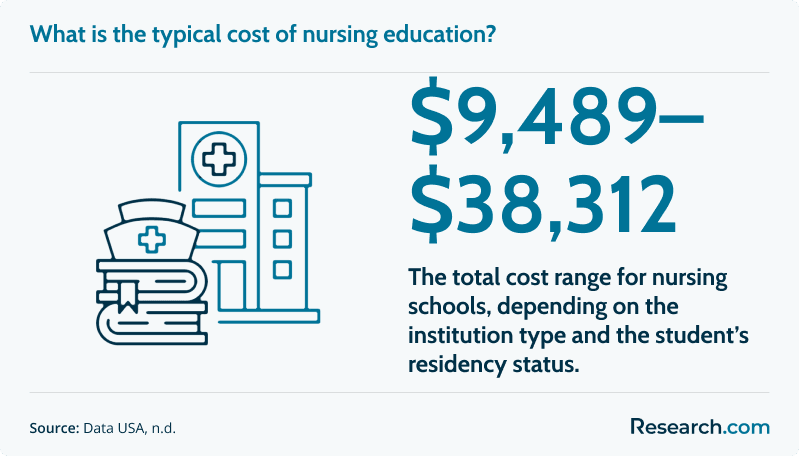
According to recent data, many students pay between $9,500 and $38,300 for the entire program, especially at public institutions for in-state learners. Affordable online RN-to-MSN options often range from $15,000 for indirect-care tracks to up toward $60,000 for clinical-focused or nurse practitioner tracks.
| Cost Factor | Why It Matters | Question to Ask |
| Transfer credits | More accepted credits can reduce both time and tuition | How many ADN, diploma, general education, and RN license credits will transfer? |
| Specialization | Nurse practitioner tracks may require more clinical preparation than nonclinical tracks | Does this concentration require additional practicum, lab, or campus attendance costs? |
| Tuition structure | Per-credit, per-term, and flat-rate tuition models can produce different total costs | What is the estimated full program cost after transfer credit review? |
| Fees and travel | Online students may still pay technology, clinical, graduation, or residency fees | Are there required campus visits, simulation labs, or in-person intensives? |
| Employer support | Hospital tuition reimbursement can lower out-of-pocket costs | Does my employer cover bridge or graduate nursing coursework? |
To evaluate affordability more clearly, compare the cheapest online BSN options with the most affordable online MSN programs and request a written cost estimate from each school before applying.
Financial Aid Options for Online RN to BSN to MSN Students
Nurses often combine several funding sources to make bridge programs more affordable. Before borrowing, confirm whether the school participates in federal aid, whether your program is eligible, and whether graduate-level tuition begins before or after the BSN portion.
- Federal financial aid: Eligible students may complete the FAFSA to be considered for grants, federal loans, and work-study opportunities.
- Nursing scholarships and grants: Universities, professional nursing groups, hospitals, foundations, and healthcare organizations may offer awards for nursing students.
- Employer tuition reimbursement: Hospitals and healthcare systems may help pay for RN-to-BSN, MSN, or bridge coursework when the degree supports workforce needs.
- State and local programs: Some states offer scholarships, loan repayment, or forgiveness programs for nurses who work in underserved communities.
- Military and veteran benefits: Active-duty service members, veterans, and eligible family members may qualify for GI Bill® benefits or other education support.
If your long-term goal is executive-level nursing leadership rather than MSN-level management, compare bridge options with a nurse leadership DNP online pathway after reviewing cost, time, and role requirements.
Common Courses in Online RN to BSN to MSN Programs
RN to BSN to MSN programs are designed to move licensed nurses from professional undergraduate completion into graduate-level practice, leadership, education, or administration. The exact curriculum depends on the school and specialization, but most programs include two major academic stages.
| Course Level | Common Topics | Purpose |
| BSN-level coursework | Community and Public Health Nursing; Nursing Research and Evidence-Based Practice; Leadership and Management in Nursing; Health Assessment and Promotion; Population Health and Healthcare Policy | Builds bachelor’s-level preparation in research, systems thinking, population care, and professional nursing leadership |
| MSN-level core coursework | Advanced Pathophysiology, Pharmacology, and Health Assessment; Nursing Theory and Professional Practice; Healthcare Systems, Finance, and Policy; Advanced Practice Roles and Leadership | Prepares students for graduate-level decision-making, advanced clinical reasoning, and leadership responsibilities |
| Specialty and practicum work | Family Nurse Practitioner, Nurse Educator, Nurse Administration, other concentration-specific courses, clinical practicum, and/or capstone project | Connects graduate study to a defined career role and may support certification preparation |
Students who want to become family nurse practitioners should examine clinical hour requirements, state authorization rules, certification preparation, and course sequencing carefully. You can also compare easy nurse practitioner programs to understand how FNP coursework and admissions requirements vary.
The chart below shows the largest employers of nurse anesthetists, nurse midwives, and NPs. Physicians' offices lead, employing 49% of these advanced practice registered nurses. This distribution helps illustrate why MSN-prepared nurses may find opportunities across clinical, educational, and administrative settings.
How to Choose the Best Online RN to BSN to MSN Program
Choosing a bridge program should be a structured comparison, not a quick decision based on tuition or ranking alone. Start with your target role, then work backward to the degree, specialization, certification, and clinical requirements needed to qualify.
- Verify accreditation: Look for nursing accreditation through the Commission on Collegiate Nursing Education (CCNE) or the Accreditation Commission for Education in Nursing (ACEN), and confirm institutional accreditation as well.
- Match the specialization to your career goal: A nurse educator track, nurse administration track, and family nurse practitioner track prepare students for different roles.
- Ask about clinical placement support: Online programs vary widely in how much help they provide with practicum sites and preceptors.
- Check state authorization and licensure fit: Confirm that the program can enroll students in your state and that the clinical track aligns with your state’s requirements.
- Review pace and flexibility: Compare part-time, full-time, accelerated, synchronous, and asynchronous options based on your work schedule.
- Calculate full cost: Include tuition, fees, books, background checks, immunizations, clinical travel, campus intensives, and lost work hours.
- Evaluate outcomes carefully: Ask for graduation rates, certification pass rates, practicum placement support, and alumni employment information.
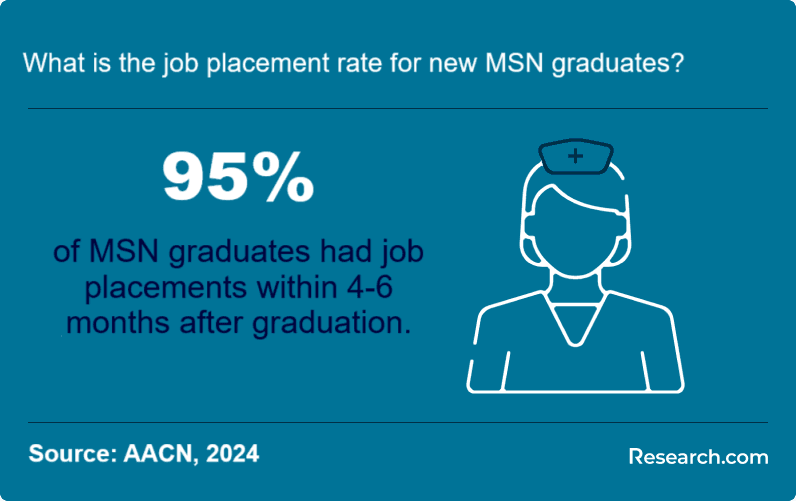
When comparing RN to MSN online programs, do not rely only on advertised job outcomes. For example, if a school states that MSN graduates have 95% job placement within 4 to 6 months after graduation, ask how the school defines placement, which programs are included, how many graduates responded, and whether the figure applies to your chosen specialization.
| Before You Enroll, Ask | Why the Answer Matters |
| Will I earn the BSN before the MSN, or only at the end? | This affects your ability to use the BSN for promotion or employment if you pause graduate study. |
| Who finds clinical placements? | Some online students must secure their own preceptors, which can delay graduation. |
| Is the program approved for students in my state? | State authorization and clinical placement rules can affect enrollment and licensure eligibility. |
| What happens if I reduce my course load? | Part-time changes may alter tuition, aid eligibility, and graduation timelines. |
| Are campus visits required? | Residencies, labs, or intensives can add travel expenses and scheduling challenges. |
Online vs. On-Campus RN to BSN to MSN Programs
Online and campus-based RN to BSN to MSN programs may cover similar academic content, but the learning experience, schedule, clinical logistics, and networking environment can differ. The better format depends on how you learn, how predictable your work schedule is, and how much in-person support you need.
| Factor | Online RN to BSN to MSN | On-Campus RN to BSN to MSN |
| Course delivery | Often asynchronous or hybrid, allowing nurses to complete coursework around shifts | Usually requires scheduled class attendance and more fixed weekly routines |
| Flexibility | Best for working nurses who need location and schedule flexibility | Best for students who prefer structured in-person learning |
| Clinical requirements | Clinical hours are still completed in person, often in the student’s local area when approved | Clinical placements may be tied to nearby partner hospitals or clinics |
| Networking | Uses discussion boards, video meetings, virtual group work, and online faculty interaction | Provides face-to-face access to classmates, faculty, labs, and campus resources |
| Cost considerations | May reduce commuting, relocation, and housing expenses, but fees and clinical travel still matter | May provide more on-site resources but can increase commuting or relocation costs |
Nurses interested in advanced pediatric care may eventually compare MSN pathways with a DNP pediatric primary care nurse practitioner program. Those who want to teach in nursing programs or staff development settings may also consider an online MSN nursing education program.
Career Outlook for Online RN to BSN to MSN Graduates
Graduates of online RN to BSN to MSN bridge programs may pursue advanced practice, nursing education, management, leadership, informatics, or administrative roles, depending on the MSN concentration completed. Career outcomes are not automatic; they depend on licensure, certification, clinical experience, location, employer demand, and specialization.
According to the U.S. Bureau of Labor Statistics (BLS), employment of nurse practitioners, nurse midwives, and nurse anesthetists is projected to grow by 40% from 2023 to 2033, much faster than the average for all occupations. The BLS also projects about 31,900 openings for nurse anesthetists, nurse midwives, and nurse practitioners each year, on average, across that same 10-year period.
MSN-prepared nurses may move into roles such as nurse practitioner, nurse educator, or nurse administrator. Nurse practitioner or MSN salary, according to BLS, can average $132,000 a year. Actual earnings vary by role, employer, state, specialty, experience, and work setting.
According to BLS, nurse anesthetists, nurse midwives, and NPs held about 349,600 jobs in 2023. The chart below shows the breakdown.
What Graduates Say About Online RN to BSN to MSN Programs
- Lucinda: "I did not think I could manage full-time work, family responsibilities, and graduate school at the same time. The online RN to BSN to MSN format gave me enough flexibility to keep practicing while moving toward a nurse practitioner role. I reached my goal without having to step away from my career."
- Lou: "The online structure let me study around my schedule, but I still had access to faculty feedback and class discussions. The leadership and advanced clinical content helped me apply new ideas in my workplace almost immediately. For me, online learning did not mean learning alone."
- Danielle: "What helped most was the clear transition from BSN-level courses into MSN work. I could complete online classes while arranging practical experiences close to home. That structure helped me move into nursing education with more confidence."
Should You Choose an Accelerated BSN Instead?
An accelerated BSN is a different option from an RN to BSN to MSN bridge program. ABSN programs are usually designed for students who already hold a non-nursing bachelor’s degree and want to become registered nurses. By contrast, RN to BSN to MSN programs are for licensed RNs who want to build on existing nursing education and move into graduate study.
An accelerated BSN may be appropriate if you are not yet an RN and need prelicensure nursing preparation. If you are already licensed as a registered nurse, an RN to BSN, RN to MSN, or RN to BSN to MSN pathway will usually be more relevant. To compare prelicensure options, review the best accelerated BSN program choices and confirm NCLEX preparation, clinical placement, and state approval requirements.
Student Support Services to Look for in Online RN to BSN to MSN Programs
Support services can make a major difference for working nurses, especially in programs that include graduate coursework and clinical placements. Before enrolling, ask how the school supports online students from admission through graduation.
- Academic advising: Advisors should help map transfer credits, degree milestones, course sequencing, and progression from BSN to MSN work.
- Clinical coordination: Strong programs provide clear guidance on practicum requirements, site approvals, preceptor documentation, and state rules.
- Faculty access: Online students should have reliable ways to reach instructors through office hours, messaging, video meetings, or course platforms.
- Technical support: Because coursework is online, responsive help with learning platforms, exams, and software is essential.
- Library and research resources: Graduate nursing students need access to databases, evidence-based practice tools, citation help, and research support.
- Career services: Resume guidance, interview preparation, certification planning, and employer connections can help students move into advanced roles.
- Peer connection: Discussion boards, cohort models, virtual study groups, and online networking can reduce isolation.
Students comparing accelerated pathways and flexible admissions may also review easy ABSN online programs, but remember that ABSN programs serve a different purpose than RN bridge programs.
Common Mistakes to Avoid
| Mistake | Why It Can Hurt You | Better Approach |
| Choosing a program without checking nursing accreditation | Accreditation can affect certification eligibility, employer recognition, and academic transfer options | Confirm CCNE or ACEN accreditation and institutional accreditation before applying |
| Looking only at tuition per credit | A lower per-credit rate may not mean a lower total cost if the program requires more credits or extra fees | Request a full cost estimate after transfer credit review |
| Assuming online means no in-person requirements | Clinical, practicum, simulation, or residency requirements may still require in-person attendance | Ask for a complete list of campus visits and clinical obligations |
| Ignoring state authorization | A program may not be able to place students or meet requirements in every state | Confirm enrollment eligibility and clinical placement rules for your state |
| Picking a specialization too quickly | Changing tracks later may add credits, delay graduation, or affect certification plans | Research target roles, certification exams, and employer expectations before choosing |
| Relying only on rankings | A highly ranked program may not fit your schedule, budget, state, or specialty needs | Use rankings as a starting point, then compare program fit and outcomes |
Key Insights
- Online RN to BSN to MSN programs are best for licensed RNs who want both bachelor’s and master’s-level progression without leaving the workforce.
- RN-to-MSN programs may be faster, but RN-to-BSN-to-MSN pathways offer the added value of a BSN milestone if you need to pause or qualify for employer advancement.
- Most programs include online coursework, but clinical and practicum requirements still take place in person.
- Accreditation, state authorization, specialization fit, clinical placement support, and total cost should matter more than ranking position alone.
- Completion time commonly depends on transfer credits, course load, and MSN concentration, with many programs taking about 2.5 to 4 years.
- Cost can vary widely, so compare total tuition, fees, transfer credits, clinical expenses, and employer reimbursement before committing.
- Career outlook is strongest when the MSN concentration aligns with licensure, certification, and employer demand in your state or region.
References
- American Association of Colleges of Nursing. (2024, June). The Impact of Education on Nursing Practice. AACN.
- Hanson, M. (2024, August 31). Cost of Online Education vs. Traditional Education. Education Data Initiative.
- Smiley, R.A. et al. (2023, April). The 2022 National Nursing Workforce Survey. Journal of Nursing Regulation.
- United States Bureau of Labor Statistics. (2025, August 16). Occupational Employment and Wage Statistics Query System. BLS.
- United States Bureau of Labor Statistics. (2025, April 18). Occupational Outlook Handbook | Nurse Anesthetists, Nurse Midwives, and Nurse Practitioners. BLS.
- University of St. Augustine for Health Sciences. (2024, November 20). 60 Key Nursing Statistics and Trends for 2024. USA.edu.
Other Things You Should Know About the Best Online RN to BSN to MSN Programs
Eligibility for RN to BSN to MSN bridge programs in 2027 typically requires an active RN license and an associate degree in nursing or a diploma. Some programs may also require a minimum GPA and relevant clinical experience. Exact criteria can vary by institution.
In 2027, typical admission requirements for RN to BSN to MSN bridge programs include an active RN license, an associate degree or diploma in nursing, a minimum GPA (often around 3.0), and completion of prerequisite courses. Some programs may also require professional experience and letters of recommendation.
In 2027, RN to BSN to MSN bridge programs often include advanced coursework that covers material found in national certification exams. However, students should verify with individual programs as not all may automatically lead to eligibility for specific certifications. It's crucial to ensure the program aligns with your career goals.