2027 Most Affordable Online MSN in Care Coordination Programs

Co-Founder and Chief Data Scientist
Choosing an online MSN in care coordination is a career decision, not just a degree decision. The right program can help experienced nurses move into roles focused on care transitions, chronic disease management, quality improvement, patient advocacy, and interdisciplinary team leadership. The wrong program, however, may cost more than expected, offer limited clinical placement support, or fail to align with your state, employer, or long-term advanced practice goals.
This guide explains how online MSN in care coordination programs work, what they cost, how long they take, what courses and specializations to expect, and how to compare accredited options. It is designed for RNs, BSN-prepared nurses, ADN-prepared nurses considering bridge pathways, and nursing professionals who want a practical way to evaluate program value before applying.
Quick answer: Is an online MSN in care coordination worth considering?
An online MSN in care coordination may be worth considering if you are a licensed nurse who wants to move beyond bedside care into patient navigation, care management, population health, quality improvement, or nursing leadership. The field is tied to strong nursing demand: between 2023 and 2033, an average of around 194,500 job openings for registered nurses (RNs) are expected each year in the United States. RNs earned a median annual wage of $93,600 in May 2024 [US Bureau of Labor Statistics (BLS), 2025].
The degree is especially relevant for nurses who want to help patients move safely across care settings, reduce gaps in communication, and manage complex health needs. It is not the same as a nurse practitioner program, though some students may later pursue advanced practice pathways depending on the program, state requirements, and certification goals.
What are the benefits of getting an online MSN in care coordination?
- It can support advancement into coordination-focused nursing roles. An online MSN in care coordination can help prepare nurses for roles such as licensed practical nurse (LPN), registered nurse (RN), nurse care coordinator, clinical nurse coordinator, case manager, or leadership-oriented nursing positions, depending on the graduate’s prior license, experience, and employer requirements.
- It may improve earning potential, but salaries vary by role and setting. In May 2024, LPNs and LVNs in the US earned a median annual wage of $62,340, while RNs earned $93,600 (US BLS, 2025). As of May 2025, clinical nurse coordinators in the country had an average annual salary of $99,666, while roles that entail an MSN in care coordination had an average annual salary of $172,199 in the same year (ZipRecruiter, 2025).
- It is built for working nurses who need flexibility. Online MSN programs often allow students to complete didactic coursework while remaining employed. Many programs use discussion boards, case-based assignments, virtual simulations, and interdisciplinary projects that reflect real care coordination work.
- It develops skills employers increasingly value. Care coordination depends on communication, evidence-based practice, health systems knowledge, data awareness, discharge planning, patient education, and collaboration across physicians, nurses, social workers, pharmacists, and community providers.
What can I expect from online MSN in care coordination programs?
Online MSN in care coordination programs combine graduate-level nursing theory with practical training in patient-centered care management. Students typically study healthcare systems, evidence-based practice, population health, chronic disease management, quality improvement, ethics, informatics, leadership, and patient advocacy.
Most programs are designed for licensed nurses who need to keep working while earning a graduate degree. Courses may be asynchronous, synchronous, or a blend of both. Even when coursework is fully online, students should expect applied assignments, group collaboration, faculty feedback, and clinical or practicum experiences that connect classroom learning to real patient care settings.
The strongest programs do more than teach theory. They show students how to coordinate services, communicate across disciplines, identify barriers to care, support high-risk patients, use data to improve outcomes, and lead care teams through complex healthcare processes.
What does care coordination mean in nursing?
Care coordination is the organized management of a patient’s healthcare needs across providers, services, and settings. In practice, this can include discharge planning, follow-up scheduling, medication reconciliation support, patient education, chronic disease monitoring, referral management, and communication with families or caregivers.
For example, a nurse care coordinator may help a patient with diabetes, heart disease, and limited transportation move from hospital discharge to home care, primary care follow-up, specialist visits, medication access, and community support. The goal is not only to complete tasks, but to prevent missed care, duplicated services, avoidable complications, and unnecessary readmissions.
Where can I work with an online MSN in care coordination degree?
An online MSN in care coordination can be useful in many healthcare environments because patients often move across multiple systems of care. Students may enter these programs with different backgrounds, including a bachelor of science in nursing (BSN), an associate degree in nursing (ADN) with RN licensure, or an advanced practice registered nurse (APRN) background. Career options depend on prior education, license type, clinical experience, employer expectations, and state regulations.
In 2023, the estimated 3.3 million RNs in the US were largely employed by the following organizations or industries (US BLS, 2025):
- Hospitals (State, Local, and Private): 58%
- Ambulatory Healthcare Services: 19%
- Government: 6%
- Nursing and Residential Care Facilities: 5%
- Educational Services (State, Local, and Private): 3%
| Work setting | How care coordination is used | Good fit for nurses who want to |
| Hospitals | Discharge planning, transition-of-care support, readmission reduction, interdisciplinary communication | Coordinate complex acute-care cases and work with large clinical teams |
| Ambulatory healthcare services | Chronic disease follow-up, referrals, medication support, preventive care tracking | Support patients over time in outpatient or community-based settings |
| Government | Public health initiatives, veteran care, population health programs, care access support | Work with system-level programs and underserved populations |
| Nursing and residential care facilities | Long-term care planning, family communication, transitions between facilities and hospitals | Focus on older adults, rehabilitation, and post-acute care |
| Educational services | Nursing instruction, clinical education, health program coordination | Teach, mentor, or support nursing workforce development |
How much can I make with an online MSN in care coordination degree?
Salary outcomes depend on job title, nursing license, employer, location, specialty, years of experience, and whether the role includes leadership or advanced clinical responsibilities. In May 2024, registered nurses (RNs) across the US had a median annual wage of $93,600 (US BLS, 2025). As of May 2025, clinical nurse coordinators in the country had an average annual salary of $99,666, and roles that entail an MSN in care coordination had an average annual salary of $172,199 in the same year (ZipRecruiter, 2025).
For RNs, median annual wages also vary by industry. The following were the highest-paying industries listed in the source data (US BLS, 2025):
- Government: $106,480
- Hospitals (State, Local, and Private): $97,260
- Ambulatory Healthcare Services: $83,780
- Nursing and Residential Care Facilities: $81,820
- Educational Services (State, Local, and Private): $74,360
Before enrolling, compare the program’s total cost with realistic career outcomes in your local labor market. A salary average does not guarantee earnings, and some care coordination roles may pay differently depending on whether they are classified as RN, case management, clinical leadership, utilization review, population health, or advanced practice positions.
- List of Online MSN Care Coordination Programs for 2027
- How long does it take to complete an online MSN in care coordination program?
- How does an online MSN in care coordination program compare to an on-campus program?
- What is the average cost of an online MSN in care coordination program?
- What are the financial aid options for students enrolling in an online MSN in care coordination program?
- What are the prerequisites for enrolling in an online MSN in care coordination program?
- What courses are typically in an online MSN in care coordination program?
- Are these online MSN programs accredited and how do they meet professional standards?
- What are the student outcomes and success metrics for online MSN in care coordination programs?
- What types of specializations are available in online MSN in care coordination programs?
- What challenges might students face in online MSN in care coordination programs?
- How do you choose the best online MSN in care coordination program?
- What career paths are available to graduates of online MSN in care coordination programs?
- What is the job market like for graduates of online MSN in care coordination programs?
- Could an Online MSN in Care Coordination Program Facilitate a Transition to a Direct Entry NP Role?
List of Online MSN Care Coordination Programs for 2027
The following programs were selected to help nurses compare online MSN options related to care coordination, population health, nursing leadership, and adjacent advanced nursing pathways. The list is based on the research methodology used by the Research.com team. Data sources include the IPEDS database, Peterson's database, the College Scorecard database, and the National Center for Education Statistics.
Use this list as a starting point, not a final decision. Always confirm tuition, accreditation, practicum requirements, state authorization, admission standards, and curriculum details directly with the school before applying.
1. Capella University
Capella University offers an accredited online MSN in care coordination with two learning formats: FlexPath and GuidedPath. The curriculum includes seven core courses, four specialization courses, and two practicum courses. Students study topics such as care coordination healthcare models, care coordination structure and process, and care coordination leadership.
- Program Length: 12 months to 28 months
- Area of Specialization: Care Coordination
- Cost per Credit: $450 (GuidedPath learning format)
- Required Credits to Graduate: 54 credits
- Accreditation: Higher Learning Commission (HLC); Commission on Collegiate Nursing Education (CCNE)
2. Nebraska Methodist College
Nebraska Methodist College offers an accredited online MSN in care coordination. Coursework includes leadership in an advanced nursing specialty role, population health in a global society, and healthcare systems management in care coordination. Applicants must hold a BSN from a state-approved nursing program or a program accredited by a professional nursing accreditor, such as the CCNE.
- Program Length: 2 years
- Area of Specialization: Care Coordination
- Cost per Credit: $588
- Required Credits to Graduate: 39 credits
- Accreditation: HLC; CCNE
3. Caldwell University
Caldwell University provides an online MSN in population health through its School of Nursing and Public Health. Students complete courses such as advanced health assessment, advanced pathophysiology, and statistics for population health. Courses are offered asynchronously in 7-week sessions throughout the academic year, with fall, spring, and summer start options.
- Program Length: 2 years (6 semesters of part-time study)
- Areas of Specialization: Healthcare Administration; Instructional Design & Curriculum; Palliative Care; Population Health
- Cost per Credit: $564
- Required Credits to Graduate: 36 credits
- Accreditation: Middle States Commission on Higher Education (MSCHE); CCNE
4. Western Governors University
Western Governors University (WGU) offers an online RN-to-MSN program in nursing leadership and management. The program includes 32 courses covering interprofessional communication and leadership in healthcare, comprehensive health assessment, and global and population health. Students also complete field experiences at approved facilities near their location.
- Program Length: At least 1 year
- Area of Specialization: Leadership and Management
- Cost per 6-month Term: $5,325 (Undergraduate Portion); $5,035 (Graduate Portion)
- Required Credits to Graduate: Not applicable
- Accreditation: Northwest Commission on Colleges and Universities (NWCCU); CCNE
5. Purdue Global
Purdue Global offers an online master’s degree in nursing with six specialty tracks. The curriculum covers organizational theory, healthcare finance, information technology, health policy, healthcare systems, advanced nursing roles, scientific and analytic approaches to advanced evidence-based practice, and clinical epidemiology and population health promotion.
- Program Length: 2 years
- Areas of Specialization: Adult-Gerontology Acute Care Nurse Practitioner; Adult-Gerontology Primary Care Nurse Practitioner; Executive Leader; Family Nurse Practitioner Primary Care; Nurse Educator; Psychiatric Mental Health Nurse Practitioner
- Cost per Credit: $420
- Required Credits to Graduate: 30 to 90 quarter credits
- Accreditation: HLC; CCNE
| School | Best fit | Key decision point |
| Capella University | Nurses who want a dedicated care coordination specialization with multiple pacing options | Compare FlexPath and GuidedPath carefully because pricing and pacing may affect total cost |
| Nebraska Methodist College | BSN-prepared nurses seeking a focused care coordination MSN | Review the 39-credit curriculum and practicum expectations before applying |
| Caldwell University | Nurses interested in population health and related public health-oriented roles | Confirm whether the population health focus matches your desired care coordination career path |
| Western Governors University | RNs seeking a leadership and management pathway that includes population health content | Understand the competency-based format and field experience requirements |
| Purdue Global | Nurses comparing MSN specialty tracks beyond care coordination | Check whether the selected track supports your state, licensure, and career goals |
How long does it take to complete an online MSN in care coordination program?
Most online MSN in care coordination programs take 1 to 3 years to complete. The actual timeline depends on your prior nursing education, whether you enroll full time or part time, how the program structures courses, and whether you need additional bridge or prerequisite coursework.
BSN-prepared nurses may complete some programs in 1 to 2 years through full-time or accelerated study. Nurses who hold an ADN may need a bridge pathway that includes additional upper-division nursing requirements. Students interested in moving quickly toward advanced clinical practice may also compare an accelerated NP program, though NP preparation has different clinical, certification, and licensure requirements than a care coordination MSN.
Practicum placement can also affect the timeline. Even online students usually need approved clinical or field experiences, and delays in securing a site or preceptor can extend completion time.
| Student background | Typical timeline consideration | What to verify before applying |
| BSN-prepared RN | Often the most direct MSN pathway | Required credits, practicum hours, and full-time versus part-time pacing |
| ADN-prepared RN | May need an RN-to-MSN or bridge structure | Whether BSN-level coursework is embedded and how many additional courses are required |
| Working nurse with limited weekly study time | Part-time enrollment may be more realistic | Maximum completion time, course availability, and practicum scheduling flexibility |
| Nurse seeking NP licensure later | Care coordination alone may not meet NP preparation requirements | Whether the program offers an NP track, post-master’s certificate options, or advising for advanced practice goals |
How does an online MSN in care coordination program compare to an on-campus program?
Online and on-campus MSN programs can lead to the same graduate credential, but the student experience can be very different. The best format depends on your work schedule, learning style, local clinical opportunities, and need for in-person networking.
| Factor | Online MSN in care coordination | On-campus MSN in care coordination |
| Schedule | Often more flexible, especially when courses are asynchronous | Usually follows set class times and campus attendance expectations |
| Best for | Working nurses, caregivers, rural students, and students who cannot relocate | Students who prefer in-person instruction, campus resources, and local faculty contact |
| Learning environment | Uses video lectures, online discussions, digital simulations, and virtual collaboration | Offers face-to-face interaction, in-person discussion, and campus-based networking |
| Clinical placement | May require students to identify local sites with school approval and support | May rely on established partnerships near the campus |
| Cost considerations | May reduce relocation and commuting expenses, but fees still apply | May include commuting, housing, parking, or campus-related costs |
Students trying to shorten their path may also research the shortest RN to MSN online program, but speed should not be the only factor. A fast program is only useful if it is accredited, manageable, affordable, and aligned with your career goals.
What is the average cost of an online MSN in care coordination program?
Tuition varies significantly by school and pricing model. Among the featured programs, Purdue Global lists a rate of $420 per quarter credit hour, Capella University’s GuidedPath learning format costs $450 per credit, Caldwell University charges $564 per credit hour, and Nebraska Methodist College lists tuition at $588 per credit.
Tuition is only one part of the total cost. Students should also ask about technology fees, course materials, background checks, drug screening, clinical compliance documents, travel to practicum sites, graduation fees, and possible costs tied to certifications or professional memberships. Nurses considering leadership-focused MSN pathways may also compare the cheapest online clinical nurse MSN programs to understand how program pricing differs across related specialties.
| Program cost factor | Why it matters | Question to ask the school |
| Tuition rate | The advertised cost may be per credit, per quarter credit, or per term | What is the estimated total tuition for my exact pathway? |
| Fees | Online programs may still charge technology, student service, or practicum-related fees | Which fees are mandatory, and are they included in the published estimate? |
| Transfer credits | Accepted credits can reduce total cost and time | How many credits can I transfer, and who evaluates them? |
| Practicum expenses | Students may pay for travel, compliance documents, or site requirements | What out-of-pocket costs are typical for clinical or field experiences? |
| Employer support | Tuition reimbursement can meaningfully reduce net cost | Does the program qualify for my employer’s reimbursement policy? |
The chart below provides a visualization of the cost per credit of online MSN in care coordination programs, according to current tuition data from the featured academic institutions.
What are the financial aid options for students enrolling in an online MSN in care coordination program?
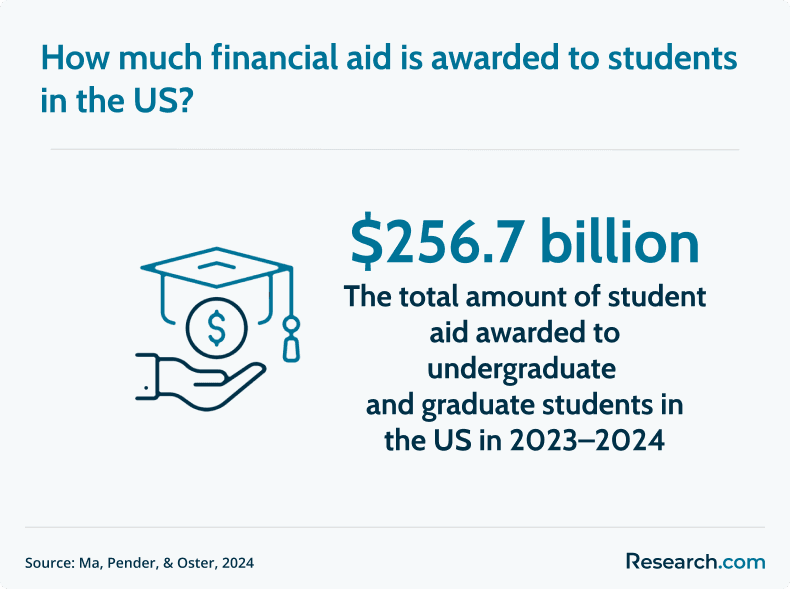
Students in online MSN in care coordination programs may be able to reduce costs through federal financial aid, scholarships, employer tuition assistance, payment plans, military or veteran benefits, and school-specific awards. Eligibility depends on enrollment status, school participation, program type, citizenship or residency requirements, academic progress, and award rules.
- NurseThink® - AACN Scholarship: The NurseThink® - AACN Scholarship is offered by the American Association of Colleges of Nursing (AACN). It supports students in master’s and doctoral nursing programs at AACN member institutions, particularly those preparing for nurse educator roles. Scholarship recipients will be given $5,000 twice a year until 2026.
- Deborah E. Trautman Future Nurse Leader Scholarship: The Deborah E. Trautman Future Nurse Leader Scholarship supports graduate nursing students who plan to become leaders in academic nursing. Qualified students are awarded a total of $3,500 each. The scholarship honors AACN president and CEO Dr. Deborah Trautman and is funded by Liaison International, the AACN’s partner in NursingCAS.
- Advancing Nurse Leadership in Post-Acute Care Scholarship: The Advancing Nurse Leadership in Post-Acute Care Scholarship provides $5,000 and complimentary registration to the American Association of Post-Acute Care Nursing (AAPACN) Conference. Applicants must be a US resident and registered nurse (RN) currently employed in post-acute care. Applicants must not have previously won this scholarship or the Cheryl M. Thomas Scholarship.
How to reduce the cost of an online MSN
- Ask your employer before applying. Many hospitals and health systems offer tuition reimbursement, but they may require approved schools, minimum grades, work commitments, or annual reimbursement limits.
- Compare total program cost, not only tuition per credit. A lower per-credit price can still lead to a higher total bill if the program requires more credits.
- Confirm transfer and bridge-credit policies. ADN-to-MSN and RN-to-MSN students should ask how previous coursework is applied.
- Look for nursing-specific scholarships early. Scholarship deadlines may occur months before the start term.
- Maintain satisfactory academic progress. Falling below required academic standards can affect financial aid eligibility.
What are the prerequisites for enrolling in an online MSN in care coordination program?
Admission requirements differ by institution, but most online MSN in care coordination programs expect applicants to demonstrate current nursing licensure, academic readiness, and the ability to complete graduate-level clinical or practicum requirements.
- Active RN license: Most programs require an active, unencumbered registered nurse license. This requirement is common across graduate nursing pathways, including management-focused programs such as the cheapest online MSN programs in health systems management.
- Prior nursing education: Many programs require a BSN, while others admit ADN-prepared RNs through bridge or RN-to-MSN options.
- Official transcripts and GPA review: Schools typically evaluate undergraduate performance to determine whether applicants are prepared for graduate nursing coursework.
- Professional materials: Applicants may need a resume, statement of purpose, letters of recommendation, proof of clinical experience, and documentation of current employment.
- Clinical compliance readiness: Programs with practicum requirements may require background checks, immunization records, CPR certification, drug screening, or site-specific documentation.
Because online students may complete clinical work in their home state, applicants should also ask whether the school is authorized to enroll students in their state and whether local practicum placement is feasible.
What courses are typically in an online MSN in care coordination program?
Online MSN in care coordination programs are designed to help nurses manage complex patient needs across healthcare systems. While course names vary, the curriculum usually blends advanced nursing theory, systems leadership, population health, quality improvement, and applied care management.
- Care Coordination and Case Management: Students learn how to develop care plans, coordinate services, support patients with chronic or complex conditions, and manage transitions between care settings.
- Health Policy and Advocacy: This course examines how laws, reimbursement systems, organizational policies, and public health priorities shape patient care and access.
- Population Health and Epidemiology: Students analyze health trends, disease prevention strategies, risk factors, and community-level interventions.
- Healthcare Systems and Quality Improvement: Coursework focuses on healthcare delivery structures, patient safety, process improvement, and methods for improving efficiency and outcomes. Similar system-level improvement skills are also emphasized in affordable online nurse midwifery MSN degree programs, though those programs prepare students for a different clinical specialty.
- Leadership and Interprofessional Collaboration: Students build communication, conflict resolution, team leadership, and collaborative decision-making skills for multidisciplinary healthcare environments.
| Course area | Skill developed | How it applies in practice |
| Care coordination | Patient navigation and service alignment | Helping patients move from hospital discharge to follow-up care and community support |
| Population health | Data-informed planning | Identifying high-risk groups and designing preventive interventions |
| Quality improvement | Process evaluation | Reducing avoidable errors, delays, or readmissions |
| Leadership | Team communication | Coordinating physicians, nurses, social workers, pharmacists, and outside providers |
| Health policy | Systems awareness | Understanding how reimbursement, regulation, and access issues affect patient care |
Are these online MSN programs accredited and how do they meet professional standards?
Accreditation is one of the most important checks when evaluating an online MSN in care coordination. Institutional accreditation confirms that the college or university meets broad academic standards, while nursing programmatic accreditation from organizations such as the Commission on Collegiate Nursing Education (CCNE) or the Accreditation Commission for Education in Nursing (ACEN) indicates that the nursing curriculum, faculty, clinical expectations, and outcomes have been reviewed against professional standards.
Accreditation can affect employer recognition, transfer credits, eligibility for some forms of financial aid, and future academic progression. Students who are planning a longer nursing education pathway should also compare how credits may transfer between programs. For example, nurses earlier in their academic journey may review options such as online RN to BSN programs no prerequisites when planning a step-by-step route toward graduate study.
How to verify accreditation before enrolling
- Check the school’s institutional accreditor on the school website and through official accreditation directories.
- Confirm nursing program accreditation, not just university-level accreditation.
- Ask whether accreditation applies to the exact MSN track you plan to enter.
- Verify whether the program accepts students from your state.
- If you plan to pursue NP certification later, ask whether the program meets the specific educational requirements for that route.
What are the student outcomes and success metrics for online MSN in care coordination programs?
Student outcomes help you judge whether a program supports students through graduation and into relevant roles. Useful indicators may include graduation rates, retention rates, practicum placement support, career services access, alumni employment patterns, certification outcomes when applicable, and student satisfaction data.
Prospective students should be careful with outcome claims. Ask whether the data applies to the exact MSN track, the whole nursing school, or the university overall. Also ask how recently the data was collected and whether it includes online students specifically. Students comparing budget-friendly nursing pathways can also review affordable RN programs to better understand how cost, completion, and program support differ across nursing education levels.
| Outcome metric | Why it matters | What to ask |
| Graduation rate | Shows whether students are completing the program | What is the graduation rate for online MSN students in this track? |
| Practicum placement support | Can affect time to completion | Does the school find sites, approve student-found sites, or only provide guidance? |
| Career support | Helps students translate the degree into advancement | Are resume reviews, interview preparation, and employer connections available? |
| Alumni outcomes | Shows where graduates actually work | What job titles do recent graduates hold? |
| Student support | Online learners need advising, technical help, and faculty access | How quickly do faculty and advisors respond to online students? |
What types of specializations are available in online MSN in care coordination programs?
Some online MSN programs offer a dedicated care coordination track, while others include related concentrations such as population health, nursing leadership, health systems management, healthcare quality, or executive leadership. Specializations help nurses align their coursework with the patient populations or healthcare problems they want to address.
- Chronic Care Management: This focus prepares nurses to coordinate long-term services for patients with ongoing conditions such as diabetes and heart disease. Students learn to design care plans, monitor needs, and support continuity of care.
- Geriatric Care Coordination: This option emphasizes the medical, social, emotional, and functional needs of older adults. It is relevant for nurses working with hospitals, nursing homes, home health agencies, rehabilitation settings, and family caregivers.
- Behavioral Health Integration: This specialization focuses on coordinating mental health and substance use support within primary care and broader healthcare systems. Students may study screening, referral processes, crisis response, and collaboration with behavioral health professionals.
- Population Health: This pathway focuses on community-level health needs, prevention strategies, data trends, and health equity.
- Leadership and Management: This direction can be useful for nurses who want supervisory, administrative, or systems improvement responsibilities.
Nurses following a critical care nursing career path may also benefit from care coordination training because critically ill patients often require multiple specialists, careful transitions, and strong communication across teams.
What challenges might students face in online MSN in care coordination programs?
Online MSN programs offer flexibility, but they are not easier than campus programs. Students must manage graduate coursework, work schedules, family responsibilities, clinical or practicum requirements, and technology demands without the structure of regular campus attendance.
- Time management: Working nurses may underestimate how many hours weekly readings, discussions, papers, and practicum planning require.
- Clinical placement pressure: Some online programs expect students to help identify local practicum sites, which can be challenging in competitive markets.
- Limited face-to-face networking: Online students need to be intentional about connecting with faculty, classmates, preceptors, and professional organizations.
- Technology barriers: Students must be comfortable with learning platforms, video tools, simulations, digital library resources, and online collaboration.
- Career-path confusion: A care coordination MSN may support leadership or coordination roles, but it may not automatically qualify a graduate for nurse practitioner licensure. Students comparing more direct advanced practice options may review direct entry NP programs for non nurses, especially if they do not already have a nursing background.
How do you choose the best online MSN in care coordination program?
The best online MSN in care coordination program is the one that matches your license, schedule, budget, state requirements, practicum access, and career target. Rankings and tuition lists can help, but they should not replace a careful program-by-program review.
- Start with accreditation: Look for recognized institutional accreditation and nursing accreditation such as CCNE. Accreditation is also essential in related fields, including affordable master's in healthcare quality and patient safety online programs.
- Match the curriculum to your career goal: Choose care coordination, population health, case management, leadership, or quality improvement based on the type of work you want after graduation.
- Understand clinical placement support: Ask whether the school arranges placements, assists with placements, or expects students to secure approved sites independently.
- Calculate the full cost: Include tuition, fees, books, practicum expenses, lost work time, and financing costs.
- Confirm state authorization: Online programs may not enroll students from every state or may have limitations tied to clinical placements.
- Assess faculty and advising access: Online students need responsive advisors, clear practicum coordination, and faculty who understand working nurses.
Questions to ask before applying
| Question | Why it matters |
| Is the MSN program accredited by a nursing accreditor? | Programmatic accreditation can affect employer recognition and future academic options |
| Does the program accept students from my state? | State authorization can affect enrollment and practicum eligibility |
| Who is responsible for finding practicum sites? | Placement delays can affect graduation timelines |
| What is the total estimated cost of the full program? | Per-credit tuition alone does not show the full financial commitment |
| Can I attend part time while working? | Many MSN students are employed nurses who need manageable pacing |
| What roles do graduates typically enter? | Graduate outcomes help you evaluate whether the program fits your goals |
| Will this program help me pursue NP licensure later? | Care coordination and nurse practitioner preparation are not automatically the same pathway |
Common mistakes to avoid
- Choosing the cheapest option without checking accreditation. Low tuition is not enough if the program does not meet professional standards.
- Assuming online means no clinical work. Many online MSN programs still require practicums or field experiences.
- Ignoring state authorization. A school may be online but still unable to enroll or place students in every state.
- Comparing tuition rates without comparing credit requirements. A lower price per credit may cost more overall if the program requires more credits.
- Assuming the degree guarantees a specific salary. Pay depends on location, employer, title, experience, and license level.
- Confusing care coordination with NP preparation. If your goal is advanced practice licensure, verify the exact curriculum and certification pathway.
What career paths are available to graduates of online MSN in care coordination programs?
Graduates may use an online MSN in care coordination to move into roles that involve patient navigation, clinical leadership, case management, transitions of care, population health, education, or quality improvement. The exact role depends on the graduate’s prior licensure, clinical experience, specialty preparation, and employer requirements.
- Registered Nurse (RN): MSN-prepared RNs may qualify for broader responsibilities in care planning, quality improvement, leadership, and patient-centered coordination. In 2024, RNs across the US had a mean annual wage of $98,430 (US BLS, 2025). Nurses interested in expanding into other advanced clinical specialties may also explore how to become a certified nurse midwife.
- Clinical Nurse Coordinator: Clinical nurse coordinators help manage care plans, coordinate services, support transitions, and improve communication for patients with complex needs. In 2025, clinical nurse coordinators working in the US had an average annual salary of $99,666 (US BLS, 2025).
- Nursing Instructor: Some graduates use their MSN to teach nursing students or support clinical education. They may bring care coordination expertise into classrooms, labs, or healthcare training environments. In 2024, nursing instructors in the US had a mean annual wage of $87,090 (US BLS, 2025).
Some graduates may also pursue a PACU nursing career path, where coordination, communication, and patient monitoring are essential during recovery from anesthesia and surgical procedures.
| Career path | Core responsibilities | Why an MSN in care coordination helps |
| Care coordinator or nurse navigator | Guide patients through appointments, referrals, treatment plans, and follow-up care | Builds skills in transitions of care, communication, and patient advocacy |
| Clinical nurse coordinator | Coordinate care delivery, support teams, monitor patient progress, and improve workflow | Develops leadership and systems-based care knowledge |
| Case manager | Assess needs, plan services, coordinate resources, and monitor outcomes | Strengthens care planning and interdisciplinary collaboration |
| Quality improvement nurse | Analyze processes, identify gaps, and support safer care delivery | Connects nursing practice with data, outcomes, and system improvement |
| Nursing instructor | Teach students, mentor clinical learners, and support nursing education | Graduate-level nursing preparation can support instructional roles |
The chart below provides a visualization of the average annual wages of nursing professionals in the US, according to 2025 data from the US BLS and Zip Recruiter.
What is the job market like for graduates of online MSN in care coordination programs?
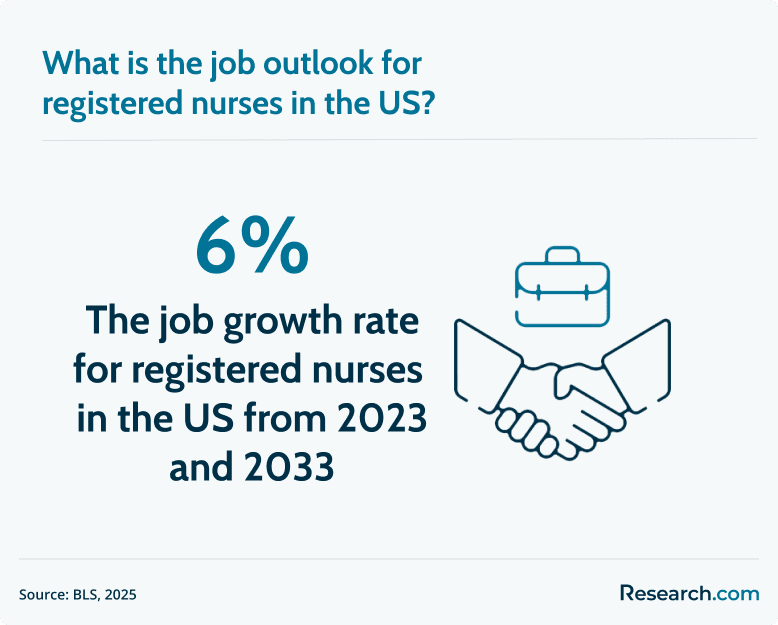
The job market for nurses with care coordination training is supported by ongoing demand for registered nurses and by healthcare systems’ need to manage complex patients more effectively. Employment for registered nurses (RNs) in the US is projected to grow by 6% between 2023 and 2033, with approximately 194,500 job openings expected annually during this period (US BLS, 2025).
Several healthcare pressures make care coordination important: an aging population, chronic disease management, hospital discharge complexity, value-based care initiatives, patient safety concerns, and the need for better communication across providers. Nurses with MSN-level preparation may be positioned for roles that involve care planning, patient education, quality improvement, transitions of care, and team leadership.
However, graduates should avoid assuming that the degree alone will automatically lead to a specific job title or salary. Employers may require relevant clinical experience, case management experience, leadership background, or specialty credentials. Some MSN-prepared nurses also move into advanced practice roles, which can influence broader APRN salary figures, but APRN roles require specific educational and certification pathways.
Current trends affecting care coordination nursing
- More attention to transitions of care: Hospitals and outpatient systems need nurses who can help patients move safely between acute care, home health, primary care, rehabilitation, and specialty services.
- Growth in chronic disease management: Patients with multiple long-term conditions often require coordinated follow-up, education, medication support, and provider communication.
- Technology-enabled care management: Nurses increasingly use electronic health records, telehealth, patient portals, remote monitoring tools, and data dashboards to track patient needs.
- Interdisciplinary care models: Care coordination depends on collaboration with physicians, pharmacists, social workers, behavioral health providers, community agencies, and caregivers.
- Employer focus on outcomes: Healthcare organizations may value nurses who can connect patient support with quality, safety, readmission, and satisfaction goals.
Could an Online MSN in Care Coordination Program Facilitate a Transition to a Direct Entry NP Role?
An online MSN in care coordination can strengthen advanced nursing skills in leadership, clinical management, patient advocacy, and interdisciplinary collaboration. Those competencies may be useful for nurses who later pursue a nurse practitioner pathway, but a care coordination MSN is not automatically the same as an NP program.
Students who want to become nurse practitioners should verify whether the program includes the required NP coursework, clinical hours, population focus, and certification preparation. Some graduates may need a separate NP track, post-master’s certificate, or a different graduate program. If your long-term goal is advanced practice, compare requirements early and review options such as a direct entry NP program to understand how NP-focused training differs from care coordination preparation.
Key Insights
- An online MSN in care coordination is best for nurses who want system-level patient care roles. It is especially relevant for care transitions, chronic disease management, case management, population health, quality improvement, and clinical coordination.
- Accreditation should be your first filter. Look for recognized institutional accreditation and nursing program accreditation, such as CCNE or ACEN, before comparing price or format.
- Total cost matters more than tuition per credit. Compare required credits, term pricing, fees, practicum expenses, transfer policies, and employer reimbursement options.
- Online does not mean practicum-free. Many programs require approved clinical or field experiences, so ask who finds placements and whether sites are available in your area.
- The degree can support advancement, but it does not guarantee a salary or job title. Outcomes depend on your license, experience, location, employer, and chosen career path.
- Care coordination and NP preparation are different pathways. If your goal is nurse practitioner licensure, verify the curriculum, clinical hours, certification eligibility, and state requirements before enrolling.
- The best program is the one that fits your actual career plan. Choose based on accreditation, curriculum match, flexibility, practicum support, cost, state authorization, and graduate outcomes—not rankings or speed alone.
References:
- Ma, J., Pender, M., & Oster, M. (2024). Trends in College Pricing and Student Aid 2024. College Board. https://research.collegeboard.org/media/pdf/Trends-in-College-Pricing-and-Student-Aid-2024-ADA.pdf
- National Center for Education Statistics. (2024, May). Graduate Degree Fields. https://nces.ed.gov/programs/coe/indicator/ctb/graduate-degree-fields
- US Bureau of Labor Statistics. (2025, April 18). Licensed Practical and Licensed Vocational Nurses. Occupational Outlook Handbook. https://www.bls.gov/ooh/healthcare/licensed-practical-and-licensed-vocational-nurses.htm
- US Bureau of Labor Statistics. (2025). May 2024 OEWS Profiles. Occupational Employment and Wage Statistics (OEWS) Profiles. https://data.bls.gov/oesprofile
- US Bureau of Labor Statistics. (2025, April 18). Nurse Anesthetists, Nurse Midwives, and Nurse Practitioners. Occupational Outlook Handbook. https://www.bls.gov/ooh/healthcare/nurse-anesthetists-nurse-midwives-and-nurse-practitioners.htm
- US Bureau of Labor Statistics. (2024, April 03). Occupational Employment and Wages, May 2023, 25-1072 Nursing Instructors and Teachers, Postsecondary. Occupational Employment and Wage Statistics. https://www.bls.gov/oes/2023/may/oes251072.htm
- US Bureau of Labor Statistics. (2025, April 18). Registered Nurses. Occupational Outlook Handbook. https://www.bls.gov/ooh/healthcare/registered-nurses.htm
- ZipRecruiter. (2025). Clinical Nurse Coordinator Salary. https://www.ziprecruiter.com/Salaries/Clinical-Nurse-Coordinator-Salary#Yearly
- ZipRecruiter. (2025). MSN Care Coordination Salary. https://www.ziprecruiter.com/Salaries/Msn-Care-Coordination-Salary
Other Things You Need to Know about Online MSN in Care Coordination Programs
Yes. The most credible online MSN in Care Coordination programs are accredited by the Commission on Collegiate Nursing Education (CCNE) or the Accreditation Commission for Education in Nursing (ACEN). Accreditation affects eligibility for federal aid, employer recognition, and future doctoral study.
Scholarships, grants, and federal financial aid are available for MSN in Care Coordination programs in 2027. Some schools may offer program-specific scholarships, and students can also apply for federal student aid through the FAFSA to reduce tuition costs.