
2027 Most Affordable Online MSN in Nurse Midwifery Programs

Co-Founder and Chief Data Scientist
Choosing an online MSN in nurse midwifery is a high-stakes decision: you are comparing tuition, accreditation, clinical placement support, certification eligibility, and the realities of training for an advanced practice role while often continuing to work as an RN. The field matters because the United States has around 3.67 million live births each year, and certified nurse-midwives help provide pregnancy, birth, postpartum, newborn, reproductive, and gynecologic care in hospitals, clinics, birth centers, and community settings.
This guide is designed for nurses and career changers who want an affordable route into nurse midwifery without sacrificing accreditation or certification readiness. It explains what online MSN nurse midwifery programs include, how long they take, what they cost, which schools are listed as affordable options, what admissions committees usually expect, and how to compare programs before applying.
Quick answer: Is an online MSN in nurse midwifery worth considering?
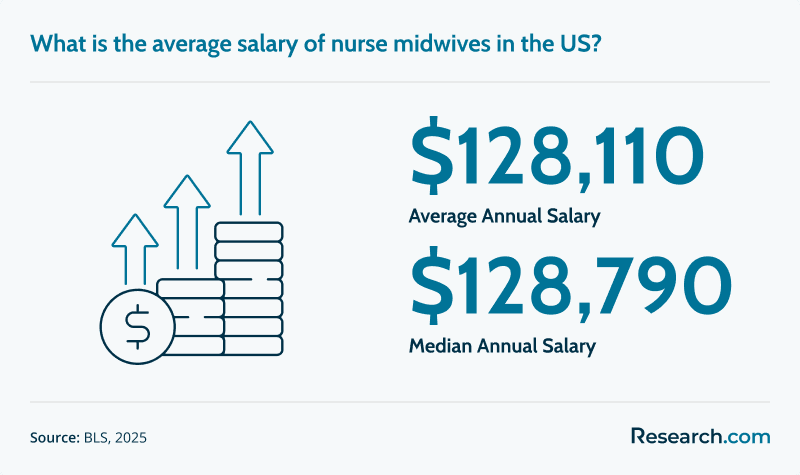
An online MSN in nurse midwifery can be a strong option for registered nurses who want advanced practice training, need schedule flexibility, and can complete in-person clinical hours near an approved site. Graduates typically pursue certification as certified nurse-midwives and may work in labor and delivery, birth centers, women’s health clinics, OB/GYN practices, public health programs, and academic settings. According to the United States Bureau of Labor Statistics, nurse midwives earn an average annual salary of $128,110 and a median annual salary of $128,790.
- Best fit: RNs who want to specialize in pregnancy, birth, reproductive health, postpartum care, and newborn care while keeping a flexible study schedule.
- Main advantage: Online coursework can reduce commuting and make graduate study more manageable for working nurses, although clinical training is still completed in person.
- Key requirement: Students should verify accreditation, certification eligibility, clinical placement policies, state authorization, and total cost before enrolling.
What can I expect from an online MSN in nurse midwifery?
An online MSN in nurse midwifery combines graduate nursing coursework, advanced practice preparation, and supervised clinical experience. Most didactic courses are delivered through a learning management system, while clinical requirements must be completed face-to-face in approved healthcare settings. Some programs also require short campus visits for orientation, skills labs, simulations, or clinical intensives.
The curriculum usually covers advanced health assessment, pathophysiology, pharmacology, antepartum care, labor and birth, postpartum care, newborn assessment, gynecologic care, reproductive health, evidence-based practice, leadership, ethics, and professional role development. Students learn how to assess patients, recognize complications, collaborate with physicians and healthcare teams, support physiologic birth when appropriate, and provide respectful, patient-centered care.
Clinical practicums are a central part of the degree. These experiences allow students to apply classroom learning under the supervision of qualified preceptors, often in hospitals, outpatient clinics, birth centers, OB/GYN practices, or community health settings. Before applying, students should ask whether the school finds placements, assists with placements, or expects students to secure their own approved sites.
| Program component | What students should expect | Why it matters |
| Online coursework | Graduate nursing and midwifery courses delivered remotely, sometimes with synchronous sessions | Allows working nurses to study with more flexibility than a fully campus-based format |
| Clinical training | In-person supervised practice at approved sites | Required for hands-on competency and certification preparation |
| Campus intensives | Some programs require short visits for skills assessment, simulation, or orientation | Adds travel costs and scheduling requirements that students should plan for early |
| Certification preparation | Coursework and clinical experiences aligned with nurse-midwifery practice expectations | Helps graduates prepare for the American Midwifery Certification Board exam when the program meets eligibility standards |
Where can I work with an online MSN in nurse midwifery?
Graduates of accredited nurse midwifery programs can pursue roles in several healthcare environments, depending on state scope-of-practice rules, employer needs, certification, experience, and clinical interests. CNMs are commonly associated with birth care, but their work often extends across reproductive, gynecologic, primary, prenatal, postpartum, and newborn care.
- Hospitals: CNMs may work in labor and delivery units, manage low-risk births, provide postpartum care, support breastfeeding, and coordinate care with physicians when higher-risk situations arise.
- Birth centers: These settings often focus on low-intervention care for low-risk pregnancies, with midwives leading prenatal, labor, birth, and postpartum services.
- Home birth practices: Some CNMs attend planned home births and provide prenatal, intrapartum, postpartum, and newborn care for patients who meet clinical eligibility standards.
- Private OB/GYN or midwifery practices: Nurse-midwives may provide routine reproductive care, prenatal visits, contraception counseling, preventive screenings, family planning, and postpartum follow-up.
- Community health clinics and FQHCs: CNMs often serve medically underserved communities by expanding access to maternal, reproductive, and women’s health services.
- Academic and teaching institutions: Experienced midwives may teach nursing or midwifery students, supervise clinical learning, or contribute to curriculum development.
- Public health and global health organizations: CNMs can work on maternal and infant health programs, community education, policy initiatives, and outreach projects.
How much can I make with an online MSN in nurse midwifery?
Salary outcomes vary by employer, state, scope of responsibilities, experience, clinical setting, and local demand. According to the United States Bureau of Labor Statistics, nurse midwives earn an average annual salary of $128,110 and a median annual salary of $128,790. That median is considerably higher than the collective median annual salary for all US jobs, which is $49,500.
The BLS reports that nurse midwives can earn around $74,670 to $177,040. New graduates and less experienced CNMs are more likely to start near the lower end of the range, while experienced professionals in high-paying regions or specialized settings may earn above the median.
- Most Affordable Online MSN in Nurse Midwifery Programs for 2027
- How long does it take to complete an online MSN in nurse midwifery?
- How does an online MSN in nurse midwifery compare to an on-campus program?
- What is the average cost of an online MSN in nurse midwifery?
- What are the financial aid options for students enrolling in an online MSN in nurse midwifery?
- What are the prerequisites for enrolling in online MSN in nurse midwifery programs?
- What courses are typically in an online MSN in nurse midwifery?
- What are the skills needed to become a successful nurse midwife?
- How do online MSN programs prepare you for certification success?
- What challenges might students face in an online MSN in nurse midwifery programs?
- What emerging trends are shaping online MSN nurse midwifery education?
- Can non-nursing graduates excel in nurse midwifery?
- How does an online MSN in nurse midwifery compare to online DNP programs?
- How to choose the best online MSN in nurse midwifery?
- What career paths are available for graduates of online MSN in nurse midwifery programs?
- What is the job market for graduates with an online MSN in nurse midwifery?
Most Affordable Online MSN in Nurse Midwifery Programs for 2027
How were these programs ranked?
Affordability matters, but it should never be evaluated apart from accreditation, clinical training, certification preparation, and program fit. To create this list, Research.com reviewed information from trusted education data sources, including the IPEDS database, College Scorecard, Peterson's database, and the National Center for Education Statistics.
Readers can review the broader ranking process on our methodology page. Program details can change, so applicants should confirm tuition, accreditation, campus visit requirements, clinical placement rules, and state authorization directly with each school before applying.
| School | Program length | Credits | Cost per credit | Accreditation listed |
| Texas Tech University | 2 years | 51 | $280.18 (in-state); 685.18 (out-of-state) | Accreditation Commission for Midwifery Education |
| Old Dominion University | 2 years | 52 | $620 (in-state); $640 (out-of-state) | Commission on Collegiate Nursing Education |
| East Carolina University | 2 years | 53 | $289.55 (in-state); $1,020.05 (out-of-state) | Accreditation Commission for Midwifery Education |
| Frontier Nursing University | 27-36 months | 55 | $705 | Accreditation Commission for Midwifery Education |
| Bethel University | 2-3 years | 57 | $887 | Accreditation Commission for Midwifery Education |
| Midwives College of Utah | 2 years | 32 | $475 | Midwifery Education Accreditation Council |
| Thomas Jefferson University | 3 years | 62 | $1,337 | Accreditation Commission for Midwifery Education |
| Stony Brook University | 2 years | 45 | $471 (in-state); $1,097 (out-of-state) | Accreditation Commission for Midwifery Education |
| University of Cincinnati | 2 years | 57 | $752 | Commission on Collegiate Nursing Education |
| Georgetown University | 27 months | 49 | $2,652 | Accreditation Commission for Midwifery Education |
1. Texas Tech University MSN Nurse Midwifery
Texas Tech University offers a 51-credit MSN Nurse Midwifery program delivered through distance education with limited on-campus requirements in Lubbock. The program can be completed full time or part time over two or more years and is designed to prepare graduates for the American Midwifery Certification Board exam. It holds ACME and CCNE accreditation.
Applicants are expected to have a BSN from an accredited school, meet prerequisite expectations in research and statistics, and satisfy track-specific requirements such as recent OB experience and a personal statement. Tuition is described as averaging $300–$400 per credit hour.
- Program Length: 2 years
- Required Credits to Graduate: 51
- Cost per Credit: $280.18 (in-state); 685.18 (out-of-state)
- Accreditation: Accreditation Commission for Midwifery Education
2. Old Dominion University Nurse Midwifery MSN Online Program
Old Dominion University offers a two-year online MSN Nurse Midwifery pathway that includes coursework from ODU and Shenandoah. Students complete advanced practice nursing coursework through ODU in the first year, then continue with nurse-midwifery-focused coursework from Shenandoah in the second year while completing clinical experiences in their local communities.
Graduates receive an MSN from ODU and a certificate of endorsement in nurse-midwifery from Shenandoah. The programs are accredited by CCNE and ACME, respectively. The pathway requires 45–52 credit hours, costs around $620–$642 per credit hour, and is intended for full-time students with a BSN, an active RN license, and at least one year of recent clinical experience.
- Program Length: 2 years
- Required Credits to Graduate: 52
- Cost per Credit: $620 (in-state); $640 (out-of-state)
- Accreditation: Commission on Collegiate Nursing Education.
3. East Carolina University Master of Science in Nursing – Nurse Midwifery
East Carolina University offers a nurse-midwifery program through its College of Nursing for registered nurses preparing for safe, competent practice and eligibility for the American Midwifery Certification Board exam. Students may complete either an MSN or a Post-Master’s Certificate. The 53-credit curriculum is available in full-time and part-time formats and generally takes over two years.
Admission requirements include a BSN from an accredited program, an unrestricted RN license in North Carolina, one year of RN experience, a statement of purpose, a resume, and an interview. Prospective applicants can also attend virtual informational sessions offered throughout the year.
- Program Length: 2 years
- Required Credits to Graduate: 53
- Cost per Credit: $289.55 (in-state); $1,020.05 (out-of-state)
- Accreditation: Accreditation Commission for Midwifery Education
4. Frontier Nursing University Nurse-Midwifery Program
Frontier Nursing University provides a nurse-midwifery program for registered nurses who want to become Certified Nurse-Midwives through a distance-learning model. Students complete online coursework and arrange clinical practicums in their home communities.
Learners may enroll full time or part time while completing a Master of Science in Nursing or a Post-Graduate Certificate, with an option to continue into a Doctor of Nursing Practice. The program includes two campus immersion experiences and 750 clinical hours. Applicants need an active RN license, one year of nursing experience, official transcripts, and a minimum 3.0 GPA in the nursing major. FNU is described as the oldest and largest continuously operating nurse-midwifery program in the United States.
- Program Length: 27-36 months
- Required Credits to Graduate: 55
- Cost per Credit: $705
- Accreditation: Accreditation Commission for Midwifery Education
5. Bethel University Nurse-Midwifery Program
Bethel University offers an online Master of Science in Nurse-Midwifery that prepares registered nurses to deliver holistic, ethical, and compassionate care across the lifespan, with attention to reproductive and primary healthcare. Students can choose two- or three-year tracks, complete 57 credits, and participate in clinical experiences across 20 states.
The curriculum emphasizes diversity, health equity, and service to underserved communities. Small class sizes and experienced faculty are intended to provide more individualized academic support. Graduates may pursue CNM roles in hospitals, birth centers, clinics, education, or global health settings. Admission requires a BSN, RN licensure, a statistics prerequisite, and official transcripts.
- Program Length: 2-3 years
- Required Credits to Graduate: 57
- Cost per Credit: $887
- Accreditation: Accreditation Commission for Midwifery Education
6. Midwives College of Utah Master of Science in Midwifery
The Midwives College of Utah offers a Master of Science in Midwifery for current Certified Professional Midwives, CNMs, and experienced traditional or community midwives. The flexible graduate program takes two to four years and focuses on leadership, education, advocacy, research, ethics, holistic care, and equity in midwifery.
Students create individualized development plans and complete either a thesis or applied project. They also participate in professional development activities, such as presenting at conferences or publishing. The program requires 32 credits, a minimum GPA of 3.0, and successful oral and written defenses. It is accredited by the Midwifery Education Accreditation Council and can be completed full time or part time.
- Program Length: 2 years
- Required Credits to Graduate: 32
- Cost per Credit: $475
- Accreditation: Midwifery Education Accreditation Council
7. Thomas Jefferson University MS - Midwifery
Thomas Jefferson University offers a Master of Science in Midwifery that combines online coursework with hands-on clinical training for students preparing for CNM or Certified Midwife certification. The program starts with an on-campus orientation and includes two campus-based intensives for clinical skill development and collaboration.
The curriculum uses online seminars, case studies, simulations, service learning, and clinical placements with experienced preceptors. It is available to nurses and non-nurses, includes full-time and part-time enrollment options, requires 62 credits, and takes just over two years to complete. Applicants need a bachelor’s degree, relevant prerequisites, and either an active RN license or specific science and social science coursework for non-nurses.
- Program Length: 3 years
- Required Credits to Graduate: 62
- Cost per Credit: $1,337
- Accreditation: Accreditation Commission for Midwifery Education
8. Stony Brook University Master of Science - Nurse Midwifery
Stony Brook University offers a Master of Science in Nursing with a Nurse Midwifery concentration for registered nurses preparing to provide comprehensive women’s healthcare, with emphasis on normal birth in multiple care settings. The program is primarily distance-based but includes required on-site components.
Students complete 45 credits in core graduate nursing, research, pharmacology, health assessment, pathophysiology, and midwifery-specific clinical coursework. Admission requirements include a BSN, a minimum 3.0 GPA, an active RN license, relevant experience, prerequisite coursework in statistics and health assessment, and additional documentation after acceptance.
- Program Length: 2 years
- Required Credits to Graduate: 45
- Cost per Credit: $471 (in-state); $1,097 (out-of-state)
- Accreditation: Accreditation Commission for Midwifery Education
9. University of Cincinnati MSN Nurse-Midwifery
University of Cincinnati offers a part-time online Master of Science in Nursing in Nurse-Midwifery for working nurses who hold a BSN and have at least one year of RN experience. The program requires 57 credits, 784 clinical hours, 42 lab hours, and one required campus-based skills intensive.
The curriculum prepares graduates to pursue certification through the American Midwifery Certification Board while balancing academic rigor with flexibility. The CCNE-accredited program admits students three times a year and provides dedicated student success coordinators.
- Program Length: 2 years
- Required Credits to Graduate: 57
- Cost per Credit: $752
- Accreditation: Commission on Collegiate Nursing Education
10. Georgetown University Nurse-Midwifery/Women’s Health Nurse Practitioner Program
Georgetown University offers an online MS in Nursing Nurse-Midwifery/Women’s Health Nurse Practitioner program for registered nurses who want dual preparation in nurse-midwifery and women’s health. The 27-month, 49-credit program includes over 1,000 clinical hours and two in-person Objective Clinical Intensives.
Graduates are eligible for certification as both CNMs and Women’s Health Nurse Practitioners. The curriculum emphasizes holistic, culturally responsive, trauma-informed, person-centered care; health equity; reproductive and gynecologic health; and reducing systemic bias. Applicants must have a BSN or CNL/entry-level MSN, a current RN license, and meet GPA and prerequisite expectations. The program is accredited by ACME and CCNE.
- Program Length: 27 months
- Required Credits to Graduate: 49
- Cost per Credit: $2,652
- Accreditation: Accreditation Commission for Midwifery Education
How long does it take to complete an online MSN in nurse midwifery?
An online MSN in nurse midwifery usually takes 2 to 5 years, depending on prior education, enrollment pace, transfer credits, clinical placement availability, and whether the student enters with a BSN, an ADN, or a non-nursing bachelor’s degree. Some applicants compare this route with MSN direct entry programs online, especially when they do not already hold a nursing degree.
| Student background | Typical timeline | What affects completion time |
| BSN-prepared RN | 2 to 3 years full time; 3 to 4 years part time | Clinical scheduling, program structure, course load, and campus intensive requirements |
| RN with an ADN | 3 to 5 years | Bridge coursework, BSN-level requirements, graduate nursing courses, and clinical hours |
| Non-nursing bachelor’s degree holder | 3 to 4 years | Foundational nursing coursework, RN preparation, graduate courses, and midwifery clinicals |
| All pathways | Varies by program | Students generally complete 600 to 1,000+ supervised clinical hours, and some schools require campus visits |
Students who want a shorter route should look carefully at admission requirements and clinical sequencing before assuming an accelerated format will save time. Some learners explore accelerated NP programs, but faster does not always mean easier or cheaper once fees, clinical logistics, and work-hour reductions are included.
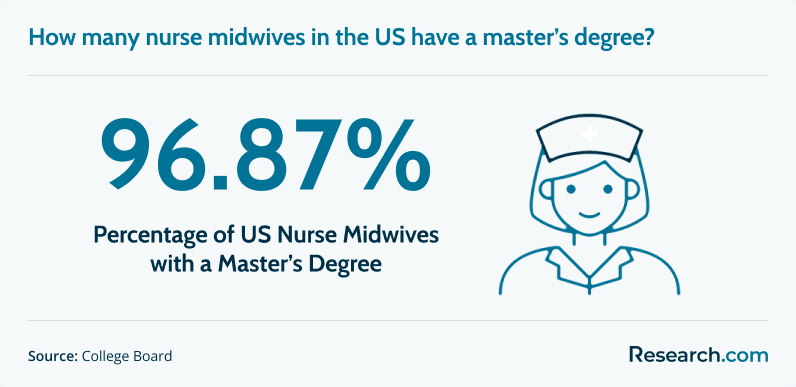
Research summarized by College Board shows that 96.87% of nurse midwives hold a master's degree, while 3.12% hold a bachelor's degree. That education profile reflects how central graduate-level preparation is for this advanced practice field.
How does an online MSN in nurse midwifery compare to an on-campus program?
Online and campus-based MSN nurse midwifery programs can both prepare students for advanced practice when they meet accreditation and certification standards. The better choice depends on how you learn, where you live, how much flexibility you need, and how much help you require with clinical placements. This same decision logic applies when comparing other specialized nursing degrees, including options such as the most affordable online MSN programs in patient safety and healthcare quality.
| Factor | Online MSN in nurse midwifery | On-campus MSN in nurse midwifery | Best for |
| Course delivery | Primarily virtual, often with asynchronous coursework | In-person classes at scheduled times | Online suits working nurses; campus suits students who prefer routine and face-to-face learning |
| Clinical training | Completed in person at approved local or regional sites | Completed in person through school-affiliated sites or regional partners | Students should compare how much placement support each program provides |
| Faculty access | Video meetings, online office hours, email, and discussion boards | In-person advising, office hours, and classroom interaction | Campus may feel more direct; online requires more self-advocacy |
| Flexibility | Often better for nurses with jobs, families, or location constraints | Less flexible but more structured | Online works best for disciplined learners with strong time management |
| Costs | May reduce commuting and relocation costs but can include technology, travel, and clinical fees | May include campus fees, commuting, housing, and relocation expenses | Students should compare total cost, not tuition alone |
| Resources | Digital library, remote advising, virtual simulation, and online support services | Physical labs, campus libraries, in-person simulation, and direct access to student services | Campus may be better for students who need frequent hands-on support |
What is the average cost of an online MSN in nurse midwifery?
The cost of an online MSN in nurse midwifery varies widely by school, residency status, credit requirements, fees, clinical placement expenses, and travel requirements. As with the most affordable online MSN public health nursing programs, students should compare total program cost rather than relying only on per-credit tuition.
- Per-credit tuition: Programs commonly charge by credit hour. Tuition typically ranges from $300 to $2,000 per credit hour, with many well-regarded programs falling between $500 and $1,200 per credit. Texas Tech University Health Sciences Center, for example, lists tuition rates between $300 and $400 per semester credit hour.
- Total program cost: The total cost of an online MSN in Nurse Midwifery generally falls between $30,000 and $70,000, depending on the institution and number of required credits. Old Dominion University estimates the full program cost at approximately $29,760 to $30,816.
- Additional expenses: Students may need to budget for books, technology fees, clinical site fees, background checks, immunizations, travel for intensives, professional liability coverage, and certification-related costs.
Salary can help frame return on investment, but it should not be treated as a guaranteed outcome. According to the BLS, the industries with the highest average annual salaries for nurse midwives are outpatient care centers ($164,080), general medical and surgical hospitals ($135,900), and local government units ($132,190).
| Cost item | Why students overlook it | Question to ask before enrolling |
| Campus intensives | Online programs may still require travel | How many visits are required, and where are they held? |
| Clinical placement costs | Fees may vary by site or state | Does the school arrange placements, or am I responsible for finding a preceptor? |
| Technology and course fees | They may not be included in advertised tuition | What mandatory fees apply each term? |
| Reduced work hours | Clinical rotations can conflict with full-time employment | How many hours per week should I expect during practicum terms? |
What are the financial aid options for students enrolling in an online MSN in nurse midwifery?
Students should plan financing before applying, not after receiving an admission offer. Funding options can affect whether a program is truly affordable, especially when clinical rotations reduce work hours. This planning approach is also useful for other graduate nursing pathways, including the most affordable online MSN pediatric nurse practitioner programs.
- Federal student aid: Graduate students commonly explore federal loan options such as Direct Unsubsidized Loans and Graduate PLUS Loans after submitting the FAFSA.
- Scholarships and grants: Nursing schools, foundations, hospitals, and professional organizations may offer awards for graduate nursing, maternal health, rural health, or midwifery students. The American College of Nurse-Midwives is one organization students often review for scholarship opportunities.
- Employer tuition assistance: Hospitals and healthcare systems may help fund advanced nursing education, sometimes in exchange for continued employment or service commitments.
- State and institutional aid: Some schools and states provide tuition support, grants, or scholarships for residents, nurses serving shortage areas, or students in high-need specialties.
- Military and veteran benefits: Eligible service members, veterans, and family members may use benefits such as the GI Bill.
- Payment plans and private loans: These options may help with short-term cash flow, but private loans often have less flexible repayment protections than federal aid.
| Funding source | Best use | Watch out for |
| Federal loans | Covering tuition and approved education costs | Borrow only what you need and understand repayment terms |
| Employer assistance | Reducing out-of-pocket tuition | Service commitments, grade requirements, or repayment clauses |
| Scholarships | Lowering total debt | Deadlines may be months before the program starts |
| Payment plans | Spreading costs across a term | Fees and due dates can vary by school |
What are the prerequisites for enrolling in online MSN in nurse midwifery programs?
Admissions requirements vary, but most online MSN nurse midwifery programs want evidence that applicants are academically prepared, clinically mature, licensed to practice, and ready for the demands of advanced practice education. Some programs are designed only for BSN-prepared RNs, while others offer bridge or direct-entry options.
- BSN or approved entry pathway: Many programs require a Bachelor of Science in Nursing from an accredited institution, although some offer ADN-to-MSN or non-nursing bachelor’s entry routes.
- Current RN license: Applicants generally need an active, unencumbered RN license in the United States. State licensure requirements may affect clinical placement eligibility.
- Minimum GPA: A minimum cumulative GPA is commonly required, often 3.0 on a 4.0 scale.
- Prerequisite coursework: Schools may require statistics, health assessment, pathophysiology, pharmacology, or related undergraduate courses, sometimes with a minimum grade such as "C" or higher.
- Clinical experience: Many programs prefer or require at least one year of full-time RN experience, particularly in labor and delivery, mother-baby, postpartum, or outpatient OB/GYN care.
- Recommendations: Applicants usually submit two to three academic or professional references, often including supervisors, nurse leaders, or nursing faculty.
- Personal statement: Most programs ask candidates to explain why they want to become nurse-midwives, how they understand the role, and what populations they hope to serve.
- Additional documentation: Interviews, background checks, drug screenings, immunizations, CPR certification, resumes, and English proficiency documentation may be required.
What courses are typically in an online MSN in nurse midwifery?
Coursework in an online MSN nurse midwifery program usually blends advanced practice nursing foundations with specialized midwifery content. Students should review course sequencing carefully because some clinical courses cannot be taken until prerequisites are complete.
- Advanced Health Assessment: Students learn to conduct comprehensive physical, emotional, social, reproductive, and pregnancy-related assessments.
- Advanced Pathophysiology: This course examines disease processes, physiologic changes, and conditions relevant to pregnancy, women’s health, and gynecologic care.
- Advanced Pharmacology: Students study medication use, prescribing principles, drug interactions, and safety considerations for obstetric and gynecologic patients.
- Gynecologic, Reproductive, and Sexual Health: This course covers contraception, fertility, sexually transmitted infections, menopause, preventive care, and reproductive health management.
- Antepartum Care: Students learn prenatal assessment, risk screening, diagnostic testing, patient education, and care planning during pregnancy.
- Intrapartum Care: This course focuses on labor, birth, maternal and fetal monitoring, pain management, clinical decision-making, and complications.
- Postpartum and Newborn Care: Students study postpartum recovery, lactation support, newborn assessment, and early newborn management.
- Primary Care of Women Across the Lifespan: This course prepares students to provide preventive and primary care from adolescence through menopause.
- Evidence-Based Practice and Research: Students learn to evaluate research, apply clinical evidence, and improve patient care through data-informed practice.
- Professional Role Development: This course explores ethics, leadership, advocacy, collaboration, scope of practice, and the professional responsibilities of nurse-midwives.
- Midwifery Practicum and Clinical Courses: Supervised clinical placements allow students to provide care under qualified preceptors and build real-world competency with patients and newborns.
What are the skills needed to become a successful nurse midwife?
Strong nurse-midwives need more than technical knowledge. They must combine clinical judgment, communication, cultural humility, emotional steadiness, patient education, and teamwork. Birth care can shift quickly, so the ability to recognize risk and collaborate appropriately is essential.
- Clinical and technical competence: CNMs must be comfortable with assessment tools, fetal and maternal monitoring, clinical procedures, documentation, and evidence-based protocols.
- Observation and assessment: Nurse-midwives monitor maternal and newborn well-being, identify normal progress, and recognize warning signs that require escalation.
- Critical thinking: They interpret complex information, weigh risks, anticipate complications, and make timely clinical decisions.
- Communication and counseling: CNMs explain options clearly, educate patients and families, provide emotional support, and document care accurately.
- Cultural competence: Effective care requires respect for patient values, family structures, language needs, trauma histories, and cultural expectations around birth and reproductive health.
- Collaboration: Nurse-midwives work with physicians, nurses, doulas, social workers, lactation consultants, and other professionals to coordinate safe care.
- Empathy and emotional support: Patients often rely on CNMs during vulnerable moments, including pregnancy complications, labor, postpartum recovery, loss, and reproductive health decisions.
- Commitment to lifelong learning: CNMs must keep current with research, clinical guidelines, technology, legal requirements, and professional standards.
Nurses who want to broaden their patient-care philosophy may also compare related advanced practice routes. For example, students asking what it takes to become a holistic nurse practitioner can review how holistic care models differ from nurse-midwifery preparation.
How do online MSN programs prepare you for certification success?
Accredited online MSN nurse midwifery programs typically align coursework and clinical experiences with certification expectations. Students may complete case-based assignments, simulation activities, skills intensives, exam review sessions, and supervised clinical rotations that build readiness for national certification. Some schools publish certification pass rates or provide structured mentoring, practice exams, review resources, and faculty advising.
Certification preparation should be evaluated before enrollment. Ask the program for recent pass-rate information, the number of graduates who sit for certification, how students are supported if they delay the exam, and whether graduates from your state have met eligibility requirements. Students comparing nursing pathways may also want to understand how clinical requirements differ across programs, including options such as RN to BSN online no clinicals.
What challenges might students face in online MSN in nurse midwifery programs?
Online study can be flexible, but nurse midwifery training is demanding. Students must manage graduate-level coursework, clinical shifts, family responsibilities, employment, travel, and certification preparation. The biggest challenge is often not the online coursework itself; it is coordinating clinical education and maintaining enough time for high-quality learning.
- Clinical placement uncertainty: Some schools provide strong placement support, while others expect students to help identify preceptors.
- Time pressure: Clinical rotations can make full-time employment difficult, especially during intensive practicum terms.
- Technology demands: Online courses require reliable internet, comfort with digital platforms, and the ability to troubleshoot quickly.
- Reduced peer connection: Students who prefer in-person learning may need to be intentional about building relationships with faculty and classmates.
- State authorization issues: Not every online program can enroll students or place students clinically in every state.
When reviewing student services, compare advising, technical support, clinical coordination, tutoring, library access, and career support. This evaluation is useful across online nursing pathways, including the most affordable online nursing programs.
What emerging trends are shaping online MSN nurse midwifery education?
Online nurse midwifery education is being shaped by broader changes in healthcare and graduate nursing education. Programs are increasingly using virtual simulation, telehealth scenarios, remote case discussions, digital patient documentation exercises, and hybrid skills intensives to prepare students for modern practice. These tools do not replace in-person clinical hours, but they can help students build decision-making skills before entering patient-care settings.
Employer expectations are also evolving. Graduates are expected to understand interprofessional care, health equity, culturally responsive practice, trauma-informed communication, digital health tools, and quality improvement. Students evaluating future-facing advanced practice education may also compare related options such as direct entry NP programs online.
Can non-nursing graduates excel in nurse midwifery?
Non-nursing graduates can pursue midwifery in some programs, but they should be realistic about the intensity of the pathway. Direct-entry routes often require foundational nursing coursework, RN preparation, graduate-level clinical courses, and midwifery-specific training. The timeline, cost, and clinical demands can be substantial.
Before choosing this route, non-nursing applicants should compare admissions requirements, licensure steps, clinical sequencing, support services, and whether the program leads to the credential they actually want. Reviewing direct entry NP programs for non nursing majors can help career changers understand how advanced practice nursing pathways differ by specialty.
How does an online MSN in nurse midwifery compare to online DNP programs?
An online MSN in nurse midwifery is primarily designed to prepare students for specialized clinical practice in maternal, reproductive, birth, postpartum, newborn, and women’s health care. By contrast, online DNP programs typically emphasize advanced leadership, evidence-based practice implementation, quality improvement, systems thinking, policy, and organizational change.
| Degree path | Main focus | Best for | Career direction |
| Online MSN in nurse midwifery | Clinical preparation for nurse-midwifery practice | RNs who want direct patient care roles in midwifery and women’s health | CNM practice, clinical care, birth center work, OB/GYN settings, community health |
| Online DNP | Advanced practice leadership, systems improvement, evidence translation, and policy | Nurses seeking the highest practice-focused doctoral credential | Clinical leadership, quality improvement, administration, advanced practice, policy, academia |
How to choose the best online MSN in nurse midwifery?
The best online MSN in nurse midwifery is not simply the cheapest program. It is the program that is accredited, authorized in your state, realistic for your schedule, transparent about costs, strong in clinical placement support, and aligned with your certification and career goals. These same evaluation criteria matter when comparing other advanced nursing and education pathways, such as affordable MSN to EdD programs online.
| Decision factor | What to verify | Why it matters |
| Accreditation | Confirm recognition from bodies such as the Accreditation Commission for Midwifery Education and the Commission on Collegiate Nursing Education where applicable | Accreditation affects certification eligibility, employer recognition, and educational quality |
| Clinical placement support | Ask whether the school arranges sites, supports student searches, or requires students to find preceptors independently | Clinical delays can extend graduation timelines |
| State authorization | Confirm the program can enroll you and place you clinically in your state | Online availability does not automatically mean eligibility in every state |
| Total cost | Compare tuition, fees, travel, books, clinical costs, and lost work time | The lowest tuition may not mean the lowest total cost |
| Certification outcomes | Request pass rates, graduate outcomes, and exam support details | Certification is central to CNM career entry |
| Format | Review synchronous sessions, asynchronous courses, part-time options, and campus visits | The program must fit your work and family obligations |
Common mistakes to avoid when choosing a program
- Choosing on tuition alone: A low per-credit rate can be offset by travel, fees, clinical delays, or limited placement support.
- Assuming “online” means fully remote: Nurse midwifery programs still require in-person clinical training and may require campus intensives.
- Ignoring accreditation: Accreditation is essential for program credibility and certification pathways.
- Not checking state rules: Some programs cannot place students in certain states, and scope-of-practice regulations vary.
- Waiting too long to plan clinicals: Preceptor availability can determine whether students progress on time.
- Assuming salary outcomes are guaranteed: Earnings depend on location, employer, experience, setting, and market demand.
Location can influence earning potential. According to BLS data shown below, the US states with the highest average annual salaries for nurse midwives are California ($183,740), Hawaii ($161,820), and Massachusetts ($154,080).
What career paths are available for graduates of online MSN in nurse midwifery programs?
Graduates of online MSN nurse midwifery programs most often pursue CNM roles, but their training can also support careers in women’s health, education, public health, administration, consulting, and policy. Career options depend on certification, state law, employer requirements, experience, and whether the graduate holds additional credentials.
- Certified Nurse-Midwife: CNMs provide care during pregnancy, birth, postpartum, and across the reproductive lifespan in hospitals, birth centers, clinics, private practices, and some home birth settings.
- Women’s Health Nurse Practitioner: Some professionals pursue dual preparation or related credentials. Nurses asking what is required to become a women’s health NP should compare certification, scope, and curriculum differences carefully.
- Educator or preceptor: Experienced CNMs may teach in nursing or midwifery programs, supervise students, or mentor new clinicians in practice settings.
- Public health and advocacy: CNMs can contribute to maternal and infant health initiatives, patient education, reproductive health access, and programs for underserved communities.
- Practice ownership or administration: Some CNMs move into leadership, operations, clinic management, or independent practice where allowed by law.
- Policy and consulting: Nurse-midwives may advise agencies, nonprofits, healthcare organizations, or community programs on maternal and reproductive health standards.
Nurses who later want to shift into a different advanced practice niche can compare related pathways. For example, a functional medicine nurse practitioner career guide can help clarify alternative roles, skills, market demand, and salary expectations.
What is the job market for graduates with an online MSN in nurse midwifery?
The BLS projects 7% employment growth for nurse midwives in the United States from 2023 to 2033, which is slightly higher than the national average of 4%. This would increase the number of nurse midwives from about 7,200 in 2023 to approximately 7,700 by 2033.
Across nurse practitioner, nurse midwife, and nurse anesthetist roles, the BLS projects 31,900 openings each year during the same period. Indeed currently lists over 1,000 openings for certified nurse midwives. That figure does not include all adjacent women’s health, reproductive health, education, or public health roles that CNMs may pursue. Students can also review this CNM salary range guide for a broader career overview.
The industries employing the most nurse midwives are offices of physicians (3,490), general medical and surgical hospitals (1,640), and outpatient care centers (1,020). The states employing the highest number of nurse midwives are California (890), New York (740), and Georgia (310).
Graduate perspectives on online MSN nurse midwifery programs
"My online MSN helped me understand the full scope of nurse-midwifery practice, from caring for complex pregnancies to supporting patients after birth. The coursework was demanding, but the flexible format allowed me to connect what I was learning with my clinical work." - Molly
"The program gave me both structure and community. I could complete asynchronous coursework around personal responsibilities, but I still felt connected to faculty and classmates who shared the same commitment to reproductive and maternal health." - Leigh
"Online study gave me access to faculty, case-based learning, and digital resources without relocating. Simulations and clinical scenarios made the material practical, and the support I received helped me feel prepared for patient care." - Ellen
Key Insights
- An online MSN in nurse midwifery is best for motivated learners who want advanced clinical training in pregnancy, birth, postpartum, newborn, reproductive, and women’s health care while keeping some schedule flexibility.
- Most students complete these programs in 2 to 5 years, depending on prior education, full-time or part-time enrollment, and clinical placement timing.
- Graduate education is central to the field: 96.87% of nurse midwives hold a master's degree, while 3.12% hold a bachelor's degree.
- The total cost of an online MSN in Nurse Midwifery generally falls between $30,000 and $70,000, but students should also calculate travel, fees, books, clinical expenses, and possible lost work hours.
- Salary potential is strong but variable. The BLS reports an average annual salary of $128,110 and a median annual salary of $128,790 for nurse midwives, with reported earnings around $74,670 to $177,040.
- The highest-paying industries listed by the BLS are outpatient care centers ($164,080), general medical and surgical hospitals ($135,900), and local government units ($132,190).
- Geography matters: California ($183,740), Hawaii ($161,820), and Massachusetts ($154,080) report the highest average annual salaries for nurse midwives.
- The BLS projects 7% employment growth for nurse midwives from 2023 to 2033, increasing employment from about 7,200 in 2023 to approximately 7,700 by 2033.
- Before enrolling, verify accreditation, certification eligibility, state authorization, clinical placement support, campus visit requirements, and total program cost.
References:
- BLS (2024, April 3). 29-1161 Nurse Midwives. BLS
- BLS (2025, May 26). Industry: Cross-industry, Private, Federal, State, and Local Government Period: May 2024. BLS
- BLS (2025, April 18). Nurse Anesthetists, Nurse Midwives, and Nurse Practitioners. BLS
- CDC (2024, September 27). Births and Natality. CDC
- Zippia (2025, January 8). Certified Nurse Midwife Education Requirements. Zippia CDC Births and Natality
- Zippia (2025, January 8). Certified Nurse Midwife skills for your resume and career. Zippia
Other Things You Should Know About Online MSN in Nurse Midwifery Programs
Most online MSN nurse midwifery programs require at least 1,000 supervised clinical hours for certification eligibility, with part of that total completed in nurse midwifery experiences. Students usually arrange local preceptors, and the program must be approved by an accrediting body such as ACME.
Financial aid for online MSN in Nurse Midwifery programs in 2027 can include federal loans, scholarships, and grants specifically for nursing students. Check with individual programs for available institutional financial aids and eligibility, as these can significantly impact the affordability of your education.





